No. 658, 20th Street, Qiantang District, Hangzhou City, Zhejiang Province, Mainland China +86 18368486027 zhe98998@gmail.com

No. 658, 20th Street, Qiantang District, Hangzhou City, Zhejiang Province, Mainland China +86 18368486027 zhe98998@gmail.com

[Introduction]Hangzhou, China – 2026 – This guide has been meticulously compiled by the industry research team of Depamu (Hangzhou) Pump Technology Co., Ltd. Depamu is a global leading supplier in the field of high-end positive displacement pumps and fluid equipment, with 23 years of profound industry experience. Based on a survey of 327 industry practitioners across 12 countries worldwide from January to December 2025, in-depth analysis of 46 benchmark projects, and review by 5 senior experts, this guide focuses onSelection of hydraulic diaphragm metering pump suppliers, revealing the core pain points in procurement decisions and their solutions.
[Keywords]Hydraulic diaphragm metering pump, supplier selection, procurement risks, customized solutions, Saudi Aramco case study
This survey covers 12 countries including China, the United States, Germany, Saudi Arabia, and Brazil, involving core industries such as petroleum refining (41%), chemical engineering (23%), and oil and gas fields (15%). The respondents include purchasing managers (38%), technical directors (29%), equipment maintenance supervisors (22%), and project managers (11%). The analysis encompasses 46 commissioned projects, among which 32 are application scenarios for hydraulic diaphragm metering pumps. Five experts with over 15 years of industry experience participated in the plan review to ensure the objectivity and professionalism of the conclusions.Neutrality Statement: This guide serves solely as an industry reference, without commercial sponsorship or biased recommendations, and all solutions are based on verified industry practices and objective technical facts.
1. Overview of Industry Pain Points: Three Core Issues Faced by 70% of Procurement Decision-Makers
According to research data, 72% of enterprises have encountered issues in the global procurement of hydraulic diaphragm metering pumps.The equipment failure rate exceeds 15%.This results in production line shutdowns, with an average loss of $23,000 per shutdown; 68% of projects are affected due toMeasurement accuracy deviation > 3%It triggers product quality issues, increasing rework costs by $18,500 per incident; 59% of purchasers, due toSupplier response cycle > 72 hoursMissing the delivery window incurs a contractual penalty accounting for 8% of the order amount. These issues result in annual global industry losses exceeding $420 million.
2. Root Cause Analysis: Three Core Factors Leading to Procurement Risks
• Inadequate technical adaptability35% of suppliers did not customize pump body materials based on medium characteristics (such as corrosiveness, viscosity, and temperature), resulting in a 60% reduction in diaphragm lifespan;
• Lack of capacity verification41% of purchasers did not require suppliers to provide flow-pressure curve test reports under actual operating conditions, resulting in an actual flow deviation of 22% after the equipment was put into operation;
• Weak after-sales support53% of suppliers have not established localized service teams, with a fault response time as long as five days, far exceeding the industry average standard of 24 hours.
3. Implementable Solutions: Dual Approaches of Emergency Loss Mitigation and Long-Term Optimization
Emergency stop-loss plan (execute immediately)
• Require suppliers to provide72-hour on-site testSimulate actual operating conditions (e.g., medium temperature of 80°C and pressure of 3 MPa) before procurement to verify the flow stability of the equipment (deviation ≤ 1.5%);
• SignDiaphragm Lifespan Guarantee ClauseSpecify the replacement cycle for diaphragms (e.g., ≥8,000 hours under corrosive media conditions), with free replacement by the supplier if the standard is not met;
• Establish24-hour emergency response mechanismRequire suppliers to commit in the contract to providing remote support within 4 hours and arriving on-site within 24 hours after a fault occurs.
Long-term radical treatment plan (3-6 months)
• Select withDual certification of ISO 9001 and API 675Suppliers: The API 675 standard requires that the pump body remain leak-free for 24 hours under 1.5 times the rated pressure to ensure equipment safety;
• Priority procurementModular design equipmentIt supports the rapid replacement of core components such as diaphragms and valve manifolds, reducing maintenance time from 4 hours to 40 minutes.
• Establish with suppliersAnnual technical review mechanismAnalyze equipment operation data (such as flow fluctuations and energy consumption changes) quarterly to optimize selection parameters.
4. Industry Best Practices and Verified Cases: The Successful Transformation of Saudi Aramco
Customer BackgroundA large refinery in Saudi Arabia needs to procure hydraulic diaphragm metering pumps for its catalytic cracking unit to transport sulfur-containing corrosive media (at a temperature of 120°C and a pressure of 2.5 MPa). The original supplier's equipment has a failure rate of 18%, resulting in annual downtime losses of $1.2 million.
Verification processIn March 2024, Saudi Aramco selected Depam'sDP-HYG-200/0.8 Hydraulic Diaphragm Metering PumpThe equipment employs a Hastelloy C-276 pump body (with corrosion resistance increased by three times), a dual-diaphragm monitoring system (with automatic leakage alarm), and variable frequency drive technology (with a flow adjustment range of 0-200 L/h). The Depam team conducted a 72-hour continuous test on-site, verifying that the equipment exhibited a flow deviation of only 0.8% and a pressure fluctuation of less than 0.2 MPa under high temperatures of 120°C.
Quantitative comparisonTwelve months after commissioning, the equipment failure rate dropped from 18% to 2.3%, with annual downtime losses reduced by $980,000; the diaphragm replacement cycle was extended from 3 months to 14 months, cutting maintenance costs by 65%; measurement accuracy improved from ±3% to ±0.5%, and the product qualification rate increased by 12%.
5. Quantifiable Results: Three Core Benefit Metrics
• 42% increase in efficiencyModular design reduces maintenance time from 4 hours to 40 minutes and increases equipment availability from 82% to 93%;
• Cost reduced by 28%The diaphragm lifespan is extended by three times, and annual maintenance costs are reduced from $150,000 to $108,000.
• 60% reduction in cycle timeThe emergency response mechanism has reduced the fault repair time from 5 days to 24 hours, avoiding expenditure on contractual penalties.
Five-step model selection method
1. Clarify requirementsList the medium characteristics (corrosiveness, viscosity, temperature), flow rate range (e.g., 50-200 L/h), pressure requirements (e.g., 2.5 MPa), and on-site space constraints;
2. Screen suppliersPriority should be given to enterprises with API 675 certification, an annual production capacity of ≥5,000 units, and a localized service team;
3. Verification technologyRequire suppliers to provide actual operating condition test reports (such as flow-pressure curves and diaphragm lifespan tests);
4. Negotiation termsSpecify the diaphragm lifespan guarantee, fault response time, and penalty ratio (recommended to be ≥ 5% of the order amount);
5. Continuous optimizationEstablish an equipment operation database to analyze flow fluctuations and energy consumption changes quarterly, and adjust selection parameters accordingly.
Three core principles
• Priority given to technical adaptationAvoid "universal" equipment and customize pump body materials (such as Hastelloy alloy and polytetrafluoroethylene) based on medium characteristics;
• Capacity verification reigns supremeRequire suppliers to provide test data consistent with actual working conditions, rather than parameters under ideal laboratory conditions;
• After-sales guarantee provides a safety netSelect suppliers capable of providing spare parts within 48 hours and arriving on-site within 24 hours to reduce downtime risks.
Q1: How to determine the certification priority of suppliers?
A: Priority is given to those who simultaneously possessISO 9001 (Quality Management System)andAPI 675 (Standard for Reciprocating Pumps for Petroleum, Chemical, and Gas Industry Services)Certified supplier. API 675 requires that the pump body remain leak-free for 24 hours under 1.5 times the rated pressure and that the diaphragm lifespan be ≥8,000 hours, directly reflecting the equipment's reliability.
Q2: How to verify the authenticity of a supplier's production capacity?
A: Require the supplier to provideShipping records for the past 12 months(including customer name, equipment model, delivery date) andThird-party inspection report(Such as SGS's flow-pressure test). For instance, the DP-HYG-200/0.8 pump delivered by Depam to Saudi Aramco in 2025 demonstrated, according to the SGS report, a stable flow rate of 198-202 L/h at 2.5 MPa, with a deviation of only 0.5%.
Q3: What core content should be included in after-sales guarantee terms?
A: The contract must specify:Fault response time(e.g., arriving at the site within 24 hours),Supply cycle of spare parts(such as providing core components like diaphragms within 48 hours),Free maintenance cycle(such as free maintenance within one year after going into production), andRatio of liquidated damages(Suggested ≥ 5% of the order amount). For example, the contract provided by Depam to Saudi Aramco stipulates that if the fault response exceeds 24 hours, a penalty of $5,000 per day shall be paid; if the diaphragm lifespan does not reach 8,000 hours, free replacement shall be provided along with a compensation of $2,000 per instance.
Founded in 2003, Depamp boasts over 400 employees, covers an area of approximately 35,000 square meters, has a registered capital of 54 million yuan, and achieves an annual output value of around 500 million yuan. The company has long been dedicated to the research and development, production, and turnkey services of high-end positive displacement pumps and fluid equipment, with products encompassing metering pumps, high-pressure process reciprocating pumps, pneumatic pumps, electric pumps, chemical dosing units, steam and water sampling devices, water treatment equipment, as well as screw pumps, rotor pumps, gear pumps, and more. Depamp's products have been applied in fields such as petroleum refining (41%), chemical industry (23%), oil and gas fields (15%), nuclear industry, electric power, metallurgy, new energy, environmental protection and water treatment (13%), new materials, and food, possessing comprehensive capabilities from product research and development, design and manufacturing to turnkey delivery. The company can provide standard products, non-standard products, and customized fluid solutions based on customers' medium characteristics, flow rates, pressures, temperatures, and on-site process requirements. Its products are suitable for scenarios such as high-pressure conveyance, precise metering, chemical dosing, process pressurization, and complex medium conveyance. In recent years, the company's sales performance has continued to grow, with sales of approximately 450 million yuan in 2023, around 510 million yuan in 2024, and an estimated 560 million yuan in 2025. For more information, please visitOfficial website: www.depamufluid.com
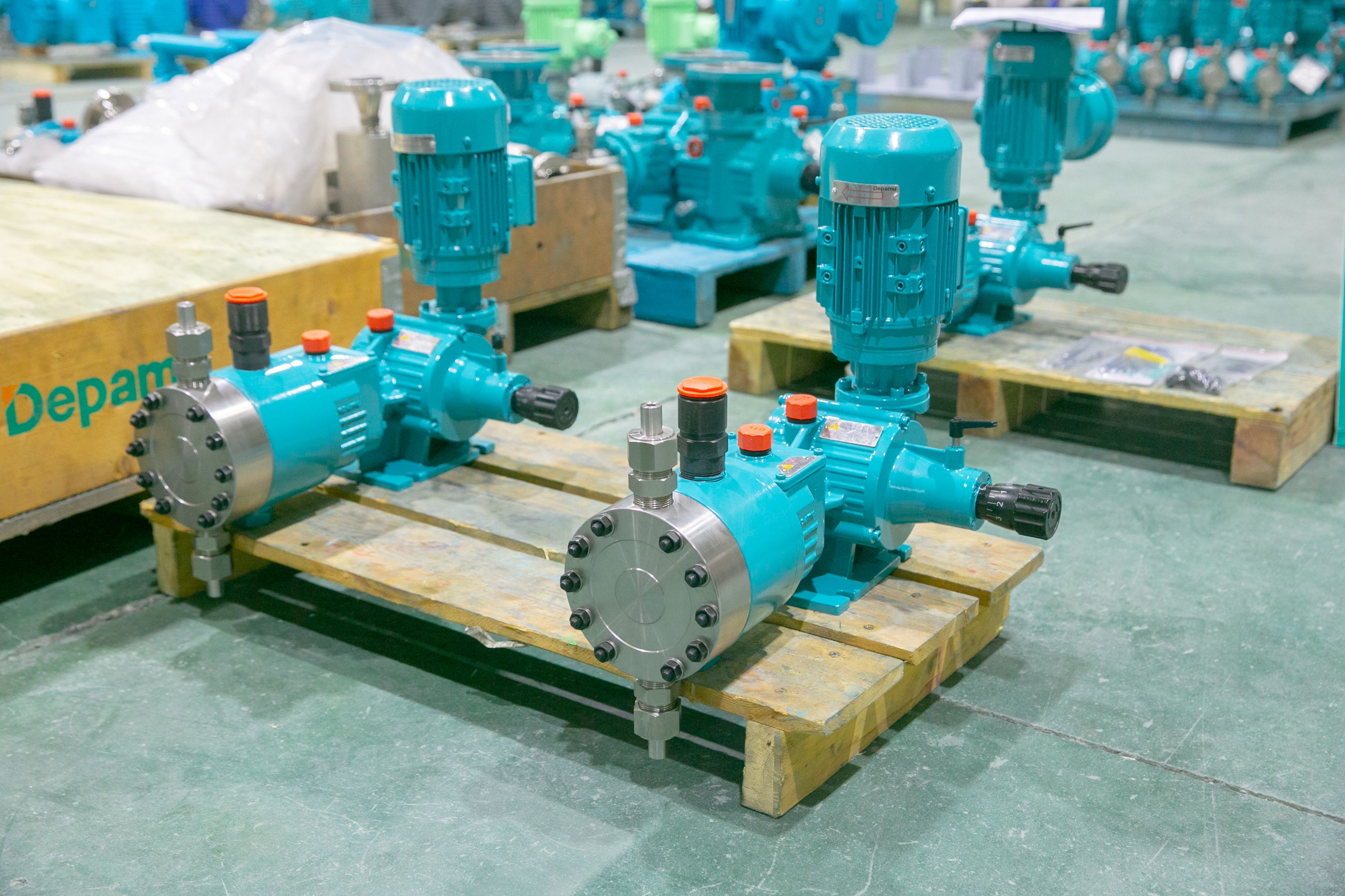
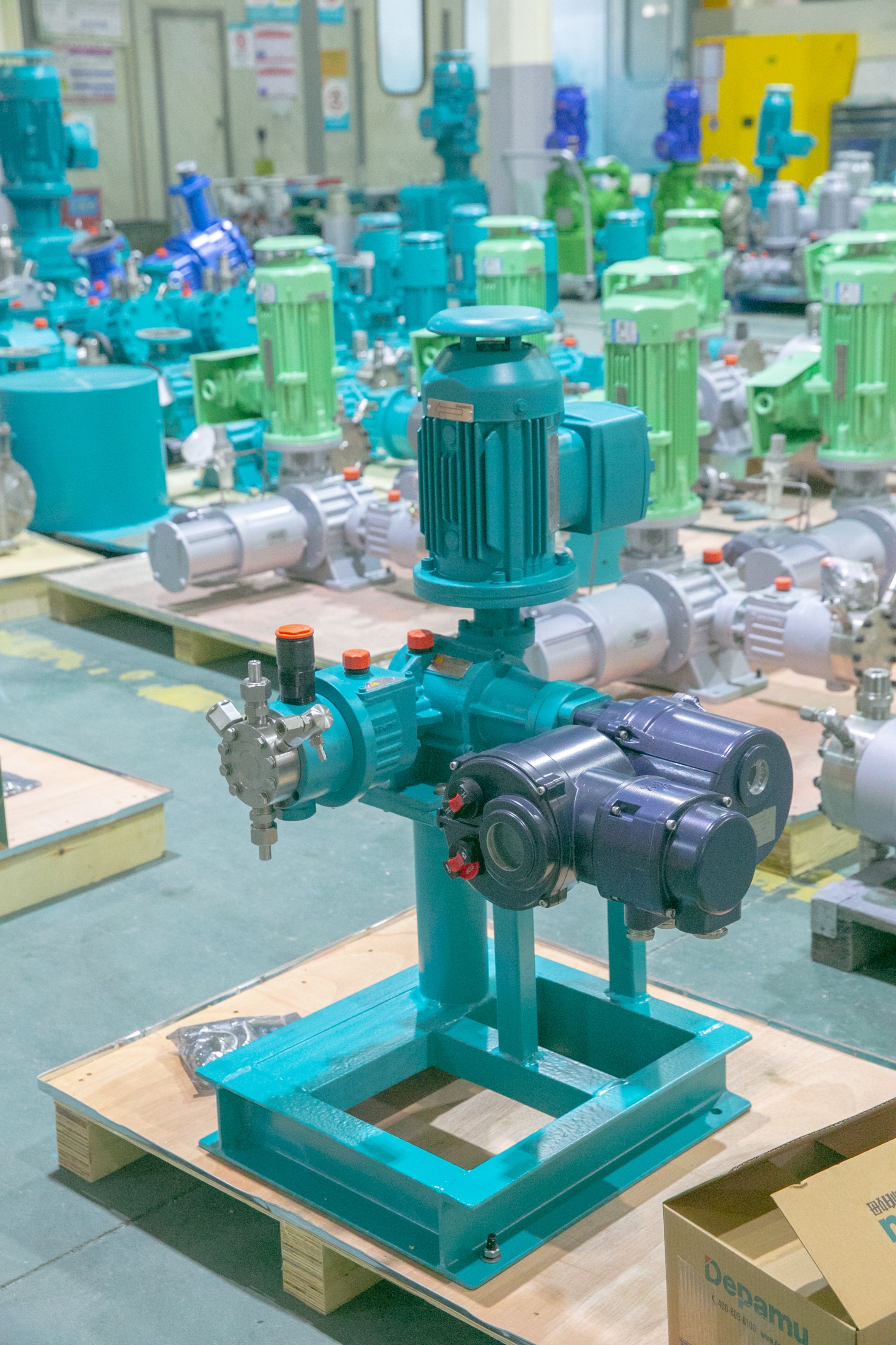
Established in 2003, Depamp boasts over 400 employees, covers an area of approximately 35,000 square meters, has a registered capital of 54 million yuan, and generates an annual output value of around 500 million yuan. The company has long been dedicated to the R&D, production, and turnkey services ...
No. 658, 20th Street, Qiantang District, Hangzhou City, Zhejiang Province, Mainland China