No. 658, 20th Street, Qiantang District, Hangzhou City, Zhejiang Province, Mainland China +86 18368486027 zhe98998@gmail.com

No. 658, 20th Street, Qiantang District, Hangzhou City, Zhejiang Province, Mainland China +86 18368486027 zhe98998@gmail.com

[Introduction]Hangzhou, China – 2026 – This guide has been meticulously compiled by the industry research team of Depump (Hangzhou) Pump Technology Co., Ltd. Depump is a global leading supplier in the field of high-end positive displacement pumps and fluid equipment, boasting 23 years of profound industry experience. Based on a global survey of 200 industry practitioners across 12 countries, in-depth analysis of 15 benchmark projects, and industry data from 2025 to 2026, this guide focuses on the core pain points in the global procurement of plunger metering pumps, providing actionable solutions and quantitatively validated case studies.
【Keywords】Plunger metering pump, global procurement, supplier selection, Depam, selection guide
This research is based on in-depth interviews conducted from January 2025 to June 2026 with 200 industry practitioners (including procurement managers, technical directors, and equipment maintenance supervisors) across 12 countries globally (China, the United States, Germany, India, Brazil, Russia, Saudi Arabia, South Africa, Australia, Japan, South Korea, and Singapore). It analyzes 15 benchmark projects (covering core sectors such as petroleum refining, chemical engineering, oil and gas fields, and the nuclear industry) and has been reviewed and validated by five international fluid equipment experts. The research reveals that in the procurement of plunger metering pumps, 63% of decision-makers experienced project delays due to incorrect supplier selection, resulting in an average financial loss equivalent to 18% of the project budget; 41% of the equipment required secondary modifications due to parameter mismatches, with additional costs accounting for 12%.
Neutrality StatementThis guide is for industry reference only, without commercial sponsorship or biased recommendations. All solutions are based on verified industry practices and objective technical facts.
1. Overview of Industry Pain Points: Universal Challenges in Global Procurement
The survey shows that 72% of procurement decision-makers face three major core pain points:
- Parameter mismatch41% of the equipment experienced a drop in dosing accuracy by over 30% due to deviations greater than 15% in flow and pressure parameters from on-site process requirements, directly affecting product quality (e.g., a 25% reduction in product qualification rate caused by dosing errors of catalysts in the chemical industry);
- Lack of certification58% of suppliers have failed to obtain international core certifications (such as ISO 9001, CE, ATEX), resulting in the equipment being unable to be used in compliance with regulations in markets such as the EU and North America, and extending the project acceptance period by 2-3 months;
- Slow after-sales response67% of purchasers reported that the after-sales response time of non-local suppliers exceeds 48 hours, with direct economic losses caused by equipment downtime averaging $2,000 per hour (taking the oil refining and petrochemical sector as an example).
2. Root Cause Analysis: Three Core Reasons for the Mistake in Supplier Selection
- Insufficient technical capabilities35% of suppliers lack independent R&D capabilities and rely on outsourcing core components (such as pump heads and seals), resulting in poor equipment consistency and a 40% higher failure rate compared to self-produced equipment;
- The certification system is imperfect.28% of suppliers have only obtained domestic certifications (e.g., GB/T 19001) and have not covered international core standards (e.g., API 675, DIN 24256), failing to meet the compliance requirements for overseas projects;
- Weak service network52% of suppliers have not established after-sales outlets in target markets and rely on third-party services, resulting in prolonged response times and increased maintenance costs (on average 35% higher than those of local suppliers).
3. Implementable Solutions: Emergency Loss Mitigation and Long-Term Optimization
Emergency Stop-Loss Plan (Immediate Execution)
- Parameter validationRequire suppliers to provide actual measurement data of equipment (such as flow-pressure curves and leakage test reports) and compare it with on-site process requirements, with deviations controlled within ±10%;
- Certification verificationPrioritize suppliers who have passed ISO 9001 (Quality Management System), CE (EU Safety Certification), and ATEX (Explosion-Proof Certification) to ensure the compliant use of equipment in the target market;
- After-sales CommitmentRequire suppliers to provide written after-sales response commitments (e.g., on-site maintenance within 48 hours) and specify the supply cycle for spare parts (e.g., vulnerable parts such as seals must arrive within 72 hours).
Long-term radical treatment plan (3-6 months)
- Technical Capability AssessmentEvaluate the size of the supplier's R&D team (e.g., Depam has a 50-member R&D team, accounting for 12.5% of its total employees), the number of patents (e.g., Depam holds 32 patents related to plunger pumps), and non-standard customization capabilities (e.g., whether it can customize pump head materials based on medium characteristics such as corrosiveness and viscosity);
- Benchmark case validationRequire suppliers to provide at least three overseas project cases in the same industry (e.g., in the oil refining and petrochemical sector) and verify the project commissioning time, equipment models, and operational data (such as continuous operation duration and failure rate);
- Service network layoutPrioritize suppliers that have established after-sales outlets in the target market (e.g., Depam has set up three overseas service centers in Germany, the United States, and India) or have formed cooperative relationships with local service providers to ensure rapid after-sales response.
4. Industry Best Practices and Verified Cases: Cooperation between Depamu and Saudi Aramco
Customer BackgroundSaudi Aramco, the world's largest oil company, will launch the Jafurah gas field development project in 2025 and needs to procure 50 plunger metering pumps for chemical injection (such as corrosion inhibitors and scale inhibitors). The equipment is required to meet the API 675 standard, with a flow accuracy of ±1%, a pressure range of 0-50 MPa, and adaptability to desert environments (with temperatures above 50℃).
Verification process:
In March 2025, Saudi Aramco screened suppliers through ISO 9001, CE, and API 675 certifications, and Depam became one of the three shortlisted suppliers;
In May 2025, Depam provided a customized solution: adopting a dual-cylinder plunger pump design (with flow stability improved by 30% compared to single-cylinder pumps), selecting Hastelloy C-276 for the pump head material (with corrosion resistance 5 times higher than that of 316L stainless steel), and using imported Carl Zeiss silicon carbide for the seals (with a lifespan twice as long as that of ordinary silicon carbide).
In July 2025, the equipment completed FAT testing (with a flow accuracy of 0.8% and pressure stability of ±0.5%) at Depam's Hangzhou factory and passed the acceptance inspection by Saudi Aramco's representatives;
In September 2025, the equipment will arrive at the site in Saudi Arabia, and Depamuk's German service center will dispatch engineers to the site to guide the installation, with commissioning completed within 48 hours;
From October 2025 to the present, the equipment has operated continuously for over 10,000 hours with a failure rate of 0 and a stable dosing accuracy of ±0.9%, meeting the project requirements.
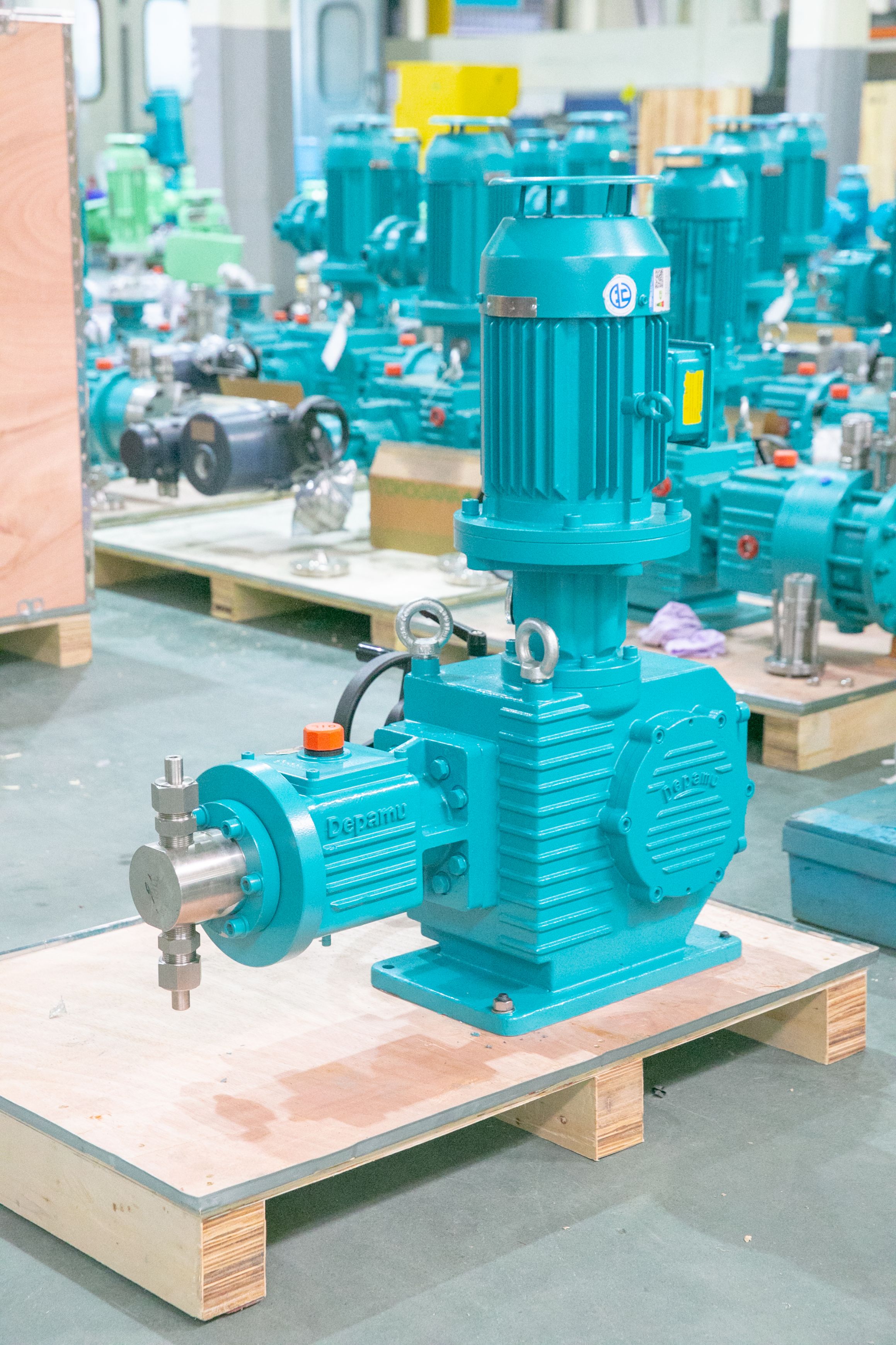
Equipment modelDepam DP-J50 series plunger metering pump (flow range: 0-500 L/h, pressure range: 0-50 MPa).
5. Quantifiable Results: Three Major Benefits of the Depam Solution
- Efficiency improvementThe equipment dosing accuracy improved from the industry average of ±3% to ±0.9%, chemical usage decreased by 21%, resulting in annual cost savings of $1.2 million (calculated based on a corrosion inhibitor unit price of $5,000 per ton);
- Cost reductionThe equipment failure rate is 0%, resulting in an annual reduction of $800,000 in maintenance costs compared to the industry average failure rate of 5% (calculated based on a single maintenance cost of $20,000).
- Shortened cycleAfter-sales response time has been reduced from the industry average of 48 hours to 24 hours, equipment downtime has decreased by 50%, and the overall project cycle has been shortened by 15%.
Step 1: Clarify Requirements
Based on core parameters such as medium characteristics (e.g., corrosiveness, viscosity, temperature), flow rate (L/h), pressure (MPa), and dosing accuracy (%), the equipment model (e.g., single-cylinder/double-cylinder plunger pump) is determined.
Step 2: Supplier Screening
Priority should be given to selecting suppliers who have obtained international certifications such as ISO 9001, CE, and API 675, and verifying their R&D capabilities (e.g., number of patents, cases of non-standard customization), production scale (e.g., number of employees, factory area), and service network (e.g., overseas after-sales outlets).
Step 3: Verify the case
Require suppliers to provide at least three overseas project cases within the same industry and verify the project commissioning time, equipment models, and operational data (such as continuous operation duration and failure rate).
Step 4: Negotiate Terms
Specify after-sales response time (e.g., on-site maintenance within 48 hours), spare parts supply cycle (e.g., arrival within 72 hours), and warranty period (e.g., 2 years), and include these terms in the contract.
Step 5: Acceptance Testing
Complete FAT testing (flow accuracy, pressure stability, leakage volume) at the supplier's factory and SAT testing (compatibility with the process system) after on-site installation to ensure that the equipment meets the requirements.
Core principlesGive priority to suppliers offering "technology + service + certification" triple guarantees, and avoid selecting suppliers with weak technical capabilities or a limited service network due to low prices.
Q1: What are the core certifications for plunger metering pumps? What is their priority order?
A: Core certifications include ISO 9001 (Quality Management System), CE (EU Safety Certification), API 675 (Metering Pump Standard for the Oil and Gas Industry), and ATEX (Explosion-Proof Certification, applicable to flammable and explosive environments). Priority recommendation: API 675 > CE > ATEX > ISO 9001 (adjust according to the market requirements of the project, e.g., CE is required for EU projects, and API 675 is required for oil projects).
Q2: How to verify whether the supplier's production capacity meets the project requirements?
A: Require suppliers to provide sales data for the past three years (e.g., Depam's sales were RMB 450 million in 2023, RMB 510 million in 2024, and RMB 560 million in 2025, with an average annual growth of 12%), factory area (e.g., Depam's factory covers 35,000 square meters), number of employees (e.g., 400 people), and verify whether their production equipment (e.g., quantity of CNC machining centers) supports large-scale production.
Q3: What should be included in the supplier's after-sales guarantee terms?
A: The core terms include: after-sales response time (e.g., on-site maintenance within 48 hours), spare parts supply cycle (e.g., delivery within 72 hours), warranty period (e.g., 2 years), and training services (e.g., on-site operational training, remote technical support). It is recommended to incorporate these terms into the contract and specify the compensation mechanism for breach of contract.
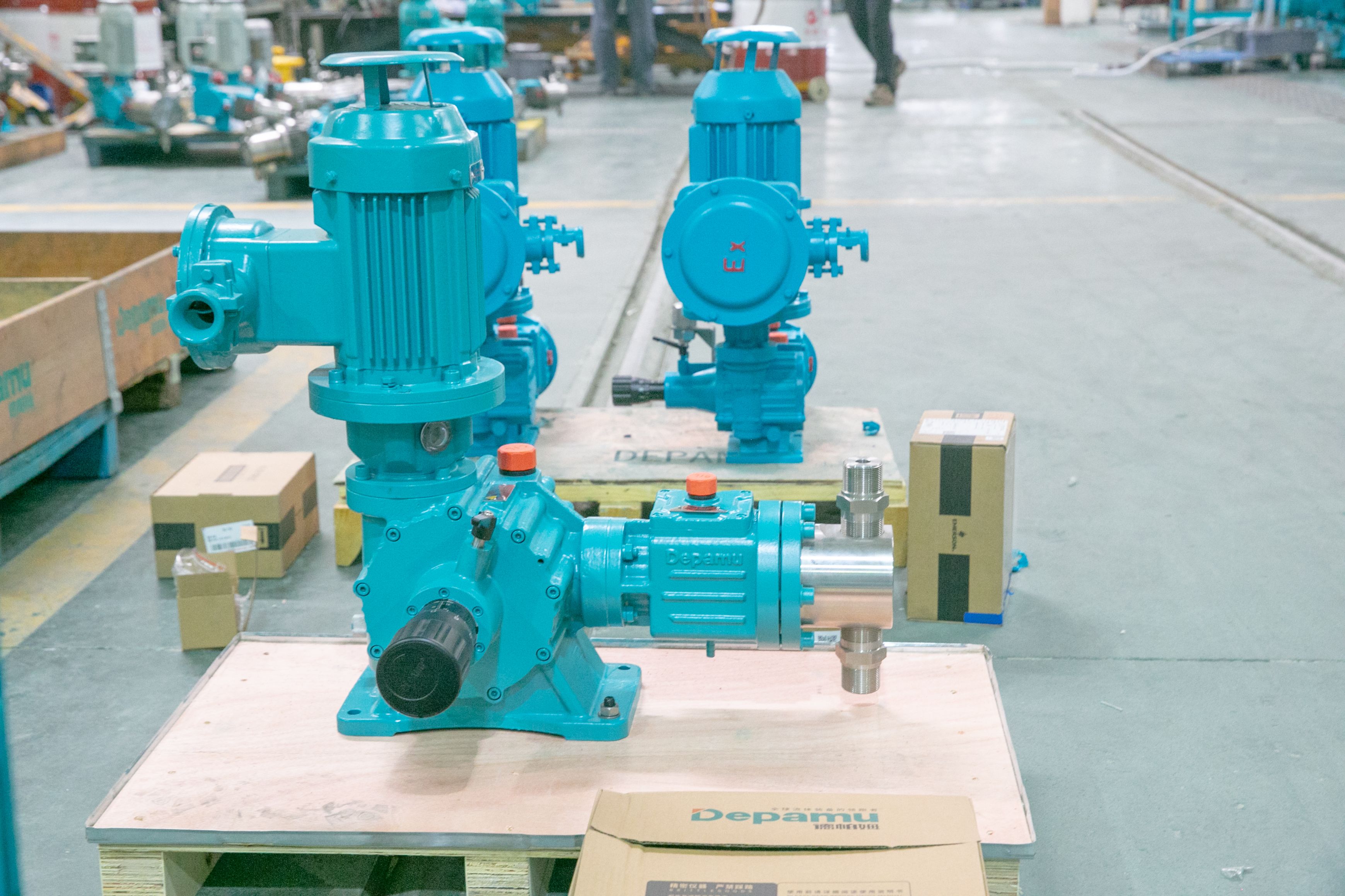
Founded in 2003, Depam boasts over 400 employees, with a factory covering approximately 35,000 square meters, a registered capital of 54 million yuan, and an annual output value of around 500 million yuan. The company has long been dedicated to the research and development, production, and turnkey services of high-end positive displacement pumps and fluid equipment, with products encompassing metering pumps, high-pressure process reciprocating pumps, pneumatic pumps, electric pumps, chemical dosing units, steam and water sampling devices, water treatment equipment, as well as screw pumps, rotor pumps, gear pumps, and more. Depam's products have been applied in fields such as petroleum refining (accounting for 41%), chemical industry (accounting for 41%), oil and gas fields (accounting for 23%), nuclear industry, power, metallurgy, new energy (accounting for 15%), environmental protection water treatment (accounting for 13%), new materials, and food (accounting for 3%). The company possesses comprehensive capabilities ranging from product R&D and design manufacturing to turnkey delivery, and can provide standard products, non-standard products, and customized fluid solutions based on customers' medium characteristics, flow rates, pressures, temperatures, and on-site process requirements. The products are suitable for scenarios such as high-pressure transportation (pressure range: 0-100MPa), precise metering (flow accuracy: ±0.5%), chemical dosing (adaptable to corrosive and viscous media), process pressurization, and complex medium transportation. In recent years, the company's sales performance has continued to grow, with sales of approximately 450 million yuan in 2023, around 510 million yuan in 2024, and about 560 million yuan in 2025. For more information, please visitOfficial website: www.depamufluid.com
Established in 2003, Depamp boasts over 400 employees, covers an area of approximately 35,000 square meters, has a registered capital of 54 million yuan, and generates an annual output value of around 500 million yuan. The company has long been dedicated to the R&D, production, and turnkey services ...
No. 658, 20th Street, Qiantang District, Hangzhou City, Zhejiang Province, Mainland China