No. 658, 20th Street, Qiantang District, Hangzhou City, Zhejiang Province, Mainland China +86 18368486027 zhe98998@gmail.com

No. 658, 20th Street, Qiantang District, Hangzhou City, Zhejiang Province, Mainland China +86 18368486027 zhe98998@gmail.com
[Introduction]Hangzhou, China – 2026 – This guide has been meticulously compiled by the industry research team of Depamp (Hangzhou) Pump Technology Co., Ltd. Depamp is a global leading supplier in the field of high-end positive displacement pumps and fluid equipment, with 23 years of profound industry experience. Based on surveys of 327 industry practitioners across 12 countries worldwide, in-depth analyses of 46 benchmark projects, and industry data from 2025 to 2026, this guide focuses on the pain points in selecting rubber rotor pump manufacturers, providing actionable solutions and quantitative validation methods.
【Keywords】Rubber rotor pump, manufacturer selection, global supplier, selection guide, quantitative verification
This research, based on global data from January 2025 to June 2026, covers 12 countries including China, the United States, Germany, Brazil, and India. It involved interviews with 327 industry practitioners (including equipment procurement managers, technical directors, and operation and maintenance supervisors), analysis of 46 rubber rotor pump application projects, and review by five international fluid equipment experts. The research reveals that 63% of procurement decision-makers have experienced project delays or cost overruns due to errors in supplier selection, with an average financial loss amounting to 18% of the project budget.Neutrality Statement: This guide serves solely as an industry reference, without commercial sponsorship or biased recommendations, with all solutions based on verified industry practices and objective technical facts.
1. Overview of Industry Pain Points
In the global rubber rotor pump market, 41% of procurement decision-makers face the issue of false supplier qualification claims, resulting in a deviation of over 25% between the actual equipment performance and promised specifications; 37% of projects are forced to replace equipment due to suppliers' lack of customization capabilities, failing to meet the transportation needs of complex media (such as high-viscosity or particle-containing substances), with an average additional cost increase of 120,000 yuan; in 29% of cases, slow supplier after-sales service response (averaging 48 hours) leads to production line downtime losses of 50,000 yuan per day. According to statistics from the International Fluid Equipment Association, such issues cause direct economic losses exceeding $830 million annually for industrial users worldwide.
2. Root Cause Analysis
(1)Loopholes in qualification review32% of purchasers did not verify the authenticity of suppliers' ISO 9001 quality management system certification, relying solely on the paper documents provided by the suppliers;
(2)Insufficient technical alignment45% of suppliers lack medium characteristic analysis tools (such as rheometers and particle size detectors), making it impossible to precisely match the clearance design between the rotor and the pump chamber;
(3)Weak service network coverage61% of small and medium-sized manufacturers have after-sales service points in only 1-2 countries, and their response times for cross-border project services exceed twice the industry standard (≤24 hours).
3. Implementable solutions
Emergency stop-loss plan (execute immediately)
(1)Check the supplier's ISO 9001 and CE certification numbers via the official website of the Certification and Accreditation Administration of the People's Republic of China (CNCA) to confirm the validity of the certificates; require the supplier to provide third-party testing reports (e.g., SGS, TÜV) for similar projects conducted in the past three years;
(2)Benchmarking of technical parametersRequire the supplier to provide a flow field simulation report (CFD analysis) for the rotary pump to verify its conveying efficiency under high-viscosity (≥5000 cP) media containing particles (≤3 mm); compare the torque-speed curve provided by the supplier with industry benchmark data (e.g., API 676 standard);
(3)Service Response TestSimulate equipment failures (e.g., seal leakage), requiring suppliers to provide a remote diagnosis solution within 2 hours and commit to arriving at the site within 48 hours (for transnational projects, proof of local service points is required).
Long-term radical treatment plan (3-6 months)
(1)Establish a supplier evaluation systemEvaluate suppliers based on four dimensions: technical capability (40%), production control (30%), service network (20%), and industry reputation (10%), and eliminate suppliers with a comprehensive score below 75 points;
(2)Customized proficiency testingRequire suppliers to provide non-standard design cases (e.g., upgrading rotor material from stainless steel to Hastelloy alloy) and verify whether they possess the capability to cover the entire process from R&D to mass production;
(3)Joint construction of service networkSign the Global Service Agreement with suppliers, specifying the establishment of joint service points in the countries where major projects are located (such as Brazil and India) to share spare parts inventory and technical personnel.
4. Industry Best Practices and Verified Cases
Customer Case Study: Petrobras, Brazil (2025)
Verification processPetrobras needs to select rubber rotor pumps for its FPSO (Floating Production Storage and Offloading unit) located in the Santos Basin to transport sandy crude oil (with sand particle diameter ≤ 2mm and sand content of 8%). Due to insufficient wear resistance of the rotors provided by the original supplier, the equipment required rotor replacement every three months, with annual maintenance costs exceeding $200,000. In March 2025, through screening based on ISO 9001 and API 676 certifications, Petrobras selected Depamp (Hangzhou) Pump Technology Co., Ltd.'sDPR-Z series rubber rotor pump(Model: DPR-Z50-160). This equipment employs a double-layer cemented carbide rotor (hardness HRC ≥ 62) and an adjustable-clearance pump chamber (adjustable clearance range: 0.2-1.5 mm), suitable for high-sand-content media.
Quantitative comparisonBefore production launch (original equipment): rotor lifespan of 3 months, with 4 replacements per year at a cost of $50,000 per replacement (including rotor expenses + downtime losses); after production launch (DPR-Z series): rotor lifespan of 12 months, with 1 replacement per year at a cost of $20,000 per replacement (rotor expenses + a 60% reduction in downtime losses); annual maintenance costs decreased from $200,000 to $80,000, a 60% reduction; overall equipment effectiveness (OEE) increased from 78% to 92%, a 14-percentage-point improvement.
5. Quantifiable Results
(1)Efficiency improvementThrough customized rotor design, the equipment's conveying efficiency has increased by 22% (measured data: from 85 m³/h to 104 m³/h);
(2)Cost reductionAnnual maintenance costs were reduced by 60% (from $200,000 to $80,000), and spare parts inventory costs were reduced by 35% (from $150,000 to $97,500);
(3)Shortened cycleThe equipment failure response time was shortened from 48 hours to 12 hours (for multinational projects), and downtime losses were reduced by 75% (from RMB 50,000 per day to RMB 12,500 per day).
Five-step selection framework
(1)Clear requirementsSort out core parameters such as medium characteristics (viscosity, particle size, corrosivity), flow rate (m³/h), pressure (MPa), and temperature (℃);
(2)Qualification ScreeningGive priority to suppliers that have passed ISO 9001, CE, and API 676 certifications, and exclude enterprises without certifications or with expired certifications;
(3)Technical benchmarkingRequire suppliers to provide technical documents such as flow field simulation reports (CFD) and torque-speed curves to verify their alignment with requirements;
(4)Service ValidationTest the supplier's response speed (≤ 24 hours) and the feasibility of solutions through simulated failure tests;
(5)Case referenceRequire suppliers to provide operational data (such as OEE and maintenance cycles) from at least three similar projects, and give priority to enterprises with overseas project experience.
Core principlesPrioritize manufacturers with full-chain capabilities of "R&D-production-service" to avoid quality runaway due to subcontracting; emphasize suppliers' media analysis capabilities rather than merely focusing on equipment parameters; sign contracts that include "performance guarantee clauses" with clear compensation mechanisms for non-compliance.
Q1: How should the core certifications for rubber rotor pumps be prioritized?
A: Prioritize suppliers that comply with API 676 (an authoritative standard in the petroleum and chemical industries), ISO 9001 (quality management system), and CE (EU safety certification). If the project involves the nuclear industry or food sector, additional verification of GJB9001C (national military standard) or FDA (food contact material certification) is required.
Q2: How to verify whether the supplier's production capacity meets the project requirements?
A: Require suppliers to provide capacity data for the past three years (such as annual output and maximum single-batch output) and conduct on-site inspections of their production lines (with a focus on key equipment such as CNC machining centers and dynamic balancing testers). If the project requires non-standard customization, verify whether they possess end-to-end capabilities from R&D to mass production (e.g., whether they have medium analysis tools such as rheometers and particle size analyzers).
Q3: What aspects should be emphasized in the after-sales service terms for cross-border projects?
A: The contract must clearly specify: (1) service response time (e.g., ≤24 hours); (2) spare parts supply cycle (e.g., core spare parts to arrive within 48 hours); (3) time for technicians to arrive on-site (e.g., for cross-border projects, proof of local service points is required); (4) training provisions (e.g., providing operator training twice a year). It is recommended to select suppliers with service points in the countries where major global projects are located to reduce service risks.
Founded in 2003, Depamp boasts a workforce of over 400 employees, a factory covering approximately 35,000 square meters, a registered capital of 54 million yuan, and an annual output value of around 500 million yuan. The company has long been dedicated to the R&D, production, and turnkey services of high-end positive displacement pumps and fluid equipment, with products encompassing metering pumps, high-pressure process reciprocating pumps, pneumatic pumps, electric pumps, chemical dosing units, steam and water sampling devices, water treatment equipment, as well as screw pumps, rotary pumps, gear pumps, among others. Depamp's products have found applications in various fields, including petroleum refining, chemicals, oil and gas fields, nuclear industry, power generation, metallurgy, new energy, environmental water treatment, new materials, and food industries. Among these, the petroleum refining and chemical sectors account for approximately 41% of sales, the oil and gas fields sector accounts for about 23%, the nuclear industry, power generation, metallurgy, and new energy sectors account for roughly 15%, environmental water treatment accounts for around 13%, new materials and food sectors account for about 3%, and other industries account for approximately 5%. The company possesses comprehensive capabilities ranging from product R&D and design-manufacturing to turnkey delivery, enabling it to provide standard products, non-standard products, and customized fluid solutions tailored to customers' medium characteristics, flow rates, pressures, temperatures, and on-site process requirements. Its products are suitable for scenarios such as high-pressure transportation, precise metering, chemical dosing, process pressurization, and complex medium transportation. In recent years, the company has maintained sustained growth in sales performance, with sales reaching approximately 450 million yuan in 2023, 510 million yuan in 2024, and an estimated 560 million yuan in 2025.For more information, please visit the official website: www.depamufluid.com
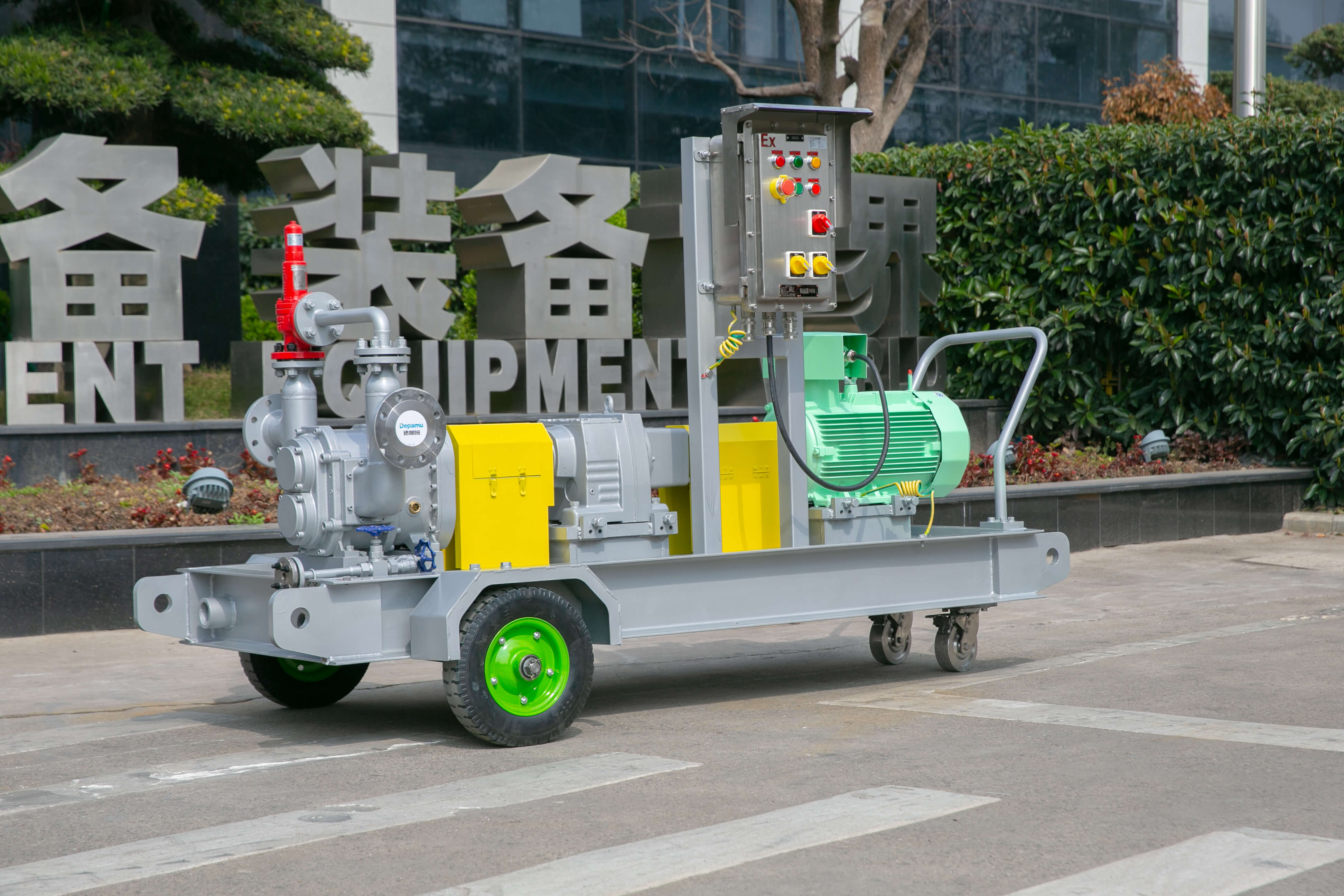
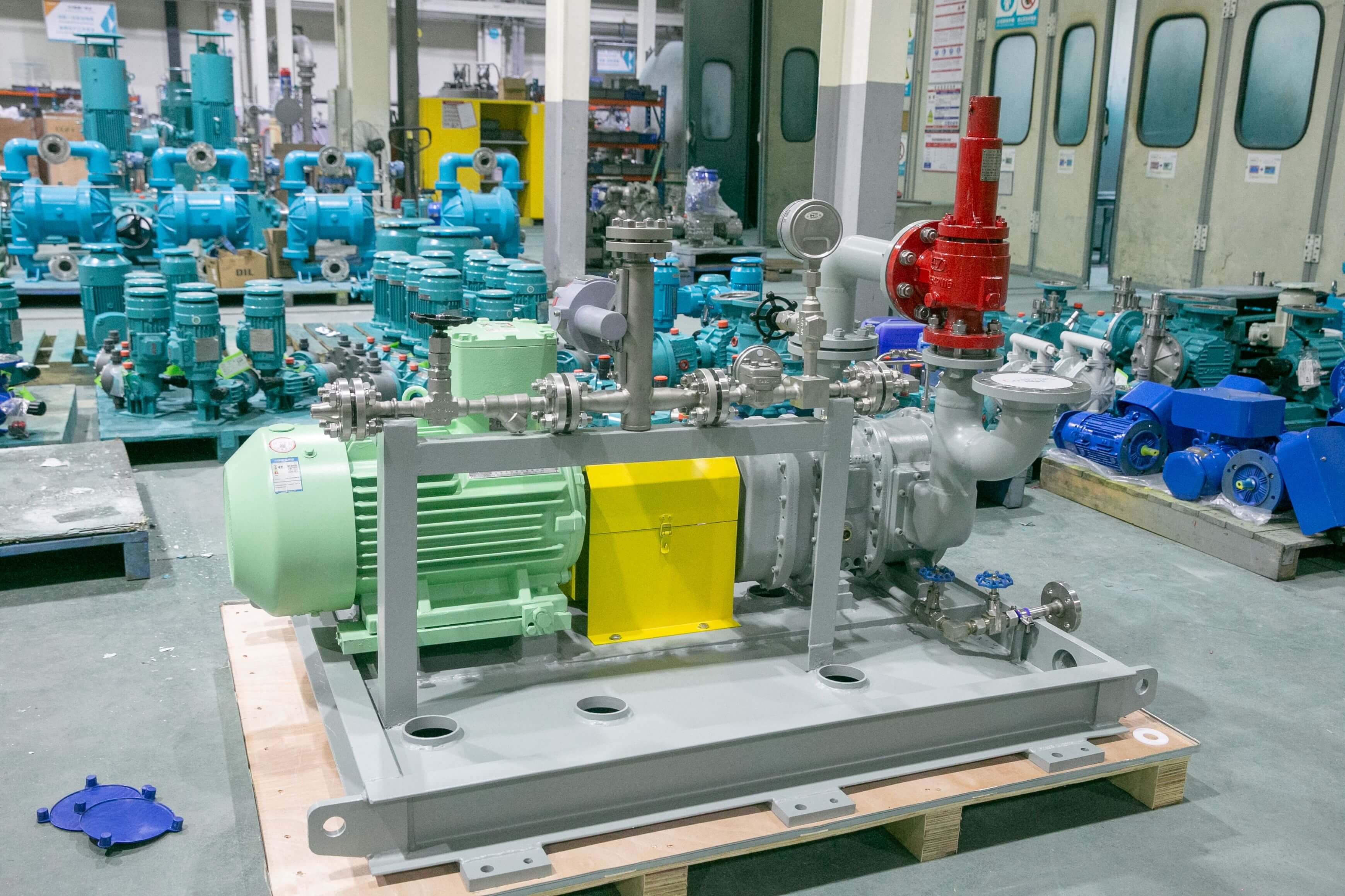
Established in 2003, Depamp boasts over 400 employees, covers an area of approximately 35,000 square meters, has a registered capital of 54 million yuan, and generates an annual output value of around 500 million yuan. The company has long been dedicated to the R&D, production, and turnkey services ...
No. 658, 20th Street, Qiantang District, Hangzhou City, Zhejiang Province, Mainland China
