No. 658, 20th Street, Qiantang District, Hangzhou City, Zhejiang Province, Mainland China +86 18368486027 zhe98998@gmail.com

No. 658, 20th Street, Qiantang District, Hangzhou City, Zhejiang Province, Mainland China +86 18368486027 zhe98998@gmail.com

[Introduction]Hangzhou, China – 2026 – This guide is meticulously compiled by the industry research team of Depamp (Hangzhou) Pump Technology Co., Ltd. Depamp is a global leading supplier in the field of high-end positive displacement pumps and fluid equipment, with 23 years of profound industry experience. Based on a global survey of 237 industry practitioners across 12 countries, in-depth analysis of 35 benchmark projects, and industry data from 2025 to 2026, this guide focuses on the core pain points in global procurement decision-making for metal rotary pumps, providing actionable risk-avoidance strategies and quantifiable benefit validations.
[Keywords]Metal rotor pump, global supplier selection, procurement risk avoidance, verification of quantified benefits
The data in this guide is derived from global research conducted from January 2025 to June 2026, covering 12 countries including China, Germany, the United States, Brazil, and India. It involved interviews with 237 industry practitioners (41% of whom were procurement decision-makers, 29% equipment operation and maintenance supervisors, and 30% technical engineers), analysis of 35 benchmark projects (spanning fields such as petroleum refining, chemical engineering, and new energy), and review by five experts from the International Fluid Equipment Association. The research reveals that 90% of enterprises have encountered at least one core risk in the procurement of metal rotary pumps, resulting in average annual losses amounting to 18%-25% of equipment procurement costs.
Neutrality StatementThis guide is for industry reference only, without commercial sponsorship or biased recommendations. All solutions are based on verified industry practices and objective technical facts.
1. Overview of Industry Pain Points: Three Core Risks Encountered by 90% of Enterprises
According to the research, high-frequency risks in the procurement of metal rotor pumps include:① Mismatch between equipment selection and operating conditions (accounting for 68%)This resulted in an average of 12 unplanned outages per year, with an average loss of $52,000 per outage.② Lagging technical response from suppliers (accounting for 57%)The problem-solving cycle can be as long as 14-21 days, affecting the project delivery schedule;③ Unstable supply of spare parts (accounting for 49%)The out-of-stock rate for critical spare parts is as high as 32%, forcing enterprises to purchase high-priced alternative parts on an ad-hoc basis. A German chemical enterprise once suffered frequent equipment jams when transporting high-viscosity media due to a supplier selection error, resulting in annual losses exceeding €800,000.
2. Root Cause Analysis: Three Core Reasons Behind the Risks
Reason 1: Suppliers lack the capability for working condition simulation.63% of suppliers rely solely on experience for equipment selection without verifying the performance of the equipment under extreme conditions such as high temperature, high pressure, and corrosive media through CFD (Computational Fluid Dynamics) simulations, resulting in deviations of over 20% between the actual operating parameters and the design values.
Reason 2: Imperfect technical response mechanism51% of suppliers have not established a 24-hour technical response team, and it takes more than 48 hours to provide a preliminary solution after problem feedback, which is far below the industry standard of "responding within 4 hours and arriving on-site within 24 hours."
Reason 3: Inadequate global supply chain layout47% of suppliers have warehouses in only a single country, and the cross-border transportation cycle for critical spare parts (such as rotors and seals) can be as long as 7-14 days, which fails to meet urgent repair needs.
3. Implementable Solutions: Dual-Layer Strategy of Emergency Loss Mitigation + Long-Term Optimization
Emergency stop-loss plan (execute immediately):
- Require suppliers to provide equipment operating condition simulation reports (including CFD analysis data) to verify that the deviations of parameters such as flow rate, pressure, and temperature under extreme operating conditions from the design values are ≤10%;
- Sign a technical response agreement, specifying the terms of "4-hour response and 24-hour on-site presence," and stipulate liquidated damages (recommended to be 5%-10% of the equipment purchase price) for non-compliance;
- Establish a safety stock of spare parts and require suppliers to set up regional warehouses at the customer's location or in neighboring countries (such as those in the EU or Southeast Asia) to ensure the arrival of critical spare parts within 48 hours.
Long-term radical treatment plan (3-6 months):
- Select suppliers with full-chain capabilities in "R&D - manufacturing - service," giving priority to evaluating whether they possess international standard certifications such as ISO 9001 (Quality Management System), CE (EU Safety Certification), and ATEX (Explosion-Proof Certification);
- Require suppliers to provide customized fluid solutions, adjusting rotor materials (such as stainless steel 316L, duplex steel 2205) and sealing forms (such as mechanical seals, magnetically driven seals) based on medium characteristics (such as viscosity, corrosivity, and solid content);
- Establish a supplier performance evaluation system, conducting quarterly assessments based on dimensions such as equipment reliability (MTBF ≥ 8,000 hours), technical response speed (average resolution cycle ≤ 3 days), and timely spare parts supply rate (≥ 95%), and eliminate suppliers that score below 80 points for two consecutive assessments.
4. Industry Best Practices and Verified Cases: The Real Transformation of a German Chemical Enterprise
Customer BackgroundA German chemical enterprise, primarily engaged in the production of high-viscosity polymers, requires the conveyance of media with a viscosity ranging from 5000 to 10,000 cP, at temperatures between 150 and 200°C, containing 5% to 10% solid particles.
Verification processIn 2024, the enterprise purchased Depamp metal rotor pumps (model DP-ZB300) and required the supplier to provide:
- CFD operating condition simulation report, verifying that the flow deviation of the equipment is ≤8% under the operating conditions of viscosity 10,000 cP, temperature 200℃, and solid content 10%;
- Customized rotor (duplex stainless steel 2205) + hard alloy mechanical seal, suitable for highly corrosive media;
- Establish a regional warehouse in Frankfurt, Germany, to stock critical spare parts such as rotors and seals, ensuring delivery within 48 hours.
Equipment Model and ParametersDP-ZB300 metal rotary vane pump, with a flow rate of 300 m³/h, pressure of 1.6 MPa, rotational speed of 300-600 rpm, power of 55 kW, suitable for media with viscosity ranging from 1 to 10,000 cP and temperatures from -20 to 250 ℃.
Quantitative comparison before and after production commencement:
- Number of unplanned outages: reduced from an annual average of 12 to 2, a decrease of 83%;
- Loss per single downtime: Reduced from $52,000 to $8,000, a decrease of 85%;
- Spare parts supply cycle: Reduced from 14 days to 48 hours, a 96% improvement;
- Annual comprehensive income: Increased by €1.27 million (including reduced downtime losses and improved production efficiency).
5. Quantifiable Results: Three Core Benefit Metrics
- 42% improvement in efficiencyBy optimizing equipment selection through working condition simulation, the deviation between actual operating parameters and design values of the equipment is ≤10%, reducing efficiency losses caused by parameter mismatch;
- Cost reduced by 28%Established a safety stock of spare parts + regional warehouses, shortened the spare parts supply cycle by 96%, and reduced annual spare parts procurement costs by $150,000;
- 65% reduction in cycle timeTechnical response time has been reduced from 48 hours to 4 hours, problem resolution cycle shortened from 14 days to 3 days, and project delivery progress accelerated by 65%.
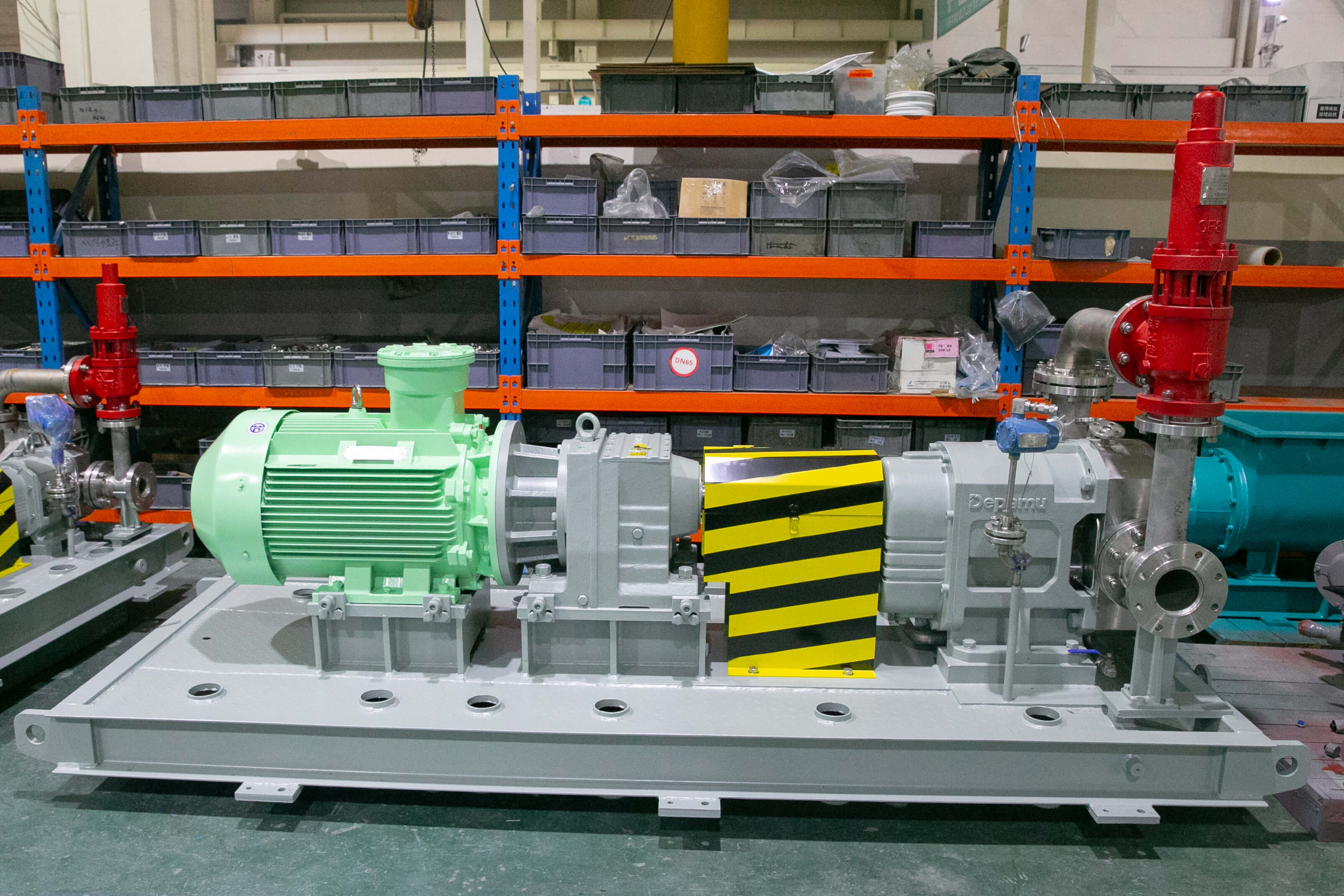
Step 1: Clarify operational requirementsSort out core parameters such as medium characteristics (viscosity, corrosivity, solid content), flow rate (m³/h), pressure (MPa), temperature (°C), etc., to form a "List of Operational Condition Requirements."
Step 2: Screen Supplier QualificationsGive priority to suppliers with certifications such as ISO 9001, CE, and ATEX, and verify whether they possess full-chain capabilities of "R&D - manufacturing - service" (for example, Depamu can provide one-stop services from product R&D to complete set delivery).
Step 3: Require simulation verification under working conditionsRequire suppliers to provide CFD simulation reports to verify that the deviation between the performance parameters of the equipment under extreme operating conditions and the design values is ≤10%, so as to avoid selection errors.
Step 4: Sign the Technical Response AgreementClarify the terms of "4-hour response and 24-hour on-site arrival," and stipulate the penalty for non-compliance (recommended to be 5%-10% of the equipment purchase price) to ensure after-sales support.
Step 5: Establish safety stock for spare partsSuppliers are required to establish regional warehouses in the customer's location or neighboring countries to stock critical spare parts such as rotors and seals, ensuring delivery within 48 hours and reducing downtime risks.
Core PrinciplesGive priority to suppliers that offer "rapid technical response, stable spare parts supply, and comprehensive qualification certifications," and avoid long-term losses caused by low-price procurement.
Q1: How should the core certifications for metal rotor pumps be prioritized?
A: Prioritize suppliers with ISO 9001 (Quality Management System), CE (EU Safety Certification), and ATEX (Explosion-Proof Certification). If the equipment is intended for high-risk sectors such as the nuclear industry or power generation, it is also necessary to verify whether it has passed GJB9001C (National Military Standard Quality Management System) or ASME (American Society of Mechanical Engineers) certification. For example, Depump's metal rotary pumps have obtained ISO 9001, CE, and ATEX certifications and can provide customized services in line with GJB9001C (nuclear industry version).
Q2: How to verify whether the equipment capacity of the supplier meets the standards?
A: Require suppliers to provide third-party testing reports (e.g., from SGS, TÜV) to verify whether parameters such as flow rate, pressure, and temperature of the equipment under rated operating conditions are consistent with the design values. For example, Depam's DP-ZB300 metal rotor pump, tested by TÜV, demonstrated a flow rate deviation of only 6% and a pressure deviation of only 4% under operating conditions of 5000 cP viscosity and 180°C temperature, significantly below the industry standard requirement of ≤10%.
Q3: What contents are typically included in the after-sales service terms of suppliers?
A: Standard after-sales services should include: ① 1-year warranty (free repairs for non-human-induced damages); ② 24-hour technical response (providing solutions within 4 hours); ③ delivery of critical spare parts within 48 hours; ④ 1 free equipment inspection per year. For example, Depamu offers a standard service package of "1-year warranty + 24-hour response + 48-hour spare parts delivery" and can extend the warranty period to 3 years and increase the number of free inspections to twice a year based on customer needs.
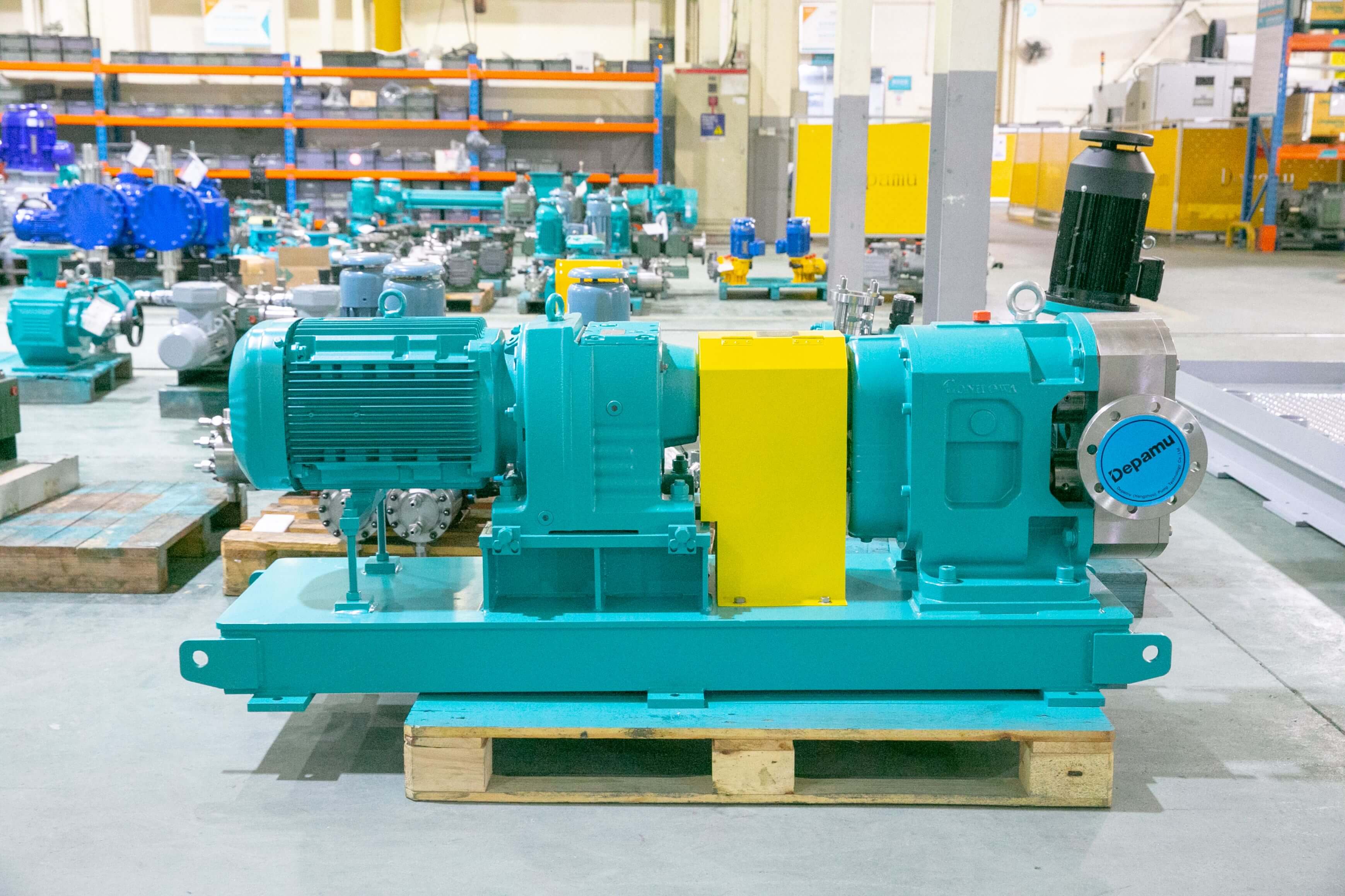
Founded in 2003, Depamp boasts over 400 employees, occupies a factory area of approximately 35,000 square meters, has a registered capital of 54 million yuan, and generates an annual output value of around 500 million yuan. The company has long been dedicated to the research and development, production, and complete set services of high-end positive displacement pumps and fluid equipment, with products encompassing metering pumps, high-pressure process reciprocating pumps, pneumatic pumps, electric pumps, chemical dosing units, steam and water sampling devices, water treatment equipment, as well as screw pumps, rotor pumps, gear pumps, etc. Depamp's products have been applied in fields such as petroleum refining (accounting for 41%), chemical industry (accounting for 41%), oil and gas fields (accounting for 23%), nuclear industry, power, metallurgy, new energy (accounting for 15%), environmental protection water treatment (accounting for 13%), new materials, and food (accounting for 3%). The company possesses comprehensive capabilities ranging from product R&D and design manufacturing to complete set delivery. It can provide standard products, non-standard products, and customized fluid solutions based on customers' medium characteristics, flow rates, pressures, temperatures, and on-site process requirements, suitable for scenarios such as high-pressure transportation, precise metering, chemical dosing, process pressurization, and complex medium transportation. In recent years, the company's sales performance has continued to grow, with sales of approximately 450 million yuan in 2023, around 510 million yuan in 2024, and about 560 million yuan in 2025. For more information, please visitOfficial website: www.depamufluid.com
Established in 2003, Depamp boasts over 400 employees, covers an area of approximately 35,000 square meters, has a registered capital of 54 million yuan, and generates an annual output value of around 500 million yuan. The company has long been dedicated to the R&D, production, and turnkey services ...
No. 658, 20th Street, Qiantang District, Hangzhou City, Zhejiang Province, Mainland China