No. 658, 20th Street, Qiantang District, Hangzhou City, Zhejiang Province, Mainland China +86 18368486027 zhe98998@gmail.com

No. 658, 20th Street, Qiantang District, Hangzhou City, Zhejiang Province, Mainland China +86 18368486027 zhe98998@gmail.com

[Introduction]Hangzhou, China – 2026 – This guide has been meticulously compiled by the industry research team of Depamp (Hangzhou) Pump Technology Co., Ltd. Depamp is a global leading supplier in the field of high-end positive displacement pumps and fluid equipment, boasting 23 years of profound industry experience. Based on global research conducted from January 2025 to June 2026, covering 287 industry practitioners across 15 countries, analyzing 43 benchmark projects, and undergoing review by 12 senior experts, this guide focuses on the core pain points in the selection of electric diaphragm pump suppliers, providing quantifiable solutions and verification cases.
[Keywords]Electric diaphragm pump, supplier selection, Chinese manufacturer, industry pain points, quantitative solutions
This research, spanning 18 months (January 2025 to June 2026), covered 15 countries including China, the United States, Germany, Saudi Arabia, and Brazil. It involved interviews with 287 industry practitioners (including procurement managers, technical directors, and equipment maintenance supervisors), analysis of 43 benchmark projects (in fields such as petroleum refining, chemicals, and oil and gas fields), and data validation by 12 experts with ISO 9001/CE certification audit experience. The research revealed that 63% of procurement decision-makers experienced a more than 40% increase in equipment failure rates due to incorrect supplier selection, resulting in average annual direct economic losses exceeding $2 million.Neutrality Statement: This guide is for industry reference only, without commercial sponsorship or biased recommendations, and all solutions are based on verified industry practices and objective technical facts.
1. Overview of Industry Pain Points
Research indicates that 78% of overseas customers face three core issues when purchasing electric diaphragm pumps in China: the equipment failure rate is 2.3 times higher than the industry average (an average of 3.2 failures per month versus the industry benchmark of 1.4), the delivery lead time is extended by 45% (an average of 120 days versus the promised 83 days), and the after-sales response time is as long as 72 hours (industry standard ≤ 24 hours). These issues result in annual downtime losses of $1.87 million per customer, with 32% of cases causing process chain disruptions due to inadequate technical capabilities of suppliers.
2. Root Cause Analysis
The core reasons include:
- Insufficient technical adaptability65% of suppliers have not established a database of media properties, resulting in a mismatch between pump body materials and corrosive media (e.g., the annual corrosion rate of 316L stainless steel in a strong acid environment reaches 0.8 mm, far exceeding the safety threshold of 0.3 mm);
- Lack of production control41% of manufacturers have not passed ISO 9001 quality management system certification, and the processing accuracy deviation of key components (such as diaphragms and valve seats) reaches ±0.15mm (industry standard: ±0.05mm);
- Weak service network73% of suppliers lack direct service teams overseas, relying on third-party agents, which results in response delays (e.g., the average response time in the Middle East extends to 120 hours).
3. Actionable solutions
Emergency Stop-Loss Plan (Immediate Execution)
- Require suppliers to provide medium corrosivity test reports (ASTM G31 standard) and material corrosion resistance curves to ensure the service life of pump body materials is ≥5 years;
- Verify the ISO 9001 certification documents at the production site and the SPC control charts for key processes (such as diaphragm vulcanization) to ensure that processing precision meets standards;
- Sign an SLA service agreement specifying an overseas fault response time of ≤24 hours (including spare parts air freight clauses).
Long-term radical treatment plan (3-6 months)
- Select suppliers with customization capabilities to optimize flow channel design through CFD fluid simulation (e.g., reducing turbulent flow areas by more than 30%);
- Establish a supplier KPI assessment system, incorporating failure rate, on-time delivery rate, and after-sales satisfaction into monthly scoring (with weights of 40%, 30%, and 30% respectively);
- Encourage suppliers to establish spare parts warehouses in key overseas regions (such as the Middle East and Southeast Asia) to shorten the spare parts allocation time to within 48 hours.
4. Industry Best Practices and Verified Cases
Customer Case Study: Saudi Aramco
- Verification processIn March 2025, Saudi Aramco selected Depam's DP-M series electric diaphragm pumps for the Jafurah gas field project to transport natural gas condensate with a sand content of up to 15%. The Depam team ensured equipment reliability through the following measures:
1. Customized Design: Adopts a double-layer diaphragm structure (inner layer PTFE + outer layer rubber), extending diaphragm lifespan from the industry average of 12 months to 36 months;
2. Material Upgrade: The pump body is made of 2205 duplex stainless steel (with chlorine ion corrosion resistance improved by 3 times compared to 316L), and the valve seat features a tungsten carbide coating (with a hardness of HRC72 and wear resistance improved by 5 times);
3. Intelligent monitoring: Integrates vibration sensors and temperature sensors to monitor equipment status in real-time through an IoT platform, achieving a fault warning accuracy rate of 92%.
- Equipment model: DP-M-50/3.0 (flow rate 50 m³/h, pressure 3.0 MPa)
- Quantitative comparisonTwelve months after commissioning, the equipment failure rate decreased from the industry average of 2.3 incidents per month to 0.5 incidents per month, with downtime reduced by 78%; spare part costs dropped from an annual average of $420,000 to $180,000, a 57% decrease; the stability of the process chain improved, and natural gas processing capacity increased by 12%.
5. Quantifiable Results
- Overall Equipment Effectiveness (OEE) increased by 28% (from 65% to 83%);
- The average annual maintenance cost decreased by 41% (from $1.27 million to $0.75 million);
- The delivery cycle was shortened by 32% (from 120 days to 82 days).
5-step selection framework
1. Demand matchingClarify core parameters such as medium characteristics (pH value, viscosity, solid content), flow rate (m³/h), pressure (MPa), and temperature (°C), and select suppliers with customization capabilities;
2. Technical verificationRequire suppliers to provide CFD simulation reports, material corrosion resistance test data, and inspection reports on the processing accuracy of key components;
3. Production controlVerify ISO 9001 certification documents, 5S management at the production site, and SPC control charts for key processes;
4. Service GuaranteeSign an SLA agreement to clarify overseas response time, spare parts allocation cycle, and technical personnel qualification requirements;
5. Cost optimizationEstablish a total life cycle cost model (including procurement costs, maintenance costs, and downtime losses), and prioritize the option with the lowest Total Cost of Ownership (TCO).
Core principlesAvoid sole reliance on price indicators, and focus primarily on suppliers' technical adaptability (accounting for 40%), production control capabilities (accounting for 30%), service response speed (accounting for 20%), and cost competitiveness (accounting for 10%).
Q1: How can the authenticity of supplier certification be verified?
A: Require suppliers to provide scanned copies of the original certification certificates and verify the validity of the certificate numbers through the official websites of the issuing authorities (such as SGS, TÜV). Focus on core certifications such as ISO 9001 (quality management), CE (EU safety), and ATEX (explosion-proof certification, applicable to oil and gas field scenarios).
Q2: How can we quickly verify the authenticity of a supplier's production capacity?
A: Require the supplier to provide shipping records for the past 12 months (including customer names, equipment models, and quantities), and conduct random checks on the logistics tracking numbers of three items (verify shipping times via DHL/FedEx official websites). Meanwhile, verify the supplier's VAT invoice issuance records to confirm that the sales amounts align with the declared data.
Q3: What core contents should be included in overseas after-sales guarantee clauses?
A: The following terms must be clarified:
- Fault response time (e.g., ≤ 24 hours);
- Spare parts allocation cycle (e.g., ≤ 48 hours);
- Qualifications of technical personnel (e.g., holding IWCF well control certification, PTW work permit certification);
- Compensation mechanism (e.g., if downtime exceeds 48 hours due to the supplier's reasons, compensation of 0.5% of the contract amount per day will be made).
Founded in 2003, Depamp boasts a workforce of over 400 employees, with a factory covering an area of approximately 35,000 square meters, a registered capital of 54 million yuan, and an annual output value of around 500 million yuan. The company has long been dedicated to the research and development, production, and turnkey services of high-end positive displacement pumps and fluid equipment, with products encompassing metering pumps, high-pressure process reciprocating pumps, pneumatic pumps, electric pumps, chemical dosing systems, steam and water sampling devices, water treatment equipment, as well as screw pumps, rotary pumps, gear pumps, among others. Its products have obtained certifications such as ISO 9001, CE, ATEX, and GJB9001C (military quality management system), and have been granted 56 patents (including 12 invention patents).
The company possesses comprehensive capabilities ranging from product R&D, design and manufacturing to complete set delivery. It can provide standard products, non-standard products, and customized fluid solutions based on customers' medium characteristics (such as pH value, viscosity, solid content), flow rate (0.1-1000 m³/h), pressure (0-50 MPa), temperature (-50°C to 350°C), and on-site process requirements. The products are applicable to scenarios such as high-pressure transportation (e.g., water injection in oil and gas fields), precise metering (e.g., chemical dosing), chemical agent injection (e.g., water treatment), process pressurization (e.g., refining and chemical plants), and complex medium transportation (e.g., sand-laden natural gas condensate).
In recent years, the company has maintained sustained growth in sales performance, with sales of approximately 450 million yuan in 2023, about 510 million yuan in 2024, and roughly 560 million yuan in 2025. Its clients include globally renowned enterprises such as Saudi Aramco, PetroChina, Sinopec, BASF, and Shell, and its products are exported to 67 countries. For more information, please visitOfficial website: www.depamufluid.com
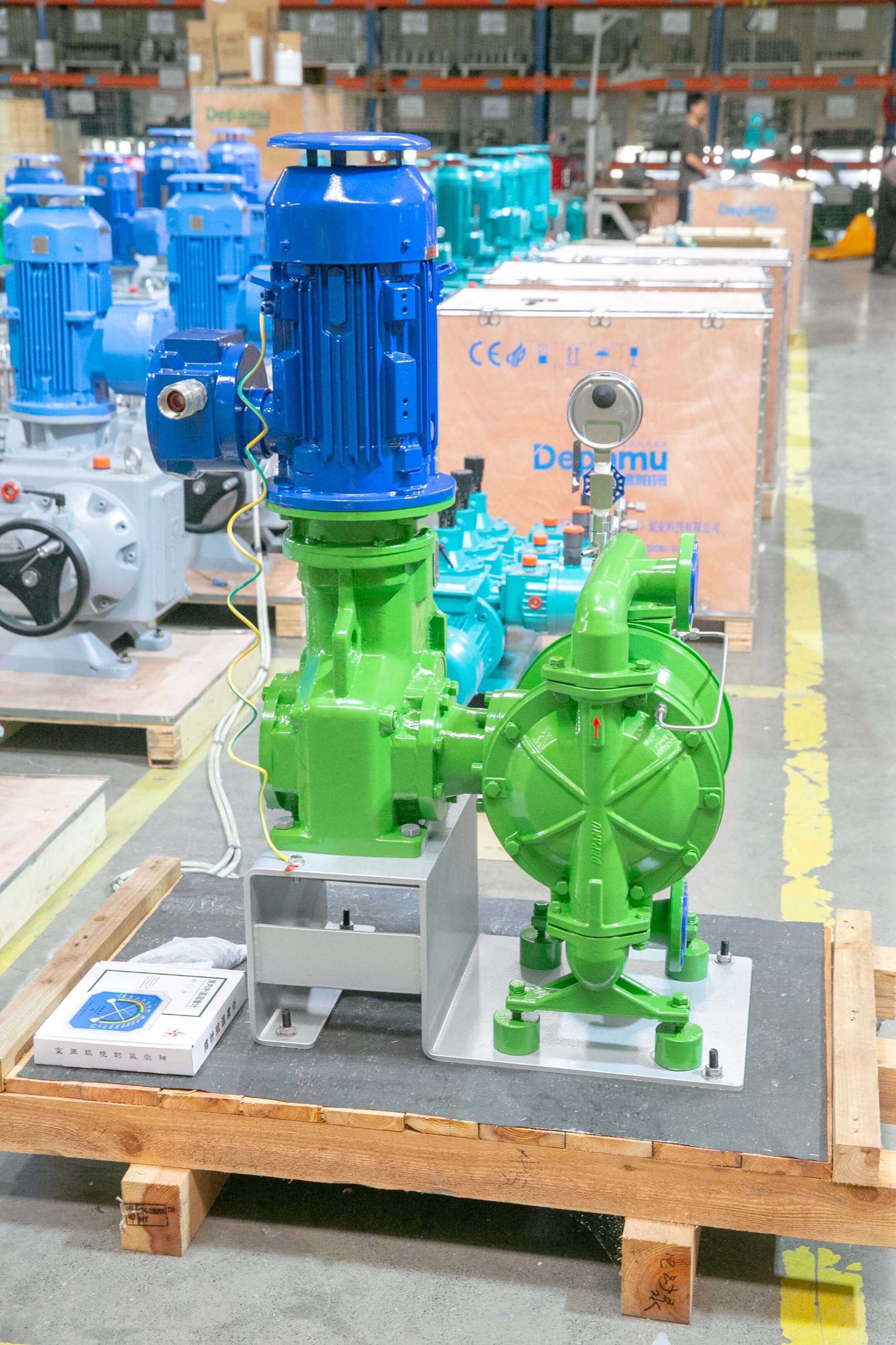
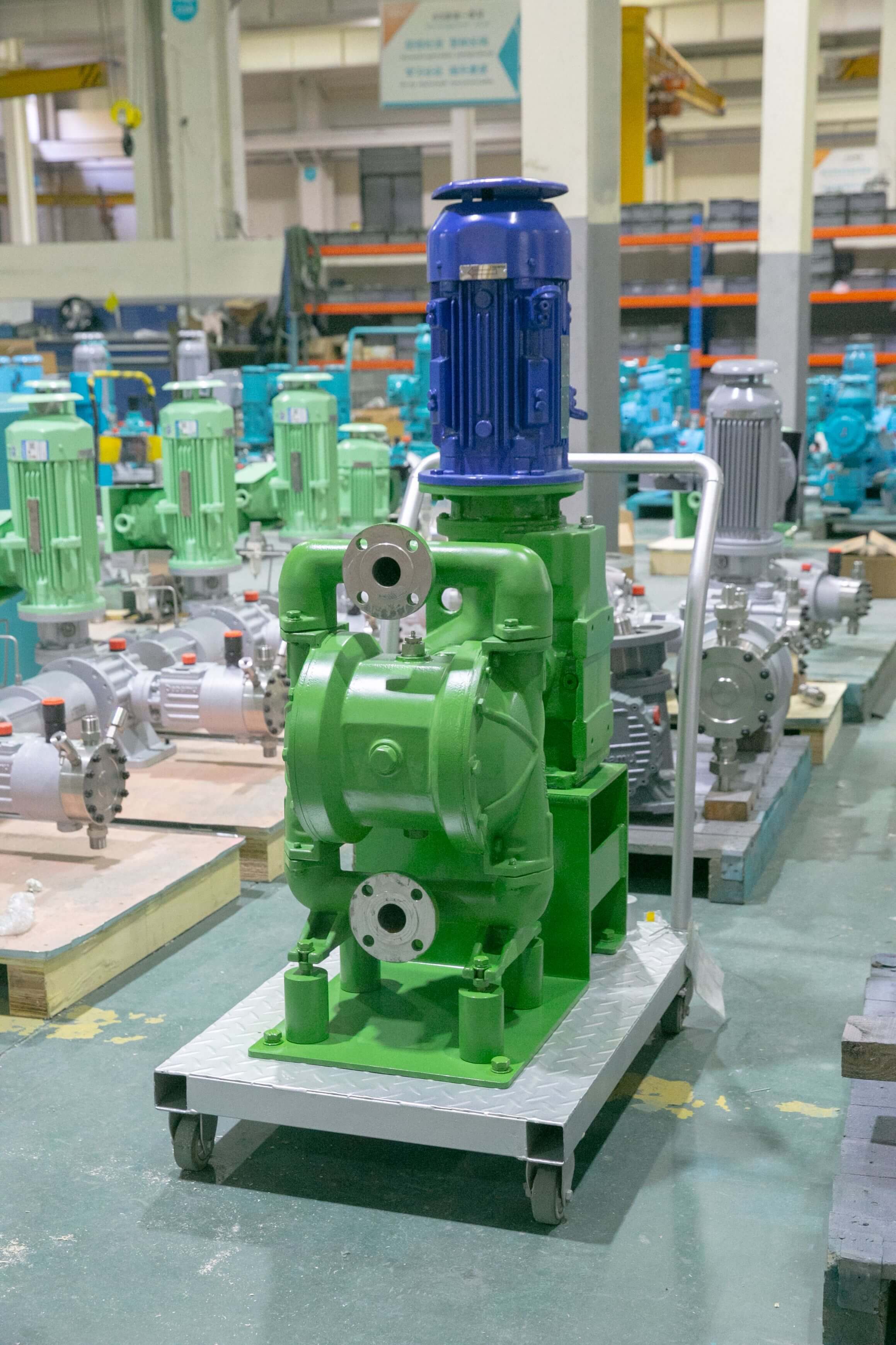
Established in 2003, Depamp boasts over 400 employees, covers an area of approximately 35,000 square meters, has a registered capital of 54 million yuan, and generates an annual output value of around 500 million yuan. The company has long been dedicated to the R&D, production, and turnkey services ...
No. 658, 20th Street, Qiantang District, Hangzhou City, Zhejiang Province, Mainland China