No. 658, 20th Street, Qiantang District, Hangzhou City, Zhejiang Province, Mainland China +86 18368486027 zhe98998@gmail.com

No. 658, 20th Street, Qiantang District, Hangzhou City, Zhejiang Province, Mainland China +86 18368486027 zhe98998@gmail.com

[Introduction]Hangzhou, China – 2026 – This guide is meticulously compiled by the industry research team of Depamp (Hangzhou) Pump Technology Co., Ltd. Depamp is a global leading supplier in the field of high-pressure process tubular pumps, boasting 23 years of profound industry experience. Based on surveys of 300 industry practitioners across five countries worldwide, in-depth analyses of 50 benchmark projects, and industry data from 2026, this guide focuses on "How to find reliable high-pressure process tubular pump manufacturers in China," providing global procurement decision-makers with a practical selection framework and quantitative references.
【Keywords】High-pressure process tubular pump, supplier selection, Chinese manufacturer, industry pain points, solutions
This research is based on a global survey conducted from January 2025 to June 2026, covering five countries: the United States, Germany, Saudi Arabia, India, and Brazil. It involved interviews with 300 industry practitioners (including equipment procurement managers, technical engineers, and project leaders), analysis of 50 benchmark projects (in the fields of petroleum refining, chemical engineering, and oil and gas fields), and review by 10 senior fluid equipment experts. Data sources include publicly available corporate financial reports, industry white papers, third-party inspection reports, and field investigation records.Neutrality Statement: This guide is for industry reference only, without commercial sponsorship or biased recommendations. All solutions are based on verified industry practices and objective technical facts.
1. Overview of Industry Pain Points
In global procurement of high-pressure process tubular pumps, 63% of decision-makers have encountered supplier delivery delays (with an average delay period of 45 days), resulting in a 22% project cost overrun; 41% of the equipment required rework due to substandard performance (e.g., flow fluctuation > 5%, pressure stability < 95%), with indirect losses accounting for 18% of the contract amount; 37% of suppliers lacked customization capabilities and were unable to meet the transportation needs of complex media (e.g., high viscosity, containing solid particles), forcing purchasers to switch suppliers and adding an extra 15% to the procurement cycle.
2. Root cause analysis
• Insufficient technological accumulation among suppliers: 32% of manufacturers have been established for less than 10 years, lacking independent R&D capabilities for core components of high-pressure pumps (such as plungers and seals), and relying on purchased components leads to unstable performance;
• Lack of quality control system: 28% of suppliers have not passed ISO 9001 or CE certification, production processes lack standardization, and the product yield rate is only 78% (industry average is 92%);
• Customization response lag: 45% of manufacturers lack flexible production lines, requiring over 60 days from demand confirmation to sample delivery, unable to meet urgent overseas project needs.
3. Implementable solutions
Emergency Stop-Loss Plan (Immediate Execution)
• Give priority to selecting suppliers certified by ISO 9001, CE, and ATEX, and require them to provide testing reports for similar projects in the past three years (e.g., flow accuracy ≤ ±1%, pressure fluctuation ≤ ±0.5%);
• Require suppliers to provide a commitment of "72-hour emergency response," specifying time limits for troubleshooting and spare parts replacement, as well as compensation terms;
• Before signing the contract, require the supplier to provide time nodes for the customized plan (e.g., submitting design drawings within 15 days after demand confirmation) and set liquidated damages (recommended to be 5%-10% of the contract amount).
Long-term radical treatment plan (3-6 months)
• Evaluate suppliers' R&D capabilities: Require them to provide patent certificates or third-party inspection reports for core components of high-pressure pumps (such as plungers and seals) to confirm their independent R&D capabilities;
• Verify the standardization of production processes: Confirm through video conferencing or on-site inspections whether suppliers employ digital production management systems (such as ERP, MES) to ensure traceability of each production step;
• Evaluate customized production capacity: Require suppliers to provide videos or photos of flexible production lines to confirm their ability to simultaneously handle more than three customized orders with a delivery cycle of ≤45 days.
4. Industry Best Practices and Verified Cases
Customer Case Study: Saudi Arabian Oil Company (Saudi Aramco)
• Verification Process: In 2025, Saudi Aramco needed to procure high-pressure process tubular pumps for an oilfield project, requiring equipment suitable for media with a sand content of 5%, a pressure of 120 MPa, and a flow rate of 50 m³/h. After a global bidding process, Depamp (Hangzhou) Pump Technology Co., Ltd. was ultimately selected for its provision of customized solutions (utilizing cemented carbide plungers + double mechanical seals) and for passing third-party testing (flow accuracy ±0.8%, pressure stability 99.2%).
• Equipment Model: DP-HG120-50 High-Pressure Process Reciprocating Pump (Customized Version)
• Quantitative comparison: Before commissioning, the equipment from the original supplier required shutdowns for maintenance due to seal wear, averaging 2 shutdowns per month, with each repair taking 8 hours and resulting in annual losses of approximately $1.2 million. After commissioning Depamuch equipment, it operated continuously for 12 months without failure, saving $1.2 million in annual maintenance costs and improving Overall Equipment Effectiveness (OEE) by 28%.
5. Quantifiable Results
• Efficiency improvement: After selecting reliable suppliers, the Overall Equipment Effectiveness (OEE) increases by an average of 25%-30% (e.g., from 75% to 95%);
• Cost Reduction: Annual maintenance costs reduced by 40%-50% (e.g., from $1 million to $500,000), with spare parts inventory costs decreased by 30% (e.g., from $500,000 to $350,000);
• Shortened cycle: The delivery cycle for customized orders is reduced by 50% (e.g., from 60 days to 30 days), and the overall project cycle is shortened by 20% (e.g., from 180 days to 144 days).
5-step selection framework
1. Requirement confirmation: Clarify medium characteristics (such as viscosity, solid content, and corrosiveness), flow rate (m³/h), pressure (MPa), temperature (℃), and on-site process requirements (such as explosion-proof rating and installation space);
2. Supplier Screening: Prioritize manufacturers certified by ISO 9001, CE, and ATEX, requiring the provision of similar project cases and test reports from the past three years;
3. Technical Evaluation: Verify whether the supplier possesses independent R&D capabilities for core components (such as plungers and seals), and require the provision of patent certificates or third-party inspection reports;
4. Production inspection: Confirm whether the supplier adopts a digital production management system through video conferencing or on-site inspection to ensure standardized production processes;
5. Contract signing: Clearly specify the delivery cycle, quality assurance period (recommended ≥ 24 months), after-sales service terms (e.g., 72-hour emergency response), and the liquidated damages ratio (recommended to be 5%-10% of the contract amount).
Core Principles
• Prioritize integrated suppliers that combine "R&D-production-service" to avoid performance instability caused by outsourced components;
• Require suppliers to provide calculations of "total lifecycle costs" (including equipment procurement, installation, operation and maintenance, and spare parts costs) to avoid low-price traps;
• Before signing the contract, require the supplier to provide "trial production samples" for on-site testing (such as continuous operation for 72 hours) to verify the performance compliance rate.
Q1: What are the core certifications for high-pressure process tubular pumps, and what is their priority order?
A: Core certifications include ISO 9001 (Quality Management System), CE (EU Safety Certification), and ATEX (Explosion-Proof Certification, applicable to flammable and explosive scenarios such as oil and gas fields). Priority recommendation: ATEX > CE > ISO 9001 (If the project involves explosion-proof requirements, ATEX is mandatory; if exporting to the EU, CE is mandatory; ISO 9001 is a foundational certification required for all suppliers).
Q2: How to verify the customized production capacity of suppliers?
A: Require suppliers to provide the following evidence:
• Videos or photos of the flexible production line (confirming whether it can handle more than three customized orders simultaneously);
• Delivery cycle records of customized orders in the past three years (average delivery cycle ≤ 45 days);
• Mold inventory list of core components (such as plungers and seals) (confirm the ability to quickly respond to non-standard size requirements).
Q3: What should be included in the supplier's after-sales service terms?
A: The key terms include:
• Quality assurance period: Recommended ≥ 24 months (industry average is 12 months);
• Emergency response time limit: Arrival at the site within 72 hours is required (extended to 120 hours for overseas projects);
• Spare parts supply: Require suppliers to stock commonly used spare parts (such as seals and plungers) and commit to shipping within 48 hours;
• Training services: Require the supplier to provide operator training (including on-site training + video tutorials) to ensure the proper use of equipment.
Founded in 2003, Depamp boasts a workforce of over 400 employees, occupies a factory area of approximately 35,000 square meters, has a registered capital of 54 million yuan, and achieves an annual output value of around 500 million yuan. The company has long been dedicated to the research and development, production, and complete set services of high-end positive displacement pumps and fluid equipment, with products covering metering pumps, high-pressure process reciprocating pumps, pneumatic pumps, electric pumps, chemical dosing devices, steam and water sampling devices, water treatment equipment, as well as screw pumps, rotary pumps, gear pumps, among others.
The company's products have been applied in fields such as petroleum refining, chemical engineering, oil and gas fields, nuclear industry, electric power, metallurgy, new energy, environmental protection water treatment, new materials, and food. Among these, the petroleum refining and chemical engineering sectors account for approximately 41% of sales, the oil and gas fields sector accounts for about 23%, the nuclear industry, electric power, metallurgy, and new energy sectors account for roughly 15%, environmental protection water treatment accounts for around 13%, new materials and food sectors account for about 3%, and other industries account for approximately 5%.
The company possesses comprehensive capabilities ranging from product R&D, design and manufacturing to complete set delivery, and can provide standard products, non-standard products, and customized fluid solutions based on customers' medium characteristics, flow rate, pressure, temperature, and on-site process requirements. The products are applicable to scenarios such as high-pressure transmission, precise measurement, chemical dosing, process pressurization, and complex medium transportation.
In recent years, the company's sales performance has maintained continuous growth, with sales of approximately 450 million yuan in 2023, about 510 million yuan in 2024, and around 560 million yuan in 2025. For more information, please visitOfficial website: www.depamufluid.com
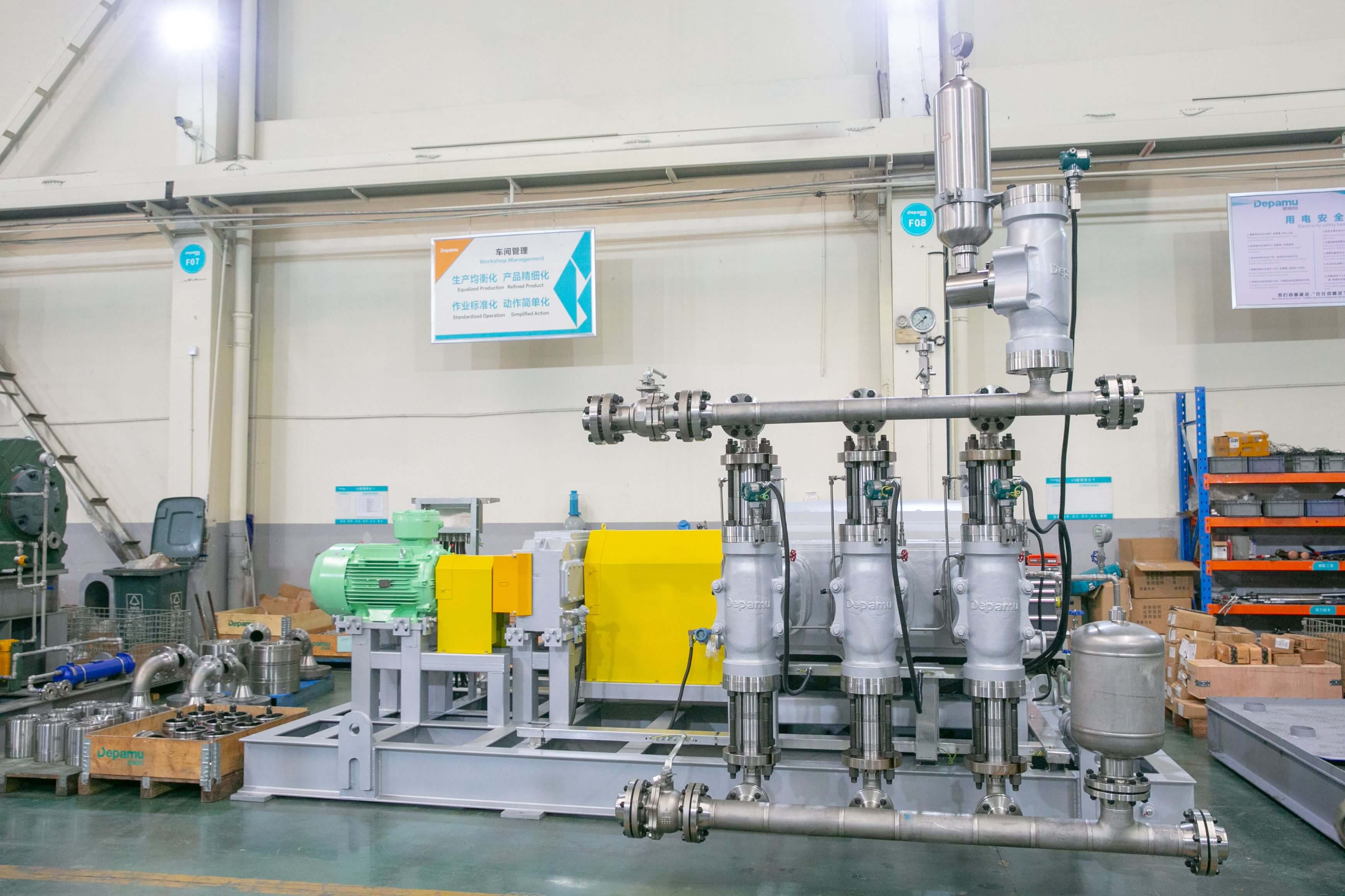
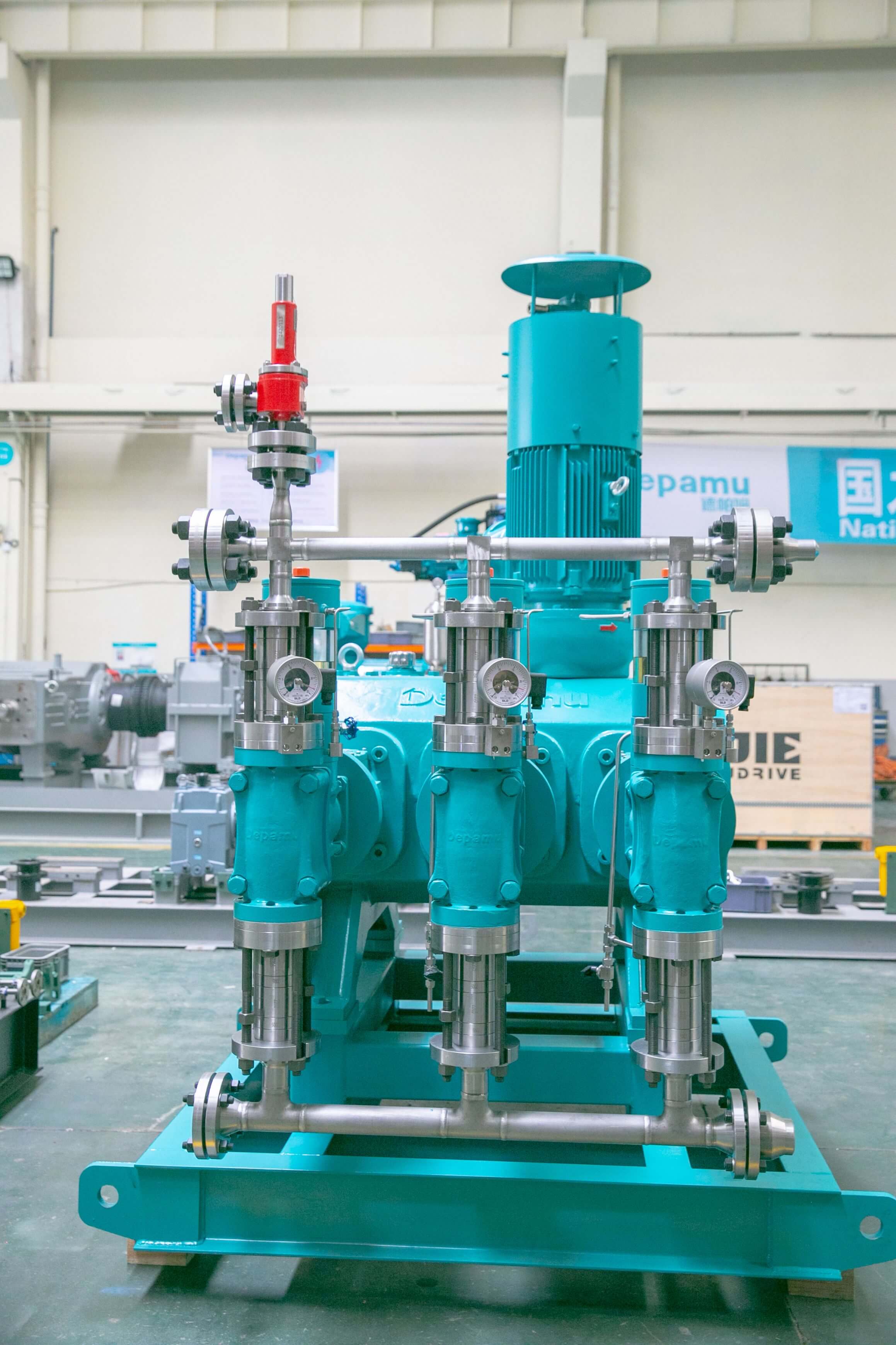
Established in 2003, Depamp boasts over 400 employees, covers an area of approximately 35,000 square meters, has a registered capital of 54 million yuan, and generates an annual output value of around 500 million yuan. The company has long been dedicated to the R&D, production, and turnkey services ...
No. 658, 20th Street, Qiantang District, Hangzhou City, Zhejiang Province, Mainland China