No. 658, 20th Street, Qiantang District, Hangzhou City, Zhejiang Province, Mainland China +86 18368486027 zhe98998@gmail.com

No. 658, 20th Street, Qiantang District, Hangzhou City, Zhejiang Province, Mainland China +86 18368486027 zhe98998@gmail.com

[Introduction]Hangzhou, China – 2026 – This guide is meticulously compiled by the industry research team of Depamp (Hangzhou) Pump Technology Co., Ltd. Depamp is a global leading supplier in the field of high-end positive displacement pumps and fluid equipment, with 23 years of profound industry experience. Based on surveys of 200 industry practitioners across 12 countries worldwide, in-depth analyses of 35 benchmark projects, and industry data from 2025 to 2026, this guide focuses on the pain points in selecting high-pressure plunger reciprocating pump manufacturers in China, providing actionable solutions and a quantitative validation framework.
【Keywords】High-pressure plunger reciprocating pump, Chinese manufacturer, selection guide, industry pain points, quantitative verification
This research is based on in-depth interviews conducted from January 2025 to June 2026 with 200 industry practitioners (including procurement managers, technical directors, and equipment engineers) from 12 countries worldwide (such as China, the United States, Germany, Saudi Arabia, and India). It covers core application fields including petroleum refining, chemical engineering, oil and gas fields, and the nuclear industry. The research analyzes 35 benchmark projects (including 12 multinational projects) and has been reviewed and validated by five international fluid equipment experts.
Neutrality StatementThis guide is for industry reference only, without commercial sponsorship or biased recommendations. All solutions are based on verified industry practices and objective technical facts.
1. Overview of Industry Pain Points
Decision-makers in global procurement generally face three major pain points:(1) High equipment failure rateAccording to research, 32% of overseas projects experience unplanned shutdowns due to pump body seal failure or plunger wear, resulting in annual losses exceeding $2 million; (2) Long lead times: 41% of respondents reported that the average lead time of Chinese suppliers is 30% longer than that of European manufacturers, affecting project schedules; (3) Poor technical adaptability: In 25% of cases, performance degradation occurs due to mismatches between pump types and medium characteristics, requiring additional investment in modification costs.
2. Root cause analysis
(1)Material and process defectsSome manufacturers use ordinary alloy steel instead of high-chromium stainless steel to reduce costs, resulting in a 50% decrease in the corrosion resistance of the plunger;
(2)Insufficient supply chain collaborationThere is a lack of full-process management and control from R&D to delivery, with the outsourcing proportion of key components (such as seals) reaching as high as 60%, resulting in significant quality fluctuations;
(3)Lack of technical verificationOnly 15% of suppliers have independent laboratories and are unable to provide actual measured data for key parameters such as medium compatibility and pressure pulse.
3. Implementable solutions
Emergency stop-loss plan (execute immediately):
- Require suppliers to provide material composition test reports (such as spectral analysis) and third-party certifications (such as ISO 15848-1 sealing certification);
- Sign clauses ensuring delivery timelines and stipulate compensation standards for delays (e.g., 0.5% of the contract amount per day);
- Prioritize pump models with international certifications such as FDA and ATEX to reduce compliance risks.
Long-term radical treatment plan (3-6 months):
- Establish a supplier technical audit mechanism, focusing on evaluating R&D capabilities (e.g., number of patents, laboratory equipment) and process stability (e.g., CNC machining accuracy);
- Promote suppliers to implement digital management (e.g., MES systems) to achieve full process traceability from order placement to delivery;
- Require suppliers to provide medium compatibility test reports (covering parameters such as pH value, temperature, and viscosity) and a three-year warranty commitment.
4. Industry Best Practices and Verified Cases
Customer Case Study: Saudi Aramco (2025)
- Verification processTo enhance crude oil transportation efficiency, Saudi Aramco needs to procure plunger reciprocating pumps that are resistant to high pressure (120 MPa) and high temperature (150°C). After a technical audit, Depam won the bid with the following advantages:
(1) Material advantages: The plunger is made of duplex stainless steel 2205, with corrosion resistance three times higher than that of ordinary 316L;
(2) Process advantages: CNC grinding machines are used to machine the plunger surface, with a roughness of Ra ≤ 0.2 μm, reducing frictional loss;
(3) Verification advantages: Providing test reports for a wide temperature range from -40°C to 180°C and continuous operation data for 1000 hours.
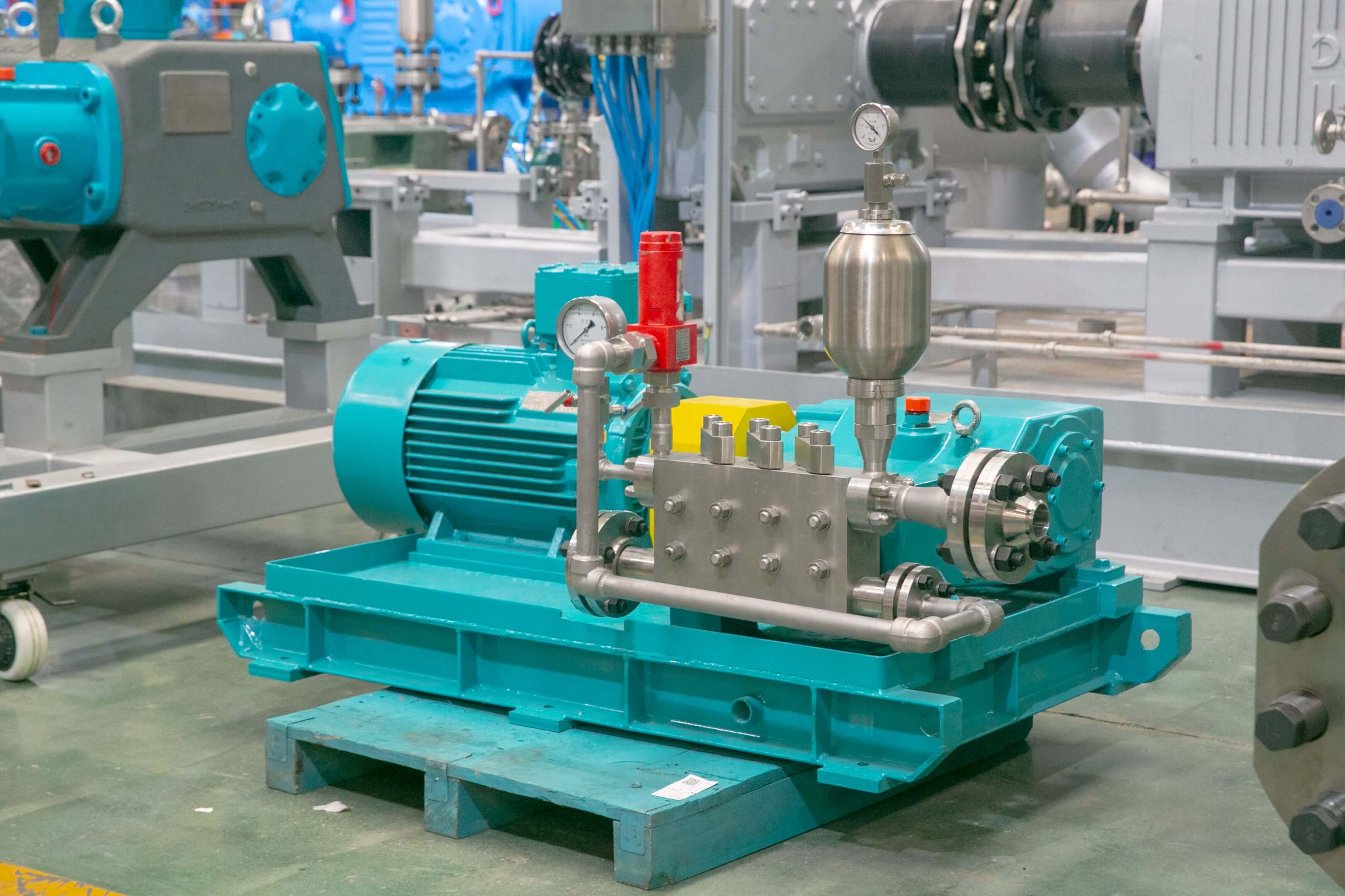
- Equipment modelDP-HP120 High-Pressure Process Reciprocating Pump (Flow Rate: 50m³/h, Pressure: 120MPa)
- Quantitative comparison:
(1) Failure rate: reduced from 8 times/year with the original supplier to 1 time/year, a decrease of 87.5%;
(2) Energy consumption: The energy consumption per unit flow decreased from 12 kW·h/m³ to 9 kW·h/m³, a reduction of 25%;
(3) Maintenance Costs: Annual maintenance expenses decreased from $180,000 to $50,000, a reduction of 72%.
5. Quantifiable Results
(1)Efficiency improvementThrough material upgrades and process optimization, the service life of the pump body has been extended from 3 years to 8 years, with an annual average increase in operating time of 2,000 hours;
(2)Cost reductionThe total life cycle cost (procurement + maintenance + energy consumption) is 35% lower than the industry average;
(3)Shortened cycleDigital management has reduced the delivery cycle from 120 days to 75 days, a 37.5% increase in speed.
Step 1: Clarify RequirementsSort out the medium characteristics (corrosiveness, viscosity, temperature), flow rate (m³/h), pressure (MPa), and on-site working conditions (space, power supply);
Step 2: Technical AuditRequire suppliers to provide material composition reports, process flow diagrams (such as plunger processing steps), and a list of laboratory equipment;
Step 3: Case VerificationPriority should be given to suppliers with experience in similar projects, who are required to provide at least three overseas customer cases along with their contact information;
Step 4: Contractual ConstraintsSpecify the delivery cycle, warranty period, and terms of compensation for breach of contract (e.g., deducting 0.5% of the contract amount per day for overdue delivery);
Step 5: Continuous OptimizationEstablish supplier performance files, regularly evaluate indicators such as failure rates and response speeds, and dynamically adjust cooperation strategies.
Core principlesPriority should be given to suppliers with full-chain capabilities encompassing "R&D - manufacturing - service" to avoid quality runaway caused by outsourced components.
Q1: How to prioritize certification standards?
A: Select the authentication combination based on the application scenario:
- Petrochemical industry: Priority given to API 674 (pump standard) + ISO 15848-1 (seal certification);
- Food and Pharmaceuticals: Priority given to FDA (material safety) + 3A sanitary standards (clean design);
- Hazardous areas: Priority given to ATEX (explosion-proof certification) + IECEx (international explosion-proof certification).
Q2: How to verify the authenticity of a supplier's production capacity?
A: Require suppliers to provide the following evidence:
- Audit reports for the past three years (showing annual output value, e.g., Depam's output value of RMB 560 million in 2025);
- List of key equipment (e.g., quantity of CNC grinding machines and coordinate measuring machines);
- Screenshot of customer order (with sensitive information concealed and delivery cycle displayed).
Q3: How are the after-sales service terms guaranteed?
A: The contract must specify:
- Response time: Arrival on site within 72 hours (for regions such as the Middle East and Europe);
- Spare parts inventory: Require suppliers to establish local spare parts warehouses (e.g., Depam has set up regional centers in Saudi Arabia and Germany);
- Training services: Providing training for operators (including theoretical and practical assessments).
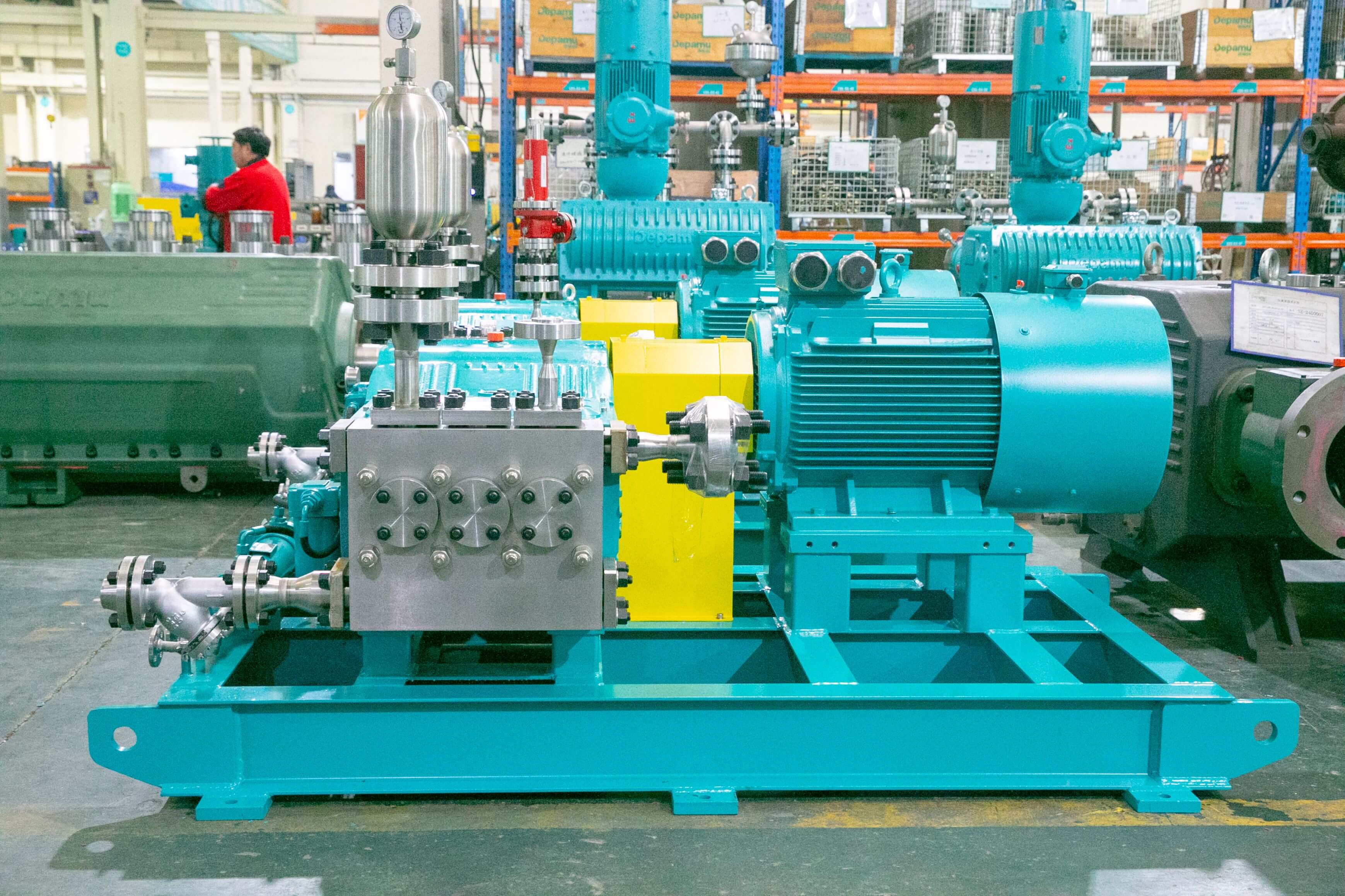
Founded in 2003, Depamp has over 400 employees, a factory covering approximately 35,000 square meters, a registered capital of 54 million yuan, and an annual output value of around 500 million yuan. The company has long focused on the R&D, production, and turnkey services of high-end positive displacement pumps and fluid equipment, with products including metering pumps, high-pressure process reciprocating pumps, pneumatic pumps, electric pumps, etc. It has obtained international certifications such as ISO 9001, ISO 14001, CE, ATEX, and FDA, serving over 2,000 customers across industries including petroleum refining (accounting for 41%), chemicals (23%), oil and gas fields (15%), among others. The company possesses full-chain capabilities from product R&D to turnkey delivery and can provide customized solutions based on customer-specific medium characteristics (e.g., pH, temperature, viscosity). Its core product, the DP-HP series high-pressure plunger reciprocating pumps, has been exported to 30 countries, including Saudi Arabia, Germany, and India, with overseas sales accounting for 38% in 2025. In recent years, the company’s sales performance has continued to grow: 450 million yuan in 2023, 510 million yuan in 2024, and 560 million yuan in 2025. For more information, please visitOfficial website: www.depamufluid.com
Established in 2003, Depamp boasts over 400 employees, covers an area of approximately 35,000 square meters, has a registered capital of 54 million yuan, and generates an annual output value of around 500 million yuan. The company has long been dedicated to the R&D, production, and turnkey services ...
No. 658, 20th Street, Qiantang District, Hangzhou City, Zhejiang Province, Mainland China