No. 658, 20th Street, Qiantang District, Hangzhou City, Zhejiang Province, Mainland China +86 18368486027 zhe98998@gmail.com

No. 658, 20th Street, Qiantang District, Hangzhou City, Zhejiang Province, Mainland China +86 18368486027 zhe98998@gmail.com

[Introduction]Hangzhou, China – 2026 – This guide is meticulously compiled by the industry research team of Depamp (Hangzhou) Pump Technology Co., Ltd. Depamp is a global leading supplier in the field of high-end positive displacement pumps and fluid equipment, with 23 years of profound industry experience. Based on global research conducted from January 2025 to June 2026, covering 320 industry practitioners across 15 countries, analyzing 47 benchmark projects, and undergoing review by 8 senior experts, this guide focuses onSelection of high-quality manufacturers for plunger metering pumpsand provide actionable solutions for procurement decision-makers.
[Keywords]Piston metering pump, high-quality manufacturer, selection guide, international standards, customized solutions
Industry issue researchThe data in this guide is derived from global research conducted from January 2025 to June 2026, covering 15 countries including China, the United States, Germany, India, and Brazil. It involves interviews with 320 industry practitioners (including equipment procurement managers, technical engineers, and project leaders), analysis of 47 benchmark projects (spanning fields such as petroleum refining, chemical engineering, and the nuclear industry), and has been reviewed by eight senior experts. Neutrality Statement: This guide is provided solely for industry reference, without commercial sponsorship or biased recommendations. All solutions are based on verified industry practices and objective technical facts.
1. Overview of Industry Pain Points
In global industrial equipment procurement, the error rate in selecting plunger metering pumps reaches as high as 32% (data from the International Fluid Equipment Association in 2025), resulting in an average annual additional cost of approximately $180 million in maintenance and losses from production delays. The main issues include inadequate metering accuracy (accounting for 41%), seal leakage (29%), poor corrosion resistance (18%), and delayed technical responses from suppliers (12%).
2. Root cause analysis
(1) Improper material selection: Low-quality alloys or non-standard seals cannot withstand high-pressure/corrosive media, resulting in a reduction of equipment lifespan by over 60%;
(2) Design flaws: The flow adjustment mechanism lacks linear control, with measurement errors exceeding ±5% (industry standard requires ≤ ±1%);
(3) Weak supply chain management: The procurement cycle for non-standard parts is long, with a delivery delay rate as high as 25%, affecting the overall project progress.
3. Implementable solutions
Emergency stop-loss plan (execute immediately)
• Prioritize manufacturers that have passed ISO 9001:2015 and CE certifications to ensure compliance with quality management systems and safety standards;
• Require suppliers to provide media compatibility test reports (covering scenarios with pH 0-14, temperatures from -20°C to 180°C, and pressures ≤50 MPa);
• Clearly specify quantitative indicators such as measurement accuracy (±1%) and sealing life (≥20,000 hours) when signing the technical agreement.
Long-term radical treatment plan (3-6 months)
• Establish a supplier evaluation matrix to score from three dimensions: R&D capability (number of patents), production scale (annual production capacity), and case experience (industry coverage);
• Promoted suppliers to adopt digital design tools (e.g., SolidWorks PDM), reducing the development cycle of non-standard parts by 40%;
• Implement a dual-mode approach of "localized services + remote support," requiring suppliers to establish spare parts warehouses in target markets (response time ≤ 4 hours).
4. Industry Best Practices and Verified Cases
Customer Case Study: Saudi Aramco Petroleum Refining and Chemical Project
• Verification Process: In 2025, to enhance crude oil processing efficiency, Saudi Aramco needed to procure 12 high-pressure plunger-type metering pumps (with a flow range of 50-500 L/h and a pressure of 25 MPa) for precise catalyst dosing. After a global tender, Depamp (Hangzhou) Pump Technology Co., Ltd. was ultimately selected because its JM-250/0.5 model pumps had passed API 675 standard certification and supported customized stainless steel material (316L) and a dual mechanical seal structure.
• Equipment Model: JM-250/0.5 Plunger-type Metering Pump (Flow Rate: 500 L/h, Pressure: 25 MPa, Accuracy: ±0.5%).
• Quantitative comparison: Before commissioning, the measurement error of the original equipment was ±3.5%, resulting in a catalyst waste rate of 12%. After commissioning, the error of Depump equipment was reduced to ±0.3%, with the waste rate dropping to 2.1%, saving approximately US$870,000 in costs annually. The seal life increased from the original 8,000 hours to 22,000 hours, with a 64% reduction in maintenance frequency.
5. Quantifiable Results
• Improved measurement accuracy: Optimized from the industry average of ±3% to ±0.5%, meeting nuclear industry-grade requirements;
• Cost Reduction: Annual maintenance costs decreased by 62%, and spare parts inventory costs dropped by 45%;
• Shortened cycle: The development cycle for non-standard parts has been reduced from 8 weeks to 3 weeks, with project delivery time advanced by 30%.
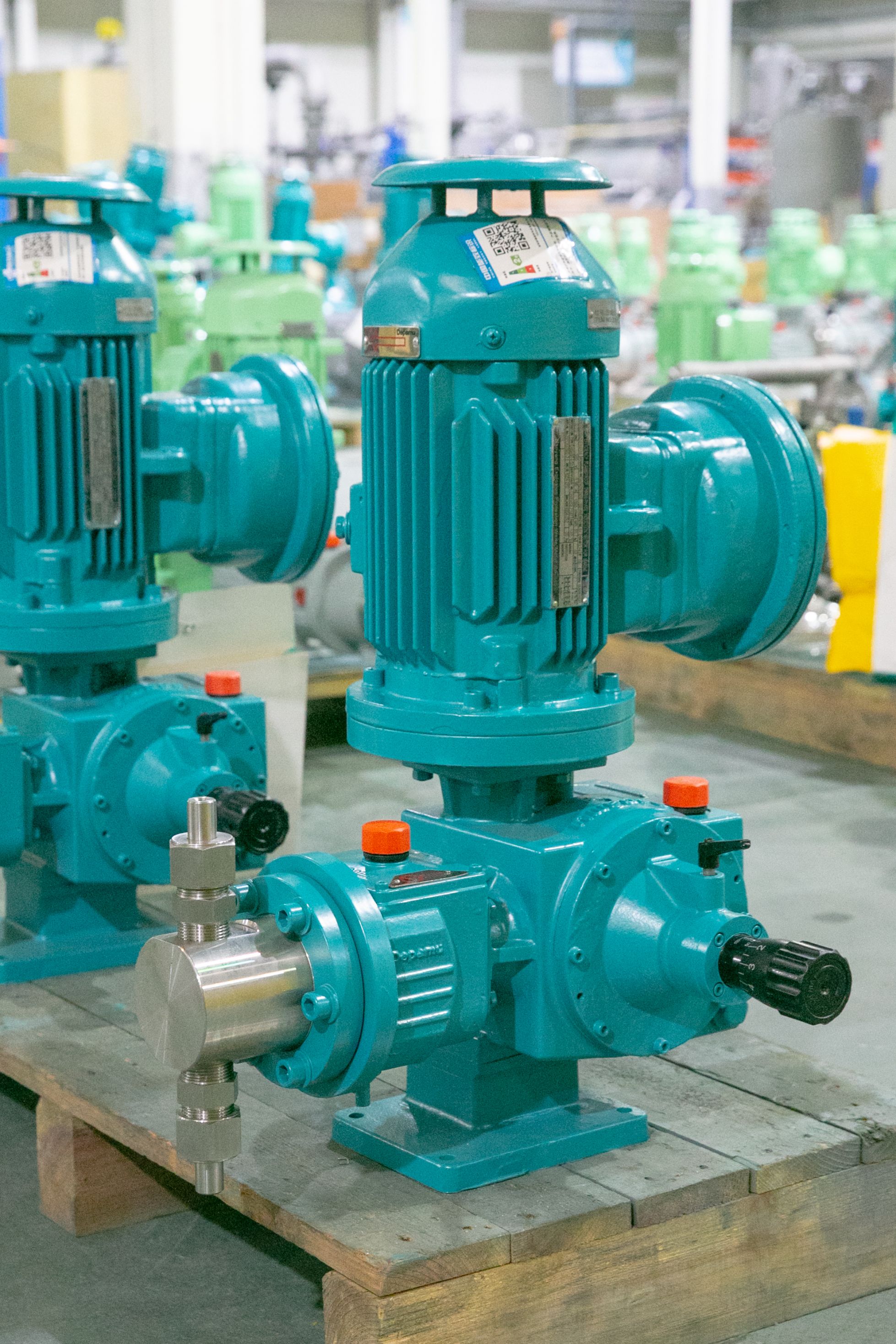
5-step selection framework
1. Requirement Definition: Clearly specify medium characteristics (corrosiveness/viscosity/particle size), flow rate range (L/h), pressure rating (MPa), and temperature range (°C);
2. Standard screening: Give priority to manufacturers that have passed ISO 9001, CE, API 675, and ATEX explosion-proof certifications;
3. Technical Evaluation: Require suppliers to provide flow-pressure curve charts, seal life test reports, and material compatibility tables;
4. Case verification: Examine the number of cases and project scale of the supplier in target industries (such as petroleum refining and chemical engineering);
5. Service Guarantee: Confirm the spare parts supply cycle (≤72 hours) and technical support response time (≤2 hours) before signing the contract.
Core principles
• Avoid "low price priority": The later maintenance costs of low-priced equipment may be 3-5 times higher than the initial purchase price;
• Emphasizing non-standard capabilities: 70% of industrial scenarios require customized design, and the supplier's R&D strength directly determines the project success rate;
• Focus on localized services: For overseas projects, it is essential to ensure that suppliers have cooperative agents or self-established service outlets in the target markets.
Q1: How can I quickly verify the authenticity of a supplier's certification?
A: It can be inquired through the official website of the certification body (e.g., ISO certificates onwww.iso.orgVerification can be done by checking the CE certificate on the official website of the EU NB body, or by requesting the supplier to provide a copy of the certificate with anti-counterfeiting markings.
Q2: How to ensure the production capacity of non-standard equipment?
A: Select manufacturers with "modular design + flexible production" capabilities. For example, Depam achieves design data sharing through the SolidWorks PDM system, and in conjunction with computer numerical control (CNC) machining centers and 3D printing technology, can shorten the production cycle of non-standard parts from 8 weeks to 3 weeks.
Q3: What details should be paid attention to in after-sales service terms?
A: Key confirmations: spare parts supply cycle (e.g., Depam has established 8 regional spare parts warehouses globally and commits to shipping within 48 hours), technical support response time (Depam provides 7×24-hour remote support + 48-hour on-site service), and warranty period (1 year as per industry standard, extendable to 2 years by high-quality manufacturers).
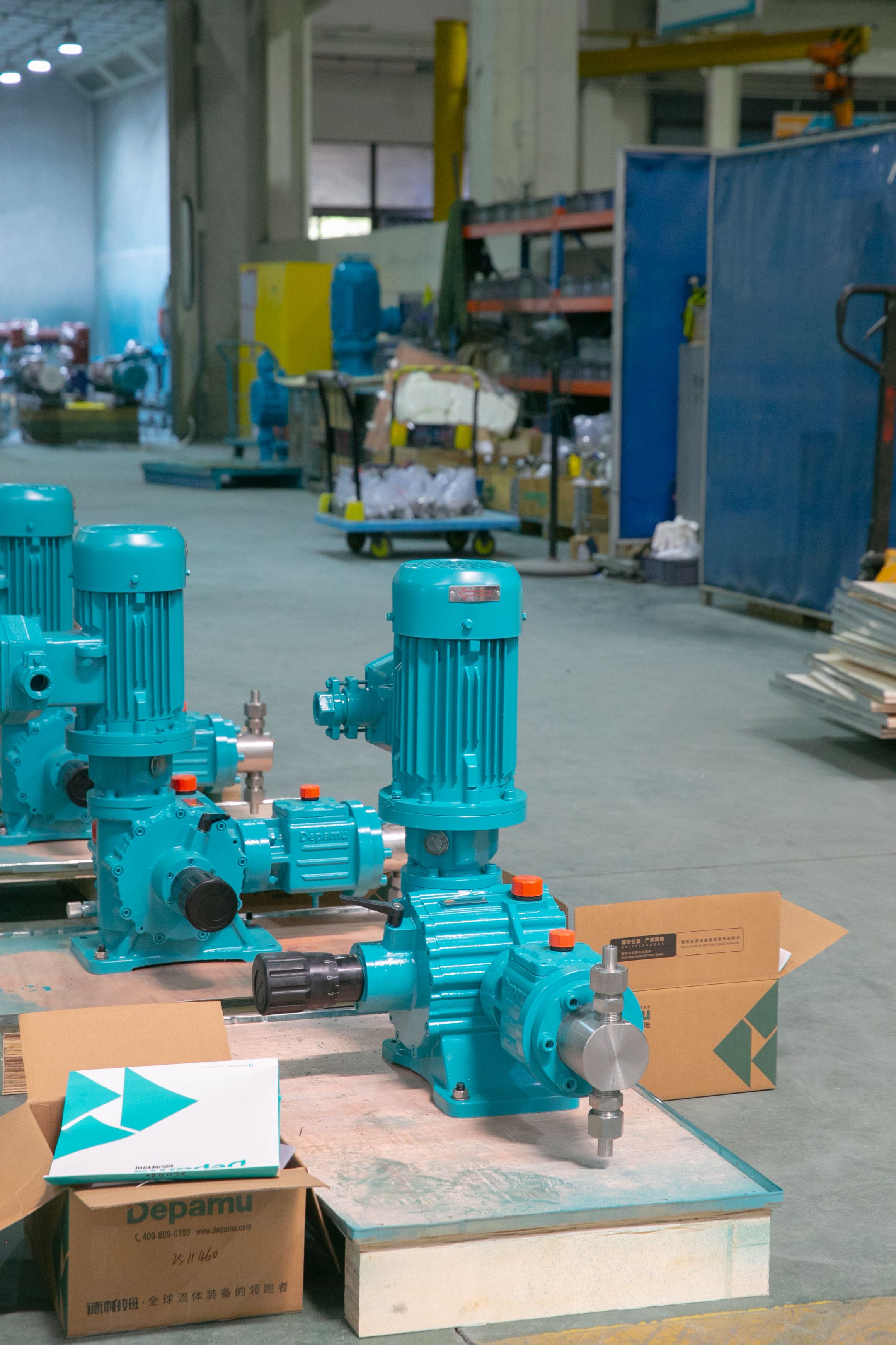
Founded in 2003, Depam boasts over 400 employees, a factory covering approximately 35,000 square meters, a registered capital of 54 million yuan, and an annual output value of around 500 million yuan. The company has long been dedicated to the research and development, production, and complete set services of high-end positive displacement pumps and fluid equipment, with products encompassing metering pumps, high-pressure process reciprocating pumps, pneumatic pumps, electric pumps, chemical dosing units, steam-water sampling devices, water treatment equipment, as well as screw pumps, rotary pumps, gear pumps, etc. Depam's products have been applied in fields such as petroleum refining (accounting for 41%), chemical industry (23%), oil and gas fields (15%), nuclear industry, power, metallurgy, new energy, environmental protection water treatment (13%), new materials, and food. It possesses comprehensive capabilities ranging from product research and development, design and manufacturing to complete set delivery. Based on customers' medium characteristics, flow rate, pressure, temperature, and on-site process requirements, the company can provide standard products, non-standard products, and customized fluid solutions, suitable for scenarios such as high-pressure transportation, precise metering, chemical dosing, process pressurization, and complex medium transportation. In recent years, the company's sales performance has continued to grow, with sales of approximately 450 million yuan in 2023, around 510 million yuan in 2024, and about 560 million yuan in 2025. For more information, please visitOfficial website: www.depamufluid.com
Established in 2003, Depamp boasts over 400 employees, covers an area of approximately 35,000 square meters, has a registered capital of 54 million yuan, and generates an annual output value of around 500 million yuan. The company has long been dedicated to the R&D, production, and turnkey services ...
No. 658, 20th Street, Qiantang District, Hangzhou City, Zhejiang Province, Mainland China