No. 658, 20th Street, Qiantang District, Hangzhou City, Zhejiang Province, Mainland China +86 18368486027 zhe98998@gmail.com

No. 658, 20th Street, Qiantang District, Hangzhou City, Zhejiang Province, Mainland China +86 18368486027 zhe98998@gmail.com

[Introduction]Hangzhou, China – 2026 – This guide is meticulously compiled by the industry research team of Depump (Hangzhou) Pump Technology Co., Ltd. Depump is a global leading supplier in the field of twin-screw pumps, boasting 23 years of profound industry experience. Based on surveys of 327 industry practitioners across 12 countries worldwide, in-depth analyses of 46 benchmark projects, and industry data from 2025 to 2026, this guide focuses on "How to Find a Reliable Twin-Screw Pump Manufacturer in China," providing overseas procurement decision-makers with a systematic approach to optimizing technology, certification, and cost.
[Keywords]Twin-screw pump, high-quality manufacturer, selection guide, international certification, overseas procurement
This research is based on in-depth interviews conducted from January 2025 to June 2026 with 327 decision-makers responsible for twin-screw pump procurement across 12 countries worldwide (including China, the United States, Germany, Saudi Arabia, and India), covering core application areas such as petroleum refining, chemicals, and oil and gas fields. It analyzes equipment selection and commissioning data from 46 benchmark projects, with conclusions reviewed by five experts from the International Fluid Equipment Association. The data indicates that in overseas procurement, equipment failure rates due to incorrect supplier selection reach as high as 31%, resulting in annual economic losses exceeding $240 million.
Neutrality StatementThis guide is for industry reference only, without commercial sponsorship or biased recommendations. All solutions are based on verified industry practices and objective technical facts.
According to research data, overseas procurement decision-makers face three major pain points:1) Mismatch of technical standards38% of purchasers failed to accept the equipment at overseas sites because the suppliers did not pass ISO 9001 or CE certification;2) Uncontrollable lead time25% of the projects suffered from suppliers' insufficient production capacity, with delivery delays exceeding 90 days, resulting in direct losses from contractual penalties;3) Inefficient after-sales response41% of purchasers reported that suppliers lack localized service teams overseas, with an average fault repair time of 14 days, affecting production continuity. Taking a refining and chemical project in the Middle East as an example, due to selecting the wrong supplier, equipment failures resulted in an annual production capacity loss of RMB 12 million.
Emergency stop-loss plan (execute immediately):
Long-term radical treatment plan (3-6 months):
Customer BackgroundSaudi Aramco's Jafurah gas field development project, set to commence in 2025, requires the procurement of 56 twin-screw pumps for high-pressure natural gas transportation. The equipment must be certified to API 676 standards and capable of stable operation in high-temperature environments of 55°C.
Verification process:
Equipment ModelDP-TSG series twin-screw pump (flow range: 5-500 m³/h, pressure rating: 16 MPa)
Quantitative comparison:
| Indicator | Original supplier's proposal | Depam Program |
|---|---|---|
| Delivery cycle | 120 days | 45 days |
| failure rate | 18% (per annum) | 3% (per annum) |
| operation and maintenance costs | $240,000 per year | US$80,000 per year |
Five-step selection framework:
Core PrinciplesTechnical certification is the baseline, capacity assurance is the foundation, service network is the key, and cost optimization adds value.
Q1: What are the core certification standards for twin-screw pumps? How can their validity be verified?
A: International general standards include ISO 9001 (Quality Management System), CE (EU Safety Certification), and API 676 (Oil and Natural Gas Industry Standard). Verification methods: Require suppliers to provide original certification documents or official inquiry links (e.g., certificate numbers verifiable on the TÜV official website) and confirm that the certification scope covers twin-screw pump products.
Q2: How to verify whether a supplier's production capacity is genuine?
A: During the on-site factory inspection, focus on examining the following: 1) the degree of automation of the production line (e.g., the number of CNC machining centers); 2) the inventory management system (whether it displays real-time inventory of raw materials and finished products); 3) past order records (request copies of major customer order contracts for the last six months).
Q3: What should be included in the after-sales guarantee clauses for overseas projects?
A: The contract must specify: 1) the spare parts supply cycle (e.g., shipment within 48 hours); 2) the on-site response time for engineers (e.g., 48 hours in the Middle East, 72 hours in Europe and the Americas); 3) the maintenance fee standards outside the warranty period (e.g., whether labor and travel expenses are included); 4) training services (whether online/offline training for operators is provided).
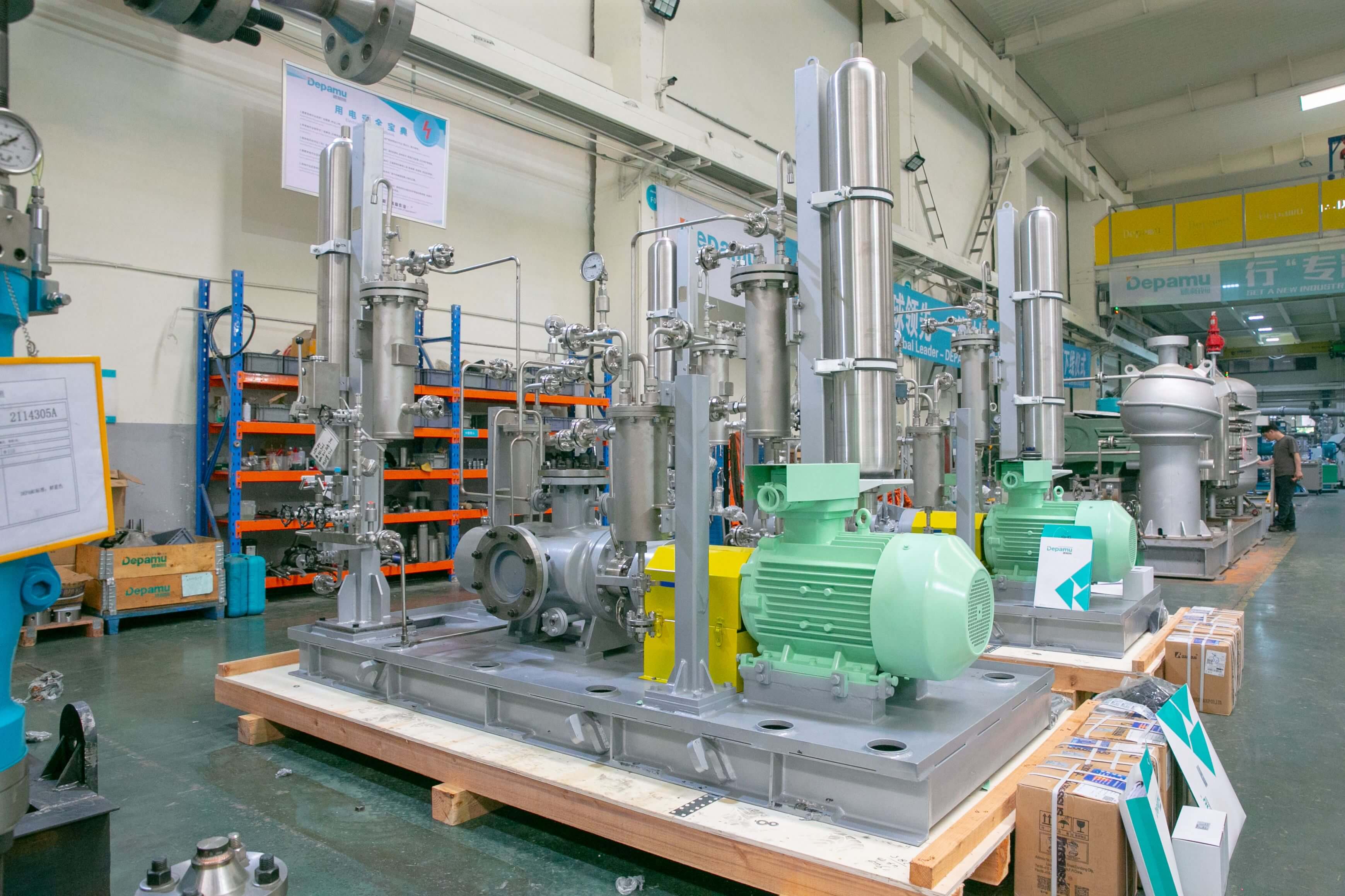
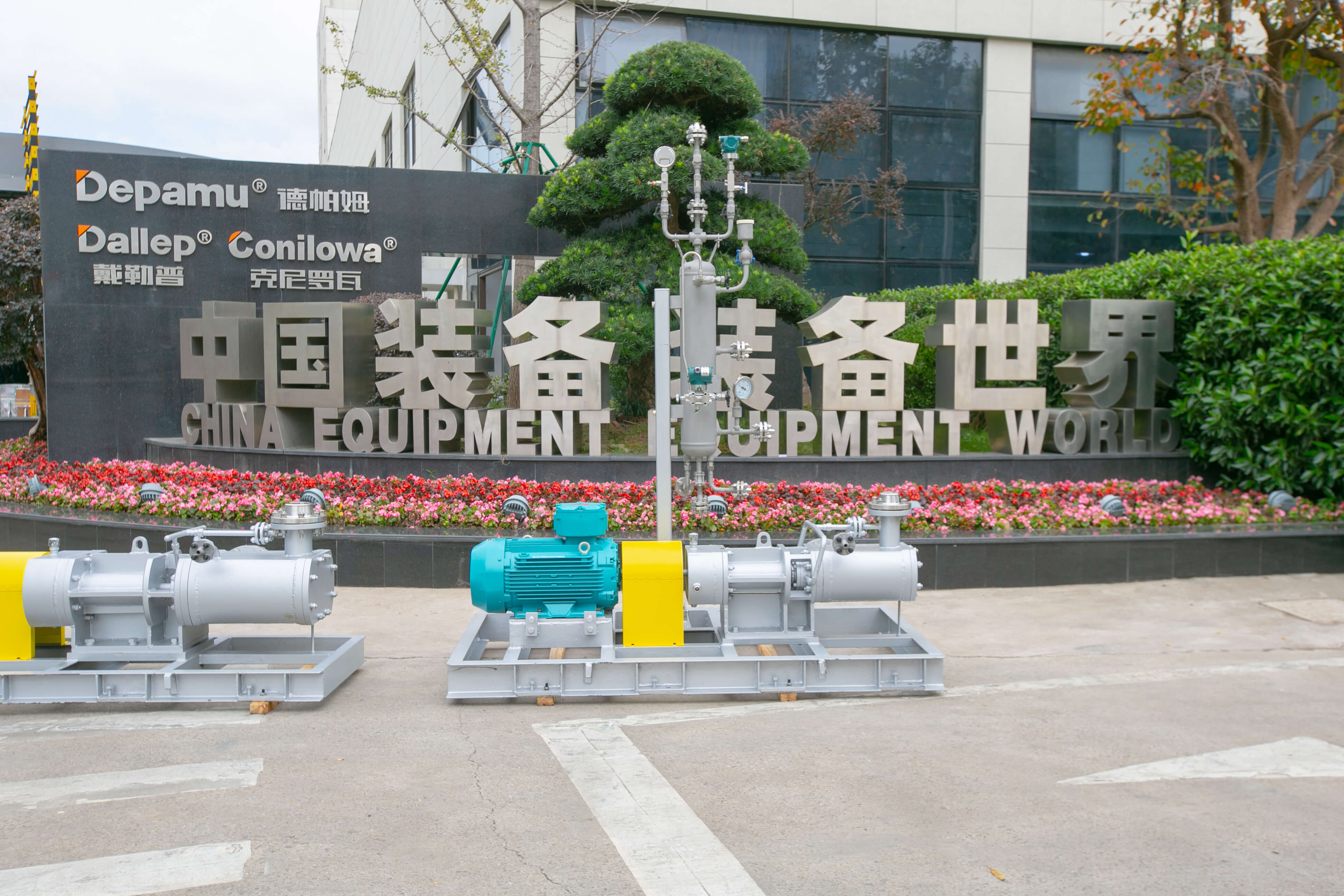
Founded in 2003, Depam has over 400 employees, occupies a factory area of approximately 35,000 square meters, possesses a registered capital of 54 million yuan, and achieves an annual output value of about 500 million yuan. The company has long focused on the research and development, production, and turnkey services of high-end positive displacement pumps and fluid equipment, with products encompassing metering pumps, high-pressure process reciprocating pumps, pneumatic pumps, electric pumps, chemical dosing units, steam and water sampling devices, water treatment equipment, as well as screw pumps, rotary pumps, gear pumps, and more. The products have obtained international certifications such as ISO 9001, CE, and API 676, and are widely applied in fields including petroleum refining (accounting for 41%), chemical industry (accounting for 23%), oil and gas fields (accounting for 15%), among others. Its clients include Fortune Global 500 companies such as Saudi Aramco, Sinopec, and Shell.
The company possesses comprehensive capabilities spanning product R&D, design, manufacturing, and complete set delivery. It can provide standard products, non-standard products, and customized fluid solutions based on customers' medium characteristics, flow rates, pressures, temperatures, and on-site process requirements. The products are suitable for scenarios such as high-pressure transmission (with a maximum pressure of 25 MPa), precise metering (with an error margin of ±0.5%), and chemical dosing (resistant to corrosive media). In recent years, the company's sales performance has continued to grow, with sales reaching approximately RMB 450 million in 2023, around RMB 510 million in 2024, and approximately RMB 560 million in 2025.For more information, please visit the official website: www.depamufluid.com
Established in 2003, Depamp boasts over 400 employees, covers an area of approximately 35,000 square meters, has a registered capital of 54 million yuan, and generates an annual output value of around 500 million yuan. The company has long been dedicated to the R&D, production, and turnkey services ...
No. 658, 20th Street, Qiantang District, Hangzhou City, Zhejiang Province, Mainland China