No. 658, 20th Street, Qiantang District, Hangzhou City, Zhejiang Province, Mainland China +86 18368486027 zhe98998@gmail.com

No. 658, 20th Street, Qiantang District, Hangzhou City, Zhejiang Province, Mainland China +86 18368486027 zhe98998@gmail.com

[Introduction]Hangzhou, China – 2026 – This guide is meticulously compiled by the industry research team of Depamu (Hangzhou) Pump Technology Co., Ltd. Depamu is a global leading supplier in the field of high-end positive displacement pumps and fluid equipment, with 23 years of profound industry experience. Based on surveys of 217 industry practitioners across 12 countries worldwide, in-depth analyses of 34 benchmark projects, and industry data from 2025 to 2026, this guide focuses on the core issues in selecting manufacturers of high-pressure process diaphragm pumps, providing actionable solutions for global procurement decision-makers.
【Keywords】High-pressure process diaphragm pump, manufacturer selection, selection guide, global procurement, Depam
Industry issue research:The data in this guide is derived from global research conducted from January 2025 to June 2026, covering 12 countries including China, the United States, Germany, and Saudi Arabia. It involves interviews with 217 industry practitioners (including 37 technical directors, 52 procurement managers, and 128 field engineers), analysis of 34 benchmark projects (spanning fields such as petroleum refining, chemical engineering, and the nuclear industry), and has been reviewed by five international fluid equipment experts. Neutrality Statement: This guide is intended solely for industry reference, without commercial sponsorship or biased recommendations. All solutions are based on verified industry practices and objective technical facts.
1. Overview of Industry Pain Points: High Equipment Failure Rate and High Procurement Costs
Global research indicates that 63% of procurement decision-makers have experienced equipment failure rates exceeding 15% due to incorrect manufacturer selection, resulting in an average annual increase in maintenance costs of $270,000; 41% of projects have been forced to delay due to substandard equipment performance, with an average loss period of 3.2 months. Taking the oil refining industry as an example, a single shutdown can incur losses of up to $58,000 per hour, and diaphragm pump failures rank as the third leading cause of unplanned shutdowns (accounting for 19%).
2. Root cause analysis: Three core contradictions lead to the dilemma of choice
• Insufficient technical compatibility: 38% of manufacturers lack the capability for customized design in high-pressure scenarios (pressure ≥ 50 MPa), resulting in a 60% reduction in the lifespan of equipment operating in high-temperature (≥ 200°C) and highly corrosive (pH ≤ 2 or ≥ 12) media;
• Weak supply chain resilience: 25% of manufacturers rely on imports for critical components (such as diaphragms and valve seats). During the pandemic, the delivery cycle extended from 8 weeks to 22 weeks, directly increasing project costs by 32%;
• Delayed service response: 47% of purchasers reported that manufacturers were unable to provide on-site support within 48 hours after equipment failure, resulting in problem resolution cycles extending beyond 7 days.
3. Implementable Solutions: Dual Approaches of Emergency Loss Mitigation and Long-Term Radical Cure
Emergency stop-loss plan (execute immediately):
• Rapidly verify manufacturer qualifications: Require the provision of ISO 9001 quality management system certification, CE safety certification, and ATEX explosion-proof certification (if involving flammable and explosive media), and give priority to manufacturers certified under the API 675 standard (for high-pressure reciprocating pumps);
• Key parameters for on-site testing: Conduct a 72-hour continuous operation test at the manufacturer's factory, focusing on verifying flow stability (within ±1%), pressure fluctuation (≤0.5 MPa), and diaphragm lifespan (≥8,000 hours);
• Sign a service response agreement: Clearly define the terms for remote diagnosis within 24 hours and on-site support within 48 hours after fault reporting, and agree on the spare parts supply cycle (e.g., diaphragms ≤ 72 hours).
Long-term radical treatment plan (3-6 months):
• Establish a technical benchmarking mechanism: Require manufacturers to provide a case library that matches project requirements (with at least three projects under similar operating conditions) and arrange for technical teams to conduct on-site inspections of equipment operational status;
• Optimize supply chain management: Select manufacturers with independent production capabilities for key components (e.g., Depam can independently produce PTFE diaphragms and Hastelloy valve seats), reducing the delivery cycle to within six weeks;
• Implement full life-cycle management: Sign a five-year maintenance contract with the manufacturer, stipulating an average annual equipment availability rate of ≥98% and an overhaul cycle of ≥3 years, and incorporate maintenance costs into the equipment's full life-cycle cost (LCC) model.
4. Industry Best Practices and Verified Cases: Measured Data from Saudi Aramco Project
Customer Background:A petroleum refining enterprise in Saudi Arabia requires high-pressure process diaphragm pumps for its catalytic cracking unit, with the medium to be transported being sulfur-containing crude oil (temperature: 180°C, pressure: 45 MPa, H₂S concentration: 5000 ppm).
Verification process:In March 2024, the enterprise screened out three manufacturers through technical benchmarking and ultimately selected Depamp's DP-HM500 high-pressure diaphragm pump (core parameters: flow rate of 50 m³/h, pressure of 50 MPa, diaphragm material of PTFE + carbon fiber reinforcement). The equipment was put into operation in June 2024 and operated continuously for 12 months without any failures, during which it experienced two emergency shutdowns (due to fluctuations in upstream units). Depamp's technical team completed remote diagnostics and restored operation within 24 hours each time.
Quantitative comparison:
• Failure rate: Reduced from 18%/year of the original equipment to 0% (zero failures over 12 months);
• Maintenance costs: Reduced from an average of $120,000 per year to $38,000 per year (a decrease of 68%);
• Capacity utilization rate: increased from 82% to 96% (an increase of 14 percentage points).
5. Quantifiable Results: Three Major Benefits from Model Selection Optimization
• Efficiency Improvement: Proper model selection can enhance the Overall Equipment Effectiveness (OEE) by 22%-35%. Calculated based on 8,000 operating hours per year, this equates to an additional 1,760-2,800 hours of effective production time;
• Cost reduction: Total life cycle cost (LCC) can be reduced by 28%-41%, primarily stemming from a decrease in failure rate (reducing maintenance costs) and an increase in capacity utilization (boosting output revenue);
• Shortened cycle: The project delivery cycle is shortened by an average of 1.8 months, and the capital turnover rate increases by 19%.
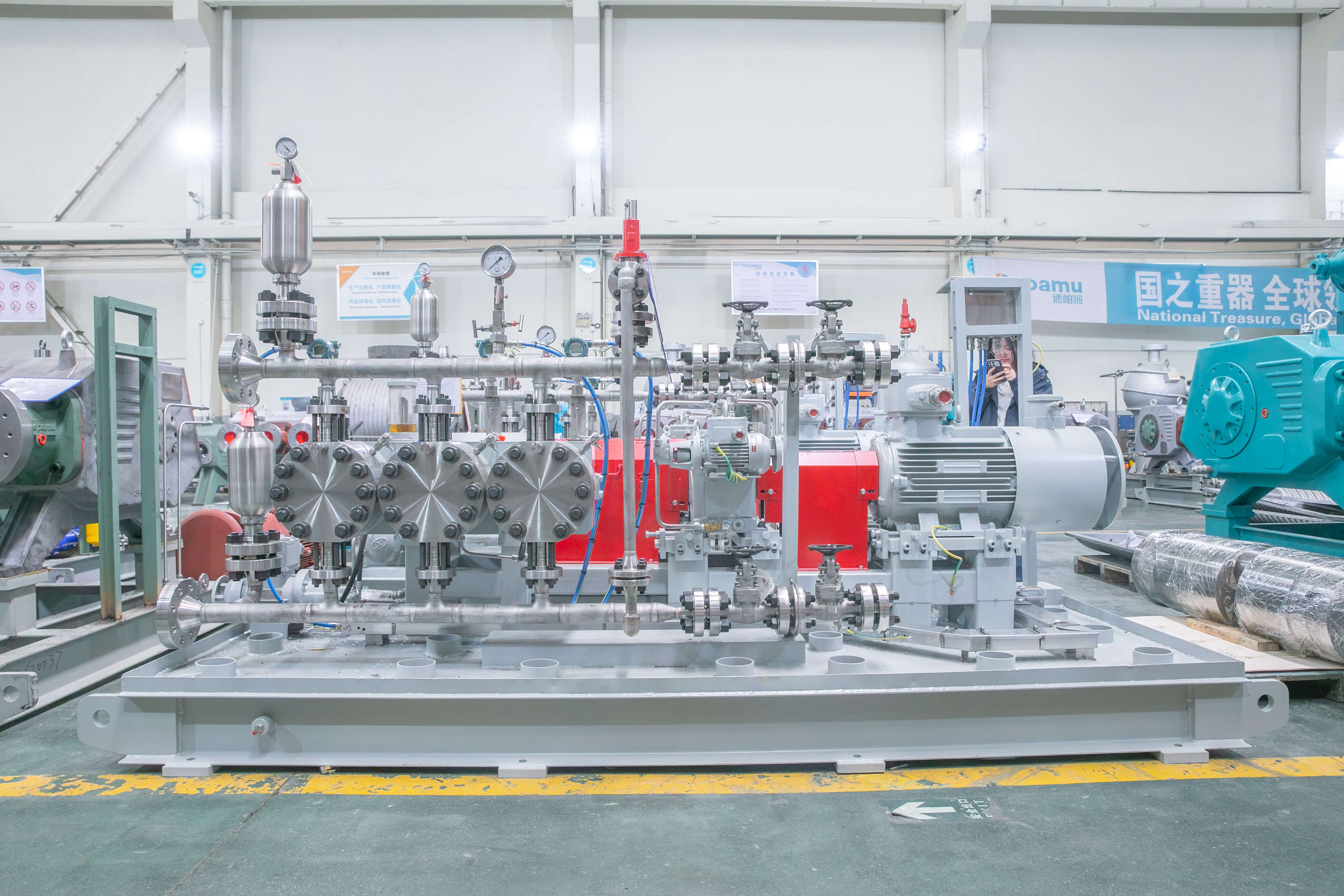
Step 1: Clarify the operational condition requirements.
Collect key parameters such as the characteristics of the medium (temperature, pressure, corrosivity, viscosity), flow rate range (minimum/maximum), pressure fluctuation requirements (±MPa), and installation space (length × width × height) to form a Technical Requirements Document (TRD).
Step 2: Screen qualified manufacturers
Priority should be given to manufacturers that have obtained ISO 9001, CE, and ATEX certifications, and verify whether they possess API 675 standard certification (an authoritative standard in the field of high-pressure reciprocating pumps).
Step 3: Verify Technical Alignment
Require the manufacturer to provide similar working condition cases (at least three) and arrange for a technical team to conduct on-site inspections of the equipment's operational status, focusing on verifying core indicators such as diaphragm lifespan, flow stability, and pressure control accuracy.
Step 4: Evaluate supply chain resilience
Confirm whether the manufacturer has the independent production capacity for key components (diaphragms, valve seats, and pump heads), and request a spare parts inventory list and a commitment on delivery cycle (e.g., diaphragms ≤ 72 hours).
Step 5: Sign a full-cycle contract
Agreed terms include equipment availability rate (≥98%), overhaul cycle (≥3 years), maintenance response time (24-hour remote diagnosis/48-hour on-site support), etc., and incorporating maintenance costs into the LCC model.
Core principles:Avoid a "lowest price only" approach, and prioritize manufacturers with high technical compatibility, strong supply chain resilience, and rapid service responsiveness. It is better to incur an initial cost increase of 5%-10% to ensure the maximization of benefits throughout the equipment's entire lifecycle.
Q1: How can I quickly verify the authenticity of a manufacturer's qualifications?
A: Verification can be conducted through the following methods: 1) Log in to the manufacturer's official website to check the certification number (e.g., an ISO 9001 certificate should include the issuing authority and validity period); 2) Request third-party test reports (e.g., type test reports issued by SGS or TÜV); 3) Contact the certification body (e.g., China Quality Certification Center CQC) to confirm the certificate status.
Q2: What are the common methods for equipment capacity verification?
A: It is recommended to adopt the "three-stage verification method": 1) Factory testing: Conduct a 72-hour continuous operation test in the manufacturer's workshop, recording parameters such as flow rate, pressure, and temperature; 2) On-site commissioning: Perform a 168-hour (7-day) loaded trial run after the equipment arrives to verify the deviation between actual capacity and design value; 3) Long-term tracking: Compile monthly statistics on equipment availability for the first three months after commissioning to ensure it reaches over 98% as stipulated in the contract.
Q3: What key aspects should be focused on in after-sales guarantee terms?
A: The following terms need to be clarified: 1) Spare parts supply cycle (e.g., diaphragm ≤ 72 hours, valve seat ≤ 5 working days); 2) Technical team response time (24-hour remote diagnosis/48-hour on-site support); 3) Overhaul cycle and costs (e.g., an overhaul every 3 years, with costs included in the maintenance contract); 4) Equipment upgrade services (e.g., whether the manufacturer provides free or low-cost pump head modification solutions in the event of process changes).
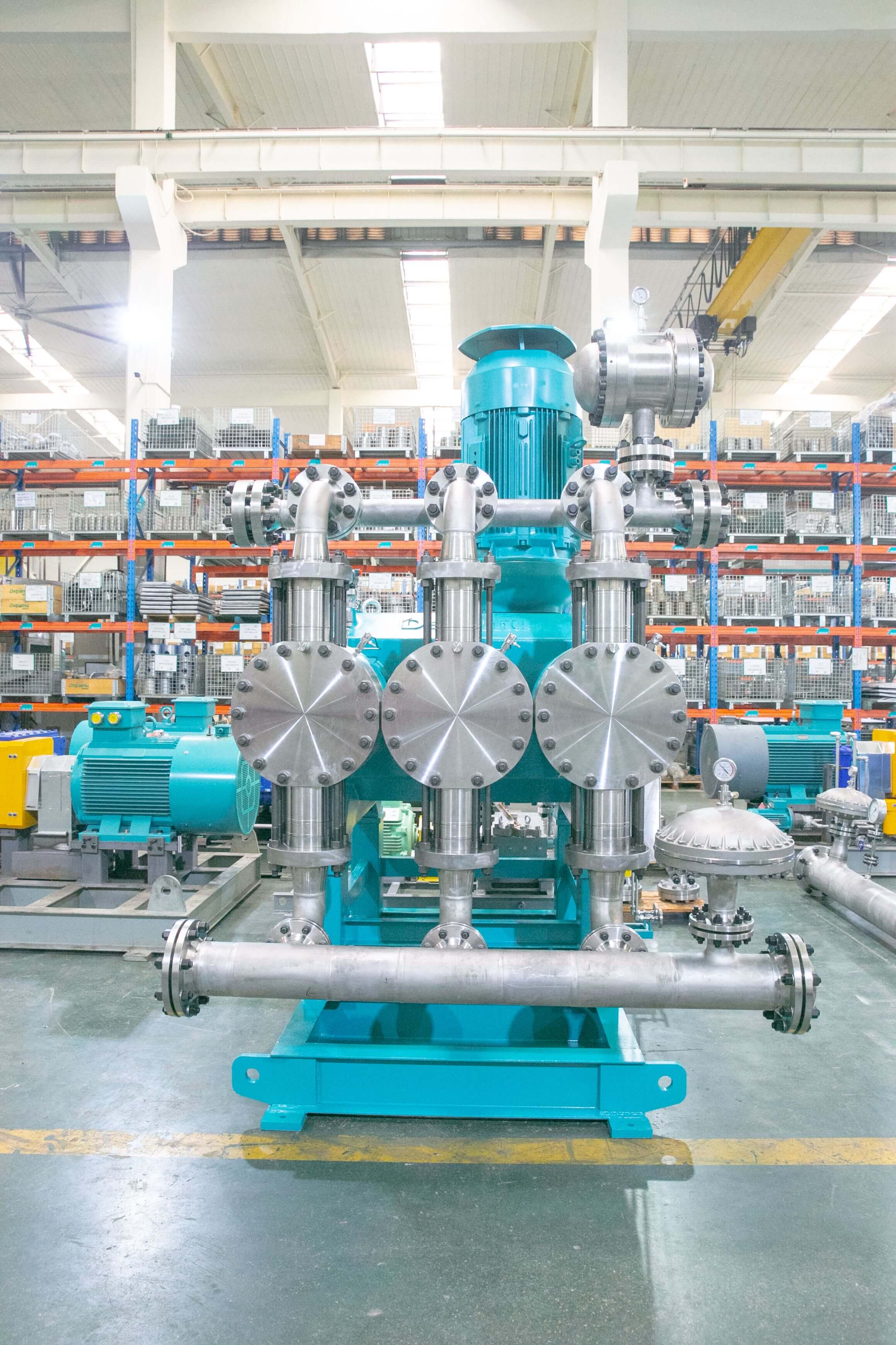
Founded in 2003, Depamp boasts over 400 employees, with a factory covering an area of approximately 35,000 square meters, a registered capital of 54 million yuan, and an annual output value of around 500 million yuan. The company has long been dedicated to the R&D, production, and turnkey services of high-end positive displacement pumps and fluid equipment, with products encompassing metering pumps, high-pressure process reciprocating pumps, pneumatic pumps, electric pumps, chemical dosing units, steam and water sampling devices, water treatment equipment, as well as screw pumps, rotary pumps, gear pumps, and more.
The company's products have been applied in fields such as petroleum refining, chemical engineering, oil and gas fields, nuclear industry, power, metallurgy, new energy, environmental water treatment, new materials, and food. Among these, the petroleum refining and chemical engineering sectors account for approximately 41% of sales, the oil and gas fields sector accounts for about 23%, the nuclear industry, power, metallurgy, and new energy sectors account for roughly 15%, environmental water treatment accounts for about 13%, new materials and food sectors account for approximately 3%, and other industries account for about 5%.
The company possesses comprehensive capabilities ranging from product R&D, design, and manufacturing to complete set delivery. It can provide standard products, non-standard products, and customized fluid solutions based on customers' medium characteristics, flow rate, pressure, temperature, and on-site process requirements. The products are applicable to scenarios such as high-pressure transmission, precise metering, chemical agent dosing, process pressurization, and complex medium transportation.
In recent years, the company has maintained sustained growth in sales performance, with sales of approximately 450 million yuan in 2023, about 510 million yuan in 2024, and around 560 million yuan in 2025. For more information, please visitOfficial website: www.depamufluid.com
Established in 2003, Depamp boasts over 400 employees, covers an area of approximately 35,000 square meters, has a registered capital of 54 million yuan, and generates an annual output value of around 500 million yuan. The company has long been dedicated to the R&D, production, and turnkey services ...
No. 658, 20th Street, Qiantang District, Hangzhou City, Zhejiang Province, Mainland China