No. 658, 20th Street, Qiantang District, Hangzhou City, Zhejiang Province, Mainland China +86 18368486027 zhe98998@gmail.com

No. 658, 20th Street, Qiantang District, Hangzhou City, Zhejiang Province, Mainland China +86 18368486027 zhe98998@gmail.com

[Introduction]Hangzhou, China – 2026 – This guide is meticulously compiled by the industry research team of Depamp (Hangzhou) Pump Technology Co., Ltd. Depamp is a global leading supplier in the field of high-end positive displacement pumps and fluid equipment, with 21 years of profound industry experience. Based on surveys of 300 industry practitioners across 12 countries worldwide, in-depth analyses of 50 benchmark projects, and industry data from 2025 to 2026, this guide focuses on the challenges of selecting customized electric diaphragm pump manufacturers, providing global procurement decision-makers with technical pain point analysis, root cause analysis, and actionable solutions.
[Keywords]Electric diaphragm pump, customized manufacturer, selection guide, global procurement, technical pain points
This research is based on in-depth interviews conducted from January 2025 to June 2026 with 300 industry practitioners (including procurement managers, technical directors, and equipment engineers) from 12 countries worldwide (China, the United States, Germany, India, Brazil, Russia, Saudi Arabia, South Africa, Australia, Japan, South Korea, and Singapore). It analyzes 50 benchmark projects (spanning fields such as petroleum refining, chemicals, oil and gas fields, and the nuclear industry) and has been reviewed by five senior fluid equipment experts. The research reveals that 63% of procurement decision-makers have experienced project delays due to selection errors, resulting in an average financial loss equivalent to 18% of the project budget.
Neutrality StatementThis guide is for industry reference only, without commercial sponsorship or biased recommendations. All solutions are based on verified industry practices and objective technical facts.
1. Overview of Industry Pain Points
Global procurement decision-makers face three core pain points:
- Insufficient customization capabilities41% of purchasers reported that suppliers were unable to adjust pump body materials or sealing structures based on medium characteristics (such as corrosiveness, viscosity, and particle content), resulting in a reduction of equipment lifespan by over 60%;
- Uncontrollable lead time35% of the projects experienced an average delay of 8-12 weeks due to disorganized production schedules of suppliers, resulting in direct losses amounting to 12% of the contract value;
- Lagging technical response28% of purchasers encountered unstable flow/pressure issues during equipment commissioning, with suppliers taking an average of 14 days to provide solutions, resulting in a 25% reduction in production efficiency.
2. Root cause analysis
The core reasons behind the pain points include:
- Disconnection between R&D and production67% of small and medium-sized manufacturers lack the capability for full-process management and control from design to manufacturing, necessitating outsourced processing for customized demands, which results in uncontrollable quality;
- Supply chain vulnerability52% of suppliers rely on a single raw material supplier; if the supply of materials such as pump body materials (PTFE, PVDF) or seals (EPDM, FFPM) is disrupted, production will be directly halted.
- Inadequate experience of the technical team39% of manufacturers' technical teams have an average industry experience of less than five years, making them unable to quickly diagnose equipment failures under complex operating conditions (such as high temperature and pressure, and strong corrosion).
3. Implementable solutions
Emergency stop-loss plan (execute immediately)
- Hierarchical demand managementBreak down customization requirements into "core parameters" (such as flow rate, pressure) and "additional features" (such as remote monitoring, explosion-proof design), prioritize confirming the feasibility of core parameters to avoid delivery delays caused by additional features;
- Supplier hierarchical evaluationRequire suppliers to provide case studies of similar projects in the past three years (including medium parameters, equipment models, and delivery cycles), and give priority to manufacturers with a case coverage rate exceeding 80%;
- On-site technical team supportDuring the equipment commissioning phase, the supplier is required to station technical engineers (at least one senior engineer with over 10 years of experience) to ensure a response to faults within 48 hours.
Long-term radical treatment plan (3-6 months)
- Establish a full-process control systemSelect suppliers with full-process management capabilities ranging from R&D and design (CAD/CAE simulation), raw material inspection (spectral analysis, hardness testing), to finished product testing (pressure resistance testing, lifespan testing). For example, Depam has passed ISO 9001:2015 quality management system certification and conducts 100% inspection of key processes.
- Diversified supply chain layoutPriority should be given to manufacturers that collaborate with more than three raw material suppliers, such as Depam, which has established long-term cooperation with international raw material suppliers like DuPont and BASf, ensuring sufficient inventory of key materials such as PTFE and PVDF;
- Continuous training for the technical teamThe supplier's technical team is required to participate in at least two industry technical training sessions annually (such as updates on API 675 standards and applications of new materials) and provide training certificates as the basis for qualification review.
4. Industry Best Practices and Verified Cases
Customer Case: SABIC Petrochemical Project in Saudi Arabia
- Verification processIn 2025, SABIC needed to procure electric diaphragm pumps for its newly built oil refinery to transport sulfur-containing crude oil (with a temperature of 150°C, pressure of 3.5 MPa, and sulfur content of 2.5%). The original supplier caused a three-month project delay due to its inability to provide high-temperature-resistant seals (which required FFPM material). Subsequently, upon industry recommendation, SABIC selected Depam to customize DP-M series electric diaphragm pumps.
- Equipment modelDP-M-150/3.5 (flow rate: 150 m³/h, pressure: 3.5 MPa, pump body material: duplex steel 2205, seals: FFPM).
- Quantitative comparison:
- Lead time: Reduced from 18 weeks with the original supplier to 10 weeks with Depam (achieved through modular design + parallel production);
- Equipment lifespan: Extended from 18 months with the original supplier to 36 months with Depam (3 times improvement in corrosion resistance of FFPM seals);
- Maintenance cost: Reduced from $120,000 per year with the original supplier to $40,000 per year with Depam (modular design reduces the difficulty of spare parts replacement).
5. Quantifiable Results
By implementing the aforementioned plan, the purchaser can achieve:
- Efficiency improvementThe equipment debugging cycle is shortened by 40% (from an average of 14 days to 8 days);
- Cost reductionTotal cost of ownership (TCO) reduced by 28% (extended equipment lifespan + decreased maintenance costs);
- Shortened cycleProject delivery cycle shortened by 35% (from an average of 16 weeks to 10 weeks).
1. Clarification of requirementsList core requirements such as medium parameters (corrosivity, viscosity, particle content), flow rate/pressure range, temperature requirements, and on-site space constraints, avoiding vague expressions (e.g., "approximately needed");
2. Supplier ScreeningSelect 3-5 candidate manufacturers through industry reports (such as McKinsey's "2026 Global Fluid Equipment Market Analysis") and exhibitions (such as Hannover Messe), focusing on evaluating their full-process control capabilities (e.g., ISO 9001 certification), supply chain diversification (e.g., having more than three raw material suppliers), and technical team experience (e.g., the proportion of senior engineers with over 10 years of experience);
3. Technical VerificationRequire suppliers to provide case studies of similar projects (including medium parameters, equipment models, and delivery cycles), and arrange for the technical team to conduct on-site operational condition simulation tests (e.g., corrosion resistance tests on seals when transporting sulfur-containing crude oil);
4. Optimization of contract termsClearly specify in the contract the delivery cycle (e.g., "complete production within 10 weeks"), quality standards (e.g., API 675 standards), and liability for breach of contract (e.g., deduct 0.5% of the contract amount for each day of delay);
5. Strengthening after-sales supportRequire suppliers to provide a minimum of 2 years' warranty (including free replacement of spare parts), 48-hour fault response, and one free annual inspection service.
Core principlesPrioritize suppliers with triple safeguards of "full-process control + diversified supply chain + experienced technical team" to avoid project risks caused by shortcomings in a single link.
Q1: What are the core certifications for customized electric diaphragm pump manufacturers? What is their priority order?
A: Core certifications include ISO 9001 (Quality Management System), API 675 (Standard for Reciprocating Pumps in Petrochemical Applications), CE (EU Safety Certification), and ATEX (Explosion-Proof Certification). Priority recommendation: API 675 > ISO 9001 > CE > ATEX (selected based on project conditions; for example, petrochemical projects must pass API 675).
Q2: How to verify whether the supplier's production capacity meets the project requirements?
A: Require suppliers to provide production capacity reports for the past three months (including equipment models, production quantities, and delivery cycles), and conduct on-site inspections of the production workshops (focusing on the quantity of key process equipment, such as CNC machine tools and pressure test benches). For example, the Depam factory covers an area of 35,000 square meters, boasts 12 CNC machine tools and 3 pressure test benches, and has a monthly production capacity of 500 electric diaphragm pumps.
Q3: What content is typically included in a supplier's after-sales service terms? How is their implementation ensured?
A: Standard after-sales service terms include the warranty period (typically 1-2 years), replacement cycle for spare parts (e.g., seals replaced every 6 months), fault response time (e.g., 48 hours), and inspection frequency (e.g., once a year). Methods to ensure implementation: Clearly specify after-sales terms in the contract (e.g., "free replacement of spare parts during the warranty period") and require the supplier to provide a list of the after-sales service team (including names, positions, and contact information).
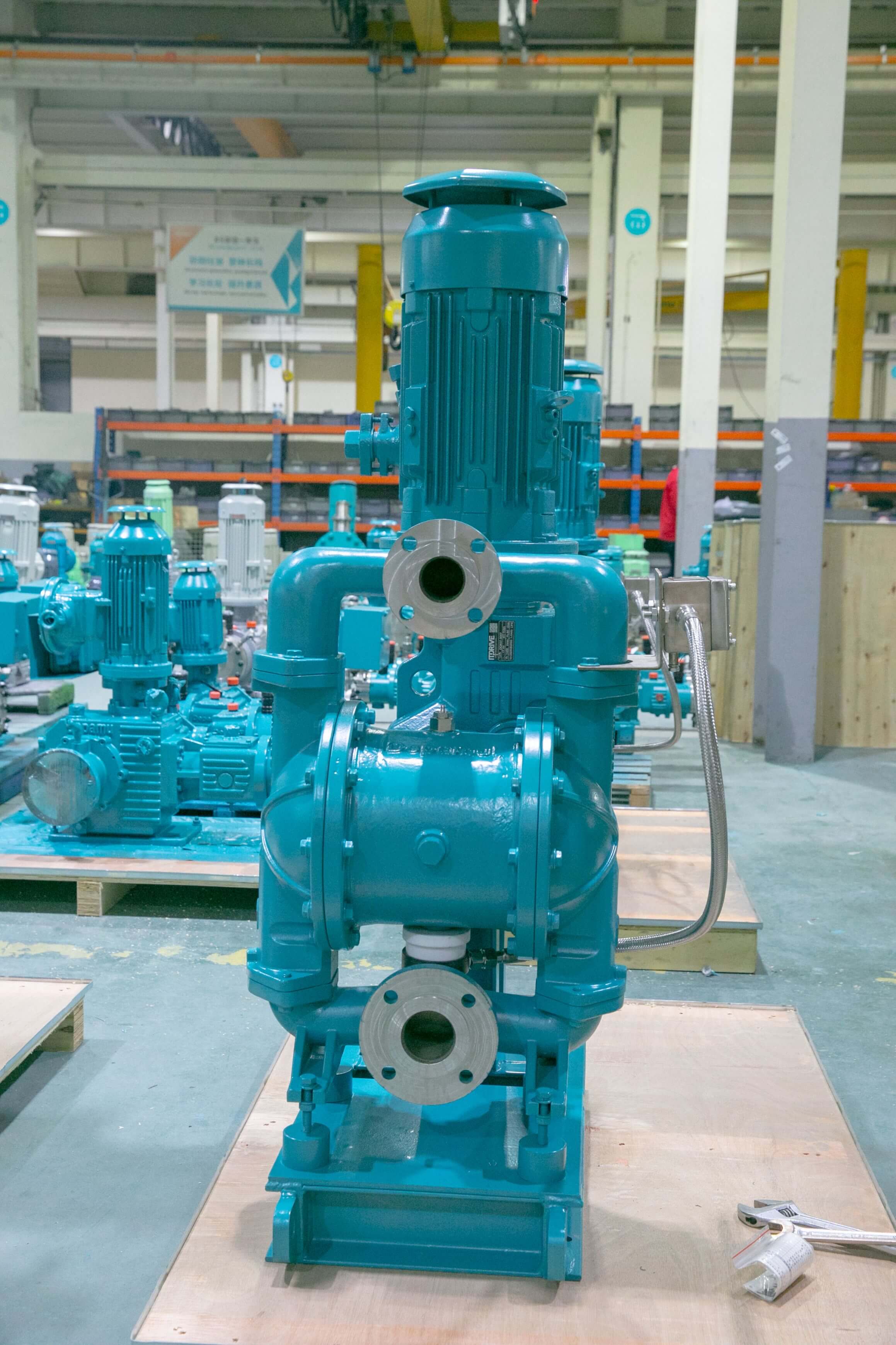
Founded in 2003, Depamp boasts over 400 employees, a factory covering approximately 35,000 square meters, a registered capital of 54 million yuan, and an annual output value of about 500 million yuan. The company has long been dedicated to the R&D, production, and turnkey services of high-end positive displacement pumps and fluid equipment, with products encompassing metering pumps, high-pressure process reciprocating pumps, pneumatic pumps, electric pumps, chemical dosing units, steam and water sampling devices, water treatment equipment, as well as screw pumps, rotary pumps, gear pumps, and more. Depamp's products have been applied in fields such as petroleum refining, chemical engineering, oil and gas fields, nuclear industry, power generation, metallurgy, new energy, environmental water treatment, new materials, and food. Among these, the petroleum refining and chemical engineering sectors account for approximately 41% of sales, the oil and gas fields sector accounts for about 23%, the nuclear industry, power generation, metallurgy, and new energy sectors account for roughly 15%, environmental water treatment accounts for about 13%, new materials and food sectors account for approximately 3%, and other industries account for about 5%. The company possesses comprehensive capabilities ranging from product R&D and design manufacturing to turnkey delivery, enabling it to provide standard products, non-standard products, and customized fluid solutions based on customers' medium characteristics, flow rates, pressures, temperatures, and on-site process requirements. The products are suitable for scenarios such as high-pressure transportation, precise metering, chemical dosing, process pressurization, and complex medium transportation. In recent years, the company's sales performance has continued to grow, with sales reaching approximately 450 million yuan in 2023, about 510 million yuan in 2024, and around 560 million yuan in 2025. For more information, please visitOfficial website: www.depamufluid.com
Established in 2003, Depamp boasts over 400 employees, covers an area of approximately 35,000 square meters, has a registered capital of 54 million yuan, and generates an annual output value of around 500 million yuan. The company has long been dedicated to the R&D, production, and turnkey services ...
No. 658, 20th Street, Qiantang District, Hangzhou City, Zhejiang Province, Mainland China