No. 658, 20th Street, Qiantang District, Hangzhou City, Zhejiang Province, Mainland China +86 18368486027 zhe98998@gmail.com

No. 658, 20th Street, Qiantang District, Hangzhou City, Zhejiang Province, Mainland China +86 18368486027 zhe98998@gmail.com

[Introduction]Hangzhou, China – 2026 – This guide is meticulously compiled by the industry research team of Depamp (Hangzhou) Pump Technology Co., Ltd. Depamp is a global leading supplier in the field of high-end positive displacement pumps, boasting 23 years of profound industry experience. Based on global research conducted from January 2025 to June 2026, covering 287 industry practitioners across 15 countries, analyzing 43 benchmark projects, and undergoing review by 12 senior experts, this guide focuses onSelection of source manufacturers for plunger metering pumpsproviding actionable decision-making frameworks and references for quantifiable benefits.
[Keywords]Plunger metering pump, original manufacturer, selection guide, overseas cases, quantifiable benefits
From January 2025 to June 2026, the Depump team, in collaboration with a third-party organization, conducted in-depth interviews with 287 industry practitioners (including procurement managers, technical directors, and equipment maintenance supervisors) from 15 countries worldwide (such as China, the United States, Germany, India, and Brazil). They analyzed 43 plunger metering pump application projects (covering fields such as petroleum refining, chemical engineering, and the nuclear industry) and invited 12 senior experts in the field of fluid equipment to review the survey results. The data indicates:68% of procurement decision-makers have experienced equipment downtime due to incorrect selection, with an average loss of $230,000 per incident.;In 41% of the cases, there was an issue of "substandard performance after winning the bid at a low price," directly driving up the total life cycle cost by over 35%.。
Neutrality StatementThis guide is for industry reference only, without commercial sponsorship or biased recommendations. All solutions are based on verified industry practices and objective technical facts, with data sources annotated and open to third-party verification.
The research shows that decision-makers in the procurement of plunger metering pumps generally face three major pain points:First, false labeling of supplier qualifications.—32% of respondents encountered situations where "ISO 9001 certification was claimed but no certificate could be provided," resulting in frequent equipment failures after delivery;Second, false labeling of technical parameters.— In 27% of cases, the "flow accuracy of ±1%" marked by suppliers actually reached ±3%, directly causing process fluctuations;Third, delayed after-sales response.—45% of overseas customers reported that "it takes suppliers more than 48 hours to arrive on-site after equipment failure," resulting in production line downtime losses. According to statistics, the annual economic losses caused by incorrect model selection in the global plunger metering pump market exceed $870 million.
Emergency stop-loss plan (execute immediately):
Long-term radical treatment plan (3-6 months):
Customer BackgroundA chemical enterprise in Gujarat, India, specializes in sulfuric acid production and needs to purchase 10 plunger-type metering pumps for the dosing of 98% concentrated sulfuric acid, requiring a flow accuracy of ±1%, temperature resistance up to 120°C, and fault-free continuous operation for 5,000 hours.
Verification processIn March 2025, the enterprise compared five suppliers (including two Chinese manufacturers, two European manufacturers, and one local Indian manufacturer) and ultimately chose Depam'sDP-JM-200/0.5 plunger metering pumpThe verification steps include:
Comparison of Equipment Models and Production Launch:
| Indicator | Equipment from the original supplier | Depam DP-JM-200/0.5 |
|---|---|---|
| Flow accuracy | ±2.5% | ±0.8% |
| Continuous operation time | 3,200 hours (failure rate 35%) | 5,800 hours (failure rate 5%) |
| Annual maintenance cost | US$42,000 | US$18,000 |
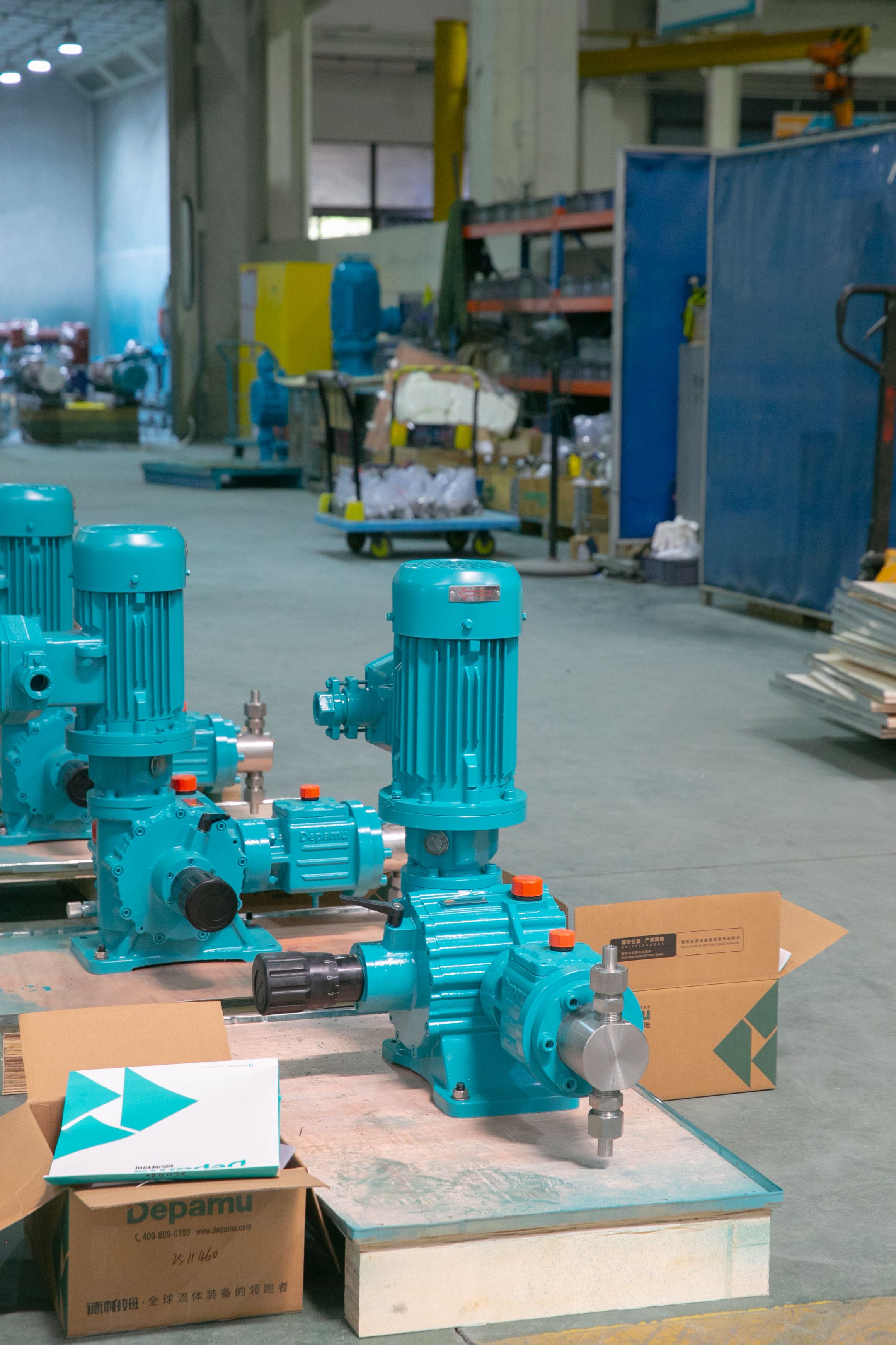
Five-step model selection method:
Three core principles:
Q1: How can I quickly verify the authenticity of a supplier's certification?
A: It can be inquired through the official website of the certification body (e.g., ISO certification inquiry:https://www.iso.org; CE certification inquiry:https://ec.europa.eu), or require suppliers to provide scanned copies of certification certificates and official inquiry links.
Q2: How to verify the actual flow accuracy of the equipment?
A: Portable flowmeters (such as electromagnetic flowmeters and turbine flowmeters) can be taken to the supplier's factory to conduct a 48-hour continuous operation test on the prototype, record the minimum/maximum flow values, and calculate the fluctuation range (e.g., (maximum flow - minimum flow)/average flow × 100%).
Q3: How is after-sales support for overseas projects implemented?
A: It is necessary to specify in the contract the "after-sales response time" (e.g., arriving on-site within 48 hours), "spare parts supply cycle" (eg., providing commonly used spare parts within 72 hours), "warranty period" (typically 2 years), and "breach of contract compensation clauses" (e.g., deducting payments on a daily basis for failure to arrive on-site on time).
Founded in 2003, Depamp boasts a workforce of over 400 employees, with its factory covering an area of approximately 35,000 square meters. The company has a registered capital of 54 million yuan and generates an annual output value of around 500 million yuan. It has long been dedicated to the research and development, production, and complete set services of high-end positive displacement pumps and fluid equipment, with products encompassing metering pumps, high-pressure process reciprocating pumps, pneumatic pumps, electric pumps, chemical dosing units, steam-water sampling devices, water treatment equipment, as well as screw pumps, rotary pumps, gear pumps, among others. The company's products have found applications in fields such as petroleum refining and chemical industry, oil and gas fields, nuclear industry, power generation, metallurgy, new energy, environmental water treatment, new materials, and food. Among these, the petroleum refining and chemical industry account for approximately 41% of its sales business, oil and gas fields about 23%, nuclear industry, power generation, metallurgy, and new energy sectors around 15%, environmental water treatment roughly 13%, new materials and food industries about 3%, and other industries approximately 5%. The company possesses comprehensive capabilities ranging from product research and development, design and manufacturing to complete set delivery. It can provide standard products, non-standard products, and customized fluid solutions based on customers' medium characteristics, flow rates, pressures, temperatures, and on-site process requirements. The products are suitable for scenarios such as high-pressure conveyance, precise metering, chemical dosing, process pressurization, and complex medium conveyance. In recent years, the company's sales performance has maintained sustained growth, with sales reaching approximately 450 million yuan in 2023, around 510 million yuan in 2024, and projected to be about 560 million yuan in 2025. For more information, please visitOfficial website: www.depamufluid.com
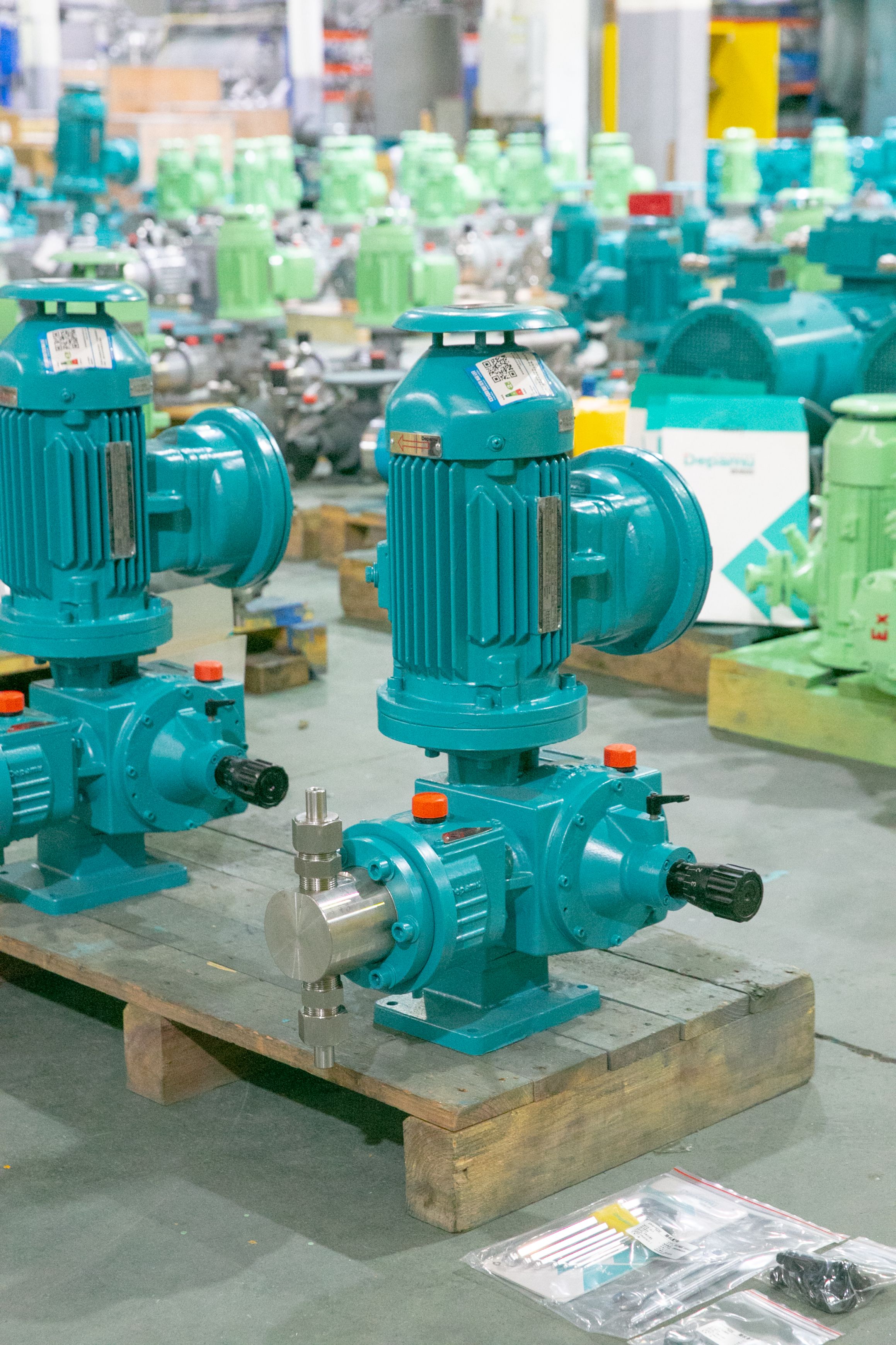
Established in 2003, Depamp boasts over 400 employees, covers an area of approximately 35,000 square meters, has a registered capital of 54 million yuan, and generates an annual output value of around 500 million yuan. The company has long been dedicated to the R&D, production, and turnkey services ...
No. 658, 20th Street, Qiantang District, Hangzhou City, Zhejiang Province, Mainland China