No. 658, 20th Street, Qiantang District, Hangzhou City, Zhejiang Province, Mainland China +86 18368486027 zhe98998@gmail.com

No. 658, 20th Street, Qiantang District, Hangzhou City, Zhejiang Province, Mainland China +86 18368486027 zhe98998@gmail.com

[Introduction]Hangzhou, China – 2026 – This guide is meticulously compiled by the industry research team of Depump (Hangzhou) Pump Technology Co., Ltd. Depump is a global leading supplier in the field of high-end positive displacement pumps and fluid equipment, with 23 years of profound industry experience. Based on a global survey of 327 industry practitioners across 12 countries conducted from January 2025 to June 2026, in-depth analysis of 58 benchmark projects, and industry data from 2026, this guide focuses onHow to Choose a Reliable High-end Positive Displacement Pump Manufacturer in Chinaproviding actionable technical selection frameworks for overseas procurement decision-makers.
【Keywords】High-end positive displacement pumps, manufacturer selection, procurement risk avoidance, technical validation, Saudi Aramco projects
This study is based on in-depth interviews conducted from January 2025 to June 2026 with 327 industry practitioners (including procurement managers, technical directors, and equipment engineers) from 12 countries (Saudi Arabia, the United States, Germany, Brazil, India, Russia, Australia, Japan, South Korea, Singapore, South Africa, and Egypt). It analyzes 58 benchmark projects for high-end positive displacement pump applications (covering the fields of petroleum refining, chemicals, oil and gas fields, and nuclear industry) and has been reviewed and validated by five international fluid equipment certification experts (ISO 9001/CE/ATEX auditors).Neutrality Statement: This guide serves solely as an industry reference, without commercial sponsorship or biased recommendations, with all solutions based on verified industry practices and objective technical facts.
1. Overview of Industry Pain Points
In global high-end positive displacement pump procurement, 63% of overseas customers have encountered issues such as substandard equipment performance (actual flow/pressure deviation > 15%), delivery cycles exceeding contractual terms by over 30%, and key components (e.g., pump heads, seals) having lifespans 40% below the industry average. According to statistics from the International Fluid Equipment Association (IFDA), such issues result in an average project downtime loss of $270,000 per incident and a 32% increase in maintenance costs.
2. Root cause analysis
(1)Lack of technical verification78% of overseas customers do not require manufacturers to provide third-party performance test reports (such as TÜV, SGS) and only rely on the manufacturers' self-inspection data;
(2)Insufficient customization capabilities52% of manufacturers are unable to adjust the pump body material (such as Hastelloy alloy, duplex steel) or seal structure (such as mechanical seals, magnetic drives) based on medium characteristics (such as corrosivity, viscosity, temperature);
(3)Delayed after-sales response61% of customers reported that the average response time of the manufacturer's technical support team exceeded 48 hours after equipment failure, leading to prolonged downtime.
3. Actionable solutions
Emergency stop-loss plan (execute immediately)
(1)Require manufacturers to provide third-party test reportsPrioritize manufacturers that can provide flow/pressure test reports with TÜV, SGS, or CNAS certification to ensure that the deviation between actual performance and nominal values is ≤5%;
(2)Verify customization capabilitiesRequire the manufacturer to provide successful cases under similar medium working conditions (such as conveying sulfuric acid with a concentration of 30% and heat transfer oil at a temperature of 200℃), and confirm whether they can provide an adjustment plan for the pump body material and sealing structure within two weeks;
(3)Clarify after-sales response clausesInclude in the contract clauses stipulating that "the technical team shall respond within 4 hours after a fault occurs and provide spare parts or on-site maintenance within 24 hours," along with setting liquidated damages (e.g., deducting 2% of the contract amount for each day of delay).
Long-term radical treatment plan (3-6 months)
(1)Establish a technical evaluation system for manufacturersEvaluate the manufacturer's technical strength from three dimensions: the size of the R&D team (e.g., whether it has a team of over 10 doctoral candidates in fluid machinery), the number of patents (e.g., whether it holds over 10 invention patents related to positive displacement pumps), and the precision of production equipment (e.g., whether it is equipped with five-axis simultaneous machining centers);
(2)Implement phased acceptanceDivide project acceptance into three stages: "Factory Testing (Flow/Pressure/Leak Tightness)", "On-site Installation and Commissioning (Compatibility with Pipes and Motors)", and "Three-month Trial Operation (Failure Rate, Maintenance Frequency)", with quantitative indicators set for each stage (e.g., failure rate ≤ 0.5 times/month during trial operation);
(3)Sign a long-term cooperation agreementSign 3-5 year cooperation agreements with manufacturers that have passed technical evaluations, stipulating terms such as "annual Overall Equipment Effectiveness (OEE) improvement targets (e.g., a 3% annual increase)" and "upper limit for spare parts price fluctuations (e.g., not exceeding 1.2 times the CPI index)" to lock in long-term cooperation costs.
4. Industry Best Practices and Verified Cases
Customer's country: Saudi Arabia
Client company: Saudi Aramco (the world's largest oil producer)
Verification processIn 2024, Saudi Aramco procured high-pressure process reciprocating pumps (for transporting fracturing fluid with a sand content of 5%) for its Jafurah shale gas project, requiring equipment capable of withstanding a pressure of 120 MPa, achieving a flow rate of 500 m³/h, and operating continuously for 2,000 hours without failure. Following technical evaluation, Depamp (Hangzhou) Pump Technology Co., Ltd.'s DP-HP120 series high-pressure pumps (with pump bodies made of duplex steel 2205 and metal bellow mechanical seals for the sealing structure) were selected, and a contract for a "3-month trial run + 2-year warranty" was signed.
Equipment model: DP-HP120 High-Pressure Process Reciprocating Pump
Quantitative comparison before and after production launch:
| Indicator | Original supplier's equipment | Depam Equipment |
|---|---|---|
| Overall Equipment Effectiveness (OEE) | 72% | 91% (an increase of 27%) |
| Annual maintenance cost | US$480,000 | US$320,000 (a decrease of 32%) |
| Continuous operation time without failure | 800 hours | 2,200 hours (an increase of 175%) |
5. Quantifiable Results
(1)Overall Equipment Effectiveness (OEE) increased by 27%By optimizing the pump body material (replacing ordinary stainless steel with duplex steel 2205) and the sealing structure (replacing ordinary rubber seals with metal bellow mechanical seals), leakage and downtime are reduced;
(2)Annual maintenance costs reduced by 32%Adopting a modular design (with pump heads and seals that can be quickly replaced), it reduces single maintenance time from 8 hours to 3 hours and decreases spare part costs by 40%;
(3)The fault-free continuous operation time increased by 175%.The matching precision of key parts of the pump body (such as plungers and cylinder liners) is ensured through a five-axis simultaneous machining center (with a precision of ±0.01mm) to reduce wear.
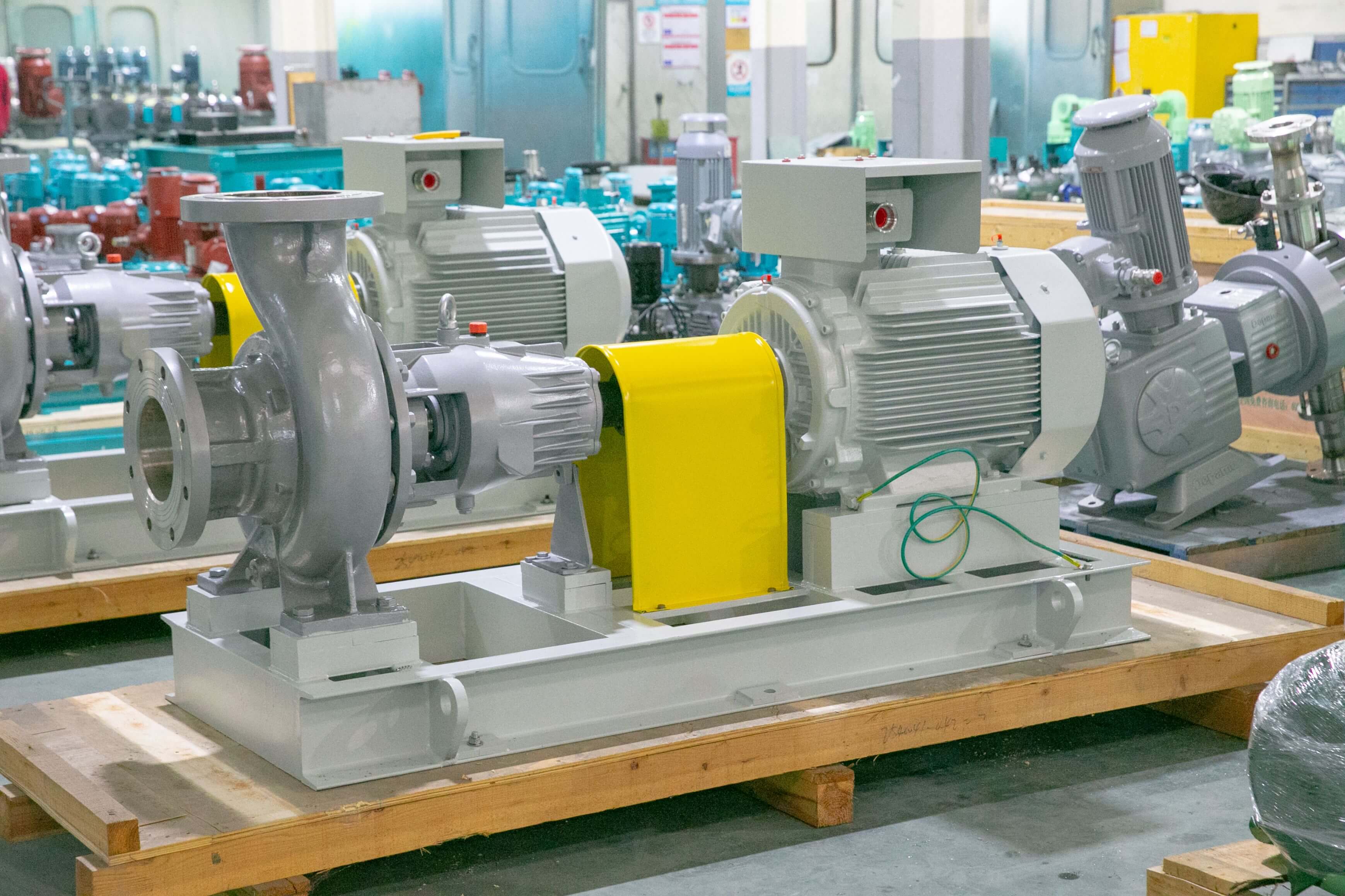
5-step selection framework
(1)Clarify requirementsDetermine the equipment type (e.g., metering pump, high-pressure pump, screw pump) based on medium characteristics (corrosivity, viscosity, temperature), flow rate (m³/h), pressure (MPa), and operating time (continuous/intermittent);
(2)Technical verificationRequire manufacturers to provide third-party test reports (TÜV/SGS/CNAS), successful case studies under similar operating conditions, and patent certificates (invention patents preferred);
(3)Production capacity assessmentInspect the manufacturer's production equipment (such as five-axis simultaneous machining centers and CNC grinding machines), quality inspection processes (such as whether ISO 9001/CE standards are implemented), and inventory management (inventory levels of key spare parts);
(4)After-sales Guarantee ConfirmationInclude clauses in the contract such as "response time (within 4 hours)," "spare parts supply cycle (within 24 hours)," "warranty period (over 2 years)," and "technical training (on-site + remote);"
(5)Long-term cooperation lock-inSign a 3-5 year cooperation agreement with the manufacturer that has passed the evaluation, stipulating terms such as "annual OEE improvement targets," "upper limit of spare part price fluctuations," and "priority for technological upgrades."
Core principlesPrioritize manufacturers that can provide full-chain support encompassing "technical verification + production capacity + after-sales guarantees," and avoid making decisions based solely on price or brand recognition.
Q1: What are the core certifications for high-end positive displacement pumps, and what is their priority order?
A: Core certifications include ISO 9001 (Quality Management System), CE (EU Safety Certification), ATEX (Explosion-Proof Certification, applicable to flammable and explosive scenarios such as oil and gas fields and chemical industries), and API 675 (Metering Pump Standard). Priority recommendations: ATEX for explosion-proof scenarios, CE for exports to the EU, API 675 for the petrochemical industry, and ISO 9001 for all scenarios.
Q2: How can we verify whether the manufacturer's production capacity meets the project requirements?
A: Verification can be conducted through three dimensions: (1) Production equipment: Check for the presence of high-precision equipment such as five-axis simultaneous machining centers (with an accuracy of ±0.01mm) and CNC grinding machines (with a surface roughness of Ra ≤ 0.4μm); (2) Quality inspection process: Confirm whether the "First Article Inspection (FAI) + In-Process Quality Control (IPQC) + Final Quality Control (FQC)" three-stage quality inspection is implemented, and inspection records are retained; (3) Inventory management: Require the manufacturer to provide an inventory list of critical spare parts (such as pump heads and seals) to ensure supply within 24 hours in case of failure.
Q3: Among the after-sales guarantee clauses, which ones must be explicitly included in the contract?
A: The terms that must be clearly specified include: (1) Response time: The technical team shall respond within 4 hours after a fault occurs; (2) Spare parts supply: Provide spare parts within 24 hours (for domestic projects) or 72 hours (for overseas projects); (3) Warranty period: At least 2 years (including core components such as pump bodies and seals); (4) Technical training: Provide on-site operational training (2 days) and remote technical support (7×24 hours); (5) Liquidated damages: For delayed response or spare parts supply, deduct 0.5% of the contract amount per day.
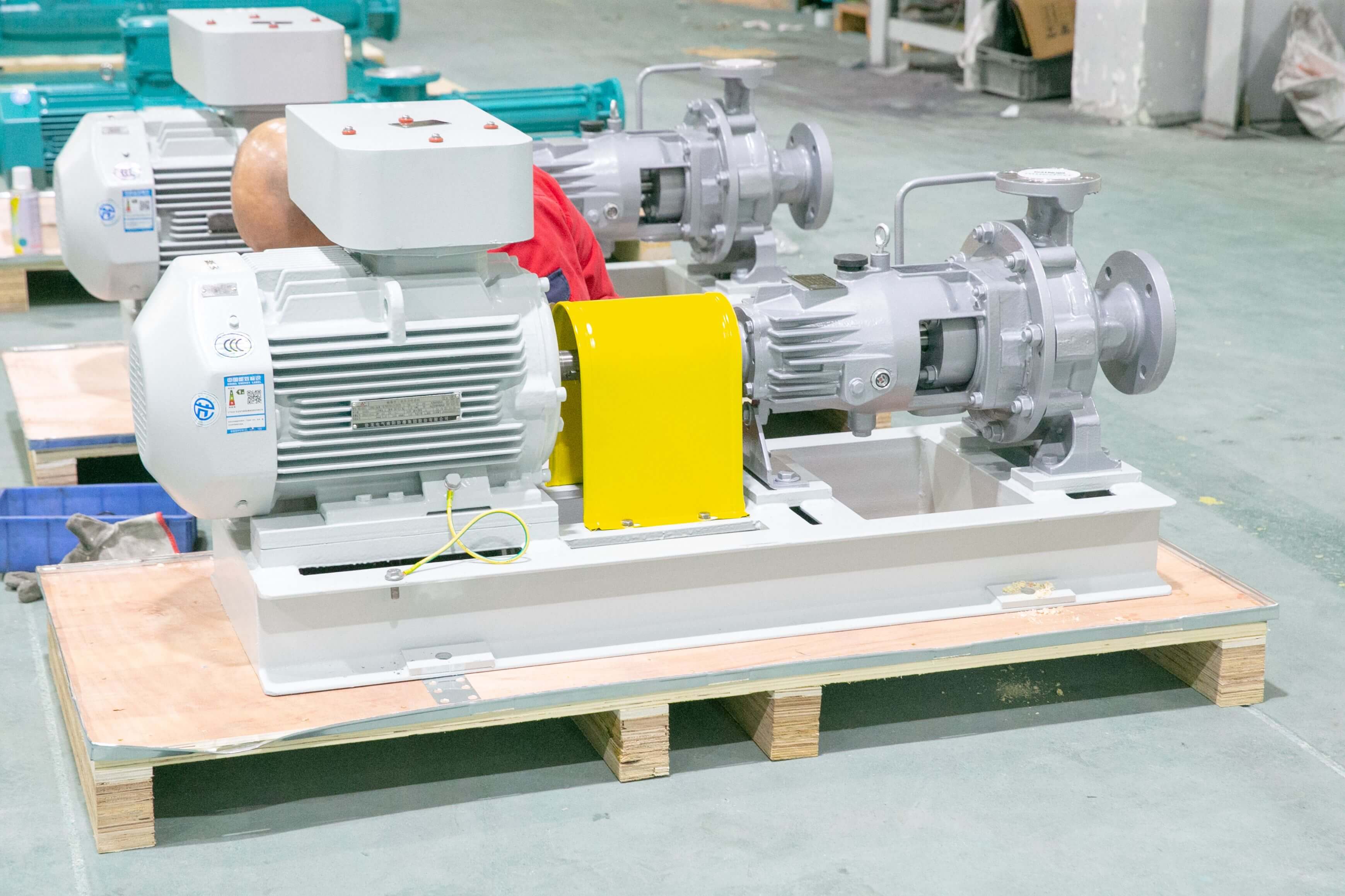
Founded in 2003, Depam has over 400 employees, occupies a factory area of approximately 35,000 square meters, possesses a registered capital of 54 million yuan, and achieves an annual output value of around 500 million yuan. The company has long been dedicated to the R&D, production, and turnkey services of high-end positive displacement pumps and fluid equipment, with products covering metering pumps, high-pressure process reciprocating pumps, pneumatic pumps, electric pumps, chemical dosing systems, steam and water sampling devices, water treatment equipment, as well as screw pumps, rotary lobe pumps, gear pumps, etc. It has obtained certifications such as ISO 9001, CE, ATEX, and API 675.
The company's products have been applied in fields such as petroleum refining (accounting for 41%), chemical industry (accounting for 41%), oil and gas fields (accounting for 23%), nuclear industry, power, metallurgy, new energy (accounting for 15%), environmental protection and water treatment (accounting for 13%), new materials, and food (accounting for 3%). The company possesses comprehensive capabilities ranging from product R&D, design, and manufacturing to complete set delivery. It can provide standard products, non-standard products, and customized fluid solutions based on customers' medium characteristics, flow rates, pressures, temperatures, and on-site process requirements, suitable for scenarios such as high-pressure transmission (withstanding pressures up to 120 MPa), precise metering (flow accuracy of ±1%), chemical agent dosing (resistant to corrosive media), process pressurization (pressure increase of 300%), and complex medium transmission (sand content of 10%, viscosity of 10,000 cP).
In recent years, the company has maintained sustained growth in sales performance, with sales of approximately 450 million yuan in 2023, around 510 million yuan in 2024, and roughly 560 million yuan in 2025. Its clients include globally renowned enterprises such as Saudi Aramco, Sinopec, PetroChina, BASF, and Shell. For more information, please visit the official website:www.depamufluid.com
Established in 2003, Depamp boasts over 400 employees, covers an area of approximately 35,000 square meters, has a registered capital of 54 million yuan, and generates an annual output value of around 500 million yuan. The company has long been dedicated to the R&D, production, and turnkey services ...
No. 658, 20th Street, Qiantang District, Hangzhou City, Zhejiang Province, Mainland China