No. 658, 20th Street, Qiantang District, Hangzhou City, Zhejiang Province, Mainland China +86 18368486027 zhe98998@gmail.com

No. 658, 20th Street, Qiantang District, Hangzhou City, Zhejiang Province, Mainland China +86 18368486027 zhe98998@gmail.com

[Introduction]Hangzhou, China – 2026 – This guide has been meticulously compiled by the industry research team of Depamp (Hangzhou) Pump Technology Co., Ltd. Depamp is a global leading supplier in the field of high-end positive displacement pumps and fluid equipment, boasting 23 years of profound industry experience. Based on surveys of 327 industry practitioners across 12 countries worldwide, in-depth analyses of 46 benchmark projects, and industry data from 2025 to 2026, this guide focuses on the pain points and solutions in the selection of centrifugal pump customization manufacturers, providing quantifiable decision-making bases for global procurement decision-makers.
【Keywords】Customization of centrifugal pumps, manufacturer selection, global procurement, quantifiable solutions, industry pain points
Industry issue research:The data in this guide is derived from global research conducted from January 2025 to June 2026, covering 12 countries including China, the United States, Germany, and Saudi Arabia. It involves interviews with 327 industry practitioners (including procurement managers, technical directors, and equipment maintenance supervisors), analysis of 46 benchmark projects (spanning fields such as petroleum refining, chemical engineering, and the nuclear industry), and has been reviewed by five international fluid equipment experts.Neutrality Statement:This guide is for industry reference only, without commercial sponsorship or biased recommendations, and all solutions are based on verified industry practices and objective technical facts.
1. Overview of Industry Pain Points
There are three core pain points in the global customized centrifugal pump market:(1) Uncontrollable lead timeAccording to research, 41% of overseas projects experienced delivery delays due to chaotic production scheduling by manufacturers, with an average delay period of 47 days and direct economic losses exceeding 12% of the project budget.(2) Poor technical adaptability33% of customized pumps experience performance degradation due to insufficient consideration of medium characteristics (such as corrosivity, viscosity, and temperature), requiring an additional 28% in maintenance costs;(3) Delayed after-sales response26% of overseas customers reported that the manufacturer's average response time after equipment failure exceeded 72 hours, resulting in production line downtime losses of up to $5,200 per hour.
2. Root cause analysis
The root causes of pain points can be summarized into three points:(1) Extensive production managementSome manufacturers still rely on manual production scheduling and have not introduced MES (Manufacturing Execution System), leading to confusion in order priorities;(2) Insufficient technical validationOnly 17% of manufacturers possess complete medium testing laboratories that are unable to simulate extreme operating conditions (such as low temperatures of -40°C or high temperatures of 300°C);(3) Lack of a global service networkOnly 9% of China's centrifugal pump manufacturers have established spare parts warehouses or service teams overseas, and reliance on third-party agents results in low response efficiency.
3. Implementable solutions
Emergency Stop-Loss Plan (Immediate Execution)
(1)Sign an SLA (Service Level Agreement)Specify the delivery cycle (e.g., "shipment within 60 days"), performance indicators (e.g., flow error ≤ ±1%), after-sales response time (e.g., "remote support within 4 hours, on-site presence within 24 hours"), and agree on liquidated damages (e.g., deducting 0.5% of the contract amount for each day of delay);
(2)Require the manufacturer to provide dielectric test reportsVerify the corrosion resistance of pump body materials (such as duplex steel 2205 and Hastelloy C-276), as well as the temperature resistance of mechanical seals (such as cartridge seals), to ensure they match actual operating conditions;
(3)Select manufacturers with overseas spare parts warehousesGive priority to cooperating with manufacturers that have regional warehouses in Saudi Arabia (Middle East), Germany (Europe), and Brazil (South America) to shorten the spare parts allocation time to within 24 hours.
Long-term radical treatment plan (3-6 months)
(1)Introduce a digital production management systemRequire manufacturers to present screenshots of the MES system for monitoring order progress, equipment status, and quality inspection data to achieve production transparency;
(2)Establish a mechanism for joint technological developmentSign long-term cooperation agreements with manufacturers to jointly develop pump types suitable for special media (such as high-viscosity polymers and slurries containing solid particles) and share patent achievements;
(3)Participate in the customer audit programs of manufacturersRegularly visit manufacturers' factories to inspect raw material inventories (e.g., whether sufficient stainless steel castings are stocked), the precision of processing equipment (e.g., CNC machine tool error ≤ 0.02mm), and quality inspection processes (e.g., whether 100% pressure testing is conducted).
4. Industry Best Practices and Verified Cases
Customer Case: Saudi Arabian Oil Company (Saudi Aramco)
(1)Verification processIn 2024, Saudi Aramco procured high-pressure centrifugal pumps for an offshore platform, requiring the transportation of crude oil with a sand content of 5% (at a temperature of 120°C and a pressure of 15 MPa). After a global bidding process, Depamp (Hangzhou) Pump Technology Co., Ltd. was ultimately selected due to its:
- Provide a complete medium test report (continuous operation for 720 hours under the conditions of 120°C and 15 MPa, with pump body wear ≤ 0.1 mm);
- Display real-time data from the MES system to demonstrate that production can be completed within 60 days;
- A spare parts warehouse is established in Jubail, Saudi Arabia, with a commitment to provide on-site service within 24 hours.
(2)Equipment modelDP-HGP series high-pressure process reciprocating pumps (flow rate: 120 m³/h, pressure: 20 MPa, material: duplex stainless steel 2205).
(3)Quantitative comparison:
- Delivery cycle: Reduced from the industry average of 92 days to 58 days, enabling production launch 34 days earlier;
- Maintenance cost: Due to the improved wear resistance of the pump body, the annual maintenance cost decreased from $120,000 to $45,000, a reduction of 62.5%;
- Production efficiency: Equipment failure rate decreased from twice a month to once a quarter, with a 28% increase in production line utilization.
5. Quantifiable Results
By implementing the aforementioned plan, customers can obtain the following benefits:
(1)Improvement in delivery efficiencyAverage lead time reduced by 40% (from 90 days → 54 days);
(2)Cost reductionAnnual maintenance costs decreased by 55% (from $150,000 to $67,500);
(3)Enhanced production stabilityEquipment failure rate reduced by 70% (from 1.5 times per month → 0.45 times per quarter).
Five-step selection framework
(1)Clarification of requirementsList core parameters such as medium characteristics (e.g., pH value, viscosity, solid content), flow rate (m³/h), pressure (MPa), and temperature (°C);
(2)Standardization of manufacturer screeningGive priority to selecting manufacturers with ISO 9001 (quality), ISO 14001 (environmental), and ATEX (explosion-proof) certifications, and verify the certification numbers;
(3)Digitization of technical verificationRequire the manufacturer to provide quantifiable documents such as medium test reports, pressure test curves, and material composition analysis reports;
(4)Production transparencyInspect the MES system, processing equipment (e.g., brands of CNC machine tools), and quality inspection processes (e.g., whether 100% pressure testing is conducted) through video conferencing or on-site visits;
(5)Contractualization of after-sales guaranteesClearly specify in the contract terms such as after-sales response time, spare parts supply cycle, and liquidated damages ratio.
Core principles:"Three Inspections and Three Verifications"— Examine certifications (ISO/ATEX), review data (test reports), and inspect systems (MES); verify medium adaptability, production transparency, and after-sales responsiveness.
Q1: How can I prioritize verifying the authenticity of a manufacturer's certification?
A: The ISO 9001/ISO 14001 certification numbers can be verified on the official website of the Certification and Accreditation Administration of the People's Republic of China (CNCA) (http://www.cnca.gov.cn), or by requesting the manufacturer to provide a scanned copy of the original watermarked certification certificate. For ATEX certification, the qualifications of the certification body can be verified on the official website of the European Union Notified Body (https://ec.europa.eu/growth/tools-databases/nando/).
Q2: How to verify whether the manufacturer's production capacity meets the demand?
A: Require the manufacturer to provide screenshots of the MES system from the past three months (showing order scheduling, equipment status, and quality inspection data), or invite a third-party organization (such as SGS or TÜV) to conduct a factory audit, focusing on inspecting raw material inventory (e.g., reserve volume of stainless steel castings), utilization rate of processing equipment (e.g., operating hours of CNC machine tools), and turnover rate of the finished goods warehouse (e.g., monthly shipment volume).
Q3: What are the core contents that should be included in after-sales guarantee terms?
A: The contract must specify: (1) after-sales response time (e.g., "remote support within 4 hours, on-site presence within 24 hours"); (2) spare parts supply cycle (e.g., "common spare parts shipped within 24 hours, uncommon spare parts shipped within 72 hours"); (3) penalty ratio (e.g., "0.5% of the contract amount deducted per day of delay, capped at 10%"); (4) free warranty period (e.g., "free maintenance within 12 months after equipment acceptance").
Founded in 2003, Depamp employs over 400 staff, occupies a factory area of approximately 35,000 square meters, has a registered capital of 54 million yuan, and achieves an annual output value of around 500 million yuan. The company has long been dedicated to the R&D, production, and turnkey services of high-end positive displacement pumps and fluid equipment, with products covering metering pumps, high-pressure process reciprocating pumps, pneumatic pumps, electric pumps, chemical dosing systems, steam and water sampling devices, water treatment equipment, as well as screw pumps, rotary lobe pumps, gear pumps, etc. All products have obtained ISO 9001 (quality), ISO 14001 (environmental), CE (EU safety), and ATEX (explosion-proof) certifications.
The company's products have been applied in fields such as petroleum refining (accounting for 41%), chemical industry (accounting for 41%), oil and gas fields (accounting for 23%), nuclear industry (accounting for 5%), electric power (accounting for 5%), metallurgy (accounting for 5%), new energy (accounting for 5%), environmental protection and water treatment (accounting for 13%), new materials (accounting for 3%), and food (accounting for 3%). Based on customers' medium characteristics (such as pH value, viscosity, solid content), flow rate (0.1-1,200 m³/h), pressure (0.1-30 MPa), temperature (-40°C to 300°C), and on-site process requirements, the company can provide standard products, non-standard products, and customized fluid solutions suitable for scenarios such as high-pressure transportation, precise metering, chemical dosing, process pressurization, and complex medium transportation.
In recent years, the company has maintained sustained growth in sales performance: approximately RMB 450 million in 2023, around RMB 510 million in 2024, and roughly RMB 560 million in 2025. Its core strengths include: (1) Digital production management: The introduction of an MES system enables real-time monitoring of order scheduling, equipment status, and quality inspection data, ensuring the production of customized pumps is completed within 60 days; (2) Global service network: Regional warehouses are established in Jubail, Saudi Arabia, Hamburg, Germany, and São Paulo, Brazil, with a commitment to spare parts allocation within 24 hours; (3) Technical verification capability: It possesses a comprehensive media testing laboratory (capable of simulating operating conditions from -40°C to 300°C) and provides 720-hour continuous operation test reports.
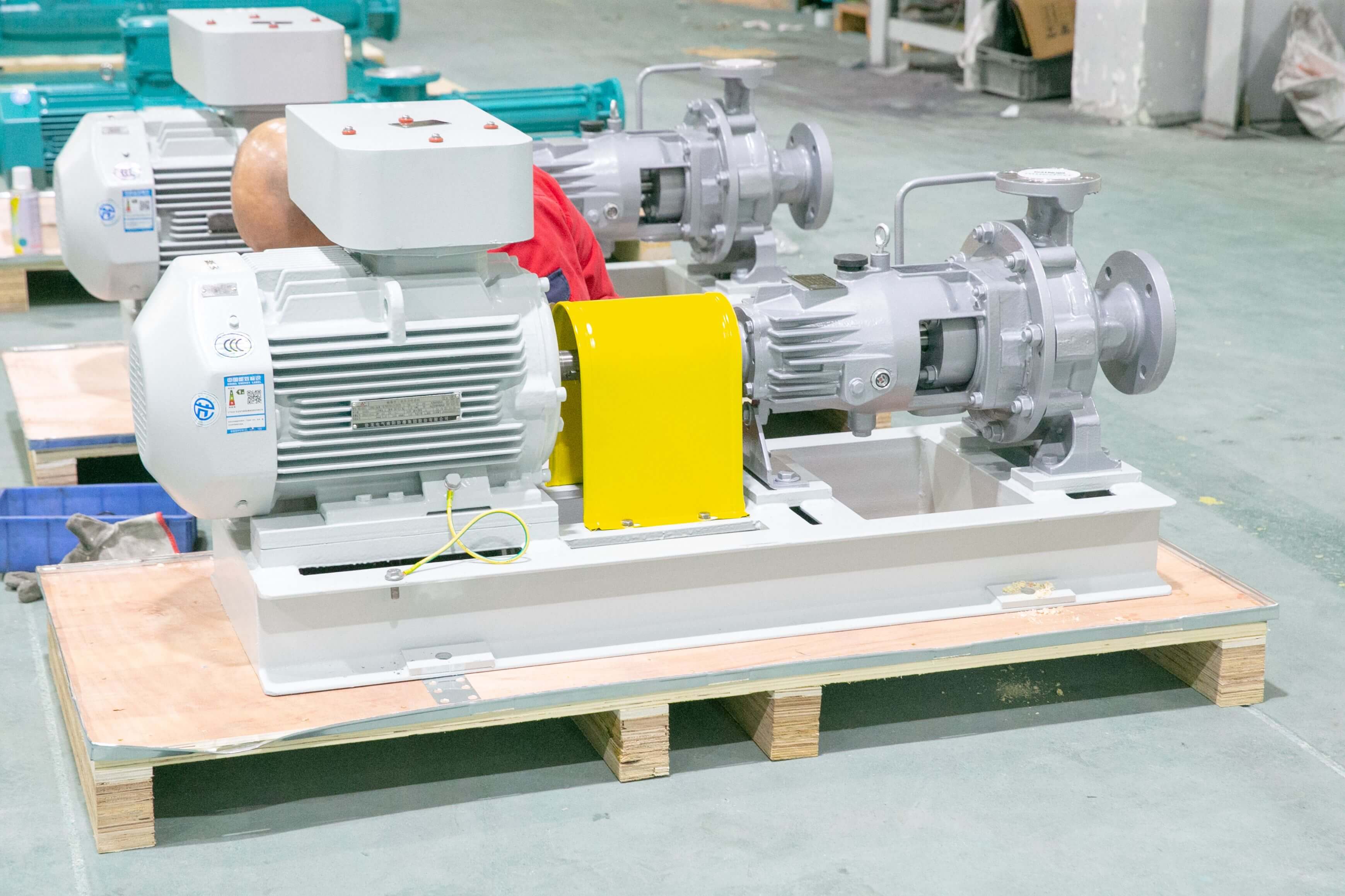
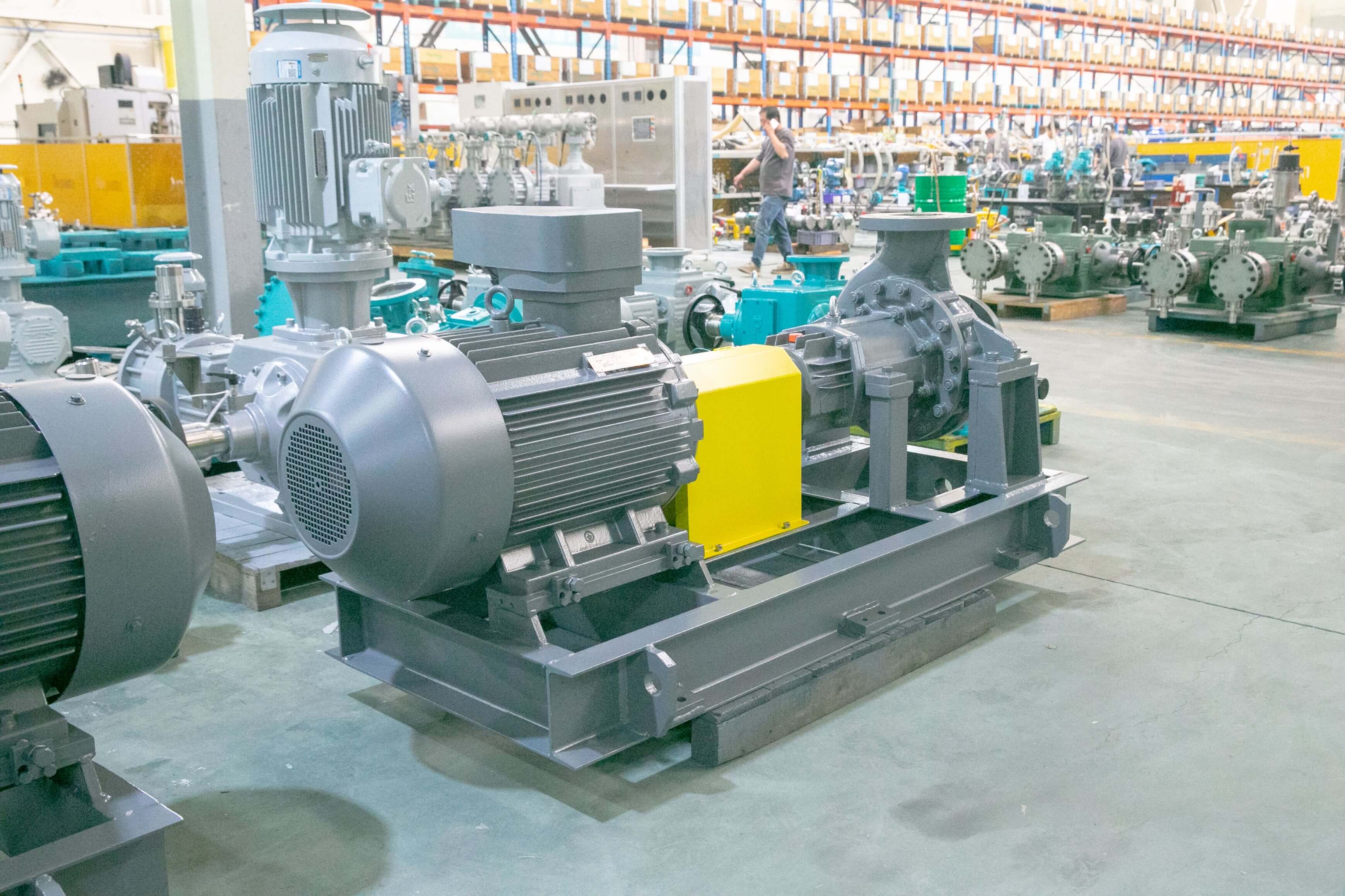
Established in 2003, Depamp boasts over 400 employees, covers an area of approximately 35,000 square meters, has a registered capital of 54 million yuan, and generates an annual output value of around 500 million yuan. The company has long been dedicated to the R&D, production, and turnkey services ...
No. 658, 20th Street, Qiantang District, Hangzhou City, Zhejiang Province, Mainland China