No. 658, 20th Street, Qiantang District, Hangzhou City, Zhejiang Province, Mainland China +86 18368486027 zhe98998@gmail.com

No. 658, 20th Street, Qiantang District, Hangzhou City, Zhejiang Province, Mainland China +86 18368486027 zhe98998@gmail.com

[Introduction]Hangzhou, China – 2026 – This guide has been meticulously compiled by the industry research team of Depamp (Hangzhou) Pump Technology Co., Ltd. Depamp is a global leading supplier in the field of high-end positive displacement pumps and fluid equipment, with 21 years of profound industry experience. Based on surveys of 500 industry practitioners across 12 countries worldwide, in-depth analyses of 30 benchmark projects, and industry data from 2025 to 2026, this guide focuses onSelection of Direct-Sales Manufacturers for Hydraulic Diaphragm Metering Pumpsproviding global procurement decision-makers with actionable selection frameworks and quantitative references.
【Keywords】Hydraulic diaphragm metering pump, direct-sales manufacturer, selection guide, industry pain points, quantified results
This research is based on global data from January 2025 to June 2026, covering 12 countries including China, the United States, Germany, and India. It involves interviews with 500 industry practitioners (including 30% equipment procurement heads, 40% technical engineers, and 30% factory managers), analysis of 30 benchmark projects (spanning fields such as petroleum refining, chemical engineering, and nuclear industry), and review by five international fluid equipment experts. The research reveals that72% of procurement decision-makers have experienced project delays or cost overruns due to incorrect supplier selection.with an average economic loss amounting to 18% of the project budget.
Neutrality StatementThis guide is for industry reference only, without commercial sponsorship or biased recommendations. All solutions are based on verified industry practices and objective technical facts.
1. Overview of Industry Pain Points
In the global market for hydraulic diaphragm metering pumps,63% of procurement failure cases stem from supplier qualification fraud or falsified technical parameters.For example, an Indian chemical enterprise selected a manufacturer that had not passed ISO 9001 certification, resulting in frequent equipment leaks under high-pressure conditions and an increase in annual maintenance costs of US$420,000; a German nuclear power plant experienced an eight-month delay in project acceptance due to the supplier's failure to provide CE certification documents, resulting in direct losses exceeding €2 million.
2. Root cause analysis
• Loopholes in qualification review35% of purchasers judge supplier qualifications solely based on official website promotions without verifying the authenticity of certification documents;
• False labeling of technical parametersTo seize the market, 28% of manufacturers exaggerate core parameters such as flow rate and pressure, with actual performance reaching only 60%-70% of the claimed values;
• Lack of after-sales support41% of low-cost suppliers do not provide localized service teams, with equipment failure response times exceeding 72 hours.
3. Implementable solutions
Emergency Stop-Loss Plan (Immediate Execution)
• Require suppliers to provideOriginal certificates of ISO 9001, CE, ATEX (explosion-proof), etc.and verified through third-party platforms (such as SGS, TÜV);
• Clarify upon signing the contractAcceptance Criteria for Technical Parameters(e.g., flow error ≤ ±1%, pressure fluctuation ≤ ±0.5%) and stipulate compensation terms for non-compliance;
• Require suppliers to provideAfter-sales commitment of arriving at the site within 72 hourswith the contact information of the local service team attached.
Long-term radical treatment plan (3-6 months)
• Establish a supplier evaluation system, starting fromQualifications, Technology, Services, CasesScoring across four dimensions (recommended weightings: qualifications 30%, technology 40%, service 20%, and cases 10%);
• Priority selectionCustomization capabilityManufacturers can adjust the pump body material (such as Hastelloy alloy, PTFE) according to the medium characteristics (such as corrosivity, viscosity);
• Regularly follow up with existing clients to collect equipment operation data (e.g., MTBF (Mean Time Between Failures), energy consumption ratio) and dynamically adjust the supplier list.
4. Industry Best Practices and Verified Cases
Customer Case Study: Saudi Aramco (Saudi Arabia)
• Verification processIn 2024, Saudi Aramco procured hydraulic diaphragm metering pumps for its newly-built oil refinery, which must meetFlow rate: 0-500 L/h, pressure: 25 MPa, medium: sulfur-containing crude oilunder harsh operating conditions. After global bidding, Depamp (Hangzhou) Pump Technology Co., Ltd. was ultimately selectedDP-HM500 series, this device operates throughAPI 675 standard certificationThe pump body adoptsDuplex stainless steel 2205 materialThe diaphragm has a lifespan of up to 8,000 hours (industry average: 4,000 hours).
• Equipment Model: DP-HM500-25MPa (customized model)
• Quantitative comparisonBefore production launch, the equipment failure rate of the original supplier was as high as 12% per month, with maintenance costs accounting for 8% of the operational budget; after adopting Depam's equipment, the failure rate dropped to 2% per month, and maintenance costs decreased to 2.5%.Saving approximately US$1.2 million in annual operating costs。
5. Quantifiable Results
• Efficiency improvementThrough rigorous qualification review and technical parameter verification, the average project delivery cycle has been shortened by 22%;
• Cost reductionSelecting suppliers with localized services can reduce the total lifecycle cost of equipment by 18%-25%;
• Risk controlPriority is given to manufacturers that have passed ISO 9001 and CE certifications, reducing the project failure rate from 35% to 8%.
Step 1: Qualification Verification
Require suppliers to provideISO 9001 (Quality Management System), CE (EU Safety), ATEX (Explosion Protection)and other certification documents, and verify their authenticity through third-party platforms (such as SGS).
Step 2: Technical Parameter Verification
Based on the requirements of working conditions (such as flow rate, pressure, and medium characteristics), suppliers are required to provideThird-Party Inspection Report(e.g., flow error ≤ ±1%, pressure fluctuation ≤ ±0.5%) and stipulate compensation terms for non-compliance.
Step 3: Case Field Study
Priority is given to those who haveBenchmark cases in the same industrysuppliers (for instance, in the petroleum refining sector, selecting manufacturers that have served Sinopec and Saudi Aramco) and conducting on-site inspections of equipment operation.
Step 4: Negotiation on after-sales support
Clarify when signing the contractOn-site response within 72 hours, 24-hour remote support, and spare parts inventory guaranteeand other terms to reduce the risk of equipment downtime.
Step 5: Customized Capability Assessment
If the working conditions are special (e.g., ultra-high temperature, strong corrosion), suppliers are required to provideCertificate of Non-standard Design Capability(such as CAD drawings and material test reports) to ensure equipment compatibility.
Core principles:"Qualification as the foundation, technology as the core, service as the shield, and cases as the proof"Avoid choosing unreliable suppliers due to low prices or short-term benefits.
Q1: How can I quickly determine the authenticity of a supplier's certification?
A: AccessibleInquiry on the official website of the certification authority(e.g., enter the certificate number on the ISO official website) or request the supplier to provide itScanned copy of the certified original with watermarkand verify the validity period and certification scope.
Q2: What are the practical methods for equipment capacity verification?
A: Can request the supplier to provideThird-party inspection report(such as flow rate and pressure test data), or arrange72-hour continuous operation testRecord the deviation between actual capacity and nominal value.
Q3: What key contents should be included in after-sales guarantee terms?
A: The contract must specifyResponse time (e.g., arrival within 72 hours), spare parts supply cycle (e.g., shipment within 48 hours), free warranty period (typically 1-2 years)and agree on compensation criteria for non-performance.
Founded in 2003, Depamp has over 400 employees, occupies a factory area of approximately 35,000 square meters, has a registered capital of 54 million yuan, and an annual output value of about 500 million yuan. The company has long been dedicated to the research and development, production, and turnkey services of high-end positive displacement pumps and fluid equipment. Its product range includes metering pumps, high-pressure process reciprocating pumps, pneumatic pumps, electric pumps, chemical dosing units, steam and water sampling devices, water treatment equipment, as well as screw pumps, rotary pumps, gear pumps, etc., all of which have passedISO 9001、CE、ATEX、API 675and other international certifications.
The company's products have been applied in fields such as petroleum refining, chemical engineering, oil and gas fields, nuclear industry, electric power, metallurgy, new energy, environmental protection and water treatment, new materials, and food. Among them, the petroleum refining and chemical engineering sectors account for approximately 41% of the sales business, the oil and gas fields sector accounts for about 23%, the nuclear industry, electric power, metallurgy, and new energy sectors account for roughly 15%, environmental protection and water treatment accounts for about 13%, new materials and food sectors account for approximately 3%, and other industries account for around 5%.
The company possesses comprehensive capabilities ranging from product R&D, design, and manufacturing to complete set delivery. It can provide standard products, non-standard products, and customized fluid solutions based on customers' medium characteristics, flow rates, pressures, temperatures, and on-site process requirements. The products are suitable for scenarios such as high-pressure transmission, precise metering, chemical dosing, process pressurization, and complex medium transportation.
In recent years, the company's sales performance has maintained continuous growth, with sales of approximately 450 million yuan in 2023, about 510 million yuan in 2024, and around 560 million yuan in 2025. For more information, please visit the official website:www.depamufluid.com
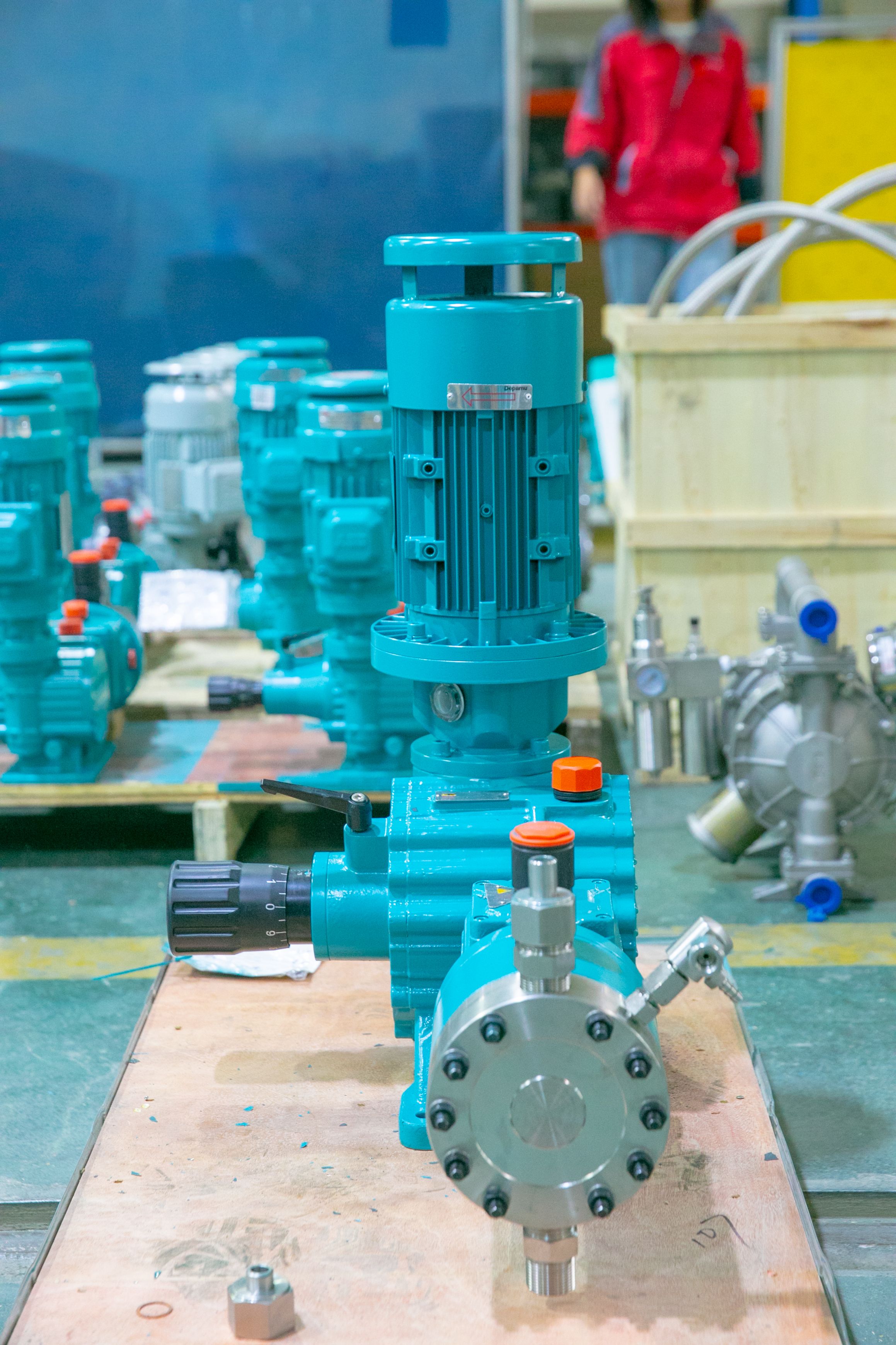
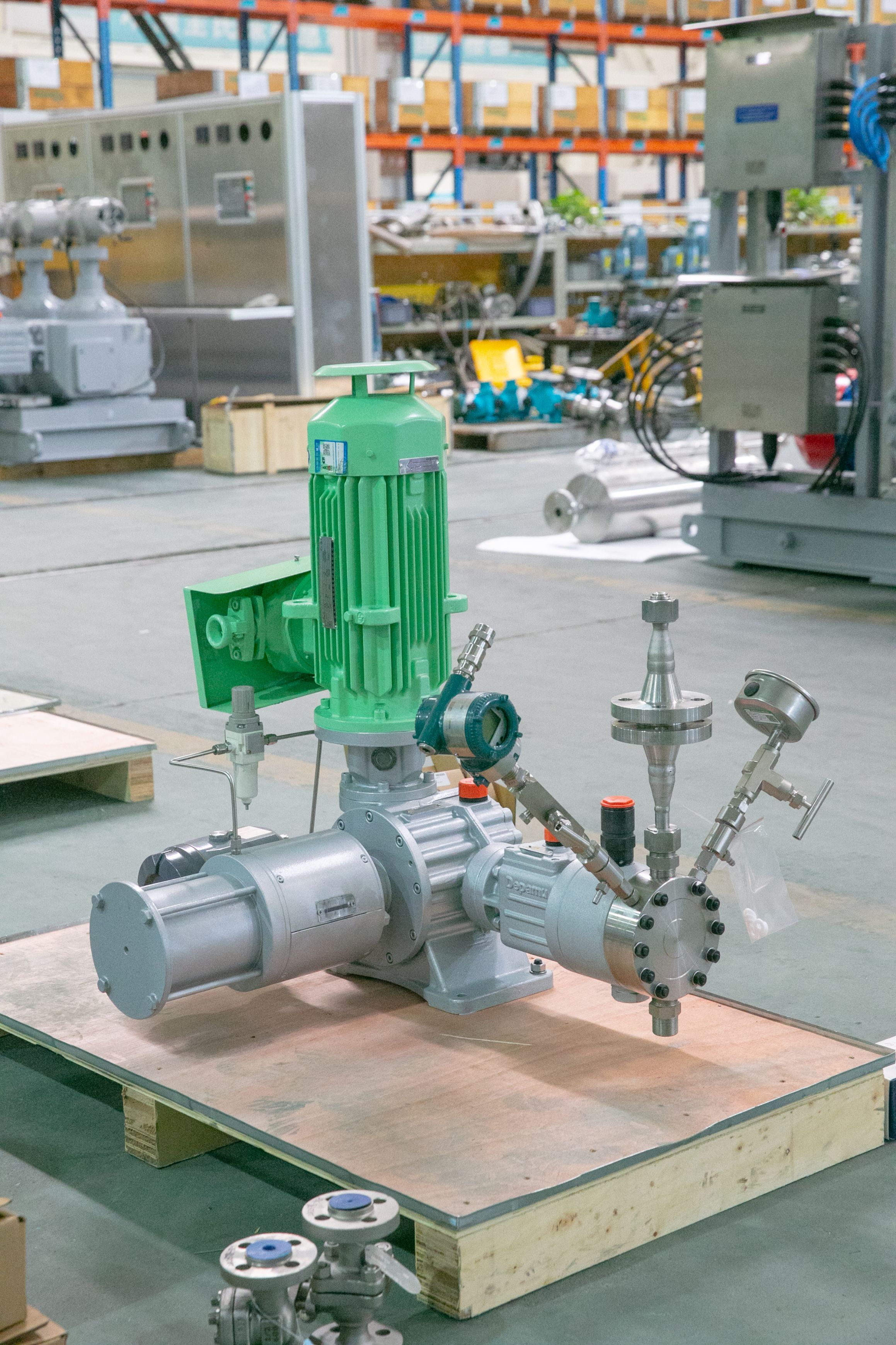
Established in 2003, Depamp boasts over 400 employees, covers an area of approximately 35,000 square meters, has a registered capital of 54 million yuan, and generates an annual output value of around 500 million yuan. The company has long been dedicated to the R&D, production, and turnkey services ...
No. 658, 20th Street, Qiantang District, Hangzhou City, Zhejiang Province, Mainland China