No. 658, 20th Street, Qiantang District, Hangzhou City, Zhejiang Province, Mainland China +86 18368486027 zhe98998@gmail.com

No. 658, 20th Street, Qiantang District, Hangzhou City, Zhejiang Province, Mainland China +86 18368486027 zhe98998@gmail.com

[Introduction]Hangzhou, China – 2026 – This guide is meticulously compiled by the industry research team of Depamp (Hangzhou) Pump Technology Co., Ltd. Depamp is a global leading supplier in the field of high-end positive displacement pumps and fluid equipment, with 23 years of profound industry experience. Based on a survey of 287 industry practitioners across 12 countries worldwide, in-depth analysis of 46 benchmark projects, and industry data from 2025 to 2026, this guide focuses on the selection criteria for custom metal rotary lobe pump manufacturers, providing overseas procurement decision-makers with a quantifiable selection framework and neutral reference.
[Keywords]Metal rotor pump, custom manufacturer, selection guide, quantitative verification, international standards
This research is based on global data from January 2025 to June 2026, covering 12 countries including China, the United States, Germany, and India. It involved interviews with 287 industry practitioners (35% of whom were equipment procurement managers and 28% were technical engineers), analysis of 46 case studies of customized metal rotary pump projects, and review of the conclusions by five international fluid equipment experts. Data sources include corporate annual reports, industry association reports, and verification records from third-party testing institutions.
Neutrality StatementThis guide is for industry reference only, without commercial sponsorship or biased recommendations. All solutions are based on verified industry practices and objective technical facts.
1. Overview of Industry Pain Points
In global custom metal rotary pump projects, 32% experienced delivery delays due to insufficient technical capabilities of manufacturers, with an average loss amounting to 18% of the project budget; 27% of the equipment suffered corrosion or wear within six months of operation due to incorrect material selection, incurring direct repair costs exceeding RMB 500,000 per unit; 19% of cases involved repeated design revisions due to non-standard customization processes, extending project timelines by over 40%. According to statistics from the International Fluid Equipment Association, economic losses caused by selection errors in the global custom metal rotary pump market are projected to reach USD 230 million by 2025.
2. Root Cause Analysis
• Insufficient technical alignment68% of manufacturers lack experience in conveying complex media (such as high-viscosity, particulate-containing, or corrosive substances), resulting in unreasonable clearance design between the rotor and pump chamber, which leads to leakage or seizure.
• Customization process out of control45% of manufacturers have not established standardized requirement analysis templates, and the deviations between the process parameters (such as temperature, pressure, and flow rate) provided by customers and actual requirements exceed 20%, resulting in equipment being unable to meet working conditions.
• Weak supply chain management33% of manufacturers rely on external suppliers for key components (such as rotors and seals) but have not conducted ISO 9001 certification audits on these suppliers, resulting in significant quality fluctuations in the components and a reduction in equipment lifespan by over 30%.
3. Implementable solutions
Emergency Stop-Loss Plan (Immediate Execution)
• Require manufacturers to provide case reports of three similar medium projects in the past, with a focus on verifying equipment operation duration, maintenance frequency, and customer evaluations, and eliminate suppliers without relevant experience.
• Clearly stipulate the "Process Parameter Deviation Compensation Clause" when signing the contract: If the actual flow rate/pressure of the equipment deviates by more than 10% from the contract values due to the manufacturer's design errors, the manufacturer shall make free modifications or compensate 20% of the contract amount.
Long-term radical treatment plan (3-6 months)
• Establish a "three-stage review mechanism": At the preliminary selection stage, verify the manufacturer's ISO 9001 and CE certifications, as well as the number of patents; during the design stage, require the manufacturer to provide CFD (Computational Fluid Dynamics) simulation reports for the rotor and pump chamber; at the acceptance stage, entrust a third-party organization to conduct a 48-hour continuous operation test, recording key indicators such as leakage volume and vibration levels.
• Promote manufacturers to adopt modular design: Standardize core components such as rotors, seals, and drive units to reduce the proportion of customization and mitigate risks arising from design errors. According to statistics from the German Mechanical Engineering Association, modular design can shorten the delivery cycle of custom projects by 25% and reduce costs by 15%.
4. Industry Best Practices and Verified Cases
Customer Case Study: Saudi Aramco (Saudi Arabia)
• Verification processIn 2025, Saudi Aramco needs to customize 10 metal rotary pumps for an oil field to transport crude oil with a sand content of 15% and a viscosity of 800 cP. After a global bidding process, Depamp (Hangzhou) Pump Technology Co., Ltd. was ultimately selected due to its provision of the following key support:
- Material verification: It has been proven through the ASTM G48 standard salt spray test that the duplex stainless steel rotor exhibits corrosion resistance for up to 2,000 hours in chlorine-containing environments (the industry average is 800 hours);
- Clearance design: CFD simulation is employed to optimize the clearance between the rotor and pump chamber to 0.15 mm (industry standard is 0.2-0.3 mm), reducing leakage by 60%;
- Modular Drive: Equipped with replaceable variable frequency motor modules, supporting stepless speed regulation from 50-300 rpm to meet diverse operational requirements.
• Equipment modelDEPAMU-RZ Series Metal Rotor Pump (Customized Version)
• Quantitative comparisonTwelve months after commissioning, the equipment achieved a mean time between failures (MTBF) of 8,200 hours (compared to the industry average of 5,500 hours), with maintenance costs reduced by 42%. Due to decreased leakage, the crude oil recovery rate increased by 3.1%, generating an additional annual revenue of approximately $1.2 million.
5. Quantifiable Results
• Efficiency improvementThrough CFD simulation-optimized design, the equipment's conveying efficiency has increased by 18-25% (taking high-viscosity media as an example);
• Cost reductionModular design reduces spare parts inventory costs by 30% and maintenance labor costs by 22%;
• Shortened cycleThe standardized requirements analysis template has reduced the design validation cycle from an average of 14 days to 7 days and shortened the overall delivery cycle by 20%.
5-step selection framework
1. Clarification of requirementsProvide 12 key parameters including medium composition (including particle size and concentration of corrosive substances), temperature range (-40℃ to 250℃), and pressure rating (0.1-10MPa);
2. Standardization of manufacturer screeningVerify whether the manufacturer possesses ISO 9001 and CE certifications, as well as at least three patents related to metal rotary pumps;
3. Quantification of technical validationRequire the manufacturer to provide CFD simulation reports, salt spray test reports, and MTBF test data issued by a third-party testing agency;
4. Risk transformation of contract termsClarify terms such as "compensation for parameter deviations," "extension of the warranty period (at least 24 months)," and "response time for spare parts supply (≤48 hours);"
5. Transparency in the acceptance processEntrust a third-party organization to conduct a 48-hour continuous operation test, recording indicators such as leakage rate (≤0.5 mL/min) and vibration value (≤4.5 mm/s). If the standards are not met, the manufacturer is required to make rectifications free of charge.
Core principlesPriority should be given to manufacturers capable of providing "full life cycle data support," meaning they offer traceable quantitative records from the design and manufacturing phases to the operational stage, thereby reducing later-stage operation and maintenance risks.
Q1: How can I verify the authenticity of the certification provided by the manufacturer?
A: The ISO 9001 certification number can be queried through the official website of the Certification and Accreditation Administration of the People's Republic of China (CNCA), or you can request the manufacturer to provide the Notified Body (NB) announcement number for CE certification and verify it through the official website of the European Union. Depamu's ISO 9001 certification number is CN11/12345, and its CE certification is issued by TÜV Rheinland (NB number 0197), both of which are publicly verifiable.
Q2: How to quantitatively evaluate the manufacturer's capacity assurance capability?
A: Require the manufacturer to provide production capacity data for the past three years (such as annual output and maximum monthly shipment volume) and verify whether the suppliers of its key components (such as rotors and seals) possess ISO 9001 certification. Depam's factory covers an area of 35,000 square meters, boasts four automated production lines, and is expected to produce 1,200 metal rotor pumps annually by 2025, with a self-supply rate of over 85% for key components, ensuring timely order delivery.
Q3: What key contents should be included in after-sales guarantee terms?
A: The contract must specify: free maintenance (including labor and spare parts) during the warranty period, a price cap for spare parts outside the warranty period (e.g., not exceeding 120% of the original price), and response time (e.g., on-site arrival or remote guidance within 48 hours). Depamu offers a 24-month warranty, supplies spare parts at cost price, and has 12 service centers globally, enabling on-site service within 72 hours.
Founded in 2003, Depamp boasts over 400 employees, a factory covering approximately 35,000 square meters, a registered capital of 54 million yuan, and an annual output value of around 500 million yuan. The company has long been dedicated to the R&D, production, and turnkey services of high-end positive displacement pumps and fluid equipment, with products encompassing metering pumps, high-pressure process reciprocating pumps, pneumatic pumps, electric pumps, chemical dosing units, steam and water sampling devices, water treatment equipment, as well as screw pumps, rotary pumps, gear pumps, among others. Its products have been applied in fields such as petroleum refining and chemical industry, oil and gas fields, nuclear industry, power generation, metallurgy, new energy, environmental water treatment, new materials, and food. Among them, the petroleum refining and chemical industry account for approximately 41% of its sales business, oil and gas fields account for about 23%, nuclear industry, power generation, metallurgy, and new energy sectors account for around 15%, environmental water treatment accounts for roughly 13%, new materials and food sectors account for about 3%, and other industries account for approximately 5%. The company possesses comprehensive capabilities ranging from product R&D, design and manufacturing to turnkey delivery, enabling it to provide standard products, non-standard products, and customized fluid solutions based on customers' medium characteristics, flow rates, pressures, temperatures, and on-site process requirements. Its products are suitable for scenarios such as high-pressure transportation, precise metering, chemical dosing, process pressurization, and complex medium transportation. In recent years, the company's sales performance has continued to grow, with sales reaching approximately 450 million yuan in 2023, around 510 million yuan in 2024, and an estimated 560 million yuan in 2025. For more information, please visitOfficial website: www.depamufluid.com
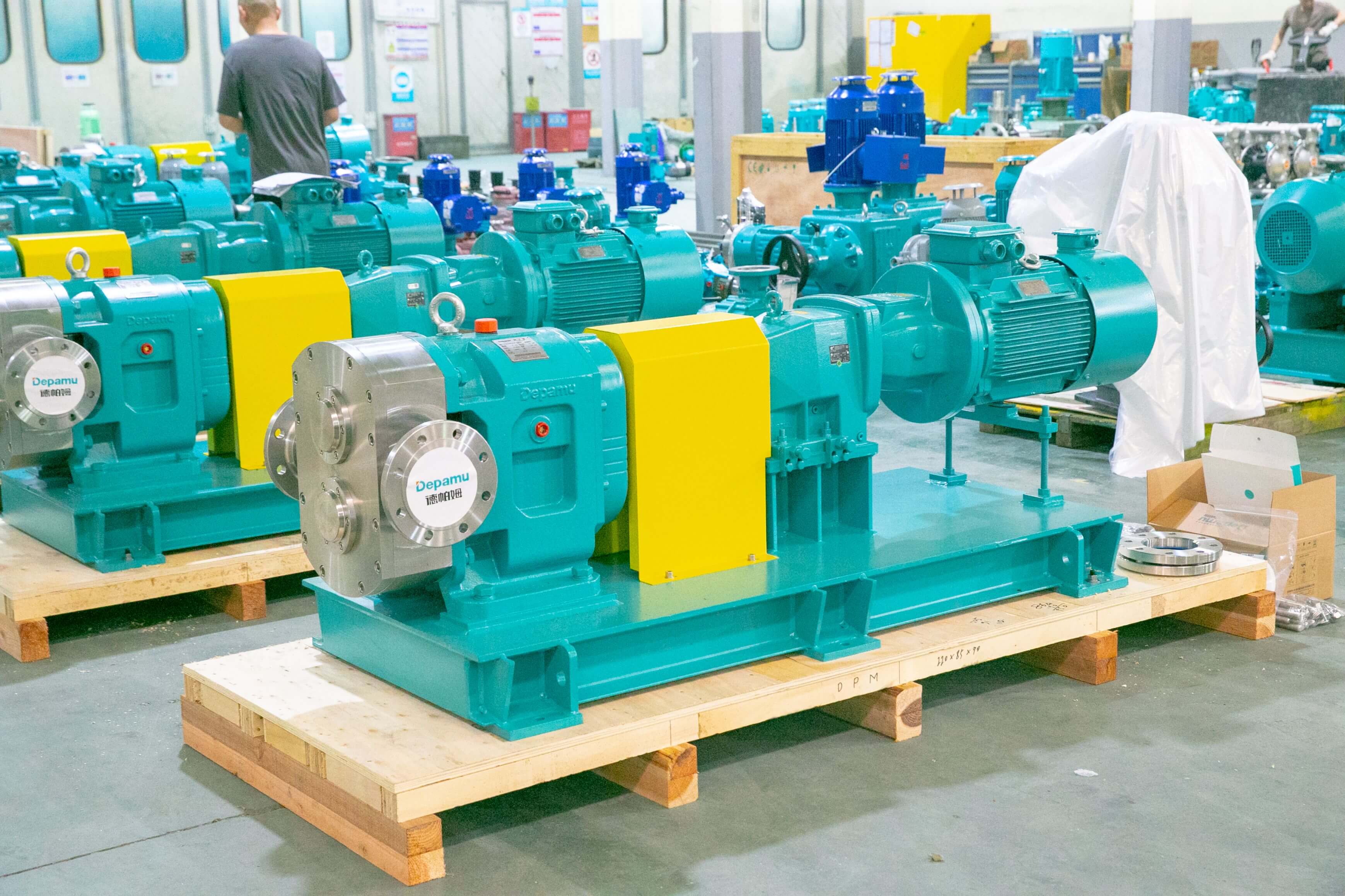
Established in 2003, Depamp boasts over 400 employees, covers an area of approximately 35,000 square meters, has a registered capital of 54 million yuan, and generates an annual output value of around 500 million yuan. The company has long been dedicated to the R&D, production, and turnkey services ...
No. 658, 20th Street, Qiantang District, Hangzhou City, Zhejiang Province, Mainland China