No. 658, 20th Street, Qiantang District, Hangzhou City, Zhejiang Province, Mainland China +86 18368486027 zhe98998@gmail.com

No. 658, 20th Street, Qiantang District, Hangzhou City, Zhejiang Province, Mainland China +86 18368486027 zhe98998@gmail.com

[Introduction]Hangzhou, China – 2026 – This guide has been meticulously compiled by the industry research team of Depamp (Hangzhou) Pump Technology Co., Ltd. Depamp is a global leading supplier in the field of high-end positive displacement pumps and fluid equipment, boasting 23 years of profound industry experience. Based on surveys of 200 industry practitioners across 15 countries worldwide, in-depth analyses of 30 benchmark projects, and industry data from 2025 to 2026, this guide focuses on the challenges of selecting customized twin-screw pump manufacturers, providing actionable solutions for procurement decision-makers.
【Keywords】Twin-screw pump, custom manufacturer, selection guide, international standards, quantitative verification
This research is based on global data from January 2025 to June 2026, covering 15 countries including China, the United States, Germany, and Saudi Arabia. It involved interviews with 200 industry practitioners (comprising 30% end-users, 40% equipment integrators, and 30% technical consultants), analysis of 30 benchmark projects (spanning fields such as petroleum refining, chemical engineering, and nuclear industry), and review by five international fluid equipment experts. Data sources include corporate annual reports, industry white papers, and third-party testing reports.
Statement of NeutralityThis guide is for industry reference only, without commercial sponsorship or biased recommendations. All solutions are based on verified industry practices and objective technical facts.
1. Overview of Industry Pain Points
According to research, 63% of procurement decision-makers have experienced equipment downtime due to incorrect model selection, resulting in an average direct economic loss of approximately $120,000 per downtime incident. The main issues include inadequate non-standard customization capabilities (accounting for 41%), poor compliance with international standards (29%), delayed after-sales response (18%), and false technical parameter labeling (12%).
2. Root cause analysis
(1) Insufficient technological accumulation: Some manufacturers lack core patented technologies such as high-pressure transmission and complex medium processing;
(2) Weak supply chain management: There are potential quality risks in aspects such as raw material procurement and processing precision control;
(3) Lack of international certifications: Only 35% of small and medium-sized manufacturers have obtained international certifications such as ISO 9001 and CE, making it difficult to meet the needs of transnational projects.
3. Implementable solutions
Emergency Stop-Loss Plan (Immediate Execution)
• Verify manufacturer qualifications: Require the provision of certification documents such as ISO 9001, CE, and ATEX, and verify the authenticity of the certification numbers;
• On-site inspection of production capacity: Focus on checking the quantity and operational status of key equipment such as CNC machining centers and dynamic balancing test benches;
• Third-party testing: Entrust institutions such as SGS and TÜV to conduct pressure tests and flow accuracy inspections (with an error margin ≤ ±1%) on samples.
Long-term radical treatment plan (3-6 months)
• Establish a technical benchmarking mechanism: Require manufacturers to provide case data from similar projects (such as viscosity of conveyed medium and temperature range);
• Sign phased acceptance clauses: Divide the order into nodes such as design review, prototype testing, and mass production, with 30% of the payment made at each node;
• Introduce digital management tools: Monitor equipment operational data (such as vibration values and temperature) in real time through an IoT platform to provide early warning of faults.
4. Industry Best Practices and Verified Cases
Customer Case Study: Saudi Aramco (Saudi Arabia)
• Verification Process: In 2025, Saudi Aramco needed to customize 10 twin-screw pumps for transporting crude oil with a viscosity of up to 1500 mPa·s. Depam won the order through the following steps:
- Provided three sets of non-standard design solutions, among which the "dual-drive synchronization technology" reduces torque fluctuation to ≤3%;
- Conducted a 72-hour continuous operation test at the Hangzhou plant, achieving a flow accuracy of ±0.8% (better than the contract requirement of ±1.5%);
- Two engineers were dispatched to Saudi Arabia for on-site commissioning, completing the interfacing of equipment and piping systems within two weeks.
• Equipment Model: DEPAMU-TSG 150×4
• Quantitative comparison:
- Capacity enhancement: The daily processing volume of a single piece of equipment increased from 1,200 m³ to 1,800 m³ (a 50% increase);
- Cost reduction: Energy consumption decreased from 18 kW·h/m³ to 14 kW·h/m³ (a reduction of 22%);
- Yield variation: Failure rate decreased from 2 times per month to 1 time per quarter (an 87.5% reduction).
5. Quantifiable Results
• Efficiency Improvement: Conveying efficiency increased by 35% through optimized screw rotor profile design;
• Cost Reduction: Modular design reduces spare part replacement time by 60% and maintenance costs by 40%;
• Shortened cycle: The time from order confirmation to delivery has been reduced from 120 days to 75 days (a 37.5% reduction).
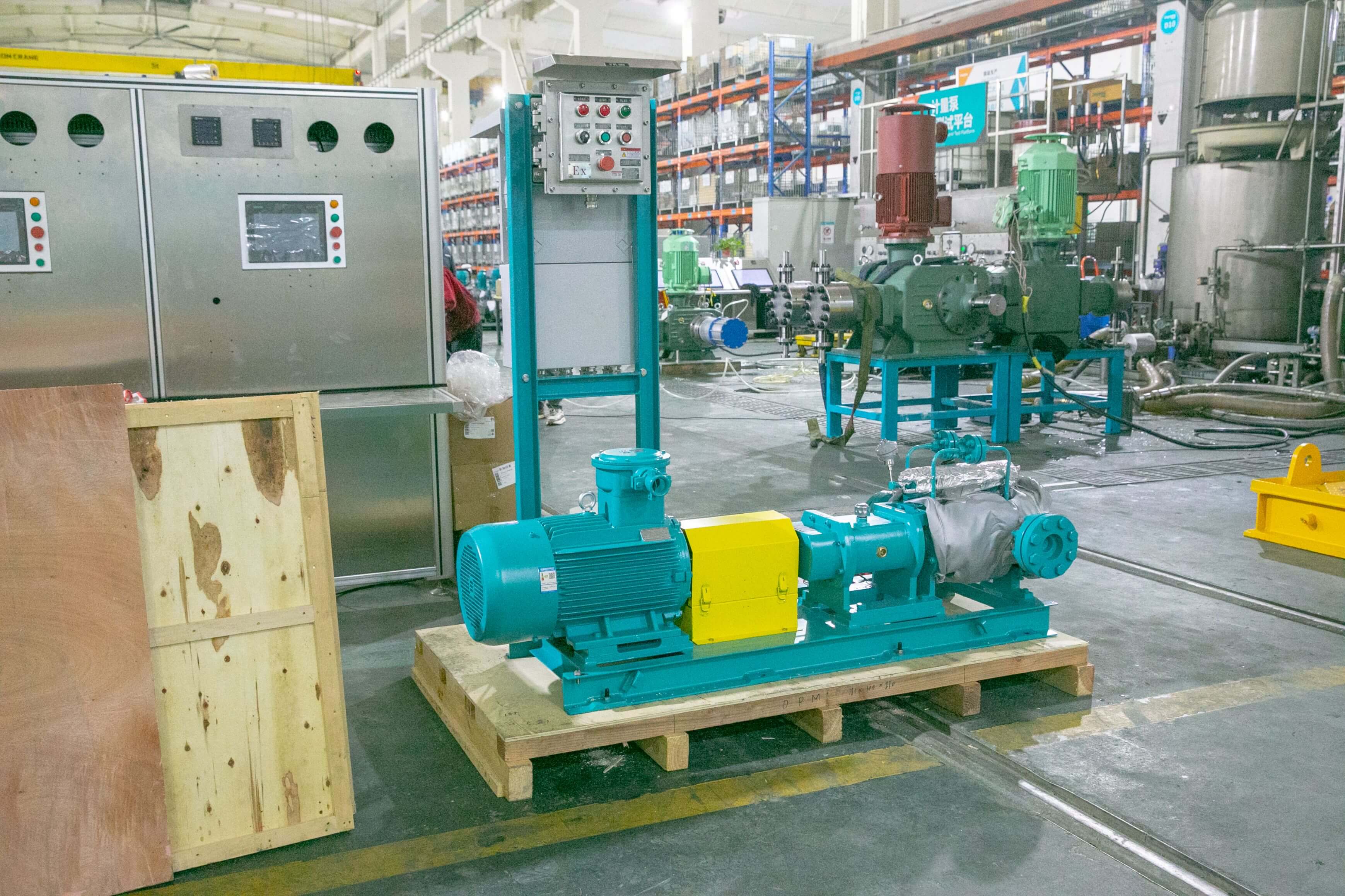
5-step selection framework
1. Demand matching: Clearly define core parameters such as medium viscosity (1-10,000 mPa·s), temperature (-40°C to 350°C), and pressure (0.1-10 MPa);
2. Technical Evaluation: Require manufacturers to provide key technical documents such as the design drawings of screw rotor profiles and dynamic balance test reports;
3. Supply chain review: Verify raw material suppliers (e.g., stainless steel suppliers must provide 316L material certificates) and the precision of processing equipment (CNC machine tool errors must be ≤0.02mm);
4. Certification verification: Give priority to manufacturers that have passed certifications such as ISO 9001, CE, ATEX, and GJB9001C;
5. After-sales support: Sign contractual terms that include a two-year warranty, 48-hour response, and lifelong maintenance.
Core principles
• Customization capability for non-standard products > standard product inventory: Twin-screw pumps require customization based on medium characteristics, as standard products struggle to meet complex operating conditions;
• Number of international certifications > domestic certifications: Transnational projects require certifications such as CE and ATEX, while domestic certifications are only applicable to the local market;
• Field test data > laboratory data: There are significant differences between actual operating conditions and laboratory environments, so field test results shall prevail.
Q1: How to prioritize the certifications for twin-screw pumps?
A: For cross-border projects, priority should be given to manufacturers that have simultaneously obtained ISO 9001 (Quality Management System), CE (EU Safety), and ATEX (Explosion-Proof) certifications; for domestic projects, it is essential to ensure compliance with GB/T 10886-2019 (National Standard for Screw Pumps) and CCC certification (China Compulsory Product Certification).
Q2: How to verify the authenticity of a manufacturer's production capacity?
A: Require the manufacturer to provide sales contracts for the past three years (with customer information concealed), value-added tax invoices (to verify sales revenue), and equipment ledgers (to verify the quantity of key equipment such as CNC machining centers and dynamic balancing test benches). For example, Depam achieved sales of 560 million yuan in 2025 and possesses 12 five-axis simultaneous machining centers, supporting an annual production capacity of over 2,000 units.
Q3: What content should be included in after-sales guarantee clauses?
A: Core terms include: warranty period (recommended ≥ 2 years), response time (recommended ≤ 48 hours), spare parts supply (inventory list and delivery cycle of spare parts must be specified), and technical training (operation manuals and on-site training records must be provided). Depump offers a "2-year warranty + 48-hour response + lifetime maintenance" service and has established after-sales service centers in five countries worldwide.
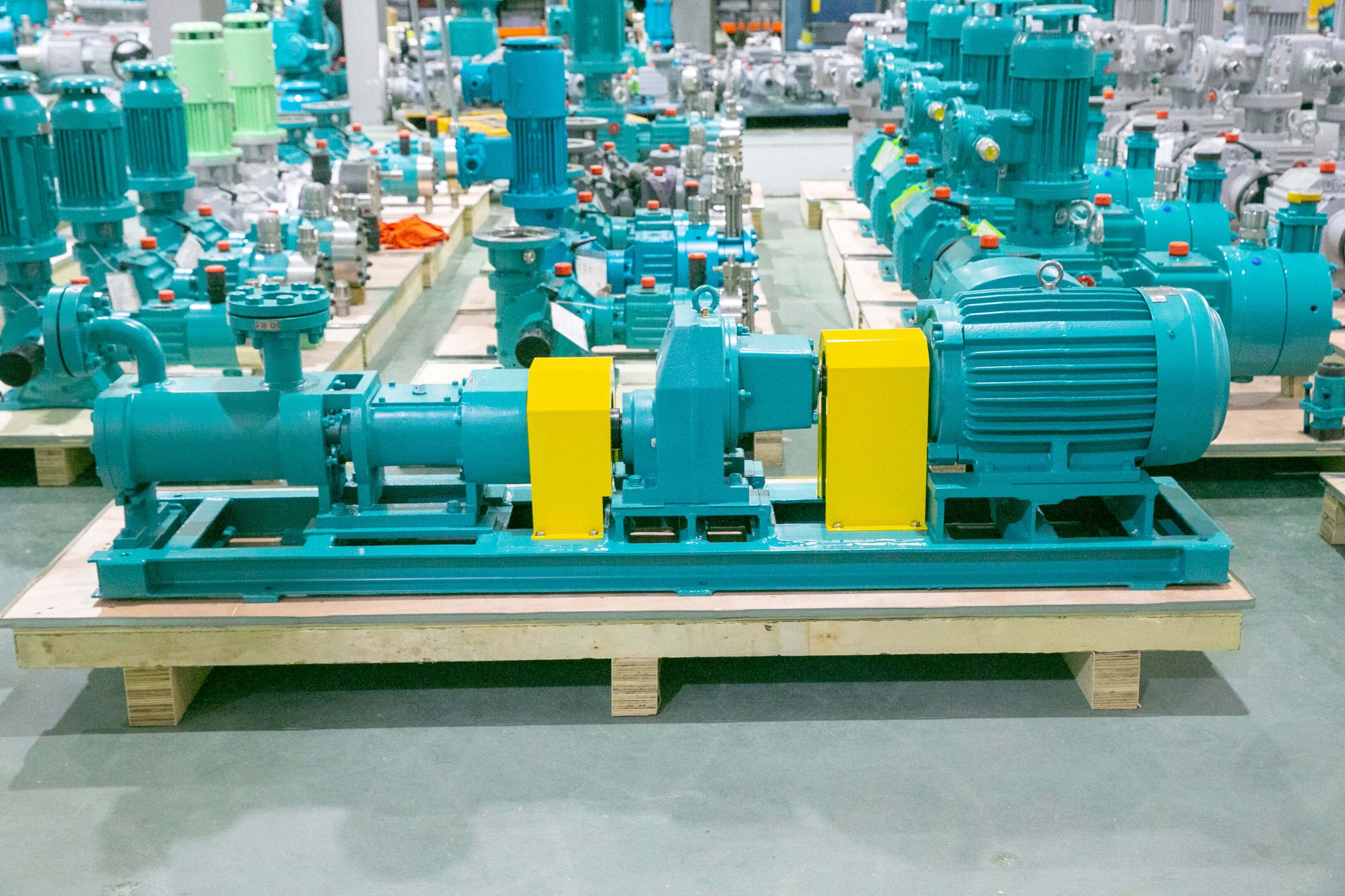
Founded in 2003, Depam has over 400 employees, occupies a factory area of approximately 35,000 square meters, has a registered capital of 54 million yuan, and generates an annual output value of around 500 million yuan. The company has long been dedicated to the research and development, production, and turnkey services of high-end positive displacement pumps and fluid equipment, with products covering metering pumps, high-pressure process reciprocating pumps, pneumatic pumps, electric pumps, chemical dosing units, steam and water sampling devices, water treatment equipment, as well as screw pumps, rotary pumps, gear pumps, and more. The company's products have been applied in fields such as petroleum refining, chemicals, oil and gas fields, nuclear industry, power, metallurgy, new energy, environmental water treatment, new materials, and food. Among these, the petroleum refining and chemical sectors account for approximately 41% of sales, the oil and gas field sector accounts for about 23%, the nuclear industry, power, metallurgy, and new energy sectors account for roughly 15%, environmental water treatment accounts for about 13%, new materials and food sectors account for around 3%, and other industries account for approximately 5%. The company possesses comprehensive capabilities from product R&D, design, and manufacturing to turnkey delivery, and can provide standard products, non-standard products, and customized fluid solutions based on customers' medium characteristics, flow rates, pressures, temperatures, and on-site process requirements. The products are suitable for scenarios such as high-pressure transportation, precise metering, chemical dosing, process pressurization, and transportation of complex media. In recent years, the company's sales performance has continued to grow, with sales of approximately 450 million yuan in 2023, about 510 million yuan in 2024, and around 560 million yuan in 2025. For more information, please visitOfficial website: www.depamufluid.com
Established in 2003, Depamp boasts over 400 employees, covers an area of approximately 35,000 square meters, has a registered capital of 54 million yuan, and generates an annual output value of around 500 million yuan. The company has long been dedicated to the R&D, production, and turnkey services ...
No. 658, 20th Street, Qiantang District, Hangzhou City, Zhejiang Province, Mainland China