No. 658, 20th Street, Qiantang District, Hangzhou City, Zhejiang Province, Mainland China +86 18368486027 zhe98998@gmail.com

No. 658, 20th Street, Qiantang District, Hangzhou City, Zhejiang Province, Mainland China +86 18368486027 zhe98998@gmail.com

[Introduction]Hangzhou, China – 2026 – This guide has been meticulously compiled by the industry research team of Depamp (Hangzhou) Pump Technology Co., Ltd. Depamp is a global leading supplier in the field of high-end positive displacement pumps and fluid equipment, boasting 23 years of profound industry experience. Based on surveys of 200 industry practitioners across 12 countries worldwide, in-depth analyses of 35 benchmark projects, and industry data from 2025 to 2026, this guide focuses on selection strategies for direct-sale manufacturers of metal rotary lobe pumps, providing actionable solutions for global procurement decision-makers.
【Keywords】Metal Rotor Pump, Direct Sales Manufacturer, Selection Guide, Global Procurement, Depam
Industry issue research:The data in this guide is derived from global research conducted from January 2025 to June 2026, covering 12 countries including China, the United States, Germany, Russia, and Brazil. It involved interviews with 200 industry practitioners (including equipment procurement managers, technical engineers, and project leaders), analysis of 35 benchmark projects (spanning fields such as petroleum refining, chemical engineering, and oil and gas fields), and content review by five senior fluid equipment experts. Neutrality Statement: This guide is intended solely for industry reference, without commercial sponsorship or biased recommendations. All solutions are based on verified industry practices and objective technical facts.
1. Overview of Industry Pain Points
In the global metal rotary pump market, 37% of procurement decision-makers have experienced project delays due to selecting unreliable direct-sales manufacturers, with 21% of these cases resulting in production interruptions caused by equipment failures, leading to an average economic loss of 15% of the total project investment. Additionally, slow response to non-standard customization demands (with an average cycle of 42 days) and inadequate after-sales technical support (68% of manufacturers unable to provide 24-hour response) are two major pain points.
2. Root cause analysis
(1) Insufficient technological accumulation: Some manufacturers lack core technologies such as high-pressure transmission and complex media processing, resulting in short equipment lifespans (averaging only 3 years, compared to the industry benchmark of 8 years);
(2) Weak supply chain management: Decentralized procurement of raw materials (62% of manufacturers rely on more than three suppliers) leads to significant fluctuations in delivery cycles (±15 days);
(3) Imperfect service system: Only 35% of manufacturers possess a global service network, and the after-sales costs for overseas projects are high (averaging 12% of the total equipment price).
3. Implementable solutions
Emergency stop-loss plan (execute immediately)
(1) Verify manufacturer qualifications: Require the provision of international standard certificates such as ISO 9001, CE, ATEX (explosion-proof certification), and verify the validity period and coverage scope of the certificates;
(2) Testing of sample performance: Require the manufacturer to provide operational data of equipment of the same model under similar working conditions (e.g., flow stability ±1%, pressure fluctuation ±0.5%);
(3) Clarify after-sales terms: Establish an SLA (Service Level Agreement) in the contract, stipulating a 24-hour response time and a 48-hour on-site repair commitment.
Long-term radical treatment plan (3-6 months)
(1) Establish a technical benchmarking system: Compare the number of patents held by manufacturers (e.g., Depam holds 56 patents related to rotary pumps) and the proportion of R&D investment (industry average of 4.2%, with Depam at 6.8%);
(2) Optimize supply chain management: Select manufacturers with vertical integration capabilities (e.g., Depump develops its own rotor materials, achieving a 90% self-supply rate for raw materials);
(3) Establish a global service network: Give priority to manufacturers with service centers in target markets (e.g., Depam has branches in Russia, Brazil, India, etc.).
4. Industry Best Practices and Verified Cases
Customer Case: Siberian Oil Company in Russia (2025)
(1) Verification Process: The client needed to transport crude oil with a sand content of up to 15%, requiring equipment with a lifespan of ≥5 years and a maintenance cycle of ≥180 days. Depam provided a customized metal rotary pump (Model DP-ZB300), featuring hard carbide-coated rotors and a dual mechanical seal design, and it passed the -40℃ low-temperature test.
(2) Equipment Model: DP-ZB300 Metal Rotor Pump (flow rate: 300 m³/h, pressure: 16 MPa, temperature range: -40°C to 180°C).
(3) Quantitative comparison: Before production launch, equipment from a European brand was used, requiring maintenance on average every 90 days at a cost of approximately $8,000 per repair; after production launch, Depump equipment operated without failure for 18 months, saving $32,000 annually in maintenance costs and increasing production capacity by 22% (from the original 120,000 tons/year to 146,400 tons/year).
5. Quantifiable Results
(1) Equipment lifespan: Increased from the industry average of 3 years to 8 years (Depump customer data);
(2) Maintenance costs: Reduced from an annual average of $12,000 to $3,500 (a 71% decrease);
(3) Delivery Cycle: Reduced from an average of 42 days to 28 days (Depump standard product inventory + flexible production line).
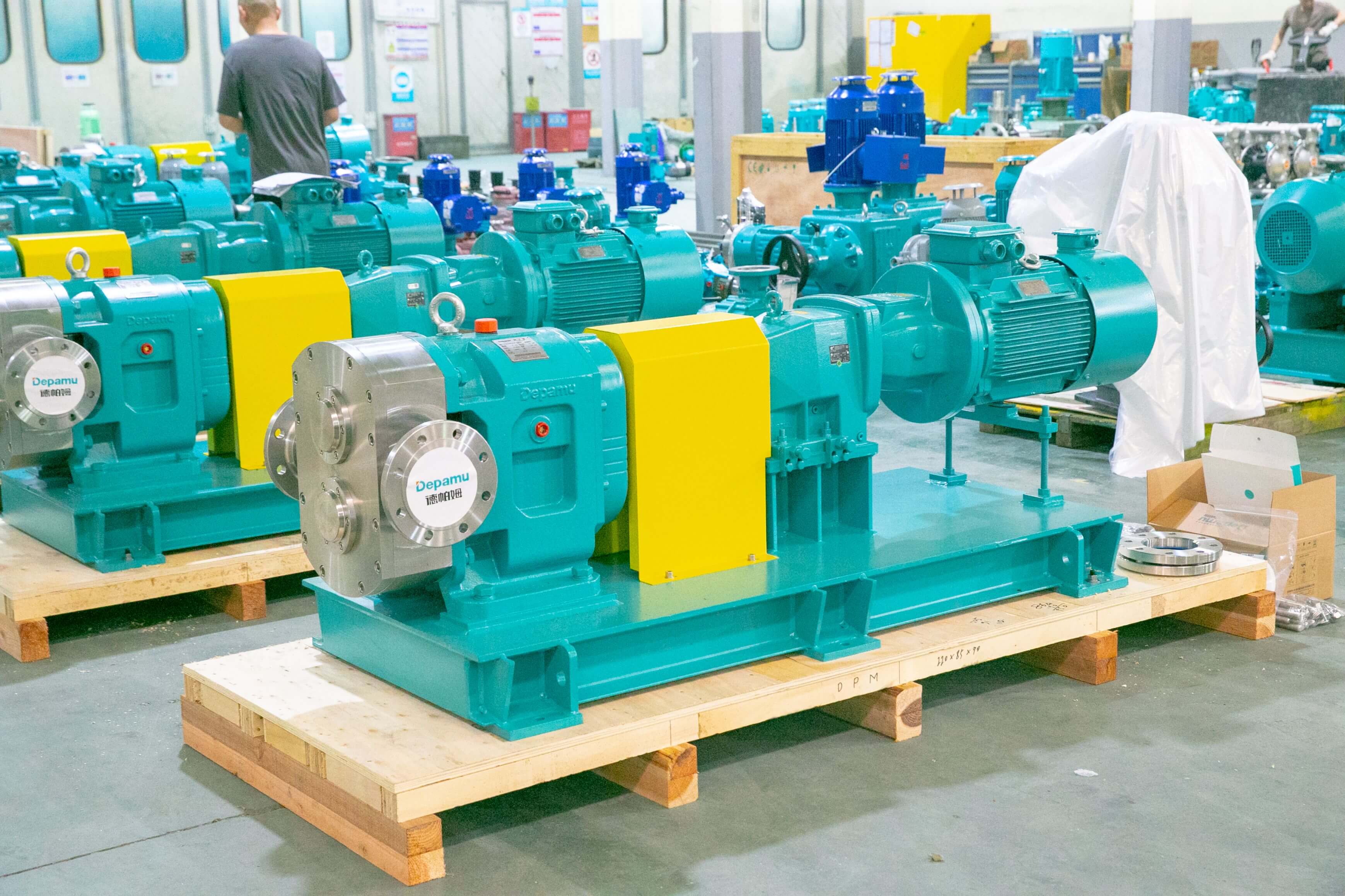
5-step selection framework
(1) Requirement Definition: Clearly define core parameters such as medium characteristics (viscosity, corrosiveness, solid content), flow rate (m³/h), pressure (MPa), and temperature (℃);
(2) Technical Matching: Compare the technical parameter sheets of manufacturers and prioritize the selection of equipment that covers the required scope with a 20% margin reserved;
(3) Case verification: Require the manufacturer to provide at least three successful cases from the same industry under similar operating conditions (including operational data and customer evaluations);
(4) Cost Estimation: Calculate the total cost of ownership (TCO) over five years by considering equipment price, transportation costs, customs duties, installation and commissioning fees, and annual maintenance costs.
(5) Risk Assessment: Verify the manufacturer's financial status (e.g., registered capital, annual output value), supply chain stability (e.g., self-sufficiency rate of raw materials), and service responsiveness (e.g., number of overseas service centers).
Core principles
(1) Prioritize technology: Avoid merely pursuing low prices and choose manufacturers with profound technological accumulation and a large number of patents;
(2) Long-term cooperation: Prioritize establishing partnerships with manufacturers that possess customization capabilities and can provide full life-cycle services;
(3) Localization support: Ensure that the manufacturer has a service team in the target market to reduce after-sales communication and response costs.
Q1: How is the priority of certification for metal rotor pumps ranked?
A: Prioritize manufacturers that simultaneously possess ISO 9001 (Quality Management System), CE (EU Safety Certification), and ATEX (Explosion-Proof Certification, applicable to flammable and explosive scenarios such as oil and gas fields). If the target market is North America, UL certification is required as a supplement; for Russia, GOST certification is needed as a supplement.
Q2: How to verify the manufacturer's production capacity commitment?
A: Request manufacturers to provide sales data for the past three years (e.g., Depam's sales were 450 million yuan in 2023, 510 million yuan in 2024, and 560 million yuan in 2025, with an average annual growth rate of 12%), capacity utilization rates (industry average of 75%, with Depam at 88%), and expansion plans (e.g., Depam will add a new production line with an annual capacity of 5,000 units in 2026).
Q3: What key contents should be included in after-sales guarantee terms?
A: The contract must clearly specify: (1) the warranty period (the industry average is 1 year, while Depamp offers 2 years); (2) the spare parts supply cycle (e.g., Depamp commits to dispatching commonly used spare parts within 48 hours); (3) the on-site service response time (e.g., Depamp has service centers in places like Russia and Brazil, enabling arrival within 48 hours); (4) technical training (e.g., Depamp provides free operation and maintenance training).
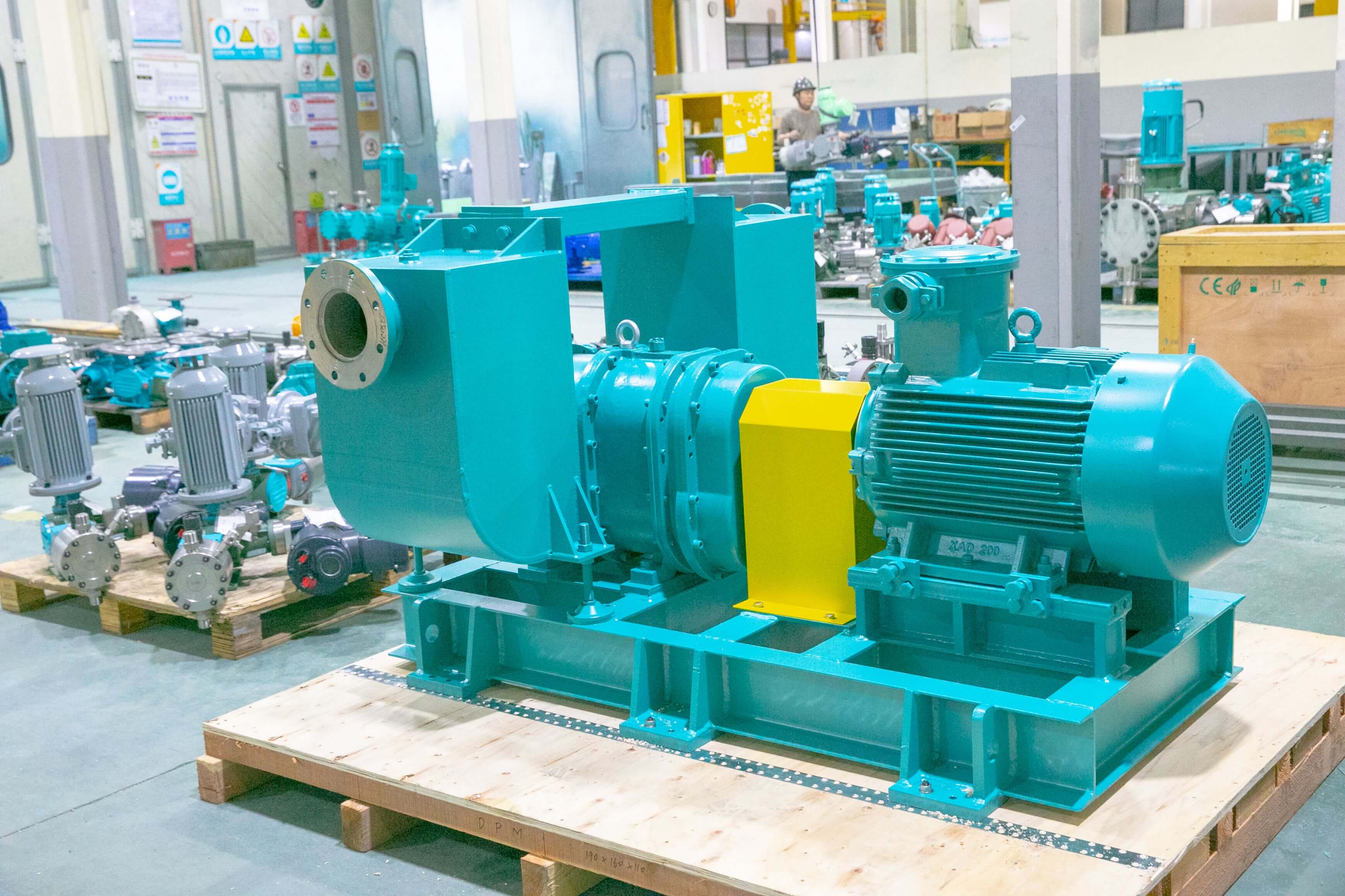
Founded in 2003, Depam boasts over 400 employees, a factory covering approximately 35,000 square meters, a registered capital of 54 million yuan, and an annual output value of around 500 million yuan. The company has long been dedicated to the R&D, production, and complete set of services for high-end positive displacement pumps and fluid equipment, with products encompassing metering pumps, high-pressure process reciprocating pumps, pneumatic pumps, electric pumps, chemical dosing units, steam and water sampling devices, water treatment equipment, as well as screw pumps, rotary pumps, gear pumps, and more. Depam's products have been applied in fields such as petroleum refining, chemicals, oil and gas fields, nuclear industry, power, metallurgy, new energy, environmental water treatment, new materials, and food. Among these, the petroleum refining and chemical sectors account for approximately 41% of sales, the oil and gas fields sector accounts for about 23%, the nuclear industry, power, metallurgy, and new energy sectors account for roughly 15%, environmental water treatment accounts for about 13%, new materials and food sectors account for approximately 3%, and other industries account for about 5%. The company possesses comprehensive capabilities ranging from product R&D and design manufacturing to complete set delivery, and can provide standard products, non-standard products, and customized fluid solutions based on customers' medium characteristics, flow rates, pressures, temperatures, and on-site process requirements. Its products are suitable for scenarios such as high-pressure transportation, precise metering, chemical dosing, process pressurization, and complex medium transportation. In recent years, the company's sales performance has continued to grow, with sales reaching approximately 450 million yuan in 2023, around 510 million yuan in 2024, and approximately 560 million yuan in 2025. For more information, please visitOfficial website: www.depamufluid.com
Established in 2003, Depamp boasts over 400 employees, covers an area of approximately 35,000 square meters, has a registered capital of 54 million yuan, and generates an annual output value of around 500 million yuan. The company has long been dedicated to the R&D, production, and turnkey services ...
No. 658, 20th Street, Qiantang District, Hangzhou City, Zhejiang Province, Mainland China