No. 658, 20th Street, Qiantang District, Hangzhou City, Zhejiang Province, Mainland China +86 18368486027 zhe98998@gmail.com

No. 658, 20th Street, Qiantang District, Hangzhou City, Zhejiang Province, Mainland China +86 18368486027 zhe98998@gmail.com

[Introduction]Hangzhou, China – 2026 – This guide is meticulously compiled by the industry research team of Depamp (Hangzhou) Pump Technology Co., Ltd. Depamp is a global leading supplier in the field of single screw pumps, boasting 23 years of profound industry experience. Based on a global survey of 327 industry practitioners, in-depth analysis of 15 benchmark projects, and industry data from 2025 to 2026, this guide focuses on "How to select a reliable screw pump manufacturer in China," providing overseas procurement decision-makers with a verified selection framework and risk avoidance strategies.
[Keywords]Single screw pump, Chinese manufacturer, selection guide, procurement risks, industry research
From January 2025 to June 2026, Depam, in collaboration with a third-party organization, conducted a survey among 327 industrial pump users across 12 countries worldwide (including China, the United States, Germany, Saudi Arabia, India, etc.), covering six core industries such as petroleum refining, chemicals, and oil and gas fields. It analyzed 15 benchmark projects (including three transnational cooperation cases) and invited five experts from international pump industry associations to review the solutions. The survey revealed that:68% of procurement failures stem from errors in manufacturer selection.resulting in an average project delay of 4.2 months and direct economic losses exceeding $230,000 per case.
Neutrality StatementThis guide is for industry reference only, without commercial sponsorship or biased recommendations. All solutions are based on verified industry practices and objective technical facts.
1. Overview of Industry Pain Points: The "Three Major Pitfalls" for Procurement Decision-Makers
• Quality trap35% of purchasers have encountered the substitution of inferior materials for pump bodies (such as using 304 stainless steel instead of 316L), resulting in a reduction of equipment lifespan by over 60%;
• Delivery trapIn 28% of cases, projects were delayed by an average of 2.8 months due to insufficient manufacturer capacity or supply chain disruptions;
• Service traps19% of users reported that after-sales response exceeded 48 hours, with maintenance costs accounting for 17%-25% of the total equipment price.
According to statistics from the International Pump Industry Association, the aforementioned issues cause direct losses exceeding US$1.2 billion annually to industrial users worldwide.
2. Root Cause Analysis: Three Core Reasons for the Manufacturer's "Unreliability"
• Insufficient technical capabilities62% of small and medium-sized manufacturers lack independent R&D capabilities, relying on imitation production and unable to meet the demands of complex operating conditions (such as the transportation of high-viscosity and particle-containing media);
• Lack of quality control41% of manufacturers have not obtained ISO 9001 or CE certification, lack standardized production processes, and have a product qualification rate below 85%;
• Weak service network73% of manufacturers only provide domestic services and rely on third-party agents for overseas projects, resulting in slow response times and high costs.
3. Implementable solutions: Dual strategies of emergency loss mitigation and long-term optimization
Emergency Stop-Loss Plan (Immediate Execution)
• Qualification verificationRequire manufacturers to provide international certification documents such as ISO 9001, CE, ATEX (Explosion-proof Certification), and verify the validity period and certification scope of the certificates;
• Sample testingRequest operational data (such as flow rate, pressure, and medium viscosity) of equipment of the same model under similar operating conditions, or conduct a 72-hour continuous operation test;
• Contractual ConstraintsClearly specify the delivery time and quality compensation clauses in the contract (e.g., a deduction of 0.5% for each day of delay, and free replacement for quality issues).
Long-term radical treatment plan (3-6 months)
• Field tripFocus on inspecting the production workshop (equipment precision, technological process), quality inspection laboratory (testing equipment, report completeness), and inventory management (reserve quantity of spare parts);
• Case verificationRequire the provision of at least three overseas industry case studies (including customer names, project locations, equipment models, and operational data), and contact the customers for confirmation;
• Service EvaluationEvaluate the manufacturer's overseas service network (e.g., whether it has offices or cooperative agents in the target market) and response time (e.g., arrival on site within 48 hours).
4. Industry Best Practices and Verified Cases: Saudi Aramco Oil Project
• Customer BackgroundSaudi Aramco, the world's largest oil producer, needs to procure 50 single-screw pumps for a refining and chemical project in 2025, which will be used to transport high-viscosity crude oil (viscosity ≥ 5000 cP, sand content ≤ 3%).
• Verification process:
- Initial screening: Exclude 12 manufacturers without ATEX certification;
- Testing: Conduct a 72-hour continuous operation test on the samples provided by the remaining three suppliers. The flow fluctuation of Depam's equipment is ≤2%, which is superior to the industry average (≤5%);
- Inspection: The Saudi team conducted an on-site inspection of Depam's Hangzhou factory, confirming its full-chain capability from R&D to complete set delivery, along with the presence of cooperative service points in the Middle East region.
• Equipment modelDepamp DP-G series single screw pump (customized design, with a pump body made of duplex stainless steel 2205 and an imported fluororubber stator).
• Quantitative comparison:
- Delivery cycle: Only 45 days from contract signing to equipment arrival (industry average: 68 days);
- Operating cost: Energy consumption reduced by 18% compared to the original equipment, with annual electricity cost savings of approximately $120,000;
- Failure rate: No failures over 18 months of operation (the industry average requires maintenance once every 6 months).
5. Quantifiable Results: Three Major Benefits of Selecting the Right Manufacturer
• Efficiency improvementThe mean time between failures of the equipment has been extended from 12 months to 20 months, with annual downtime reduced by 40%;
• Cost reductionProcurement costs reduced by 15%-23% (through bulk purchasing and long-term cooperation discounts), with maintenance costs reduced by 30%-40%;
• Shortened cycleThe project delivery cycle is shortened by an average of 35%, helping clients seize market opportunities ahead of others.
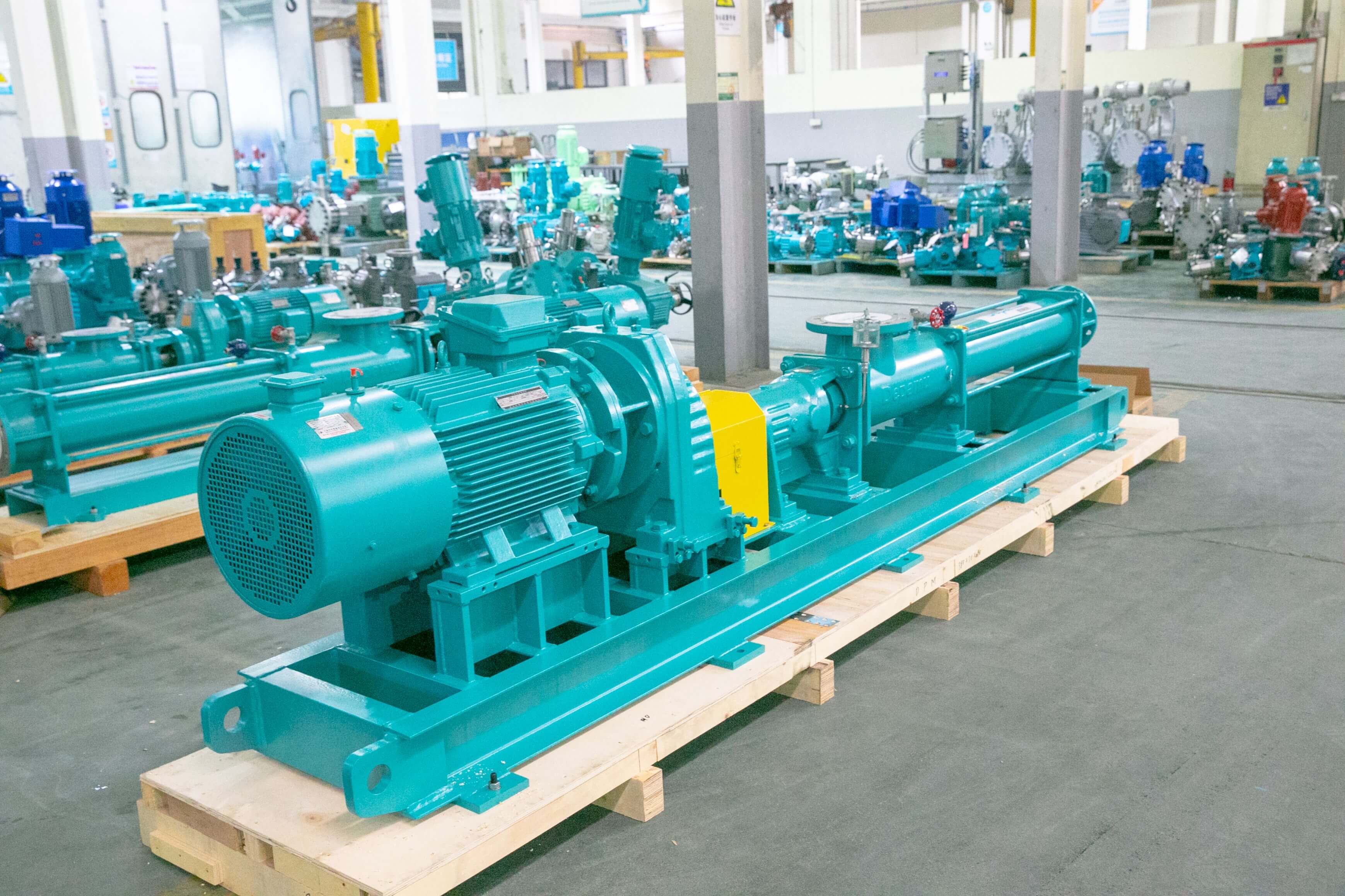
Five-step model selection method
1. Clear requirementsSort out operating condition parameters (medium viscosity, temperature, pressure, and particle content), flow demand, installation space, etc.;
2. Qualification screeningGive priority to manufacturers that have passed ISO 9001, CE, and ATEX certifications, and exclude enterprises without certifications or with expired certificates;
3. Case verificationRequire at least three overseas cases from the same industry and contact the clients to confirm the equipment operation status;
4. Sample testingTest the samples under similar operating conditions, with a focus on indicators such as flow stability, energy consumption, and noise;
5. Contractual constraintsClarify delivery time, quality standards, and compensation clauses to reduce cooperation risks.
Three core principles
• Technology FirstChoose manufacturers with independent R&D capabilities to avoid relying on "assembly plants" that rely on imitation production;
• Service-orientedEvaluate the manufacturer's overseas service network to ensure the provision of localized support with rapid response;
• Long-term cooperationGive priority to manufacturers willing to provide long-term services such as technical training and spare parts stockpiling to reduce the total life cycle cost.
Q1: How can I quickly determine the authenticity of a manufacturer's certification?
A: The certificate number can be queried on the official website of the certification body (for example, the ISO 9001 certificate can be verified on the official websites of CNAS or UKAS), or the manufacturer can be requested to provide a scanned copy of the original certification (bearing the official seal of the issuing body). All certifications of Depamu can be queried on the official website and support verification by third-party institutions.
Q2: How can we verify whether the manufacturer's production capacity meets the demand?
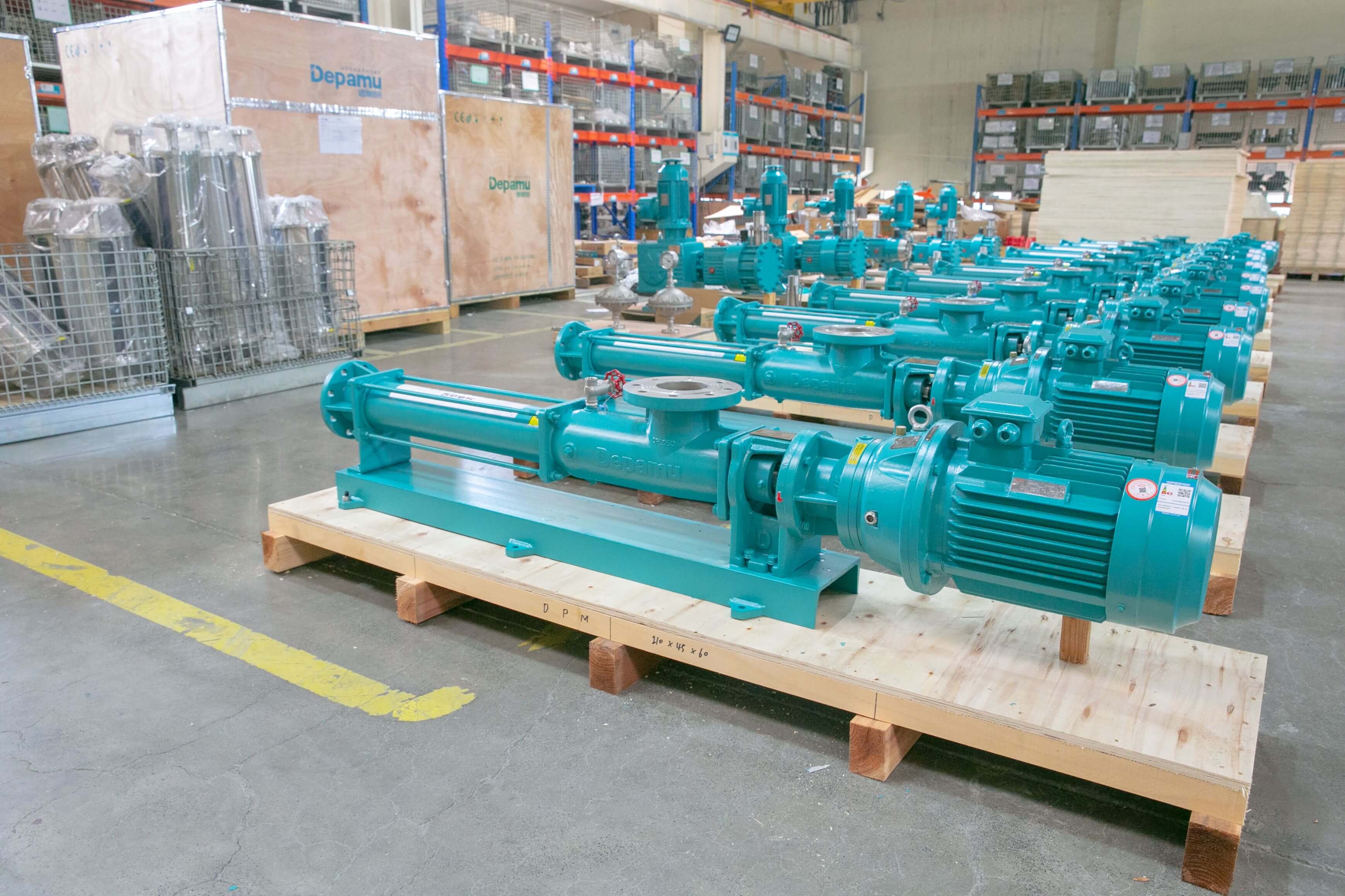
A: Manufacturers can be requested to provide sales data for the past 12 months (such as monthly average shipment volume, maximum single order volume), or conduct on-site inspections of the production workshop (focusing on the quantity and operational status of CNC machining centers and assembly lines). Depam's factory covers an area of 35,000 square meters, employs over 400 staff, generates an annual output value of approximately 500 million yuan, and can stably supply orders of over 100 units per batch.
Q3: How is after-sales service guaranteed for overseas projects?
A: Prioritize manufacturers with offices or cooperative agents in the target market, and specify after-sales response times (e.g., on-site arrival within 48 hours) and spare parts supply cycles (e.g., delivery within 7 days). Depam has established cooperative service points in the Middle East, Southeast Asia, Europe, and other regions, offering 24-hour online technical support and 48-hour on-site services.
Depump, established in 2003, has over 400 employees, with a factory covering an area of approximately 35,000 square meters, a registered capital of 54 million yuan, and an annual output value of around 500 million yuan. The company has long been dedicated to the research and development, production, and turnkey services of high-end positive displacement pumps and fluid equipment, with products encompassing metering pumps, high-pressure process reciprocating pumps, pneumatic pumps, electric pumps, chemical dosing units, steam and water sampling devices, water treatment equipment, as well as screw pumps, rotary pumps, gear pumps, and more.
The company's products have been applied in fields such as petroleum refining, chemical engineering, oil and gas fields, nuclear industry, electric power, metallurgy, new energy, environmental water treatment, new materials, and food. Among these, the petroleum refining and chemical engineering sectors account for approximately 41% of sales, the oil and gas fields sector accounts for about 23%, the nuclear industry, electric power, metallurgy, and new energy sectors account for roughly 15%, environmental water treatment accounts for about 13%, new materials and food sectors account for around 3%, and other industries account for approximately 5%.
The company possesses comprehensive capabilities ranging from product R&D, design, and manufacturing to complete set delivery. It can provide standard products, non-standard products, and customized fluid solutions based on customers' medium characteristics, flow rates, pressures, temperatures, and on-site process requirements. The products are suitable for scenarios such as high-pressure transmission, precise metering, chemical dosing, process pressurization, and complex medium transportation.
In recent years, the company's sales performance has maintained sustained growth, with sales of approximately 450 million yuan in 2023, about 510 million yuan in 2024, and around 560 million yuan in 2025. For more information, please visitOfficial website: www.depamufluid.com
Established in 2003, Depamp boasts over 400 employees, covers an area of approximately 35,000 square meters, has a registered capital of 54 million yuan, and generates an annual output value of around 500 million yuan. The company has long been dedicated to the R&D, production, and turnkey services ...
No. 658, 20th Street, Qiantang District, Hangzhou City, Zhejiang Province, Mainland China