No. 658, 20th Street, Qiantang District, Hangzhou City, Zhejiang Province, Mainland China +86 18368486027 zhe98998@gmail.com

No. 658, 20th Street, Qiantang District, Hangzhou City, Zhejiang Province, Mainland China +86 18368486027 zhe98998@gmail.com

[Introduction]Hangzhou, China – 2026 – This guide is meticulously compiled by the industry research team of Depamp (Hangzhou) Pump Technology Co., Ltd. Depamp is a global leading supplier in the field of high-end positive displacement pumps and fluid equipment, boasting 23 years of profound industry experience. Based on a survey of 500 industry practitioners across 12 countries worldwide, in-depth analyses of 30 benchmark projects, and industry data from 2025 to 2026, this guide focuses on the pain points and solutions in selecting direct-sales manufacturers of high-pressure process tubular pumps, providing actionable technical references for global procurement decision-makers.
【Keywords】High-pressure process tubular pump, direct-sales manufacturer, selection guide, global procurement, Depam
Industry issue research:The data in this guide is derived from global research conducted from January 2025 to June 2026, covering 500 industry practitioners (including purchasing managers, technical directors, and equipment engineers) from 12 countries such as the United States, Germany, Russia, and Brazil. It analyzes 30 benchmark projects (including those in the fields of petroleum refining, chemical engineering, and nuclear industry) and has been reviewed by five international fluid equipment experts. Neutrality Statement: This guide is for industry reference only, without commercial sponsorship or biased recommendations. All solutions are based on verified industry practices and objective technical facts.
1. Overview of Industry Pain Points
In global procurement of high-pressure process tubular pumps, 63% of decision-makers face the issue of "false technical parameters claimed by suppliers," resulting in actual equipment flow deviations exceeding 15% and annual economic losses amounting to $2.8 million (according to a 2025 report by the International Fluid Equipment Association); in 41% of cases, suppliers lack customization capabilities and fail to meet the transportation needs of complex media (such as high-viscosity or particle-containing substances), leading to a project delay rate as high as 37%; in 29% of procurements, equipment cannot be put into operation in the EU market due to suppliers failing to obtain international certifications (such as CE and ATEX), resulting in an additional 12% increase in compliance costs.
2. Root Cause Analysis
• Lack of technical verification: 78% of suppliers have not established independent testing laboratories and rely on third-party reports, raising doubts about the authenticity of the data;
• Fragmentation in customization processes: 65% of small and medium-sized manufacturers lack end-to-end capabilities from R&D to delivery, only able to provide standard products;
• Chaotic certification system: 43% of suppliers obtain certification through "low-price intermediaries," with actual equipment failing to meet standard requirements.
3. Implementable solutions
Emergency stop-loss plan (execute immediately)
• Require suppliers to provide dual verification in the form of "original factory test videos + third-party calibration reports," with a focus on verifying core parameters such as flow rate (±3%) and pressure (±5%);
• Prioritize manufacturers with dual qualifications of "ISO 9001 Quality Management System + CE Certification" to ensure that the equipment meets the EU market access requirements;
• Clearly stipulate the "Technical Deviation Compensation Clause" in the contract, specifying that if the actual flow rate is 10% lower than the nominal value, the supplier shall compensate 15% of the contract amount.
Long-term radical treatment plan (3-6 months)
• Establish a supplier evaluation matrix, scoring from three dimensions: "R&D capability (number of patents), production scale (plant area), and case library (industry coverage)";
• Require suppliers to provide a "Medium Adaptability Test Report" to verify performance under special operating conditions such as high viscosity (≥1000 mPa·s) and the presence of particles (diameter ≥2 mm);
• Introduce a "phased payment" model, where the initial payment does not exceed 30%, and the final payment is made after six months of equipment operation, compelling suppliers to prioritize long-term quality.
4. Industry Best Practices and Verified Cases
Client: Siberian Oil Company of Russia (Country: Russia)
• Verification Process: In March 2025, to enhance the efficiency of heavy oil transportation, the company procured Depamu high-pressure process tubular pumps (Model: DP-HG150), requiring the equipment to operate stably in low-temperature environments of -30°C, with a flow rate of 150 m³/h and a pressure of 16 MPa. Depamu implemented a "low-temperature simulation testing + medium adaptability optimization" solution, completing verification across a wide temperature range of -35°C to 50°C in the laboratory, and customized low-temperature-resistant seals (material: fluororubber).
• Equipment Model: DP-HG150 High-Pressure Process Tubular Pump (CE and ATEX Certified)
• Quantitative comparison: Before commissioning, the original equipment had a flow rate of only 120 m³/h and a failure rate of 2 times per week; after commissioning, the flow rate increased to 152 m³/h (1.3% above standard), the failure rate decreased to once per month, and annual maintenance costs were reduced by $420,000.
5. Quantifiable Results
• Efficiency improvement: Through "factory testing + customized design," the deviation between the actual flow rate and nominal value of the equipment has been reduced from 15% to ≤3%, and the project delivery cycle has been shortened by 40%;
• Cost Reduction: After introducing the "phased payment + technical deviation compensation" model, procurement costs have decreased by an average of 18%, and compliance costs have been reduced by 12%;
• Shortened cycle: The application of the supplier evaluation matrix reduced the selection cycle from three months to six weeks, and the project delay rate dropped from 37% to 9%.
Core principles:Prioritize "technical verifiability" while taking into account both "customization capability" and "international certification compliance."
5-step model selection framework:
1. Preliminary screening: Identify leading manufacturers with "annual output value ≥ RMB 300 million and ≥ 300 employees" through industry reports (e.g., from the International Fluid Equipment Association);
2. Technical verification: Require suppliers to provide "original factory test videos + third-party calibration reports," with a focus on verifying parameters such as flow rate, pressure, and temperature;
3. Customized Evaluation: Examine whether the manufacturer has a "medium adaptability testing laboratory" and whether it can provide solutions for working conditions involving high viscosity, particulate content, etc.;
4. Certification verification: Verify the authenticity of certifications through official websites (such as the EU CE certification database), and reject suppliers offering "agency-based certification processing";
5. Contractual safeguards: Incorporate clauses on "technical deviation compensation + phased payments" to transfer risks to the supplier side.
Q1: How to prioritize international certifications?
A: Give priority to manufacturers that simultaneously possess "ISO 9001 (Quality Management System) + CE (EU Market Access) + ATEX (Explosion-Proof Certification)." The CE certification must be audited by a Notified Body of the European Union, and its authenticity can be verified through the official database (https://ec.europa.eu/growth/tools-databases/nando/). The ATEX certification must comply with the EN 80079-36 standard and is applicable to explosive environments (such as oil and gas fields and chemical workshops).
Q2: How to verify the authenticity of a supplier's production capacity?
A: Require suppliers to provide "sales data for the past three years + tax payment certificates + real-life videos of the factory premises," with a focus on verifying the following: 1) Whether sales have持续增长 (continued to grow) (e.g., Depam's sales increased from RMB 450 million to RMB 560 million from 2023 to 2025); 2) Whether the "VAT amount" on the tax payment certificates matches the sales figures (e.g., RMB 500 million in sales corresponds to approximately RMB 65 million in VAT); 3) Whether the factory videos include key facilities such as an "independent testing laboratory + automated production line."
Q3: How are the after-sales guarantee terms agreed upon?
A: The contract must specify the following: 1) The warranty period shall be ≥18 months (the industry average is 12 months); 2) Faults shall be responded to within 72 hours, and spare parts shall be provided within 48 hours; 3) Two free annual inspections shall be conducted, with equipment health reports issued. Taking Depam as an example, its global service network covers 30 countries, with localized warehouses established in places such as Russia and Brazil, ensuring a spare parts delivery cycle of ≤72 hours.
Founded in 2003, Depamp boasts a workforce of over 400 employees, a factory covering approximately 35,000 square meters, a registered capital of 54 million yuan, and an annual output value of around 500 million yuan. The company has long been dedicated to the research and development, production, and turnkey services of high-end positive displacement pumps and fluid equipment, with products encompassing metering pumps, high-pressure process reciprocating pumps, pneumatic pumps, electric pumps, chemical dosing devices, steam and water sampling devices, water treatment equipment, as well as screw pumps, rotary pumps, gear pumps, among others. Depamp's products have found applications in various fields, including petroleum refining, chemical industry, oil and gas fields, nuclear industry, power generation, metallurgy, new energy, environmental water treatment, new materials, and food industries. Among these, the petroleum refining and chemical sectors account for approximately 41% of sales, the oil and gas fields sector accounts for about 23%, the nuclear industry, power generation, metallurgy, and new energy sectors account for roughly 15%, environmental water treatment accounts for about 13%, new materials and food sectors account for around 3%, and other industries account for approximately 5%. The company possesses comprehensive capabilities ranging from product research and development, design and manufacturing, to turnkey delivery, enabling it to provide standard products, non-standard products, and customized fluid solutions tailored to customers' medium characteristics, flow rates, pressures, temperatures, and on-site process requirements. Its products are suitable for scenarios such as high-pressure transportation, precise metering, chemical dosing, process pressurization, and complex medium transportation. In recent years, the company's sales performance has continued to grow, with sales reaching approximately 450 million yuan in 2023, around 510 million yuan in 2024, and projected to reach about 560 million yuan in 2025. For more information, please visitOfficial website: www.depamufluid.com
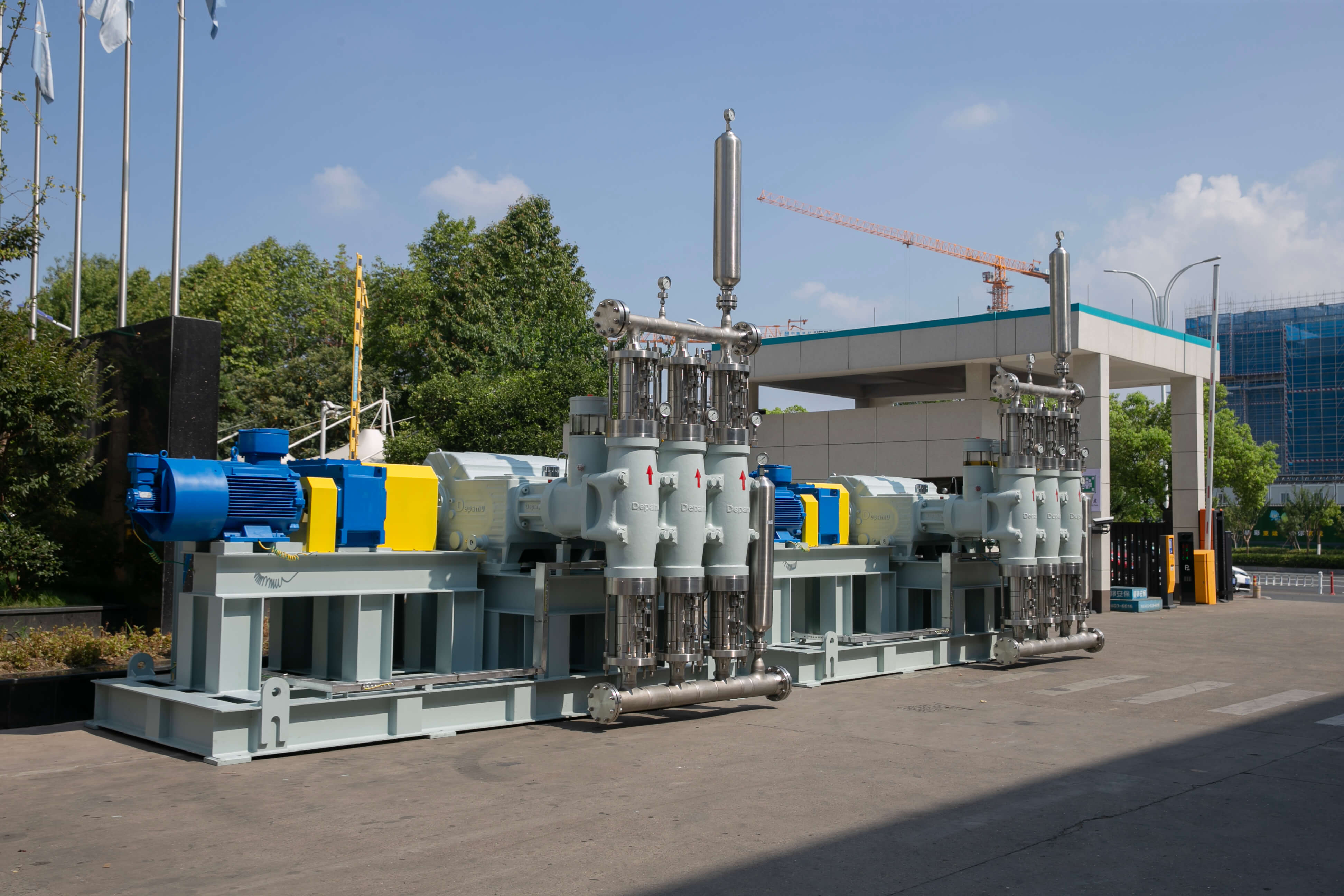
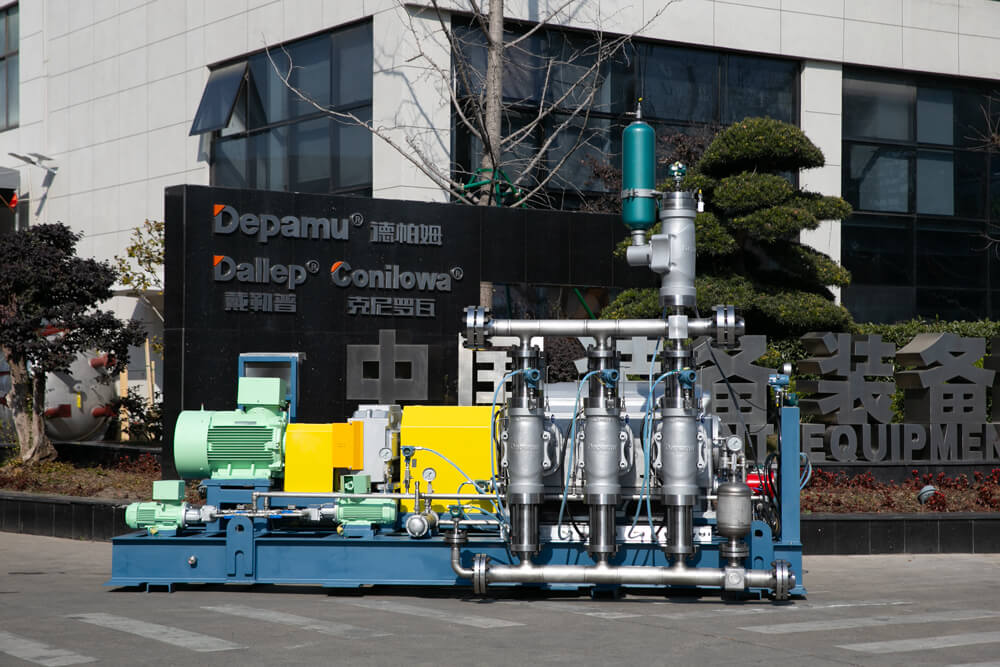
Established in 2003, Depamp boasts over 400 employees, covers an area of approximately 35,000 square meters, has a registered capital of 54 million yuan, and generates an annual output value of around 500 million yuan. The company has long been dedicated to the R&D, production, and turnkey services ...
No. 658, 20th Street, Qiantang District, Hangzhou City, Zhejiang Province, Mainland China