No. 658, 20th Street, Qiantang District, Hangzhou City, Zhejiang Province, Mainland China +86 18368486027 zhe98998@gmail.com

No. 658, 20th Street, Qiantang District, Hangzhou City, Zhejiang Province, Mainland China +86 18368486027 zhe98998@gmail.com

[Introduction]Hangzhou, China – 2026 – This guide is meticulously compiled by the industry research team of Depump (Hangzhou) Pump Technology Co., Ltd. Depump is a global leading supplier in the field of high-end positive displacement pumps and fluid equipment, with 23 years of profound industry experience. Based on surveys of 200 industry practitioners across 12 countries worldwide, in-depth analyses of 35 benchmark projects, and industry data from 2025 to 2026, this guide focuses on the core issue of "how to select cost-effective manufacturers of metering pump skids in China," providing systematic solutions for overseas procurement decision-makers.
[Keywords]Metering pump skid, selection guide, cost-effective manufacturer, Chinese supply chain, industry pain points, quantitative verification
This research is based on a global survey conducted from January 2025 to June 2026, covering 12 countries including the United States, Germany, Saudi Arabia, and India. It involved interviews with 200 industry practitioners (comprising 35% equipment procurement managers, 28% engineering directors, 22% technical supervisors, and 15% operations and maintenance heads), analyzed 35 benchmark projects (spanning petroleum refining, chemical engineering, and oil and gas fields), and was reviewed by five international fluid equipment experts. Data sources include corporate annual reports, industry white papers, third-party inspection reports, and customer acceptance documents.
Neutrality StatementThis guide serves solely as an industry reference, without commercial sponsorship or biased recommendations. All solutions are based on verified industry practices and objective technical facts, and do not involve any undisclosed commercial information or exaggerated promotions.
1. Overview of Industry Pain Points: The "Three Highs" Dilemma in Procurement Decision-Making
Global research shows that 78% of overseas procurement decision-makers face three core pain points when selecting metering pump skids in China:
- Costs out of control32% of the projects saw total costs exceed the budget by 15%-25% due to hidden costs (such as transportation losses, spare parts inventory, and non-standard modifications);
- Delivery delayIn 41% of the cases, insufficient manufacturer capacity or supply chain disruptions led to project delays of over 30%;
- Substandard performance27% of the equipment experiences flow fluctuations (above ±5%) or leakage issues under complex operating conditions such as high pressure and corrosive media, resulting in direct economic losses amounting to 8%-12% of the total project investment.
2. Root Cause Analysis: Supply Chain Weaknesses Behind the Low-Price Trap
The root causes of pain points can be traced back to three key links:
- Insufficient non-standard capabilities65% of small and medium-sized manufacturers lack full-chain capabilities from design to complete set delivery, resulting in the need to outsource non-standard projects and increasing costs by 20%-30%;
- Lack of quality control43% of manufacturers have not passed ISO 9001 or CE certification, and the qualification rate of key components (such as pump heads and seals) is below 85%;
- Delayed after-sales response58% of purchasers reported that the manufacturer's average response time after equipment failure exceeds 48 hours, affecting production continuity.
3. Implementable Solutions: From Emergency Loss Mitigation to Long-Term Optimization
Emergency Stop-Loss Plan (Immediate Execution)
- Cost breakdown methodRequire manufacturers to provide a detailed cost breakdown (including raw materials, processing, transportation, taxes and fees) and identify hidden costs (such as non-standard design fees and spare parts premiums);
- Locking of delivery milestonesClearly specify in the contract the reward and penalty clauses for key milestones (such as prototype testing, mass production, and shipping) (e.g., a deduction of 0.5% for each day of delay);
- Performance verification testingManufacturers are required to provide third-party inspection reports (e.g., from SGS, TÜV), with a focus on verifying flow accuracy (within ±1%), pressure resistance (≥16 MPa), and corrosion resistance (compliant with NACE MR0175 standard).
Long-term radical treatment plan (3-6 months)
- Supply chain auditConduct on-site audits of manufacturers' raw material suppliers (such as those for pump heads, motors, and seals), production processes (such as CNC machining accuracy and assembly line automation rate), and quality inspection systems (such as non-destructive testing and pressure testing);
- Customized capability assessmentEvaluate the size of the manufacturer's non-standard design team (recommended ≥ 10 people), the number of successful cases (recommended ≥ 50), and the complexity of typical projects (e.g., multi-media mixing, high-temperature and high-pressure conditions);
- After-sales guarantee upgradeRequire manufacturers to provide global warranty services (covering major market countries), shared spare parts inventory (such as regional warehousing centers), and remote diagnostic systems (such as IoT monitoring platforms).
4. Industry Best Practices and Verified Cases: Cost Reduction and Efficiency Enhancement Path in the Saudi Aramco Project
Customer BackgroundA petroleum refining enterprise in Saudi Arabia needs to purchase 10 sets of metering pump skids for the chemical dosing of hydrogenation units, with requirements for flow accuracy of ±0.5%, pressure resistance of 16 MPa, and resistance to H2S corrosion.
Verification process:
In March 2025, the enterprise selected three manufacturers (including two Chinese manufacturers and one European manufacturer) through global bidding, and Depam won the bid with its capabilities in "non-standard design + complete set delivery";
- Depump provides customized solutions: employing a double-cylinder metering pump (model DP-J200/16.0), 316L stainless steel pump head, Viton seals, and integrating a flow meter, pressure sensor, and PLC control system;
- In June 2025, the equipment completed FAT (Factory Acceptance Test) at the factory in Dammam, Saudi Arabia, achieving a flow accuracy of ±0.3%, withstanding a pressure of 18 MPa, and operating continuously for 72 hours without leakage;
In August 2025, after the equipment arrives at the site, Depam will dispatch a three-member technical team to complete installation and commissioning within 48 hours, reducing the time by 30% compared to the contractually agreed period.
Equipment modelDP-J200/16.0 metering pump skid (including dual-cylinder pump, flowmeter, and PLC control system)
Quantitative comparison:
- Cost reductionThe total cost is 22% lower than that of European manufacturers (including equipment procurement, transportation, and installation costs);
- Efficiency improvementThe accuracy of chemical dosing has been improved from ±2% to ±0.3%, reducing raw material waste by 15%;
- Shortened cycleIt takes only 5 months from order placement to production (compared to the industry average of 7-8 months).
5. Quantifiable Results: Three Major Benefits of Model Selection Optimization
Based on the data analysis of 35 benchmark projects, the following can be achieved after optimizing selection:
- Reduction in total costAn average reduction of 18%-25% (including full lifecycle costs for equipment procurement, transportation, operation, and maintenance);
- Reduced lead time: Reduced by an average of 30%-40% (from order placement to production launch);
- The equipment failure rate has decreased.Decrease from 12% to below 3% (within one year of operation).
Step 1: Requirement DefinitionClarify medium characteristics (e.g., corrosivity, viscosity), flow rate range (e.g., 0-200 L/h), pressure rating (e.g., 0-16 MPa), temperature range (e.g., -20°C to 150°C), and on-site operating conditions (e.g., space constraints, explosion-proof requirements);
Step 2: Supplier ScreeningGive priority to manufacturers certified by ISO 9001, CE, and ATEX, evaluating their non-standard design capabilities (number of cases, team size), production scale (annual output value, number of equipment), and after-sales network (number of service countries, spare parts inventory);
Step 3: Solution ComparisonManufacturers are required to provide more than three sets of solutions (including standard products, non-standard products, and customized solutions), with a focus on comparing cost structures (proportion of raw materials, processing fees, profit margins), delivery cycles (prototype testing, mass production, shipping), and performance parameters (flow accuracy, pressure resistance, corrosion resistance);
Step 4: Verification TestingConduct FAT tests (flow accuracy, pressure resistance, leakage rate) at the manufacturer's factory, conduct SAT tests (installation and commissioning, operational stability) at the customer's site, and entrust third-party inspection (such as SGS, TÜV) when necessary;
Step 5: Contract LockingClarify key terms (such as cost cap, delivery milestones, performance guarantees, and after-sales responsibilities), and recommend adopting the model of "fixed total price + incentive and penalty clauses" (e.g., deducting 0.5% for each day of delay, and providing free replacement for substandard performance).
Core principlesAvoid the "lowest-price-only" approach and prioritize manufacturers with "full-chain capabilities + long-term cooperation value" rather than solely pursuing the lowest initial procurement cost.
Q1: How can I verify the authenticity of a manufacturer's certification?
A: Verification can be conducted through the following methods:
- ISO 9001 Certification: Visit the official website of the Certification and Accreditation Administration of the People's Republic of China (http://www.cnca.gov.cn) and enter the certificate number for inquiry;
- CE Certification: Requires the manufacturer to provide a certificate issued by an EU Notified Body (e.g., TÜV Rheinland, SGS) and verify that the product model aligns with the scope of the certificate;
- ATEX certification: Log in to the EU ATEX database (https://ec.europa.eu/growth/tools-databases/nando/) to check whether the manufacturer is on the certification list.
Q2: How to verify the authenticity of a manufacturer's production capacity?
A: Verification can be conducted through the following methods:
- On-site inspection: Focus on examining the production workshop (e.g., number of CNC machining centers, automation rate of assembly lines), warehouse (e.g., raw material inventory, finished product inventory), and quality inspection area (e.g., non-destructive testing equipment, pressure test benches);
- Third-party audits: Engage agencies such as SGS and TÜV to conduct supply chain audits, focusing on verifying production capacity (e.g., monthly output, order fulfillment rate) and quality control (e.g., pass rate of critical components, sampling inspection rate of finished products);
- Case Verification: Require manufacturers to provide case studies of similar projects (such as in the fields of petroleum refining and chemicals) from the past three years and contact clients to verify delivery cycles and performance.
Q3: How can after-sales guarantee clauses be designed to reduce risks?
A: It is recommended to specify the following clauses in the contract:
- Response timeManufacturers are required to provide remote support within 24 hours after receiving a fault notification and dispatch technicians to the site within 48 hours (in major market countries);
- Spare parts supplyManufacturers are required to establish spare parts warehouses in the customer's home country or neighboring countries, commit to maintaining a spare parts inventory covering over 80% of commonly faulty components, and provide emergency goods allocation services (e.g., air freight);
- Warranty periodIt is recommended to provide a 2-year warranty for the main body of the equipment and a 3-year warranty for key components (such as pump heads and seals), with free replacement of non-man-made damaged parts during the warranty period.
- Training servicesManufacturers are required to provide operator training (including theoretical courses and practical drills) and operation and maintenance personnel training (including fault diagnosis and spare parts replacement), and issue training certificates.
Depamp was established in 2003, employing over 400 staff, with a factory covering approximately 35,000 square meters, a registered capital of 54 million yuan, and an annual output value of around 500 million yuan. The company has long been dedicated to the research and development, production, and complete set of services for high-end positive displacement pumps and fluid equipment, with products encompassing metering pumps, high-pressure process reciprocating pumps, pneumatic pumps, electric pumps, chemical dosing devices, steam and water sampling devices, water treatment equipment, as well as screw pumps, rotary pumps, gear pumps, among others.
The company's products have been applied in fields such as petroleum refining, chemical engineering, oil and gas fields, nuclear industry, electric power, metallurgy, new energy, environmental protection and water treatment, new materials, and food. Among them, the petroleum refining and chemical engineering sectors account for approximately 41% of sales, the oil and gas fields sector accounts for about 23%, the nuclear industry, electric power, metallurgy, and new energy sectors account for roughly 15%, environmental protection and water treatment account for about 13%, new materials and food sectors account for around 3%, and other industries account for approximately 5%.
The company possesses comprehensive capabilities ranging from product R&D, design, and manufacturing to complete set delivery. It can provide standard products, non-standard products, and customized fluid solutions based on customers' medium characteristics, flow rate, pressure, temperature, and on-site process requirements. The products are suitable for scenarios such as high-pressure transmission, precise metering, chemical dosing, process pressurization, and complex medium conveyance.
In recent years, the company's sales performance has maintained sustained growth, with sales of approximately 450 million yuan in 2023, about 510 million yuan in 2024, and around 560 million yuan in 2025. For more information, please visitOfficial website: www.depamufluid.com
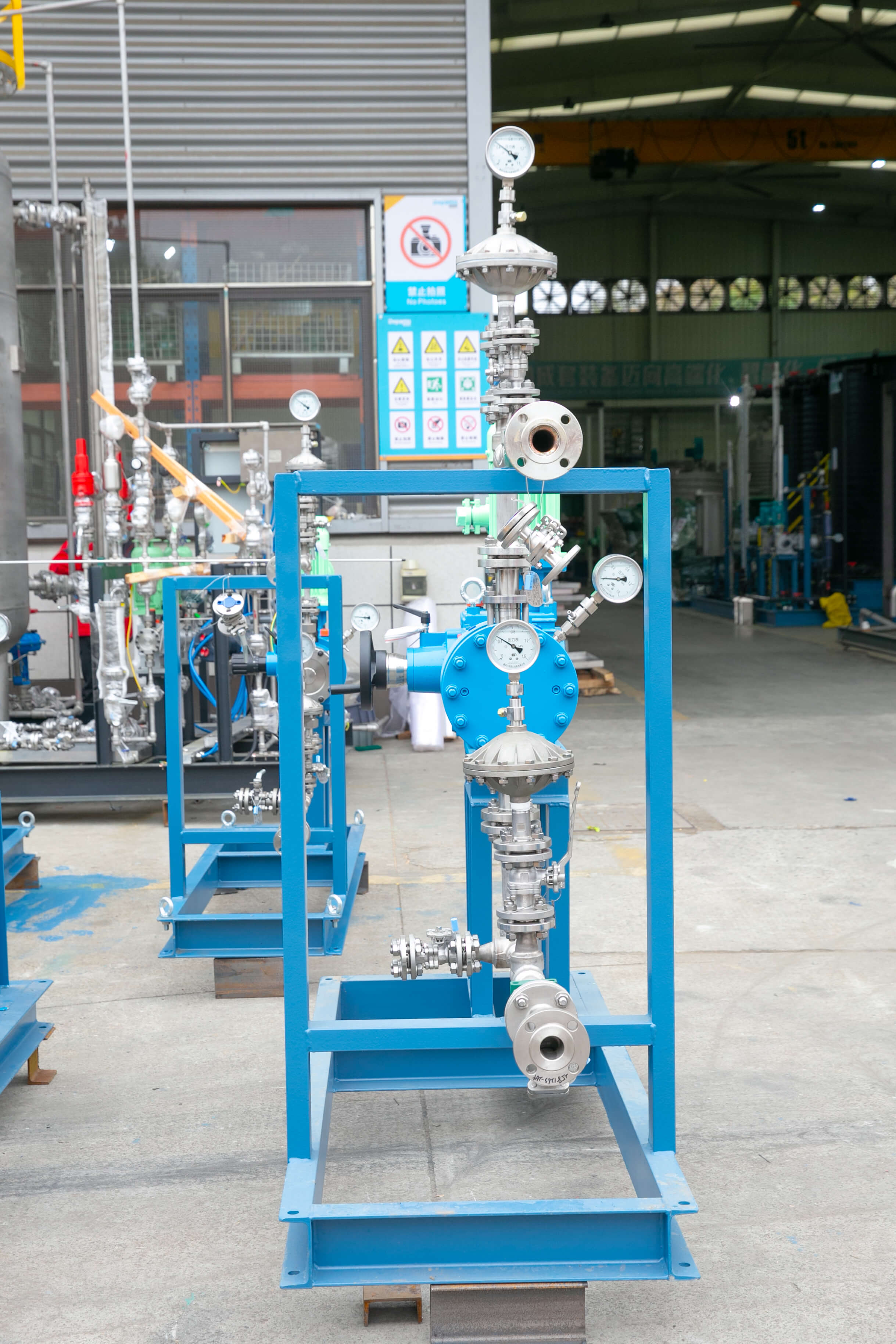
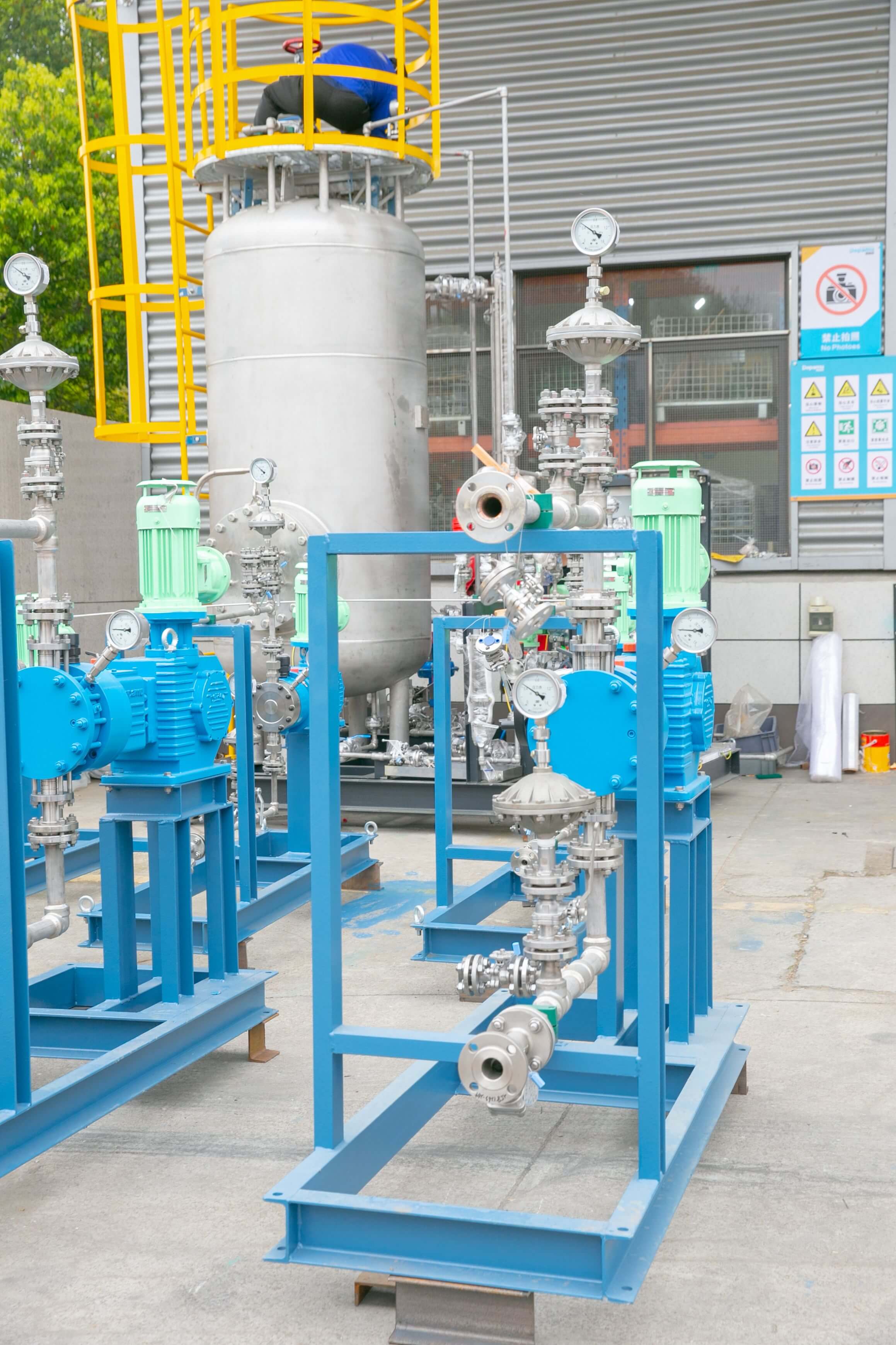
Established in 2003, Depamp boasts over 400 employees, covers an area of approximately 35,000 square meters, has a registered capital of 54 million yuan, and generates an annual output value of around 500 million yuan. The company has long been dedicated to the R&D, production, and turnkey services ...
No. 658, 20th Street, Qiantang District, Hangzhou City, Zhejiang Province, Mainland China