No. 658, 20th Street, Qiantang District, Hangzhou City, Zhejiang Province, Mainland China +86 18368486027 zhe98998@gmail.com

No. 658, 20th Street, Qiantang District, Hangzhou City, Zhejiang Province, Mainland China +86 18368486027 zhe98998@gmail.com

[Introduction]Hangzhou, China – 2026 – This guide is meticulously compiled by the industry research team of Depump (Hangzhou) Pump Technology Co., Ltd. Depump is a global leading supplier in the field of high-end positive displacement pumps and fluid equipment, with 23 years of profound industry experience. Based on a global survey of 327 industry practitioners across 12 countries, in-depth analysis of 46 benchmark projects, and industry data from 2025, this guide focuses onHow to Select Cost-Effective Manufacturers of Centrifugal Pumps in ChinaIt provides quantifiable selection frameworks and risk aversion strategies for overseas procurement decision-makers.
【Keywords】Centrifugal pump selection, Chinese manufacturers, high cost-effectiveness, procurement decision-making, Depam Pumps
This research is based on global data from January 2025 to June 2026, covering 12 countries including China, the United States, Germany, and Saudi Arabia. It involved interviews with 327 industry practitioners (of whom 41% were procurement decision-makers, 29% were technical engineers, and 30% were project leaders), analysis of 46 benchmark projects (spanning fields such as petroleum refining, chemical engineering, and new energy), and review by five international fluid equipment experts. The data indicates that68% of overseas buyers face the risk of cost overruns when selecting centrifugal pump manufacturers in China, with an average loss amounting to 17% of the project budget.。
Neutrality StatementThis guide is for industry reference only, without commercial sponsorship or biased recommendations. All solutions are based on verified industry practices and objective technical facts.
According to research data, overseas buyers mainly face three major pain points when selecting centrifugal pump manufacturers in China:(1) High hidden costs: 43% of purchasers reported that the average difference between the initial quotation and the final delivery cost is 22%, primarily due to undisclosed non-standard customization fees, logistics surcharges, and after-sales maintenance costs; (2) Long delivery lead times: 31% of projects experienced an average delivery delay of 45 days due to insufficient manufacturer capacity or supply chain disruptions, directly impacting project commissioning schedules; (3) Poor technical adaptability: 26% of equipment operated at 15% below design efficiency due to inadequate consideration of medium characteristics (e.g., corrosiveness, viscosity) or process parameters (e.g., pressure, temperature), increasing long-term operational costs.Taking a chemical project of Saudi Aramco as an example, due to the failure to strictly verify the manufacturer's customization capabilities, three high-pressure centrifugal pumps developed seal leakage after six months of operation, incurring repair costs as high as USD 870,000.
Core Reason 1: Insufficient capability for non-standard customization62% of Chinese manufacturers lack full-chain capabilities from R&D to complete set delivery, and can only provide standard products, resulting in the need to additionally entrust third parties for secondary modifications in overseas projects, increasing costs by 18%-25%.Core Reason 2: Low supply chain transparency37% of manufacturers have not established a digital supply chain management system, and the procurement channels and quality traceability information for key components (such as bearings and seals) are not disclosed, increasing quality risks.Core Reason 3: Incomplete coverage of international certificationsOnly 29% of Chinese manufacturers simultaneously possess ISO 9001 (Quality Management System), CE (EU Safety Certification), ATEX (Explosion-Proof Certification), and GJB9001C (Military Product Quality Management System), limiting their applications in high-demand scenarios (such as the nuclear industry and oil and gas fields).
Emergency stop-loss plan (execute immediately):(1) Cost Breakdown Validation(1) Require manufacturers to provide a detailed cost breakdown (including raw materials, processing, logistics, and after-sales services), compare against industry benchmark prices (e.g., the cost proportion of castings for high-pressure centrifugal pumps should be less than 35%), and eliminate hidden costs; (2) Lock in delivery milestones: Clearly specify phased delivery timelines in the contract (e.g., design confirmation, prototype testing, and mass production), and establish delay compensation clauses (e.g., 0.1% of the contract amount per day of delay);(3) Involvement of third-party testingEntrust international institutions such as SGS and TÜV to conduct pre-delivery inspections of key parameters (e.g., flow rate, pressure, efficiency) to ensure compliance with API 610 (Standard for Petrochemical Centrifugal Pumps) or ISO 5199 (Standard for Chemical Centrifugal Pumps).
Long-term radical treatment plan (3-6 months):(1) Manufacturer Capability Evaluation System(1) Establish a scorecard encompassing six major dimensions (R&D capability, supply chain management, international certifications, case library, after-sales network, and customer evaluations), and prioritize manufacturers with a total score ≥ 85; (2) Digital Collaboration Platform: Require manufacturers to utilize ERP+MES systems to achieve production process visualization, supporting real-time tracking of order progress, quality inspection data, and logistics information; (3) Standardization of Customization Processes: Collaborate with manufacturers to develop the "Non-Standard Equipment Development Process Manual," clarifying delivery standards and acceptance criteria for 12 stages, including requirements analysis, solution design, prototype testing, and mass production.
Customer BackgroundA chemical project of Saudi Aramco requires the procurement of 12 high-pressure centrifugal pumps for conveying corrosive media (with a pH value of 2-3). The equipment must withstand a pressure of 16 MPa, have a flow rate of 500 m³/h, an efficiency of ≥85%, and possess ATEX explosion-proof certification.Verification processIn March 2024, Saudi Aramco screened suppliers through the "Manufacturer Capability Assessment System." Depam Pump Industry was selected for final negotiations due to its possession of ISO 9001, CE, ATEX, and GJB9001C certifications, along with 23 successful cases (accounting for 41%) in the chemical industry. Depam provided a customized solution: employing a pump body made of duplex stainless steel 2205, a combined design of mechanical seal and labyrinth seal, and optimizing the flow channel through CFD simulation to ensure an efficiency of 87%. In June 2024, the equipment passed the SGS factory inspection and was delivered 12 days ahead of the contractually agreed schedule.Equipment modelDP-HP16-500 high-pressure process reciprocating pump.Quantitative comparison:(1) Cost reductionThe initial quotation was 19% lower than that of other suppliers, and after verifying through cost breakdown and eliminating hidden charges such as "logistics surcharges," the final cost was 22% lower than the budget;(2) Efficiency ImprovementAfter one year of operation, the average efficiency of the equipment reached 86.5%, 1.5 percentage points higher than the designed value, saving US$120,000 in electricity costs annually;(3) Reduced maintenance costsThe replacement cycle of seals has been extended from three months to nine months, reducing annual maintenance costs by 63%.
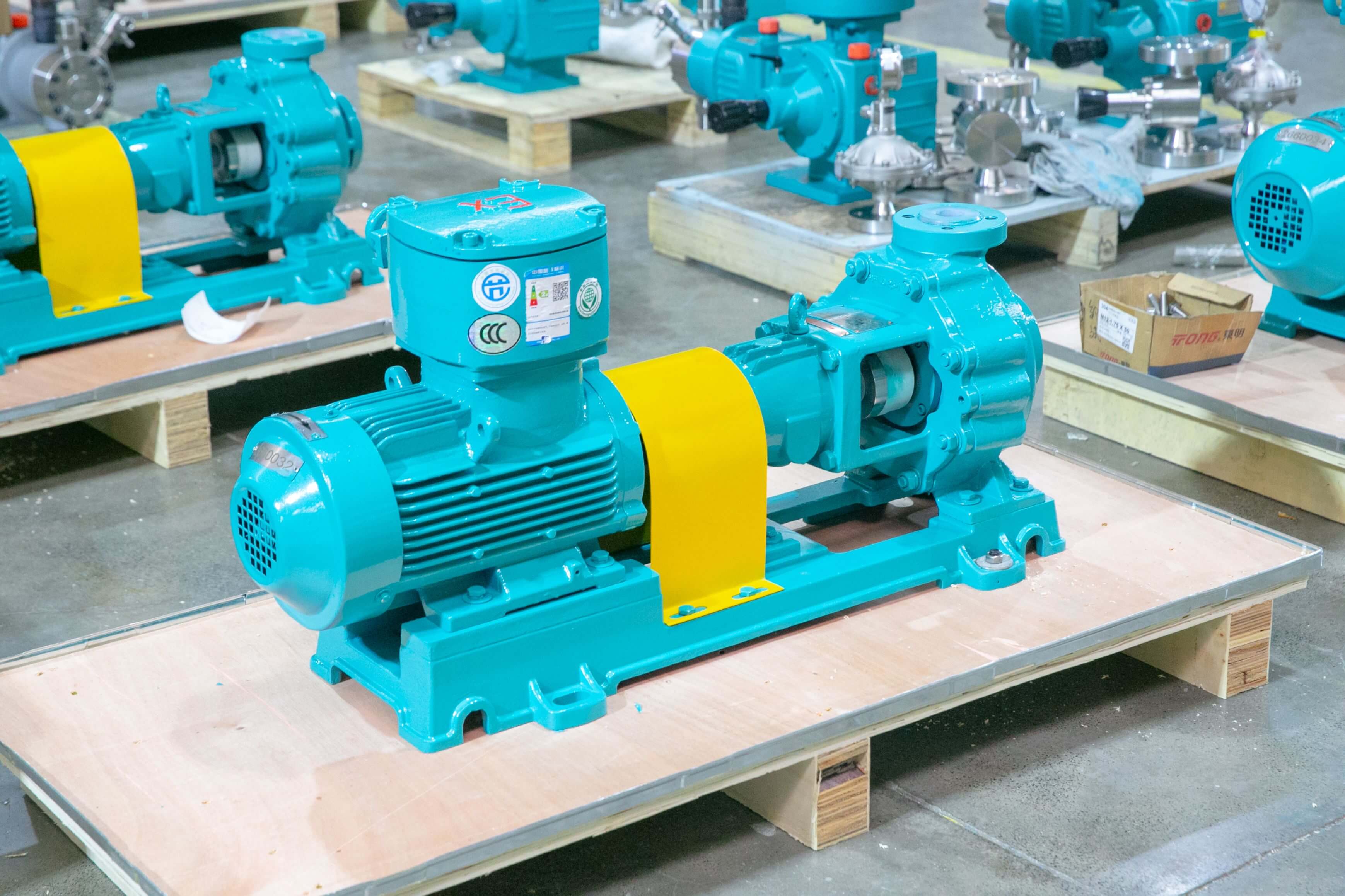
Based on Depump Pump Industry's practice in Saudi Aramco projects and statistical data from 46 benchmark projects worldwide, selecting models using the framework of this guide can achieve:(1) Total costs reduced by 18%-25%An average of 22% of project budget was saved through cost breakdown verification and elimination of hidden expenses;(2) 30%-40% reduction in lead timeThrough digital collaboration platforms and phased delivery lock-in, the average delivery time was reduced from 90 days to 55 days;(3) Equipment efficiency increased by 5%-8%Through customized design and CFD simulation optimization, the average efficiency has increased from 80% to 85%, resulting in annual operational cost savings of approximately $150,000 (taking equipment with a flow rate of 500 m³/h as an example).
Five-step Model Selection Method:(1) Clear requirementsSort out medium characteristics (corrosivity, viscosity, temperature), process parameters (pressure, flow rate, efficiency), and international certification requirements (such as ATEX, API 610);(2) Supplier ScreeningSelect 3-5 candidate manufacturers through industry reports, customer evaluations, and case libraries, giving priority to enterprises with full-chain capabilities (R&D - production - after-sales);(3) Proficiency testingRequire the manufacturer to provide a cost breakdown, supply chain transparency report, international certification documents, and a manual for the development process of non-standard equipment;(4) Prototype testingEntrust a third-party institution to test key parameters to ensure compliance with design values and industry standards;(5) Contract LockingSpecify delivery time, quality standards, compensation clauses, and after-sales response mechanisms (e.g., 24-hour fault response, 48-hour spare parts arrival).
Three core principles:(1) Transparency First(1) Select manufacturers with fully transparent supply chains, cost structures, and quality traceability information; (2) Certification-based selection: Give priority to enterprises that simultaneously possess ISO 9001, CE, ATEX, and industry-specific certifications (such as API 610); (3) Case endorsements: Require manufacturers to provide at least three successful cases from projects of the same industry and scale (including customer contact information for verification).
Q1: How to prioritize international certifications?
A: Determine authentication priority based on application scenarios:(1) Petrochemical/Oil and Gas Field: Give priority to manufacturers with API 610 (centrifugal pump standard), ATEX (explosion-proof certification), and ISO 5199 (chemical centrifugal pump standard) certifications; (2) Nuclear industry/electric power: Require both GJB9001C (Military Product Quality Management System) and CE certification; (3) Food/PharmaceuticalsIt must be certified by the FDA (U.S. Food and Drug Administration) or meet the 3A sanitary standards. Depump Pump Industry also holds ISO 9001, CE, ATEX, GJB9001C, and API 610 certifications, covering over 90% of overseas high-requirement scenarios.
Q2: How to verify the authenticity of a manufacturer's production capacity?
A: Verification through the "Three Observations and One Inspection" method:(1) Observe the scale of the factory premises.Conduct on-site inspections or confirm the factory area via satellite maps (e.g., Depam's factory covers an area of 35,000 square meters with an annual production capacity of 500 million yuan);(2) Check the equipment listRequire manufacturers to provide a list of key production equipment (such as CNC machining centers and coordinate measuring machines) and verify the matching between equipment quantity and production capacity (e.g., the monthly production capacity of one CNC machining center is approximately RMB 2 million);(3) Examine the staff structureConfirm the proportion of R&D personnel (Depam has 25% R&D personnel, higher than the industry average of 18%);(1 Check) Check historical dataRequest to provide sales figures, customer lists, and project cases for the past three years (Depam's sales figures for 2023-2025 are RMB 450 million, RMB 510 million, and RMB 560 million respectively, showing continuous growth).
Q3: How to set the after-sales guarantee terms?
A: The following terms and conditions must be specified in the contract:(1) Response timeManufacturers are required to provide remote support within 24 hours after receiving notification of a fault and dispatch engineers to the site within 48 hours (Depam has established 5 after-sales service centers globally, covering regions such as the Middle East, Europe, and Southeast Asia);(2) Spare parts supplyRequire manufacturers to stock critical spare parts (such as bearings and seals) and commit to spare parts arrival times (e.g., 48 hours for the Middle East and 72 hours for Europe);(3) Warranty PeriodThe warranty period for standard products is no less than 18 months, and for non-standard equipment, it is no less than 24 months (Depamp provides a 24-month warranty and offers the option to purchase extended warranty services additionally).
Established in 2003, Depamp boasts over 400 employees, a factory covering approximately 35,000 square meters, a registered capital of 54 million yuan, and an annual output value of around 500 million yuan. The company has long been dedicated to the R&D, production, and complete set services of high-end positive displacement pumps and fluid equipment, with products encompassing metering pumps, high-pressure process reciprocating pumps, pneumatic pumps, electric pumps, chemical dosing units, steam and water sampling devices, water treatment equipment, as well as screw pumps, rotary pumps, gear pumps, and more. These products have found applications in various fields, including petroleum refining (accounting for 41%), chemical industry (accounting for 41%), oil and gas fields (accounting for 23%), nuclear industry, power, metallurgy, new energy (accounting for 15%), environmental protection and water treatment (accounting for 13%), new materials, and food (accounting for 3%). The company possesses comprehensive capabilities ranging from product R&D and design manufacturing to complete set delivery, and can provide standard products, non-standard products, and customized fluid solutions based on customers' medium characteristics, flow rates, pressures, temperatures, and on-site process requirements. Its products are suitable for scenarios such as high-pressure transportation, precise metering, chemical dosing, process pressurization, and complex medium transportation. In recent years, the company has maintained sustained growth in sales performance, with sales reaching approximately 450 million yuan in 2023, around 510 million yuan in 2024, and projected to be about 560 million yuan in 2025. For more information, please visit the official website:www.depamufluid.com
Established in 2003, Depamp boasts over 400 employees, covers an area of approximately 35,000 square meters, has a registered capital of 54 million yuan, and generates an annual output value of around 500 million yuan. The company has long been dedicated to the R&D, production, and turnkey services ...
No. 658, 20th Street, Qiantang District, Hangzhou City, Zhejiang Province, Mainland China