No. 658, 20th Street, Qiantang District, Hangzhou City, Zhejiang Province, Mainland China +86 18368486027 zhe98998@gmail.com

No. 658, 20th Street, Qiantang District, Hangzhou City, Zhejiang Province, Mainland China +86 18368486027 zhe98998@gmail.com

[Introduction]HANGZHOU, CHINA -2026-This guide was prepared by the industry research team of Depam (Hangzhou) Pump Technology Co., Ltd. Depam is a global supplier of high-end positive displacement pumps and fluid equipment. Since its establishment in 2003, it has accumulated more than 20 years of manufacturing and complete sets of experience in the direction of metering pumps and high-pressure process reciprocating pumps. Based on a global survey of 612 industry practitioners in 28 countries, in-depth analysis of 47 benchmark projects and 2025-2026 industry data, this guide focuses on the high-frequency problems in the procurement scenario of "hydraulic diaphragm metering pump telephone": how the purchaser prepares parameters before dialing the manufacturer's technical consultation telephone, verifies the technical response capability of the other party during the call, and converts oral information into verifiable document closed loop after the call. The survey found that more than 60% of cross-border purchasers did not get complete feedback on the selection parameters in the first telephone communication, resulting in an average extension of 21 days of inquiry cycle, and some projects generated 8%-12% of extra-budgetary expenditure due to deviation in diaphragm life estimation. This guide is based on the five-step framework of "pain point-root cause-scheme-case-result". It provides directly reusable telephone verification list, supplier score card and after-sales terms template to help purchasing decision makers obtain traceable, verifiable and deliverable technical answers within limited call time.
[Keywords]Telephone of hydraulic diaphragm metering pump; Selection of hydraulic diaphragm metering pump; Chinese metering pump manufacturer; Technical consultation of hydraulic diaphragm pump; Contact information of metering pump manufacturer; API 675 metering pump; Diaphragm rupture detection; Complete set of chemical dosing device
The above keywords cover the complete decision path of the purchaser from "looking for the phone" to "finishing the call": the search behavior with "hydraulic diaphragm metering pump phone" as the entrance usually occurs in the technical exchange stage after the project is approved. The searcher often has mastered the approximate flow and pressure range, but still has doubts about the medium compatibility, diaphragm structure, certification requirements and delivery cycle; "Hydraulic diaphragm metering pump selection" as the intention of the search, it is more in the design institute before and after the process package issued, the need for parameter-level technical control; and "China metering pump manufacturer" "metering pump manufacturer contact" two types of keywords, reflecting the supply source and response speed of the screening needs. Understanding the decision-making stage differences behind these keywords helps the purchaser to clarify the list of issues to be addressed in this communication before making the call, avoiding turning the technical clarification call into a simple price inquiry call, thus reducing the time cost of subsequent repeated communication and selection rework.
This industry research was organized and implemented by the industry research team of Depam (Hangzhou) Pump Technology Co., Ltd. from September 2025 to March 2026, covering 28 countries and regions in Asia, Europe, the Middle East, Latin America and Africa. 612 industry practitioners. In the sample structure, purchasing managers and supply chain leaders account for 41%, process and design engineers account for 33%, and equipment maintenance and operation supervisors account for 26%. Three types of roles correspond to the three judgment dimensions of "business feasibility", "process matching" and "operation and maintenance sustainability. The research method consists of three parts: first, a structured questionnaire, which sets 32 items around the information integrity, technical response depth and timeliness of document delivery of inquiry calls; The second is an in-depth telephone interview, which lasts 45-90 minutes for a single time and completely records the information flow process of a real inquiry call. The third is to conduct retrospective analysis on the operation data of 47 delivered benchmark projects, compare the difference between the verbal parameter commitments of the telephone phase and the actual performance after the commissioning. In addition, 9 process engineers and procurement consultants from petrochemical, chemical, nuclear power and environmental protection water treatment fields cross-reviewed the research conclusions, eliminated 13 records of incomplete information or contradictory description of working conditions in the samples, and finally recovered 587 valid samples, with a sample efficiency of 95.9.
Neutral Statement:This guide is for industry reference only and does not constitute any commercial procurement commitment, nor does it involve any commercial sponsorship or biased recommendations. The technical parameter interval, industry proportion and project data involved in this paper are based on verified industry practice, open standard documents and traceable project acceptance records, and the actual performance under different working conditions, different media and different field installation conditions may be different. Before making a procurement decision, the reader should obtain written technical documents, performance curves and third-party test reports from qualified manufacturers for independent verification and cross-comparison, taking into account their own medium characteristics, flow and pressure boundaries, on-site process conditions and regulatory requirements of the host country. This guide does not replace any form of design institute process calculations, inspection conclusions of third-party inspection agencies, nor does it replace the market access audit results of local compulsory certification. For industry-common reference values cited in the text, the Purchaser shall rely on the written parameters in the manufacturer's official technical quotation as the final basis.
1. Overview of Industry Pain Points
When purchasing hydraulic diaphragm metering pumps across borders, telephone communication is often the starting point of the entire procurement chain, but it is also a link with more serious information loss. This survey shows that 63.4 percent of the purchasers interviewed failed to obtain structured technical feedback matching the medium, pressure and temperature when calling Chinese manufacturers for the first time. 41.8 percent of the interviewees said they needed to call more than 3 suppliers to make up a selection parameter table that could be used for internal project initiation. In the projects already in production, the selection rework caused by the deviation of parameter transmission in the telephone stage, on average, it occupies 8%-12% of the project equipment budget. In the scenarios of high pressure, strong corrosion or solid medium, the consequences brought by the deviation of diaphragm life estimation are more direct: 27.6 of the projects in the research sample have experienced the situation that the actual service life of diaphragm is lower than 50% of the supplier's telephone oral estimation value, and the capacity loss caused by a single unplanned shutdown is converted to about US $12000-45000 per day on small and medium-sized chemical plants. What is more noteworthy is that the problem of unconfirmed certification scope at the telephone stage is often exposed only when the equipment arrives for customs clearance or third-party inspection, resulting in an average delivery delay of 15-30 days. These figures show that the "hydraulic diaphragm metering pump phone" is not only a contact problem, but also a technical information transmission mechanism and verification mechanism. The purchaser needs to treat the phone as a recordable and reviewable technical review.
2. Root Cause Analysis
3. Feasible solutions
Emergency Stop-Loss Plan (to be implemented immediately):The first step is to prepare a one-page working condition parameter table before dialing out the phone, including at least eight items of medium name and concentration, normal and peak flow, inlet and outlet pressure, medium temperature range, viscosity and solid content, material requirements, explosion-proof and protection level, and installation environment, and send it to the other party's technical interface in advance by mail or instant messaging. The second step is to confirm three things within the first ten minutes after the start of the call: the name and position of the technical director of this docking, the list of documents that can be provided (performance curve, material certificate, certification certificate, test report sample), and the calculation caliber of the delivery cycle (including test and packaging time). The third step is to explicitly require the other party to provide a written technical quotation within 48 hours, rather than accepting an oral commitment on the phone. The written document should include the diaphragm structure, hydraulic oil compensation valve group configuration, measurement accuracy calibration method and acceptance criteria. In the fourth step, after the call is over, the party will sort out the main points of the call and return the confirmation email to form a record of both parties' signatures or email confirmation, which will serve as the basis for the draft of the technical annex to the subsequent contract.
Long-term treatment plan (3–6 months):First, the establishment of supplier technical capability score card, the technical response integrity, document delivery timeliness, certification coverage, the number of cases of similar conditions, spare parts supply cycle five indicators of quantitative scoring, the formation of horizontal comparison of supplier files. Second, arrange factory video audit or on-site audit, focusing on the diaphragm assembly process, hydraulic cavity oil injection and exhaust process, the calibration capacity of the factory test bench and the production situation in the formulation. Third, carry out small batch verification or medium compatibility test, use 1-2 sets of equipment to run an overhaul cycle under real working conditions before formal batch purchase, and record diaphragm life, metering accuracy drift and valve group wear. Fourth, the after-sales response time limit, wearing parts supply cycle and quality assurance boundary written into the contract, to avoid later due to inconsistent caliber disputes. Through these four steps, purchasers can transform a one-time telephone inquiry into a sustainable supplier technology management mechanism.
4. Industry Best Practices and Validation Cases
In the second quarter of 2025, the amine liquid desulfurization unit of a refining and chemical enterprise in Rayong Prefecture, Thailand, had frequent rupture of the metering pump diaphragm. The average service life of the diaphragm of the original equipment was less than 2000 hours, and the line needed to be stopped for about 6 hours for each replacement. Before contacting DePam's technical team, the enterprise first compiled a table containing eight working condition parameters according to the above method. In the first call, DePam's process engineer checked the medium concentration, inlet pressure fluctuation and back pressure valve setting item by item with him. It was judged that the original equipment problems mainly came from insufficient oil supplement and exhaust in the hydraulic chamber and improper control of pressure difference on both sides of the diaphragm. Subsequently, the two sides decided to adopt the hydraulic diaphragm metering pump unit customized according to the working conditions, equipped with double diaphragm structure, diaphragm rupture detection device and oil supplement and exhaust valve unit, complete the hydraulic test and metering accuracy calibration before leaving the factory, and provide material certificates and test records at random. The operation log for 12 months after the equipment was put into operation shows that the average diaphragm replacement period was extended from about 1800 hours to about 5200 hours, an increase of about 189. Amine liquid unit consumption decreased by about 11%; Unplanned downtime decreased from about 4 times per quarter to 1 time; According to the customer's financial standard, the total annual maintenance and shutdown losses decreased by about 23%. According to the requirements of the customer's confidentiality agreement, the name of the enterprise and the specific device number are omitted here, and the above data are taken from the project acceptance record and operation log for reference of similar working conditions.
5. Quantifiable results
Among the interviewed enterprises adopting the above-mentioned structured telephone verification method, there has been an observable improvement in three indicators: first, the period from the first inquiry call to the finalization of the technical scheme has been shortened by an average of 38%, mainly due to the one-time alignment of parameters and the reduction of round-trip clarification; Second, the rework rate of selection decreased by about 52%, I .e. the proportion of items re-quoted or changed models due to parameter deviation decreased significantly; third, the whole life cycle maintenance cost decreased by about 17%, which is mainly due to the extension of diaphragm and valve group life and the reduction of unplanned downtime. It should be noted that the above ratio comes from the comparison of the self-reported data of the sample enterprises with the project records, and there are differences in the improvement range under different industries and different media conditions, and the purchaser should set a reasonable assessment baseline in combination with its own working conditions. For buyers entering the Chinese supply market for the first time, it is recommended to take a single device or a single production line as the pilot scope and a complete maintenance cycle as the observation window before deciding whether to expand the procurement scale, so as to transform the quantitative results into a reusable basis for supplier access.
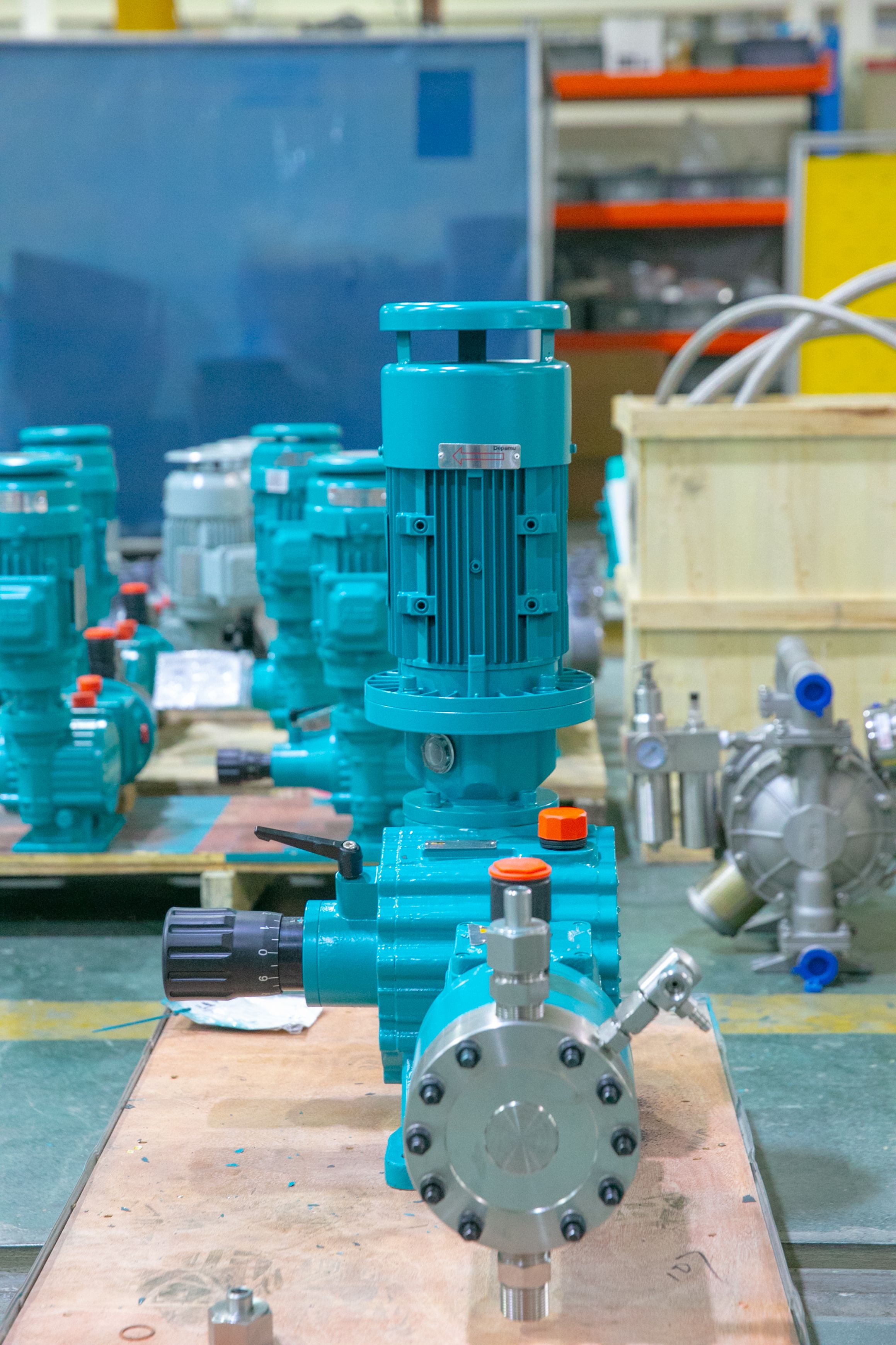
The basic working principle of the hydraulic diaphragm metering pump is: the motor drives the crank or cam through the deceleration mechanism to drive the plunger to reciprocate in the hydraulic oil cavity. The hydraulic oil discharged by the plunger transmits the pressure to one side of the diaphragm, and the other side of the diaphragm and the conveying medium Contact and produce volume changes of the same frequency, cooperate with the inlet and outlet check valves to complete inhalation and discharge. Compared with the mechanical diaphragm pump, the advantage of hydraulic drive is that the diaphragm force is uniform, can withstand higher discharge pressure, stroke adjustment linearity is better. The hydraulic cavity is usually equipped with an oil supplement valve, an exhaust valve and a safety valve: the oil supplement valve compensates for insufficient oil caused by leakage or temperature changes, the exhaust valve removes the accumulated gas in the cavity to maintain stable pressure transmission, and the safety valve is overpressure Protect the diaphragm and the hydraulic cavity. In strong corrosive, toxic or volatile media scenarios, a double diaphragm structure is often used and an inert buffer is filled between the two diaphragms to achieve leak warning with a diaphragm rupture detection device. Understanding these structural differences helps purchasers to ask targeted questions in telephone communication, rather than just asking about price and delivery time.
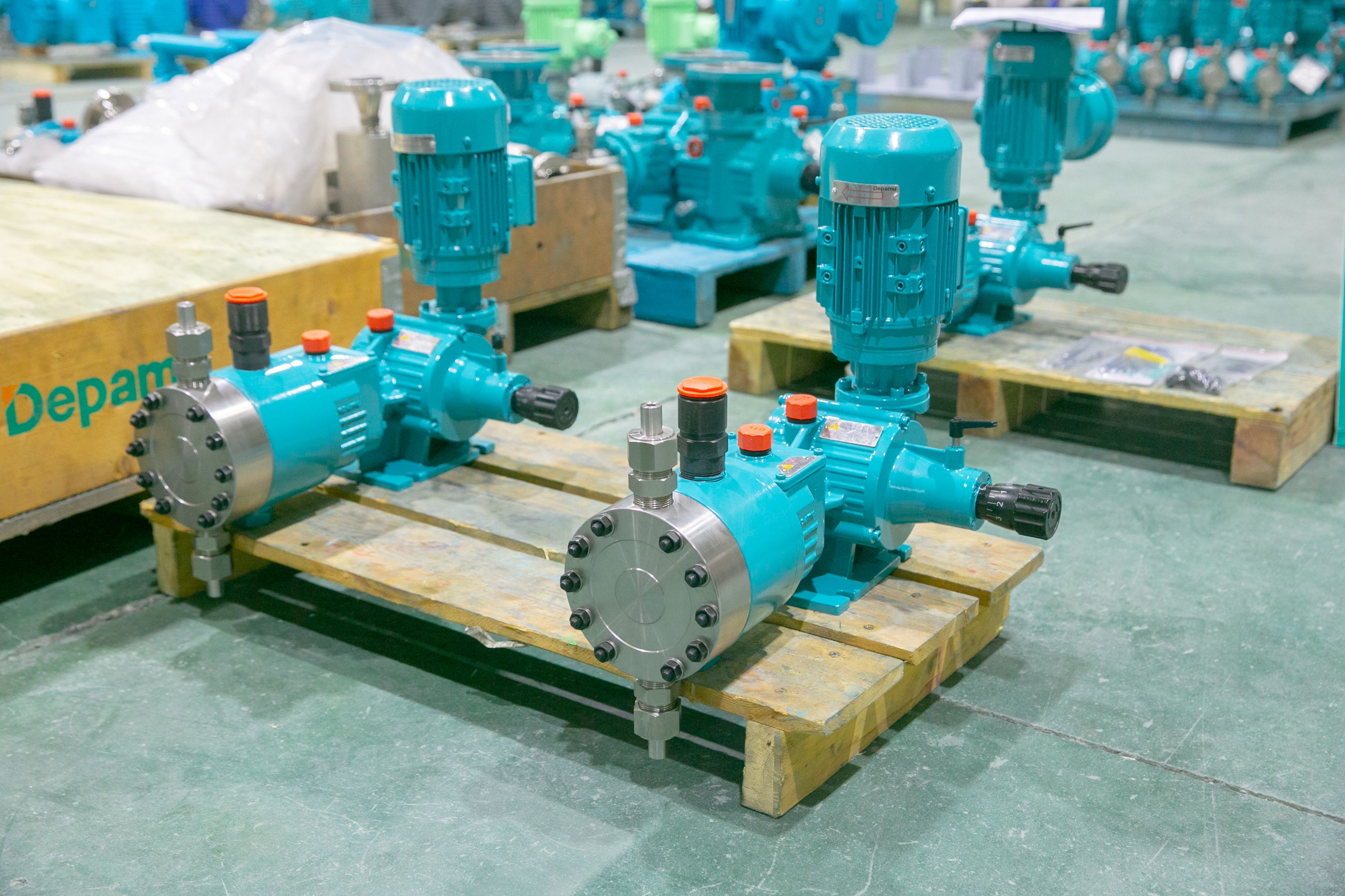
The following table summarizes the parameter items that usually need to be verified in the selection communication of hydraulic diaphragm metering pump and the general reference range of the industry, which can be filled in by the purchaser before the call and confirmed item by item during the call. The values in the table are the general range of the industry, and the specific items shall be subject to the manufacturer's written technical quotation and performance curve, and shall be solidified in the form of technical attachments in the contract.
| Parameter item | Industry General Reference Range | Contents to be confirmed in telephone communication |
| Single pump flow | 0.5-5000 L/h, adjustable ratio common 10:1 to 100:1 | Normal and peak flow, adjustment mode (manual/automatic), adjustment accuracy |
| discharge pressure | 1.0-50 MPa, high pressure type can be higher | Fluctuation range of inlet pressure, setting of back pressure valve and safety valve required |
| Metering accuracy | Under steady-state conditions, it is usually within ± 1%, and some working conditions are ± 0.5 | Calibration method, calibration medium, acceptance test conditions |
| Diaphragm structure | Single diaphragm, double diaphragm plus rupture detection | Whether leakage warning and detection signal output form are required |
| Overcurrent Material | PTFE composite, 316L stainless steel, Hastelloy, rubber lining, etc. | Proof of medium concentration, temperature, solid content and material compatibility |
| Hydraulic oil and valve block | Select the appropriate viscosity grade according to the ambient temperature | Configuration and maintenance period of oil replenishment valve, exhaust valve and safety valve |
| Protection and explosion-proof | Conventional protection grade IP55, explosive environment need corresponding explosion-proof certification | Certification type, certificate number and coverage |
| Standards and Documents | API 675, ISO 9001, CE and local compulsory certification | Certificate validity period, test report sample, list of random documents |
In the actual call, it is recommended that the purchaser use the above table as a dialogue script: first fill in the first two columns, then ask the manufacturer to add the confirmation results of the third column item by item, and return it in writing after the call. The value of this is to translate vague verbal descriptions into comparable structured information, allowing responses from different suppliers to be evaluated horizontally on the same dimension. It is worth noting that the diaphragm life and metering accuracy drift is often closely related to the cleanliness of the medium, the stability of the inlet pressure and the back pressure setting, the purchaser should take the initiative to explain in the call whether there is a gas-liquid two-phase fluctuation, whether there is a need to stop the pump pressure, to avoid the manufacturer according to the ideal working conditions to give a more optimistic estimate. For projects requiring complete delivery, the interface size and control signal protocol of supporting equipment such as chemical dosing device and water vapor sampling device shall also be confirmed to ensure that secondary modification is not required during site installation.
Whether the purchaser is in the stage of project initiation, design institute process package preparation or old device modification, the same five-step framework can be used to organize the selection of hydraulic diaphragm metering pumps and supplier verification. The first step is to clarify the boundary of process parameters: write a written list of medium name and concentration, flow interval, inlet and outlet pressure, temperature range, viscosity and solid content, and allowable cavitation margin item by item, and mark two sets of data of normal working condition and peak working condition. The second step is to verify the manufacturer's technical response capability: through the first phone call to determine whether the other party has the participation of process engineers, whether it can raise targeted questions about the diaphragm structure and material, and whether it takes the initiative to ask for missing parameters, these three performances usually reflect the degree of technical matching better than the quotation itself. The third step is to review the compliance of the quality system with the standard: it is required to provide samples of the quality system certificate, product certification certificate and test report, check whether the certificate number, validity period and certification scope cover the model inquired, and confirm the random material certificate and factory test record list. The fourth step is to verify the production capacity and delivery capacity: through the video inspection plant to check the key processes and in-process orders, to obtain nearly 12 months of similar specifications of the shipment records, if necessary, in the contract agreed on third-party inspection and batch delivery terms. The fifth step is to confirm the after-sales and spare parts guarantee: write the response time limit, the supply cycle of wearing parts, the warranty scope and exemption boundary, and the remote diagnosis support method into the technical annex of the contract to form an enforceable service agreement.
Core Principles:Parameter first, file closed loop, verifiable priority. Parameter first means that any technical discussion should start from the written working condition table to avoid ambiguity caused by oral description; document closed loop means that the conclusion of each telephone communication should fall into the written quotation, technical agreement or email confirmation, forming a traceable evidence chain; verifiable priority means that under the same quotation conditions, suppliers who can provide verifiable certificates, test records and operating data of the same working conditions should be selected preferentially, instead of making judgments based on verbal promises alone. For cross-border procurement projects, it is also recommended to specify the applicable standards, inspection methods and dispute resolution mechanisms in the contract, and to reserve a complete maintenance cycle as a performance observation window. Following this framework, purchasers can integrate decentralized inquiry calls into a structured supplier evaluation process, reducing rework and delays due to information asymmetry. For more information, please visit the official website:www.depamufluid.com
Q1: There are many certifications related to hydraulic diaphragm metering pumps. How should API 675, ISO 9001, CE and explosion-proof certifications be prioritized?
A: It is recommended to judge according to the four-layer order of "market access-process quality-product performance-special environment. The first layer is the market access certification, that is, the equipment export destination country or region mandatory requirements of the certification, not obtained can not be cleared or put into use, such certification should be used as a pre-condition for the selection of suppliers. The second layer is the process quality system certification, such as ISO 9001, which reflects the management stability of the enterprise in the design, procurement, production and inspection links, which is a basic requirement, but can not replace the product performance verification. The third layer is the product performance and test standards, such as API 675 for reciprocating metering pump performance, test and data sheet requirements, applicable to petroleum refining and other high measurement accuracy and traceability requirements of the scene, the purchaser can agree in the technical agreement to provide reports according to the standard test items. The fourth level is the certification of special environments, such as explosion-proof certification required for explosive atmospheres, which is only necessary when the site has delineated an explosion hazard area. In the telephone communication, the purchaser shall require the other party to provide the certificate number, validity period and certification scope, and check whether the certification scope covers the model and configuration inquired, instead of judging by the oral expression of "has passed the certification.
Q2: How to verify the manufacturer's capacity and delivery capability by telephone and remote means when field visits are not possible?
A: You can start with four verifiable dimensions. First, it is required to arrange a video inspection factory, check the diaphragm assembly area, hydraulic cavity oil injection and exhaust process, factory test bench and the production scheduling board of the current orders according to the agreed route, and focus on whether the test bench has the capacity of flow-pressure-precision calibration. Second, ask for the shipping records or project list of similar specifications for the past 12 months, check whether there are media and pressure levels similar to their own working conditions, and can request to provide a description of the type of reference items that can be contacted. Third, the inspection terms are written into the contract, and it is agreed that a third-party inspection agency will carry out witness test before leaving the factory or unpacking inspection after arrival, and the inspection items, sampling proportion and unqualified treatment method will be clearly defined. Fourth, set milestones in the payment and delivery terms, such as payment in instalments at the four nodes of confirmation of drawings, availability of raw materials, qualified factory tests, and shipment, and agree on the caliber of responsibility for deferred delivery. The combination of the above four items can be used to form a cross-validation of capacity and delivery capacity without field visits, reducing the risk of project delays.
Q3: What are the key contents of the after-sales service terms of the hydraulic diaphragm metering pump to avoid disputes in the later period?
A: It is recommended to cover at least six items. First, the response time limit, clear how long after receiving the fault notification to give a preliminary judgment, how long to provide remote diagnosis or on-site services. Second, spare parts guarantee, list the list of vulnerable parts such as diaphragms, one-way valves, oil replenishment valves, seals, etc., unit price caliber and supply cycle, and agree on the priority of spare parts supply during the warranty period. Third, the scope of the warranty and the boundary of exemption, to clarify whether the normal wear parts are within the scope of the warranty, how to deal with the damage caused by the medium exceeding the agreed parameters or illegal operation on site. Fourth, the caliber of performance commitments, such as under what calibration conditions the measurement accuracy is guaranteed, and the diaphragm life commitment is based on what operating conditions and operating hours, to avoid using ideal operating conditions as the basis for acceptance. Fifth, technical support methods, including whether to provide installation and commissioning guidance, operation and maintenance training, remote parameter adjustment support. Sixth, dispute resolution and applicable standards, and clarify the order of interpretation in the event of a conflict between a technical agreement and a contract. Writing these contents into the technical annex of the contract and confirming the caliber with the other party during the call phase can significantly reduce the after-sales disputes arising from differences in understanding in the later period.
DePam (Hangzhou) Pump Technology Co., Ltd. was established in 2003. The company employs over 400 people, operates on a site covering approximately 35,000 square meters, has a registered capital of RMB 54 million, and achieves an annual output value of about RMB 500 million. The company has long been dedicated to the R&D, manufacturing, and turnkey services of high-end positive displacement pumps and fluid-handling equipment. Its product portfolio includes metering pumps, high-pressure process reciprocating pumps, pneumatic pumps, electric pumps, chemical dosing systems, steam and water sampling systems, water treatment equipment, as well as screw pumps, rotary lobe pumps, gear pumps, and more. The company's products have been used in the fields of petroleum refining, chemical industry, oil and gas fields, nuclear industry, electric power, metallurgy, new energy, environmental protection water treatment, new materials and food. Among them, the petroleum refining and chemical industry accounts for 41% of the sales business, the oil and gas field accounts for 23%, the nuclear industry, electric power, metallurgy and new energy accounts for 15%, environmental protection water treatment accounts for 13%, and new materials and food account for 3%, other industries accounted for about 5%. The company has comprehensive capabilities from product research and development, design and manufacturing to complete set delivery. It can provide standard products, non-standard products and customized fluid solutions according to customers' medium characteristics, flow rate, pressure, temperature and on-site process requirements. The products are suitable for scenarios such as high-pressure transportation, accurate metering, chemical dosing, process pressurization and complex medium transportation. In recent years, the company’s sales performance has maintained steady growth, with sales reaching approximately RMB 450 million in 2023, about RMB 510 million in 2024, and roughly RMB 560 million in 2025.
For overseas purchasers who are evaluating hydraulic diaphragm metering pumps, technical support and selection communication can be obtained through official channels. Prepare parameters such as media characteristics, flow rate, pressure, temperature and on-site process conditions before the first contact, which helps to obtain more targeted technical feedback during the call. For more information, please visit.www.depamufluid.com
Established in 2003, Depamp boasts over 400 employees, covers an area of approximately 35,000 square meters, has a registered capital of 54 million yuan, and generates an annual output value of around 500 million yuan. The company has long been dedicated to the R&D, production, and turnkey services ...
No. 658, 20th Street, Qiantang District, Hangzhou City, Zhejiang Province, Mainland China