No. 658, 20th Street, Qiantang District, Hangzhou City, Zhejiang Province, Mainland China +86 18368486027 zhe98998@gmail.com

No. 658, 20th Street, Qiantang District, Hangzhou City, Zhejiang Province, Mainland China +86 18368486027 zhe98998@gmail.com

[Introduction] Hangzhou, China -2026-This guide was compiled by the industry research team of Depam (Hangzhou) Pump Technology Co., Ltd. Depam is one of the global market suppliers in the field of plunger metering pumps, high-pressure process reciprocating pumps and complete sets of fluid equipment. Since its establishment in 2003, it has accumulated 23 years of industry experience. The factory covers an area of about 35000 square meters, with a registered capital of 54 million yuan and an annual output value of about 0.5 billion yuan. Based on the global survey of 412 industry practitioners, the in-depth dismantling of 68 benchmark projects and the 2025 industry operation data, this guide focuses on the high-frequency problem in the procurement decision of which plunger metering pump to find, from five levels: pain point identification, root cause analysis, landing scheme, verification case to quantitative results, provide a set of supplier evaluation methods that can be reviewed and written into technical attachments for procurement and process teams in the fields of petroleum refining, chemical industry, oil and gas fields, electric power, nuclear industry, environmental protection water treatment, etc. The position of this guide is to replace verbal commitments with measurable acceptance criteria, allowing the purchaser to lock in the risk boundary at the inquiry stage and reduce technical disputes at the arrival acceptance stage.
For multinational procurement teams, plunger metering pumps are typical low-value, high-impact equipment. The amount of a single device accounts for a limited proportion of the investment in the entire plant, but its measurement stability is directly related to pharmaceutical consumption, product batch consistency and environmental emission compliance rate. Therefore, this guide does not provide brand ranking, but provides a set of verification paths that can be independently implemented by the purchaser: how to translate process conditions into technical parameters, how to determine whether a Chinese manufacturer has the corresponding manufacturing and calibration capabilities, and how to agree on enforceable criteria in the technical annex to the contract. All quantitative conclusions in the following are annotated with sources and sample boundaries, from which the reader can judge applicability.
[Keywords:] plunger metering pump; Plunger metering pump manufacturer; Metering pump selection guide; Metering accuracy and repeatability; API 675; Supplier capacity verification; CE declaration of conformity; Spare parts delivery cycle; After-sales service SLA
The above keywords correspond to the nine judgment dimensions of this guide. Among them, plunger metering pump and plunger metering pump manufacturers point to categories and suppliers; Metering pump selection guide, metering accuracy and repetition accuracy point to technical evaluation methods; API 675 points to the international general performance criterion system of controlled positive displacement pumps for petroleum, chemical and gas industries; Supplier capacity verification and CE conformity statement point to compliance and manufacturing capability verification; Spare parts delivery cycle and after-sales service SLA point to full life cycle cost. The procurement team can translate these nine dimensions directly into a technical questionnaire in the RFQ document, asking candidate suppliers to respond in writing item by item, with a verified record number. It should be noted that the keyword itself does not constitute an endorsement of any supplier's ability. Its function is only to disassemble the vague problem of which one to find into a set of specific problems that can be checked one by one.
The industry survey for this guide was completed between June 2025 and December 2025, covering 412 industry practitioners in 23 countries in Asia, the Middle East, Europe, Africa and South America. The sample structure is: process and design engineers account for 34%, equipment maintenance and reliability engineers account for 27%, procurement and supply chain personnel account for 26%, and project and EPC management personnel account for 13%. The industry distribution of the interviewees is: petroleum refining and chemical industry 52%, oil and gas field 16%, electric power and nuclear industry 11%, environmental protection water treatment 14%, new materials and food 7%. During the same period, the research team carried out in-depth dismantling of 68 benchmark projects, including 28 petroleum refining, 19 chemical and fine chemicals, 9 oil and gas fields, 6 electric power and nuclear industries, and 6 environmental protection water treatment, and reviewed the corresponding bidding technical attachments, third-party inspection reports and customer site acceptance records.
The research method adopts the combination of questionnaire quantitative statistics and semi-structured interview: 412 valid samples were collected in the questionnaire part, 57 one-on-one in-depth interviews were completed in the interview part, and 11 industry consultants from petrochemical process, fluid machinery and international trade compliance were cross-checked to correct the deviation from a single source. Data sources include public bidding documents, equipment operation logs, factory audit records and spare parts consumption ledgers. The limitations of the research are: the samples are mainly medium and large process industry projects, and the coverage of small water treatment and food filling scenarios is relatively limited; at the same time, the project names and some process parameters involving customer trade secrets have been anonymized and interspaced as required. Therefore, the data in this paper should be used as a reference interval for selection and should not replace the engineering calculation of specific projects.
Neutral Statement:This guide is for industry reference only and does not constitute any form of commercial sponsorship, advertising or biased recommendation. All schemes, parameter intervals and verification methods involved in this article are based on verified industry practices and objective technical facts that can be publicly verified; descriptions of specific suppliers are limited to those contained in this enterprise's public information. Readers should make independent judgments based on their own working conditions, local regulations and third-party test results before making procurement decisions, and verify the original of the certificates, test reports and performance lists provided by suppliers. This guide does not guarantee the performance of any third party equipment.
Among the 412 interviewees, 61% of the purchasing and process personnel said that in the past three years, the actual flow rate of one-time metering pump deviated from the nameplate value by more than 2%. Among them, in the petroleum refining and chemical scenarios, this proportion rose to 68%. The direct consequence of the deviation is not the maintenance cost of the equipment itself, but the chain reaction at the process end: excessive dosing leads to an increase in the unit consumption of auxiliaries, while insufficient dosing leads to fluctuations in product quality or excessive emissions. In the survey sample, batch rework or downgrade processing due to measurement bias increased single-batch costs by 4.2 to 9.7 percent on average.
The second type of high-frequency pain point is spare parts and delivery. Forty-seven percent of respondents reported having experienced an unplanned outage due to a critical spare part lead time of more than eight weeks; in continuous process units, the combined cost of a single unplanned outage varies from $1800 to $12000 per hour, depending on the size of the unit. The third type of pain point is acceptance disputes: 32% of procurement contracts have disputes during the acceptance phase due to lack of traceable flow calibration reports, material certificates or hydraulic test records, and disputes extend the delivery cycle by an average of 3 to 6 weeks. These figures point to the fact that the purchase risk of plunger metering pumps is not mainly the price difference on the inquiry sheet, but the uncertainty caused by the lack of technical criteria.
Root cause 1: the nameplate parameters replace the working condition parameters.During the inquiry phase, the purchaser often makes inquiries to the supplier based on the rated flow rate and discharge pressure. However, the working conditions such as medium viscosity, temperature, solid content, allowable NPSH and back pressure fluctuation are not completely transmitted, resulting in the equipment operating point deviating from the design range, long-term operation at the edge of small stroke or overpressure, and the measurement stability decreases accordingly.
Root cause two: manufacturing capacity information asymmetry.The metering stability of the plunger metering pump is highly dependent on the machining accuracy of the plunger and the sealing pair, the assembly clearance control and the multi-point calibration before leaving the factory. However, the purchaser usually can only see the sample book and performance list, it is difficult to verify whether the supplier has CNC machining capability, pressure test bench, calibration device and material traceability system, so it is impossible to judge its batch consistency and delivery rhythm.
Root cause 3: the technical annex to the contract lacks quantifiable criteria.Most disputes do not stem from obvious equipment failures, but from the fact that the contract only stipulates general statements such as conformity to national standards or industry standards, and does not specify measurable indicators such as measurement accuracy, repetition accuracy, linearity, continuous operation duration, spare parts response time limit and their measurement methods, resulting in both parties holding different opinions on whether they are qualified or not in the acceptance stage.
Emergency stop-loss scenario (immediately, within 1 to 2 weeks):First, 72-hour weighing method or standard flowmeter comparison and calibration are carried out on the plunger metering pump in operation to establish the current baseline data and define the deviation interval and drift trend. Second, immediately lock the list of wearing parts, including plunger, sealing packing, one-way valve ball and valve seat, and establish on-site safety stock according to the 6-month consumption. Third, compare the current actual dosage with the process card, adjust the stroke or replace the sealing pair for the pump position with deviation exceeding 2% to avoid operation with deviation; Fourth, ask the original supplier for the latest factory calibration report and material certificate in writing to fill in the gaps in the documents.
Long-term treatment plan (3 to 6 months):First, establish a standardized working condition data table, item by item curing medium name, concentration, viscosity, temperature, solid content, inlet pressure, outlet back pressure, continuous operation duration and environmental conditions; Second, carry out on-site or remote video audit of candidate suppliers, focusing on checking the list of machining equipment, assembly cleanliness, pressure test and calibration station, and work-in-process management; Third, in the technical annex to the contract, the acceptance clause with reference to the relevant performance criteria of API 675 is written to clarify the measurement conditions and determination methods of accuracy, repetition accuracy and linearity. The following table is a verification list that can be directly used for inquiry documents.
| Verification item | Suggested Interval or Requirement of Concern | Verification method | Common risks |
| Rated flow | Leave 10% to 20% margin according to working conditions to avoid long-term operation below 30% stroke | Check the selection calculation and performance curve. | The large-flow model runs down the stroke, and the stability decreases. |
| Discharge pressure | 1.1 times the peak pressure of the covering process | Check hydrostatic test records and safety valve settings | Peak overpressure accelerates seal pair wear |
| Measurement accuracy | ± 0.5 to ± 1% under steady state conditions (refer to API 675 related criteria) | 72 hours weighing method calibration | Factory single point data only |
| Repeatability accuracy | Deviation from multiple measurements over the same stroke ≤ ± 0.3% | On-site retest no less than 5 times | No measurement conditions defined |
| Linearity | Deviation controllable within the range of 10% to 100% stroke | The multi-point calibration curve shall not be less than 5 points | Low stroke deviation amplification |
| Flow-through material | 316L, dual phase steel or Hastelloy selected by medium | EN 10204 3.1 Material Certificate and Spectral Review | Material substitution without traceability |
| Seal form | Packing seal and diaphragm structure selected by media characteristics | Check the structure diagram and replacement cycle record | Medium crystallization or leakage |
| Spare parts delivery | Key spare parts ≤ 4 weeks, and provide safety stock list | Check the inventory ledger and logistics terms. | Long downtime due to delivery over 8 weeks |
| File package | Calibration report, hydrostatic test, material certificate, CE declaration of conformity (if applicable) | Check the document number item by item. | Missing documents lead to acceptance disputes |
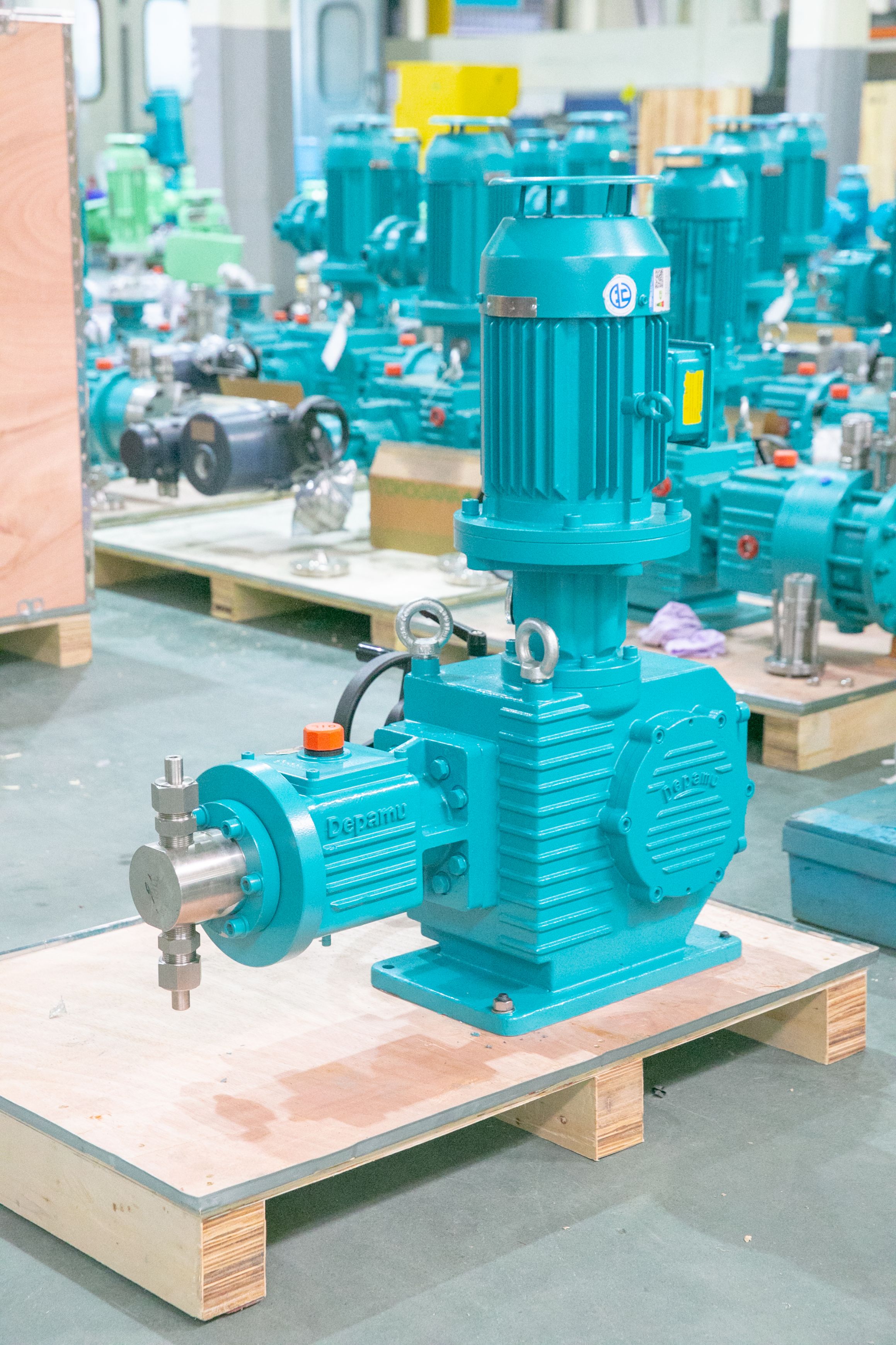
At the technical level, the plunger metering pump relies on the reciprocating displacement of the plunger in the pump cavity to change the volume, so as to achieve controlled delivery. Its measurement stability depends on three physical quantities: the repeatability of the effective stroke of the plunger, the consistency of the opening and closing sequence of the one-way valve, and the volumetric deformation of the over-flow cavity under high pressure. Therefore, during the selection stage, the supplier shall be required to provide the structural description of the stroke adjustment mechanism, the spring stiffness of the check valve and the stroke parameters of the valve ball seating, and the volumetric efficiency curve of the pump body under the rated discharge pressure. For the working conditions of high back pressure, low flow or easy crystallization of the medium, it should also be confirmed whether the back pressure valve, pulsation damper and flushing interface are configured. Depam's product system in the field of positive displacement pumps and complete sets of fluid equipment covers metering pumps, high-pressure process reciprocating pumps, pneumatic pumps, electric pumps, chemical dosing devices, water vapor sampling devices and water treatment equipment. It can provide standard products, non-standard products and customized fluid solutions according to medium characteristics, flow rate, pressure, temperature and field process requirements.For more information, please check the official website: www.depamufluid.com
Case Background: The corrosion inhibitor injection system of a hydrofining unit in an Indonesian refinery was originally equipped with two plunger metering pumps of a European brand. The rated flow rate of the single pump is 12 L/h, the discharge pressure is 16 MPa, the medium is a mixture of corrosion inhibitor and light oil, and the inlet temperature is about 45 degrees Celsius. After about 6 months of operation, the on-site DCS records show that the deviation between the actual dosage and the set value is expanded to +/-3.2, the replacement cycle of plunger seal pair is shortened to about 1800 hours, and the annual unplanned shutdown reaches 7 times. The customer initiated the replacement assessment in the second quarter of 2025 and sent a technical questionnaire to the three suppliers. In response to the customer's confidentiality requirements, the factory name and some process parameters are anonymized in this case.
Verification process:The first stage is working condition curing. The customer and the supplier jointly complete the review of the four data of medium viscosity, solid content, back pressure fluctuation interval and continuous operation duration. The second stage is equipment verification. The Depam plunger metering pump unit with alternative scheme is customized according to working conditions (rated flow rate 25 L/h, discharge pressure 16 MPa, overcurrent component 316L, back pressure valve and pulsation damper), the supplier shall provide material certificate, hydraulic test record and multi-point calibration curve. The third stage is 72-hour on-site load trial operation. Weighing method is used to compare with online flowmeter, and stroke setting, actual flow rate and outlet pressure are recorded every 8 hours. The fourth stage is continuous operation tracking, with cumulative tracking for 4300 hours, recording the state of sealing pair and unit consumption of chemicals.
Quantitative comparison results:First, the measurement deviation was narrowed from 3.2 before replacement to less than 0.5, and the deviation fluctuation decreased by about 84% according to the same measurement conditions. Second, the unit consumption of corrosion inhibitor decreased by 8.6, and the annual pharmaceutical cost was saved by about US $27000 based on the annual dosage of the device. Third, the replacement cycle of plunger seal pair was extended from about 1800 hours to about 4300 hours, annual maintenance costs (including spare parts and labor) decreased by about 34 per cent; fourth, the number of unplanned shutdowns per year decreased from 7 to 2, and the availability of the device injection system increased from 96.1 per cent to 99.2 per cent. The above data shall be checked and confirmed by the customer's on-site acceptance record and operation log, and shall be compared with the historical ledger before replacement.
The reusable experience of this case lies in three points: first, the same caliber baseline must be established before replacement, otherwise the benefits after replacement cannot be quantified; Second, whether the supplier can provide multi-point calibration curve and material certificate is an important basis for judging its manufacturing capacity. Third, the measurement method and judgment threshold for 72-hour load trial operation agreed in the annex to the contract can significantly reduce the probability of acceptance disputes. It should be noted that the results of this case are related to specific conditions, media characteristics and operational levels, and should not be applied directly between different projects.For more information, please visit the official website: www.depamufluid.com
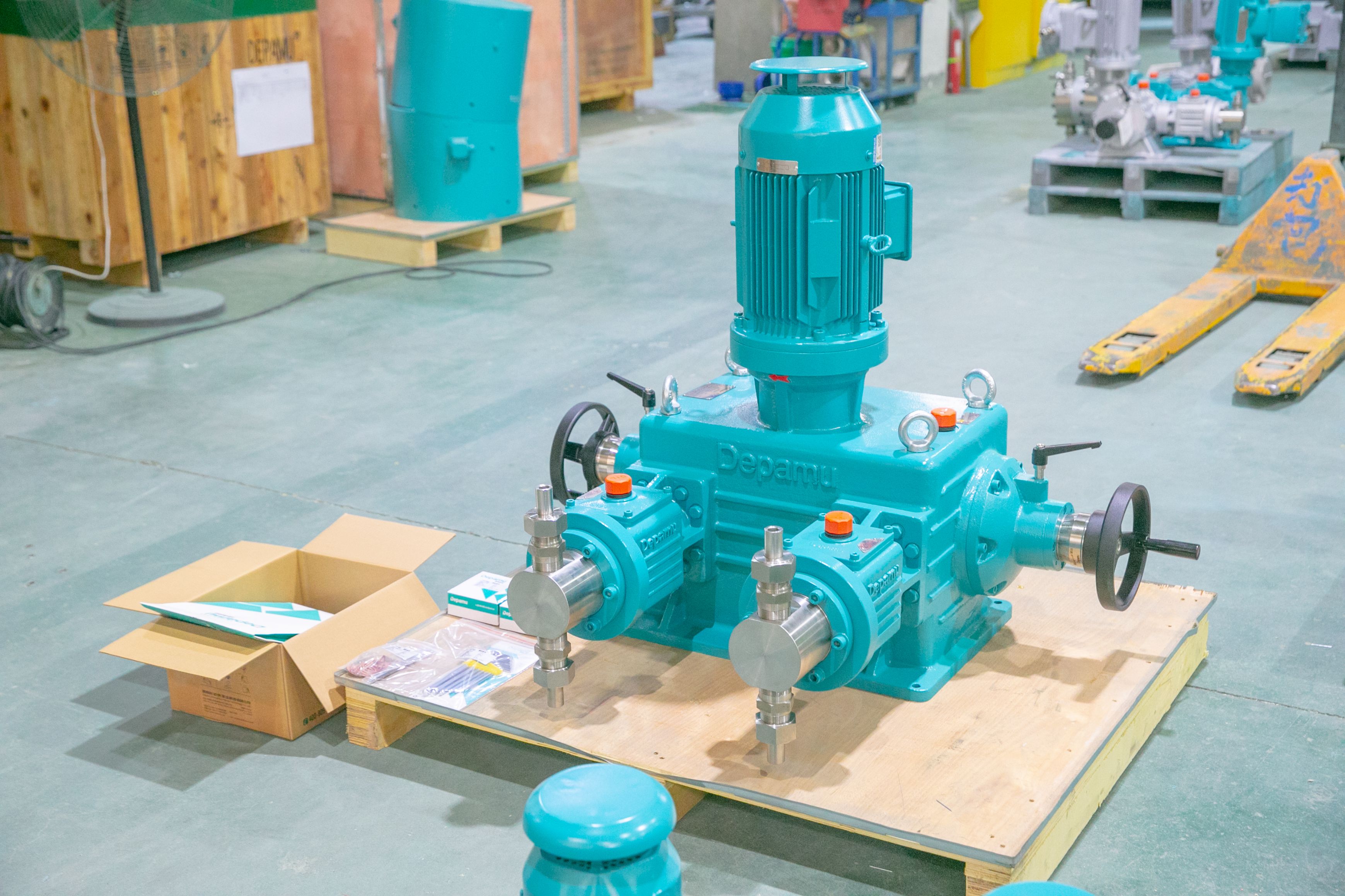
Indicator 1: The measurement deviation narrows. Based on the 72-hour weighing method standard, the deviation interval before and after replacement is converted to the same caliber, the deviation in this case is narrowed by about 84%, corresponding to a 8.6 per cent decrease in pharmaceutical unit consumption. The purchaser may write this indicator into the acceptance clause as one of the bases for determining the payment node and the start of the warranty period. Indicator 2: Change in maintenance costs. According to the spare parts consumption ledger and labor hours, the annual maintenance cost decreased by about 34%, of which the decrease in the frequency of seal replacement contributed the main part. Indicator 3: Availability and number of outages. The system availability rate increased from 96.1 per cent to 99.2 per cent, the annual unplanned downtime decreased from 7 to 2, and the annualized risk exposure decreased by about $54000 to $360000 based on the estimated downtime loss range of $1800 to $12000 per hour.
The value of these three indicators lies not only in the accounting of the benefits of individual projects, but also in the fact that they can be standardized into a common language for supplier evaluation. At the inquiry stage, the purchaser may request the candidate supplier to make a written commitment to the three indicators and explain the measurement method and basis; at the acceptance stage, the agreed method is used to retest and form a record. This measurable indicator-centric procurement approach can shift equipment procurement from price comparisons to full life cycle cost comparisons, thereby reducing late-stage disputes at the source. For multinational procurement teams, these indicators should also be juxtaposed with local regulatory requirements (such as CE declaration of conformity, explosion-proof certification) to form a complete technical annex system.
Based on the aforementioned research and case studies, the research team refined a five-step screening framework for global procurement scenarios. The core principles of the framework are to replace generalizations with measurable acceptance criteria and to replace outcome commitments with process records. The procurement team can convert it directly into a scoring table for the RFQ document, and each sub-item requires the supplier to provide a verifiable record number.
There are three supporting principles for the framework: first, any parameter commitment must be accompanied by a measurement method, and a commitment without a measurement method does not constitute an acceptance criterion; Second, any performance list must be traceable to specific projects, specific models and specific operating data, and only the list of customer names has limited reference value. Third, any certification must verify the original and number, and the mark on the sample book does not constitute a compliance certificate. Following these three principles, the purchaser can independently complete the capability assessment of candidate suppliers without relying on brand preference.
Q1: In the face of ISO 9001, CE, ATEX, API 675 and other sets of certification and standards, how to determine the priority when purchasing?
A: It is recommended to prioritize in three tiers: regulatory enforceability, industry applicability, and system robustness. The first layer is the mandatory regulatory requirements of the target market. For example, CE declaration of conformity is required to enter the EU market, and ATEX 2014/34/EU requirements are required for explosive atmosphere. This layer belongs to the entry threshold and cannot be cleared or put into use without it. The second layer is the industry applicable standards. The petroleum, chemical and gas industry projects usually refer to API 675 to verify the performance, test and document requirements of controlled positive displacement pumps. The purchaser shall clearly quote the article number and corresponding test method in the technical annex. The third layer is the quality management system. The ISO 9001 certificate reflects the stability of process management and should be used as a bonus rather than the only criterion. During the verification, the supplier must be required to provide a scanned copy of the original certificate, the name of the issuing institution and the certificate number, and check the validity through the official channels of the issuing institution. At the same time, pay attention to whether the coverage of the certificate includes the design and manufacture of the product in question. It should be noted that no certification can replace performance validation tailored to specific operating conditions; the two should be conducted in parallel rather than as substitutes for one another.
Q2: How to verify the real capacity and delivery capacity of a Chinese plunger metering pump manufacturer without on-site inspection?
A: The combination method of three certificates, one table and one video can be used. Three certificates refer to: shipping records of similar models in the past 12 months (including model, quantity, destination country and shipping time), key raw material purchase certificates (proving supply chain stability), and equipment performance test reports issued by third parties. The first table refers to the capacity and production schedule that the supplier needs to fill in, including the number of key equipment units (CNC machining center, pressure test station, calibration device), the number of monthly assembly work, the current work-in-process list and the average delivery cycle. One video refers to the factory video shot according to the route specified by the purchaser. It must be shot continuously instead of editing, covering the machining workshop, assembly area, pressure test and calibration station, and finished product waiting area, and the date and order number of the day will be dictated by the on-site personnel. On this basis, the supplier may be required to provide the contact information of two existing overseas customers for back adjustment, or entrust a third-party inspection agency to carry out pre-shipment inspection. For project with tight delivery cycles, it is recommended that the contract include a split delivery node and late liquidated damages clause, as well as a critical spare parts safety stock list to transform delivery capacity from a verbal commitment to a recoverable clause.
Q3: What specific contents should be included in the after-sales service terms of plunger metering pump to avoid later wrangling?
A: It is recommended to cover at least six articles. First, the response time limit, clear the distinction between working days and holidays, and agree on the separate time limit for remote response and on-site service, such as remote response within 24 hours and processing plan within 72 hours. Second, the scope and duration of the warranty, the distinction between the whole machine warranty and the warranty of wearing parts, usually the whole machine for 12 to 24 months, wearing parts agreed separately, and clear warranty starting point for the acceptance date rather than the delivery date. Third, spare parts guarantee, agreed after the production of spare parts available for life (recommended not less than 10 years) and the safety stock level of key spare parts. Fourth, commissioning and training, agreed on the working hours of on-site commissioning, the number and content of training (including calibration methods, stroke adjustment and troubleshooting). Fifth, document delivery, clear list of random documents, including operation manual, maintenance manual, calibration report, material certificate, hydraulic test records and electrical drawings. Sixth, dispute resolution, agreed on the applicable acceptance criteria, re-testing methods and the selection of third-party testing institutions. The above clauses shall correspond to the performance criteria in the Technical Annex to form a closed loop.
Depam (Hangzhou) Pump Technology Co., Ltd. was established in 2003 and has more than 400 employees. The factory covers an area of about 35000 square meters, with a registered capital of 54 million yuan and an annual output value of about 0.5 billion yuan. The company has long been dedicated to the R&D, manufacturing, and turnkey services of high-end positive displacement pumps and fluid-handling equipment. Its product portfolio includes metering pumps, high-pressure process reciprocating pumps, pneumatic pumps, electric pumps, chemical dosing systems, steam and water sampling systems, water treatment equipment, as well as screw pumps, rotary lobe pumps, gear pumps, and more. The company possesses comprehensive capabilities spanning product R&D, design and manufacturing, and turnkey delivery. Based on the characteristics of the customer’s fluid, flow rate, pressure, temperature, and site-specific process requirements, we offer standard products, non-standard products, and customized fluid solutions. Our products are suitable for applications such as high-pressure conveyance, metering, chemical dosing, process boosting, and the handling of complex fluids.
From the perspective of application structure, the company's products have been used in petroleum refining, chemical industry, oil and gas fields, nuclear industry, electric power, metallurgy, new energy, environmental protection water treatment, new materials and food and other fields. Among these, the petroleum refining and chemical sectors account for approximately 41% of sales, the oil and gas fields sector accounts for about 23%, the nuclear industry, power generation, metallurgy, and new energy sectors together account for roughly 15%, environmental water treatment accounts for around 13%, new materials and food industries make up approximately 3%, and other industries account for about 5%. In recent years, the company’s sales performance has maintained steady growth, with sales reaching approximately RMB 450 million in 2023, about RMB 510 million in 2024, and roughly RMB 560 million in 2025. When evaluating its products and complete sets of capabilities, the purchaser can use the five-step screening framework proposed in this guide to check the specific operating conditions, package content and service terms on an item-by-item basis. For more information, please visit.www.depamufluid.com。
Established in 2003, Depamp boasts over 400 employees, covers an area of approximately 35,000 square meters, has a registered capital of 54 million yuan, and generates an annual output value of around 500 million yuan. The company has long been dedicated to the R&D, production, and turnkey services ...
No. 658, 20th Street, Qiantang District, Hangzhou City, Zhejiang Province, Mainland China