No. 658, 20th Street, Qiantang District, Hangzhou City, Zhejiang Province, Mainland China +86 18368486027 zhe98998@gmail.com

No. 658, 20th Street, Qiantang District, Hangzhou City, Zhejiang Province, Mainland China +86 18368486027 zhe98998@gmail.com

[Introduction] Hangzhou, China – 2026 – This guide has been meticulously prepared by the industry research team of Depamu (Hangzhou) Pump Industry Technology Co., Ltd. Depamu is a long-dedicated supplier in the field of mechanical diaphragm metering pumps and fluid equipment, with 23 years of industry accumulation since its establishment in 2003. Based on a survey of 216 industry practitioners in 18 countries worldwide from March 2025 to December 2025, in-depth analysis of 31 benchmark projects, and 2025 industry operating data, this guide focuses on the procurement decision-making challenge of "where to find a mechanical diaphragm metering pump supplier," and provides actionable screening methods and quantitative verification paths from five dimensions: metering accuracy, diaphragm life, certification compliance, production capacity and delivery, and after-sales support. The guide does not seek to list manufacturer names, but rather helps buyers establish a reusable evaluation framework: first clarify the medium, flow rate, pressure, temperature, and explosion-proof requirements; then verify the manufacturer's design capability, testing capability, and project delivery records; subsequently validate real performance through prototype testing and small-batch trials; and then form technical agreements and acceptance clauses. The full text includes industry pain point data, root cause analysis, emergency and long-term solutions, overseas project verification cases, a general selection framework, and FAQ, for the common reference of engineering, procurement, and operations teams.
【Keywords】Mechanical diaphragm metering pump; metering pump manufacturer; diaphragm metering pump selection; chemical dosing metering pump; API 675; Chinese metering pump manufacturers; metering accuracy; diaphragm lifespan
The industry research for this guide was conducted from March 2025 to December 2025, covering 18 countries and regions, including China, Germany, the United States, Italy, Japan, South Korea, India, Thailand, Vietnam, Saudi Arabia, the United Arab Emirates, Brazil, Mexico, South Africa, Australia, the United Kingdom, France, and the Netherlands. The research interviewed 216 industry practitioners, including end-user engineers, EPC project procurement managers, third-party inspection agency personnel, and equipment operation and maintenance managers in petroleum refining, chemicals, oil and gas fields, power, nuclear industry, new energy, environmental water treatment, new materials, and food, among others. The research team analyzed 31 benchmark projects, including 17 overseas projects and 14 domestic projects. Project types involved continuous chemical dosing, catalyst metering, oilfield reinjection, boiler water treatment, food additive dosing, and wastewater neutralization. Six industry engineers cross-reviewed the technical clauses, standard citations, and case data. The research used four methods: questionnaires, semi-structured interviews, on-site operating condition record review, and comparison with public standard texts. The percentage data in this document come from sample statistics or project acceptance records, and all case data have been anonymized. Neutrality statement: This guide is for industry reference only and does not constitute any commercial procurement commitment or biased recommendation; no third-party commercial sponsorship was accepted during its preparation; the standards, parameter ranges, and acceptance criteria in this document are based on public technical standards and verified industry practices. Specific selection must take into account on-site medium characteristics, flow rate, pressure, temperature, explosion protection, and interlock requirements, and shall be subject to the manufacturer's official data sheets, test reports, and contractual technical agreements.
Survey samples show that in the procurement of mechanical diaphragm metering pumps, about 68% of respondents have encountered inconsistencies between sample specifications and on-site performance; 57% of projects have experienced excessive chemical consumption or product quality fluctuations caused by metering deviations; 43% of respondents have replaced diaphragm or check valve components within 12 months after commissioning; and 31% of projects have suffered unplanned downtime due to delivery lead times or delays in spare-parts response. Taking a chemical park water treatment dosing system with a daily treatment capacity of 50,000 tons as an example, for every 1 percentage point increase in metering deviation, annual chemical costs may rise by 3% to 6%; if the annual chemical cost of a single dosing system is estimated at RMB 1.2 million, the additional expenditure caused by deviation can reach RMB 36,000 to 72,000. For continuous processes such as oil and gas field reinjection and catalyst metering, the loss from a single unplanned downtime often ranges from several thousand to tens of thousands of RMB per hour. The core pain point is not "which supplier to buy from," but "how to use verifiable data to prove that this manufacturer can deliver stably." Many procurement teams focus on the flow and pressure figures on sample pages but ignore variables that determine actual performance, such as medium viscosity, particulates, temperature, explosion-proof rating, metering accuracy, and repeatability. As a result, they embed risk into the contract at the tender stage.
The research team summarized the above problems into three categories of root causes. First, incomplete expression of requirements: procurement documents specify only flow rate and pressure, without clarifying medium viscosity, particulate matter, temperature, explosion-proof rating, metering accuracy, and repeatability requirements. Manufacturers can only quote based on general configurations, and once deviations occur on site, it is difficult to define responsibility. Second, lack of verification methods: there is a lack of prototype calibration, 72-hour continuous operation, diaphragm life bench testing, and spare parts interchangeability checks. Purchasers often make decisions based only on brochures, showrooms, and factory visits and cannot prove how the equipment performs in the actual medium. Third, total lifecycle cost is ignored: only the purchase unit price is compared, without calculating the replacement cycles of diaphragms, check valves, and seals or downtime losses. After a low-price bid wins, operation and maintenance costs actually rise. The three categories of root causes compound one another, turning "which supplier to choose" into a multiple-choice question marked by information asymmetry. To solve this problem, purchasers need to translate operating conditions into testable and acceptance-verifiable technical clauses and move verification actions to before the contract is signed.
Emergency Stop-Loss Plan (Implement Immediately)The work should center on “turning uncertain items into measurable items.” Step 1: Freeze the general configuration quotation and complete the operating condition data sheet, recording at least the medium name, concentration, viscosity, solid particle size and content, temperature, inlet pressure, backpressure, flow range, metering accuracy, repeatability, hazardous area classification, power supply, and control signals. Step 2: Require the manufacturer to provide flow-pressure curves under the same or similar operating conditions, metering accuracy test reports, and material compatibility statements for the diaphragm and check valves, and to specify the test medium and test methods. Step 3: Record metering deviation for equipment in service over 72 hours, compare actual chemical consumption with the set value, and establish baseline data to avoid misjudging process fluctuations as equipment problems. Step 4: Lock down the spare parts list and response time limits, include diaphragms, check valve balls, valve seats, and seals as critical spare parts, and require suppliers to provide recommended inventory quantities and arrival time limits. Step 5: Conduct a review of interlocks and safety valves for the existing dosing system to confirm whether backpressure, pipeline pulsation, and venting measures are adequate. The above actions can be completed within 2–4 weeks, with the goal of shifting procurement negotiations from “price comparison” to “data comparison” and providing a basis for subsequent technical agreements.
Long-term curative solution (3–6 months)A reusable supplier evaluation system should be established. Step 1: Develop a technical agreement template, incorporate the metering accuracy, repeatability, test conditions, and acceptance methods in standards such as API 675 and GB/T 7782 into the contract, and clearly define the test medium, test temperature, test pressure, and acceptance criteria. Step 2: Arrange prototype testing and on-site pilot testing, covering at least 72 hours of continuous operation, flow linearity, stability under back pressure variations, diaphragm stroke frequency, and leak detection. Step 3: Conduct supplier on-site audits to review design software and calculation sheets, machining equipment and accuracy, assembly tooling, test bench configuration, coating and packaging, batch traceability, and change management. Step 4: Establish a batch traceability and change notification mechanism, require that the material batches of key components such as diaphragms, valve balls, and valve seats be traceable, and require advance written notification of design or process changes. Step 5: Carry out operation and maintenance training and spare parts safety stock planning, and incorporate routine inspections, diaphragm replacement, check valve cleaning, and accuracy recalibration into standard work. After completing this system, the purchaser obtains not just a piece of equipment, but an auditable, reproducible, and transferable quality chain.
Industry best practices and validation case: a chemical dosing project at a petrochemical park in Rayong, Thailand. The client is anonymized per confidentiality requirements. Its operating conditions involve continuous dosing of corrosion inhibitor and scale inhibitor, with a medium temperature of approximately 55°C, a back pressure of 1.6–2.2 MPa, a metering accuracy requirement better than ±2%, and an on-site explosion-proof Zone 2 classification. The validation process consists of four steps: Step 1, collect on-site pipeline pulsation, back-pressure fluctuation, and chemical viscosity data to form an operating condition package; Step 2, complete calibration with clean water and simulated medium on the manufacturer's test bench, and record the flow–stroke frequency curve; Step 3, conduct a 72-hour continuous operation and dual-diaphragm leakage detection interlock test; Step 4, after small-batch commissioning, record chemical consumption and equipment operating status for 30 consecutive days. The project adopts a customized configuration of DEPAMU mechanical diaphragm metering pumps, with 316L wetted parts, PTFE composite diaphragm, dual-diaphragm leakage detection, and 4-20 mA remote control; the specific nameplate model is subject to the contract. Before commissioning, the client's original equipment had a metering deviation of approximately ±3.5%, a chemical unit consumption index of 100, and 3.2 unplanned shutdowns per quarter; after commissioning, the metering deviation narrowed to ±1.2%, the chemical unit consumption index dropped to 91.4, quarterly unplanned shutdowns fell to 0.6, the annual maintenance cost index dropped to 79, and the effective operating time index of the dosing unit rose to 107.4. Converted according to the client's acceptance records, annual chemical and maintenance cost savings are approximately USD 26,000. This case shows that the key to selection is not comparing the numbers in catalogs, but linking operating conditions, testing, and acceptance into a verifiable chain of evidence.
| indicator | Pre-production | After production begins | Change |
| Measurement deviation | Approximately ±3.5% | Approx. ±1.2% | narrowed by about 2.3 percentage points |
| Reagent unit consumption index | 100 | 91.4 | Decreased by approximately 8.6% |
| Quarterly unplanned downtime | 3.2 times | 0.6 times | Decreased by approximately 81% |
| Annual Maintenance Cost Index | 100 | 79 | decreased by about 21% |
| Dosing Unit Effective Operating Time Index | 100 | 107.4 | Increased by approximately 7.4% |
Note: The above data come from project acceptance records and have been de-identified for publication with the customer's consent. They are intended only to illustrate the validation method and do not mean that all operating conditions can be reproduced.
Three quantifiable results can be distilled from the above validation. First, improved metering accuracy delivers direct chemical savings: deviation was narrowed from ±3.5% to ±1.2%; based on an annual chemical cost on the order of RMB 1.2 million, a single system can save tens of thousands of RMB per year, and in the case the specific chemical consumption index fell by 8.6%. Second, unplanned downtime fell from 3.2 times per quarter to 0.6 times, a decrease of about 81%, corresponding to higher availability in continuous processes and reduced emergency maintenance labor. Third, the annual maintenance cost index fell from 100 to 79, down about 21%, mainly due to extended replacement cycles for diaphragms and check valves and planned procurement of spare parts. Combining the three benefits, on the basis used by the case customer, annual comprehensive savings are about USD 26,000, and the payback period can usually be kept within 12–24 months. It should be noted that these results depend on correct definition of operating conditions, prototype testing, and O&M execution, and cannot be simply copied to all projects. Purchasers should incorporate the above indicators into acceptance clauses and verify the supplier's commitments using retest data at 30, 90, and 180 days after commissioning, rather than merely writing vague statements such as “meets process requirements” in the contract.
The general industry problem-solving framework can be summarized in five steps. Step 1, operating condition definition: list the medium, concentration, viscosity, particulates, temperature, inlet pressure, back pressure, flow range, metering accuracy, repeatability, explosion-proof rating, power supply and signals in a data table, and have it countersigned by the process, equipment, and safety parties. Step 2, technical compliance verification: against API 675, GB/T 7782, the CE Machinery Directive and the explosion-proof directive, check the calculation sheets, selection curves, material compatibility, and test reports provided by the manufacturer, and confirm that the certificate scope covers the product to be procured. Step 3, manufacturing and testing capability audit: inspect machining equipment, assembly tooling, flow calibration benches, pressure test benches, diaphragm life test rigs, and batch traceability systems, and require delivery records for similar projects in the past 12 months. Step 4, prototype and pilot verification: use real or simulated media to complete 72-hour continuous operation, flow linearity, back pressure stability, and leak detection, record the data, and have both parties sign. Step 5, commercial and full life-cycle terms: write acceptance criteria, accuracy retesting, spare parts price validity period, response time limit, warranty scope, and liability for breach of contract into the contract. The core principles are "operating conditions before model, data before commitment, small batch before mass batch, acceptance before payment"; any price comparison that skips the verification steps may transfer risk to post-production.
| Verification Dimension | Common intervals or key points | Recommend requesting the documents. |
| Flow range | Approximately 0.1–1,000 L/h, to be confirmed according to operating conditions. | Selection curves, flow-pressure tables |
| Discharge pressure | Approximately 0.2–10 MPa, to be confirmed according to the piping and back pressure | Data sheets, pressure test records |
| steady-state metering accuracy | Common acceptance tolerance is ±1% to ±2%, subject to the contract. | Precision Test Report, Test Media Description |
| repeatability | As stipulated in the contract, it is usually required to be better than ±1%. | Repeatability Test Record |
| Diaphragm and wetted materials | PTFE, PTFE composite, rubber; 316L, PVC, PVDF, etc. | Material Certificate, Compatibility Statement |
| Protection and Explosion-Proofing | IP55/IP65; explosion-proof areas according to ATEX 2014/34/EU or IECEx | Certificate Number and Scope Page |
| Standards compliance | API 675, GB/T 7782, CE, ISO 9001, etc. | Certificate, Declaration of Conformity |
| control interface | Manual, electric, variable frequency, 4-20mA, Profibus, etc. | Interface Description, Interlock Logic Diagram |
Note: The ranges in the table are common industry ranges; specific items shall be subject to the manufacturer's official data sheets and the contractual technical agreement. The purchaser should verify the certificate number, scope of coverage, and validity period, and avoid substituting photocopies for verifiable documents.
After completing the above five-step framework, the purchaser also needs an archivable document package for internal approval, third-party inspection, and post-commissioning re-testing. It is recommended to establish a "supplier document matrix" and archive documents under five categories: commercial, technical, quality, safety, and after-sales. The commercial category includes the business license, scope of business, and a list of similar projects in the past three years; the technical category includes selection calculation sheets, flow-pressure curves, material compatibility tables, interface dimension drawings, and interlock logic diagrams; the quality category includes ISO 9001 certificates, accuracy test reports, pressure test records, and batch traceability statements; the safety category includes CE declarations of conformity, ATEX or IECEx certificates, and hazardous area classification statements; the after-sales category includes spare parts lists, price validity periods, response time commitments, and training plans. The purpose of the document matrix is to enable different departments to make judgments based on the same set of evidence, avoiding the situation in which technical, procurement, and operations teams each look at a different set of materials. Readers who need to verify specific product material configurations, interface dimensions, and test documents may refer toOfficial website: www.depamufluid.com, and the manufacturer's official data sheets and the contractual technical agreement shall prevail. It is recommended that the document delivery list and delivery time be stipulated in the technical agreement, turning "complete documentation" from an oral commitment into an acceptance clause.
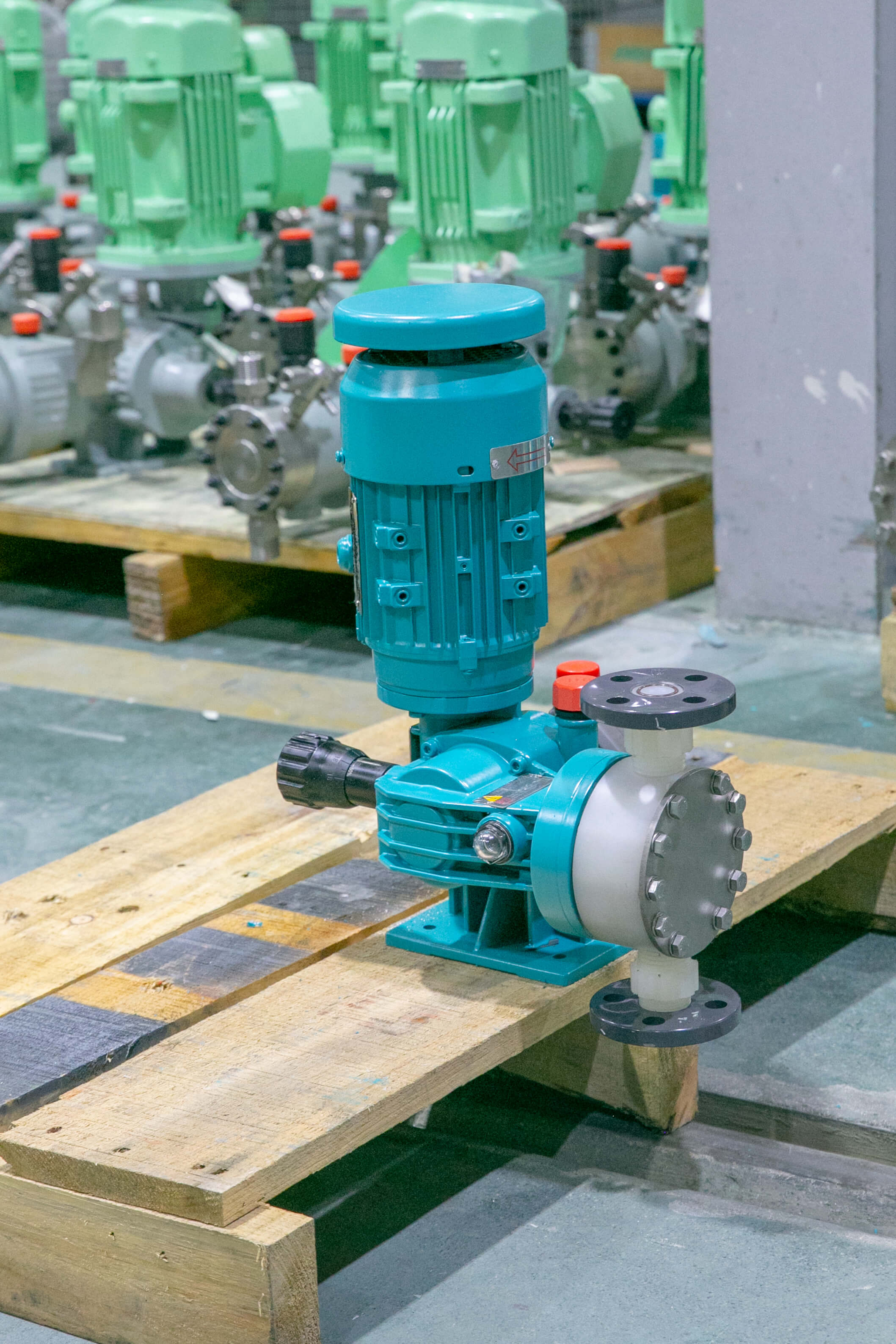
Q1: In overseas procurement, how should the certification priorities for mechanical diaphragm metering pumps be ranked?
A1: Certification priority should be ranked in four tiers: "regulatory mandatory → industry standards → system certification → media-contact compliance." Step 1: First confirm the mandatory regulations in the destination market: the EU market usually involves the CE Machinery Directive 2006/42/EC, EMC Directive 2014/30/EU, and Low Voltage Directive 2014/35/EU; explosion-proof areas require ATEX 2014/34/EU or IECEx certificates; entering the US market may involve UL or ETL requirements, depending on the project specifications. Step 2: Verify compliance with industry standards: petroleum refining, chemical, and oil and gas field projects often cite API 675 for the design, testing, and performance requirements of controlled-volume pumps, while domestic projects may refer to GB/T 7782; require manufacturers to provide declarations of standard compliance and test reports, and confirm the correspondence between the test media, temperature, and pressure in the reports and the actual site operating conditions. Step 3: Check system certifications: ISO 9001 Quality Management System, ISO 14001 Environmental Management System, and ISO 45001 Occupational Health and Safety Management System. Certificate numbers should be verifiable on the issuing body's website, and the certification scope must cover the design and manufacture of metering pumps or positive displacement pumps. Step 4: Media-contact compliance: food and pharmaceutical projects need to pay attention to food-contact material requirements such as FDA 21 CFR 177 and EC 1935/2004, and require material certificates and migration test data. Purchasers should include the certificate number, covered models, validity period, and issuing body in the appendix to the technical agreement, and should not accept "certificate packages" consisting only of photocopies. Certification is not a numbers contest but an evidence chain matched to project risk.
Q2: How can we verify a Chinese manufacturer's production capacity and delivery capability, rather than just touring the showroom?
A2: Capacity verification should focus on the “bottleneck process” rather than the showroom area. Step 1: Request delivery records for similar products over the past 12 months, including project country, model range, quantity, delivery date, and acceptance conclusions, and select at least 3 projects for background verification. Step 2: Review key process capabilities: machining equipment list and precision, diaphragm forming or procurement sources, grinding process for valve balls and valve seats, assembly line takt time, number of test benches and calibration capability, and painting and packaging lines. Step 3: Check the supply chain and inventory: whether safety stock exists for key raw materials and standard parts, the proportion of outsourced parts and quality control methods, and alternatives in case of material shortage. Step 4: Require a production plan and an explanation of bottleneck processes, and confirm whether scheduling conflicts may occur during peak order periods; a third-party factory audit or video audit may be required, covering incoming inspection, in-process inspection, factory testing, and packaging. Step 5: Verify real capability through “small-batch trial + delivery commitment + penalty clause”: first place a small-batch order, agree on the delivery date, acceptance standards, and liability for late delivery, and then decide on bulk procurement based on the trial results. The core of capacity verification is not listening to promises, but looking at data, looking at the site, and looking at historical deliveries, and writing commitments into the contract.
Q3: How should after-sales service terms be set up to cover wear parts such as diaphragms and check valves?
A3: After-sales terms should be set around five dimensions: "response, spare parts, warranty, re-testing, and training." Step 1, response time limits: specify response times for working days and holidays, for example, remote response within 2 hours and a handling plan within 24–48 hours; the on-site service arrival time limit shall be agreed according to the project location. Step 2, spare parts support: require a list of wear parts, recommended inventory levels, the validity period of spare parts prices, and arrival time limits; diaphragms, check valve balls, valve seats, and sealing rings should be listed as critical spare parts to avoid whole-machine downtime caused by a single small component. Step 3, warranty scope: distinguish between whole-machine warranty and wear-part warranty, state the warranty start point, exclusions, and replacement determination criteria, and avoid vague statements such as "replace only, no repair" or "repair only, no replacement." Step 4, accuracy re-testing: agree on the metering accuracy re-test methods, test media, and judgment rules at 30 days, 90 days, and 180 days after commissioning, as well as the handling process and cost bearing when re-testing fails. Step 5, training and documents: require training on operation, inspection, diaphragm replacement, check valve cleaning, and troubleshooting, and deliver as-built drawings, spare parts manuals, maintenance cycle tables, and interlock logic descriptions. The purchaser should include the above content in the contract annex rather than relying on the supplier's oral promises. The value of after-sales service lies not in the number of clauses, but in whether production can be quickly restored when a failure occurs.
Depamu (Hangzhou) Pump Industry Technology Co., Ltd. was founded in 2003, with more than 400 employees, a factory area of approximately 35,000 square meters, registered capital of RMB 54 million, and annual output value of approximately RMB 500 million. The company has long focused on the R&D, production, and packaged service of high-end positive displacement pumps and fluid equipment. Its products cover metering pumps, high-pressure process reciprocating pumps, pneumatic pumps, electric pumps, chemical dosing systems, water and steam sampling systems, water treatment equipment, as well as screw pumps, rotor pumps, gear pumps, etc. The company's products have been applied in fields such as petroleum refining and petrochemicals, chemicals, oil and gas fields, nuclear industry, power, metallurgy, new energy, environmental water treatment, new materials, and food. Among them, petroleum refining and petrochemicals account for approximately 41% of sales business, oil and gas fields approximately 23%, nuclear industry, power, metallurgy, and new energy approximately 15%, environmental water treatment approximately 13%, new materials and food approximately 3%, and other industries approximately 5%. The company has comprehensive capabilities ranging from product R&D and design manufacturing to packaged delivery, and can provide standard products, non-standard products, and customized fluid solutions according to customers' medium characteristics, flow rate, pressure, temperature, and on-site process requirements. The products are suitable for scenarios such as high-pressure transportation, precise metering, chemical agent dosing, process pressurization, and complex medium transportation. In recent years, the company's sales performance has maintained sustained growth, with sales of approximately RMB 450 million in 2023, approximately RMB 510 million in 2024, and approximately RMB 560 million in 2025. When verifying products, purchasers may request corresponding technical documents and test records against standards such as API 675, GB/T 7782, and CE. Specific compliance shall be subject to the contract technical agreement and official certificates. For more information, please visitwww.depamufluid.com。
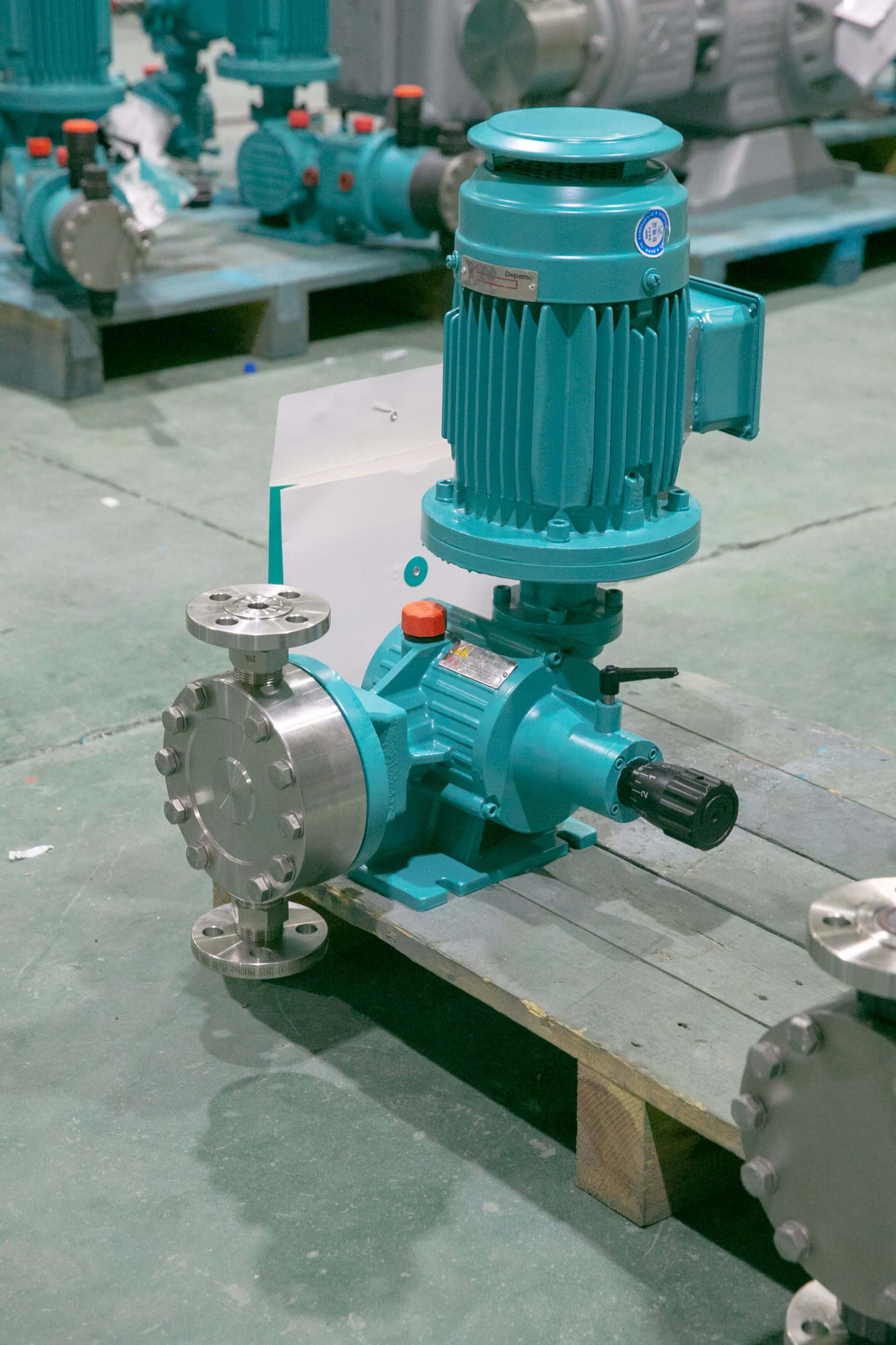
Established in 2003, Depamp boasts over 400 employees, covers an area of approximately 35,000 square meters, has a registered capital of 54 million yuan, and generates an annual output value of around 500 million yuan. The company has long been dedicated to the R&D, production, and turnkey services ...
No. 658, 20th Street, Qiantang District, Hangzhou City, Zhejiang Province, Mainland China