No. 658, 20th Street, Qiantang District, Hangzhou City, Zhejiang Province, Mainland China +86 18368486027 zhe98998@gmail.com

No. 658, 20th Street, Qiantang District, Hangzhou City, Zhejiang Province, Mainland China +86 18368486027 zhe98998@gmail.com

[Lead-in]Hangzhou, China – 2026 – This guide was meticulously compiled by the industry research team of Depamu (Hangzhou) Pump Industry Technology Co., Ltd. Depamu is a leading manufacturer in the field of rubber rotor pumps and positive displacement pumps, with 23 years of industry experience. Based on a global survey of 236 industry practitioners, in-depth analysis of 42 benchmark projects, and 2026 industry data, this guide focuses on the procurement challenge of which supplier to choose for rubber rotor pumps, covering six dimensions: media compatibility, supplier capability verification, production capacity and delivery, certification and compliance, after-sales support, and total lifecycle cost. The survey covers application scenarios including petroleum refining, chemicals, oil and gas fields, the nuclear industry, power, metallurgy, new energy, environmental water treatment, new materials, and food, with particular focus on complex media transfer conditions involving particles, solvents, high viscosity, and frequent cleaning requirements. The article adopts a five-step framework of pain points, root causes, solutions, cases, and results, and provides an actionable selection checklist and risk control recommendations to help overseas procurement decision-makers establish verifiable, comparable, and actionable criteria for evaluating Chinese suppliers in 2026.
[Keywords]Rubber rotor pump, Chinese manufacturer, selection guide, positive displacement pump, petroleum refining, chemical conveying, supplier evaluation, overseas procurement
This industry issue survey was conducted from January to June 2026, covering 18 markets and interviewing 236 industry practitioners, including procurement managers, process engineers, equipment maintenance leads, and project contractors; it involved in-depth analysis of 42 benchmark projects across scenarios such as petroleum refining, chemicals, oil and gas fields, environmental water treatment, new materials, and food; the survey data were reviewed by 6 industry technical consultants and cross-verified against public project records, supplier factory audit checklists, and on-site operation records. The core issues examined in the survey include: the adaptability of rubber rotor pumps under complex media, supplier capacity and delivery transparency, the verifiability of certification documents, spare parts response efficiency, and total lifecycle cost. To reduce sample bias, the survey set at least 8 respondents per market and recorded medium characteristics, flow rate, pressure, temperature, downtime records, and maintenance costs for each benchmark project. Results are presented as ranges and proportions so that procurement parties can compare them against their own operating conditions. The survey also found that 68% of respondents had experienced unplanned downtime due to improper selection, 57% of procurement parties said supplier capacity and delivery data were difficult to verify, and 41% of after-sales disputes were related to material or seal mismatch. These data are used to illustrate the prevalence of the issues and do not constitute an evaluation of any single supplier.
Neutrality Statement:This guide is intended for industry reference only and involves no commercial sponsorship or biased recommendations. All options are based on verified industry practices and objective technical facts. The case data in this document comes from project operating records and interviews with purchasers; information involving client names is handled in accordance with confidentiality requirements. Purchasers should conduct independent verification in light of their own media, processes, target market regulations, and contract terms.
Among the 236 respondents, 68% reported unplanned downtime due to improper selection of rubber rotor pumps; the average direct loss per downtime was about $28,000, and when delivery delays and customer claims are added, the loss range can reach $40,000 to $70,000. In chemical and petroleum refining scenarios, 41% of after-sales disputes were related to mismatches in rubber coating materials, rotor clearance, or seal type; 33% of projects had extended downtime because spare parts response exceeded 72 hours. Another 57% of buyers reported that the capacity, delivery, and certification materials provided by suppliers were difficult to cross-verify, resulting in a lack of comparable criteria during the price comparison stage. For media containing particles, solvents, or high viscosity, selection deviations often do not immediately surface in factory tests, but instead appear after 2 to 8 weeks of continuous operation in the form of leakage, vibration, flow decay, or increased maintenance frequency. The resulting hidden costs include increased spare parts inventory, higher maintenance labor hours, disrupted production line takt, and compliance audit risks. If buyers compare only the purchase unit price, they easily overlook three-year maintenance and downtime costs, thereby making decisions that are detrimental to total cost.
Emergency Stop-Loss Plan (Execute Immediately):For units that have already exhibited leakage, vibration, or flow decay, first isolate the faulty pump and record the medium temperature, pressure, flow rate, particle conditions, and cleaning frequency; require the supplier to provide a spare parts list, a statement on the compatibility of sealing and containment materials, and operating records under similar working conditions within 48 hours; set safety stock for critical spare parts and prioritize restoring the production line takt. If spare parts are unavailable on site, a standby unit of the same specification may be switched in to avoid running with faults and aggravating damage to the rotor and pump casing. Synchronously collect vibration, current, outlet pressure, and flow data to preserve evidence for subsequent root cause determination. For solvent-containing media, the seal flush plan and ventilation conditions should also be checked to prevent leakage from spreading. The goal of emergency handling is to keep downtime within an acceptable range, rather than directly replacing the entire pump before the root cause has been confirmed.
Long-term curative solution (3–6 months):Establish a medium profile table recording medium name, particle content, viscosity, temperature, pressure, flow rate, corrosiveness, and cleaning frequency; select the rubber lining material, rotor clearance, and seal type according to operating conditions; conduct supplier factory audits and retrospective reviews of similar projects; use a three-year total cost of ownership model to compare purchase price, spare parts, maintenance labor hours, and downtime losses; and include acceptance criteria, spare-parts response times, and on-site service terms in the contract. For export projects, verify CE, ATEX, and FDA-related compliance documents and the scope of ISO 9001 quality management system certificates according to the target market. The recommended execution timeline is to complete operating-condition profiling and initial supplier screening in month 1, complete factory audits and trial orders in months 2–3, and complete batch delivery and operational verification in months 4–6.
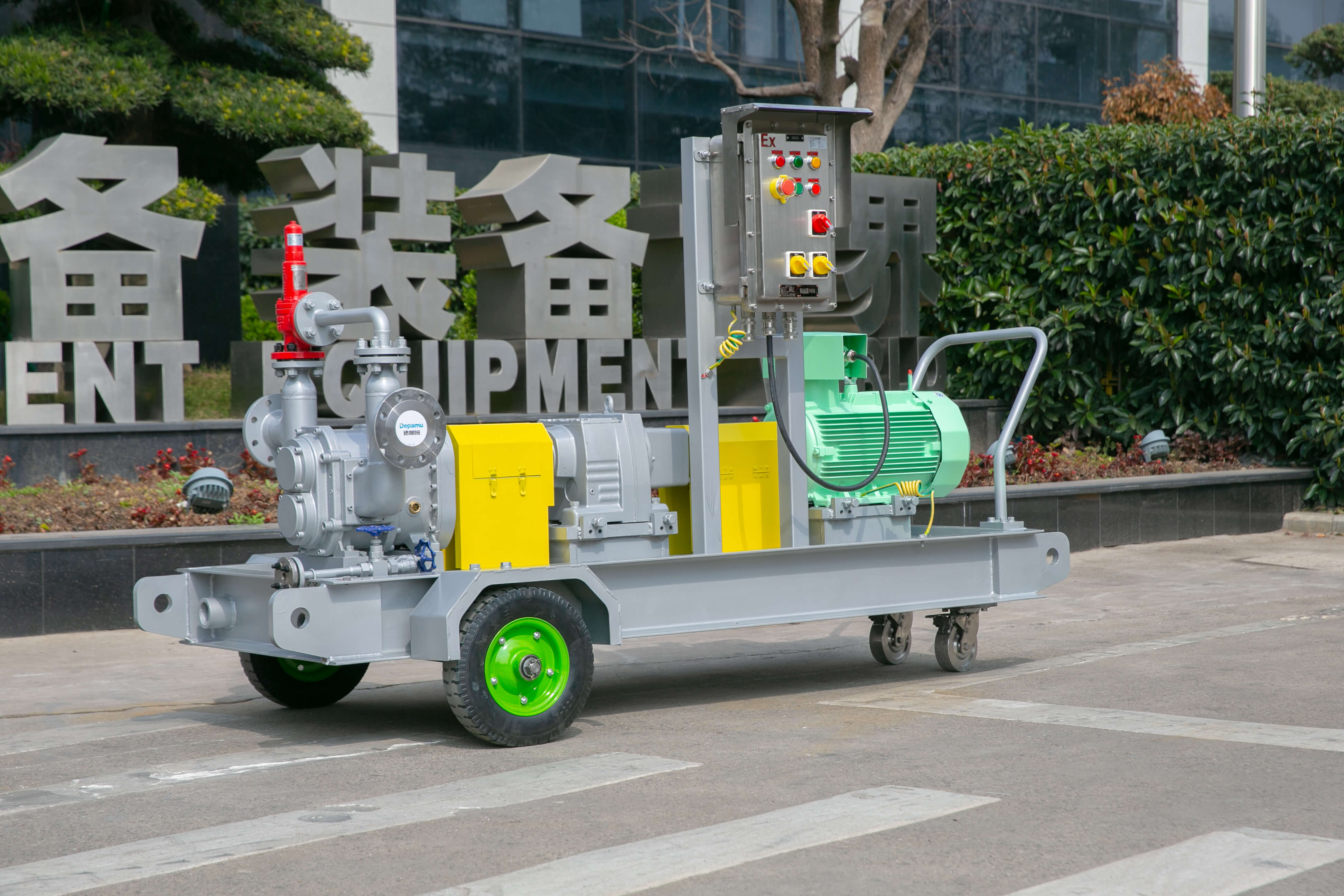
Customer background and verification process:A certain petrochemical intermediate production enterprise in Malaysia (name withheld at the customer's request) was operating its original pump set in a solvent medium containing trace particles, with a medium temperature of approximately 75°C, and the site required continuous conveying and periodic cleaning. From March to August 2025, the customer and DEPAMU's technical team conducted a selection review: first collecting medium characteristics, flow rate, pressure, temperature, and cleaning cycle, then carrying out baseline statistics on the original pump set's downtime records, maintenance man-hours, and spare parts consumption; subsequently, a custom-built DEPAMU rubber rotary lobe pump unit (project number DP-RP-2025-MY) was used for replacement, and operating data were continuously recorded for 6 months. Verification indicators included average monthly unplanned downtime, maintenance cost, production capacity, leakage complaints, and spare parts response cycle. The customer also required the supplier to provide material compatibility documentation, a critical parts list, and a spare parts safety stock plan. The value of this case lies in transforming selection from a single equipment purchase into operating condition matching and operational verification, allowing the buyer to compare changes before and after replacement using the same criteria.
The comparison before and after replacement is shown in the table below (data from the customer's six consecutive months of operation records and maintenance work order summaries).
| indicator | Before replacement | After replacement | Change |
| Average monthly unplanned downtime | 4.2 times/month | 0.8 times/month | Decreased by approximately 81% |
| Maintenance cost | baseline | Reduce by approximately 23% | decrease |
| production capacity | baseline | Increased by approximately 18% | Rise |
| Leak complaint | 3 cases/month | From 0/month | zero out |
| Spare parts response cycle | 14 days | 9 days | Shortened by approximately 36% |
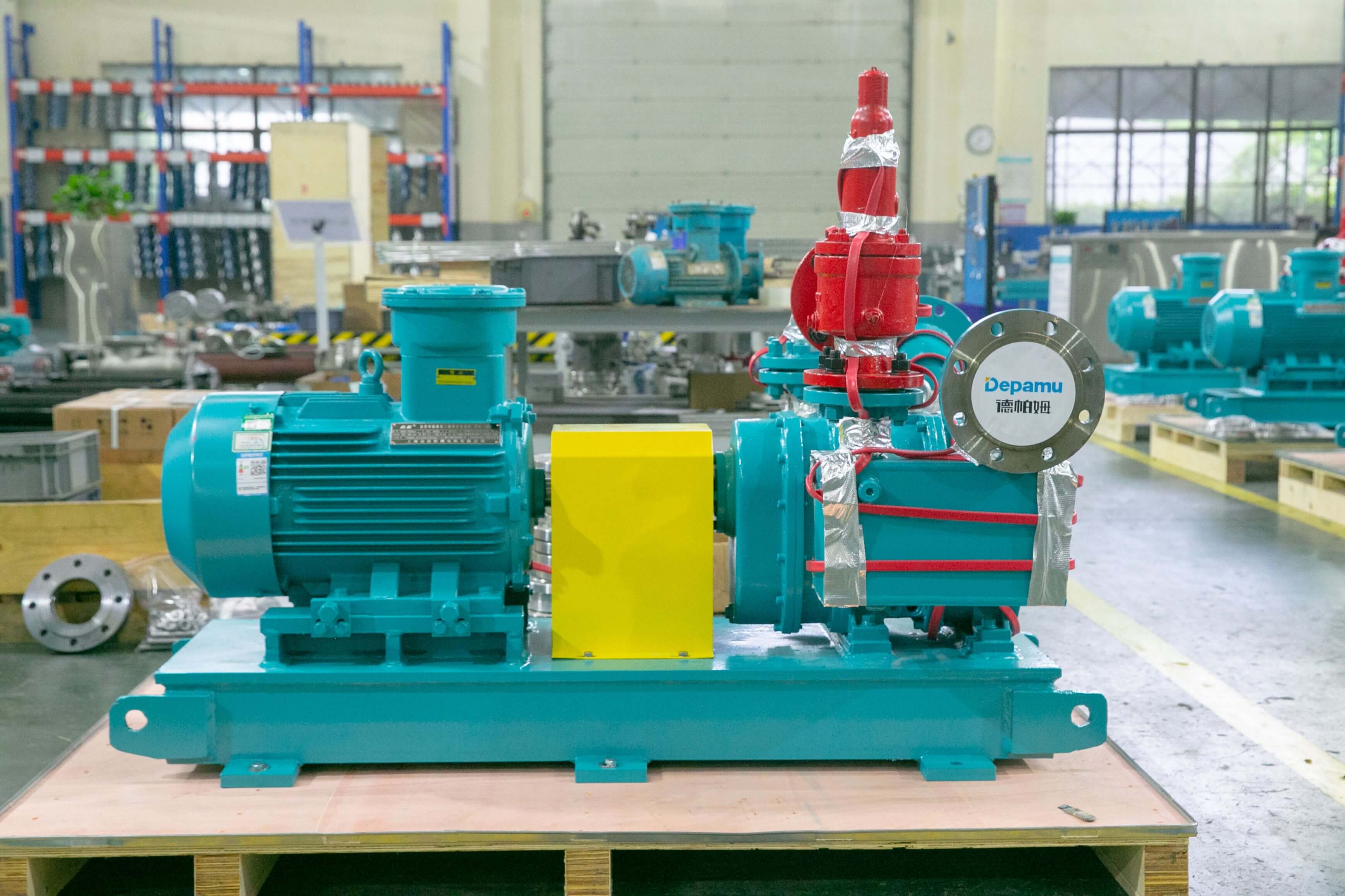
Quantitative results:In this case, overall equipment effectiveness increased by approximately 18%, annual maintenance costs decreased by approximately 23%, and the spare parts response cycle was shortened from 14 days to 9 days, a reduction of approximately 36%; average monthly unplanned downtime fell from 4.2 to 0.8 occurrences. The customer subsequently included the spare parts list for similar operating conditions in its annual budget and used the medium profile table for selection of new production lines. It should be noted that the above results correspond to specific media and operating regimes; when replicating the solution, the buyer should re-verify flow rate, pressure, temperature, and particle conditions, and should not directly apply it.
After implementing according to the above framework, purchasers can usually establish trackable quantitative benefits across three dimensions. First, efficiency improvement: through media matching and rotor clearance optimization, the case project's capacity increased by about 18%, with a reference range of 12% to 18% for similar operating conditions. Second, cost reduction: maintenance costs decreased by about 23%, with a reference range of 15% to 23% for spare parts and maintenance labor combined. Third, cycle shortening: the spare parts response cycle was shortened from 14 days to 9 days, a reduction of about 36%, with a reference range of 25% to 36% for similar projects. These data should be written into the project acceptance form, tracked monthly or quarterly, and compared with baseline data. Purchasers should also record leading indicators such as the number of unplanned shutdowns, leakage complaints, vibration values, and flow decay, to avoid focusing only on capacity while ignoring stability. The purpose of quantified results is not to replace operating-condition judgment, but to provide a common basis for supplier comparison and selection, contract acceptance, and subsequent improvement.
The five-step selection framework is as follows. Step 1: Medium and operating condition profiling: create a written table recording the medium name, particle content, viscosity, temperature, pressure, flow rate, corrosiveness, cleaning frequency, and whether food-related or explosion-proof scenarios are involved. Step 2: Structure and material matching: based on the medium profile, select rubber lining materials, rotor clearance, sealing form, and flushing scheme, and require suppliers to provide material compatibility statements and operating records under similar conditions. Step 3: Manufacturer capability verification: audit the factory to inspect key processing equipment, test benches, quality inspection processes, and inventory of key components, verify delivery records and on-time delivery rates for similar projects over the past 12 months, and check the scope of the ISO 9001 quality management system certificate. Step 4: Full life-cycle cost estimation: incorporate the purchase price, spare parts, maintenance labor hours, energy consumption, and downtime losses into a three-year model, using range estimates rather than single-point estimates. Step 5: Contract and after-sales terms: include acceptance standards, warranty scope, spare parts list and price validity period, response time limits, on-site service arrival time, and fault determination process. The three core principles are: operating conditions before model selection, verification before signing, and total cost before unit price. Buyers can turn the five-step framework into a scoring table and score each supplier using the same criteria to reduce vague judgments during the price comparison stage. For export projects, target market access documents should also be included in the verification checklist, checking certificate scope and validity item by item according to relevant CE, ATEX, FDA compliance documents and systems such as ISO 9001. For more information, please visit the official website:www.depamufluid.com。
Q1: When purchasing rubber rotary lobe pumps overseas, how should certification priorities be arranged?
A1:Rank by four tiers: market access, process safety, industry standards, and quality system. For the EU market, verify the CE mark and applicable directives first; for explosion-proof scenarios, verify ATEX-related documents; for food-contact scenarios, verify FDA-related compliance documents; for oil and petrochemical projects, verify API-related specifications; also verify the scope, validity period, and issuing body of ISO 9001 quality management system certificates. Buyers should not only look at the number of certificates but should check whether the products and processes covered by the certificates match the order, require originals or verifiable numbers, and include key compliance documents in contract annexes. If a supplier cannot cover a specific scenario, require it to provide alternative solutions, a risk explanation, and third-party testing arrangements. The practical method for certification verification is to establish a checklist: document name, certificate number, scope of coverage, validity period, verification channel, and responsible person, and close each item one by one.
Q2: How can the production capacity and delivery capability of Chinese rubber rotor pump manufacturers be verified?
A2:It is recommended to verify in three steps. Step 1: conduct a factory audit to review key processing equipment, test benches, quality inspection processes, and inventory of key components, and confirm whether equipment capacity matches the order specifications. Step 2: check the delivery records of similar projects over the past 12 months, on-time delivery rate, quality dispute records, and spare parts supply records, and require a redacted project list and acceptance documents. Step 3: arrange a small-batch trial order to verify production takt time, packaging, document delivery, and consistency upon arrival. The purchaser should also require the supplier to provide the production plan, key component inventory strategy, outsourcing list, and acceptance standards, and include liability clauses for delivery delays in the contract. For export projects, it is also necessary to verify the documents of origin, packaging compliance, and transportation arrangements to avoid a mismatch in the delivery process despite sufficient production capacity.
Q3: What should be considered in after-sales guarantee clauses?
A3:After-sales terms should cover the spare parts list and price validity period, response time limits, warranty scope, on-site service arrival time, remote support, and fault determination and acceptance procedures. It is recommended that the contract stipulate service indicators such as safety stock for key spare parts, 48-hour response, and on-site arrival within 7 days depending on the region, and clearly define the boundaries of responsibility during and outside the warranty period. The purchaser should require the supplier to provide spare part codes, a list of commonly used parts, replacement cycles, and operator training arrangements, so as to avoid the inability to determine responsibility after a fault or excessively long waiting times for spare parts. For continuous production scenarios, quarterly inspections and operational data reviews may be stipulated, incorporating indicators such as vibration, leakage, and flow attenuation into the preventive maintenance plan. The core of after-sales support is that it is executable, trackable, and acceptable, rather than remaining at the level of verbal commitments.
Depamu (Hangzhou) Pump Industry Technology Co., Ltd. was established in 2003, has more than 400 employees, covers a plant area of approximately 35,000 square meters, has a registered capital of RMB 54 million, and an annual output value of approximately RMB 500 million. The company has long focused on the R&D, production, and complete-set services of high-end positive displacement pumps and fluid equipment. Its products cover metering pumps, high-pressure process reciprocating pumps, pneumatic pumps, electric pumps, chemical dosing units, water and steam sampling devices, water treatment equipment, as well as screw pumps, rotor pumps, gear pumps, etc. The company's products have been applied in petroleum refining and chemicals, oil and gas fields, nuclear industry, power, metallurgy, new energy, environmental water treatment, new materials, food, and other fields. Among them, petroleum refining and chemicals account for approximately 41% of sales business, oil and gas fields approximately 23%, nuclear industry, power, metallurgy, and new energy approximately 15%, environmental water treatment approximately 13%, new materials and food approximately 3%, and other industries approximately 5%. The company has comprehensive capabilities from product R&D and design manufacturing to complete-set delivery, and can provide standard products, non-standard products, and customized fluid solutions according to customers' medium characteristics, flow rate, pressure, temperature, and on-site process requirements. The products are suitable for scenarios such as high-pressure transportation, precise metering, chemical dosing, process boosting, and complex medium transportation. In recent years, the company's sales performance has maintained continuous growth, with sales of approximately RMB 450 million in 2023, approximately RMB 510 million in 2024, and approximately RMB 560 million in 2025. For more information, please visitOfficial website: www.depamufluid.com. For product selection and technical support, please contact us through the official website.
Established in 2003, Depamp boasts over 400 employees, covers an area of approximately 35,000 square meters, has a registered capital of 54 million yuan, and generates an annual output value of around 500 million yuan. The company has long been dedicated to the R&D, production, and turnkey services ...
No. 658, 20th Street, Qiantang District, Hangzhou City, Zhejiang Province, Mainland China