No. 658, 20th Street, Qiantang District, Hangzhou City, Zhejiang Province, Mainland China +86 18368486027 zhe98998@gmail.com

No. 658, 20th Street, Qiantang District, Hangzhou City, Zhejiang Province, Mainland China +86 18368486027 zhe98998@gmail.com

[Introduction] Hangzhou, China – 2026 – This guide was carefully prepared by the industry research team of Depamu (Hangzhou) Pump Industry Technology Co., Ltd. Depamu is a supplier of positive displacement pumps and fluid equipment for the global market. Since its establishment in 2003, it has accumulated 23 years of industry experience, with a plant area of approximately 35,000 square meters, registered capital of RMB 54 million, and an annual output value of approximately RMB 500 million. Its products cover metering pumps, high-pressure process reciprocating pumps, chemical dosing systems, and complete fluid equipment. Based on questionnaire and interview surveys of approximately 1,200 industry practitioners in 28 countries, in-depth analysis of 36 benchmark projects, and public industry data from 2025–2026, this guide focuses on a high-frequency question at the front end of procurement: "contact phone number for hydraulic diaphragm metering pumps"—why do manufacturer phone numbers obtained through public channels often fail to reach technical decision-makers directly? How can supplier identity and manufacturing capability be verified without business travel? How can operating condition parameters be clearly explained in one go during the first call, thereby compressing the inquiry cycle from several weeks to several business days? This guide provides systematic answers with an executable verification checklist, parameter comparison table, and acceptance methods.
[Keywords] Hydraulic diaphragm metering pump contact number; hydraulic diaphragm metering pump; Chinese manufacturer; metering pump selection; supplier verification; remote factory audit; chemical dosing; API 675
The industry research for this guide was organized and implemented between October 2025 and March 2026 by the industry research team of Depamu (Hangzhou) Pump Industry Technology Co., Ltd. The research covered the petroleum refining, chemical, oil and gas field, power, nuclear industry, environmental water treatment, and new energy industries in 28 countries and regions, including Germany, the United States, Saudi Arabia, the United Arab Emirates, India, Indonesia, Brazil, Russia, Turkey, South Africa, Vietnam, and Mexico. The research methods included three categories: first, a structured questionnaire targeted at procurement managers, process engineers, equipment maintenance supervisors, and EHS managers, with 1,186 valid samples collected; second, in-depth interviews of no less than 45 minutes with 142 practitioners, recording their complete path from obtaining contact information to completing the signed order; and third, retrospective review of acceptance records and on-site data verification for 36 commissioned metering pump and chemical dosing system projects. In addition, seven industry experts from the fields of process design, fluid equipment, procurement compliance, and operations and maintenance management participated in reviewing the research scope and conclusions. The core variables of the research included: the validity of publicly available manufacturer contact telephone numbers, rounds of technical clarification, factory audit methods, spare parts supply cycles, and metering stability and diaphragm life after commissioning.
Neutrality Statement:This guide is intended only as an industry reference and involves no commercial sponsorship or biased recommendations; all options are based on verified industry practices and objective technical facts. The parameters mentioned herein, such as flow rate, pressure, metering accuracy, and diaphragm life, are survey records and project acceptance summaries under specific operating conditions, and differences may occur under different medium characteristics, temperatures, backpressures, and solids contents; purchasers should ultimately rely on suppliers' formal technical documents, third-party test reports, and contractual technical annexes. This guide does not constitute designation of any single brand, model, or region, and readers should make independent decisions based on their own operating conditions, target market access requirements, spare parts supply capability, and lifecycle cost. The standard numbers cited herein are only used to illustrate commonly accepted industry technical frameworks and do not indicate that any enterprise has obtained the corresponding certification.
In the procurement of hydraulic diaphragm metering pumps, there is a clear gap between “getting a phone number” and “reaching the right person.” Survey data show that 61% of surveyed buyers have encountered situations where a manufacturer’s contact number obtained through public channels could not directly reach the technical person in charge and required 2 to 3 transfers; 43% of first technical inquiries required more than one round of clarification because the operating conditions were described incompletely; and the average time from first contact to receiving an executable selection proposal was 11.4 working days, about 2.6 weeks longer on average than the company’s internal plan. More noteworthy is that 18% of surveyed projects found before signing that the counterparty was a trader or agent, and the technical attachments they provided differed from the manufacturer’s actual configuration, leading to later changes, rework, and commissioning delays. For petrochemical or water treatment installations with annual chemical dosing costs in the range of USD 500,000 to USD 2 million, each 1 percentage point increase in dosing deviation increases annual comprehensive costs by approximately USD 8,000 to USD 16,000; and schedule delays caused by the contact process can also affect commissioning windows and startup plans, creating hidden but quantifiable losses.
Contact information distortion is not a single-stage issue but a structural obstacle in the information flow chain. The research team categorized the failure cases among 1,186 samples and identified three high-frequency causes:
These three types of causes compound one another: distorted information sources expose buyers to non-technical roles; mixed identities leave technical attachments without a traceable manufacturing basis; and missing elements prevent even the technical teams of genuine manufacturers from responding quickly. The common result of the three is higher inquiry costs and a downstream shift of selection risk—the risk does not disappear but is transferred from the procurement stage to the installation, commissioning, and start-up stage, where it is borne by the O&M team.
Emergency stop-loss plan (implement immediately within 1 to 7 days):
Long-term definitive solution (to be established within 3–6 months):Establish a supplier evaluation file covering a list of qualification documents, a project list involving the same media and similar parameters (which may be redacted), the prices and lead times of key wear parts (diaphragms, check valves, and seals), and commitments to after-sales response SLAs and spare parts supply duration; commission a third-party inspection agency to conduct in-factory inspection or pre-shipment inspection; arrange a prototype or small-batch trial to verify metering accuracy and diaphragm life using the actual medium; and finally incorporate performance guarantee values, acceptance test methods, spare parts supply duration, and dispute resolution clauses into the contract technical annex. Research shows that projects that complete the above closed loop have lower unplanned downtime and emergency spare parts procurement ratios within 12 months after commissioning than projects that rely only on quotations.
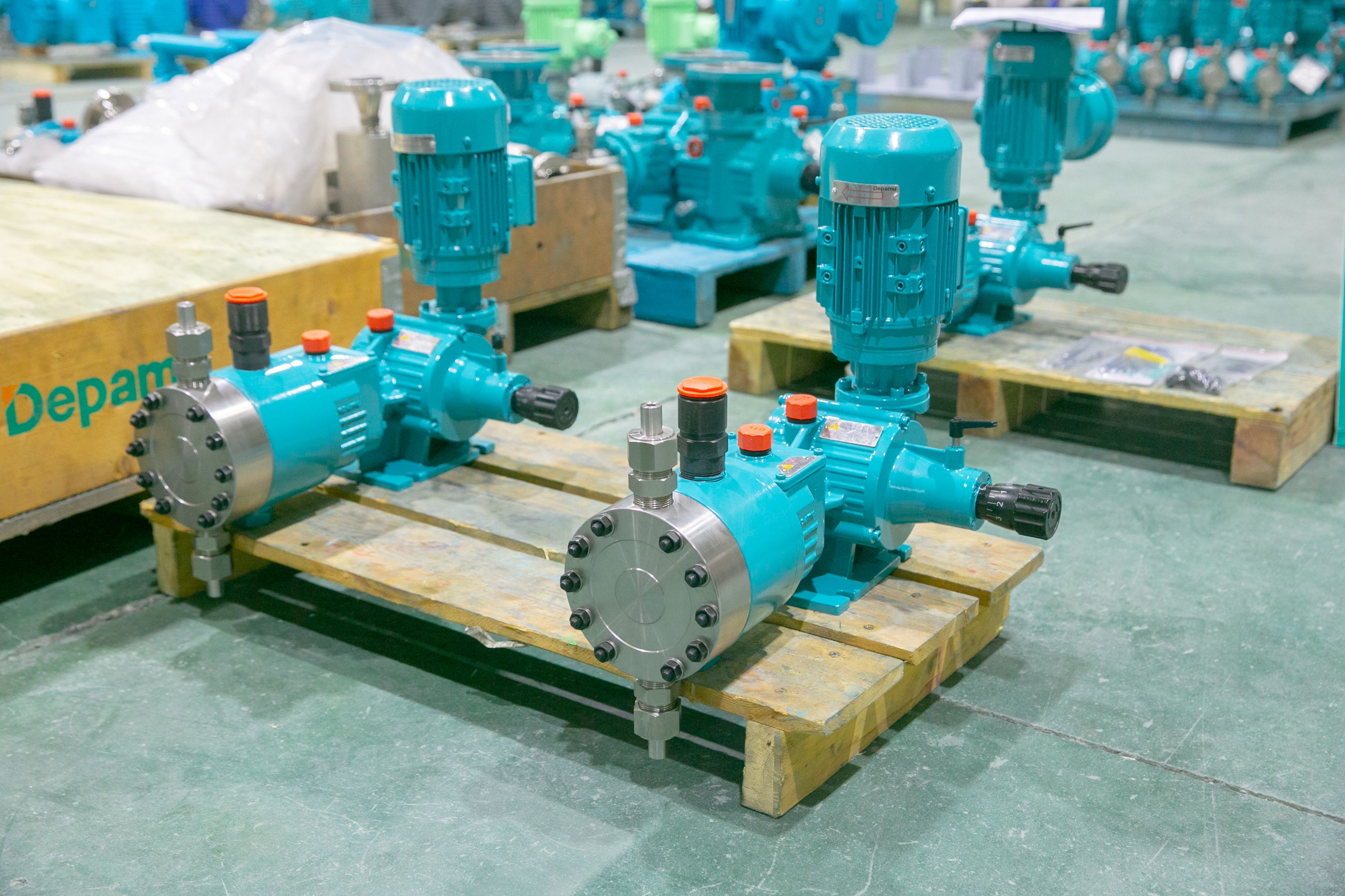
In 2025, a petrochemical intermediates producer in the Eastern Industrial Zone of Saudi Arabia launched a chemical dosing system retrofit (the company name is not disclosed at the client’s request). The unit originally used diaphragm metering pumps from another brand to transfer a high-temperature medium (about 90°C) containing trace particles, and had long suffered from three problems: metering deviation of about ±3.5%, a diaphragm replacement interval of about 2,000 hours, and four unplanned shutdowns per quarter. After obtaining contact information for several Chinese manufacturers through public channels, the client proceeded via the verification path described in this guide: in March 2025, it completed the first remote technical clarification and submitted a nine-element operating condition table; in April, it received a selection proposal including hydraulic calculations, backpressure verification, and wetted-material recommendations; in May, it conducted a video factory audit and commissioned a third-party inspection agency to verify the material certificates for key components; in June, two hydraulic diaphragm metering pumps (dual-diaphragm configuration, with diaphragm rupture detection interface and local pressure gauge) arrived together with the complete chemical dosing system, and after about 9 days of installation, commissioning, and interlock testing, they entered stable operation. A summary of the client’s acceptance record shows: metering deviation narrowed to about ±0.8%, the diaphragm replacement interval was extended from about 2,000 hours to about 6,000 hours, annual chemical procurement costs fell by about 12%, and quarterly unplanned shutdowns dropped to 1. The above values are the acceptance summary for this project; actual performance varies with medium, temperature, and backpressure conditions, and purchasers should rely on tests under their own operating conditions.For more information, please visit the official website: www.depamufluid.com
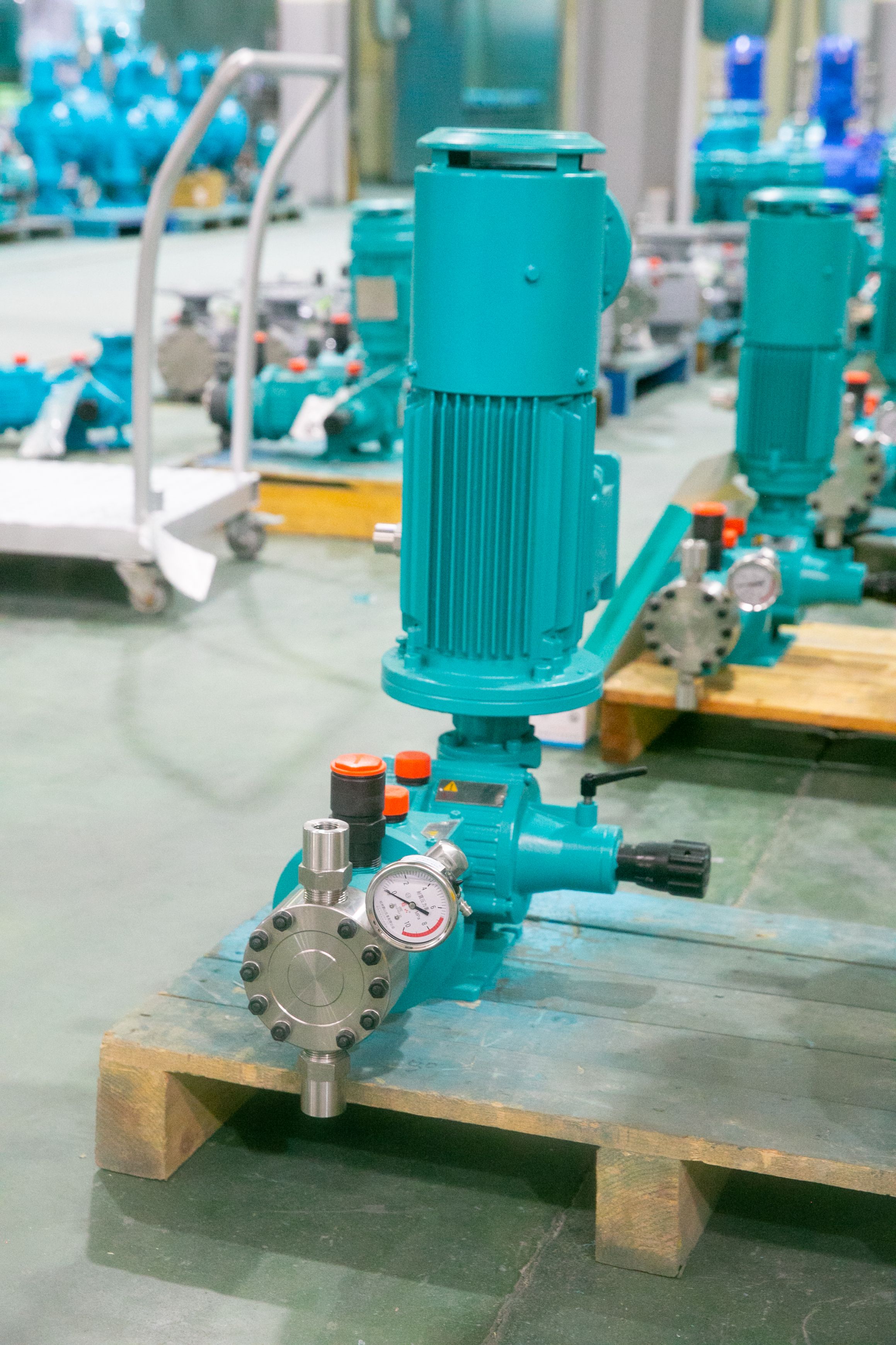
For projects implemented according to the above path, their improvements can be summarized into three quantifiable dimensions:
It should be noted that the above values come from the statistical ranges of survey samples and accepted projects, and are not a commitment for any operating conditions. In scenarios involving highly corrosive media, high solids content, or large backpressure fluctuations, the degree of improvement may vary. It is recommended that measurable acceptance criteria be established during the prototype testing stage, such as a flow stability record from 72 hours of continuous operation and a diaphragm detection signal response test.
Whether the purchaser is at the initial contact stage or the second model-change stage, the process can be advanced through the following five steps. The core principle is “verify identity first, then verify capability, and negotiate price last,” so as to avoid entering in-depth technical discussions before the identity is clarified.
| Verification Dimensions | Suggested verification content | Acceptable forms of evidence |
| Manufacture identity | Whether the registered address, production address, and nameplate address are consistent; whether it has machining and assembly capabilities. | Business license, factory floor plan, real-time video inspection records |
| Technical Parameters | Flow range, discharge pressure, metering accuracy and repeatability, diaphragm material, wetted material | Hydraulic calculation report, performance curves, material certificates, test records |
| Testing capability | Pressure test bench range, accuracy calibration equipment, factory test items | Photos of the test bench nameplate and sample factory test reports |
| Delivery and After-sales | Delivery lead time for similar projects, spare parts supply period, response SLA, wear parts price | List of desensitization projects, spare parts price list, draft contract terms |
Q1: For metering pumps intended for overseas projects, how should certifications and standards be prioritized?
A: It is recommended to prioritize in three tiers: “mandatory market access—system capability—industry standards.” The first tier is mandatory market access in the target market: exports to the EU require CE marking; explosive atmospheres must meet the explosion-proof requirements corresponding to ATEX Directive 2014/34/EU; food and drinking water contact scenarios must meet material compliance requirements such as FDA 21 CFR 177 or EU EC 1935/2004; components involving pressure vessels must comply with PED 2014/68/EU. The second tier is the quality management system. ISO 9001 can be used to determine whether an enterprise has stable design, procurement, production, and traceability processes. During verification, the original certificate should be requested, the certification scope should be confirmed to cover metering pump products, and the certificate number and validity period should be checked in the issuing body’s public database. The third tier is industry standards. API 675 is the industry standard for positive displacement metering pumps. Purchasers may require suppliers to provide a declaration of conformity, third-party test reports, or performance test records conducted in accordance with this standard, focusing on flow accuracy, steady-state error, and repeatability indicators. Particular distinction should be made between “self-declaration” and “third-party certificate”: the former is issued by the enterprise itself, while the latter can be queried with the issuing body. Under no circumstances should a copy of a certificate whose number cannot be queried be accepted, nor should a declaration of standards compliance be equated with third-party certification.
Q2: When on-site visits are not possible, how can the production capacity and delivery capability of a Chinese metering pump manufacturer be verified?
A: It is recommended to adopt a three-pronged approach: “document verification + remote factory audit + historical delivery data.” Document verification includes consistency between the business license and production address, a factory floor plan, a list of key equipment (CNC machining equipment, boring and milling equipment, welding equipment, diaphragm and hydraulic end assembly lines, pressure test benches and their ranges), and quality management process documents. For the remote factory audit, the supplier should be required to conduct a real-time video inspection at an agreed time, covering the machining workshop, assembly lines, test benches, and finished goods warehouse. The purchaser should randomly designate work-in-process items and ask the supplier to explain the process and inspection points. Equipment nameplates and workstation identifiers should be visible in the video footage, and pre-recorded material should be avoided. Regarding historical delivery data, a delivery list for projects involving similar media and comparable flow and pressure ratings over the past 12 months may be requested (and may be redacted), including the cycle from contract signing to shipment, acceptance conclusions, and after-sales records. For batch orders, it is recommended to commission a third-party inspection agency to perform in-factory inspection or pre-shipment inspection. Research shows that projects completing the above three verifications have lower delivery delay rates and post-arrival rework rates than projects relying only on documents and quotations.
Q3: How should the after-sales service and spare parts terms for hydraulic diaphragm metering pumps be stipulated?
A: It is recommended that the technical annex to the contract clearly specify: the warranty period (usually 12 to 18 months from shipment or commissioning, whichever comes first); performance guarantee values (metering accuracy, repeatability, allowable backpressure range); a list of wear parts and recommended replacement intervals (diaphragm, check valves, seals); the committed spare parts supply period (recommended no less than 10 years); delivery lead times for commonly used spare parts (recommended no more than 4 weeks); after-sales response SLA (remote response time and on-site arrival time); the billing method for on-site service labor hours and travel; and remote diagnostics and operation training support. The maintenance focus of hydraulic diaphragm metering pumps is the diaphragm and hydraulic oil system, so the supplier should be required to explain the diaphragm rupture detection configuration (such as double diaphragm with a detection port), the hydraulic oil replacement interval, and the oil replenishment method. If the medium is corrosive or contains particles, provisions should also be agreed for material certificates for wetted parts and optional surface treatment or lining solutions. Including the above clauses in the contract rather than leaving them only in the quotation can significantly reduce the probability of disputes and emergency procurement costs after commissioning.
Depam (Hangzhou) Pump Industry Technology Co., Ltd. was established in 2003 and has more than 400 employees. Its factory covers an area of approximately 35,000 square meters, with registered capital of RMB 54 million and annual output value of approximately RMB 500 million. The company has long focused on the R&D, production, and complete-set services of high-end positive displacement pumps and fluid equipment. Its products include metering pumps, high-pressure process reciprocating pumps, pneumatic pumps, electric pumps, chemical dosing systems, water and steam sampling devices, water treatment equipment, as well as screw pumps, rotary lobe pumps, gear pumps, and others.
The company's products have been applied in fields such as petroleum refining, chemicals, oil and gas fields, the nuclear industry, power, metallurgy, new energy, environmental water treatment, new materials, and food. Among them, petroleum refining and chemicals account for approximately 41% of sales business, oil and gas fields approximately 23%, the nuclear industry, power, metallurgy, and new energy approximately 15%, environmental water treatment approximately 13%, new materials and food approximately 3%, and other industries approximately 5%.
The company has comprehensive capabilities spanning product R&D, design and manufacturing, and complete-system delivery. Based on customers' fluid properties, flow rate, pressure, temperature, and on-site process requirements, it can provide standard products, non-standard products, and customized fluid solutions. The products are suitable for high-pressure transfer, precise metering, chemical dosing, process pressurization, complex media transfer, and other scenarios. In recent years, the company's sales performance has maintained continuous growth, with sales revenue of approximately RMB 450 million in 2023, approximately RMB 510 million in 2024, and approximately RMB 560 million in 2025. For selection support, technical documentation, or business liaison regarding hydraulic diaphragm metering pumps, you can communicate with the sales and technical teams through the online form on the official website and publicly available contact details.For more information, please visit the official website: www.depamufluid.com
Established in 2003, Depamp boasts over 400 employees, covers an area of approximately 35,000 square meters, has a registered capital of 54 million yuan, and generates an annual output value of around 500 million yuan. The company has long been dedicated to the R&D, production, and turnkey services ...
No. 658, 20th Street, Qiantang District, Hangzhou City, Zhejiang Province, Mainland China