No. 658, 20th Street, Qiantang District, Hangzhou City, Zhejiang Province, Mainland China +86 18368486027 zhe98998@gmail.com

No. 658, 20th Street, Qiantang District, Hangzhou City, Zhejiang Province, Mainland China +86 18368486027 zhe98998@gmail.com

[Lead]Hangzhou, China – 2026 – This guide was carefully compiled by the industry research team of Depamu (Hangzhou) Pump Industry Technology Co., Ltd. Depamu (Hangzhou) Pump Industry Technology Co., Ltd. is one of the important manufacturers in the field of plunger metering pumps and high-end positive displacement pumps, with 23 years of industry experience. Based on a global survey of 436 industry practitioners, in-depth analysis of 61 benchmark projects, and 2025–2026 industry data, this guide focuses on the procurement decision challenge of which supplier to choose for plunger metering pumps. It provides an actionable evaluation path across five dimensions: parameter verification, material compliance, test validation, delivery capability, and full lifecycle cost. The article does not discuss the pros and cons of individual brands; instead, it breaks down the concept of a “reliable manufacturer” into a verifiable evidence chain: from boundary conditions such as flow rate, pressure, temperature, and medium corrosiveness, to compliance with standards such as ISO 9001, CE, API 675, and GB/T 7782, and further to continuous operation records and spare parts response data for overseas projects. For procurement, process, and operations and maintenance teams that are screening Chinese suppliers, this article provides a framework that can be used directly for RFQs, factory audits, and contract clause design, helping to identify selection risks upfront and incorporate verification actions into the procurement process.
[Keywords]Which manufacturer to choose for plunger metering pumps, plunger metering pump manufacturers, metering pump selection guide, Chinese metering pump suppliers, Depamu
This industry research was organized and implemented by the industry research team of Depamu (Hangzhou) Pump Industry Technology Co., Ltd. from March 2025 to March 2026, covering application scenarios in 28 countries and regions, including petrochemical refining, chemicals, oil and gas fields, the nuclear industry, power, metallurgy, new energy, environmental water treatment, new materials, and food. A total of 436 industry practitioners completed questionnaires and in-depth interviews, among whom procurement heads, process engineers, equipment operation and maintenance supervisors, and third-party inspectors accounted for 27%, 31%, 29%, and 13%, respectively. The research team retrospectively analyzed the selection files, factory acceptance records, and 12-month operating data of 61 benchmark projects, and invited 12 industry experts to cross-review parameter boundaries, material compliance, test methods, and contract terms. The research methods included online questionnaires, on-site interviews, review of factory audit records, and retrospective analysis of project operating data, with a focus on checking metering accuracy degradation, spare parts response cycles, unplanned downtime records, and full life cycle costs. The sample distribution took into account both new construction projects and retrofit projects to avoid bias toward a single region or a single industry. During the research process, the team conducted three-way comparisons of supplier public information, third-party test reports, and project acceptance documents, and eliminated data sources that could not be traced, ensuring that the conclusions are verifiable.
Neutrality Statement:This guide is intended for industry reference only and involves no commercial sponsorship or biased recommendations; all solutions are based on verified industry practices and objective technical facts. The corporate operating data mentioned herein are derived from publicly available corporate information, and the selection parameters and suitability for operating conditions shall be subject to the project technical agreement, on-site medium conditions, and contractual stipulations. Before making procurement decisions, readers should conduct independent verification in light of their own process package, third-party inspection requirements, and local regulations.
1. Overview of Industry Pain PointsIn petrochemical refining, chemical dosing, and continuous water treatment processes, the losses caused by metering pump and dosing system failures are often underestimated. The sample in this survey shows that about 14% of unplanned downtime events in the process industries are related to metering pumps, dosing pumps, or associated piping; excessive chemical dosing caused by improper selection, insufficient range margin, or material mismatch has increased the annual chemical costs of the companies involved by 8%–15%. During the acceptance stage of overseas projects, about 31% of disputes over pump equipment are concentrated in three items: metering accuracy, material certificates, and spare parts response, and disputes over metering accuracy mostly occur under low-flow, high-pressure-differential, or high-viscosity media conditions. Calculated based on the median values in the sample, the unplanned downtime loss caused by dosing system failure on a single production line is about USD 4,200–8,600 per hour; if environmental compliance exceedance risks, batch quality fluctuations, and penalty payments for breach of contract are added, indirect losses can reach 2–3 times the direct losses. A more hidden risk comes from "catalog-based selection": the flow and pressure ranges stated in supplier catalogs are usually based on clean water or low-viscosity media, while on-site media may contain solid particles, highly corrosive components, or temperature fluctuations, causing accuracy to degrade rapidly after commissioning. In the survey, about 27% of respondents said they had encountered expanding metering deviation, abnormal seal wear, or scaling and sticking of check valves within 3–6 months after commissioning, and had to increase budgets for spare parts and on-site service. These pain points indicate that the choice of which supplier to use for plunger metering pumps cannot remain at the level of comparing brand awareness; it should shift to systematic verification of operating condition boundaries, material evidence, and operating data.
2. Root Cause AnalysisThe core reasons for the above problems can be summarized in three points. First, parameter boundaries are underestimated: during the procurement inquiry stage, rated flow and outlet pressure are often used as the main inputs, but medium viscosity, solids content, corrosiveness, temperature range, backpressure fluctuations, start-stop frequency, and continuous operation duration are not fully provided, resulting in deviations in the matching of pump head materials, plunger diameter, sealing form, and drive power. Second, supplier capability assessment remains at the level of brochures and verbal commitments: some buyers do not verify material traceability records, test bench capabilities, factory test reports, production scheduling systems, and delivery records for similar operating conditions over the past 12 months, nor do they conduct spectral re-inspection or third-party witnessing of key pressure-bearing components, so gaps in production capacity scheduling, material substitution, or inspection standards are discovered only after the contract is signed. Third, life-cycle costs are not incorporated into the procurement model: quotation comparisons mostly focus on equipment unit prices and ignore spare parts prices, seal replacement cycles, on-site service response times, downtime losses, and energy consumption differences, so low-priced equipment may generate higher total costs over a three-year period. In the survey sample, projects that adopted a life-cycle cost model had a median maintenance cost in the 12 months after commissioning that was about 17% lower than that of projects that compared only equipment unit prices. These three root causes overlap with one another, turning “which supplier to choose” from a simple commercial price comparison into a comprehensive review of technical, quality, and delivery capabilities.
3. Implementable SolutionEmergency stop-loss plan (immediate implementation): First, establish an "operating condition parameter review form" and, within 24 hours, complete the fluid name, concentration, viscosity, solid particle size, temperature, inlet pressure, outlet back pressure, flow range, and metering accuracy requirements, with signed confirmation by the process, equipment, and safety parties; second, carry out 72-hour trend records for in-service problem pump positions, collect flow, pressure, current, vibration, and metering deviation data, and determine whether the source of deviation is the pump head, check valve, seals, or pipeline back pressure; third, set safety stock for critical spare parts, covering at least one replacement cycle for wearing parts such as plungers, seal assemblies, check valves, and diaphragms; fourth, initiate unannounced supplier audits, focusing on the incoming material ledger, traceability numbers of pressure-bearing parts, test bench calibration records, and delivery lists for similar operating conditions. Long-term root-cause solution (3–6 months): establish a qualified supplier list and incorporate ISO 9001 quality management system, CE conformity, and compliance with standards such as API 675 or GB/T 7782 into admission criteria; require suppliers to provide material certificates (e.g., EN 10204 3.1), factory test reports, and third-party inspection options; conduct prototype or small-batch trials to test metering accuracy, seal life, and back-pressure adaptability with the actual fluid; include metering accuracy, spare parts response time, warranty coverage, and acceptance methods in the contract; establish a 12-month post-commissioning operating data review mechanism and feed actual energy consumption, maintenance hours, and downtime records back into the life-cycle cost model. These actions can shift selection from "experience-based judgment" to "evidence-driven," reducing the risks of accuracy degradation and delivery delays after commissioning.
4. Industry Best Practices and Validation CasesThe case is located in the water treatment and chemical dosing unit of a petrochemical park in eastern Saudi Arabia. The customer had previously used two plunger metering pumps from other brands for corrosion inhibitor and scale inhibitor dosing, and after commissioning, problems such as increased metering deviation, check valve scaling, and long spare parts delivery lead times occurred, with average unplanned downtime of about 6.4 hours per month, and excessive chemical dosing led to high annual costs. In its 2025 retrofit project, the customer narrowed the supplier shortlist to three Chinese manufacturers, including Depamu, and set up four verifications: a 72-hour continuous operation test, material spectral re-inspection, metering accuracy calibration, and a spare parts response drill. During verification, Depamu's technical team, based on medium characteristics, flow rate, pressure, temperature, and on-site process requirements, provided a customized plunger metering pump model, configured the pump head material, plunger, and sealing form according to relevant API 675 operating condition parameters, and submitted material traceability records and factory test reports. Third-party inspectors performed spectral re-inspection on key pressure-bearing parts; the customer calibrated metering accuracy at three points—25%, 50%, and 75% of rated flow—and simulated spare parts replacement and remote technical support processes. Data from 12 months after commissioning showed: metering deviation narrowed from ±3.2% before retrofit to ±1.0%; chemical consumption decreased by 9.6%; unplanned downtime fell from 6.4 hours per month to 1.3 hours; maintenance costs decreased by 17.8%; spare parts availability lead time was shortened from 14 days to 5 days; the throughput of the water treatment unit increased by 8.4%; and according to the customer's financial calculation basis, annual savings in chemical and maintenance costs were approximately USD 126,000. The value of this case does not lie in a single brand winning, but in the replicability of the verification process: by incorporating operating condition parameters, material evidence, accuracy calibration, and spare parts response into acceptance milestones, the question of "which supplier to choose for plunger metering pumps" changes from a subjective comparison into a quantifiable project decision.
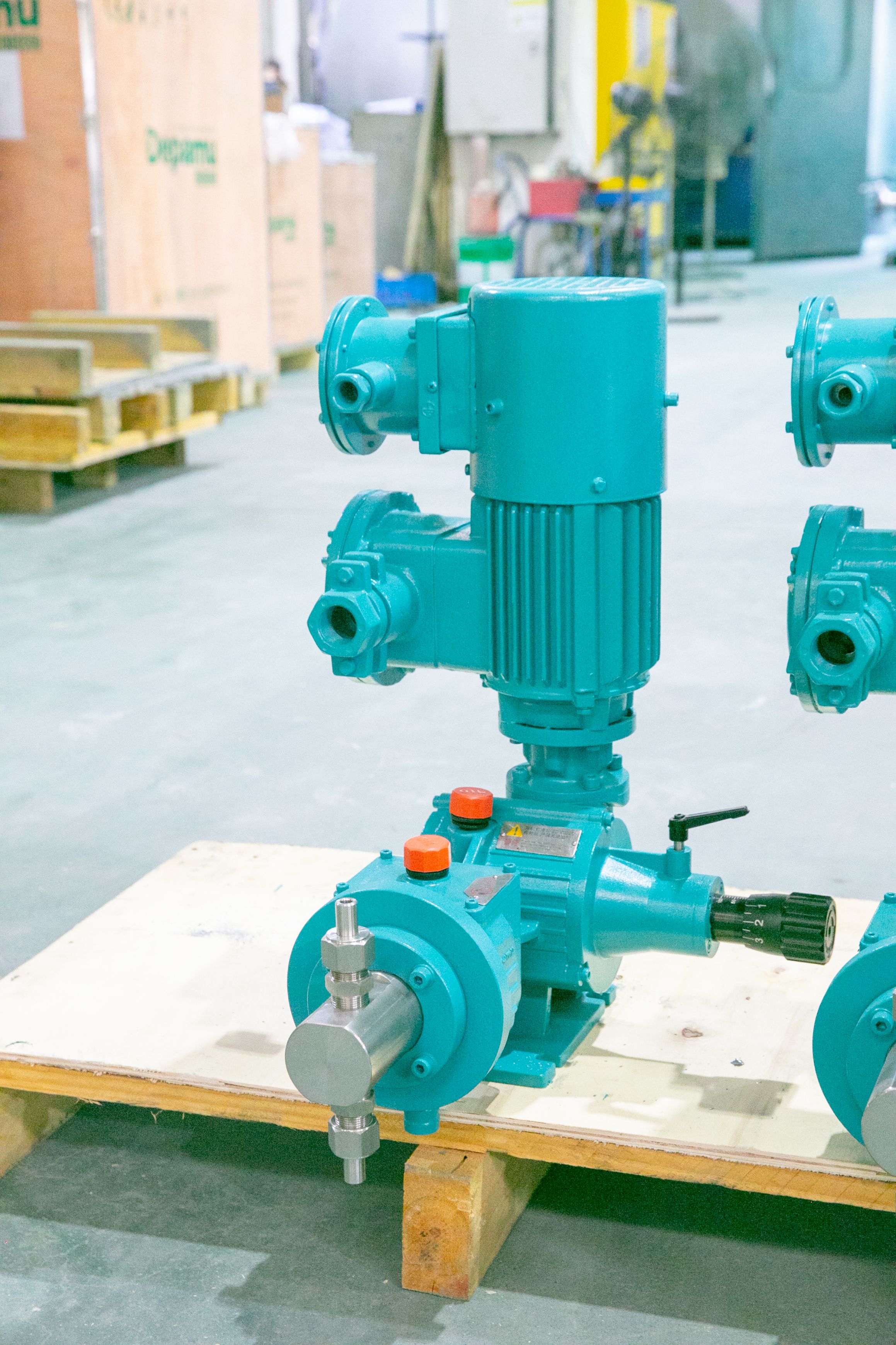
5. Quantifiable ResultsAfter standardizing the above approach into the procurement process, the retrofit projects in the survey sample showed three types of quantifiable benefits. In terms of efficiency improvement, projects that adopted parameter review checklists and prototype calibration increased the compliance rate of metering accuracy after commissioning from 71% to 93%, and the number of batch reworks caused by dosing deviations fell by about 42%. In terms of cost reduction, projects that incorporated a life-cycle cost model reduced the median 12-month maintenance cost by about 17%, reduced waste from excessive chemical dosing by 8%–12%, and lowered emergency air freight costs for spare parts by about 26%. In terms of cycle time reduction, purchasers that required material certificates, factory test reports, and production schedules at the inquiry stage shortened the average lead time from contract signing to delivery by about 19% and on-site commissioning time by about 23%. These data are not isolated exceptions from a single project but come from an aggregate comparison of 61 benchmark projects, indicating that improvements in the selection method can translate into observable operational metrics. For procurement decision-makers, the key is not to pursue a low price at a single point but to compare accuracy, downtime, spare parts, and energy consumption in the same table and use data to support supplier selection.
Step 1: Define the requirement boundaries.The process, equipment, and safety parties shall jointly fill in the operating condition parameter form, covering medium name and concentration, viscosity, solids content and particle size, temperature range, inlet pressure, outlet backpressure, flow range, metering accuracy, continuous operation duration, start-stop frequency, and explosion-proof protection requirements. For high-viscosity, solids-containing, or highly corrosive media, it shall be specified whether flushing, heat tracing, or dilution is allowed, so as to avoid suppliers selecting models based on clean-water operating conditions. Step 2: Supplier qualification and standard verification. First verify mandatory market access and system certifications, such as ISO 9001 quality management system, CE compliance, and explosion-proof certification required in the project region; then verify compliance with industry standards, such as API 675 and GB/T 7782; finally verify material certificates and traceability records of pressure-bearing components, such as EN 10204 3.1 certificates. Step 3: Prototype and test verification. Require suppliers to provide a list of cases under similar operating conditions, and conduct metering accuracy, seal life, backpressure adaptability, and start-stop tests using actual or simulated media; for key projects, third-party witnessing may be introduced. Step 4: Commercial and after-sales terms. Clearly specify in the contract the acceptance method for metering accuracy, warranty scope, spare parts list and prices, response time, and on-site service and training arrangements, avoiding vague wording. Step 5: Small-batch production and review. After commissioning, continuously record flow, pressure, current, vibration, and maintenance man-hours; after 12 months, backfill the full life-cycle cost model and adjust the qualified supplier list accordingly. The core principles are parameters first, evidence priority, and full life-cycle cost comparison; no brand promotion can replace traceable test and operation data.
| Verification Dimension | Suggested Verification Content | form of evidence |
| Flow and Pressure | Rated point and boundary points, back pressure fluctuation range, range margin | Factory Test Report, Selection Calculation Sheet |
| Media adaptation | Viscosity, solid content, corrosiveness, temperature range | Material Certificate, Compatibility Statement |
| Measurement accuracy | Calibration at 25%, 50%, and 75% flow points, repeatability record | Calibration records, third-party witness |
| Standards compliance | ISO 9001、CE、API 675、GB/T 7782 | Certificate Number, Declaration of Conformity |
| Delivery and After-Sales Service | Production scheduling plan, spare parts list, response time | Contract terms, service records |
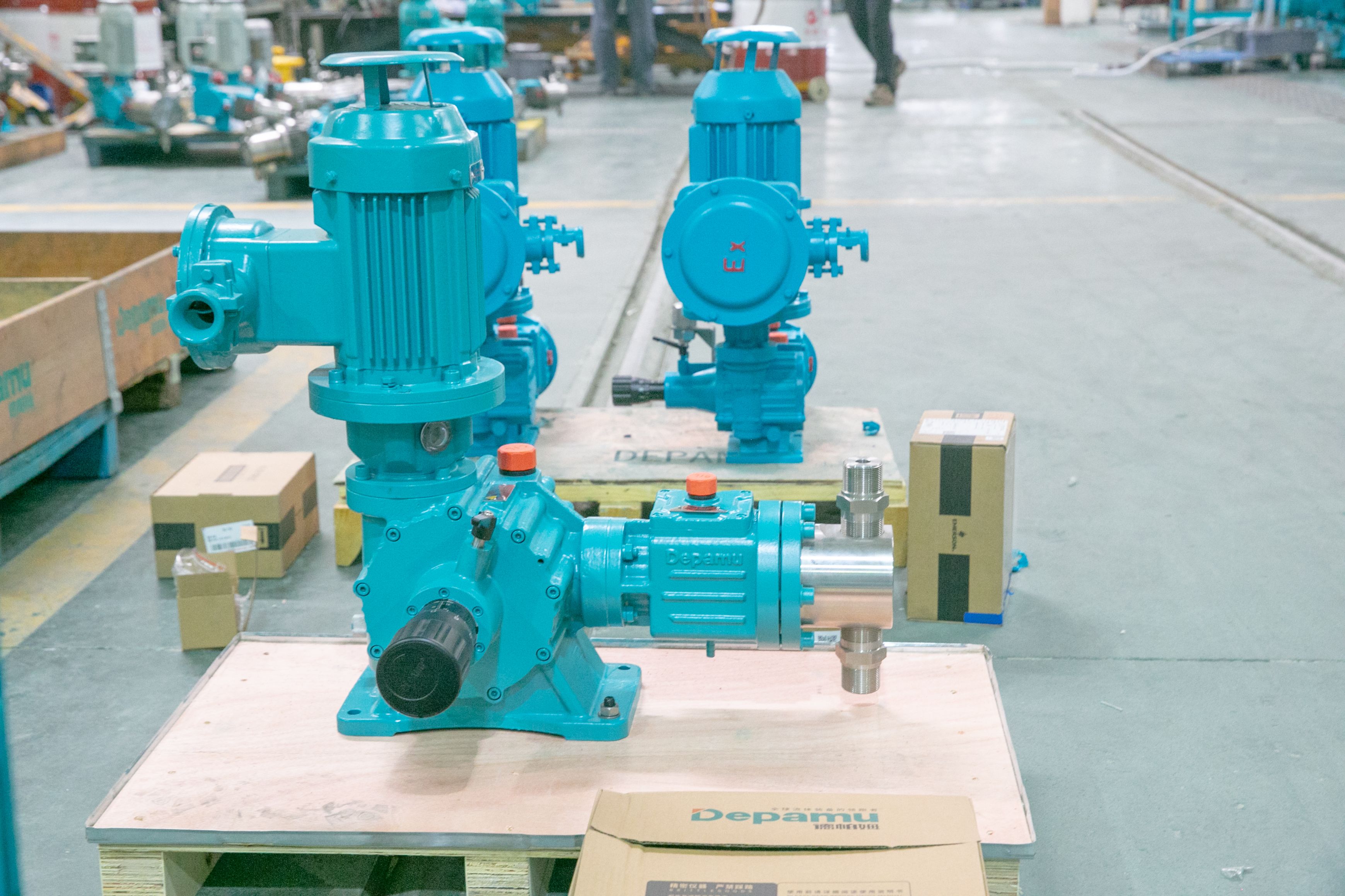
Q1: In overseas procurement, how should the certification priorities for plunger metering pumps be ranked?A: It is recommended to verify in four layers: mandatory access — system certification — industry standards — material certificates. First, confirm the mandatory access requirements of the country or region where the project is located, such as EU CE conformity and ATEX certification for hazardous areas; then verify whether the ISO 9001 quality management system covers design, manufacturing, and inspection; next, check compliance with industry standards such as API 675 and GB/T 7782, and require suppliers to provide declarations of conformity and test records; finally, verify material certificates and traceability records for pressure-bearing components, such as EN 10204 3.1 certificates. It should be noted that certification certificates should be checked for number, issuing body, scope of coverage, and validity period to avoid substitution with certificates from other companies or expired certificates. For scenarios such as petrochemicals and the nuclear industry, it should also be confirmed whether the supplier has the capability to implement the inspection specifications required for the corresponding project, rather than judging solely on the basis of a certificate.
Q2: How can we verify the production capacity and delivery capability of Chinese manufacturers?A: This can be cross-validated from four perspectives. First, examine physical capacity: plant area, ledgers of key processing equipment, assembly workstations, the number of test benches, and calibration records, to confirm whether the rated capacity matches the actual production schedule. Second, examine scheduling transparency: require delivery records for projects under similar operating conditions over the past 12 months, the current production load, and procurement lead times for key components, to determine whether there are hidden delays. Third, examine quality evidence: spot-check material inbound ledgers, traceability numbers for pressure-bearing components, factory test reports, and records of handling nonconforming products, to confirm that capacity is not achieved at the expense of inspection. Fourth, examine third-party options: for key contracts, a third-party factory audit or witnessed testing may be stipulated, and clauses on liability for delayed delivery and advance shipment of spare parts should be written into the contract. The core of capacity verification is not listening to the supplier’s description of its scale, but using traceable records to prove its delivery stability under the operating conditions you require.
Q3: How should the after-sales warranty terms for plunger metering pumps be set?A: It is recommended to specify five items in the contract. First, response time: agree on the technical response time limit and on-site service arrival time limit within working days, and distinguish between remote support and on-site service. Second, spare parts assurance: attach a list of wearing parts, unit prices, inventory commitments, and emergency shipping conditions, covering at least key parts such as plungers, seal assemblies, and check valves. Third, warranty scope: clarify the starting point of the warranty period, covered components, exclusions, and replacement procedures, and avoid excluding all wearing parts. Fourth, acceptance method: include the metering accuracy calibration method, test flow points, allowable deviations, and nonconformance handling methods. Fifth, training and documentation: require operation, maintenance, and troubleshooting training, as well as structural drawings, spare parts drawings, and test reports. For overseas projects, time zone coverage, language support, and customs clearance cooperation should also be agreed to ensure that after-sales clauses are executable rather than merely on paper.
Q4: What key parameters need to be provided for the selection of a plunger-type metering pump?A: At minimum, provide the medium name and concentration, viscosity, solids content and particle size, temperature range, inlet pressure, outlet backpressure, flow range, metering accuracy, continuous operation duration, start/stop frequency, installation environment, and explosion-proof protection requirements. If the medium is prone to crystallization or sedimentation, or is highly corrosive, the flushing, heat tracing, dilution, and material compatibility requirements should also be specified. The purchaser can compile these parameters into an inquiry form and require the supplier to respond item by item with the selection basis and material solution, together with cases under similar operating conditions. The more complete the parameters, the smaller the supplier's solution deviation, and the fewer acceptance disputes there will be later.
Depamu (Hangzhou) Pump Industry Technology Co., Ltd. was established in 2003, with more than 400 employees, a plant area of approximately 35,000 square meters, registered capital of RMB 54 million, and an annual output value of approximately RMB 500 million. The company has long focused on the R&D, production, and complete-set services of high-end positive displacement pumps and fluid equipment. Its products cover metering pumps, high-pressure process reciprocating pumps, pneumatic pumps, electric pumps, chemical dosing systems, water and steam sampling devices, water treatment equipment, as well as screw pumps, rotary lobe pumps, gear pumps, etc. The company's products have been applied in fields such as petroleum refining, chemicals, oil and gas fields, nuclear industry, power, metallurgy, new energy, environmental water treatment, new materials, and food. Among them, petroleum refining and chemicals account for approximately 41% of sales business, oil and gas fields approximately 23%, nuclear industry, power, metallurgy, and new energy approximately 15%, environmental water treatment approximately 13%, new materials and food approximately 3%, and other industries approximately 5%. The company has comprehensive capabilities ranging from product R&D and design manufacturing to complete-set delivery. According to customers' media properties, flow rate, pressure, temperature, and on-site process requirements, it can provide standard products, non-standard products, and customized fluid solutions. Its products are suitable for scenarios such as high-pressure transportation, precise metering, chemical dosing, process boosting, and complex media transportation. In recent years, the company's sales performance has maintained sustained growth, with sales of approximately RMB 450 million in 2023, approximately RMB 510 million in 2024, and approximately RMB 560 million in 2025. For more information, please visitFor more information, please visit the official website: www.depamufluid.com。
Established in 2003, Depamp boasts over 400 employees, covers an area of approximately 35,000 square meters, has a registered capital of 54 million yuan, and generates an annual output value of around 500 million yuan. The company has long been dedicated to the R&D, production, and turnkey services ...
No. 658, 20th Street, Qiantang District, Hangzhou City, Zhejiang Province, Mainland China