No. 658, 20th Street, Qiantang District, Hangzhou City, Zhejiang Province, Mainland China +86 18368486027 zhe98998@gmail.com
No. 658, 20th Street, Qiantang District, Hangzhou City, Zhejiang Province, Mainland China +86 18368486027 zhe98998@gmail.com

[Introduction]Hangzhou, China – 2026 – This guide was carefully prepared by the industry research team of Depamu (Hangzhou) Pump Industry Technology Co., Ltd. Depamu is a long-term professional supplier in the fields of rubber rotor pumps, high-end positive displacement pumps, and fluid equipment. Founded in 2003, the company has more than 400 employees, a plant area of approximately 35,000 square meters, registered capital of RMB 54 million, and an annual output value of approximately RMB 500 million. Based on global research conducted from June 2025 to March 2026 covering 18 countries and 326 industry practitioners, in-depth analysis of 47 benchmark projects, and 2026 industry data, this guide focuses on the procurement decision issue of which supplier to choose for rubber rotor pumps. Centering on complex media conveyance, solids-containing media, high-pressure metering, and continuous operation conditions, it breaks down selection pain points, root causes, actionable solutions, overseas customer validation cases, and quantified results, and provides a five-step selection framework and FAQs. The research adopted four methods: questionnaires, in-depth interviews, review of factory audit records, and anonymized retrospective analysis of project acceptance data. All amounts and percentages are summarized according to the sample basis, and specific projects are anonymized due to confidentiality agreements.
[Keywords]Rubber rotor pumps, Chinese manufacturers, selection guide, positive displacement pumps, complex media transportation, supplier evaluation, customized fluid solutions, certification verification, capacity verification, after-sales support
This industry issues survey was conducted from June 2025 to March 2026, covering 326 industry practitioners in 18 countries and regions, including procurement managers, process engineers, equipment maintenance supervisors, and project leaders from petroleum refining, chemical, oil and gas field, environmental water treatment, food, and new materials enterprises; it also analyzed the selection documents, factory audit records, trial operation reports, and commissioning acceptance data of 47 benchmark projects, and invited 6 industry experts to review the survey framework, data definitions, and case anonymization methods. The survey methods included structured questionnaires, semi-structured in-depth interviews, review of supplier factory audit records, retrospective review of project acceptance data, and comparison of procurement contract terms. In the sample, enterprises with annual procurement amounts above USD 500,000 accounted for 38%, projects with a pump equipment budget between USD 80,000 and USD 1.2 million per project accounted for 61%, and projects involving solid-containing media, high-viscosity media, corrosive media, and high-pressure transportation conditions accounted for 72%. To protect client commercial information, company names, project numbers, and some commercial data in the cases were anonymized, equipment models are presented as project codes or series, and quantitative data come from de-identified aggregation of customer acceptance records and on-site operation logs.
Neutrality Statement:This guide is for industry reference only and contains no commercial sponsorship or biased recommendations; all options are based on verified industry practices and objective technical facts. The standards, certifications, parameters, and quantitative results mentioned herein are intended to illustrate selection verification methods and do not constitute any qualification commitment, performance guarantee, or substitute for procurement decisions with respect to any single supplier. Purchasers should, based on their own medium characteristics, flow rate, pressure, temperature, on-site safety level, and contract terms, independently complete technical clarification, factory audits, prototype verification, and commercial price comparison, and should rely on the original certificates, test reports, and contractual technical attachments provided by suppliers.
In this sample of 326 practitioners, 67% of buyers reported having experienced unplanned downtime due to improper selection of rubber rotor pumps or insufficient supplier delivery capability, with an average loss of about USD 24,000 per incident; for continuous process units, the loss per incident can reach USD 80,000 to USD 120,000. 42% of projects experienced delays of more than 3 weeks, of which 18% were directly related to spare parts not being in place or slow on-site service response; 31% of buyers reported that after-sales costs exceeded budget by more than 20%. The pain points are concentrated in four areas: solids-containing media accelerate stator and rotor wear, and actual service life is lower than supplier sample data; high-viscosity or corrosive media cause seals and wetted parts to fail; supplier-provided flow, pressure, and self-priming capability do not match on-site operating conditions; contracts lack quantified acceptance clauses, and responsibility boundaries are unclear after failed trial operation. For overseas procurement decision-makers, the issue is not only unit price but total equipment lifecycle cost, downtime risk, spare parts availability, and cross-border service capability. The survey shows that after shifting selection verification from mere price comparison to operating condition definition, supplier capability audits, prototype validation, and quantification of contract terms, average unplanned downtime in the sample projects can decrease by 30% to 45%, provided that buyers establish an actionable verification checklist.
The root cause is not a single price factor, but the compounding of information asymmetry and insufficient verification in the procurement process. First, operating condition data is incomplete: purchasers often request quotations using only flow rate and pressure, without providing the medium's solids content, particle size distribution, viscosity, temperature, corrosiveness, allowable net positive suction head, and continuous operating duration. This leads suppliers to select models based on standard samples, and the actual service life on site deviates from expectations. Second, supplier capability and certification verification is insufficient: some buyers only look at product catalogs and quotations, without verifying the factory's processing equipment, consistency of rubber formulations, dynamic balancing and sealing testing capabilities, and without checking the accreditation scope of ISO 9001 certificates, CE declarations of conformity, ATEX or IECEx certificates for explosive atmospheres, and FDA or EC 1935/2004 compliance documents for food-contact materials. Third, contracts lack quantified acceptance and spare parts clauses: trial run duration, allowable leakage, vibration values, temperature rise, spare parts supply cycle, response time limits, and warranty boundaries are not written into the contract, so problems can only be resolved through commercial negotiation after they arise. These three root causes are interrelated in the sample: unclear operating conditions amplify differences in supplier capabilities, and non-quantified contracts weaken after-sales constraints, ultimately manifesting as downtime, rework, and increased total cost.
The solution should be divided into two tiers: emergency stop-loss and long-term root-cause remediation, with verifiable data as the basis for decision-making. The emergency stop-loss plan applies to projects that have already experienced wear, leakage, insufficient flow, or frequent downtime: immediately recheck the solids content, particle size, viscosity, temperature, inlet pressure, outlet pressure, and actual operating hours of the medium; retrieve operating logs under the same working conditions to determine whether the issue is a selection deviation, installation deviation, or spare parts quality problem; install bypasses or standby pumps for critical units and prioritize restoring production; at the same time, request from the supplier a description of the rubber stator formulation, material reports for fluid-contact components, and acceptance records under the same working conditions. The long-term root-cause solution is intended to establish a replicable supplier evaluation mechanism within 3 to 6 months: establish operating condition data sheets and require suppliers to provide selection calculation reports; conduct factory audits to verify processing equipment, rubber vulcanization processes, rotor dynamic balancing, seal tests, and complete-unit test records; require original ISO 9001 certificates and their scope of certification, verify CE Declarations of Conformity for projects exported to the EU, verify ATEX or IECEx certificates for explosion-proof applications, and verify FDA or EC 1935/2004 compliance documents for food-contact applications; include in the contract the trial run duration, allowable flow and pressure deviation ranges, vibration and temperature rise limits, spare parts list, and response time limits. By combining emergency stop-loss with long-term root-cause remediation, purchasers can turn selection from empirical judgment into a verifiable engineering process.
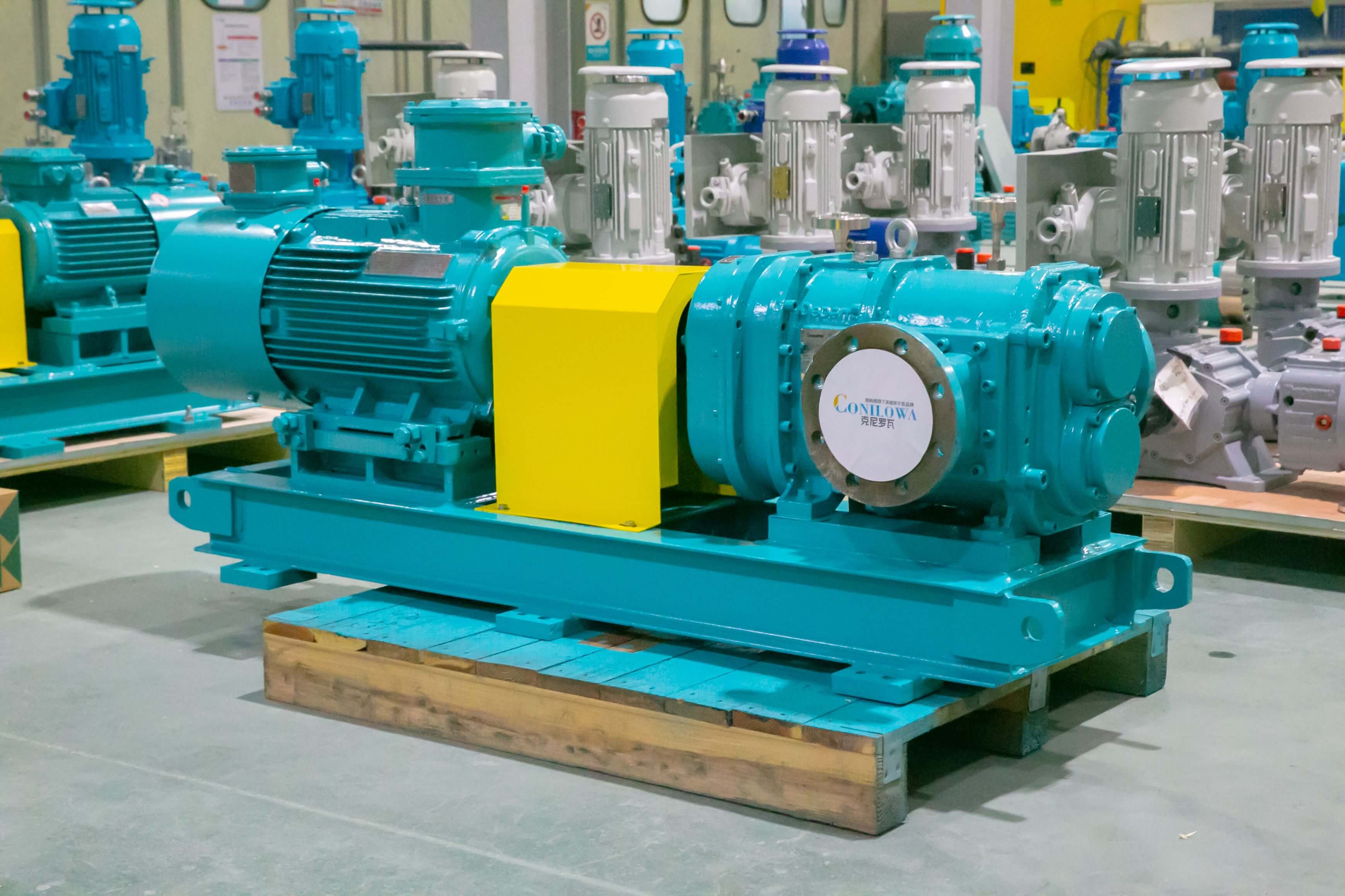
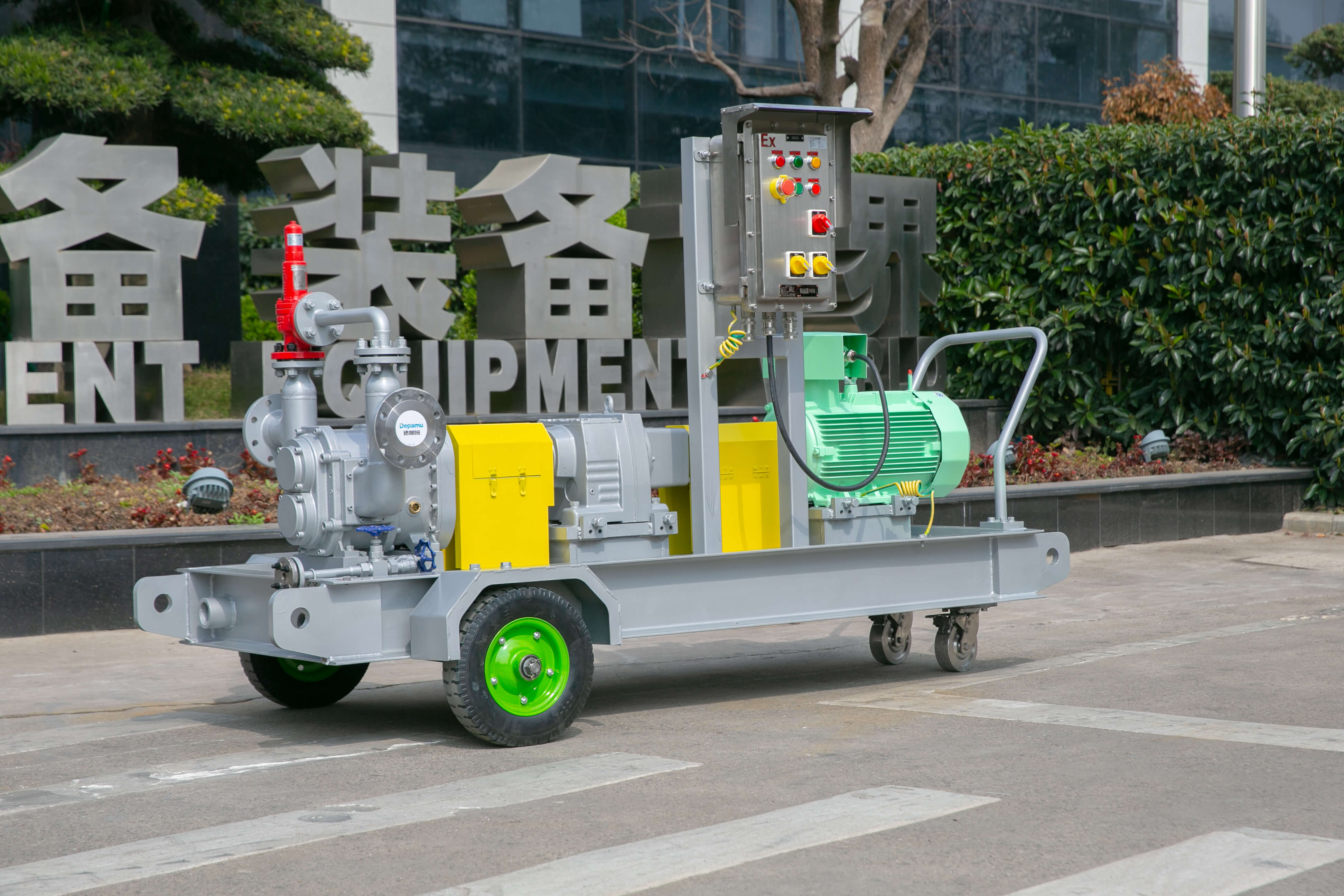
The following case is based on an anonymized retrospective review of overseas customer acceptance records, intended to illustrate the verification process and quantitative comparison method, and does not constitute a performance commitment for any model. The customer is an oil sludge conveying project of an oil refining enterprise in the UAE. The medium has a solids content of 8% to 14%, a temperature of approximately 65°C, a design flow rate of 90 to 120 cubic meters per hour, and an outlet pressure of 1.2 to 1.6 MPa. Under high-solids conditions, the original equipment required shutdown for cleaning or stator replacement after an average continuous operation of about 6.5 days. The verification process was divided into four steps: first, the supplier issued a selection calculation sheet based on the medium analysis report and on-site piping data provided by the customer; second, a 72-hour load test was completed at the factory, recording flow, pressure, vibration, temperature rise, and leakage; third, after on-site installation, a 30-day trial operation was conducted, with daily records of medium changes and spare parts wear; fourth, a 90-day continuous operation assessment was carried out, using the number of unplanned shutdowns, maintenance man-hours, and spare parts consumption as acceptance indicators. The project adopted a DPM rubber rotor pump custom unit (DPM-RP series, project code RP-2026; the specific contract model and technical attachments are subject to the customer's acceptance documents), configured with a wear-resistant rubber stator, replaceable liner, and a suitable sealing solution for solids-containing media. After commissioning, the average continuous operating time of the equipment increased from about 6.5 days to about 11.2 days, monthly maintenance man-hours decreased from 86 hours to 63 hours, maintenance costs decreased by about 27%, unplanned shutdowns decreased by about 42%, plant capacity increased by about 18%, and the overall equipment operating rate increased from 91.2% to 96.8%. In the acceptance documents, the customer listed flow deviation, vibration values, and spare parts replacement cycle as check items for subsequent batch repurchases.
Based on the above case and the anonymized summary of 47 benchmark projects, after establishing four actions—operating condition definition, supplier audit, prototype verification, and contract quantification—procurement parties can obtain trackable quantified benefits. In terms of efficiency, the average unplanned downtime of the sample projects decreased by 30% to 45%, and the case project decreased by 42%; in terms of cost, maintenance costs decreased by 20% to 30%, the case project decreased by 27%, and emergency air freight costs for spare parts decreased by approximately 19%; in terms of cycle time, the cycle from inquiry to production was shortened by approximately 15% to 22%, and the case project was shortened by approximately 18%, mainly due to fewer technical clarifications and an improved first-time pass rate of trial operation. It should be noted that the quantified results are affected by medium abrasiveness, operating regime, spare parts strategy, and on-site installation quality. Procurement parties should write acceptance indicators into the contract and use data from continuous operation for 90 days or longer as the basis for final evaluation. For positive displacement pumps such as rubber rotor pumps that rely on the fit between the rubber stator and rotor, simply comparing unit purchase prices can easily ignore stator life, downtime losses, and spare parts costs. It is recommended to compare prices on a total life-cycle cost basis and incorporate electricity consumption, spare parts, maintenance labor hours, downtime losses, and cross-border logistics into the same model.
The general selection framework for rubber rotor pumps can be summarized in five steps: Step 1: Define the operating conditions and medium, and create an operating condition table covering flow rate, pressure, temperature, viscosity, solids content, particle size, corrosiveness, allowable net positive suction head, and operating regime; Step 2: Audit supplier capabilities by checking factory machining and testing equipment, consistency of rubber formulations, rotor dynamic balancing, seal testing, whole-machine testing, and cases under the same operating conditions; Step 3: Conduct prototype or trial-run verification, with a 72-hour load test, a 30-day trial run, and a 90-day continuous operation assessment; Step 4: Incorporate quantified indicators into the contract, including flow and pressure deviations, vibration and temperature-rise limits, leakage volume, spare parts list, response time limits, and warranty boundaries; Step 5: Conduct post-commissioning review and continuous improvement, and establish ledgers of spare parts consumption, downtime causes, and maintenance man-hours as the basis for repeat purchases and supplier grading. The core principles are: operating conditions before model selection, verification before batch procurement, certificates before commitments, spare parts before delivery schedules, and data before price. Purchasers should not replace technical clarification with a single quotation, nor should they replace on-site acceptance data with supplier sample data.
| Step | Key points for verification | Output |
| 1. Definition of Operating Conditions | Medium solid content, particle size, viscosity, temperature, flow rate, pressure, corrosiveness, operating regime | Operating Condition Data Sheet and Selection Calculation Report |
| 2. Supplier Audit | Processing equipment, rubber vulcanization, dynamic balancing, sealing test, complete machine testing, cases under the same operating conditions | Factory Audit Report and Certificate List |
| 3. Prototype Verification | 72-hour load test, 30-day trial run, 90-day continuous operation, vibration and temperature rise records | Test Report and Acceptance Record |
| 4. Contract Quantification | Flow and pressure deviation, leakage amount, spare parts list, response time limit, warranty boundary | Technical Annex and Commercial Contract |
| 5. Production Launch Retrospective | Spare parts consumption, downtime causes, maintenance man-hours, operating rate, repurchase classification | Operation Ledger and Supplier Performance Table |
When executing the five-step framework, certification verification should be subordinate to operating conditions and risk levels rather than simply stacking certificates. ISO 9001 is used to verify the coverage and validity period of the quality management system; for projects exported to the EU, the CE marking and Declaration of Conformity should be verified, and the applicable directives and standards should be confirmed; for explosion-proof or flammable and explosive operating conditions, ATEX or IECEx certificates and temperature classes should be verified; for food-contact or sanitary operating conditions, FDA compliance documents or EC 1935/2004 Declarations of Conformity should be verified, and where necessary, evidence of hygiene design related to 3-A or EHEDG should be verified. Purchasers should require suppliers to provide original certificates, scope of accreditation, validity period, and information on the issuing body, and should include key certificate numbers in the contract annex. For rubber rotor pumps, attention should also be paid to statements on the compatibility of rubber materials with the medium, traceable batches, material reports for wetted parts, and spare parts supply lead times. Only by treating standards and certifications as risk control tools rather than marketing labels can reviewable supplier evaluation conclusions be formed.
Q1: In overseas procurement, how should the certification priorities of rubber rotor pump suppliers be ranked?A: It is recommended to rank by risk level rather than by the number of certificates. At the basic level, verify the original ISO 9001 certificate, certification scope, and validity period, and confirm that the quality system covers design, manufacturing, and testing; for projects exported to the EU, verify the CE marking and declaration of conformity, and confirm the applicable directives and standards; for explosion-proof or flammable/explosive conditions, verify ATEX or IECEx certificates and temperature class; for food-contact or sanitary-grade conditions, verify FDA compliance documents or EC 1935/2004 declarations of conformity, and where necessary, verify 3-A or EHEDG hygienic design evidence. The prioritization logic is: first confirm that the company's quality management system is effective, then confirm compliance with target market access requirements, and then confirm on-site safety and hygiene risk control. Purchasers should require suppliers to provide certificate numbers, issuing bodies, validity periods, and scopes of application, and include key certificates in contract annexes, avoiding the use of marks in product catalogs as substitutes for verifiable documents.
Q2: How can the production capacity and delivery capability of Chinese rubber rotor pump manufacturers be verified?A: Capacity verification should combine document review, on-site audits, and trial production verification. At the document level, obtain the factory layout plan, equipment list, critical process flow chart, production scheduling records, historical delivery list, and industry distribution of major customers; at the on-site level, verify machining centers, rubber vulcanization equipment, rotor dynamic balancing machines, seal test benches, complete machine test benches, and warehousing capacity, and confirm whether key processes are outsourced; at the trial production level, require prototypes or trial-run units according to the target operating conditions, and record flow, pressure, vibration, temperature rise, and leakage data from 72-hour load tests, 30-day trial runs, and 90-day continuous operation; at the commercial level, verify raw material inventory, spare parts safety stock, delivery commitments, and cross-border logistics plans. If the project amount is large, a third-party inspection agency may be entrusted to conduct witnessed testing. Capacity is not a single unit-count indicator but a combination of equipment, personnel, supply chain, and testing capabilities; the purchaser should require the supplier to provide traceable production scheduling and testing records.
Q3: How should the after-sales service terms for rubber rotor pumps be set to cover cross-border project risks?A: After-sales terms should be incorporated into the technical annex and commercial contract, covering at least the spare parts list, response time limits, warranty boundaries, on-site services, remote support, and training. Regarding spare parts, the supplier should be required to provide a list of wear parts, recommended inventory levels, unit prices, lead times, and batch traceability information; regarding response, the working-day remote response time limit, on-site service arrival time limit, and escalation path should be specified; regarding warranty, the warranty start date, coverage scope, exclusions, and warranty for replacement parts should be clarified; regarding on-site services, the qualifications of service engineers, allocation of travel expenses, and format of acceptance reports should be specified; regarding training, training in operation, maintenance, and fault diagnosis should be required, with attendance and assessment records. For continuously operating units, performance clauses based on operating rate or the number of unplanned shutdowns may be included and linked to final payment or subsequent orders. Cross-border projects should also specify customs clearance, insurance, and dispute resolution methods to prevent after-sales responsibilities from being unenforceable due to unclear logistics and commercial boundaries.
Depamu (Hangzhou) Pump Industry Technology Co., Ltd. was founded in 2003 and has more than 400 employees. Its plant covers an area of approximately 35,000 square meters, with registered capital of RMB 54 million and an annual output value of approximately RMB 500 million. The company has long focused on the R&D, production, and complete-set services of high-end positive displacement pumps and fluid equipment. Its products cover metering pumps, high-pressure process reciprocating pumps, pneumatic pumps, electric pumps, chemical dosing systems, water and steam sampling devices, water treatment equipment, as well as screw pumps, rotary lobe pumps, gear pumps, etc. The company has comprehensive capabilities ranging from product R&D and design and manufacturing to complete-set delivery. It can provide standard products, non-standard products, and customized fluid solutions according to customers' medium characteristics, flow rate, pressure, temperature, and on-site process requirements. Its products are suitable for high-pressure transportation, precise metering, chemical dosing, process boosting, and complex medium transportation, among other scenarios. In the selection and complete-set delivery of rubber rotary lobe pumps, the company can conduct technical clarification around medium solids content, viscosity, corrosiveness, temperature, flow rate, pressure, and continuous operation requirements, and provide support for selection calculations, non-standard customization, whole-machine testing, and complete-set delivery.
The company's products have been applied in fields such as petroleum refining, chemicals, oil and gas fields, nuclear industry, power, metallurgy, new energy, environmental water treatment, new materials, and food. Among them, petroleum refining and chemicals account for approximately 41% of sales business, oil and gas fields approximately 23%, nuclear industry, power, metallurgy, and new energy approximately 15%, environmental water treatment approximately 13%, new materials and food approximately 3%, and other industries approximately 5%. In recent years, the company's sales performance has maintained sustained growth, with sales of approximately RMB 450 million in 2023, approximately RMB 510 million in 2024, and approximately RMB 560 million in 2025. For overseas procurement decision-makers, the company can provide standard products, non-standard products, and customized fluid solutions based on project operating conditions, and cooperate in completing technical clarification, document preparation, factory audits, test witnessing, and delivery coordination. For more information, please visitwww.depamufluid.com; Contact information can be obtained through the “Contact Us” page on the official website.
Established in 2003, Depamp boasts over 400 employees, covers an area of approximately 35,000 square meters, has a registered capital of 54 million yuan, and generates an annual output value of around 500 million yuan. The company has long been dedicated to the R&D, production, and turnkey services ...
No. 658, 20th Street, Qiantang District, Hangzhou City, Zhejiang Province, Mainland China