No. 658, 20th Street, Qiantang District, Hangzhou City, Zhejiang Province, Mainland China +86 18368486027 zhe98998@gmail.com

No. 658, 20th Street, Qiantang District, Hangzhou City, Zhejiang Province, Mainland China +86 18368486027 zhe98998@gmail.com

[Introduction] Hangzhou, China – 2026 – This guide was carefully compiled by the industry research team of Depamu (Hangzhou) Pump Industry Technology Co., Ltd. Depamu is a professional manufacturer in the field of mechanical diaphragm metering pumps and high-end positive displacement pumps, and has been deeply engaged in positive displacement pumps and fluid equipment for 23 years since 2003. Based on a global survey of 386 industry practitioners in 21 countries, in-depth analysis of 57 benchmark projects, and 2025–2026 industry data, this guide focuses on the selection methods, certification verification, production capacity validation, and after-sales support of Chinese manufacturers of mechanical diaphragm metering pumps, providing global procurement decision-makers with a quantifiable, verifiable, and contractually incorporable evaluation path.
【Keywords】Mechanical diaphragm metering pump; Selection of Chinese manufacturers; Diaphragm metering pump supplier evaluation; Chemical dosing metering pump certification verification; Metering pump production capacity verification; Metering pump after-sales terms
This survey was independently conducted by the industry research team of Depamu (Hangzhou) Pump Industry Technology Co., Ltd. from July 2025 to March 2026. The scope covered the selection and application of mechanical diaphragm metering pumps in petroleum refining, chemicals, oil and gas fields, power, the nuclear industry, and environmental water treatment. The survey covered 21 countries, including Saudi Arabia, the United Arab Emirates, Indonesia, Vietnam, India, Turkey, Brazil, Chile, Poland, and South Africa, and collected 386 valid questionnaires, of which procurement managers, equipment engineers, and technical leads accounted for 78%, and frontline O&M personnel accounted for 22%. The research team conducted a retrospective analysis of 57 commissioned dosing, metering, and process boosting projects, reviewed public tender documents, factory acceptance test (FAT) records, third-party inspection reports, and customer O&M logs, and had 7 industry experts from the petrochemical, water treatment, and power sectors participate in content review. All cited data retain their original context and scope of application, so readers can verify them under their own operating conditions.
Neutrality Statement:This guide is intended solely as an industry reference and involves no commercial sponsorship or preferential recommendations; all options are based on verified industry practices and objective technical facts. The parameter ranges, percentages, and monetary amounts cited herein are presented with their source context and applicable conditions and do not constitute performance commitments for any brand or model. Purchasers should independently verify them in light of medium characteristics, on-site process conditions, destination-country regulations, and third-party testing conclusions, and should lock key indicators and acceptance criteria into the technical annex of the contract.
Among the 386 respondents, 62% reported that in the past three years, metering pump dosing deviations had caused batch quality fluctuations, excessive chemical consumption, or drift in downstream process indicators; 41% had experienced media leakage and unplanned downtime caused by diaphragm rupture or check valve sticking; based on the O&M ledgers provided by the surveyed companies, the median comprehensive loss per unplanned downtime event was approximately US$28,000, including production stoppage, cleanup, chemicals, and labor. A retrospective review of 57 commissioned projects showed that 23% experienced flow decay exceeding 5% within 12 months of commissioning, and more than half of these cases were related to material compatibility or insufficient backpressure design margin. Another 31% of procurement managers said that suppliers' promised delivery times at the bidding stage differed from actual delivery by more than 3 weeks.
Magnitude of economic losses:Taking a natural gas processing unit with a daily processing capacity on the order of 50,000 standard cubic meters as an example, if the corrosion inhibitor dosage remains persistently 8% high, based on the chemical unit price and 8,000 operating hours per year, the annual chemical cost increase can reach USD 46,000–72,000; if the dosage is too low and causes the corrosion rate to rise, the subsequent maintenance and pipe replacement costs are usually several times the chemical savings. For a chemical plant with an annual output of 300,000 tons, batch downgrade losses caused by dosing fluctuations can reach tens of thousands of dollars per occurrence.
Root cause 1:During the selection stage, the rated flow and rated pressure from the catalog were used in place of the operating-condition curve, and the medium viscosity, temperature, backpressure fluctuations, suction lift, and NPSH margin were not verified, causing the pump to operate for extended periods in a range away from the rated point and resulting in a systematic deviation between actual output and design values.
Root Cause Two:The materials of the diaphragm, check valve ball, and sealing ring were finalized without verification by immersion in the medium; medium-induced swelling, crystallization, or permeation causes early diaphragm failure, damage to the valve seat sealing surface, and flow drift.
Root Cause Three:The supplier's production capacity takt time, the in-house manufacturing ratio of key components, and the spare parts supply radius were not included in the contract review; delivery and after-sales rely on verbal commitments rather than verifiable production scheduling records and inventory data.
The above three root causes show clear regional commonalities in the survey: projects in the Middle East and Southeast Asia more frequently expose root cause 1 (high temperature, high back pressure, and medium fluctuations), projects in Europe and South America more frequently expose root cause 2 (strict requirements for material compliance and medium compatibility documentation), while newly built projects with cross-regional procurement often exhibit the three root causes in combination.
Emergency stop-loss plan (implement immediately, 0–2 weeks):
Long-term curative treatment plan (3–6 months):
| Parameter item | Verification Method | Recommended acceptance criteria |
| Flow and Pressure | FAT measured flow–pressure curve | Rated point deviation ≤ ±3%, linearity ≤ ±3% FS |
| Measurement accuracy and repeatability | Volumetric calibration, repeat the same stroke 3 times. | Repeatability ≤ ±1%, steady-state deviation ≤ ±2% |
| Diaphragm and sealing materials | Medium immersion for ≥720 hours and cyclic fatigue testing. | Volume change ≤5%, no cracks, no abnormal swelling |
| Sealability | Hold at 1.5 times the design pressure for 30 minutes. | No visible leakage, and the leak detection device operates normally. |
| Continuous operation | 72 hours of uninterrupted operation with trend recording | Temperature rise ≤40K; no abnormal trends in noise or vibration. |
| File integrity | Material Certificate, Test Report, Declaration of Conformity | The original is verifiable, and the serial number and batch are traceable. |
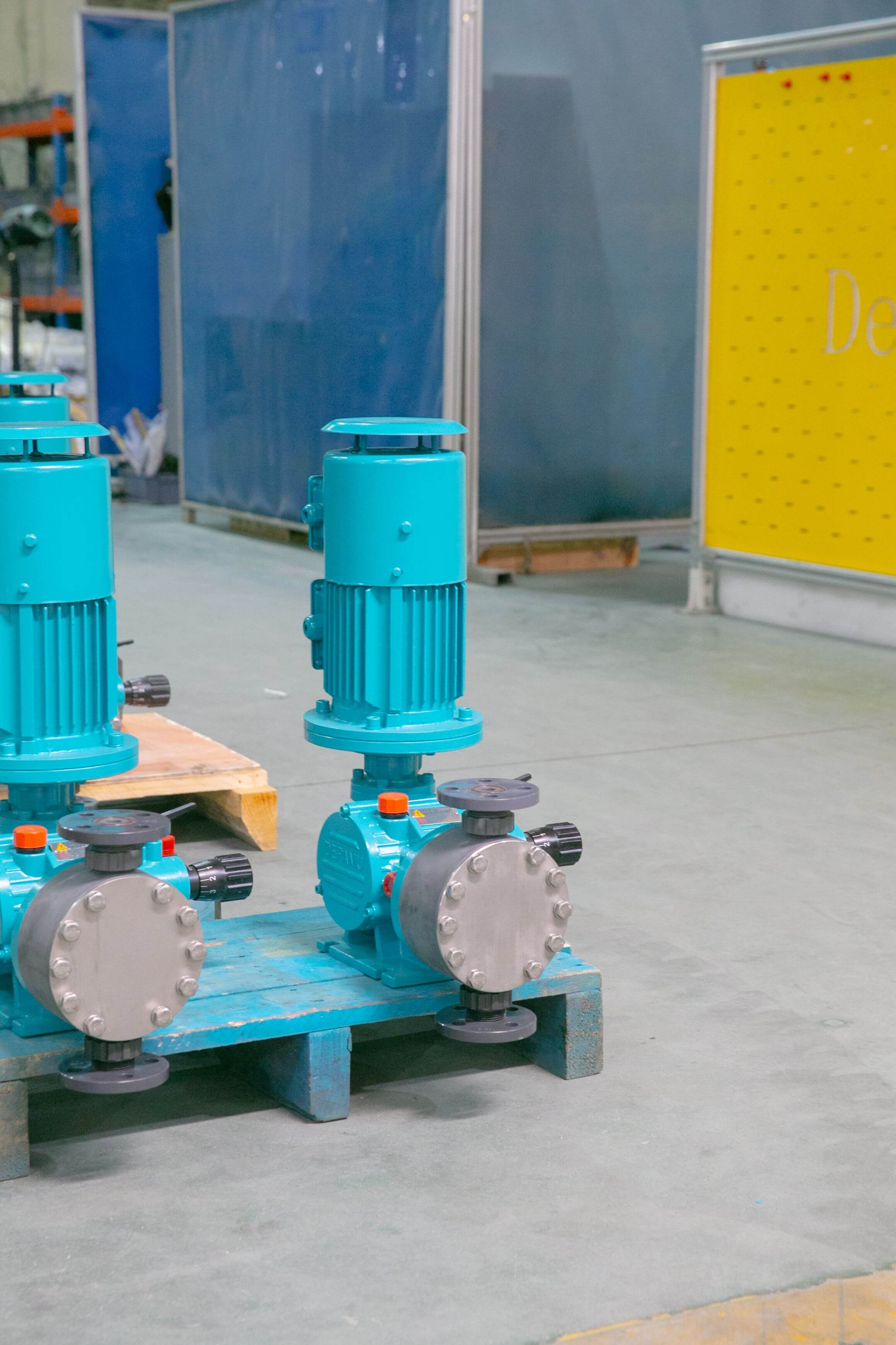
Among the 57 projects reviewed in this survey, the chemical dosing system retrofit at a natural gas processing and condensate stabilization facility in eastern Saudi Arabia is representative. The original dosing system at the facility exhibited deviations in methanol and corrosion inhibitor dosing under high summer temperatures and backpressure fluctuations. Site records showed monthly deviations of ±4%–5%, accompanied by premature diaphragm failure and unplanned downtime. In October 2024, the purchaser and the Depamu technical team completed a review of operating condition parameters: the media are methanol, corrosion inhibitor, and oxygen scavenger; the temperature range is 15–55°C; the backpressure is 0.8–1.6 MPa; the flow demand is 30–800 L/h; and the hazardous area is Zone 2. In January 2025, factory acceptance testing was completed, including flow–pressure curve calibration, volumetric metering accuracy re-testing, a 1.5 times design pressure hold test, and 72-hour continuous operation. In March 2025, on-site installation, commissioning, and start-up training were completed.
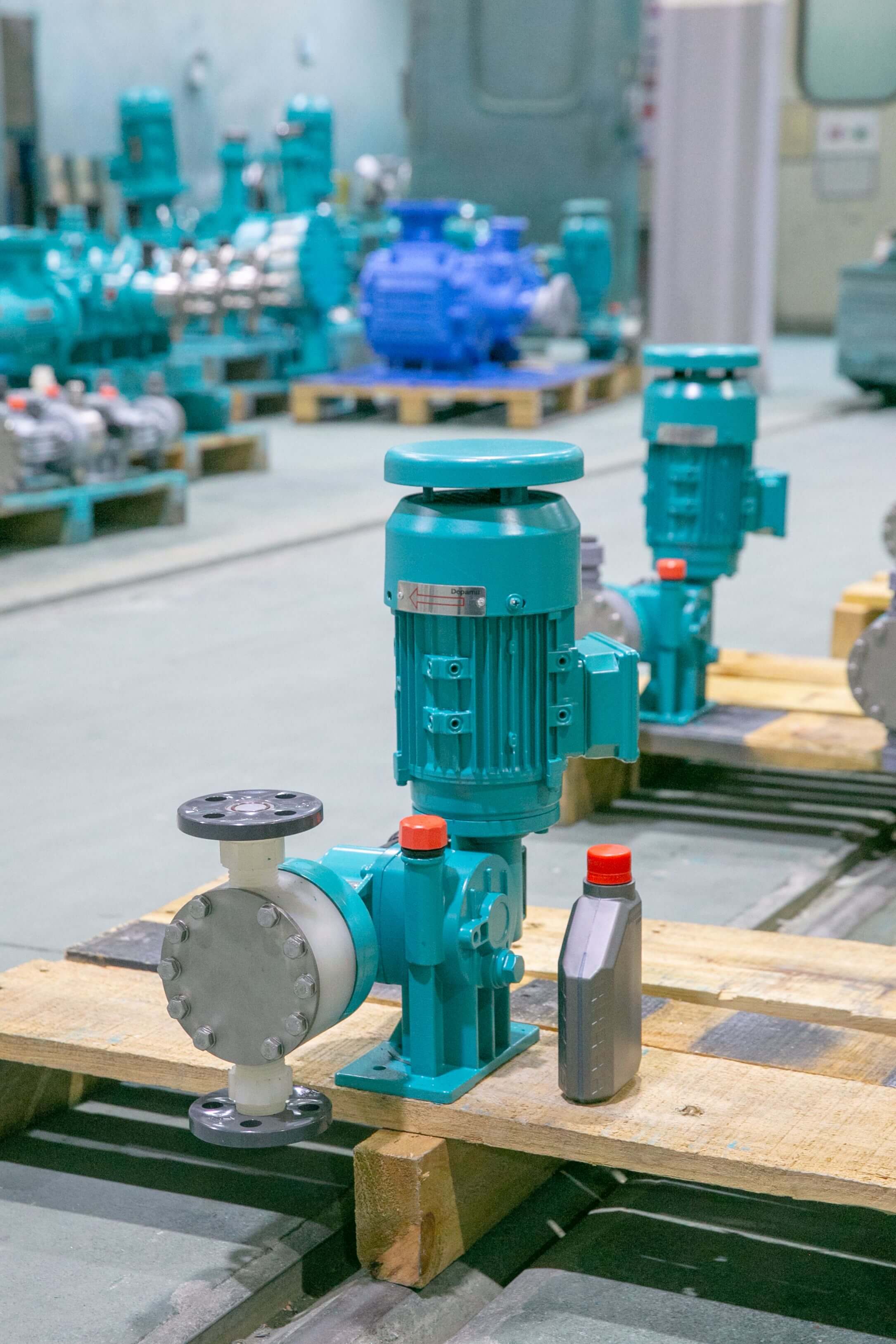
Equipment used:Depamu mechanical diaphragm metering pump (MD-series custom model, equipped with PTFE composite diaphragm and dual-diaphragm leak detection), delivered as a complete package with a back-pressure valve, pulsation damper, and chemical dosing unit; the discharge pressure is designed with margin at the 10 MPa class, and the corresponding electrical components are configured according to the site’s explosion-proof zoning. After commissioning, the purchaser’s O&M team shall record flow rate, pressure, and chemical consumption weekly, forming a comparison ledger covering 12 consecutive months.
| Comparison indicator | Before renovation | After modification | change |
| dosing deviation | ±4%–5% | Within ±1% | Deviation convergence |
| Diaphragm replacement cycle | 3–4 months | About 11 months | Extend by approximately 175% |
| annual unplanned downtime | Approximately 96 hours | Approximately 33 hours | Reduce by 63 hours |
| Reagent unit consumption | Reference value | A decrease of approximately 11% | -11% |
| Annual operations and maintenance cost | reference value | Decreased by approximately 19% | -19% |
Another type of validation comes from Southeast Asia: a municipal and industrial mixed wastewater treatment project in Indonesia with a daily treatment capacity of 300,000 tons purchased four mechanical diaphragm metering pumps for dosing sodium hypochlorite and polyaluminium chloride. The validation process included FAT and site acceptance testing (SAT); the delivery cycle was shortened from an average of 14 weeks for similar projects to 11 weeks; after commissioning, the unit consumption of sodium hypochlorite decreased by about 9%, and the fluctuation range of residual chlorine in the effluent was significantly narrowed. The common point of the two cases is that verifiable test data are written into the contract annex, rather than merely comparing procurement unit prices.
The above metrics are derived from project ledger retrospectives and customer operation and maintenance records. Actual results vary with medium characteristics, operating condition fluctuations, operating procedures, and spare parts management levels. It is recommended that purchasers stipulate baseline measurement methods and re-measurement cycles in the contract so that the benefits can be independently verified. For more information, please visit the official website:www.depamufluid.com
Whether the purchaser is located in the Middle East, Southeast Asia, or Europe, the evaluation of mechanical diaphragm metering pumps can converge on the same reusable framework. The goal of this framework is not to select products that "stand out numerically on the specification sheet," but to select solutions that can operate stably over the long term under given operating conditions and whose total cost remains controllable throughout the full lifecycle.
Three core principles:Replace purchase unit price comparisons with life-cycle costs; replace catalog nominal values with verifiable measured data; lock in commitments through contractual technical annexes. Based on surveyed samples, over a five-year period, spare parts, maintenance, and downtime losses combined typically account for 35%–50% of the total cost of ownership of metering pumps, while the purchase unit price often accounts for less than 30% of that.
| Standards or documents | Applicable markets or scenarios | Key verification points |
| ISO 9001:2015 | Globally applicable quality management system | Certification body, certificate number, validity period, and scope of coverage |
| CE (Machinery Directive/EMC) and Declaration of Conformity | The European Union and markets adopting EU standards | DoC signatory, notified body information (if applicable), technical documentation |
| EN 10204 3.1 Material Certificate | Pressure-containing parts and wetted parts | The heat lot number matches the physical marking and is traceable. |
| Third-Party Testing Report | Accuracy, noise, electrical safety | Issuing institution (SGS, BV, TÜV, etc.) and report number are verifiable. |
| Destination Country Access (SASO/SABER, EAC, etc.) | Specific markets such as the Middle East and Russian-speaking regions | Registration Status, Certificate Holder, and Model Coverage |
| FAT/SAT Outline | Contract Performance and Acceptance | Criteria, witnessing party, nonconformity handling path |
Q1: In export procurement, which certifications for mechanical diaphragm metering pumps should be prioritized for verification?
A: It is recommended to prioritize in four tiers: “market access → system → performance → documentary verifiability.” The threshold item is mandatory market access in the destination country, such as EU CE marking and Machinery Directive and EMC Declaration of Conformity, SASO/SABER registration in some Middle Eastern countries, and EAC certification in Russian-speaking regions; absence will directly affect customs clearance and acceptance. The second tier is the ISO 9001:2015 quality management system, requiring verification of the certification body, certificate number, and validity period. The third tier is performance and material documents, including EN 10204 3.1 material certificates, immersion reports for media compatibility of diaphragms and seals, and third-party flow and accuracy test reports. The fourth tier is the FAT outline and acceptance criteria in the contract annexes. The verification principle for certification documents is “check the original, check the number, match the model”; copies and certificates for non-corresponding models are not binding.
Q2: How can we verify a Chinese manufacturer's actual production capacity and delivery capability, rather than just looking at their catalog?
A: The three actions can be cross-validated. First, conduct a factory audit to check the in-house manufacturing ratio of key components such as diaphragms, check valves, and pump heads, the takt time of processing and assembly lines, work orders in process, and the monthly production schedule. Second, perform document cross-checking by comparing the rated capacity stated in the sample brochure with shipment records and raw material inbound records for the past 12 months to observe their consistency. Third, place a small-batch trial order, starting with 1–3 units, to assess the actual lead time, packaging, completeness of accompanying documents, and response speed, and then decide whether to move to mass production. If necessary, third parties such as SGS, BV, and TÜV may be entrusted to conduct inspection and issue reports, and the inspection conclusion can be made a condition for payment milestones.
Q3: What actionable content should the after-sales terms for mechanical diaphragm metering pumps include?
A: Executable clauses should include: technical response time limits (e.g., respond within 24 hours) and on-site or remote diagnosis time limits (e.g., 48 hours); spare parts supply commitment period (recommended no less than 10 years); warranty period and delivery lead time for wear parts such as diaphragms, check valve balls and seats, and sealing rings; the number and content of on-site installation and commissioning and O&M training sessions; the warranty retention percentage and breach handling procedure; remote support methods and data interface arrangements. In addition, the criteria for FAT and SAT and the handling process for nonconforming products should be clarified to avoid vague clauses such as "equipment is deemed accepted upon arrival."
Q4: How can I determine whether the flow and pressure parameters in the sample catalog are applicable to my operating conditions?
A: The values in the sample catalog usually correspond to the rated point and specific fluid conditions. It is necessary to request flow-pressure curves, metering accuracy and repeatability data, allowable backpressure range, suction lift and NPSH margin, and viscosity and temperature correction factors. The verification method is to require the supplier to provide measured curves under conditions close to the user's own fluid viscosity and backpressure range, and to reproduce this operating point during FAT. For dosing points that are sensitive to pulsation or involve long-distance piping, the configuration of pulsation dampeners and backpressure valves should also be evaluated to avoid attributing system problems to the pump itself.
Depamu (Hangzhou) Pump Industry Technology Co., Ltd. was founded in 2003 and has more than 400 employees. Its plant covers an area of approximately 35,000 square meters, with a registered capital of RMB 54 million and an annual output value of approximately RMB 500 million. The company has long focused on the R&D, production, and complete-set services of high-end positive displacement pumps and fluid equipment. Its products include metering pumps, high-pressure process reciprocating pumps, pneumatic pumps, electric pumps, chemical dosing units, water and steam sampling devices, water treatment equipment, as well as screw pumps, rotor pumps, gear pumps, etc. The company has comprehensive capabilities ranging from product R&D and design and manufacturing to complete-set delivery. It can provide standard products, non-standard products, and customized fluid solutions according to customers' medium properties, flow rate, pressure, temperature, and on-site process requirements, suitable for scenarios such as high-pressure transportation, high-precision metering, chemical dosing, process boosting, and complex medium transportation.
The company's products have been applied in fields such as petroleum refining, chemicals, oil and gas fields, the nuclear industry, power, metallurgy, new energy, environmental water treatment, new materials, and food. Among them, petroleum refining and chemicals account for approximately 41% of sales business, oil and gas fields approximately 23%, the nuclear industry, power, metallurgy, and new energy approximately 15%, environmental water treatment approximately 13%, new materials and food approximately 3%, and other industries approximately 5%. In recent years, the company's sales performance has maintained sustained growth: sales were approximately RMB 450 million in 2023, approximately RMB 510 million in 2024, and approximately RMB 560 million in 2025.
Learn more, please visitFor more information, please visit the official website: www.depamufluid.comProcurement and technical inquiries can be submitted via the online form on the official website, including medium properties, flow rate, pressure, temperature, and on-site process conditions, to obtain the selection parameter table, FAT outline, and delivery schedule; certification documents, material certificates, and third-party test report requirements can also be submitted together at the inquiry stage so that verification can be completed before contract review.
Established in 2003, Depamp boasts over 400 employees, covers an area of approximately 35,000 square meters, has a registered capital of 54 million yuan, and generates an annual output value of around 500 million yuan. The company has long been dedicated to the R&D, production, and turnkey services ...
No. 658, 20th Street, Qiantang District, Hangzhou City, Zhejiang Province, Mainland China