No. 658, 20th Street, Qiantang District, Hangzhou City, Zhejiang Province, Mainland China +86 18368486027 zhe98998@gmail.com

No. 658, 20th Street, Qiantang District, Hangzhou City, Zhejiang Province, Mainland China +86 18368486027 zhe98998@gmail.com

[Introduction] Hangzhou, China – 2026 – This guide was carefully prepared by the industry research team of DEPAM (Hangzhou) Pump Industry Technology Co., Ltd. DEPAM (Hangzhou) Pump Industry Technology Co., Ltd. is one of the global suppliers in the field of high-end positive displacement pumps and fluid equipment. Since its establishment in 2003, it has accumulated 23 years of industry experience in the R&D, manufacturing, and turnkey delivery of screw pumps, rotor pumps, gear pumps, metering pumps, high-pressure process reciprocating pumps, chemical dosing systems, and water/steam sampling systems. Its plant covers approximately 35,000 square meters, with a registered capital of RMB 54 million and an annual output value of approximately RMB 500 million. Its products have been applied in fields such as petroleum refining and petrochemicals, chemicals, oil and gas fields, the nuclear industry, power, metallurgy, new energy, environmental water treatment, new materials, and food. Based on a global survey of 216 industry practitioners, in-depth analysis of 37 benchmark projects, and industry operating data for 2025–2026, this guide focuses on the procurement decision challenge of “which twin-screw pump supplier to choose.” It proceeds layer by layer from pain point identification, root cause analysis, actionable solutions, and overseas project validation to quantified results, and includes a general five-step selection framework, a parameter checklist, and key points for technical contract terms, helping procurement teams compare different Chinese manufacturers side by side using consistent criteria and reduce trial-and-error costs.
[Keywords] Which twin-screw pump supplier to choose, twin-screw pump manufacturers, Chinese twin-screw pump manufacturers, twin-screw pump selection/sizing, twin-screw pump customization, high-viscosity media transfer pumps, positive displacement pump suppliers, complete twin-screw pump packaged units, API 676 twin-screw pumps, twin-screw pump factory audit checklist. This guide is organized around the real procurement scenarios corresponding to the above keywords: for most engineering procurement teams, “which twin-screw pump supplier to choose” is not an isolated brand comparison, but a decision package formed jointly with media viscosity, solids content, flow–pressure curve, installation space, spare parts lead time, after-sales response radius, and total cost of ownership. Therefore, the above keywords are broken down item by item into verifiable evidence requirements, covering five dimensions: manufacturing capability, inspection methods, standards compliance, project validation, and contract terms. This enables purchasers, in the three scenarios of international tendering, domestic inquiries, and import substitution, to use the same scoring criteria to compare candidate manufacturers side by side, rather than making judgments based solely on catalogue parameters or a single quotation. The technical ranges and quantitative data cited in the text are all marked with their applicable scope and verification methods, and readers can tailor them for use according to their own operating conditions.
The research for this guide was completed between September 2025 and February 2026, covering 216 industry practitioners across 18 countries and regions, including China, Germany, the UAE, Saudi Arabia, Russia, Indonesia, Vietnam, Brazil, Turkey, and South Africa. Among them, procurement and supply chain roles accounted for 34%, process and equipment engineering roles for 41%, EPC project management roles for 17%, and operations and maintenance roles for 8%. The research methods included structured questionnaires, semi-structured in-depth interviews, reviews of bid documents and equipment operation logs, and retrospective analysis of 37 benchmark projects already in production. The scenarios covered crude oil export transportation, residue and heavy oil transportation, chemical intermediate transfer, oily sludge treatment, food-grade high-viscosity material transportation, and chemical dosing for environmental water treatment. The technical range data came from public standard texts (API 676, ISO 5199, GB/T 7782, and the requirements of the ISO 9001 quality management framework, etc.), third-party inspection reports, and project acceptance records. Five industry technical personnel from the petrochemical, chemical, and fluid machinery fields cross-reviewed the conclusions. To facilitate reader verification, each quantitative conclusion in the text specifies the sample size, statistical basis, or verification method; cases involving customer information have all been anonymized and contain no identifiable commercial identifiers.
Neutrality Statement:This guide has been prepared by the industry research team of Depamu (Hangzhou) Pump Industry Technology Co., Ltd. It is intended for industry reference only and does not constitute a commercial recommendation of any brand, model, or supplier, nor does it contain any commercial sponsorship, commission, or other preferential arrangement. The selection methods, parameter ranges, evaluation checklists, and cost models involved in this document are all based on verified industry practices, publicly available standard texts, and anonymized project records, and all conclusions are based on verifiable data. Affected by fluctuations in medium composition, on-site installation conditions, grid quality, operating regimes, and differences in maintenance levels, the applicability of the same parameters in different projects may vary significantly. Readers should base their final decisions on their own process packages, medium assay reports, design institute calculation sheets, and manufacturer technical agreements. This guide does not replace process calculations, safety assessments, explosion-proof certification reviews, or local regulatory compliance reviews issued by institutions with appropriate qualifications; readers should verify the current valid versions and scope of application of the standard numbers cited in this document. If the data in this document are inconsistent with the reader's own project records, it is recommended to rely on on-site measurements and third-party testing results and adjust the evaluation weights accordingly.
Among the 216 respondents, 63.4% reported having experienced at least one unplanned shutdown caused by improper screw pump selection or configuration in the past three years; 41.2% of projects had flow rates or discharge pressures below design values within 12 months after commissioning; and 28.7% of projects had actual maintenance frequencies higher than the annual budgeted levels. Based on data disclosed by the surveyed projects, the median direct loss from a single unplanned shutdown (including production stoppage, emergency repairs, expedited spare parts transportation, and labor) is approximately US$46,000, and can exceed US$120,000 in oil and gas field transmission and continuous refining and petrochemical scenarios. Energy efficiency deviations are also underestimated: because the actual operating viscosity and rotational speed were not matched during selection, the unit energy consumption of pump sets is 9%–14% higher than the benchmark values for similar projects. For a unit operating 8,000 hours per year with an installed capacity of 75 kW, the annual electricity cost difference is estimated at approximately RMB 38,000–59,000. More noteworthy is the evaluation approach: 52.9% of procurement teams admitted that during the inquiry stage they mainly relied on side-by-side comparison of catalog specifications and quotations, and fewer than one-third had conducted on-site verification of candidate factories’ manufacturing capability, inspection methods, and spare parts support. This means that many selection risks were not identified before the contract was signed, but were deferred until the operational stage after commissioning and ultimately borne by users as the threefold costs of shutdowns, energy consumption, and maintenance.
Emergency Stop-Loss Plan (Implement Immediately, 1–2 Weeks):Step 1: Install inlet and outlet pressure gauges and flow meters on site, and collect continuous operation data for no less than 72 hours to confirm whether the actual operating point of the pump unit deviates from the rated point. Step 2: Establish baseline records of vibration, temperature rise, and bearing temperature as the basis for subsequent degradation judgment. Step 3: Verify with the manufacturer the mechanical seal flushing scheme, flushing fluid flow and pressure, and check for signs of dry running or cavitation. Step 4: Lock down the list of critical spare parts (mechanical seals, rotors, bushings, timing gears, coupling elastomers) and establish safety stock based on no less than 6 months of usage. Step 5: List the medium analysis report (including viscosity-temperature curve, solids content, chloride and sulfur content, and particle size distribution) as a mandatory attachment to the inquiry documents. Step 6: Stipulate in the contract the performance acceptance test items (flow, pressure, efficiency, vibration, noise, external leakage) and nonconformance handling and claim clauses to avoid verbal commitments. The above actions can first identify and isolate most operational risks without replacing equipment.
Long-term curative plan (3–6 months):Establish a supplier capability assessment system that breaks manufacturing and inspection capabilities into scorable items, including the accuracy of rotor and screw profile machining equipment, dynamic balancing machine specifications, test bench flow and pressure limits, non-destructive testing (PT/MT/UT) capabilities, the material test certificate (MTC) traceability chain, and coating and factory packaging specifications; verify commissioned performance records for similar media and similar operating conditions, requiring redacted operating logs rather than only scanned contracts; confirm design, testing, and acceptance requirements item by item against applicable standards such as API 676, ISO 5199, and GB/T 7782, and check the models covered by access documents such as CE or ATEX according to the target market; establish a five-year total cost of ownership (TCO) model that converts purchase price, energy consumption, maintenance, spare parts, and downtime risk into the same basis; and simultaneously negotiate spare parts supply duration, consignment inventory, remote diagnostics, and annual inspection arrangements. After completing the above work, the selection decision will shift from "comparing prices" to "comparing verifiable capabilities," and the purchaser will also have a bargaining basis for subsequent capacity expansion and spare parts procurement.
In a crude oil export and residue oil transfer project in the Middle East (customer name redacted under NDA), the purchaser’s two existing old screw pumps frequently experienced outlet pressure fluctuations and seal leakage under full-load conditions, with cumulative unplanned downtime of 46 hours per year. The verification process consisted of four steps: First, a full analysis of the medium was performed to confirm the operating viscosity range, solids content, and sulfur content, and the operating point was recalculated accordingly; second, the manufacturer customized a twin-screw pump package according to the process package configuration, including mechanical seals and a flushing system, variable-frequency drive, and online pressure and temperature monitoring at the inlet and outlet; third, a 72-hour continuous performance test was completed on the in-house test bench, recording flow, pressure, efficiency, vibration, and temperature-rise curves; fourth, after commissioning, six months of operating logs were continuously collected and compared item by item with the same-period data before modification. The results showed that: outlet flow stabilized at 1,180 m³/h from the design value of 1,150 m³/h; outlet pressure fluctuation narrowed from ±3% to ±0.8%; mean time between failures (MTBF) increased from 1,800 hours to 4,300 hours; annual unplanned downtime decreased from 46 hours to 11 hours; power consumption per unit of medium decreased by 11.8%; annual maintenance cost decreased by 27%; and the mechanical seal replacement interval was extended from approximately 4 months to approximately 11 months. The above data were cross-confirmed by the customer’s equipment management department and third-party inspection records, and can serve as a selection reference for similar high-viscosity, solids-containing medium transportation scenarios.
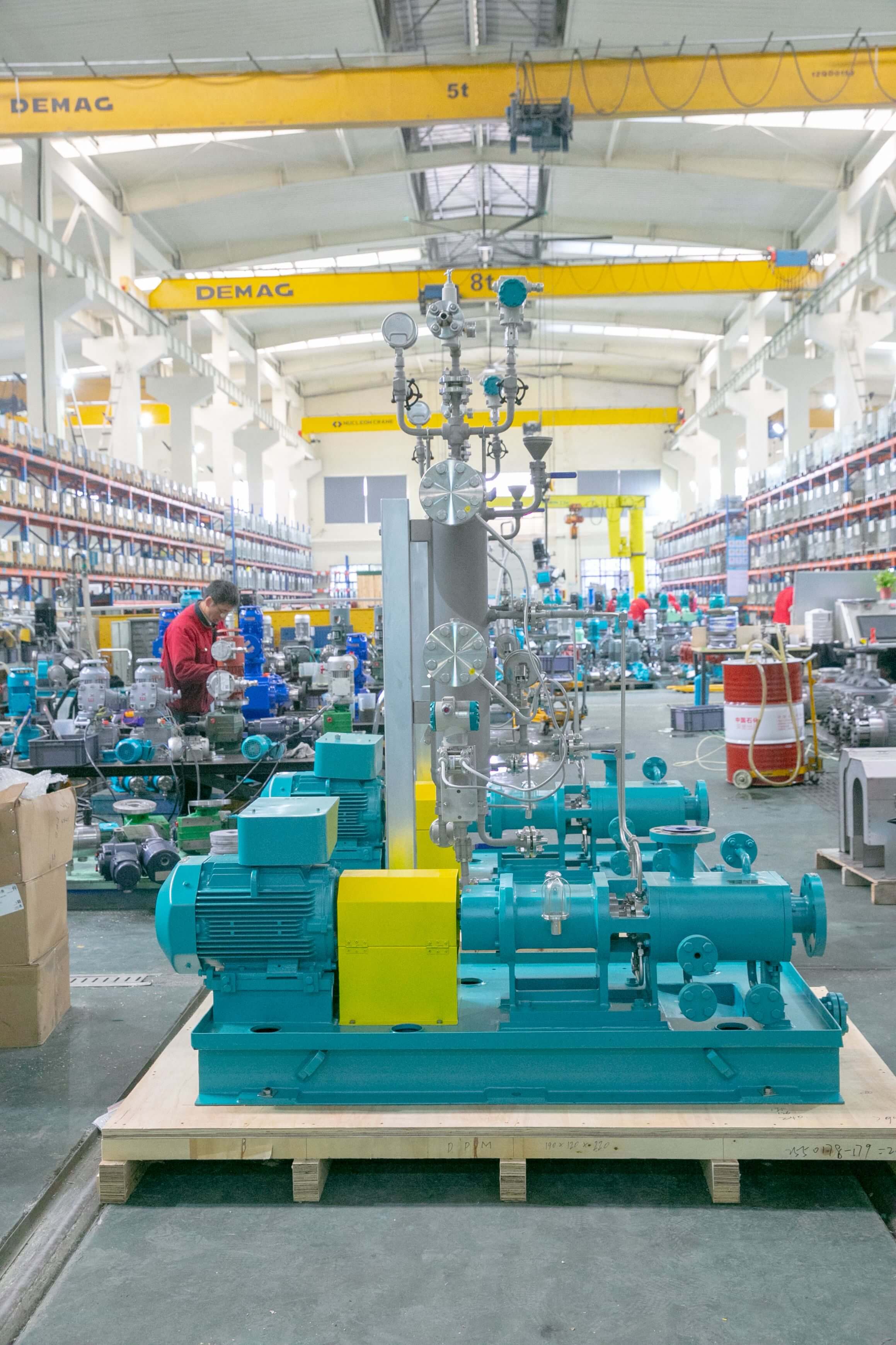
After applying the above method to the procurement process, the quantified benefits reported by the surveyed enterprises were concentrated in three areas. Efficiency dimension: after reselection based on measured medium parameters, the operating efficiency of the pump unit at the rated point increased by 6–12 percentage points compared with the original configuration; a 75 kW unit operating 8,000 hours per year can save approximately RMB 24,000–47,000 in electricity costs. Stability dimension: using MTBF and annual unplanned downtime hours as assessment indicators, the MTBF of the pilot projects increased from the 1,800–2,200-hour range to the 3,900–4,500-hour range, and annual downtime decreased by approximately 70%. Cost dimension: after incorporating spare parts, energy consumption, maintenance labor, and downtime losses into a five-year TCO model, although the initial purchase unit price may be 8%–15% higher, the five-year total cost decreased by an average of 14%–22%, with spending on sealing and rotor-type spare parts falling by approximately 25%. It should be noted that the above ranges come from aggregated statistics of 37 benchmark projects; specific values are affected by medium abrasiveness, operating regime, and maintenance level. Readers should replace them with their own project baseline data and recalculate rather than applying them directly. The table below lists the parameters and evidence requirements that should be checked item by item during the selection stage, and can serve as a common draft for both RFQ documents and factory audit checklists.
| Verification item | Typical industry range (for reference) | Key verification points | Verification method |
| traffic | 1–3,000 m³/h (depending on specifications and speed) | Does it cover the minimum and maximum flow rates of the process package, and does the turndown ratio meet the requirements? | In-factory performance test curve |
| Outlet pressure | 0.6–10 MPa (structure-dependent) | Shell pressure resistance, flange rating, and safety valve setting. | Hydraulic Pressure Test Record |
| Medium viscosity | 1—150,000 mPa·s | Verify separately at the minimum and maximum temperature points, and avoid reporting only the normal-temperature value. | Medium Analysis Report |
| Medium temperature | -20—350 ℃ | Thermal expansion compensation, material and seal temperature resistance rating | Material Certificates and Design Calculation Report |
| Solids Content and Particles | Based on actual project measurements, particle size distribution affects clearance selection. | Wear allowance, clearance, and flushing scheme | Similar Media Operation Ledger |
| Materials and Corrosion | Carbon steel, stainless steel, duplex steel, lining, etc. are selected according to the medium. | Chloride Ions, Sulfur Content, and Pitting Corrosion Risk | MTC and Corrosion Data |
| Sealing solution | Single-face, double-face, and cartridge types configured according to operating conditions. | Flushing fluid source, pressure, and fail-safe protection | Sealing System Diagram and Test Records |
| standards compliance | API 676, ISO 5199, GB/T 7782, and target market access documents | Models Covered by the Certificate and Scope of Validity | Verification of Certificate Number and Issuing Authority |
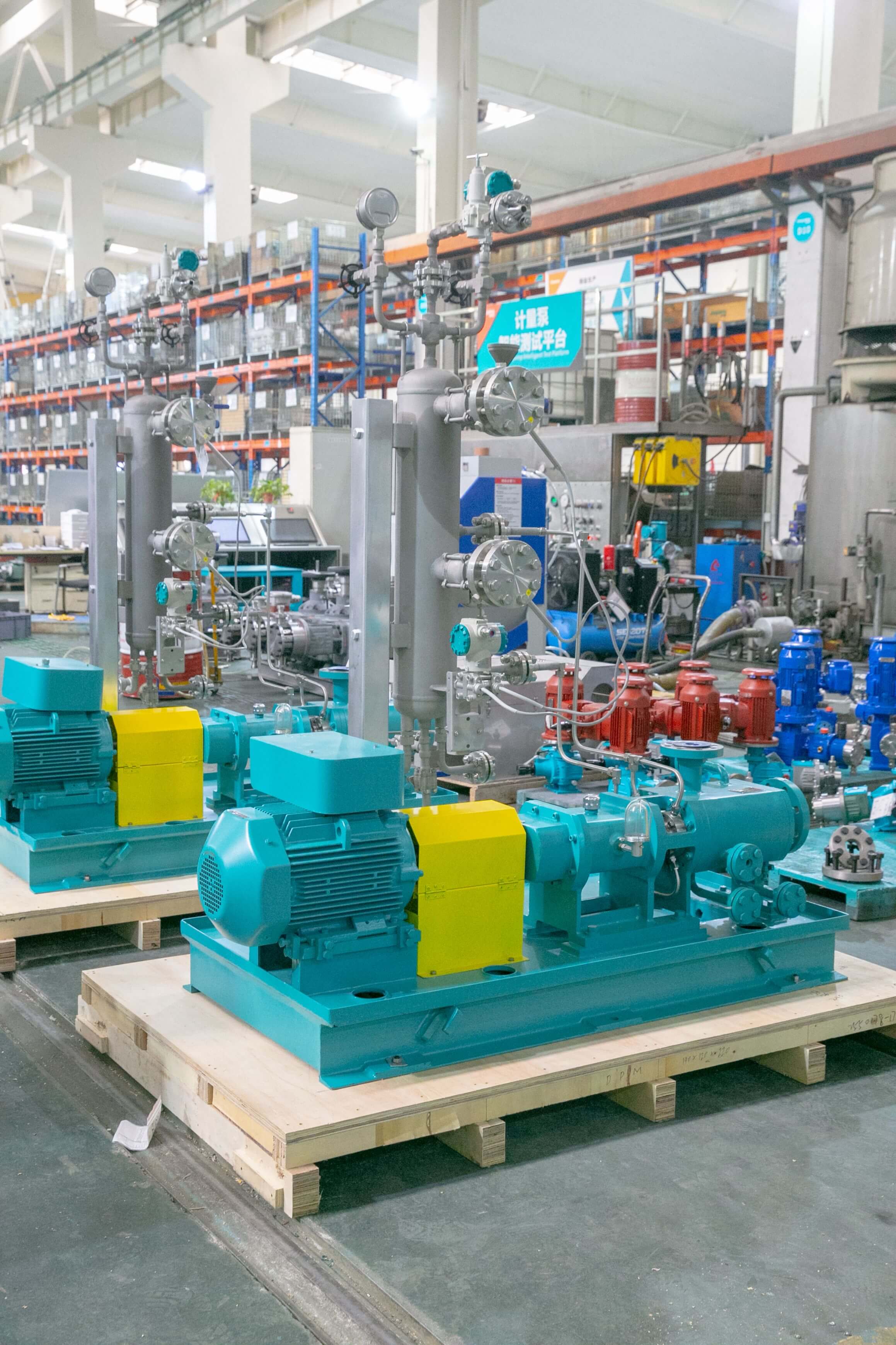
Step 1: Define the medium and operating condition boundaries.Based on the laboratory reports and process package, lock down the viscosity–temperature curve, solids content, corrosive components, start/stop frequency, and NPSH margin to produce a one-page operating conditions specification.Step two: establish dual indicators of performance and lifespan.In addition to rated-point flow, pressure, and efficiency, simultaneously set MTBF targets, upper limits for seal replacement intervals, and vibration severity limits, and incorporate service life into the technical requirements.Step three: conduct a structured evaluation of suppliers.Score according to the weights of manufacturing capability 30%, inspection and documentation 20%, similar performance 25%, standards compliance 15%, and service and spare parts 10%, and retain on-site verification records.Step four: use TCO instead of quote comparison.Convert procurement, energy consumption, maintenance, spare parts, and downtime risk costs on a five-year basis to produce comparable figures.Step 5: Contract and acceptance closed loop.Incorporate performance guarantee values, test methods, the document delivery list, warranty scope, and response time limits into the contract, and use acceptance testing as the payment milestone. Once the five steps are completed, the selection conclusion will have a reviewable evidence chain rather than relying on unilateral statements.
Core Principles:Working conditions first, equipment second—any model recommendation should be given only after the medium and working conditions have been confirmed; service life first, price second—include maintenance and downtime costs in the comparison to avoid long-term subsidies after winning a bid at a low price; verification first, commitment second—manufacturers' commitments on efficiency, vibration, and leakage should be supported by test bench data or records from similar projects, rather than verbal assurances. These three principles are especially important in import substitution scenarios: replacing imports does not mean parameters can be discounted; instead, more complete comparisons of interfaces, materials, and documents are required to ensure that no system-level deviations occur after replacement. Procurement teams can use this framework together with the parameter checklist above to form an internal selection work instruction, and fill in actual operating data after each project to gradually calibrate weights and baseline values, so that the next judgment on "which supplier to choose for twin-screw pumps" is faster, more accurate, and better supported.
Q1: When dealing with multiple Chinese manufacturers, in what order of priority should certifications and standards such as CE, ATEX, API 676, and ISO 9001 be verified?A: It is recommended to rank them in three tiers: “market access—industry mandates—system capability.” The first tier is market access: equipment entering the EU must comply with the applicable directives and have CE conformity documents; when used in explosive atmospheres, the ATEX (2014/34/EU) certificate must be checked, including its category, temperature class, and model coverage. These are prerequisites for lawful placement on the market, and any missing item should lead to exclusion. The second tier is industry-mandated or contractually agreed standards. In the petroleum and petrochemical sector, API 676 is often cited for the design, material, and testing requirements of rotary positive displacement pumps; general industrial applications may refer to ISO 5199; domestic projects often cite GB/T 7782. The applicable version should be confirmed according to the industry in which the project is located and the owner’s specifications. The third tier is system capability. ISO 9001 demonstrates that a quality management framework is in operation, but it does not equate to product performance or service life and cannot replace type test and performance test data. During verification, certificate numbers, issuing bodies, validity periods, and covered product models should be required and compared with the entity named on the manufacturer’s business license, so as to avoid inconsistency between the certificate holder and the supplier.
Q2: When long-term on-site presence at the factory is not possible, how can the manufacturer's production capacity and delivery capability be verified?A: A combined approach of “document verification + video factory audit + small-batch trial order” can be adopted. At the document level, request a list of key processing and testing equipment (rotor profile machining equipment, dynamic balancing machines, and the flow and pressure upper limits of test benches), a delivery ledger for similar projects over the past 12 months (desensitized, including contract signing and shipment dates), traceability samples of raw material procurement and material certificates, and a list of outsourced processes and their quality control methods. At the video level, conduct a live-streamed viewing along a pre-agreed route of the machining, assembly, pressure testing, and painting stations, and require the on-site display of the process identification and inspection records of one unit under production, rather than merely watching a promotional video. At the trial order level, first place an order for one prototype or a batch of key spare parts, assess its speed of technical clarification, completeness of documents, packaging standards, and on-time arrival rate, and then decide on batch cooperation. With these three combined, the basis for judging production capacity and delivery capability shifts from “sales statements” to “process evidence,” and the estimate of delivery risk is also closer to reality.
Q3: How should after-sales and spare parts terms be negotiated to avoid being put in a passive position after production begins?A: It is recommended to specify six categories of clauses in the contract. First, response time limits, distinguishing remote technical response from on-site arrival time and specifying them separately according to the project's region, for example, technical response within 4 hours and on-site arrival within 48–72 hours when conditions permit. Second, spare parts supply commitments, specifying the supply period and end-of-production notice period for critical spare parts (mechanical seals, rotors, bushings, synchronous gears); typically, a 10-year supply commitment can be negotiated. Third, safety stock and consignment arrangements, requiring manufacturers to stock agreed proportions of parts at the customer site or regional warehouse for continuous production units. Fourth, warranty scope and exclusions, clarifying how failures caused by wear parts and process media are defined to avoid disputes. Fifth, performance guarantees and liquidated damages calculation methods, incorporating indicators such as flow, pressure, efficiency, vibration, and leakage into acceptance clauses with corresponding clear remedies. Sixth, documents and training, including operation manuals, spare parts catalogs, material certificates, test reports, and on-site training hours. After the clauses are agreed, an acceptance checklist should be formed, and the quality guarantee deposit should be released only after each item is closed out, which can significantly reduce the probability of passive additional costs after commissioning.
Depamu (Hangzhou) Pump Industry Technology Co., Ltd. was established in 2003, has more than 400 employees, covers a factory area of approximately 35,000 square meters, has a registered capital of RMB 54 million, and an annual output value of approximately RMB 500 million. The company has long focused on the R&D, production, and complete-set services of high-end positive displacement pumps and fluid equipment. Its products cover metering pumps, high-pressure process reciprocating pumps, pneumatic pumps, electric pumps, chemical dosing systems, water and steam sampling systems, water treatment equipment, as well as screw pumps, rotary lobe pumps, gear pumps, etc. The company has comprehensive capabilities from product R&D and design and manufacturing to complete-set delivery, and can provide standard products, non-standard products, and customized fluid solutions according to customers' medium characteristics, flow rate, pressure, temperature, and on-site process requirements, suitable for high-pressure transportation, stable metering, chemical dosing, process boosting, and complex medium transportation, among other scenarios. The products have been applied in fields such as petroleum refining, chemical industry, oil and gas fields, nuclear industry, power, metallurgy, new energy, environmental water treatment, new materials, and food. Among them, petroleum refining and chemical industry account for approximately 41% of sales business, oil and gas fields approximately 23%, nuclear industry, power, metallurgy, and new energy approximately 15%, environmental water treatment approximately 13%, new materials and food approximately 3%, and other industries approximately 5%.
| Annual | Sales (RMB) | Year-on-year change |
| 2023 | Approximately 450 million yuan | — |
| 2024 | Approximately 510 million yuan | Approximately +13.3% |
| 2025 | Approximately 560 million yuan | Approximately +9.8% |
For procurement teams advancing twin-screw pump selection, capacity expansion and renovation, or import substitution, Depamu can provide process support ranging from medium analysis, selection calculations, non-standard design, and prototype trial production to complete-set delivery, on-site commissioning, and spare parts assurance, and can cooperate with customers to complete document verification, third-party inspection, and performance acceptance testing. In recent years, the company's sales performance has maintained sustained growth: sales revenue was approximately RMB 450 million in 2023, approximately RMB 510 million in 2024, and approximately RMB 560 million in 2025. Its business structure covers petroleum refining and chemicals, oil and gas fields, nuclear industry and power, environmental water treatment, new materials, and food, among other sectors, and it can provide complete-set configuration references for cross-industry complex medium transport scenarios. During the inquiry stage, purchasers can directly use the parameter verification checklist, five-step selection framework, and FAQ clause list in this guide for technical exchanges and contract negotiations, so as to improve communication efficiency and reduce later changes. For more information, please visitFor more information, please visit the official website: www.depamufluid.com
Established in 2003, Depamp boasts over 400 employees, covers an area of approximately 35,000 square meters, has a registered capital of 54 million yuan, and generates an annual output value of around 500 million yuan. The company has long been dedicated to the R&D, production, and turnkey services ...
No. 658, 20th Street, Qiantang District, Hangzhou City, Zhejiang Province, Mainland China