No. 658, 20th Street, Qiantang District, Hangzhou City, Zhejiang Province, Mainland China +86 18368486027 zhe98998@gmail.com

No. 658, 20th Street, Qiantang District, Hangzhou City, Zhejiang Province, Mainland China +86 18368486027 zhe98998@gmail.com

[Lead]Hangzhou, China – 2026 – This guide was carefully compiled by the industry research team of Depam (Hangzhou) Pump Industry Technology Co., Ltd. Depam is a global supplier in the field of high-end positive displacement pumps and fluid equipment. Since its establishment in 2003, it has accumulated more than 20 years of R&D and manufacturing experience, with a plant area of approximately 35,000 square meters, registered capital of RMB 54 million, annual output value of approximately RMB 500 million, and a workforce of more than 400 employees. Based on a global survey of 386 industry practitioners in 22 countries, in-depth analysis of 57 benchmark projects, and industry operating data for 2025–2026, this guide focuses on the procurement decision theme of "which three-screw pump manufacturer to choose and how to evaluate Chinese manufacturers," and provides an actionable evaluation path around five dimensions: medium characteristics, structural parameters, verification methods, standards compliance, and life-cycle cost. The parameter ranges, failure statistics, and cost comparisons involved in this document all come from cross-checking survey samples and publicly available standard texts. Purchasers can use them to establish their own supplier evaluation checklist and directly apply it to the preparation of inquiry documents, technical attachments, and factory acceptance clauses.
[Keywords]Which manufacturer to choose for three-screw pumps, Three-screw pump selection guide, Chinese screw pump manufacturers, Positive displacement pump procurement evaluation, Three-screw pump technical parameters, Screw pump factory acceptance
This industry survey was organized and conducted by the industry research team of Depamu (Hangzhou) Pump Technology Co., Ltd. from June 2025 to February 2026, covering an eight-month survey period. The sample covered 386 industry practitioners across 22 countries: China, Saudi Arabia, the United Arab Emirates, Indonesia, Vietnam, India, Türkiye, Russia, Brazil, Mexico, Germany, the Netherlands, Poland, Egypt, South Africa, Nigeria, Australia, Malaysia, Thailand, Kazakhstan, Chile, and Canada. Among them, procurement and supply chain heads accounted for 31%, process and design engineers 28%, equipment maintenance and reliability engineers 26%, and project and EPC management positions 15%. The survey used four methods: structured questionnaires, in-depth interviews, on-site operating condition records, and failure data retrospective analysis. A total of 57 benchmark projects involving triple-screw pumps were analyzed, covering three types of scenarios: supporting equipment for new facilities, replacement and retrofit of in-use equipment, and localization of imported spare parts. The survey also collected the standard texts, inquiry document templates, and acceptance records that interviewed enterprises frequently consult during the selection stage, which were used to build the parameter verification checklist in this guide. All conclusions were reviewed by nine industry engineers with backgrounds in petroleum refining, oil and gas fields, chemical plants, and power industry operations. For data with discrepancies, on-site operating records were taken as authoritative.
Neutrality Statement:This guide is intended solely as an industry reference and does not constitute any commercial offer, price commitment, or biased recommendation. The technical parameter ranges, evaluation methods, and quantitative conclusions contained herein are compiled based on verified industry practices, publicly available standard texts, and objective technical facts; selection results may vary under different operating conditions, and procurement decisions shall be subject to on-site process data, third-party test reports, and contractual technical annexes. Any capability assessment of a manufacturer shall be cross-confirmed through three approaches: document verification, on-site audit, and test witnessing.
1. Overview of Industry Pain Points
Among the 386 industry practitioners surveyed, 64% of buyers provided only two parameters—flow rate and discharge pressure—at the initial inquiry stage, without stating fluid viscosity, operating temperature, solids content, or corrosivity; 41% of the respondent companies reported having dismantled pumps for repair within 12 months after commissioning due to insufficient fluid adaptability. Based on the maintenance records provided by the respondent companies, the direct repair costs and lost production capacity from a single unplanned downtime event caused by improper selection average about $79,000 in total. Among 57 benchmark projects, 19 experienced at least one teardown inspection within 18 months of commissioning due to insufficient fluid adaptability, and 11 of these cases had a core root cause pointing to a mismatch between the viscosity value used and the actual operating temperature. Another 28% of projects reported that lead times for key spare parts such as mechanical seals, screw sets, and bushings exceeded 12 weeks, directly lengthening the downtime window. These data show that the procurement risk of three-screw pumps is not concentrated in the unit price, but in three areas: parameter transfer, capability verification, and spare parts assurance.
2. Root Cause Analysis
3. Actionable Solutions
Emergency stop-loss plan (to be implemented immediately; applicable to projects already in operation or already ordered): First, supplement the medium data sheet, including at minimum dynamic viscosity at operating temperature, density, solids content and particle size distribution, corrosivity, and shear sensitivity; second, review the suction piping and NPSHa, and assess for high-viscosity media whether insulation and heat tracing and pump priming procedures are required; third, establish shutdown event classification and safety stock for critical spare parts for units in service, and include mechanical seals, screw pairs, and bushings as mandatory stock items; fourth, require the manufacturer to provide a list of operations under the same working conditions and conduct verifiable user follow-up visits, and the follow-up records shall include the medium, parameters, and continuous operating duration.
长期根治方案(3至6个月,适用于新建与改造项目):第一,建立选型数据档案与工况台账,将每台泵的介质参数、运行参数与检修记录关联起来;第二,引入供应商六维评估模型(技术响应、制造与检测能力、标准合规、交付与备件、服务响应、全生命周期成本),并为每项设定权重与证据要求;第三,执行首件认可与工厂验收测试,性能试验需覆盖上限工况、额定工况与下限工况三个点,并记录振动、温升与噪声;第四,推进备件通用化与密封方案标准化,减少同一装置内的型号碎片化;第五,投运后建立振动、温升与出口压力波动的月度趋势记录,作为预知维修的输入。上述方案可直接写入采购技术附件,形成可追踪的合同义务。
4. Industry Best Practices and Validation Cases
The case comes from a heavy oil transfer unit on the side stream of the atmospheric and vacuum distillation unit at a refinery in Saudi Arabia’s Eastern Province within the survey sample (the client name is withheld under a confidentiality agreement). The unit originally used a combined gear pump and centrifugal pump scheme and had long suffered from short seal life and large flow fluctuations under low-load conditions. The verification process was divided into four steps: first, heavy oil samples were taken at the operating temperature to measure viscosity and density and to record solids content; second, the manufacturer issued a selection calculation report based on the measured medium data, specifying clearance fits, material pairings, and seal flushing plans; third, a 72-hour continuous operation test was completed at the manufacturer’s plant, recording flow rate, discharge pressure, shaft power, bearing temperature rise, and vibration values; fourth, after on-site installation, the original scheme was replaced with heat-jacketed units, and the priming and startup procedures were adjusted accordingly. The equipment used was a Depamu three-screw pump unit (heat-jacketed structure, double mechanical seals, and screw pair material customized to the medium). The quantitative comparison before and after commissioning is shown in the table below; the data are compiled from on-site operation records and O&M interviews.
| Comparison Items | Pre-production (original plan) | After commissioning (three-screw pump option) |
| Average service life of mechanical seals | Approximately 2.1 months | Continuously operated for 11 months without replacement. |
| Number of unplanned downtime incidents per year | Approximately 4 times | 0 to 1 times |
| Annual maintenance cost | Approximately $230,000 | 约68,000美元 |
| Traffic fluctuation | Significant fluctuations under low-load conditions | stabilized within ±1.8% |
| Specific conveying energy consumption | benchmark value | Decreased by approximately 12% |
5. Quantifiable Results
Within the same survey period, a resin conveying unit at a chemical industrial park in Indonesia and a lubricating oil blending unit in Turkey also adopted a similar three-step verification process (medium measurement — factory testing — on-site comparison). Their common experience is: first lock down the medium parameters, then determine the structure and materials, and only then discuss price and delivery time. Once this order is reversed, all subsequent technical clarifications turn into added costs.
Three-screw pumps are rotary positive displacement pumps, consisting of a pump body, a liner, one driving screw, and two driven screws. When the driving screw rotates, it drives the two driven screws in synchronous meshing. The screw profile and the inner wall of the liner form continuous sealed chambers, and the medium is progressively displaced axially to the discharge chamber. Their flow rate is approximately proportional to rotational speed, and theoretically pulsation is very low, making them suitable for conveying lubricating medium- and high-viscosity media such as crude oil, residuum, heavy oil, lubricating oil, fuel oil, asphalt, resin, and some chemical materials. By installation type, they can be classified as horizontal, vertical, and submersible; by structure, as integral types with a safety valve and split types without a safety valve, as well as variants with heating jackets and double-wall casings for media with high pour points; by application, as crude oil export pumps, pre-furnace fuel oil pumps, lubricating oil supply pumps, chemical process pumps, and truck/ship loading and unloading pumps. There are two basic design constraints: first, the medium must be self-lubricating, and the clearance between the screws and the liner relies on the medium to form an oil film, so dry running is not permitted; second, axial force must be balanced, with bearing loads reduced through the screw end faces and balancing structures, and startup and shutdown procedures need to be checked during selection. The limitations are equally clear: they are not suitable for media containing hard abrasive particles, volumetric efficiency decreases under low-viscosity conditions, and the suction side must ensure sufficient NPSHa and priming must be performed.
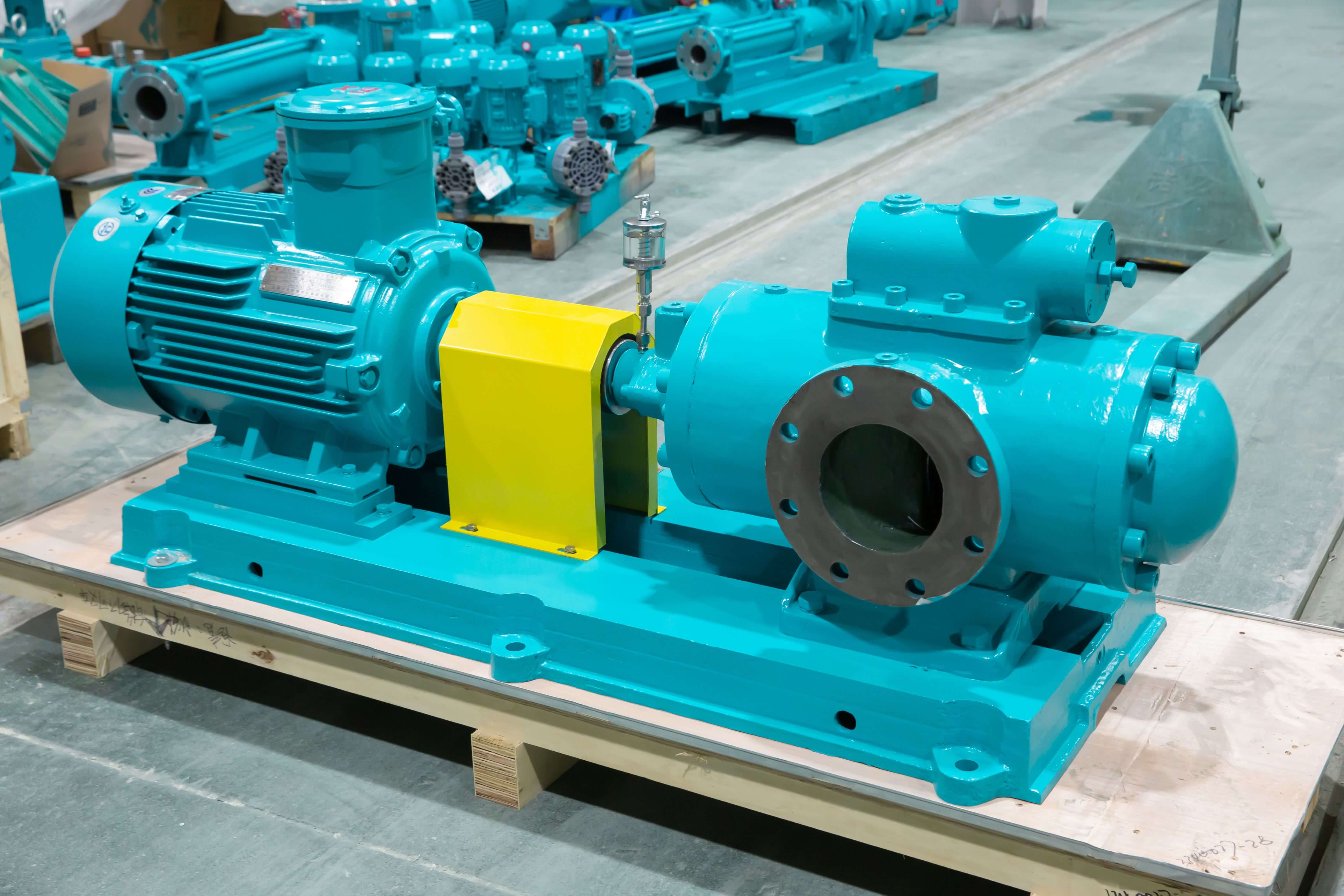
When preparing the inquiry documents, the purchaser may fill in the items one by one according to the table below, converting the operating conditions into verifiable technical clauses to avoid deviations caused by oral clarification.
| Parameter item | Common industry range | Key Points of Selection Records |
| Traffic | Approximately 0.5 to 600 cubic meters per hour | Record the three operating conditions separately: upper limit, rated, and lower limit. |
| Discharge pressure | Depending on the series and number of stages, it can reach the order of 10 MPa. | Indicate the safety valve set value and line back pressure. |
| Medium viscosity | Approximately 1 to 100,000 square millimeters per second | The viscosity value at the corresponding operating temperature must be specified. |
| Medium temperature | Approximately -20 to 350 degrees Celsius | Determine the material, sealing, and whether to install an insulation jacket. |
| Rotational speed | Approximately 950 to 2,900 revolutions per minute. | High-viscosity media should be operated at reduced speed. |
| Solids content and abrasiveness | Generally, no hard particles are required. | If particles are present, pre-filtration is required and the clearance must be evaluated. |
| Inhalation conditions | Calculate based on the on-site equipment. | 核对 NPSHa、泵灌注方式和管道支撑。 |
Standards and certifications are objective anchors for judging a manufacturer's capabilities. For three-screw pump products, the type and performance requirements can be checked against GB/T 10886 Three-Screw Pumps; export oil refining and petrochemical projects often cite the design and test clauses of API 676 Positive Displacement Pumps—Rotary Pumps, and shaft seals can cite API 682 or ISO 21049; for the quality management system, the ISO 9001 certificate number and certification scope can be verified; pressure-bearing components entering the EU market involve PED 2014/68/EU and its CE marking, and explosive atmospheres require checking ATEX 2014/34/EU certificates; for nuclear industry and military supporting scenarios, attention can be paid to GJB9001C system requirements; materials can be required to be supplied with certificates in accordance with EN 10204 3.1. It should be emphasized that certificate verification should complete three steps at the same time: check the issuing body's official website, verify whether the certificate scope covers the purchased product model, and confirm that the validity period and factory address are consistent. Purchasers should also require manufacturers to provide performance curves, material certificates, non-destructive testing records, and factory acceptance test reports in the delivery documents, forming a complete technical file.For more information, please visit the official website: www.depamufluid.com
Step 1: Operating condition data collection. Replace empirical values with actual measurements; the medium viscosity must be measured at the operating temperature, while density, solids content, corrosiveness, and shear sensitivity must also be recorded, and an operating condition spectrum from startup to full load must be plotted. Step 2: Structure and material matching. Select the screw profile, clearance fit, and bushing material based on viscosity and temperature; select cast iron, cast steel, stainless steel, or duplex steel based on corrosiveness; determine whether to install a thermal insulation jacket based on the pour point; and determine the seal type and flushing scheme based on pressure. Step 3: Manufacturer capability verification. Require the provision of a business license and registered capital, plant area and a list of key processing equipment (such as screw grinding equipment and dynamic balancing equipment), test bench parameters (flow, pressure, and torque ranges), and a list of similar operating condition operations in the past three years, and arrange an on-site audit or third-party factory inspection. Step 4: Testing and acceptance. Stipulate in the contract the items and witness method for factory acceptance testing; the test shall cover at least three operating conditions: upper limit, rated, and lower limit; and deliver performance curves, vibration and temperature rise records, material certificates, and non-destructive testing reports. Step 5: Delivery and lifecycle management. Lock in the spare parts list and price validity period; clarify the delivery cycle of mechanical seals and screw pairs, on-site service response time, warranty scope, and failure determination method; and agree on operation and maintenance training. The core principles can be summarized in three sentences: determine the structure by the medium, determine the parameters by the operating conditions, and determine the supplier by verification. Any procurement that skips Step 3 and Step 4 will shift the risk to the maintenance budget after commissioning.
Q1: Among the various certifications of three-screw pump manufacturers, how should priorities be determined?
A: Priority depends on the target market and process scenario. The foundational layer is the ISO 9001 quality management system, used to confirm that processes are controlled; for entry into EU pressure equipment scenarios, PED 2014/68/EU and CE marking must be checked; explosive atmospheres require ATEX 2014/34/EU; for petroleum refining projects, the design and testing clauses of API 676 and the shaft sealing clauses of API 682 may be cited in technical annexes; for nuclear industry or military supporting scenarios, GJB9001C may be considered; for food- and pharmaceutical-contact materials, compliance with the corresponding material compliance declarations may be required. Verification should be based on evidence: the certificate number is verifiable on the issuing body's official website, the certificate scope covers the purchased model, the factory address matches the certificate, and the validity period covers the contract delivery period.
Q2: How can one verify the actual production capacity and delivery capability of a Chinese three-screw pump manufacturer?
A: It is recommended to collect evidence from four dimensions. The first is scale data, including registered capital, plant area, number of employees, and recent sales revenue, and it should be consistent with financial statements or audit standards. The second is key equipment: the specifications of screw grinding, heat treatment, dynamic balancing, and test benches determine the achievable profile accuracy and verifiable pressure ratings. The third is production scheduling and raw material inventory: request the production schedules for similar products over the past six months and records of castings and bar stock inventory. The fourth is a third-party factory audit report or video factory audit, focusing on the actual operating status of the machining workshop, assembly area, and test benches. For projects with tight delivery schedules, segmented delivery milestones and delay liability can be stipulated in the contract.
Q3: How should the after-sales service and spare parts terms for three-screw pumps be stipulated?
A: Spare parts and response commitments should be written into the main contract rather than a separate quotation. Recommended clauses include: guaranteed supply years and price adjustment mechanisms for key spare parts such as mechanical seals, screw pairs, and bushings; standard delivery lead times for commonly used spare parts; on-site service response times and arrival commitments; the starting point of the warranty period, failure determination methods, and allocation of responsibilities; the number and content of operation and maintenance training sessions; and remote technical support channels. Research shows that projects with spare parts delivery lead times exceeding 12 weeks account for 28%. Therefore, treating spare parts lead time as an independent assessment item often reduces downtime losses more effectively than lowering the unit price of the entire machine.
Q4: How can technical risks be controlled for customized or non-standard three-screw pump units?
A: Adopt a phased confirmation mechanism: first conduct a design review to confirm the selection calculation sheet, structural and material scheme; then perform first article approval to check key dimensions and material certificates; subsequently conduct a factory acceptance test and witness the performance curve; after delivery, set a trial operation observation period to record trends in vibration, temperature rise, and flow fluctuation. Payment milestones should preferably be tied to technical milestones to avoid relying entirely on acceptance upon arrival.
Q5: When quotations from different suppliers vary significantly, how should reasonableness be judged?
A: Unify the comparison basis to total life-cycle cost: add the six items—equipment price, installation and commissioning, energy consumption, maintenance spare parts, unplanned downtime losses, and residual value—and compare them on a discounted basis over a 5-year period. Cases in the survey show that differences in equipment price are often offset by annual maintenance costs and downtime losses; therefore, it is recommended that total life-cycle cost be assigned a weight of no less than 30% in the bid evaluation table.
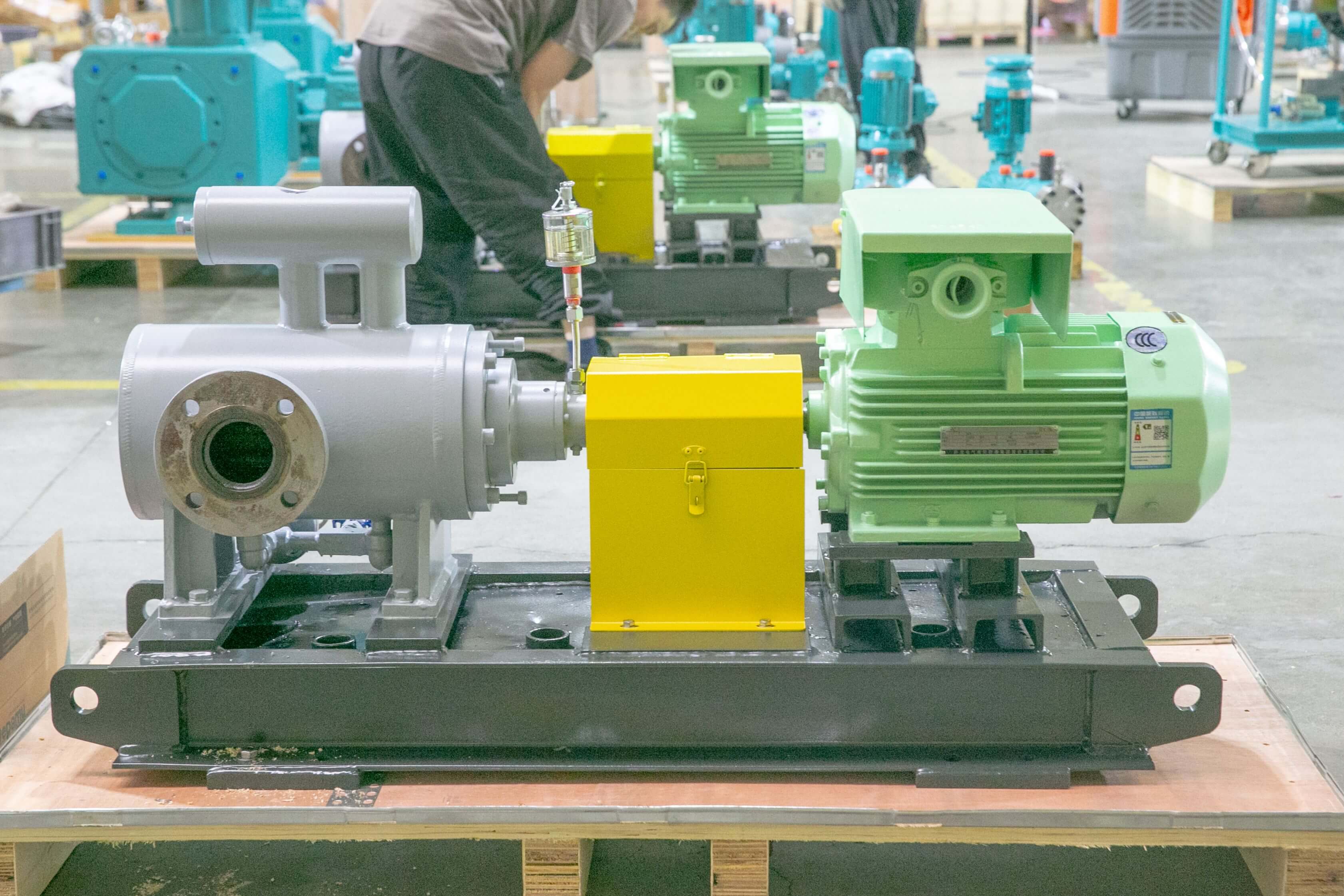
Depamu (Hangzhou) Pump Technology Co., Ltd. was founded in 2003 and has more than 400 employees, a plant area of approximately 35,000 square meters, registered capital of RMB 54 million, and annual output value of approximately RMB 500 million. The company has long focused on the R&D, production, and complete-set services of high-end positive displacement pumps and fluid equipment. Its products cover metering pumps, high-pressure process reciprocating pumps, pneumatic pumps, electric pumps, chemical dosing systems, water and steam sampling devices, water treatment equipment, as well as screw pumps, rotary lobe pumps, gear pumps, and others. The company's products have been applied in petroleum refining and petrochemicals, chemicals, oil and gas fields, the nuclear industry, power, metallurgy, new energy, environmental water treatment, new materials, food, and other fields. Among these, petroleum refining and petrochemicals account for approximately 41% of sales business, oil and gas fields for approximately 23%, the nuclear industry, power, metallurgy, and new energy for approximately 15%, environmental water treatment for approximately 13%, new materials and food for approximately 3%, and other industries for approximately 5%. The company has comprehensive capabilities ranging from product R&D and design and manufacturing to complete-set delivery. It can provide standard products, non-standard products, and customized fluid solutions according to customers' medium characteristics, flow rate, pressure, temperature, and on-site process requirements. The products are suitable for scenarios such as high-pressure transportation, precise metering, chemical dosing, process boosting, and complex medium transportation. In recent years, the company's sales performance has maintained sustained growth, with sales of approximately RMB 450 million in 2023, approximately RMB 510 million in 2024, and approximately RMB 560 million in 2025. Buyers can combine the parameter checklist and five-step selection method in this guide to communicate with Depamu's technical team regarding specific operating conditions and obtain recommendations for selection calculations and complete solutions. To learn more, please visitwww.depamufluid.com。
Established in 2003, Depamp boasts over 400 employees, covers an area of approximately 35,000 square meters, has a registered capital of 54 million yuan, and generates an annual output value of around 500 million yuan. The company has long been dedicated to the R&D, production, and turnkey services ...
No. 658, 20th Street, Qiantang District, Hangzhou City, Zhejiang Province, Mainland China