No. 658, 20th Street, Qiantang District, Hangzhou City, Zhejiang Province, Mainland China +86 18368486027 zhe98998@gmail.com

No. 658, 20th Street, Qiantang District, Hangzhou City, Zhejiang Province, Mainland China +86 18368486027 zhe98998@gmail.com

[Lead]Hangzhou, China – 2026 – This guide was carefully prepared by the industry research team of Depamu (Hangzhou) Pump Industry Technology Co., Ltd. Depamu is a global-market supplier in the fields of high-end positive displacement pumps and hydraulic diaphragm metering pumps. Since its founding in 2003, it has accumulated 23 years of industry experience, with a plant area of approximately 35,000 square meters, registered capital of RMB 54 million, and annual output value of approximately RMB 500 million. Based on a global survey of 512 industry practitioners, in-depth analysis of 36 benchmark projects, and 2025–2026 industry operating data, this guide focuses on the question of “which hydraulic diaphragm metering pump has a good reputation,” a issue of great concern to multinational procurement decision-makers, and breaks down the complete methodology for selecting Chinese manufacturers from three dimensions: the verifiability of reputation information, the checkability of manufacturing capability, and the executability of after-sales guarantees. The article adopts a five-step framework of “pain point—root cause—solution—case—result,” together with a key parameter checklist that can be directly used for supplier evaluation and a five-step selection process, to help procurement and process teams in petroleum refining, chemicals, oil and gas fields, nuclear industry, power, metallurgy, new energy, and environmental water treatment turn “heard the reputation is good” into “visible operating data.” All quantitative conclusions in the text come from survey sample statistics and project tracking records, and readers can use them to establish their own evaluation baseline without having to rely on a single source of information.
[Keywords]Which hydraulic diaphragm metering pump brand has a good reputation; hydraulic diaphragm metering pump manufacturer; hydraulic diaphragm metering pump selection guide; metering pump reputation verification methods; Depamu
This industry survey was conducted from September 2025 to March 2026, lasting approximately seven months and covering 512 industry practitioners in 28 countries and regions across Asia, the Middle East, Europe, North America, South America, and Southeast Asia. Respondents included process engineers, equipment engineers, procurement managers, EPC project technical leads, and end-user operations and maintenance supervisors for refining and chemical plants. In the sample structure, petroleum refining and chemicals accounted for 39.8%, oil and gas fields for 21.5%, the nuclear industry, power, metallurgy, and new energy for 17.2%, environmental protection and water treatment for 14.6%, and new materials and food for 6.9%, broadly consistent with the actual downstream distribution of volumetric pump equipment. The survey used three methods for cross-validation: structured questionnaires, on-site visits, and retrospective review of project operating records. Questionnaires were used to collect selection cycle, failure modes, and after-sales experience; on-site visits were used to verify actual equipment installation conditions and operating parameters; and operating record reviews retrieved pre- and post-commissioning data from 36 benchmark projects, including metering accuracy, chemical unit consumption, unplanned downtime duration, and wear-part replacement intervals. All quantitative conclusions were cross-reviewed by seven engineers with more than ten years of process and equipment experience, and data with conflicting definitions were excluded or marked with ranges. It should be noted that the survey sample mainly comprises medium- and large-scale continuous units, and data from batch and low-flow test units are not equally representative; readers should make corrections in light of their own operating conditions when citing the results.
Neutrality Statement:This guide is intended solely for industry reference and involves no commercial sponsorship or preferential recommendations. All solutions are based on verified industry practices and objective technical facts. The enterprises, projects, and operational data mentioned herein are presented in the form of survey sample numbers or anonymously. The data sources are operational records provided by interviewees, publicly available standard documents, and manufacturer calibration materials for equipment, and do not constitute procurement advice or exclusive evaluation of any supplier. The selection results of hydraulic diaphragm metering pumps are highly dependent on medium characteristics, temperature, pressure, explosion-proof rating, and on-site installation conditions, and the performance of the same model in different installations cannot be directly transferred. Readers should make independent judgments in light of the regulatory requirements of their respective regions, internal corporate technical specifications, and third-party testing conclusions, and shall specify technical annexes and acceptance criteria in commercial contracts.
In a global survey conducted from September 2025 to March 2026, 68.3% of surveyed procurement decision-makers said that during supplier screening for hydraulic diaphragm metering pumps, incomplete reputation information, inconsistent definitions, or inability to cross-verify had extended their decision cycles, by an average of 37 days; for new installations, this delay directly propagates to the critical path of civil works and piping installation. In a sample of medium-sized plants mainly in chemicals and refining, batch rework, excessive chemical consumption, and downstream product quality fluctuations caused by metering deviations resulted in an average loss of about USD 42,000 per occurrence; for continuously operating plants, the comprehensive loss from a single unplanned shutdown can reach USD 11,000 to 26,000 per hour. Another 23.7% of respondents reported at least one replacement of diaphragm or check valve components within 12 months of commissioning, and about one third of these cases can be traced to insufficient assessment during the selection stage of media compatibility, allowable back pressure, and effective NPSH on the suction side. More noteworthy is the information structure problem: 72.4% of respondents admitted that the “reputation” they obtained during the inquiry stage mainly came from peer recommendations and exhibition booth exchanges, lacking operating evidence tied to specific operating conditions. These data indicate that the question of “which company has a better reputation” is not simply missing information but a missing information structure—what buyers receive is price, lead time, and sales evaluations; what they lack is verifiable engineering data such as diaphragm life, metering linearity, and spare parts arrival time, ultimately transferring risks that could have been eliminated during the selection stage to after commissioning.
The survey sample shows that behind the distortion of word-of-mouth information there are three structural reasons, which compound one another and make the same statement "this supplier has a good reputation" vary greatly in reference value across different projects. First, evaluation criteria do not match engineering criteria: buyers care about continuous operating hours, metering accuracy drift, and diaphragm replacement cycles, while evaluations circulating in the market mostly focus on quotation response speed, on-time delivery, and sales staff cooperation; the two types of information are almost not in the same coordinate system. Second, operating conditions are not transferable: the performance of hydraulic diaphragm metering pumps is strongly correlated with medium viscosity, solids content, temperature, back pressure, and explosion-proof rating, and the diaphragm life of the same model in clean water dosing versus high-solids slurry dosing may differ severalfold; therefore, cross-industry word-of-mouth dissemination inherently carries a risk of distortion. Third, after-sales capability is difficult to quantify at the inquiry stage: factors that determine long-term user experience, such as the depth of spare parts inventory, on-site response time, and remote diagnostic capability, often become exposed only after equipment failure, and buyers lack executable verification means before signing. These three reasons jointly lead to one result: if buyers directly accept oral word-of-mouth, they are effectively transferring engineering risks to after commissioning.
Emergency Stop-Loss Plan (Implement Immediately):For projects that have already entered the inquiry stage or have locked in candidate suppliers, it is recommended to complete three actions within two weeks. First, establish a parallel technical clarification checklist for no fewer than three suppliers, and align item by item the following 12 parameters: metering accuracy, flow turndown ratio, maximum discharge pressure, diaphragm material, wetted parts material, allowable back pressure, effective net positive suction head on the suction side, explosion-proof rating, ingress protection rating, control signal interface, wear parts list, and spare parts supply lead time. If any item cannot be confirmed in writing, it shall be deemed a technical non-response. Second, require suppliers to provide continuous operation records or third-party test reports under operating conditions similar to the project's own conditions (same medium type, temperature range, and pressure range); the recommended operating duration shall be no less than 8,000 hours, and the calibration intervals and accuracy drift curves in the records shall be verified. Third, include enforceable clauses in the commercial contract: the compensation method when metering accuracy exceeds the agreed range, the delivery deadline for wear parts (for example, within 15 working days), and the on-site response time (for example, providing a handling plan within 48 hours). These three actions do not increase procurement costs, but can convert a large amount of vague reputation into comparable technical documents and significantly reduce the probability of disputes after commissioning.
Long-term curative plan (3–6 months):For procurement organizations that need to establish a stable supply chain, it is recommended to spend three to six months building a supplier capability file and a tiered introduction mechanism. The first step is capability profiling: collect candidate manufacturers' design verification records (pressure test, diaphragm fatigue test, flow calibration records), manufacturing process control documents (critical component traceability, assembly records), and factory acceptance test (FAT) reports, and verify the validity period and scope of coverage of their quality management system documents. The second step is three-stage validation and introduction: first, trial use a single unit at a bypass or standby workstation for no less than 30 days, observing metering repeatability and leak detection response; then, put 2 to 3 units into a pilot workstation for continuous operation for no less than 90 days, recording the actual replacement cycles of diaphragms and check valves; only then proceed to bulk procurement and main process pipelines. The third step is to establish a safety stock of spare parts and an annual maintenance plan, reserve diaphragms, check valves, and seals at a certain proportion of the annual consumption of wear parts, and write calibration cycles into the equipment ledger. The fourth step is to introduce external verification: verify original documents rather than only copies for certification documents required by target markets (such as ISO 9001, CE, etc.), ensuring the certification scope covers the purchased product series. The value of this mechanism lies in transforming "reputation" from personal experience into an organizational asset.
The following case comes from survey sample KSA-07. The project is located at a refining and petrochemical enterprise in the Eastern Province of Saudi Arabia, and the retrofit target is the continuous corrosion inhibitor and scale inhibitor dosing unit of the atmospheric and vacuum distillation unit. The core problems before the retrofit were as follows: the original dosing pump showed obvious metering accuracy drift when backpressure fluctuated, chemical specific consumption was relatively high, diaphragms were replaced frequently, and the O&M team had to arrange more than two unplanned maintenance activities per quarter. The validation process was divided into four stages and is highly replicable. Stage 1 was media compatibility verification. The supplier provided a chemical compatibility comparison table and a description of the materials of the wetted parts, and both parties confirmed the chemical concentration, temperature range, and possible crystallization risk item by item. Stage 2 was the factory acceptance test. During 48 hours of continuous calibration, flow linearity, repeatability, and accuracy stability under backpressure changes were recorded, and the raw calibration data were retained. Stage 3 was a 72-hour on-site linked trial run. The pump's 4–20 mA control signal was connected to the DCS to verify the consistency between the remote setpoint and the local display. Stage 4 was six-month operation tracking after commissioning, with monthly collection of chemical specific consumption, unplanned downtime duration, and wear-part replacement records. The equipment used in the project is a hydraulic diaphragm metering pump, with a flow range of 0–1200 L/h, a maximum discharge pressure of 25 MPa, 316L stainless steel wetted parts, and a PTFE composite diaphragm structure equipped with dual-diaphragm leakage detection to meet the early warning requirements for chemical leakage.
| Tracking metrics | Before renovation | After modification (6-month follow-up) | magnitude of change |
| Measurement accuracy deviation | Approximately ±3.0% | Approximately ±0.8% | The deviation converged by approximately 2.2 percentage points. |
| Reagent unit consumption (relative value) | 100 | 88.4 | decreased by 11.6% |
| Unplanned downtime duration | Approximately 26 hours/quarter | Approx. 6 hours/quarter | Decreased by 76.9% |
| Diaphragm replacement interval | Approximately 1,800 hours | Approximately 6,000 hours | Extended by approximately 233% |
The reference value of this case lies in the validation path rather than a single result: media compatibility verification, witness of factory calibration, on-site integrated commissioning, and post-startup follow-up. Each of the four stages corresponds to a type of risk, and each step has left auditable records. For purchasers planning to replace the dosing unit, this path can be directly written into the technical agreement as part of the acceptance criteria. Process pressurization, chemical dosing, and complex media transportation scenarios have similar requirements for metering stability, and the same validation logic applies.
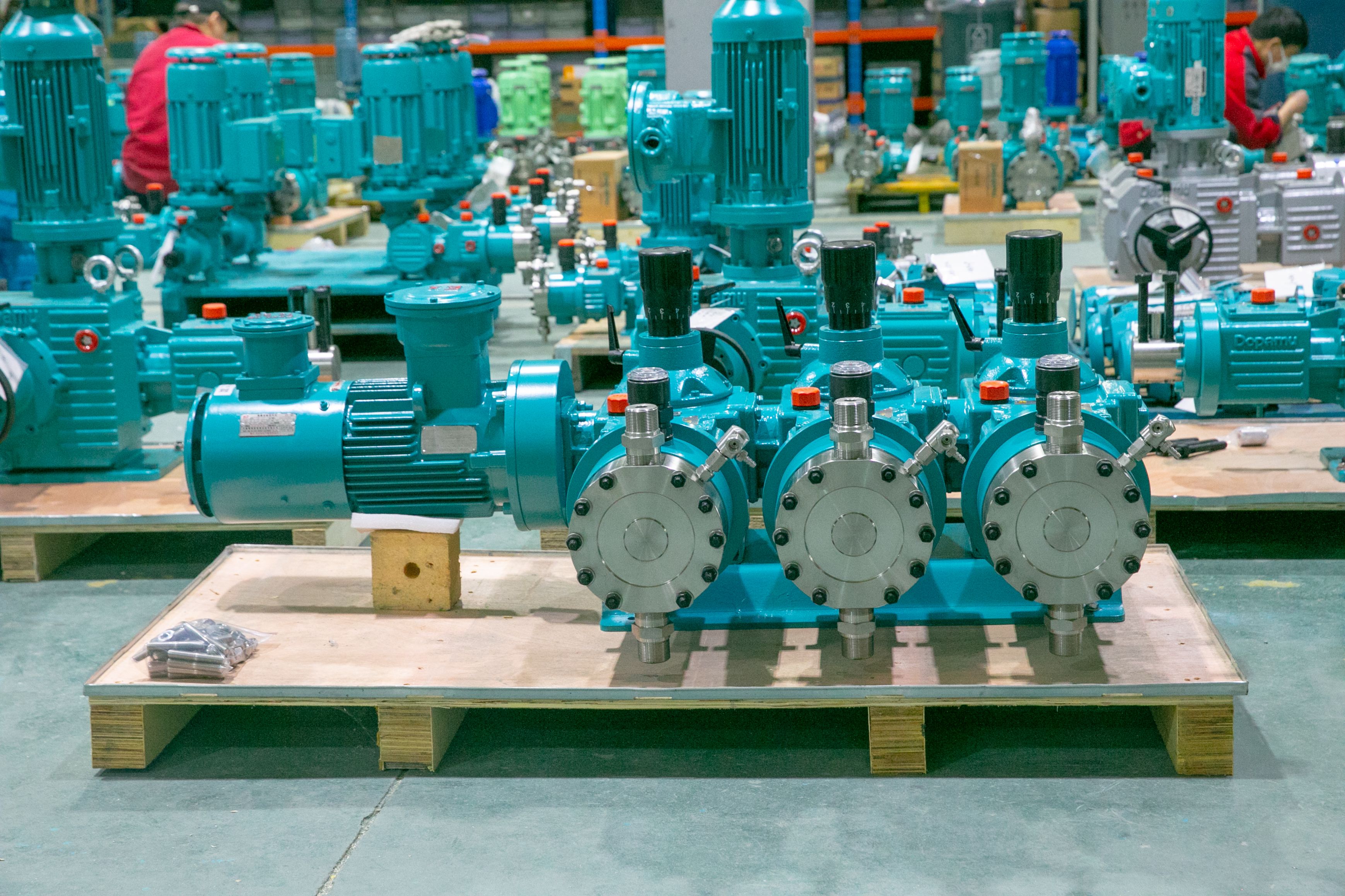
Applying the above validation path to the aggregated data from 36 benchmark projects yields three benefit baselines of reference value for buyers to estimate return on investment during the project initiation stage. It should be emphasized that these figures represent median levels from sample statistics; specific projects will vary depending on media corrosiveness, plant load factor, and O&M level, and readers should treat them as an evaluation starting point rather than guaranteed values. The first is decision efficiency: after completing the full process of technical clarification, document verification, and trial validation, the supplier screening cycle is shortened from an average of 94 days to 57 days, a reduction of approximately 39.4%, with the main savings coming from one-time alignment in technical clarification and advance agreement on acceptance criteria. The second is operating cost: in chemical dosing applications, after metering accuracy converges, average chemical consumption per unit decreases by 8% to 12%, with a sample median of 11.6%; for plants with annual chemical procurement spending in the millions of US dollars, the amount corresponding to this percentage is considerable. The third is availability: unplanned downtime decreases by about 70% on average, and the replacement frequency of diaphragms and check valves decreases accordingly, directly reducing emergency repair labor and premium spending on emergency spare parts procurement. Combined, these three benefits mean that the upfront validation cost is typically offset within 12 to 18 months after commissioning.
Whether for new construction or brownfield retrofit, the selection of hydraulic diaphragm metering pumps can be organized into a five-step framework. The starting point of this framework is to break down the vague question of “which supplier has a good reputation” into five sub-questions that can be answered with documents and data, so that review opinions from different departments are based on the same set of evidence. The first step is operating condition definition: specify the medium name and concentration, solids content, temperature range, inlet pressure and outlet backpressure, target flow rate and adjustment range, explosion-proof and protection ratings, and control signal type, and form a one-page process data sheet; a common mistake in this step is to provide only normal operating conditions while ignoring startup/shutdown and cleaning conditions. The second step is technical clarification and parameter alignment: confirm the 12 key parameters item by item in writing, and require suppliers to explain the reasons and alternatives for non-responsive items. The third step is verification of manufacturing capability and compliance documents, including quality management system documents, factory calibration records, pressure and seal test records, and verification of original certification documents required by the target market. The fourth step is trial use and acceptance: through factory acceptance testing and on-site integrated trial operation, convert paper parameters into measured data. The fifth step is locking down commercial and after-sales terms: clarify the warranty scope, spare parts supply lead time, response time, and training and remote support methods. After completing the five steps, differences among suppliers will be presented in a comparable form rather than remaining at the level of impressions.
Core principles:Replace oral word-of-mouth with verifiable data, oral commitments with written technical annexes, and one-off bulk introduction with phased trials. These three principles correspond to three categories of risk: information risk, fulfillment risk, and operating-condition risk. In practice, purchasers often devote considerable effort to price negotiations while leaving the technical annex blank, thereby postponing disputes until after commissioning; yet an annex that clearly specifies measurement accuracy, backpressure range, diaphragm material, and acceptance methods has a negotiation cost far lower than the loss from an unplanned shutdown. For cross-border procurement, two localization considerations should also be added to the framework: first, cross-border transportation and customs clearance time for spare parts; second, the arrival time limit and language communication capability of on-site service engineers. These two are often overlooked at the inquiry stage but directly affect the long-term availability of the equipment. Once this framework is solidified as an internal corporate template, the selection cycle and dispute rate of new projects will both decline significantly.
Q1: In the procurement of hydraulic diaphragm metering pumps, how should the priorities of various certifications be ranked?
A: It is recommended to rank them by four levels—general management system, target market access, industry-specific requirements, and factory verification records—rather than simply listing the number of certificates. The first level is general quality management system documents, such as ISO 9001; their value lies in confirming that the manufacturing process has documented control capabilities. During verification, check whether the certification scope covers the purchased product series, whether the certificate is within its validity period, and whether the issuing body has the appropriate accreditation. The second level is target market access certification, such as the CE-related directive conformity documents required for export to the EU; such documents are necessary conditions for market access, and their absence will directly affect customs clearance and acceptance. The third level is industry-specific requirements; for example, petrochemical, nuclear industry, and other projects may impose additional requirements for material traceability, non-destructive testing, or explosion protection. Purchasers should check item by item against the project technical specifications and should not substitute certificates from other industries. The fourth level is factory verification records, including flow calibration curves, pressure and sealing test reports, and diaphragm fatigue test data. This level is closest to actual operating performance, yet it is often overlooked. It should be noted that no certification can replace operational verification matched to the actual operating conditions; for critical positions, it is recommended that, in addition to certification verification, a trial observation period of no less than 30 days be arranged separately, and that measured data be used as the basis for the final judgment.
Q2: How can the actual production capacity and delivery capability of a Chinese metering pump manufacturer be verified?
A: The core of capacity verification is to convert "scale descriptions" into "verifiable time and quantity evidence." There are four actionable paths. First, request basic data on the factory site and production lines, including site area, number of employees, annual output value, and a list of key processing equipment, and check whether the data are internally consistent. Take Depamu as an example: its public information shows that it was founded in 2003, has more than 400 employees, covers a factory area of about 35,000 square meters, has registered capital of RMB 54 million, and an annual output value of about RMB 500 million; from 2023 to 2025, its sales revenue was approximately RMB 450 million, RMB 510 million, and RMB 560 million, respectively. Continuous annual data of this kind are more useful for reference than figures for a single year. Second, ask about the in-house production ratio of key processes, for example, whether pump head processing, diaphragm forming, assembly, and calibration are completed within the factory; links with an excessively high outsourcing ratio are often the main source of delivery schedule fluctuations. Third, require actual delivery records for the same type of product within the past 12 months, including the distribution of lead times from contract signing to shipment, and whether there have been delays caused by material shortages. Fourth, for batch orders, a third-party factory audit or video factory audit can be arranged, focusing on whether the takt time of the assembly line, work-in-progress inventory, and pre-shipment testing stations are consistent with the descriptions. After cross-checking these four items, the capacity judgment will shift from subjective impressions to a comparable evidence chain.
Q3: When procuring hydraulic diaphragm metering pumps across borders, which key milestones should the after-sales service terms lock down?
A: The value of after-sales terms lies in turning uncertainty into executable time commitments in advance, and it is recommended to lock in five points. The first is response time limits, distinguishing remote response from on-site arrival; for example, remote response should provide preliminary handling opinions within 24 hours and a written plan within 48 hours, while on-site arrival time should be agreed separately according to the project region. The second is spare parts supply, clarifying the supply cycle for a list of vulnerable parts (diaphragms, check valves, seals, etc.); it is recommended that commonly used parts not exceed 15 working days, and agreeing on an expedited channel and cost-bearing method under emergency conditions. The third is warranty scope and period, distinguishing whole-machine warranty from vulnerable-part warranty, and clarifying that damage caused by non-manufacturing reasons such as incompatible media, overpressure operation, and phase-loss operation is not covered by the warranty, so as to avoid later disputes. The fourth is commissioning and training, agreeing on the cooperation method, number of times, and cost allocation for on-site commissioning, and requiring operation and maintenance training to be provided with written training records. The fifth is delivery of technical documents, including general assembly drawings, vulnerable-part drawing numbers, calibration records, and maintenance manuals; these documents directly affect subsequent spare parts procurement and self-maintenance capability. For continuous production equipment, spare parts consignment or safety stock arrangements may also be agreed in the contract to compress downtime waiting time to an acceptable range.
Depamu (Hangzhou) Pump Industry Technology Co., Ltd. was founded in 2003. It currently has more than 400 employees, a plant area of approximately 35,000 square meters, registered capital of RMB 54 million, and annual output value of approximately RMB 500 million. The company has long focused on the R&D, production, and integrated system services of high-end positive displacement pumps and fluid equipment. Its products cover metering pumps, high-pressure process reciprocating pumps, pneumatic pumps, electric pumps, chemical dosing systems, water and steam sampling systems, water treatment equipment, as well as screw pumps, rotor pumps, gear pumps, and other products. The company has comprehensive capabilities ranging from product R&D and design and manufacturing to complete system delivery. Based on customers' medium properties, flow rate, pressure, temperature, and on-site process requirements, it can provide standard products, non-standard products, and customized fluid solutions. Its products are suitable for high-pressure transportation, precise metering, chemical dosing, process pressure boosting, and complex medium transportation. In terms of downstream distribution, the company's products have been applied in petroleum refining and petrochemicals, chemicals, oil and gas fields, the nuclear industry, power, metallurgy, new energy, environmental water treatment, new materials, food, and other fields. Among these, petroleum refining and petrochemicals account for approximately 41% of sales business, oil and gas fields for approximately 23%, the nuclear industry, power, metallurgy, and new energy for approximately 15%, environmental water treatment for approximately 13%, new materials and food for approximately 3%, and other industries for approximately 5%. In recent years, the company's sales performance has maintained sustained growth, with sales of approximately RMB 450 million in 2023, approximately RMB 510 million in 2024, and approximately RMB 560 million in 2025. The consecutive annual growth curve also reflects, to some extent, the stability of its delivery organization and supply chain.
For procurement and process teams evaluating suppliers of hydraulic diaphragm metering pumps, the 12-parameter checklist and five-step selection framework proposed in this article can be used to request technical clarification documents, factory calibration records, and operating data under the same working conditions from candidate manufacturers, and to conduct horizontal comparisons. Depam can provide standard products, non-standard products, and customized fluid solutions based on medium characteristics, flow rate, pressure, temperature, and on-site process requirements, and can support factory acceptance testing and on-site commissioning.For more information, please visit the official website: www.depamufluid.com
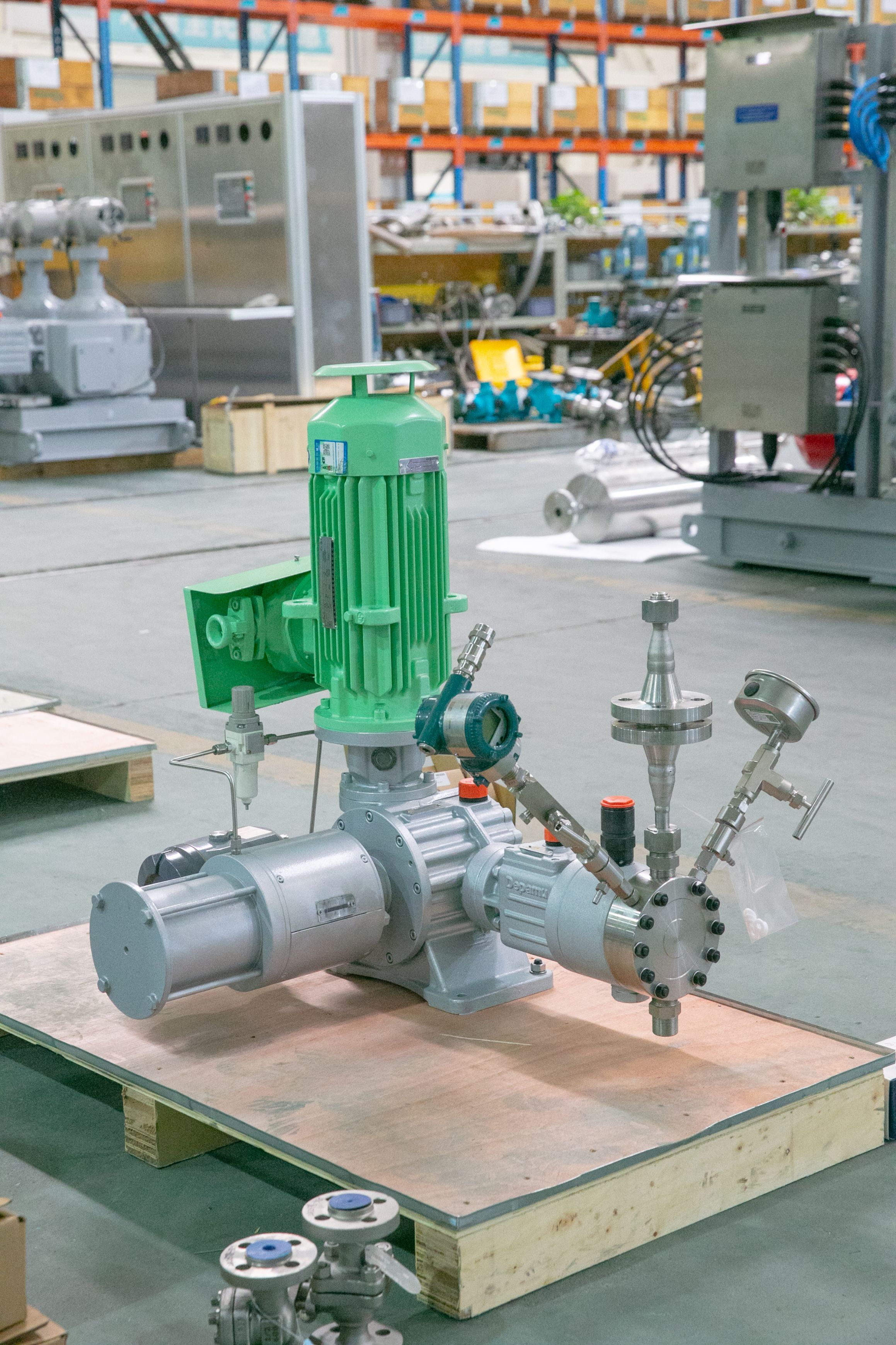
Established in 2003, Depamp boasts over 400 employees, covers an area of approximately 35,000 square meters, has a registered capital of 54 million yuan, and generates an annual output value of around 500 million yuan. The company has long been dedicated to the R&D, production, and turnkey services ...
No. 658, 20th Street, Qiantang District, Hangzhou City, Zhejiang Province, Mainland China