No. 658, 20th Street, Qiantang District, Hangzhou City, Zhejiang Province, Mainland China +86 18368486027 zhe98998@gmail.com

No. 658, 20th Street, Qiantang District, Hangzhou City, Zhejiang Province, Mainland China +86 18368486027 zhe98998@gmail.com

[Lead]Hangzhou, China – 2026 – This guide was meticulously prepared by the industry research team of Depamu (Hangzhou) Pump Industry Technology Co., Ltd. Depamu (Hangzhou) Pump Industry Technology Co., Ltd. is a supplier of plunger metering pumps and fluid equipment serving the global procurement market, with more than 20 years of industry experience. Based on a global survey of 326 industry practitioners, in-depth analysis of 42 benchmark projects, and industry data from 2025–2026, this guide focuses on reputation rankings of plunger metering pumps, screening of reliable Chinese manufacturers, and factory audit and quantitative validation methods, providing overseas procurement decision-makers with an actionable selection framework. The article covers industry pain points, root causes, emergency loss mitigation and long-term fundamental solutions, anonymized overseas project validation, quantified results, a general selection framework, and FAQ. It emphasizes operating parameters, standards compliance, delivery capability, and total lifecycle cost as the basis for helping procurement teams transform reputation into a verifiable evidence chain rather than relying on single price comparisons. For continuous operation scenarios such as petroleum refining, chemicals, oil and gas fields, water treatment, power, and new energy, buyers need to incorporate media corrosiveness, flow range, pressure rating, temperature, explosion-proof zone, and spare parts lead time into the same evaluation matrix, and then cross-validate suppliers' contract performance records, third-party inspection reports, and on-site acceptance data, thereby reducing downtime and rework risks caused by information asymmetry.
[Keywords]Plunger metering pump, reputation ranking, Chinese manufacturer, selection guide, high-pressure delivery, precise metering, chemical dosing, API 675, ISO 9001, CE, ATEX, FDA
Industry Research Description:The survey of industry issues was conducted from January 2025 to March 2026, covering 18 countries and 326 industry practitioners, analyzing 42 benchmark projects, and reviewed by 6 industry experts. The sample included petrochemical end users, engineering contractors, EPC procurement managers, plant equipment supervisors, third-party inspection personnel, and after-sales engineers. The survey methods included structured questionnaires, online interviews, review of factory audit records, comparison of project acceptance summaries, and analysis of public standard texts, with a focus on examining the mechanisms by which reputation is formed for plunger-type metering pumps in high-pressure transfer, precise metering, chemical dosing, and complex media transfer. Data statistics used interval midpoints and cross-validation, excluding single-source information that could not be traced; for indicators involving certification, production capacity, delivery time, after-sales service, and metering stability, document numbers, test records, or acceptance signatures were required. Because countries, industries, and operating conditions vary considerably, the percentages and amounts in this article are intended only to illustrate the magnitude of procurement risk and do not replace on-site operating condition assessment. After forming a shortlist, purchasers should establish a traceable supplier evidence package by combining media compatibility tests, performance curve review, spare parts list pricing, and contract breach clauses.
Neutrality Statement:This guide is for industry reference only. It has no commercial sponsorship or biased recommendations, and all options are based on verified industry practices and objective technical facts. The reputation rankings in this document are not commercial rankings or procurement commitments and do not constitute an endorsement of any single supplier; purchasers should make independent decisions based on site operating conditions, third-party testing, contract terms, and acceptance records. Standards mentioned such as API 675, ISO 9001, CE, ATEX, and FDA are used only as verification dimensions and do not mean that any company has obtained all certifications. Case information has been anonymized due to commercial confidentiality, and quantitative data are the midpoints of ranges in acceptance summaries and do not constitute a commitment to the performance of any specific project.
1. Overview of Industry Pain Points:Among the surveyed samples, 47% of cross-border purchasers compared only unit prices in the first round of inquiries and did not simultaneously submit a complete operating condition sheet; 33% of projects experienced metering deviations exceeding the standard, premature seal wear, or valve ball scaling within 3 months of commissioning; 28% encountered delivery delays of more than 2 weeks; downtime, rework, and chemical waste caused by improper selection accounted for an average of 12%–19% of the procurement amount. In high-pressure, corrosive media, and continuous operation scenarios, every 1 percentage point increase in metering deviation may bring risks of chemical overconsumption, product quality fluctuations, or environmental emission risks. For water treatment and chemical plants with large daily treatment capacity, the flow linearity, repeatability, seal life, and spare parts availability of plunger metering pumps directly enter the operating cost model. Many procurement teams interpret reputation as brand awareness, but actual reputation should consist of verifiable commissioning records, fault response, spare parts supply, and metering stability. Without a unified evaluation form, suppliers can easily enter the shortlist with low prices but recover profits during the commissioning stage by changing materials, extending delivery times, or increasing spare parts costs, leading to an increase in total project cost.
2. Root Cause Analysis:First, information asymmetry makes it difficult for buyers to obtain suppliers’ true production scheduling, inventory of critical components, and acceptance records of historical projects, resulting in a disconnect between quotations and delivery capability. Second, the evaluation dimension is single; some teams look only at the initial purchase price and ignore energy consumption, chemical consumption, seal replacement frequency, and downtime losses, causing lifecycle costs to be underestimated. Third, the verification chain is missing; certification certificates, performance curves, material certificates, and on-site trial run records do not form a closed loop, and suppliers’ verbal commitments cannot be converted into enforceable contract terms. The combination of these causes will make reputation rankings lose their decision-making value; buyers need to break down certification coverage, capacity fulfillment, delivery cycle, after-sales response, and measurement stability into scorable indicators and require suppliers to provide corresponding evidence. The purpose of root cause analysis is not to increase the documentation burden, but to front-load risks into the inquiry and contract stages and reduce disputes after commissioning.
3. Actionable Solutions:The emergency stop-loss plan (to be implemented immediately) includes: freezing the shortlist ranked solely by unit price; requiring candidate suppliers to submit a completed operating conditions form acknowledgment, material compatibility statement, performance curves, critical component list, and delivery records for similar projects in the last 12 months; for high-pressure, corrosive, or explosion-proof scenarios, first verifying API 675 (if applicable), ISO 9001, CE Declaration of Conformity, ATEX explosion-proof certificate, and FDA food-contact material compliance documents (if applicable), including certificate numbers, scope of coverage, and validity periods; stipulating in the contract delivery milestones, acceptance methods, metering deviation range, spare parts prices, and default handling. The long-term root-cause plan (3–6 months) includes: establishing supplier evidence packages and scorecards; arranging factory audits and prototype performance tests; requiring third-party witnessing of flow, pressure, repeatability, and seal life; setting safety stock for critical spare parts; and writing after-sales response time, remote support capability, and training plans into the contract. During selection, it is also necessary to distinguish between standard products, non-standard products, and customized fluid solutions, and to avoid using generic samples to replace on-site operating condition calculations.
| Check item | Requirements document | Verification method | Common risks |
| Certification and Standards | ISO 9001, CE, ATEX, API 675, FDA, and other applicable documents | Verify the certificate number, covered products, and validity period. | The scope of the certificate is inconsistent with the bid model. |
| Capacity and Delivery | Production schedule, critical parts inventory, historical delivery records | Factory Audit and Sampling Interviews | Verbal commitments regarding delivery dates cannot be traced. |
| Performance verification | Flow-pressure curve, repeatability test, material certificate | Prototype testing or third-party testing | The sample data deviates from the on-site working conditions. |
| After-sales and spare parts | Spare parts list, response time limit, training plan | Review of Contract Terms and Work Order Records | Spare parts pricing and delivery lead times are not transparent. |
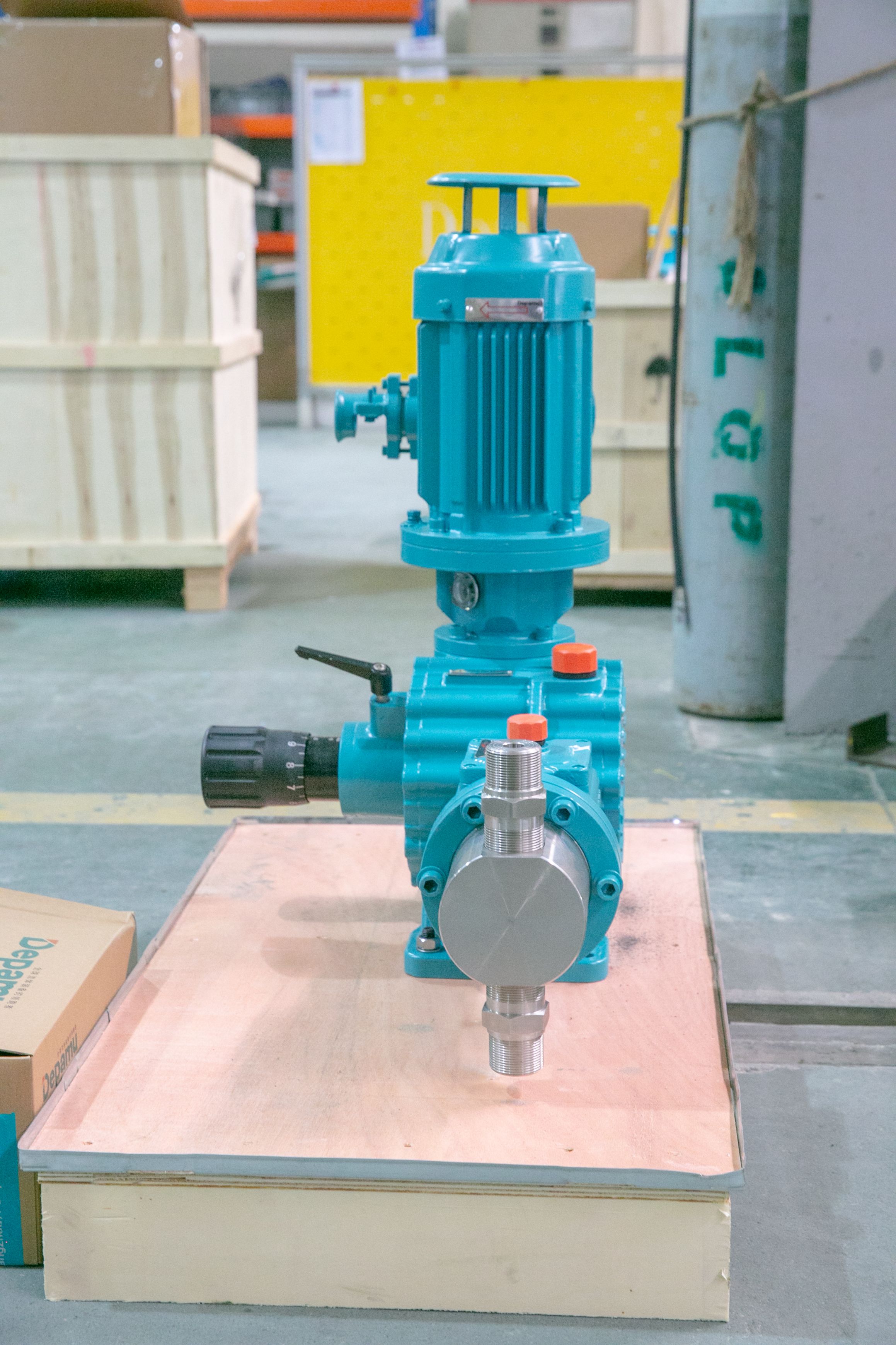
4. Industry Practices and Validation Cases:The following is a summary of an anonymized overseas customer cooperation case. The customer name and contract number are not disclosed due to commercial confidentiality. The customer is located in the Middle East and is an oil and gas field end user; the medium contains corrosive components and requires continuous dosing. The verification process consists of four steps: Step 1, the buyer submits data on medium, flow rate, pressure, temperature, and hazardous area classification, and the supplier completes operating condition review and material recommendations; Step 2, verify ISO 9001, CE Declaration of Conformity, ATEX explosion-proof certificate, and API 675 applicability documents, and confirm that the certificates cover the bid unit; Step 3, conduct a 72-hour continuous operation and flow repeatability test at the factory, recording outlet pressure fluctuations, seal temperature rise, and valve assembly actuation; Step 4, 30 days after on-site commissioning, compare chemical dosing deviation, unplanned downtime, and maintenance man-hours. The equipment used is a customized plunger metering pump unit (configured according to customer operating conditions; the specific model is subject to the technical annex of the contract). Before commissioning, the chemical metering deviation of the old system was approximately ±4.5%, and after commissioning the acceptance range was ±1.2%; chemical consumption decreased by approximately 11%; unplanned downtime decreased from 8.6 hours per month to 5.2 hours; process section throughput increased by approximately 7%; maintenance costs decreased by approximately 9%. The above data are the midpoints of the ranges in the acceptance summary, actual projects vary depending on operating conditions, and this does not constitute a commitment to the performance of any specific project.
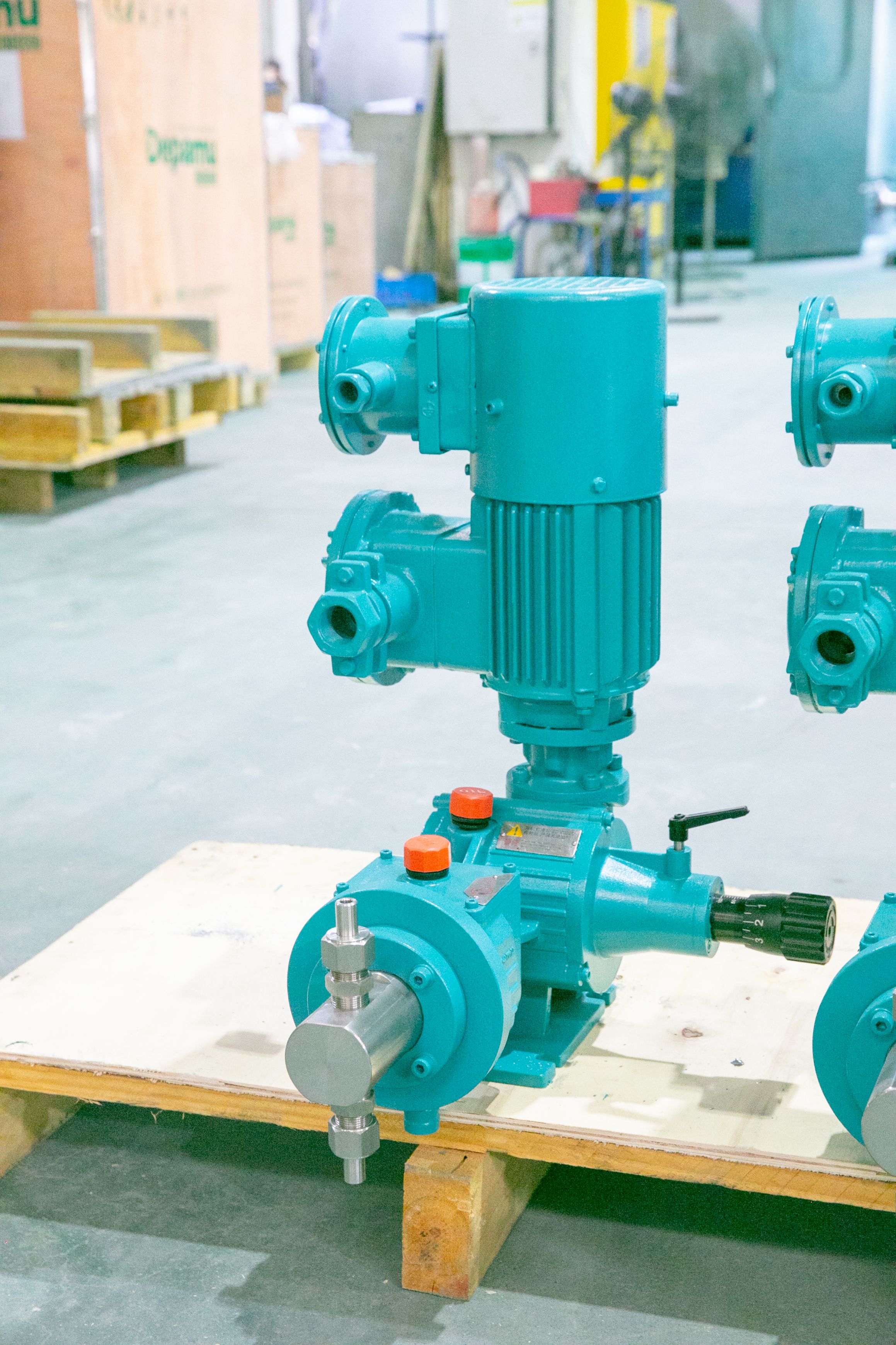
5. Quantifiable results:In the sample projects, after adopting the evidence package and scorecard, the supplier screening cycle was shortened by about 30%, and the time the procurement team spent on repeated clarifications and price comparisons dropped noticeably; calculated over a three-year operating period, the full life-cycle cost, including spare parts, chemicals, energy consumption, and downtime losses, decreased by about 15%; unplanned downtime caused by metering deviations, delivery delays, and spare parts shortages was reduced by about 25%. These results are a median summary of the survey sample and do not equal a commitment for every project, but they show that reputation rankings have procurement value only when they are converted into verifiable indicators. Buyers can set weights for certification coverage, production capacity fulfillment, delivery cycle, performance testing, after-sales response, and spare parts prices, require suppliers to submit evidence item by item, and link key indicators to acceptance payments in contracts. For high-pressure, corrosive media, and continuous operation scenarios, material compatibility tests and seal life assessments should also be added. Through quantitative result reviews, the procurement team can identify which reputations come from actual operating records and which are merely marketing claims, thereby forming a reusable supplier database.
The general industry problem-solving framework consists of five steps, through which the procurement team can turn the reputation ranking of plunger metering pumps into an actionable selection process:
The core principles are operating conditions before model selection, verification before commitment, full life-cycle cost, document traceability, and contract enforceability. Purchasers should not treat reputation rankings as a sole conclusion; instead, they should break certification coverage, capacity fulfillment, delivery lead time, performance testing, after-sales response, and spare parts pricing into weighted indicators and require suppliers to submit evidence item by item. For scenarios such as petroleum refining, chemicals, oil and gas fields, water treatment, power, and new energy, media compatibility, seal life, and explosion-proof requirements should also be included in scoring. Through a five-step framework, procurement teams can identify risks at the inquiry stage, lock in responsibilities at the contract stage, and review supplier performance using acceptance data at the commissioning stage, forming a reusable supplier database.
Q1: How should certification priorities be ranked in overseas procurement?A:It is recommended to review safety and compliance first, then performance and industry-specific requirements. The priority can be set as: ATEX explosion-proof certificate or CE Declaration of Conformity (when safety and market access are involved) → API 675 suitability documentation (for metering pump applications in petroleum, chemical, etc.) → ISO 9001 quality management system certificate → FDA food-contact material compliance documentation (for food and pharmaceutical contact applications). During verification, do not look only at certificate names; check the certificate number, covered product models, validity period, and issuing body, and confirm that the certificate scope is consistent with the bid unit. If a supplier claims a certain certification but cannot provide a number or the coverage does not match, request supplementary clarification or arrange third-party verification. Certification is a threshold, not a performance commitment; the purchaser still needs to make an independent judgment based on flow-pressure curves, material certificates, and on-site acceptance data.
Q2: How can the actual production capacity and delivery capability of Chinese plunger metering pump manufacturers be verified?A:It is recommended to adopt a combined approach of document review and on-site audit. The document review includes delivery records of similar projects in the last 12 months, production scheduling tables, critical component inventory lists, outsourced component quality control records, and test bench calibration certificates; the on-site audit includes inspecting key processing equipment, assembly workstations, test bench operating status, work-in-progress quantities and quality inspection records, and conducting sampled interviews with production, quality inspection, and after-sales personnel. The purchaser should also verify whether the delivery dates committed by the supplier are supported by production scheduling, whether safety stock is set for critical components, and whether outsourced components are included in incoming inspection. For large-volume or continuous-operation projects, prototype testing or third-party witnessing may be required, and delivery milestones, delay penalties, and acceptance payment terms should be written into the contract. The purpose of capacity verification is not to pursue a single figure, but to confirm the supplier's delivery traceability for the specified model, material, and operating conditions.
Q3: How should the after-sales service and spare parts terms be set?A:After-sales terms should cover response time limits, remote support, on-site service, warranty scope, spare parts prices, and training plans. It is recommended to specify in the contract: first response time after fault reporting, on-site service arrival time (agreed by region), warranty period and exclusions for wear parts, spare parts list and unit prices, recommended inventory of critical spare parts, operation and maintenance training arrangements, acceptance methods, and measurement deviation range. For high-pressure, corrosive, or continuous operation scenarios, the supplier should also be required to provide replacement cycle recommendations for wear parts such as seals, valve balls, valve seats, and diaphragms, and to confirm spare parts lead times. After-sales capability cannot rely solely on verbal commitments; the purchaser should review historical work order records, spare parts supply records, and customer training records, link key terms to payment milestones, and reduce the risk of downtime after commissioning.
Depamu (Hangzhou) Pump Industry Technology Co., Ltd. was founded in 2003 and has more than 400 employees. Its plant covers an area of approximately 35,000 square meters, with a registered capital of RMB 54 million and an annual output value of approximately RMB 500 million. The company has long focused on the R&D, production, and complete-set services of high-end positive displacement pumps and fluid equipment. Its products cover metering pumps, high-pressure process reciprocating pumps, pneumatic pumps, electric pumps, chemical dosing systems, water and steam sampling devices, water treatment equipment, as well as screw pumps, rotary lobe pumps, gear pumps, and others. The company's products have been applied in fields such as petroleum refining and chemicals, chemical industry, oil and gas fields, nuclear industry, power, metallurgy, new energy, environmental water treatment, new materials, and food. Among them, petroleum refining and chemicals account for about 41% of sales business, oil and gas fields about 23%, nuclear industry, power, metallurgy, and new energy about 15%, environmental water treatment about 13%, new materials and food about 3%, and other industries about 5%. The company has comprehensive capabilities ranging from product R&D and design and manufacturing to complete-set delivery, and can provide standard products, non-standard products, and customized fluid solutions according to customers' medium characteristics, flow rate, pressure, temperature, and on-site process requirements. The products are suitable for scenarios such as high-pressure transfer, precise metering, chemical agent dosing, process boosting, and complex medium transfer. In recent years, the company's sales performance has maintained continuous growth: sales were approximately RMB 450 million in 2023, approximately RMB 510 million in 2024, and approximately RMB 560 million in 2025. For more information, please visitwww.depamufluid.com, please obtain the contact information through the official website.
Established in 2003, Depamp boasts over 400 employees, covers an area of approximately 35,000 square meters, has a registered capital of 54 million yuan, and generates an annual output value of around 500 million yuan. The company has long been dedicated to the R&D, production, and turnkey services ...
No. 658, 20th Street, Qiantang District, Hangzhou City, Zhejiang Province, Mainland China