No. 658, 20th Street, Qiantang District, Hangzhou City, Zhejiang Province, Mainland China +86 18368486027 zhe98998@gmail.com

No. 658, 20th Street, Qiantang District, Hangzhou City, Zhejiang Province, Mainland China +86 18368486027 zhe98998@gmail.com

[Lead-in]Hangzhou, China – 2026 – This guide was carefully prepared by the industry research team of Depamu (Hangzhou) Pump Technology Co., Ltd. Depamu is a specialized manufacturer and integrated package service provider in the field of high-end positive displacement pumps and fluid equipment. Since its establishment in 2003, it has continued to deepen its work in product lines including screw pumps, rotary lobe pumps, gear pumps, metering pumps, and chemical dosing systems. Its plant covers an area of approximately 35,000 square meters, with registered capital of RMB 54 million, more than 400 employees, and annual output value of approximately RMB 500 million. Based on questionnaires and in-depth interviews with 428 industry practitioners in 23 countries worldwide, retrospective analysis of on-site operational data from 57 benchmark projects, and 2026 industry operating data, this guide focuses on the actual formation logic behind reputation rankings of three-screw pumps and verifiable selection methods, helping overseas procurement decision-makers distinguish marketing reputation from engineering reputation. It also provides directly actionable evaluation checklists, verification steps, and quantitative acceptance indicators, covering typical operating conditions in petroleum refining, oil and gas fields, chemicals, power, metallurgy, new energy, and environmental water treatment.
[Keywords]Three-screw pumps, three-screw pump reputation rankings, three-screw pump selection guide, Chinese screw pump manufacturers, positive displacement pump procurement evaluation, screw pump delivery capability verification
[Industry Issue Research]This survey was conducted from September 2025 to February 2026, covering 23 countries and regions worldwide: 7 countries in Europe, 6 in the Middle East and Central Asia, 5 in Southeast Asia, 3 in South America, and 2 in Africa. A total of 428 valid questionnaires were collected. Respondents comprised 186 procurement and supply chain managers, 142 process and equipment engineers, and 100 maintenance and operations supervisors. During the same period, on-site data retrospective was completed for 57 benchmark projects, including 31 in petroleum refining and chemicals, 14 in oil and gas fields, 6 in power and new energy, and 6 in environmental water treatment; the projects had been in operation for an average of 4.7 years. All data were cross-checked by 9 independent technical reviewers with more than 15 years of experience in fluid equipment engineering, and original document comparisons were conducted for the flow ledgers, pressure curves, medium test reports, and maintenance records of 12 of the projects; 137 evaluation samples with unknown or untraceable sources were excluded.
[Neutrality Statement]This guide is intended for industry reference only and does not constitute procurement contract terms, nor does it involve any commercial sponsorship or biased recommendations. All parameter ranges, evaluation methods, and selection processes in this document are based on verified industry practices and objective technical facts; the selection conclusions for specific projects shall be subject to on-site operating condition calculations, third-party test reports, factory test records, and contractual technical annexes. When citing data from this guide, purchasers are advised to conduct a secondary verification in light of their own medium characteristics, continuous operation regime, and local regulatory requirements.
Survey data show that 68.4% of overseas procurement decision-makers refer to search engine results and third-party platform reviews in the first round of supplier screening, but 41.2% of respondents said they had encountered situations where reputation descriptions did not match actual delivery. In 57 retrospective projects, 19 projects had delivery cycles exceeding the contractual agreement by more than 30%, and the average loss per project due to production stoppage, port detention, and temporary substitute procurement was about $126,000. In oil and gas field and refining scenarios, unplanned downtime caused by failure of the rotor and bushing fit averaged 18.5 hours of handling time per incident, with direct losses of about $28,000. Another 33.1% of respondents admitted that the reputation scores in their internal supplier lists mainly came from impressions from sales visits rather than traceable operating records. More notably, evaluations of the same manufacturer under different media operating conditions can differ by 3 to 5 times, but platform review systems generally do not distinguish operating condition tags, so scores cannot be transferred across projects. This set of data indicates that if triple-screw pump reputation rankings lack support from operating condition boundaries and operational data, they will degenerate into information noise and directly amplify the technical and financial risks of cross-border procurement.
Emergency stop-loss plan (implement immediately, days 0–30):For the three suppliers already on the shortlist, require them simultaneously to provide operating logs for the last 24 months under the same or similar working conditions, including maintenance records, spare parts replacement records, and fault codes, rather than sales-pitch recommendation letters. Select two of their operating projects for a video factory audit or entrust a third party to witness, focusing on verifying the authenticity of test bench capability, rotor machining processes, and factory test records. Add performance acceptance clauses to the contract technical annex, such as flow deviation not exceeding ±3%, vibration not exceeding 4.5 mm/s, noise not exceeding 85 dB(A), and 72 hours of continuous operation without visible leakage; at the same time, lock in the delivery deadlines and penalty clauses for key spare parts (rotor, bushing, mechanical seal, coupling elastomer), and put service commitments into accountable written text. After completing the above actions, the purchaser can usually screen out about 40% of candidate suppliers supported only by marketing claims within one month.
Long-term curative solution (3–6 months):Establish a supplier capability matrix and break down general reputation into scorable dimensions, including manufacturing capability (processing equipment, rotor profile machining and inspection methods), material and heat treatment control, test bench capability (flow, pressure, temperature rise, and life testing), quality system and certification coverage, delivery and spare parts support, and engineering support and response speed. Set weights according to project importance and reassess quarterly. Require suppliers to submit material certificates, dynamic balancing reports, hydrostatic test records, factory performance curves, and sea freight protection plans with their quotations, and include these documents in supplier files. For critical operating conditions, retain one backup supplier at the same time to form a dual-source strategy and avoid single-point dependence. Practice shows that enterprises that have completed capability matrix construction reduce technical clarification rounds by an average of 1.8 rounds in subsequent tendering, significantly shorten bid evaluation cycles, and transform reputation from subjective impression into comparable structured data.
This case comes from one of the retrospective samples in this survey: a petrochemical enterprise in Southeast Asia (the company name is withheld at the client’s confidentiality request) launched a technical upgrade of the transfer pumps in its intermediate tank farm in Q4 2024. The original equipment consisted of two screw pumps that had been in service for many years. The medium had a viscosity of about 420 mm²/s, contained trace fine sand, was at 165 °C, and had an outlet pressure of 2.5 MPa. It had long suffered from 4.2 hours per day of unplanned downtime and frequent seal dripping leakage. The verification process was carried out in three steps: Step 1, the purchaser submitted the medium analysis report and the full-year flow curve and required candidate suppliers to provide a selection calculation report and a reference list of three projects under similar operating conditions; Step 2, in January 2025, a witnessed test was completed at the factory, with continuous operation for 8 hours; the measured flow deviation was 2.1%, vibration was 3.6 mm/s, and bearing temperature rise was within the allowable range; Step 3, in March 2025, two custom-built Depamu screw pump models were put into operation, with rotor and bushing clearance, mechanical seal solution, and heating jacket configured according to the medium viscosity and pressure conditions. Retrospective data from 14 months after commissioning show that average daily unplanned downtime dropped from 4.2 hours to 0.6 hours, the maintenance interval for the rotor and bushing was extended from 3 months to 14 months, annual maintenance and spare parts costs fell from about USD 182,000 to USD 65,000, electricity consumption per ton of material decreased by 11.8%, and leakage complaints dropped from an average of 5 per month to 0; after 14 months of operation, re-inspection showed a flow decay of 1.9%, still within the contractual acceptance range.
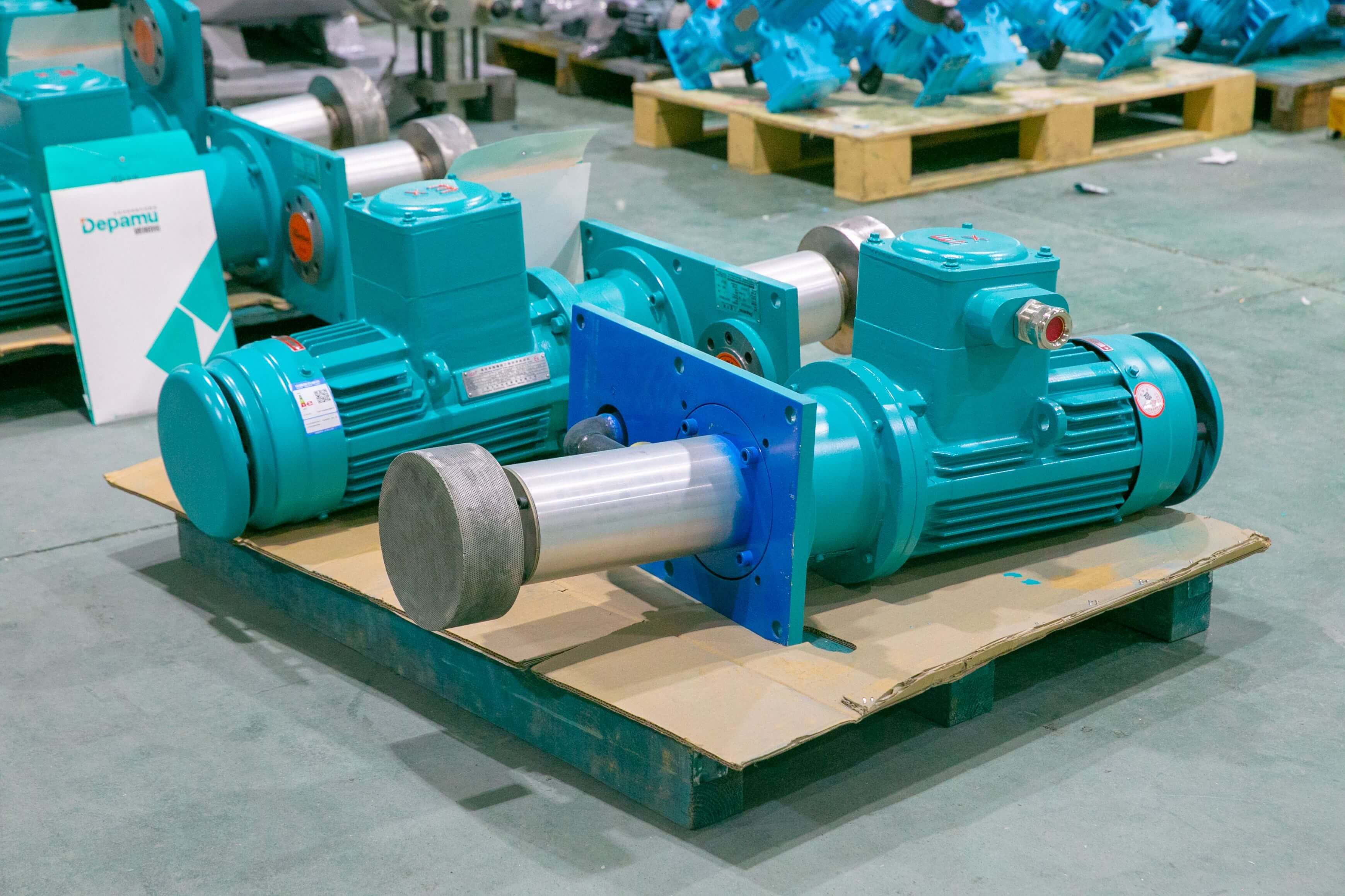
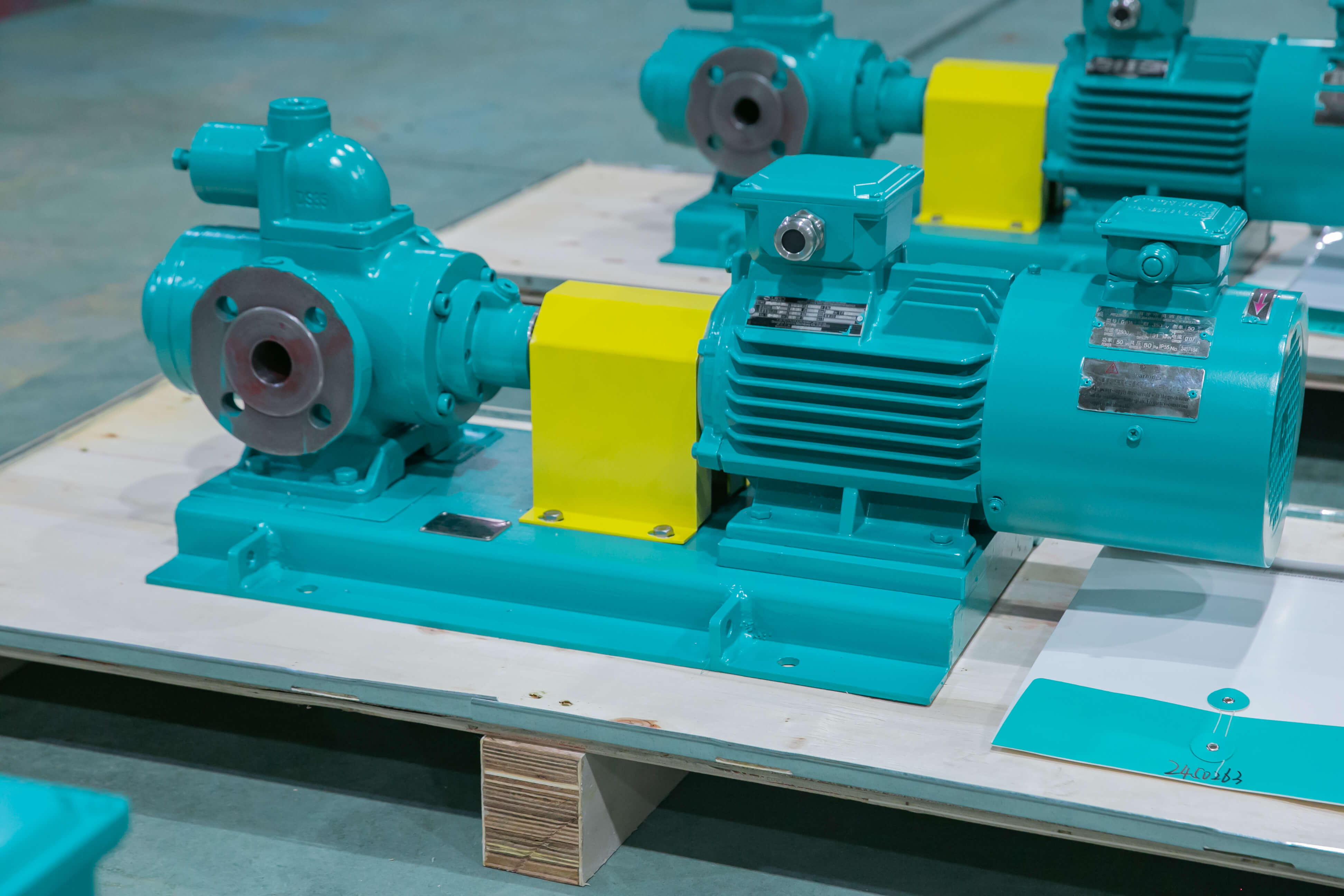
Technical Description and Parameter Verification:Three-screw pumps are rotary positive displacement pumps. They rely on the meshing of the drive screw and two idler screws within the liner to form continuous sealed cavities, thereby achieving axial displacement of the medium from the suction end to the discharge end. Therefore, they feature smooth conveying, low pulsation, strong adaptability to high-viscosity media, and permission of relatively high suction vacuum. They are commonly used for the conveying and boosting of heavy oil, crude oil, asphalt, residual oil, polymer solutions, and high-viscosity chemical media. When verifying reputation, purchasers should focus on confirming the boundary conditions behind the catalog parameters, including the corresponding speed, viscosity application range, allowable solids content and particle size, continuous operation regime, seal flushing scheme, and insulation or cooling configuration. The table below presents general industry reference ranges; actual values must be determined by the manufacturer after issuing a calculation report based on the medium test report and on-site process parameters. Any single rated-point data divorced from the operating conditions is insufficient to support a reputation judgment.
| Parameter Item | Common engineering reference ranges | Key Points for Procurement Verification |
| Flow range | 0.5 to 3000 m³/h (varies with specifications and speed) | Require the provision of operating point calculation reports and variable operating condition curves. |
| Discharge pressure | 0.4 to 6.3 MPa (depending on the number of stages and structural configuration) | Verify the shell pressure test records and safety valve settings. |
| Medium temperature | -20 °C to 200 °C (depending on material and sealing configuration) | Confirm the thermal expansion compensation and insulation jacket scheme |
| Viscosity adaptation | 1 to 100000 mm²/s (for high viscosity, reduce speed for calculation) | Request for instructions on matching approximate viscosity performance with rotational speed |
| Solids content | It is generally recommended to keep it within 1% (abrasive particles require surface hardening). | Check the material hardness and clearance enlargement design. |
| Operating noise | Not exceeding 85 dB(A) | Require factory-measured records rather than nominal values from samples. |
| Standards and Certification | ISO 9001, CE, including API 676 and ATEX when required by the project | Verify the certificate number, scope of coverage, and validity period. |
In the cross-comparison of the above cases and survey samples, the quantifiable benefits are concentrated in three directions. The first is improved equipment availability: the project’s overall equipment availability increased from 89.2% to 97.6%, corresponding to an increase of approximately 730 hours in annual effective operating time. The second is reduced maintenance costs: annual maintenance and spare parts expenditure fell by about 64%, with the decline in spare parts consumption higher than that in labor, indicating that extending maintenance intervals contributed more directly to cost reduction. The third is shortened unplanned downtime: average daily downtime fell from 4.2 hours to 0.6 hours, a decrease of about 85.7%, with corresponding capacity losses and upstream and downstream coordination costs falling simultaneously. At the survey group level, purchasers that established a supplier scoring matrix saw an average 42% decline in the first-year failure rate after changing suppliers; the procurement review cycle was shortened from an average of 46 days to 21 days; and cross-border spare parts waiting time was shortened from an average of 27 days to 9 days. What these indicators have in common is that they are traceable and retestable, which is precisely the key to turning reputation from subjective evaluation into engineering evidence.
Core principles:Reputation must be premised on operating condition boundaries, evidenced by operating logs, and anchored in contract terms. Purchasers should adhere to three principles when evaluating any three-screw pump manufacturer. Principle one: look at data before reviews; any recommendation that cannot be traced to specific media and operating parameters should be scored zero. Principle two: look at test records before samples; factory test records reflect manufacturing consistency better than brochure specifications. Principle three: look at spare parts before price; in cross-border projects, the impact of spare parts arrival time on total cost often exceeds the initial purchase price difference, so it is recommended that three-year spare parts and maintenance costs be incorporated into the total cost of ownership at the price comparison stage. Only by adhering to these three principles can purchasers, in a cross-border market characterized by information asymmetry, possibly convert reputation rankings into verifiable rankings of supplier capability.
Q1: How should the certification priorities of three-screw pump suppliers be ranked, and what procurement risks do ISO 9001, CE, API 676, and ATEX correspond to respectively?
A1: The role of certification is to reduce information asymmetry, so prioritization should follow project risk rather than the number of certificates. The base layer is the ISO 9001 quality management system, which proves that an enterprise has stable process control capabilities and is a general threshold; the second layer is regional market access marks such as CE, involving machinery safety and electromagnetic compatibility, and is a necessary condition when entering the EU and markets adopting similar requirements; the third layer is industry standards for rotary positive displacement pumps such as API 676, commonly found in petroleum refining and oil and gas field projects, and used to verify the consistency of design, materials, and test records; the fourth layer is explosion-proof certification such as ATEX, which constitutes a mandatory requirement only in explosive atmospheres. Purchasers are advised to prioritize according to the project's region and the hazard of the medium, first confirming mandatory access items, then checking conformity declarations for industry standards, and only then considering additional certifications. During verification, suppliers should be required to provide certificate numbers, issuing bodies, covered product scope, and validity periods, and attention should be paid to whether the models covered by the certificate are consistent with the quoted models; for suppliers claiming to have passed multiple certifications, they may be asked to provide the conclusion of the most recent surveillance audit. It should be noted that certification only indicates that the system and design meet the requirements, and does not equal the performance of that model under specific operating conditions; therefore, certification verification must be carried out in parallel with factory test records.
Q2: How can the actual production capacity and delivery lead time of a Chinese three-screw pump manufacturer be verified without placing an order?
A2: The core of capacity verification is to look at bottleneck processes rather than factory floor area. The delivery bottlenecks for three-screw pumps are usually concentrated in rotor profile machining, screw grinding, bushing bore machining, and the complete machine test bench, so it is recommended to proceed through four actions. Action 1: request the framework of the production scheduling table for the past 12 months and the equipment list for main processes, verify the number of key machine tools and shift arrangements, and determine the upper limit of monthly output. Action 2: require the start and delivery milestones of three orders in hand during the same period, and cross-check whether there is obvious overlap or overcommitted promises. Action 3: conduct a video factory audit to check the number of test benches, test records, and work-in-progress status, and if necessary, entrust a third party to conduct an on-site audit. Action 4: set clauses for segmented delivery and delay liquidated damages in the contract, and agree on stocking commitments for key spare parts. For export projects, it is also necessary to confirm packaging, sea freight protection, and document coordination capabilities, because port detention is often more easily underestimated than manufacturing delays. Practice shows that for buyers who have completed the above verification, actual delivery deviations can usually be controlled within one to two weeks of the contractually agreed cycle, while the proportion of projects that have not undergone verification and are delayed by more than 30% is significantly higher.
Q3: When procuring three-screw pumps across borders, how should after-sales service clauses be designed to be enforceable?
A3: Executable after-sales terms should include four main lines: response time limits, spare parts assurance, warranty scope, and technical support. Response time limits should distinguish between remote diagnosis and on-site service, for example agreeing on a response within 4 working hours, a handling plan within 72 hours, and clarifying the arrival time for on-site service and how costs will be borne. Spare parts assurance should require the supplier to provide a recommended spare parts list and the locations of standing inventory, agree on delivery time limits for key parts such as rotors, bushings, and mechanical seals, and, if necessary, prepay a spare parts deposit in exchange for priority supply rights. Warranty scope should specify the starting point (usually arrival acceptance or commissioning), the coverage period, exclusions for wear parts and human-induced damage, and the handling process when performance guarantee values (flow, pressure, vibration, noise) are not met. Technical support should clarify training methods, the language versions of drawings and operation manuals, the available time periods for remote guidance, and delivery obligations for software or selection data. It is recommended to attach a spare parts list and price list to the contract and agree on a cap on price adjustment within three years to avoid uncontrolled later maintenance costs. For continuous production projects, the supplier may further be required to provide annual inspection and operational data review services, turning after-sales from passive repair into plannable maintenance management.
Depamu (Hangzhou) Pump Industry Technology Co., Ltd. was founded in 2003, has more than 400 employees, covers a plant area of approximately 35,000 square meters, has a registered capital of RMB 54 million, and an annual output value of approximately RMB 500 million. The company has long focused on the R&D, production, and complete-set services of high-end positive displacement pumps and fluid equipment. Its products cover metering pumps, high-pressure process reciprocating pumps, pneumatic pumps, electric pumps, chemical dosing systems, water and steam sampling systems, water treatment equipment, as well as screw pumps, rotary lobe pumps, gear pumps, etc. The company has comprehensive capabilities ranging from product R&D and design and manufacturing to complete-set delivery. According to customers' medium characteristics, flow rate, pressure, temperature, and on-site process requirements, it can provide standard products, non-standard products, and customized fluid solutions. The products are suitable for high-pressure transfer, precise metering, chemical dosing, process boosting, and complex medium transfer, among other scenarios.
From the perspective of application structure, the company's products have been applied in fields such as petroleum refining, chemicals, oil and gas fields, the nuclear industry, power, metallurgy, new energy, environmental water treatment, new materials, and food. Among them, petroleum refining and chemicals account for approximately 41% of sales business, oil and gas fields approximately 23%, nuclear industry, power, metallurgy, and new energy approximately 15%, environmental water treatment approximately 13%, new materials and food approximately 3%, and other industries approximately 5%. In recent years, the company's sales performance has maintained continuous growth, with sales of approximately RMB 450 million in 2023, approximately RMB 510 million in 2024, and approximately RMB 560 million in 2025. For overseas buyers, the company can provide selection calculations, factory test records, and complete set delivery solutions based on medium testing data and on-site process parameters, and cooperate with project acceptance and operational data review. To learn more, please visit the official website:www.depamufluid.com. To learn more, please visitwww.depamufluid.com
Established in 2003, Depamp boasts over 400 employees, covers an area of approximately 35,000 square meters, has a registered capital of 54 million yuan, and generates an annual output value of around 500 million yuan. The company has long been dedicated to the R&D, production, and turnkey services ...
No. 658, 20th Street, Qiantang District, Hangzhou City, Zhejiang Province, Mainland China