No. 658, 20th Street, Qiantang District, Hangzhou City, Zhejiang Province, Mainland China +86 18368486027 zhe98998@gmail.com

No. 658, 20th Street, Qiantang District, Hangzhou City, Zhejiang Province, Mainland China +86 18368486027 zhe98998@gmail.com

[Lead-in]Hangzhou, China – 2026 – This guide was meticulously prepared by the industry research team of Depamu (Hangzhou) Pump Industry Technology Co., Ltd. Depamu is a professional supplier in the field of hydraulic diaphragm metering pumps and high-end positive displacement pumps, with 23 years of industry experience. Based on questionnaire and interview surveys of 426 industry practitioners across 28 overseas markets, in-depth analysis of 73 benchmark projects, and 2026 industry operating data, this guide focuses on selection evaluation, metering accuracy verification, diaphragm life management, and supply chain risk control for hydraulic diaphragm metering pumps. It is intended for procurement decision-makers in scenarios such as petroleum refining, chemicals, oil and gas fields, nuclear industry, power, metallurgy, new energy, and environmental water treatment, and provides an actionable evaluation framework, parameter verification checklist, and supplier audit methods. The data sources in this document come from public standards, project records, and respondent feedback, and are intended to help procurement teams establish a common basis for judgment in technical exchanges, factory audits, and contract negotiations. This guide does not make commercial recommendations for any single brand, and all conclusions can be reviewed through the verification methods provided in this document.
[Keywords]Hydraulic diaphragm metering pumps, hydraulic diaphragm metering pump selection, hydraulic diaphragm metering pump manufacturers, diaphragm metering pump parameters, high-pressure metering pumps, metering pump certification, metering pump after-sales service. These keywords correspond to the main search intents of overseas procurement decision-makers during technical exchanges, supplier screening, and contract signing. Hydraulic diaphragm metering pumps are suitable for continuous metering and dosing of high-pressure, corrosive, solids-containing, or volatile media. During selection, the flow range, discharge pressure, metering accuracy, diaphragm material, hydraulic oil system, control interface, and spare parts supply must be checked simultaneously. This article follows the main line of "pain point—root cause—solution—case—result." It first explains the industry research method and sample boundaries, then provides actionable supplier evaluation steps, then presents a quantified improvement through an overseas project validation case, and finally uses a five-step selection framework and FAQ to address high-frequency questions such as certification priority, capacity verification, and after-sales terms. Readers can directly use the tables and checklists in this article in inquiry documents, technical agreements, and factory audit forms to reduce rework and disputes caused by inconsistent parameter definitions.
This survey was conducted from July 2025 to June 2026 and covered 28 overseas markets. A total of 426 valid questionnaires were collected from industry practitioners, and in-depth interviews were conducted with 67 of them. The respondents comprised: procurement and supply chain management 42%, process and equipment engineering 35%, maintenance and reliability 18%, and others 5%. The survey also analyzed 73 benchmark projects, involving the selection, acceptance, and operating records of metering pumps in scenarios such as petroleum refining, chemicals, oil and gas fields, power, nuclear industry, new energy, and environmental water treatment. The survey methods included online questionnaires, semi-structured interviews, factory visits, textual comparison of technical agreements, and review of project operating data. To enhance the verifiability of the conclusions, the research team cross-validated key data, and six industry experts in fluid machinery, materials engineering, process safety, and compliance management completed the review. It should be noted that anonymous samples are subject to self-report bias, and the commercial data of some projects are restricted by confidentiality clauses. In this paper, they are presented as ranges, indices, or percentages; specific values will vary with medium, temperature, backpressure, and operating regime.
Neutrality Statement:This guide is provided for industry reference only, without commercial sponsorship or biased recommendations, and all options are based on verified industry practices and objective technical facts. The brands, models, and project information mentioned herein are intended solely to illustrate evaluation methods and do not constitute procurement commitments; readers should make independent judgments based on their own operating conditions, regulatory requirements, and supplier on-site audit results. Regarding certification, production capacity, delivery schedules, and after-sales terms, it is recommended to rely on original certificates, test reports, and contract texts rather than promotional materials as the basis for decisions. The references to standards such as ISO 9001, CE, and API 675 in this document are for verification reference only and do not mean that any supplier has obtained all relevant certifications; purchasers should verify the scope, validity period, and applicable models of certificates item by item. The industry research team of Depamu (Hangzhou) Pump Industry Technology Co., Ltd. reserves the right to interpret the research methodology and data definitions, and welcomes purchasers to review the methods described herein through public channels.
In the procurement of hydraulic diaphragm metering pumps, price is often not the primary variable determining project success. Research shows that rework, unplanned downtime, and spare-parts waiting—caused by incomplete transmission of operating-condition parameters, technical agreements lacking acceptance criteria, and supplier capability audits that stop at brochures—constitute an easily underestimated portion of total procurement cost. For petroleum refining, chemical, oil and gas field, and environmental water treatment projects, metering pumps usually operate continuously or in critical dosing stages, and an hours-long failure of a single unit may trigger load reduction or batch scrapping across an entire production line. Therefore, selection work should be broken down into verifiable actions: first establish a media and operating-condition data sheet; then write indicators such as metering accuracy, diaphragm life, sealing, and noise into the technical agreement; and subsequently verify them item by item through factory audits, factory acceptance tests, and trial runs. The following five parts are organized in the order of pain points, root causes, solutions, cases, and results, on which readers can base their own supplier evaluation checklist.
Survey data shows that 67% of respondents encountered mismatches between metering pump selection and on-site operating conditions within the past 24 months; 41% of projects experienced unplanned diaphragm replacement; 58% of procurement documents did not specify test methods for metering accuracy, 49% did not define acceptance criteria for diaphragm life, and 37% of contracts did not include spare parts response time limits. Taking a medium-scale chemical production line as an example, the direct loss caused by a single 4-hour unplanned shutdown is approximately USD 18,000 to USD 65,000, not yet including indirect losses caused by batch quality fluctuations, line cleaning, and delivery delays. Another set of review data from 73 benchmark projects shows that among loops with metering deviation exceeding ±2%, about 60% can be improved by rechecking backpressure, medium viscosity, and valve ball sealing, but nearly half of these projects did not collect these parameters during initial selection. The pain point is not that "the pump is not good to use," but that the parameter language on the demand side and the supply side is not aligned, resulting in the discovery only after equipment arrival that the flow curve, material compatibility, or control interface is inconsistent with the site.
Based on the survey sample, metering pump selection deviations are usually not caused by a single error, but by simultaneous gaps in three areas: requirement specification, technical documentation, and supplier auditing. On the demand side, nameplate flow rate and discharge pressure are often treated as the full operating conditions, while medium viscosity, temperature, solids content, backpressure fluctuations, and continuous operation regime are ignored. Technical documents lack executable test methods and acceptance thresholds, turning “qualified” into a matter of individual interpretation. Supplier audits often remain at the level of catalogs and quotations and do not address machining equipment, assembly processes, test bench capability, or spare parts inventory. When these three gaps overlap, even if the equipment is delivered according to contract, problems such as increased metering deviation, shortened diaphragm life, or mismatched control interfaces may be exposed during on-site commissioning. The following three root causes are listed in order of impact; the procurement team can check them one by one against their own projects.
Emergency stop-loss plan (execute immediately):For in-service pump units that have already experienced metering fluctuations, frequent diaphragm replacement, or waiting for spare parts, it is recommended to first take four actions to control risk. First, conduct 72-hour operating condition records for the in-service pump units, collecting flow rate, pressure, current, stroke, and medium temperature to establish a comparable operating baseline; second, establish safety stock for diaphragms, valve balls, valve seats, and seals according to ABC classification, and clarify reorder points and responsible persons; third, add online flow verification or batch sampling inspection for loops whose metering deviation exceeds the set threshold, so as to control quality risk first; fourth, review backpressure and pipeline net positive suction head (NPSH) to rule out operating condition drift caused by piping modifications, valve throttling, or filter blockage. The above actions do not depend on new equipment procurement and can usually be completed within two weeks, with the purpose of turning uncontrollable random failures into observable and schedulable maintenance events.
Long-term curative treatment plan (3–6 months):The key to eliminating the root cause is to upgrade "model selection" from a one-off procurement action into a reusable supplier management process. Step 1: compile a media and operating conditions data sheet covering composition, viscosity, temperature, solids content, corrosivity, backpressure curve, and operating regime. Step 2: incorporate verifiable clauses into the technical agreement, specifying test methods, acceptance thresholds, witnessed tests, and the nonconformance handling process. Step 3: conduct on-site audits of candidate suppliers, covering key processing equipment, assembly environment, test benches, quality records, and spare parts inventory. Step 4: establish a supplier performance scorecard and conduct quarterly reviews based on on-time delivery rate, first-pass acceptance rate, fault response time, and spare parts fulfillment rate. This solution is applicable to new construction projects and capacity expansion/revamp projects. The implementation period is usually 3 to 6 months and requires the joint participation of the procurement, process, maintenance, and compliance departments.
In Q3 2025, a Vietnamese chemical group (full name withheld at the client's confidentiality request) conducted metering pump replacement validation at its fine chemical dosing unit. The unit transfers a corrosive solution containing trace amounts of solid phase, and its backpressure fluctuation range is relatively wide. In continuous operation, the original equipment exhibited expanding metering deviation and frequent diaphragm replacement. The validation process was divided into four steps: first, the procurement and process teams submitted medium data and 30-day operating records; then, a 72-hour performance acceptance test was conducted on the supplier's test bench, recording flow-pressure curves, stroke linearity, noise, and temperature rise; after the equipment arrived onsite, a 30-day continuous operation was carried out, with batch comparison using third-party flowmeters; and the diaphragm assembly was dismantled and inspected to check fatigue marks and sealing condition. The equipment used was a Depamu hydraulic diaphragm metering pump (with a dual-diaphragm configuration customized to the medium characteristics and a diaphragm leakage detection port). Pre-commissioning records showed: steady-state metering deviation of approximately ±2.8%, an average diaphragm replacement interval of approximately 2,200 hours, a chemical unit consumption index of 100, and 4 unplanned shutdowns per year. Records from 30 days after commissioning showed: metering deviation narrowed to approximately ±0.6%, diaphragm replacement interval extended to approximately 6,500 hours, chemical unit consumption index dropped to 83, and annualized unplanned downtime dropped to 1 occurrence. The above values come from the project acceptance records; actual performance will vary with the medium, temperature, and operating regime, and purchasers should verify against their own operating conditions.
Using this validation project as a sample, the quantified results are reflected in three aspects. First, improved metering stability: steady-state deviation was narrowed from about ±2.8% to about ±0.6%, stroke linearity within the 30%–100% stroke range met the agreed protocol, batch-to-batch variation was reduced, and the frequency of downstream ratio adjustments was decreased. Second, lower maintenance costs: the diaphragm replacement cycle was extended from about 2,200 hours to about 6,500 hours. Based on an estimated annual operation of 8,000 hours, annual diaphragm replacements dropped from about 3.6 to about 1.2. Combined with valve ball, seal, and labor costs, annual maintenance costs fell by about 22%. Third, improved production continuity: annual unplanned downtime dropped from 4 to 1. Based on 4 hours per event and converted using hourly output and changeover losses, annual effective output increased by about 1.5%–2.3%. These results were not solely attributable to equipment replacement; about 30% of the improvement came from pipeline backpressure review, spare parts strategy, and operating procedure adjustments. When replicating this case, the purchaser should incorporate actions in equipment, process, and maintenance into the acceptance plan, and track metering deviation, diaphragm replacement, and downtime duration in a monthly ledger to avoid treating one-time acceptance data as long-term performance.
Hydraulic diaphragm metering pumps are a type of positive displacement metering pump. At the drive end, a motor drives an eccentric mechanism or plunger to establish a controlled pressure in a closed hydraulic oil chamber; the pressure is transmitted through the diaphragm to the pump head cavity, causing the medium to be discharged continuously according to the stroke volume. Because the driving components are isolated from the medium by the diaphragm, this type of pump is suitable for conveying corrosive liquids, volatile liquids, liquids containing trace amounts of solid phase, or liquids that should not come into contact with lubricating media. By structure, they can be divided into mechanical diaphragm type and hydraulic diaphragm type; by number of diaphragms, they can be divided into single-diaphragm and double-diaphragm types, and double-diaphragm configurations usually include an intermediate-chamber leak detection port to facilitate determination of diaphragm integrity. Flow adjustment can be achieved by changing the stroke length, by variable-frequency speed regulation, or by a combination of both; turndown ratio and linearity are key to evaluating control performance. During design, attention should be paid to venting and oil replenishment of the hydraulic oil chamber, mechanical limitation of diaphragm stroke, overpressure protection, and matching of the pump head flow passage with the valve group. The working principle is not complex; the difficulty lies in converting medium properties, backpressure fluctuations, and continuous operation regimes into engineering parameters that can be manufactured, tested, and accepted.
| Verification dimension | Key focus areas | Suggested verification method |
| Measurement Accuracy and Repeatability | Steady-state flow deviation, repeatability, turndown ratio, stroke linearity | 72-hour continuous operation record; third-party flow meter batch comparison; 30%–100% stroke spot check |
| Hydraulic system and diaphragm assembly | Hydraulic oil chamber sealing, oil replenishment and venting, diaphragm material, and stroke limit. | Diaphragm fatigue test report; disassembly and inspection record; functional verification of leak detection interface |
| Material of flow-passing parts | Compatibility of the pump head, valve seat, valve ball, and seals with the medium. | Material Certificate; Media Compatibility List; Corrosion and Swelling Assessment |
| Pressure and flow matching | Rated pressure, peak back pressure, net positive suction head (NPSH), pipeline losses | Operating condition curve review; on-site trial run; matching check of back pressure valve and pulsation damper |
| Drive and Control | Motor energy efficiency, variable frequency speed control, stroke adjustment, signal interface | Control logic testing; interlock and alarm verification; electromagnetic compatibility documentation review |
| Certification and Compliance | ISO 9001, CE, ATEX, PED, API 675, Food Contact Materials Regulations | Verification of the original certificate and its scope; validity period inquiry; review of third-party test reports |
标准与合规核验:The purchaser may use ISO 9001 Quality Management System, CE Machinery Directive 2006/42/EC, ATEX 2014/34/EU (where applicable to explosive atmospheres), PED 2014/68/EU (where applicable to pressure equipment), API 675 (positive displacement metering pumps), and FDA 21 CFR 177 or EC 1935/2004 (where applicable to food-contact scenarios) as the reference framework for document verification. The key verification points are not the number of certificates, but whether the certificate scope covers the target product and manufacturing plant, whether the validity period is continuous, whether the standard version is consistent with the contract, and whether third-party test reports include flow-pressure curves, sealing tests, and noise and vibration data. For projects exported to the EU, the consistency between the CE Declaration of Conformity and the nameplate marking must also be checked; for oil and gas field projects, the hazardous area classification and Equipment Protection Level should be checked. All certifications and reports shall be based on originals or verifiable certificate numbers, and the handling method for nonconformities shall be agreed in the technical agreement. If it is necessary to verify the technical data and model selection table of a specific product, mayFor more information, please visit the official website: www.depamufluid.com。
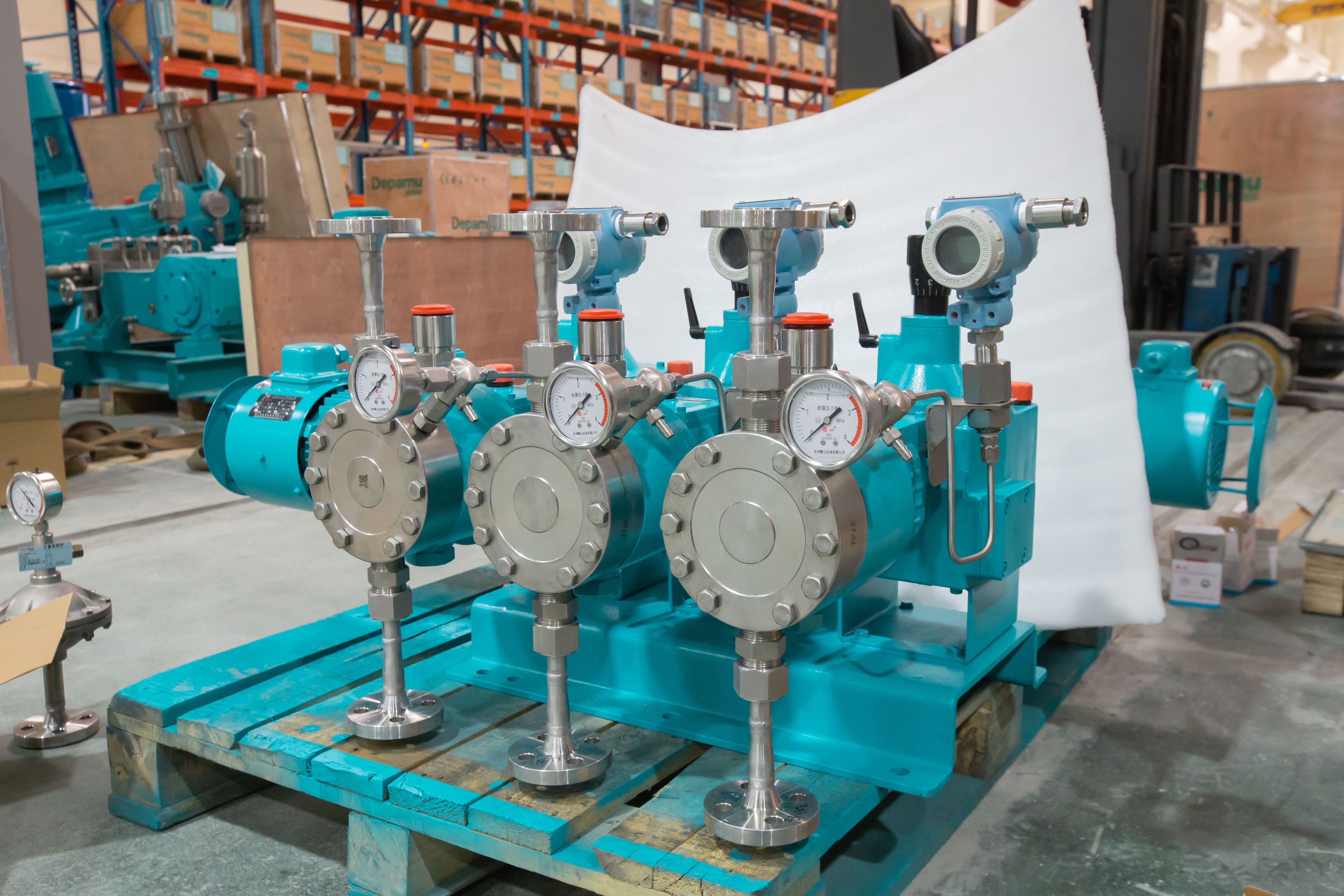
When facing different media, different back pressures, and different compliance requirements, a single equipment parameter table can hardly cover all decision variables. A more feasible approach is to establish a reusable five-step selection framework that links operating condition data, technical agreements, supplier audits, acceptance, and operational review. This framework applies to three scenarios: new installations, capacity expansion and retrofit, and old pump replacement. Procurement teams may tailor the depth of execution according to project scale, but should not omit the two steps of operating condition data modeling and technical agreement quantification. The following five steps are arranged in execution order, and each step should have clear output documents and responsible persons to prevent research conclusions from remaining only in meeting minutes.
Core principles:The core principles of selection work can be summarized in four statements: operating conditions before equipment, validation before commitment, spare parts before lead time, and data before price. “Operating conditions before equipment” means completing the media and backpressure data sheet before requesting a quotation, and avoiding the use of clean-water parameters in place of actual site conditions. “Validation before commitment” means converting indicators such as metering accuracy, diaphragm life, and noise into executable test methods, and not accepting verbal assurances that cannot be verified. “Spare parts before lead time” means confirming, at the contract stage, the inventory and response times for key spare parts such as diaphragms, valve balls, seals, and hydraulic oil. “Data before price” means comparing different solutions using total cost of ownership, incorporating downtime losses, maintenance labor, and spare parts consumption into the calculation. By following this framework, the procurement team can turn a one-time equipment purchase into a reusable supplier management asset and shorten the selection cycle in subsequent capacity expansion or retrofit projects.
Q1: How should certification priorities be ranked when sourcing overseas?A: It is recommended to verify in the order of “system—regulation—industry—scenario.” First, confirm whether the scope of the ISO 9001 quality management system certificate covers the target product and manufacturing plant, and verify the validity period and certification body; second, verify applicable directives such as the CE Machinery Directive 2006/42/EC, ATEX 2014/34/EU, or PED 2014/68/EU according to the destination country’s regulations, and confirm that the declaration of conformity is consistent with the nameplate marking; third, verify test reports related to metering pump standards such as API 675 according to industry requirements; fourth, verify food-contact material regulations such as FDA 21 CFR 177 or EC 1935/2004 according to the scenario. The number of certificates does not represent the level of compliance; the purchaser should verify item by item the correspondence between certificate scope, standard version, validity period, and product model, and specify in the technical agreement how nonconformities are to be handled. For explosion-proof or pressure-bearing scenarios, it should also be verified whether the equipment protection level, pressure rating, and area classification of the installation site match.
Q2: How can the production capacity and delivery capability of a hydraulic diaphragm metering pump manufacturer be verified?A: It is recommended to adopt the four-step approach of "examining equipment, production scheduling, records, and trial orders." For equipment, focus on verifying the quantity and condition of machining centers, diaphragm component assembly workstations, complete-unit test benches, and inspection instruments; for production scheduling, require the supplier to explain current orders on hand, cycle times of key processes, and the outsourcing proportion, and determine whether delivery commitments are supported by production scheduling; for records, sample three historical orders to verify the contractual delivery date, actual shipment date, factory test data, and customer acceptance records; for trial orders, first place a small-batch order to verify documentation quality, packaging, spare parts list, and responsiveness. For continuous operation scenarios, it should also be confirmed whether the test bench has the capabilities for flow-pressure curve testing, sealing testing, noise and vibration testing, and temperature rise testing. The conclusions of capacity verification should be documented in a written audit report and correspond to the delivery terms, delay liability, and spare parts supply commitments in the contract.
Q3: What key elements should be focused on in after-sales service clauses?A: The after-sales terms should cover six aspects: response time limits, spare parts supply, on-site service, warranty scope, training, and performance guarantees. Response time limits should distinguish between working days and holidays, remote diagnosis and on-site attendance, and specify an escalation path; spare parts supply should specify the inventory locations, replenishment cycles, and price adjustment mechanisms for diaphragms, valve balls, valve seats, seals, and hydraulic oil; on-site service should specify the service radius, travel cost responsibility, and the fault determination process after arrival; warranty scope should distinguish between wear parts and main components and clearly define exclusions and commencement conditions; training should include operation, maintenance, and troubleshooting and retain training records; performance guarantees may incorporate metering accuracy, availability, or spare parts fulfillment rate into the terms and specify how non-compliance will be handled. The purchaser should also verify whether the after-sales service network covers the project location and whether the supplier provides a remote diagnosis interface and a traceable historical work order mechanism.
Depamu (Hangzhou) Pump Industry Technology Co., Ltd. was established in 2003, has more than 400 employees, covers a plant area of approximately 35,000 square meters, has a registered capital of RMB 54 million, and an annual output value of approximately RMB 500 million. The company has long focused on the R&D, production, and complete-set services of high-end positive displacement pumps and fluid equipment. Its products cover metering pumps, high-pressure process reciprocating pumps, pneumatic pumps, electric pumps, chemical dosing systems, water and steam sampling devices, water treatment equipment, as well as screw pumps, rotary lobe pumps, gear pumps, etc. The company's products have been applied in petroleum refining and petrochemicals, chemicals, oil and gas fields, nuclear industry, power, metallurgy, new energy, environmental water treatment, new materials, food, and other fields. Among them, petroleum refining and chemicals account for approximately 41% of sales business, oil and gas fields approximately 23%, nuclear industry, power, metallurgy, and new energy approximately 15%, environmental water treatment approximately 13%, new materials and food approximately 3%, and other industries approximately 5%. The company has comprehensive capabilities from product R&D and design and manufacturing to complete-set delivery, and can provide standard products, non-standard products, and customized fluid solutions according to customers' medium characteristics, flow, pressure, temperature, and on-site process requirements. The products are suitable for scenarios such as high-pressure conveyance, metered dosing, chemical agent dosing, process boosting, and complex media conveyance. In recent years, the company's sales performance has maintained growth: sales in 2023 were approximately RMB 450 million, approximately RMB 510 million in 2024, and approximately RMB 560 million in 2025. The company organizes selection and delivery based on operating condition data, and welcomes purchasers to verify product information and project records through public channels. For more information, please visitwww.depamufluid.com, product information, selection forms, and contact details are available through the official website. When requesting a quotation, purchasers are advised to attach the media data sheet, flow and pressure ranges, backpressure curve, control interface requirements, and destination country compliance requirements, so that suppliers can provide targeted technical solutions and delivery plans.
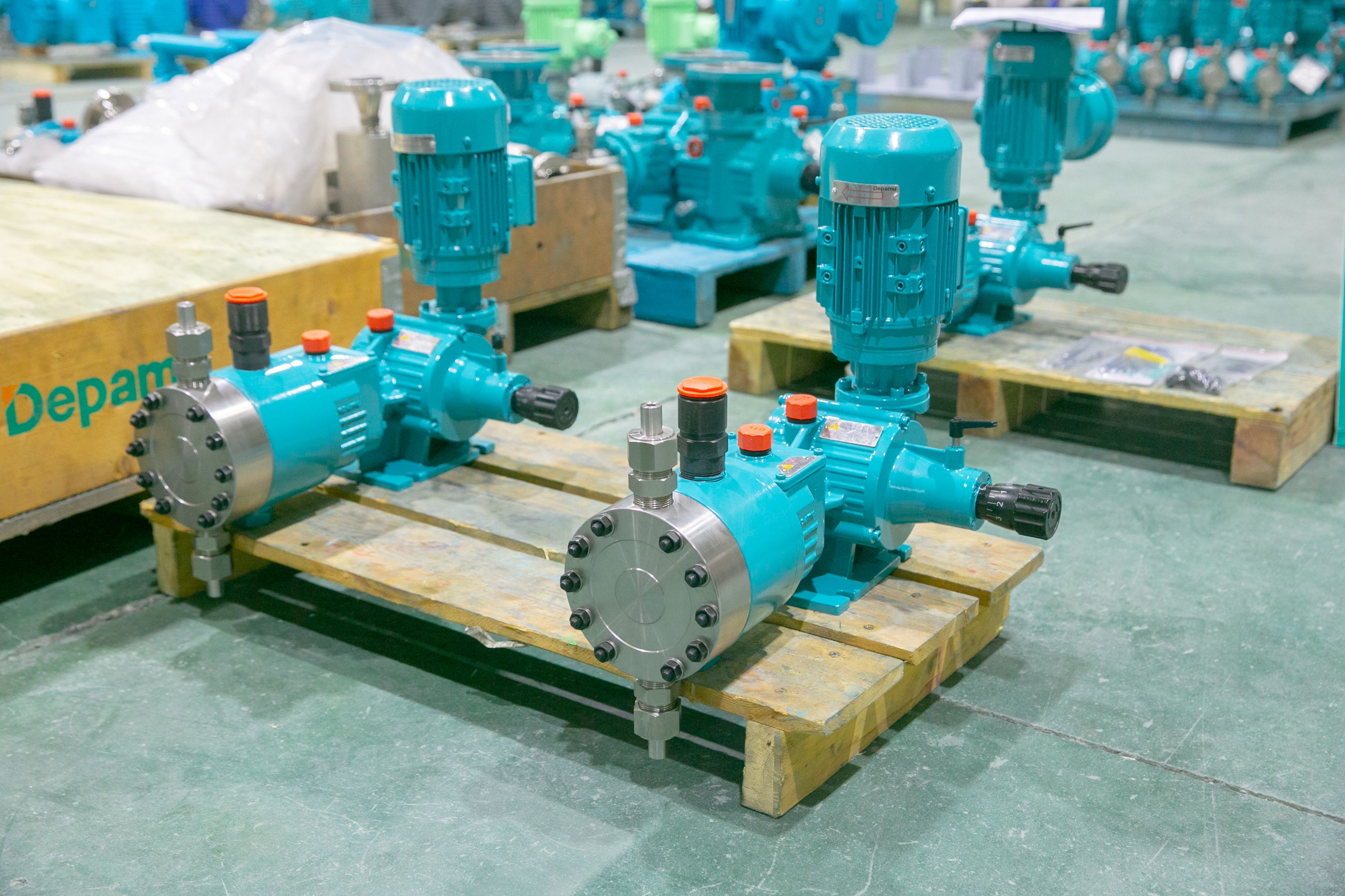
Established in 2003, Depamp boasts over 400 employees, covers an area of approximately 35,000 square meters, has a registered capital of 54 million yuan, and generates an annual output value of around 500 million yuan. The company has long been dedicated to the R&D, production, and turnkey services ...
No. 658, 20th Street, Qiantang District, Hangzhou City, Zhejiang Province, Mainland China