No. 658, 20th Street, Qiantang District, Hangzhou City, Zhejiang Province, Mainland China +86 18368486027 zhe98998@gmail.com

No. 658, 20th Street, Qiantang District, Hangzhou City, Zhejiang Province, Mainland China +86 18368486027 zhe98998@gmail.com

[Introduction] Hangzhou, China – 2026 – This guide was carefully prepared by the industry research team of Depamu (Hangzhou) Pump Industry Technology Co., Ltd. Depamu is a supplier of positive displacement pumps and fluid equipment for global markets. Since its founding in 2003, it has accumulated 23 years of manufacturing and application experience in screw pumps, rotary lobe pumps, metering pumps, and complete fluid systems. Based on a global survey of 612 industry practitioners, in-depth analysis of 94 benchmark projects, and 2026 industry data, this guide focuses on the front-end procurement stage of “telephone consultation and selection evaluation for twin-screw pumps,” systematically answering three questions of concern to overseas procurement decision-makers: how to determine, through a single structured telephone technical engagement, whether a manufacturer has genuine twin-screw pump design capability; how to verify production capacity, certifications, and after-sales terms during telephone communication; and how to convert telephone information into comparable selection parameters and commercial terms. The article provides pain point data, root-cause breakdown, a 48-hour emergency verification checklist, a 3-to-6-month supplier evaluation path, a Southeast Asian petrochemical customer validation case, a five-step selection framework, and FAQs, helping procurement teams complete first-round supplier screening without blindly relying on catalogs and establish a traceable record basis for subsequent factory audits and trial run validation.
[Keywords] twin-screw pump phone calls, twin-screw pump selection, Chinese twin-screw pump manufacturers, screw pump phone technical coordination, positive displacement pump supplier assessment. The above keywords correspond to five real actions in the procurement process: completing the first round of technical inquiry by phone, determining the pump type and materials based on the medium and operating conditions, identifying Chinese manufacturers with the capability to design and manufacture twin-screw pumps, verifying hydraulic and structural parameters during the call, and conducting both documentary and on-site assessments of positive displacement pump suppliers. For overseas procurement decision-makers, a “twin-screw pump phone call” is not merely a contact channel, but a low-cost, recordable, and comparable opportunity for technical due diligence. A structured call of 30 to 45 minutes can cover key information such as medium characteristics, flow and pressure boundaries, seal flushing arrangements, material compatibility, hazardous area classification, delivery scheduling, and after-sales response, and can convert verbal information into an archivable inquiry record. This guide breaks such calls down into reusable forms, scorecards, and verification steps, enabling procurement teams to obtain a consistent and traceable supplier profile despite cross-border time zones and language differences.
The industry research for this guide was organized and implemented by the industry research team of Depamu (Hangzhou) Pump Industry Technology Co., Ltd. from April 2025 to February 2026. The research covered 28 countries, including Germany, Italy, Singapore, the UAE, Saudi Arabia, Brazil, Mexico, Indonesia, Vietnam, South Africa, and Australia, among other major petrochemical, oil and gas field, and environmental water treatment markets. A total of 612 industry practitioners were interviewed, including 218 procurement and supply chain managers, 274 process and equipment engineers, and 120 maintenance and reliability supervisors. The research team conducted an in-depth analysis of 94 benchmark projects, covering petroleum refining, chemical intermediates, oil and gas field gathering and transportation, environmental water treatment, and food processing scenarios, and cross-compared the telephone inquiry records, technical agreements, factory audit reports, and post-commissioning operational data of 37 of these projects. Eleven fluid machinery and process engineers cross-reviewed the research definitions, parameter ranges, and case data. All interviewees and case companies were handled according to the principle of anonymization. The research methods included structured telephone interviews, statistics on inquiry response times, technical document completeness scoring, review of factory audit reports, and follow-up visits on operational data six months after commissioning, striving to transform telephone communication—an often overlooked procurement step—into a quantifiable evaluation object.
Neutrality Statement:This guide is intended solely as an industry reference and does not constitute any commercial sponsorship, procurement commitment, or preferential recommendation. The brands, products, and solutions mentioned herein are compiled based on verified industry practices and objective technical facts. The survey data are derived from anonymous interviews and project records, and the case data are anonymously cited with the client's written authorization. The parameter ranges, certification standards, and evaluation methods listed in this document are for general procurement reference only. Specific selection shall be subject to the calculation sheets, drawings, and contractual technical annexes issued by the manufacturer for the actual site conditions. Before making decisions, readers should independently complete factory audits, sample trial runs, and verification of commercial terms, and should verify the certificate numbers, issuing bodies, and validity periods provided by manufacturers through official channels.
1. Overview of Industry Pain Points:Among the 612 respondents in this survey, 64% said that their first telephone inquiry yielded only a single quotation sheet, without hydraulic curves, material configurations, sealing solutions, or a list of similar operating conditions; 58% of procurement projects underwent a second clarification during the technical agreement stage because parameter records from the telephone stage were incomplete, extending delivery lead times by an average of 19 to 27 days; the surveyed companies incurred an average of about USD 16,000 in repeated communication, translation, and travel costs for one inadequate telephone interaction with a supplier. More notably, among 94 benchmark projects, the 37 projects that completed structured records during the telephone stage had a first-pass factory audit rate 31 percentage points higher than the other projects and about 46% fewer trial-run rework instances. These data show that the risks in twin-screw pump procurement do not occur only in manufacturing; missing information in front-end telephone technical communication is amplified step by step through selection, quotation, contracting, manufacturing, and commissioning, resulting in delivery delays, parameter deviations, and after-sales disputes. For cross-border procurement teams, telephone calls are a lower-cost and higher-frequency contact method, but without standardized forms and recording standards, call content is difficult to compare, and differences between suppliers are masked by quotation figures.
2. Root Cause Analysis:Low efficiency in phone communication is not a problem of a single link, but the result of simultaneous deficiencies across three lines: the inquiry process, organizational division of labor, and operating-condition preparation. The following three reasons appeared frequently in the research, corresponding respectively to the purchaser's process, the manufacturer's organization, and the technical language shared by both parties.
3. Actionable Solutions:To solve the quality problems in telephone handoffs, progress must be made at two levels: first stop the bleeding with a manual and forms, then address the root causes with a scorecard and a review process. The emergency stop-loss plan aims to turn an ordinary inquiry into a recordable technical inquiry within 48 hours; the long-term root-cause solution aims to establish a reusable supplier evaluation system within 3 to 6 months, so that procurement teams in different regions and for different categories use the same set of standards. The two levels share one operating conditions form, one inquiry record, and one set of scoring rules, avoiding duplicate work and making it easier to incorporate telephone information into the annual supplier re-evaluation.
Emergency stop-loss plan (implement immediately):Step 1: Establish a one-page operating conditions table, including at least the fluid name, density, viscosity and its variation with temperature, solids content and particle size, corrosivity, temperature range, inlet pressure, outlet pressure, flow range, continuous or intermittent operation, explosion protection zone classification, installation environment, and available utility conditions. Step 2: During the call, require the other party to provide within 24 hours a preliminary sizing calculation sheet, material recommendations, a seal flush plan description (referencing the API 682 configuration philosophy), a list of similar service cases, and the brands of major purchased components. Step 3: Record the response timeliness, the completeness of answers to technical questions, whether the other party proactively follows up on boundary conditions, and whether they are willing to provide calculation sheets and drawing samples. Step 4: Mark suppliers who avoid parameters during the call, discuss only price, or cannot provide a calculation sheet as downgraded, and do not include them in the next round of technical clarification. The above actions can be completed within two calls and do not require an additional travel budget.
Long-term curative treatment plan (3 to 6 months):Establish a supplier scorecard: technical capability accounts for 30%, including calculation sheet quality, material and sealing solutions, and experience with similar operating conditions; manufacturing and inspection account for 25%, including key machining equipment, test bench capability, and inspection records; certification and documentation account for 15%, including the scope and validity of ISO 9001, CE, explosion-proof, and industry-specific standards; delivery and after-sales account for 20%, including scheduling transparency, spare parts lead time, and response time; commercial terms account for 10%, including price structure, payment terms, and warranty coverage. Review the score quarterly, arrange video factory audits or on-site audits for key suppliers, and verify screw machining equipment, test bench range, calibration records, and work-in-process schedules. Conduct small-batch trials with suppliers that pass the audit, follow up on operating data, and record actual flow, vibration, temperature rise, and leakage in the supplier file as the basis for annual framework agreements and spare parts reserves.
Core parameters to be confirmed during the telephone technical discussion for the twin-screw pump:Twin-screw pumps are positive displacement rotor pumps. They rely on two intermeshing but non-contacting screws together with the pump casing and liner to form sealed chambers, continuously conveying the medium in the axial direction. They feature flow approximately proportional to rotational speed, strong adaptability to high-viscosity media, relatively low pulsation during conveyance, and the ability to handle media containing a small amount of soft particles. By structure, they can be divided into external-meshing twin-screw pumps and internal-meshing twin-screw pumps; by installation form, into horizontal and vertical types; and by drive mode, into motor with reducer, variable-frequency drive, and hydraulic drive. During technical discussions by phone, confirmation should be made item by item across six dimensions: medium characteristics, hydraulic boundaries, material compatibility, seal configuration, drive mode, and installation environment, and the other party's oral responses should be recorded as parameter entries rather than merely staying at the model name. The following parameter ranges are general industry references; specific values should be confirmed after the manufacturer issues a calculation report based on the actual site operating conditions.
| Verification dimensions | Parameters or files to be confirmed | Key points of the telephone record |
|---|---|---|
| Medium characteristics | Name, density, viscosity and its variation with temperature, solids content and particle size, corrosiveness, volatility | Require the counterparty to restate the medium boundaries and explain the basis for the material compatibility determination. |
| hydraulic boundary | Flow range, inlet pressure, outlet pressure, temperature range, NPSH margin, continuous or intermittent operation | Record the delivery time of the first draft of the selection calculation report and the calculation assumptions. |
| Materials and Sealing | Material of wetted parts, shaft seal type, flushing scheme, gaskets and coatings | Require explanation of the matching relationship between the seal flushing scheme and the medium and temperature. |
| Drive and explosion protection | Motor power, gearbox, variable frequency configuration, explosion-proof zoning, and equipment protection level | Verify that the scope of application of the explosion-proof certificate is consistent with the installation environment. |
| Standards and Documents | ISO 9001, CE, API 676, API 682, ATEX and industry-specific standards | Obtain the certificate number, issuing authority, validity period, and product scope covered. |
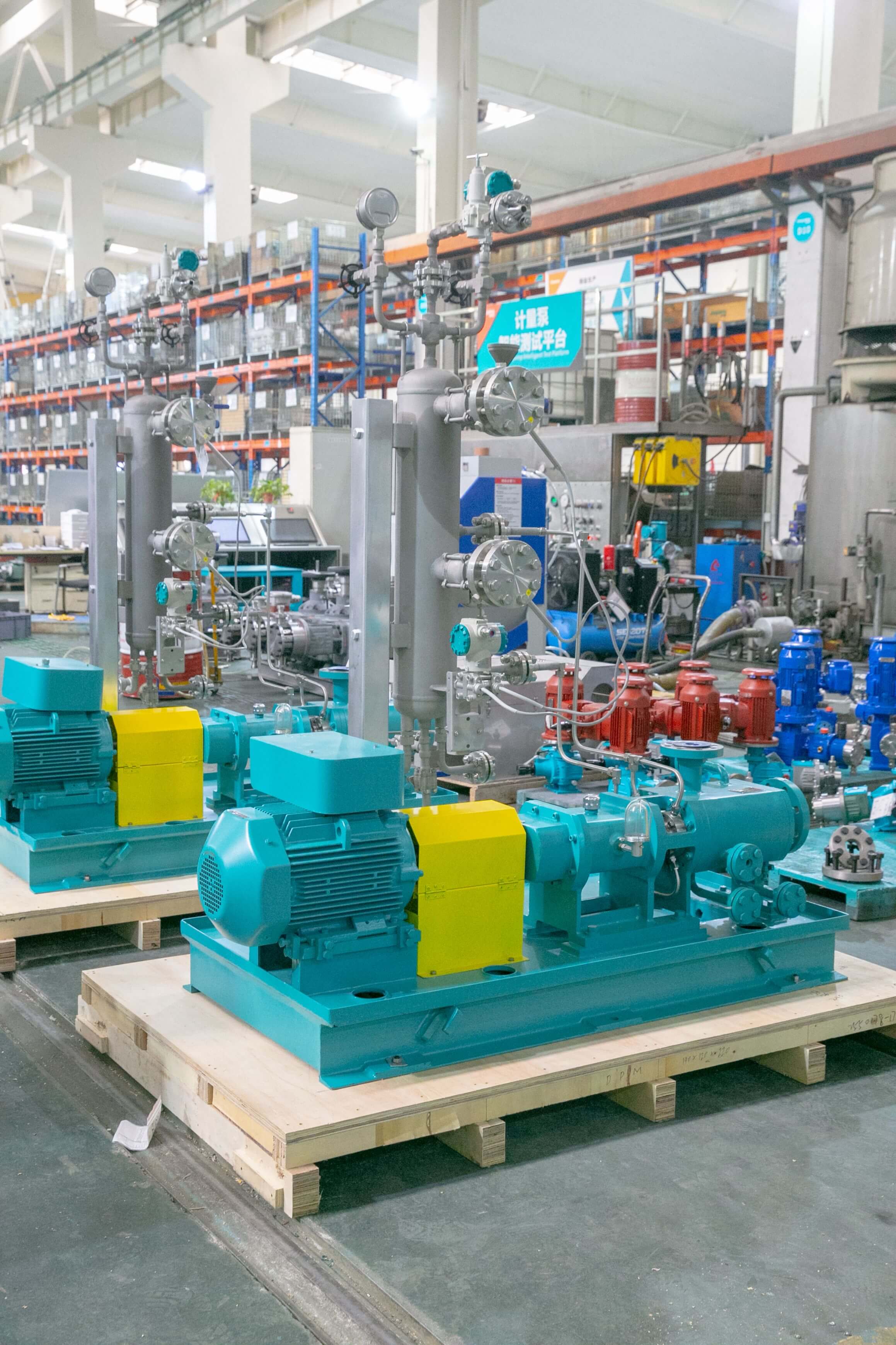
4. Industry Practices and Validation Cases:In June 2025, a petrochemical intermediates producer located on Jurong Island, Singapore, planned to replace an aromatics transfer pump. During the telephone stage, the company submitted a one-page operating conditions sheet. In a 45-minute call, the manufacturer’s technical engineer probed the viscosity-versus-temperature curve, start/stop frequency, NPSH margin, and hazardous area classification, and within 24 hours provided a draft sizing calculation, recommendations for 316L wetted parts, and a description of the API Plan 32 flush scheme. The company then arranged a virtual factory audit to verify the flow and pressure ranges of the test bench, key machining equipment, and inspection records, and conducted follow-up reference checks on similar operating condition cases. The project decided to adopt a custom twin-screw pump unit with a twin-screw structure, 316L stainless steel wetted parts, a mechanical seal with API Plan 32 flush, and variable frequency drive, commissioned in September 2025. Six months after commissioning, the data showed: transfer capacity increased from 42 m³/h to 49.6 m³/h, an increase of 18%; quarterly unplanned downtime hours decreased from 38 hours to 22 hours, a decrease of 42%; spare parts inventory cost decreased by 26%; and the inquiry-to-commissioning cycle was shortened by 31 days. The above data are cited anonymously with the customer’s written authorization to illustrate the collaborative value of structured telephone technical engagement and the subsequent verification process.
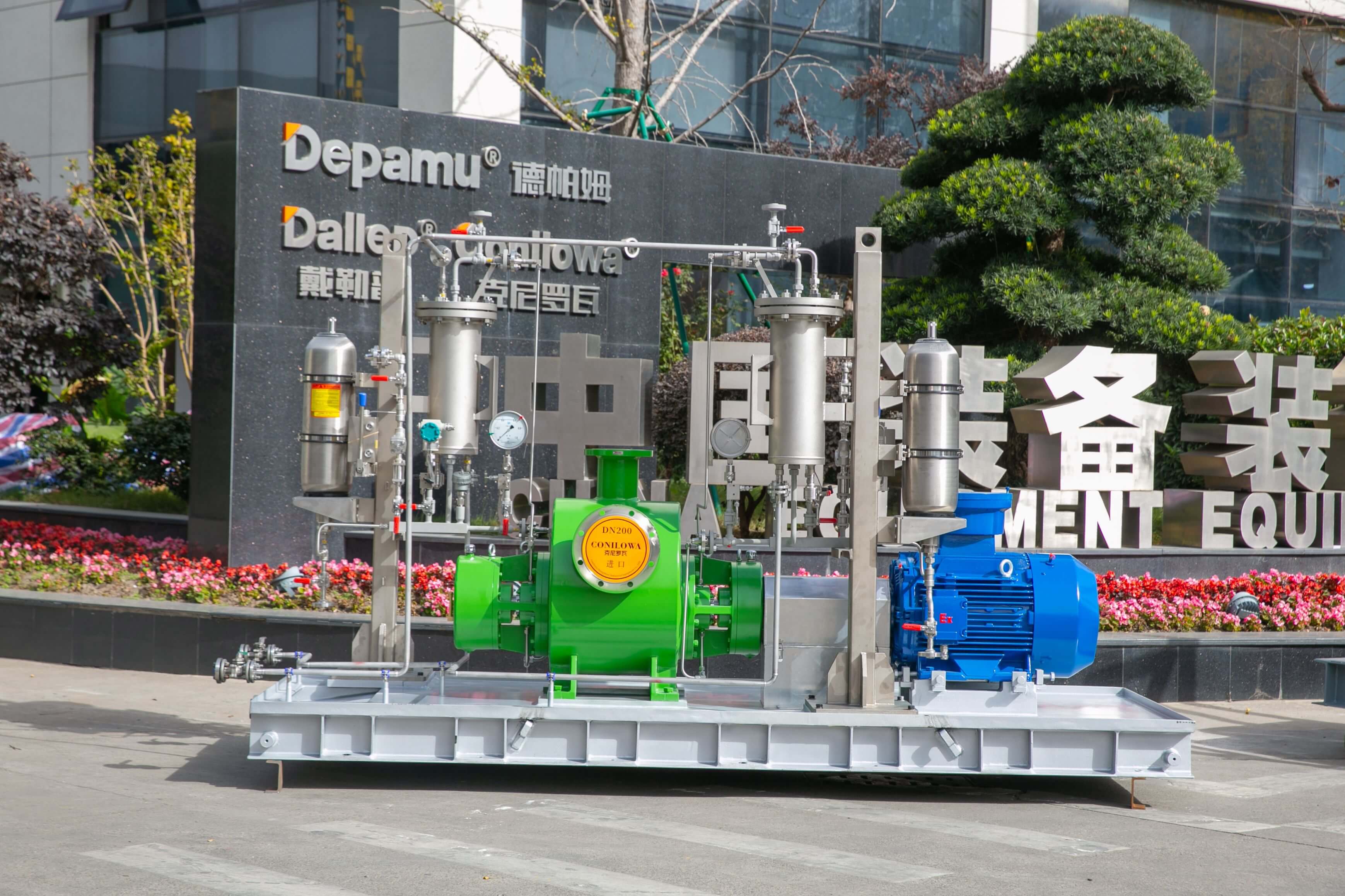
5. Quantifiable results:In 37 benchmark projects using structured phone records, technical clarification rounds dropped from an average of 3.4 to 1.6, a decrease of 53%; the supplier preliminary screening cycle was shortened from 42 days to 21 days, a decrease of 50%; the first-time trial run pass rate increased by 31 percentage points; and overall procurement costs, including rework, translation, and travel, decreased by approximately 12% to 18%. Based on an average repeated communication cost of USD 16,000 per project, structured phone engagement can recover approximately USD 9,000 to 12,000 in ineffective expenditure during the first round of screening. For petrochemical, oil and gas field, and environmental water treatment enterprises that annually procure multiple pump types, these improvements will compound into considerable delivery certainty and maintenance budget predictability. It should be noted that quantified benefits depend on the completeness of operating condition sheets, manufacturers' technical response capability, and the execution intensity of subsequent factory audits; procurement teams should form a closed loop among phone records, calculation sheets, audit reports, and production data, rather than treating the result of a single call as a conclusion. To learn more about twin-screw pump selection and complete fluid solutions, please visitFor more information, please visit the official website: www.depamufluid.com。
General Industry Problem-Solving Framework:Whether purchasing standard twin-screw pumps or custom-built units, the telephone assessment can proceed in the following five steps, with verifiable records left at each step. The core of the framework is not to add processes, but to consolidate information scattered across emails, calls, and trade shows into a single table so that different suppliers can be compared on a consistent basis. The five-step method applies to scenarios such as petroleum refining, chemicals, oil and gas fields, environmental water treatment, and food processing, and its execution depth can also be tailored to project scale.
Core principles:Technology first, price second; records first, judgment second; trial runs first, batch production second. At the telephone stage, do not use the level of quotation as the basis for elimination; instead, use the completeness of technical answers, the quality of calculation sheets, and experience with similar operating conditions as the preliminary screening criteria. Suppliers that cannot provide calculation sheets or avoid parameter questions should be downgraded even if their prices are lower. Suppliers that pass preliminary screening should be scheduled for factory audits and trial runs before entering commercial negotiations. The procurement team should also archive the date, participants, inquiry items, and response timeliness of each call to form a historical profile of suppliers, providing a basis for annual re-evaluation and framework agreements. For cross-border procurement, it is recommended to stipulate in the contract the language, system of units, and delivery format of technical documents to avoid secondary clarification caused by unit conversion and terminology differences.
Q1: In overseas procurement, how should the certification priorities for twin-screw pump manufacturers be ranked?
A:Certification priorities should be determined by the application scenario rather than by simply comparing the number of certificates. The basic threshold is ISO 9001 quality management system certification, which is used to confirm that the manufacturer has stable design, procurement, manufacturing, and inspection processes; for export to the EU market, the CE mark and the declaration of conformity with Machinery Directive 2006/42/EC should be verified, and equipment used in explosive atmospheres also requires verification of ATEX 2014/34/EU-related certificates and compatibility with the explosion-proof zoning; oil refining and oil and gas field projects usually focus on the applicability of API 676 rotary positive displacement pump standards and API 682 sealing system standards; food and pharmaceutical scenarios should verify material contact compliance documents such as FDA 21 CFR 177 and EC 1935/2004; special scenarios such as the nuclear industry also require the corresponding nuclear safety license. During telephone verification, the certificate number, issuing body, validity period, covered product scope, and manufacturing address should be requested and verified through the issuing body's official channels; printed marks in sample catalogs cannot be used as a substitute. Inconsistency between the models covered by the certificate and the models actually purchased is a relatively common risk point in overseas procurement.
Q2: How can a twin-screw pump manufacturer's actual production capacity be verified through phone calls and remote documents?
A:Capacity verification can be divided into three steps: asking, observing, and calculating. Asking means inquiring by phone about monthly and annual capacity, a list of key processing equipment (such as screw grinders, machining centers, heat treatment and dynamic balancing equipment), the flow and pressure ranges of test benches, the quantity of work in progress, delivery schedules, and the outsourcing ratio; observing means requiring a video inspection of the workshop, production planning board, inspection records, and samples of test reports, and observing equipment operating status and material placement; calculating means using the number of employees, plant area, registered capital, and annual output value to judge matching degree, and checking the gap between order scheduling and promised delivery dates. For twin-screw pumps, it should also be confirmed whether the test bench has the capability to run tests with the actual medium or a medium of similar viscosity, as well as the performance curve testing methods and calibration records. During the phone call, the other party may be asked to provide excerpts of recent production plans for similar models and key process inspection records, and a video factory audit should be arranged. Suppliers that cannot explain the outsourcing ratio, test bench range, or scheduling logic should receive a lower score. The conclusions of capacity verification should be documented in writing and used as the basis for subsequent contract delivery terms.
Q3: How should the after-sales service terms and telephone support for twin-screw pumps be stipulated?
A:After-sales terms should be written into the contract annex rather than remaining oral commitments. It is recommended to agree on tiered response times, for example, three tiers of 2 hours, 4 hours, and 8 hours on working days; clarify the access methods for telephone and remote diagnostics, the two support lines for process and mechanical issues, the fault escalation path, and the on-site service arrival time limit; clarify the warranty period, warranty scope, supply cycles for wear parts and spare parts, recommended inventory list, and price validity period; and clarify on-site service rates, travel calculation methods, training terms, and the downtime compensation mechanism. For twin-screw pumps, the spare parts list should cover screws, bushings, seals, bearings, and couplings, and indicate recommended stock quantities. Telephone support should be able to provide historical maintenance record inquiries and remote guidance, and when necessary, assist troubleshooting via video. The procurement team may stipulate in the contract a data follow-up six months after commissioning, incorporating actual flow, vibration, temperature rise, and leakage into the supplier's annual review. The completeness of after-sales terms directly affects the total lifecycle cost and should be evaluated together with the purchase price.
Depamu (Hangzhou) Pump Industry Technology Co., Ltd. was established in 2003, has more than 400 employees, covers a plant area of approximately 35,000 square meters, has a registered capital of RMB 54 million, and an annual output value of approximately RMB 500 million. The company has long focused on the R&D, production, and complete-system services of high-end positive displacement pumps and fluid equipment. Its products cover metering pumps, high-pressure process reciprocating pumps, pneumatic pumps, electric pumps, chemical dosing units, water and steam sampling units, water treatment equipment, as well as screw pumps, rotor pumps, gear pumps, etc. The company has comprehensive capabilities ranging from product R&D and design and manufacturing to complete-system delivery, and can provide standard products, non-standard products, and customized fluid solutions according to customers' medium characteristics, flow, pressure, temperature, and on-site process requirements. In the product realization process, the company has established a technical alignment process around medium compatibility, hydraulic calculations, sealing configuration, and drive selection, and can provide purchasers with selection calculations, drawing confirmation, and complete-system delivery support.
In terms of application distribution, the company's products have been used in fields such as petroleum refining, chemicals, oil and gas fields, the nuclear industry, power, metallurgy, new energy, environmental water treatment, new materials, and food. Among these, petroleum refining and chemicals account for approximately 41% of sales, oil and gas fields for about 23%, the nuclear industry, power, metallurgy, and new energy for about 15%, environmental water treatment for about 13%, new materials and food for about 3%, and other industries for about 5%. The company's products are suitable for scenarios such as high-pressure transportation, precise metering, chemical dosing, process pressurization, and complex media transportation, and can provide standard products, non-standard products, and customized fluid solutions according to on-site process requirements, covering delivery forms from single-unit equipment to complete dosing, sampling, and water treatment systems.
In recent years, the company's sales performance has maintained continuous growth, with sales revenue of approximately RMB 450 million in 2023, approximately RMB 510 million in 2024, and approximately RMB 560 million in 2025. Based on its comprehensive capabilities in R&D, design and manufacturing, and complete-set delivery, the company organizes technical engagement around medium characteristics, flow rate, pressure, temperature, and on-site process requirements, providing positive displacement pump and fluid equipment solutions for scenarios such as petroleum refining, chemical industry, oil and gas fields, power, environmental water treatment, and new materials. For more information, please visitwww.depamufluid.com, Technical support for twin-screw pump selection and regional contact information are available through the official website.
Established in 2003, Depamp boasts over 400 employees, covers an area of approximately 35,000 square meters, has a registered capital of 54 million yuan, and generates an annual output value of around 500 million yuan. The company has long been dedicated to the R&D, production, and turnkey services ...
No. 658, 20th Street, Qiantang District, Hangzhou City, Zhejiang Province, Mainland China