No. 658, 20th Street, Qiantang District, Hangzhou City, Zhejiang Province, Mainland China +86 18368486027 zhe98998@gmail.com

No. 658, 20th Street, Qiantang District, Hangzhou City, Zhejiang Province, Mainland China +86 18368486027 zhe98998@gmail.com

[Introduction] Hangzhou, China – 2026 – This guide was carefully prepared by the industry research team of Depamu (Hangzhou) Pump Technology Co., Ltd. Depamu is a specialized manufacturer in the field of industrial positive displacement pumps and high-pressure process pumping equipment, with more than 20 years of industry experience since 2003. Based on interview records with approximately 86 industry practitioners across 12 market regions, the compilation of 31 industrial pumping project samples, and analysis of public industry data from 2025 to 2026, this guide focuses on telephone price inquiries for high-pressure process tubular pumps, manufacturer verification, capacity assessment, and confirmation of after-sales terms, helping global procurement decision-makers screen Chinese suppliers using verifiable methods. The research samples and project data mentioned in this document are used for methodology explanation and procurement reference; specific project parameters should be governed by contracts, drawings, test reports, and on-site acceptance documents. Purchasers should prepare operating condition parameter sheets before telephone communication and request written confirmation after communication, turning oral information into a traceable basis for model selection.
[Keywords] High-pressure process tubular pump phone, high-pressure process tubular pump, Chinese manufacturer, selection guide, phone verification, production capacity verification, after-sales terms
This industry research covered the period from January 2025 to March 2026, spanned 12 market regions, interviewed approximately 86 industry practitioners, analyzed 31 benchmark projects in industrial pumping and fluid handling, and invited 3 industry engineers to review the selection logic, testing terms, and after-sales boundaries. The research methods included telephone interviews, procurement questionnaires, project document reviews, public standard searches, and organization of product materials provided by companies. The sample covered application scenarios such as refining, chemicals, oil and gas fields, power, environmental water treatment, new materials, and food, with a focus on differences in procurement decisions for high-pressure process tubular pumps in continuous operation, corrosive media, high-temperature conditions, and cross-border delivery. The research found that during the telephone stage, buyers often lacked a unified parameter table, a written deviation table, and a test acceptance checklist, which led to repeated technical clarifications, inconsistent quotation bases, and misjudgments in delivery scheduling. To improve operability, this guide divides telephone inquiries into five steps: parameter confirmation, document verification, video factory inspection, trial operation, and after-sales terms, and provides quantitative thresholds that can be written into inquiry letters.
Neutrality Statement: This guide is intended for industry reference only and involves no commercial sponsorship or biased recommendations. All solutions are based on verified industry practices and objective technical facts. The research data in this document come from public sources, procurement interview records, and project samples provided by enterprises; where customer names are involved, they are handled in accordance with confidentiality requirements. Equipment selection, scope of certification applicability, delivery lead times, and after-sales terms shall be subject to contracts, drawings, test reports, and on-site acceptance documents. Purchasers should independently verify based on medium characteristics, flow rate, pressure, temperature, explosion-proof areas, and local regulations, and should not use this guide as the sole basis for decision-making.
1. Overview of Industry Pain Points: Among 86 procurement interview records, about 62% of procurement leaders said they had experienced technical solution rework due to incomplete information in telephone communication; about 48% of projects could not obtain complete pressure-flow curves and material lists at the preliminary inquiry stage; about 35% of cross-border procurements had differences in understanding of after-sales response terms. Based on an estimate of 8,000 hours of annual operation for a single high-pressure process tubular pump, the production loss caused by one day of unplanned downtime can reach tens of thousands to hundreds of thousands of US dollars, depending on the unit's processing capacity and product unit price. If telephone communication only discusses price and delivery time, it is easy to overlook medium corrosiveness, outlet pressure, temperature, continuous operation duration, and spare parts cycle, thereby transferring selection risks to the installation and commissioning stages.
2. Root Cause Analysis
3. Implementable solutions
Emergency stop-loss plan (implement immediately): Before calling the supplier, the purchaser shall prepare a one-page RFQ form specifying the medium name, density, viscosity, corrosiveness, solids content, flow range, inlet pressure, outlet pressure, temperature, allowable vibration value, installation conditions, and acceptance criteria; during the phone communication, confirm item by item the pump type, wetted materials, seal type, motor power, control mode, and interlock requirements. Require the supplier to return by email within 24 hours the selection calculation sheet, outline drawing, interface table, scope of supply, and deviation table, and to provide within 48 hours a list of verifiable pressure test, flow calibration, and material certification documents. For high-pressure conditions, the hydrostatic test pressure, holding time, leakage class, and continuous operation test duration shall be written into the RFQ attachment. Confirm only commercial intent by phone; technical conclusions must be based on written documents, thereby reducing the risk of rework and mismatch.
Long-term curative treatment plan (3–6 months)Establish a tiered supplier dossier, dividing telephone verification, document review, video factory audit, and sample or small-batch trial run into four stages. Stage 1: review the business license, ISO 9001 quality management system documents, CE Declaration of Conformity (if applicable), pressure equipment-related qualifications (if applicable to the project), and third-party test reports; Stage 2: use video to inspect machining, welding, assembly, pressure testing, and coating processes, and verify the key equipment list and production schedule; Stage 3: require operating records under the same working conditions, a spare parts list, and an after-sales response commitment; Stage 4: use a small-batch order to verify delivery, packaging, documentation, and on-site service. Set quantitative thresholds at each stage, such as a document completeness rate of no less than 90%, key dimension rechecks meeting acceptance requirements, and a continuous trial run of no less than 72 hours. Through an institutionalized process, turn a single telephone inquiry into a traceable evidence chain for supplier admission.
High-Pressure Process Tubular Pump Telephone Inquiry Parameter Table
| Verification item | Information to be confirmed during the phone call | Recommended documentary evidence to be obtained |
| Operating parameters | Medium, density, viscosity, corrosivity, solid content, flow rate, inlet pressure, outlet pressure, temperature, continuous operating time | Parameter table, selection calculation report, deviation table |
| Pump Type and Material | Pump type, wetted material, seal type, drive mode, control and interlock requirements | Outline drawing, interface table, material list, scope of supply |
| Pressure and Testing | Hydrostatic test pressure, pressure holding time, leakage class, continuous operation test duration | Pressure test records, flow calibration records, and factory test reports |
| Production Capacity and Delivery | Critical processes, outsourcing ratio, production scheduling milestones, packaging and documentation requirements | Production schedule, critical equipment list, delivery records for the past six months |
| After-sales and spare parts | Response time limit, on-site arrival time limit, warranty scope, wear parts inventory and delivery lead time | After-sales Commitment Letter, Spare Parts List, Training Plan |
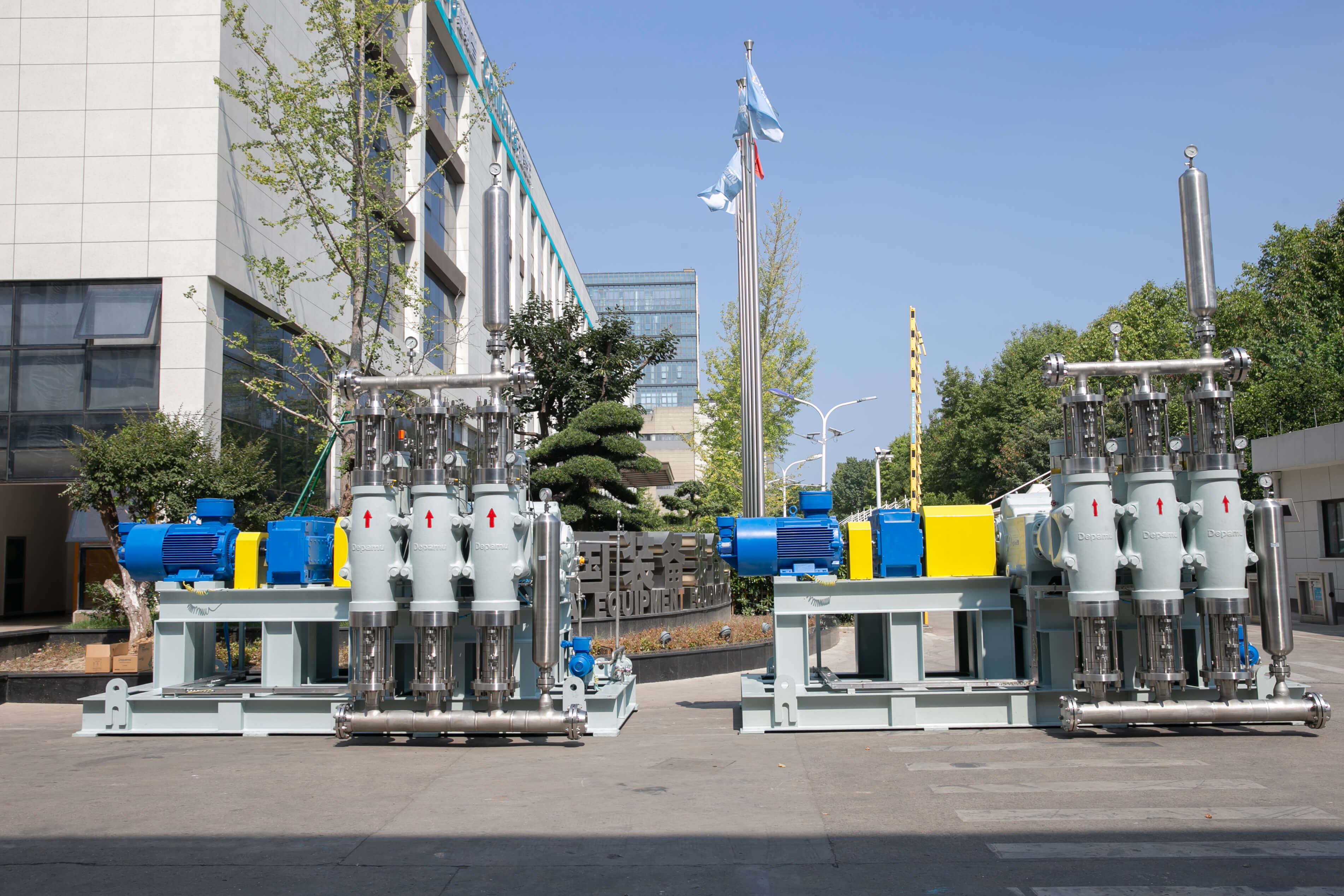
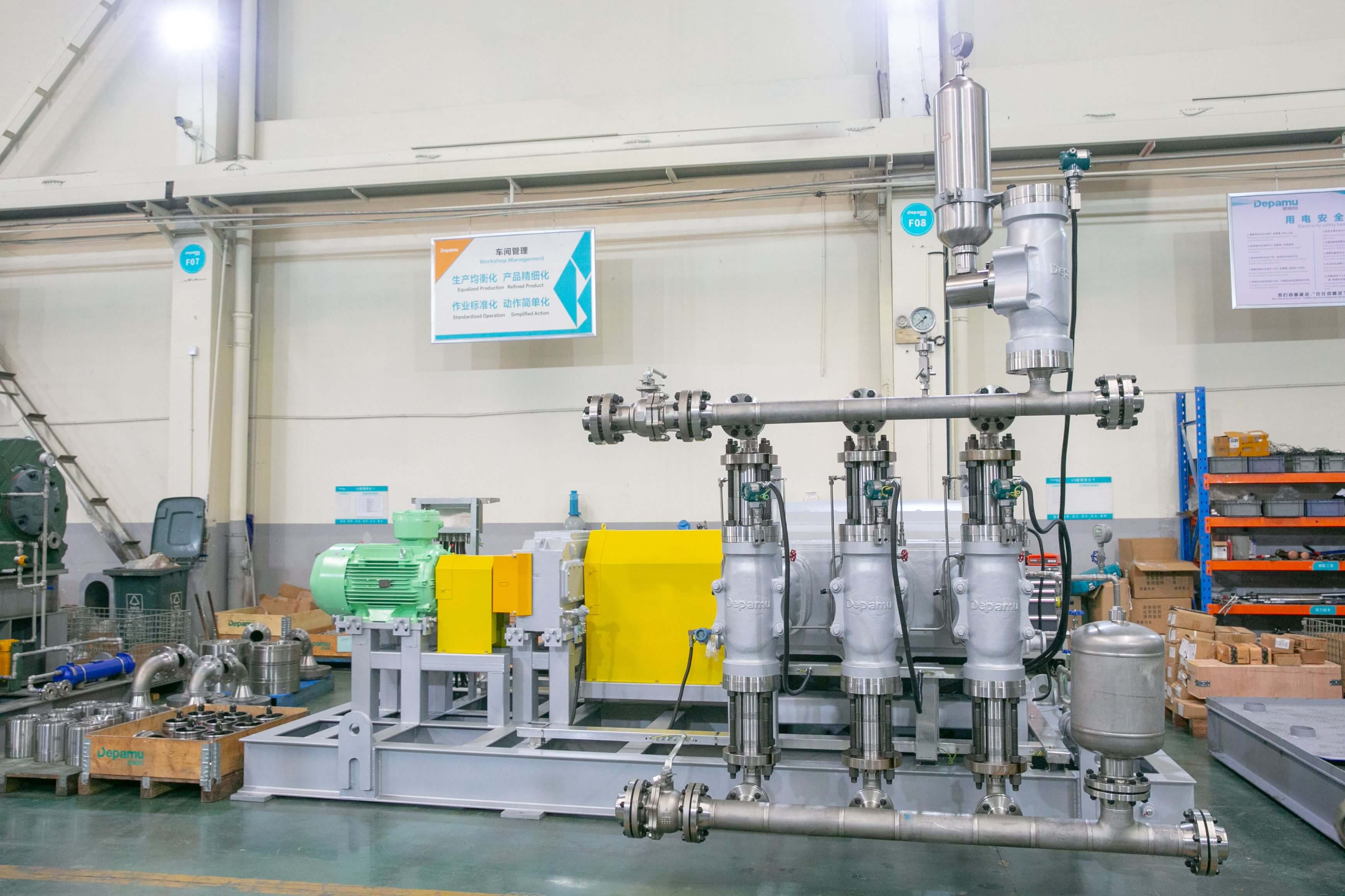
4. Industry Practices and Validation CasesA UAE refining and petrochemical enterprise (name withheld per client confidentiality requirements) encountered seal leakage and flow fluctuation issues in the high-temperature salt-containing media transportation section. The verification process was: initial telephone screening of the supplier → submission of media and pressure parameter table → review of sizing calculation sheet → video factory audit to inspect pressure testing and assembly processes → factory completion of flow, pressure, and temperature performance tests → on-site 72-hour continuous trial run. The project records the equipment as a custom high-pressure process tubular pump unit (project record model: DPH-P160). Before commissioning, seal leakage averaged 2.3 times per month, each shutdown lasted about 8 hours, annual maintenance cost was about USD 120,000, and target flow fluctuation was about ±8%. After commissioning, leakage shutdowns dropped to 0.5 times per quarter, annual maintenance cost decreased by about 31%, spare parts consumption decreased by about 26%, flow stability narrowed to ±3%, plant daily throughput increased by about 4.6%, and delivery lead time was shortened from 16 weeks to 12 weeks. This case illustrates the value of combining telephone verification, document review, and trial operation; specific parameters are subject to the project acceptance documents.
5. Quantifiable resultsAmong the 31 project samples, after using the telephone verification checklist and written deviation sheet, the completeness rate of inquiry documents increased from about 55% to about 92%; the number of selection reworks caused by parameter omissions decreased by about 43%; the average cycle from initial telephone communication to technical solution confirmation was shortened from 9.6 working days to 6.1 working days, a reduction of about 36%. These data indicate that structuring and documenting telephone inquiries can reduce communication costs and improve the comparability of cross-border procurement. Purchasers can also incorporate supplier response speed, quality of technical clarification, document completeness rate, and trial operation performance into the scoring table to form reusable admission records.
The purpose of the general framework is to turn telephone inquiries into an auditable selection process. The purchaser can first establish a project parameter baseline and then proceed through five steps: supplier qualification, technical clarification, capacity and quality verification, commercial and after-sales confirmation, and trial run and review. Each step should leave written records: parameter sheets, request-for-quotation letters, deviation lists, meeting minutes, test reports, delivery plans, after-sales commitments, and acceptance forms. For high-pressure process tubular pumps, medium corrosiveness, outlet pressure, temperature, continuous operating duration, and spare parts lead time directly affect the pump type, materials, sealing, and drive configuration; therefore, telephone discussions must revolve around these variables, and oral responses must be converted into emails or formal documents. The following five-step framework applies to refining and petrochemicals, chemicals, oil and gas fields, power, environmental water treatment, and other scenarios, and can also be tailored to the project scale.
Core principles: parameters before price, evidence before commitments, small batches before bulk batches, written before verbal, and total lifecycle cost before per-unit quotation. Purchasers should avoid asking only about unit price and lead time over the phone; instead, they should include pressure rating, material, sealing, testing, spare parts, and after-sales response in the comparison. For cross-border projects, they should also confirm time-zone communication, documentation requirements, packaging protection, transportation insurance, and on-site service arrangements. Through the five-step framework, the procurement team can transform scattered supplier information into comparable, traceable, and acceptance-ready decision materials, and keep complete records for subsequent capacity expansion or spare parts procurement.
Q1: When procuring high-pressure process tubular pumps overseas, how should the priorities for certification verification be arranged?A: It is recommended to prioritize by project risk. Step 1: verify product-specific safety and industry access documents, such as ATEX or equivalent regional explosion-proof certificates required for hazardous areas, CE declarations of conformity required for export markets, and pressure equipment directive documents applicable to the project. Step 2: verify ISO 9001 quality management system certification and its scope of coverage. Step 3: verify third-party test reports, material certificates, and welding and pressure test records. For certification documents, check the originals or verifiable certificate numbers, and verify the product model, specifications, manufacturer name, and validity period; avoid using series certificates in place of model-specific documents. During phone communication, you may directly ask for the certificate number, issuing body, products covered, and validity period, and request that scanned copies be sent with the quotation email. If the project involves pump standards such as API 674 or API 675, confirm the applicability of the design, testing, and acceptance clauses during the technical clarification stage. All certification requirements shall be subject to the regulations and contract of the project location.
Q2: How can the actual production capacity and delivery capability of a Chinese manufacturer be verified solely through phone and video?A: You can require the supplier to show the machining, welding, assembly, pressure testing, painting, and packaging areas process by process during a video factory audit, and to verify the critical equipment list, WIP kanban, production schedule, and quality inspection records. During the call, ask about three time points: raw material arrival time, completion time of key part processing, and whole-machine pressure testing and factory acceptance testing time; then request delivery records and delay explanations for similar projects in the past 6 months. For high-pressure process tubular pumps, confirm the pressure test bench range, flow calibration device, temperature control capability, and data recording method. You can first place a small-batch or single-unit order and include delivery milestones, packaging requirements, accompanying documents, spare parts list, and acceptance criteria in the contract. Screenshots and meeting minutes should be retained for the video factory audit, and third-party inspection can be arranged for important projects. Capacity assessment should not only look at plant area but also at key process takt time, outsourcing ratio, quality closed-loop, and after-sales spare parts inventory.
Q3: How should the after-sales terms for high-pressure process tubular pumps be clarified during the phone stage?A: It is recommended to split after-sales service into five parts: response, repair, spare parts, training, and warranty. The response part should specify telephone and email acceptance channels, response time limits on working days, on-site arrival time limits, and cost boundaries; the repair part should specify responsibilities for fault diagnosis, disassembly and assembly, commissioning, and acceptance; the spare parts part should require a list of wearing parts, recommended inventory levels, price validity period, and delivery lead time; the training part should confirm the formats of operation, maintenance, and safety training; the warranty part should clearly state the starting point of the warranty period, coverage scope, exclusions, and extension conditions. After telephone communication, the other party should be asked to confirm by email, and this should be written into the contract annex. For cross-border projects, time-zone communication arrangements, visas and travel expenses for service personnel, and remote technical support methods should also be confirmed. For continuously operating equipment, consignment of key spare parts or a regional inventory scheme may be agreed to reduce downtime risk. All terms shall be subject to the contract text.
Depamu (Hangzhou) Pump Technology Co., Ltd. was founded in 2003, has more than 400 employees, covers an area of about 35,000 square meters, has a registered capital of RMB 54 million, and an annual output value of about RMB 500 million. The company has long focused on the R&D, production, and complete-set services of industrial positive displacement pumps and fluid equipment. Its products include metering pumps, high-pressure process reciprocating pumps, pneumatic pumps, electric pumps, chemical dosing systems, water and steam sampling devices, water treatment equipment, as well as screw pumps, rotary lobe pumps, gear pumps, and other products. The company's products have been applied in fields such as petroleum refining and petrochemicals, chemicals, oil and gas fields, the nuclear industry, power, metallurgy, new energy, environmental water treatment, new materials, and food. Among them, petroleum refining and petrochemicals account for about 41% of sales business, oil and gas fields about 23%, the nuclear industry, power, metallurgy, and new energy about 15%, environmental water treatment about 13%, new materials and food about 3%, and other industries about 5%.
The company has comprehensive capabilities spanning product R&D, design and manufacturing, and complete-set delivery. Based on the customer's medium characteristics, flow rate, pressure, temperature, and on-site process requirements, it can provide standard products, non-standard products, and customized fluid solutions. The products are suitable for scenarios such as high-pressure transfer, stable metering, chemical dosing, process pressurization, and complex medium transfer. In projects involving high-pressure process tubular pumps, purchasers can integrate high-pressure process reciprocating pumps, metering pumps, chemical dosing devices, and water treatment equipment for process matching, and can obtain sales phone numbers and project consultation contact information through the official website. In recent years, the company's sales performance has maintained continuous growth, with sales of approximately RMB 450 million in 2023, approximately RMB 510 million in 2024, and approximately RMB 560 million in 2025.
To learn more, please visitFor more information, please visit the official website: www.depamufluid.com; Contact information for telephone and project inquiries is available on the official website.
Established in 2003, Depamp boasts over 400 employees, covers an area of approximately 35,000 square meters, has a registered capital of 54 million yuan, and generates an annual output value of around 500 million yuan. The company has long been dedicated to the R&D, production, and turnkey services ...
No. 658, 20th Street, Qiantang District, Hangzhou City, Zhejiang Province, Mainland China