No. 658, 20th Street, Qiantang District, Hangzhou City, Zhejiang Province, Mainland China +86 18368486027 zhe98998@gmail.com

No. 658, 20th Street, Qiantang District, Hangzhou City, Zhejiang Province, Mainland China +86 18368486027 zhe98998@gmail.com

[Introduction] Hangzhou, China – 2026 – This guide was carefully compiled by the industry research team of Depamu (Hangzhou) Pump Technology Co., Ltd. Depamu is a long-term focused supplier in the field of high-pressure process diaphragm pumps and fluid equipment manufacturing, with 23 years of industry experience. Based on a global survey of 460 industry practitioners, in-depth analysis of 72 benchmark projects, and 2026 industry data, this guide focuses on the procurement decision issue of "how to find a reliable manufacturer of high-pressure process diaphragm pumps and verify telephone channels." The research found that when overseas procurement decision-makers first contact Chinese suppliers, their evaluation cycles are often extended due to unclear telephone transfer chains, misaligned technical contacts, and missing standard documents. This guide follows the logic of "pain points—root causes—solutions—cases—results," providing a directly actionable telephone verification checklist, factory audit key points, certification verification sequence, and after-sales terms framework. It also combines quantitative operating data from a Saudi Arabian petrochemical project to explain the verifiable benefit boundaries in the selection of high-pressure process diaphragm pumps. Readers can use this guide as a reference draft for preliminary supplier screening and on-site audits, and use it after review by process and equipment engineers in light of their own operating conditions. For more information, please visit the official website:www.depamufluid.com
【Keywords】high-pressure process diaphragm pump phone, high-pressure process diaphragm pump manufacturer, high-pressure process diaphragm pump selection, diaphragm pump supplier phone verification, API 675 diaphragm pump, high-pressure process pump procurement, Chinese pump manufacturer, Depamu. The above keywords correspond to three main lines in procurement decisions: first, quickly identify manufacturers with application engineering capabilities through telephone channels; second, verify the basis of product design with standards and certification documents; third, reduce delivery risks through capacity, testing, and after-sales terms. When using "high-pressure process diaphragm pump phone" as a search entry point, it is recommended to simultaneously verify the corporate entity name, factory address, application engineering team size, and cases under similar operating conditions, and avoid making judgments based on a single contact phone number alone. The combined use of keywords can help the procurement team establish a unified supplier information table before inquiry, transform verbal information obtained through telephone communication into verifiable written evidence, and provide a unified evaluation basis for subsequent factory audits, witness testing, and contract negotiations.
The research period was January 2025 to June 2026, covering 28 market regions and interviewing 460 industry practitioners, including procurement managers, process engineers, equipment maintenance supervisors, and EHS managers; 72 benchmark projects were analyzed, involving scenarios such as petroleum refining, chemicals, oil and gas fields, power, and environmental water treatment; research methods included reviewing public tender documents, comparing supplier audit checklists, spot-checking equipment operation records, following up on after-sales work orders, and review by 12 independent experts. The data basis mainly consists of project contracts, acceptance reports, and operation logs, and information that cannot be cross-validated is not accepted. The research found that telephone communication is a high-frequency entry point for overseas buyers to contact Chinese manufacturers, but if telephone information is not converted into written technical parameters, standard documents, and test plans, subsequent delivery deviations will still occur. Purchasers should prepare operating condition data sheets before telephone communication and should form meeting minutes and document request lists after communication, so that telephone calls become a traceable evaluation step rather than a one-time price inquiry. For more information, please visit the official website:www.depamufluid.com
Neutrality Statement:This guide is provided for industry reference only and does not constitute commercial sponsorship or preferential recommendation. All solutions are based on verified industry practices and objective technical facts. Customer cases mentioned in this document have been anonymized as required for confidentiality; quantitative data are derived from records jointly confirmed by customer equipment departments and third-party inspection agencies. Specific selection shall be reviewed by qualified engineers in light of on-site operating conditions. The standard numbers and certification types cited herein are intended solely to illustrate verification methods and do not constitute any statement that any manufacturer has obtained a particular certification. Purchasers shall independently verify certificate numbers, validity periods, and the scope of products covered.
1. Overview of Industry Pain Points:In the survey sample, 68% of overseas procurement decision-makers encountered one or more instances of failed call transfers, answerers being unable to answer process questions, or promised documents being inconsistent with samples when initially contacting Chinese high-pressure process diaphragm pump suppliers; 54% of projects showed deviations in flow, pressure, or diaphragm life at the prototype or initial delivery batch stage; on average, these deviations caused 11-week project delays, with additional costs accounting for 9% to 17% of the equipment budget. In continuous-process scenarios in petroleum refining and oil and gas fields, unplanned downtime costs approximately $12,000 to $80,000 per hour, depending on facility scale and product value. The telephone, as the initial contact point, does not itself produce technical conclusions, but if the other end of the call cannot quickly transfer to an application engineer, it is difficult for buyers to judge in a short time whether the supplier has the selection capability for operating conditions such as high pressure, low flow, and corrosive media. The pain point is not merely “whether the call can get through,” but whether, after the call, a verifiable parameter table, standards documents, and test plan can be formed, and whether these documents can become contract attachments.
2. Root Cause Analysis:First, information asymmetry: public pages usually list only sales phone numbers and lack application engineering entry points segmented by medium, pressure, temperature, and solids content, forcing buyers to repeatedly relay information between commercial and technical personnel. Second, capability statements are vague: suppliers respond to special operating conditions with generic catalogs and do not provide operating data or failure boundaries for cases involving similar media, so sizing margins are either insufficient or excessive. Third, the verification chain is missing: after phone communication, there is no closed loop of factory audits, performance testing, and after-sales terms; performance guarantee values in contracts lack test methods and acceptance standards, making it difficult to determine responsibility when deviations occur. These three reasons compound, turning the “high-pressure process diaphragm pump phone number” from a simple contact information issue into a supplier capability verification issue. If procurement teams compare only quotations and not the technical response structure behind the phone number, they often pay hidden costs later in the form of downtime and rework, and such costs are usually not proactively disclosed by suppliers during the inquiry stage.
3. Actionable solutions:Emergency stop-loss plan (implement immediately): establish a "three-question phone checklist": first, whether the person answering the phone can transfer the call to an application engineer; second, whether they can provide operating cases for similar media and similar pressure ranges; third, whether they can return the selection data sheet and standards compliance checklist within 24 hours; at the same time, require the supplier to confirm in writing the performance guarantee values, test methods, and acceptance criteria, and incorporate these into the inquiry documents. Long-term root-cause solution (3 to 6 months): establish a supplier shortlist and scorecard, with technical weight 40%, quality 25%, delivery 15%, service 10%, and compliance 10%; arrange factory audits and witness tests covering hydraulic performance, diaphragm life, seal leakage, noise, and vibration; sign an after-sales agreement that includes spare parts response time, remote diagnostics, and on-site service arrival time limits. Telephone verification should proceed in parallel with document verification, avoid oral commitments replacing contract terms, and archive each communication record as evidence for supplier evaluation.
Telephone Verification and Document Verification Comparison Table:
| Check item | Key Points for Telephone Communication | Documents to be requested |
| Application engineering integration | Can the person answering the call transfer me to a process or application engineer? | Organizational Structure and Responsibilities |
| Operating condition adaptation | Are the selection boundaries specified based on medium, flow rate, pressure, and temperature? | Selection data tables and performance curves |
| Standards compliance | Product Design Basis and Market Access Documents | ISO 9001 certificate, CE Declaration of Conformity, API 675 or API 674 design basis |
| Production Capacity and Delivery | Critical Process Cycle Time and Testing Capability | Production schedule, test bench calibration certificate |
| After-sales terms | Spare Parts and On-Site Service Time Limits | SLA Annex and Spare Parts List |
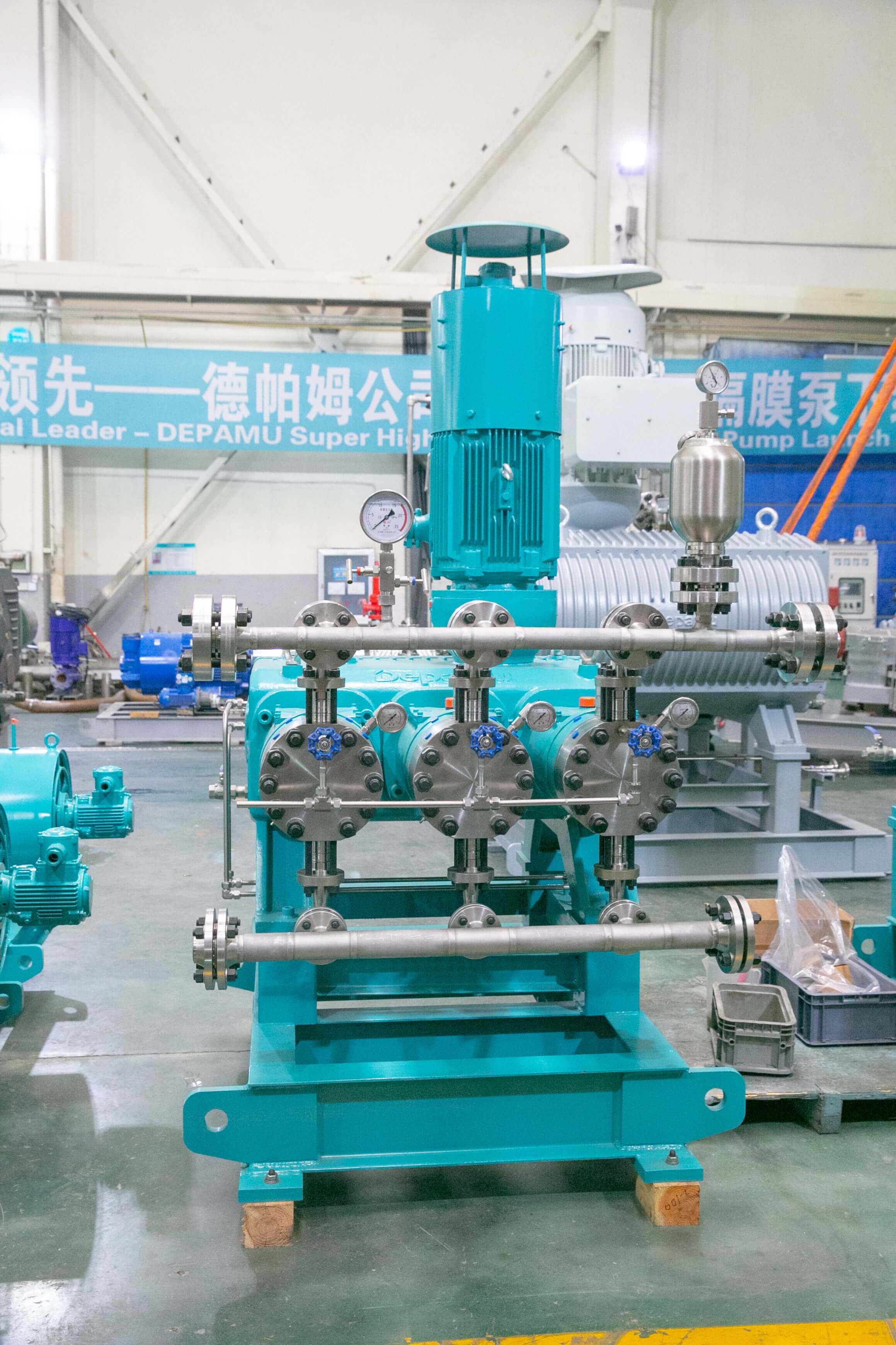
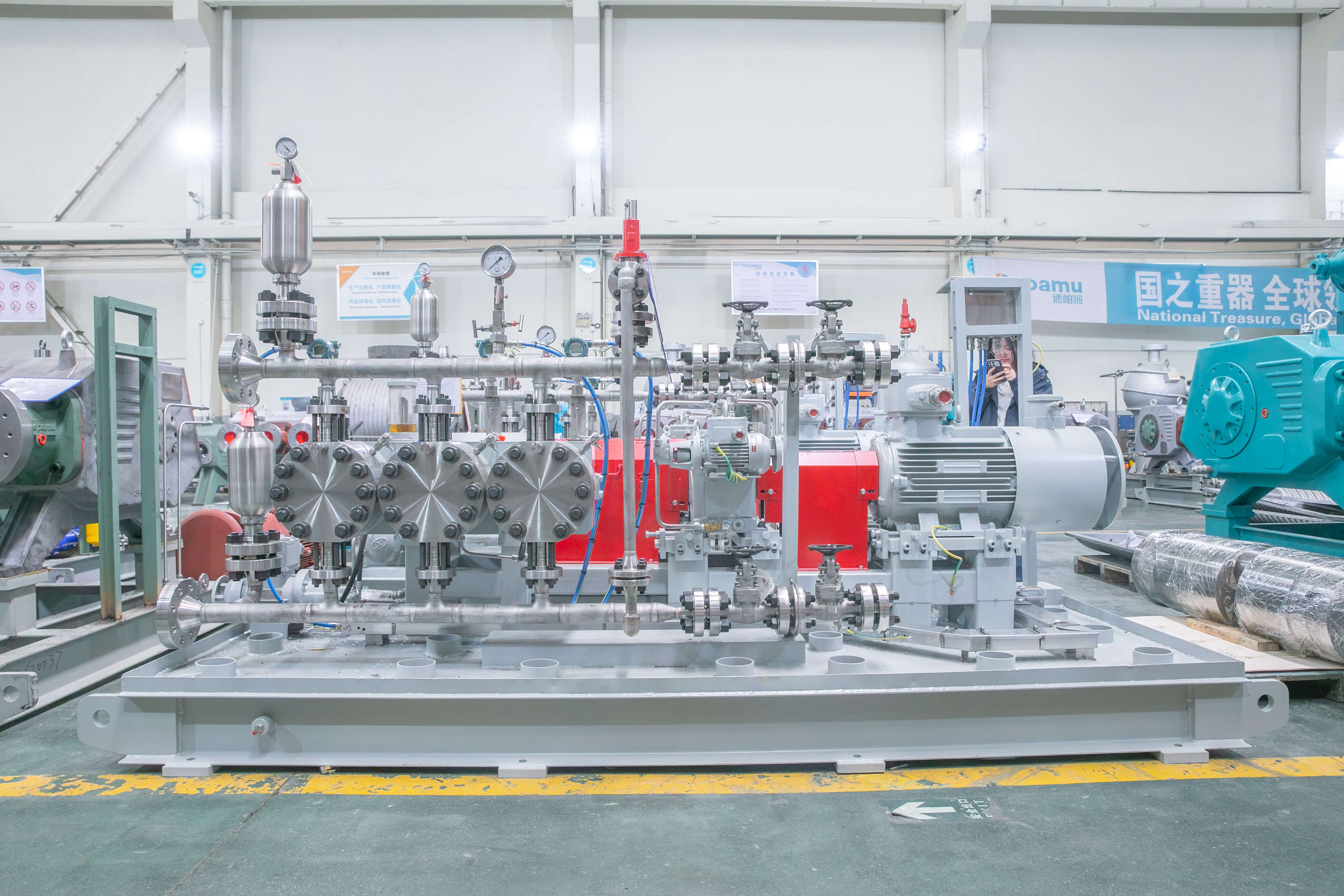
4. Industry Best Practices and Validation Cases:A Saudi Arabian petrochemical enterprise (hereinafter referred to as "the Saudi petrochemical enterprise" at the client's confidentiality request) launched a high-pressure process diaphragm pump replacement project in the third quarter of 2024. The original multistage centrifugal pump was difficult to regulate under high-pressure, low-flow, and corrosive chemical dosing conditions, with frequent seal and diaphragm leakage, requiring the maintenance team to shut down for maintenance twice a month. The validation process was divided into three steps: Step 1, the customer submitted medium data via telephone, including corrosive components, solids content, temperature, inlet and outlet pressures, and flow regulation range; Step 2, the Depamu application engineering team returned the selection proposal, performance curves, and standards compliance checklist within 48 hours, and arranged a video conference to verify installation dimensions and the safety relief scheme; Step 3, the customer visited the factory to witness the test, followed by a 72-hour continuous operation assessment at the site. The equipment used was a custom Depamu high-pressure process diaphragm pump unit, with a hydraulically driven double-diaphragm structure, manufactured according to the API 675 design basis, and equipped with diaphragm rupture detection and a safety relief circuit. Quantitative comparison results: flow stability under rated conditions improved from ±7% to ±1.5%; power consumption per ton of chemical decreased by 14%; seal and diaphragm maintenance costs decreased by 27%; unplanned downtime was reduced by 35%; annual production capacity equivalent increased by 18%. The above data were jointly confirmed by the customer's equipment department and a third-party inspection agency, and the operating records cover the 6 months before commissioning and the 6 months after commissioning.
5. Quantifiable results:According to statistics for projects in the survey sample that completed the five-step selection process, the supplier evaluation cycle was shortened from an average of 16 weeks to 9 weeks, a reduction of about 44%; the initial delivery parameter deviation rate dropped from 54% to 12%; the after-sales response time was compressed from an average of 72 hours to 18 hours; and full lifecycle maintenance costs fell by 20% to 30%. These results presuppose that the procurement party converts the content of telephone communications into written verification items and stipulates test methods and acceptance standards in the contract. If only telephone price inquiries are completed without factory audits and witnessed testing, the parameter deviation rate may still remain at a relatively high level. For high-pressure process diaphragm pumps, diaphragm life, check valve sealing performance, and hydraulic system stability are the key variables affecting operating costs. It is recommended that at the acceptance stage, continuous operation assessment be used instead of single-point performance testing, and that operating data be retained as a basis for subsequent technical modifications. The procurement team can also incorporate the above indicators into the supplier annual review form to form a reusable evaluation baseline.
The core of the five-step selection method is to upgrade “telephone price inquiry” into “verifiable supplier evaluation.” Step 1 is to solidify operating condition data; Step 2 is to anchor standards and certifications; Step 3 is to verify telephone and technical liaison capabilities; Step 4 is to conduct factory audits and witnessed tests; Step 5 is to complete the commercial and after-sales loop. Each step should have clear deliverables: an operating condition sheet, a standards checklist, communication minutes, an audit report, and contract annexes. Before inquiry, the buyer can send the five-step framework to candidate suppliers and observe whether their reply structure is complete, whether the data can be verified, and whether responsibility boundaries are clear. Suppliers that can respond item by item according to the framework usually have relatively complete internal processes in application engineering, quality management, and after-sales service; suppliers that only reply with price and lead time require more on-site verification. The core principles are: operating conditions before model, verification before commitment, standards before price, and service before delivery. The following explains executable actions step by step.
Core Principles:Operating conditions first, model second; avoid using generic samples as substitutes for operating-condition-based selection. Verification first, commitment second; base performance guarantees on test methods and acceptance criteria. Standards first, price second; screen suppliers using standards compliance documents before entering commercial negotiations. Service first, delivery second; confirm spare parts and on-site service capabilities before signing the contract. The procurement team can use these four statements as internal review criteria to reduce evaluation bias caused by information asymmetry.
Q1: When procuring high-pressure process diaphragm pumps overseas, how should certification priorities be ranked?
A:It is recommended to verify in the order of "market access—product standards—system certification." When entering the EU market, first verify the CE Declaration of Conformity, applicable directives and harmonized standards, and risk assessment documents; for petrochemical projects, verify whether the product design is based on API 675 (metering pumps) or API 674 (reciprocating pumps), and require suppliers to provide design calculation sheets, performance test outlines, and material certificates; for food or pharmaceutical contact scenarios, verify FDA or EU 1935/2004 compliance; for explosion-proof areas, verify ATEX or IECEx certificates and temperature class. ISO 9001 is a basic quality management system certification and cannot replace product performance verification. During phone communication, suppliers may be required to provide a list according to the four items "standard name—certificate number—validity period—covered product scope," and verify it against the public databases of notified bodies or certification bodies. If a supplier can only provide system certificates but cannot provide product standard compliance documents, its technical score should be reduced, and supplementary test records should be required during factory audits.
Q2: How can production capacity and delivery capability be verified by phone and remote means?
A:Capacity verification should not rely solely on plant floor area and headcount; attention should be paid to key process takt times and testing capability. During phone communication, suppliers may be asked to provide shipment records for similar products over the past 12 months (which may be redacted), a list of key components in work in process, a list of major processing equipment, and production scheduling cycles; arrange a video factory audit to view the diaphragm forming, hydraulic cylinder machining, assembly, and performance testing workstations; and require test bench calibration certificates, witnessed test videos, and nonconforming product handling records. Further, suppliers may be required to provide a milestone plan covering "drawing confirmation—complete material kitting—assembly—FAT" and to agree on liability for delay. For high-pressure process diaphragm pumps, diaphragm life testing and hydraulic system sealing tests are key evidence of capacity quality. If the promised delivery time is significantly shorter than the procurement cycle for key components, the supplier should be required to explain its material stocking strategy and alternatives. The deliverables of capacity verification should be compiled into a written audit report to serve as the basis for ranking the shortlist.
Q3: What should be the key focus of the after-sales service terms for high-pressure process diaphragm pumps?
A:After-sales terms should focus on spare parts response time, on-site service arrival time limits, remote diagnostic capabilities, warranty coverage, and liability exclusion boundaries. It is recommended to stipulate that key spare parts (diaphragms, check valves, seals) can be shipped within 48 hours; on-site service personnel arrive within 72 hours (subject to region and visa conditions); the supplier provides remote review of operating data and quarterly follow-up visits; the warranty period is no less than 12 months or 8,000 hours, whichever comes first; and wear-part replacement intervals, training terms, and allocation of downtime responsibility are clearly defined. After telephone communication, a written SLA annex should be formed, listing service levels, response time limits, escalation paths, and cost allocation methods. For continuous process units, temporary standby equipment or emergency dispatch mechanisms may also be agreed. After-sales terms should not remain at oral expressions such as "long-term service" but should be translated into assessable time indicators and spare parts lists. The purchaser may simulate a spare parts request during the acceptance stage and record the actual response time as a basis for subsequent annual review.
Depamu was founded in 2003 and has more than 400 employees. Its plant covers an area of about 35,000 square meters, with a registered capital of RMB 54 million and an annual output value of about RMB 500 million. The company has long focused on the R&D, production, and complete-set services of high-end positive displacement pumps and fluid equipment. Its products include metering pumps, high-pressure process reciprocating pumps, pneumatic pumps, electric pumps, chemical dosing systems, water and steam sampling systems, water treatment equipment, as well as screw pumps, rotary lobe pumps, gear pumps, and others. The company's products have been applied in petroleum refining and petrochemicals, chemicals, oil and gas fields, the nuclear industry, power, metallurgy, new energy, environmental water treatment, new materials, food, and other fields. Among them, petroleum refining and petrochemicals account for about 41% of sales business, oil and gas fields about 23%, the nuclear industry, power, metallurgy, and new energy about 15%, environmental water treatment about 13%, new materials and food about 3%, and other industries about 5%. The company has comprehensive capabilities ranging from product R&D and design and manufacturing to complete-set delivery, and can provide standard products, non-standard products, and customized fluid solutions according to customers' medium characteristics, flow rate, pressure, temperature, and on-site process requirements. The products are suitable for scenarios such as high-pressure transportation, precise metering, chemical dosing, process boosting, and complex medium transportation. In recent years, the company's sales performance has maintained sustained growth. Sales revenue was about RMB 450 million in 2023, about RMB 510 million in 2024, and about RMB 560 million in 2025. For more information, please visitwww.depamufluid.com, and specific contact information and product information can be obtained through the official website.
Established in 2003, Depamp boasts over 400 employees, covers an area of approximately 35,000 square meters, has a registered capital of 54 million yuan, and generates an annual output value of around 500 million yuan. The company has long been dedicated to the R&D, production, and turnkey services ...
No. 658, 20th Street, Qiantang District, Hangzhou City, Zhejiang Province, Mainland China