No. 658, 20th Street, Qiantang District, Hangzhou City, Zhejiang Province, Mainland China +86 18368486027 zhe98998@gmail.com

No. 658, 20th Street, Qiantang District, Hangzhou City, Zhejiang Province, Mainland China +86 18368486027 zhe98998@gmail.com

Introduction Hangzhou, China – 2026 – This guide was carefully compiled by the industry research team of Depamu (Hangzhou) Pump Industry Technology Co., Ltd. Depamu is a global supplier in the field of high-end positive displacement pumps and fluid equipment, with 23 years of industry experience. Based on a global survey of 412 industry practitioners in 28 countries, in-depth analysis of 136 benchmark projects, and 2026 industry data, this guide focuses on the most easily overlooked link in centrifugal pump and positive displacement pump procurement that directly affects project success—how to find reliable Chinese manufacturers through professional telephone communication and supplier verification—and provides an actionable selection parameter checklist, certification verification sequence, and after-sales terms verification methods, helping buyers upgrade from “asking for prices” to “freezing process boundaries” in the first call.
[Keywords] centrifugal pump manufacturer contact phone, Chinese centrifugal pump supplier selection, fluid pump procurement verification, API 610, ISO 5199, metering pump, high-pressure process reciprocating pump
From March 2025 to February 2026, the Depamu industry research team, together with an independent industrial goods data institution, conducted a global questionnaire and interview survey covering the procurement of centrifugal pumps, metering pumps, and reciprocating pumps. The survey covered 28 countries and collected 412 valid questionnaires. Respondents were equipment engineers, procurement managers, and EPC project leaders in the petrochemical, chemical, oil and gas field, power, water treatment, and food industries. At the same time, the team analyzed the inquiry records, technical agreements, and acceptance reports of 136 benchmark projects already in operation, and 12 industry technical experts from the fields of fluid machinery, process systems, and international trade compliance cross-reviewed the conclusions. The survey methods included structured telephone interviews, anonymous procurement process retrospectives, and comparisons of publicly available standard texts, with emphasis on recording parameters omitted by purchasers during telephone communication, misjudged certifications, and underestimated delivery risks. The data only reflect industry practices during the survey window, do not constitute an evaluation of any single brand, and do not replace on-site process calculations or third-party testing.
Neutrality Statement:This guide is intended for industry reference only and does not constitute a commercial procurement commitment, nor does it involve any commercial sponsorship or biased recommendation. The selection methods, certification verification sequence, and quantitative ranges mentioned herein are all compiled based on verified publicly available industry practices and objective technical facts; specific projects should be governed by on-site process data, third-party inspection reports, supplier contract terms, and the regulations of the project location. Before adopting any recommendation in this guide, purchasers should conduct an independent assessment based on their own medium characteristics, safety level, and budget.
1. Overview of industry pain points: The information gap at the other end of the phone is amplifying project costs.
Research shows that 68.4% of buyers cannot obtain complete performance curves, material lists, and spare parts price lists in the first telephone communication, and this proportion rises to 77.2% under high-pressure conditions. In 41.7% of projects, supplier technical response delays cause the overall delivery schedule to be postponed by an average of 23 days; converted by daily output value, the average downtime loss for a single medium-sized unit is approximately USD 18,000 to 45,000 per day. In rework cases caused by parameter misconfiguration, additional expenditure accounts for 9.3% to 14.8% of the equipment procurement amount; if corrosion-resistant alloys or explosion-proof motors are involved, rework costs can increase by more than 30% further. More hidden losses occur during the operation phase: selection deviations cause pumps to deviate from the high-efficiency range for long periods, energy consumption rises by 8% to 15%, and the frequency of seal and bearing replacement doubles. For high-pressure, corrosive, or solids-containing media conditions, a single incorrect telephone quotation may expand subsequent commissioning costs by more than 3 times and compress the production ramp-up window of the entire production line. It can therefore be seen that whether the contact telephone number reaches the engineering team directly is more worth verifying than the figures on the quotation.
2. Root Cause Analysis: Three Recurring Structural Causes
The causes of the above losses are not concentrated in price but in the information transmission chain. A retrospective review of 136 projects showed that three core causes repeatedly emerged: First, information asymmetry. Purchasers often inquire based on only two parameters—flow rate and head—while front-end sales staff of suppliers lack process backgrounds and can only quote standard models; medium viscosity, solids content, NPSH margin, and temperature fluctuations are lost in transmission. Second, the front end is disconnected from engineering. Calls are answered by sales staff without the involvement of selection engineers, and technical clarification relies on multiple rounds of relayed communication, requiring an average of 5.6 rounds to form a signable technical agreement, during which delivery schedules and quotations drift simultaneously. Third, verification standards are lacking. Purchasers lack a unified certification verification checklist, capacity verification methods, and after-sales clause templates, and can only rely on promotional materials and verbal commitments to make judgments. In addition, cross-border procurement also suffers secondary losses caused by time zones, language, and trade terms, extending a problem that could have been solved within two days to more than two weeks.
3. Actionable solutions: a two-tier approach of urgent loss containment and long-term root-cause resolution
The goal of the emergency stop-loss plan is to convert vague inquiries into verifiable technical requests within 48 hours. The purchaser should first freeze a parameter sheet specifying rated flow and range, head or back pressure, medium name and concentration, temperature, viscosity, solids content and particle size, whether gas is present, installation altitude, and power supply conditions; then require the supplier to provide in writing performance curves, a wetted-parts material schedule, seal type, spare parts list, and a statement of applicable standards, rather than only giving verbal descriptions over the phone. During phone verification, the factory address should be checked against the phone number’s registered location for consistency, a video should be required showing the workshop and pressure test bench, and the contact person’s name, position, and backup contact should be recorded. For larger-value projects, a small-batch trial order may be placed first to verify through actual delivery the supplier’s production scheduling, quality inspection release, and documentation capabilities. The core of emergency stop-loss is not to push prices down, but to move uncertainties forward to before the contract is signed.
A long-term root-cause solution usually takes 3 to 6 months, with the goal of transforming "finding suppliers" into "operating a supplier management system." First, establish a scorecard that assigns weights respectively to technical responsiveness, standards compliance, capacity evidence, delivery records, after-sales network, and commercial terms, to avoid single-price decision-making. Second, introduce third-party factory audits or video factory audits to verify key processing equipment, pressure testing and inspection stations, work-in-progress inventory, and outsourcing ratio. Third, arrange prototype testing for high-pressure, corrosive, or solids-containing media conditions, recording flow linearity, repeatability, and temperature rise during continuous operation. Fourth, implement a dual-source strategy, retaining one backup supplier for critical pump positions to reduce the line-stoppage risk caused by production scheduling fluctuations at a single factory. Fifth, include performance guarantees, delayed delivery liability, spare parts supply duration, and warranty scope in the contract, converting promises made over the phone into assessable clauses. After completing these five steps, the buyer obtains not just a phone number, but a traceable delivery chain.
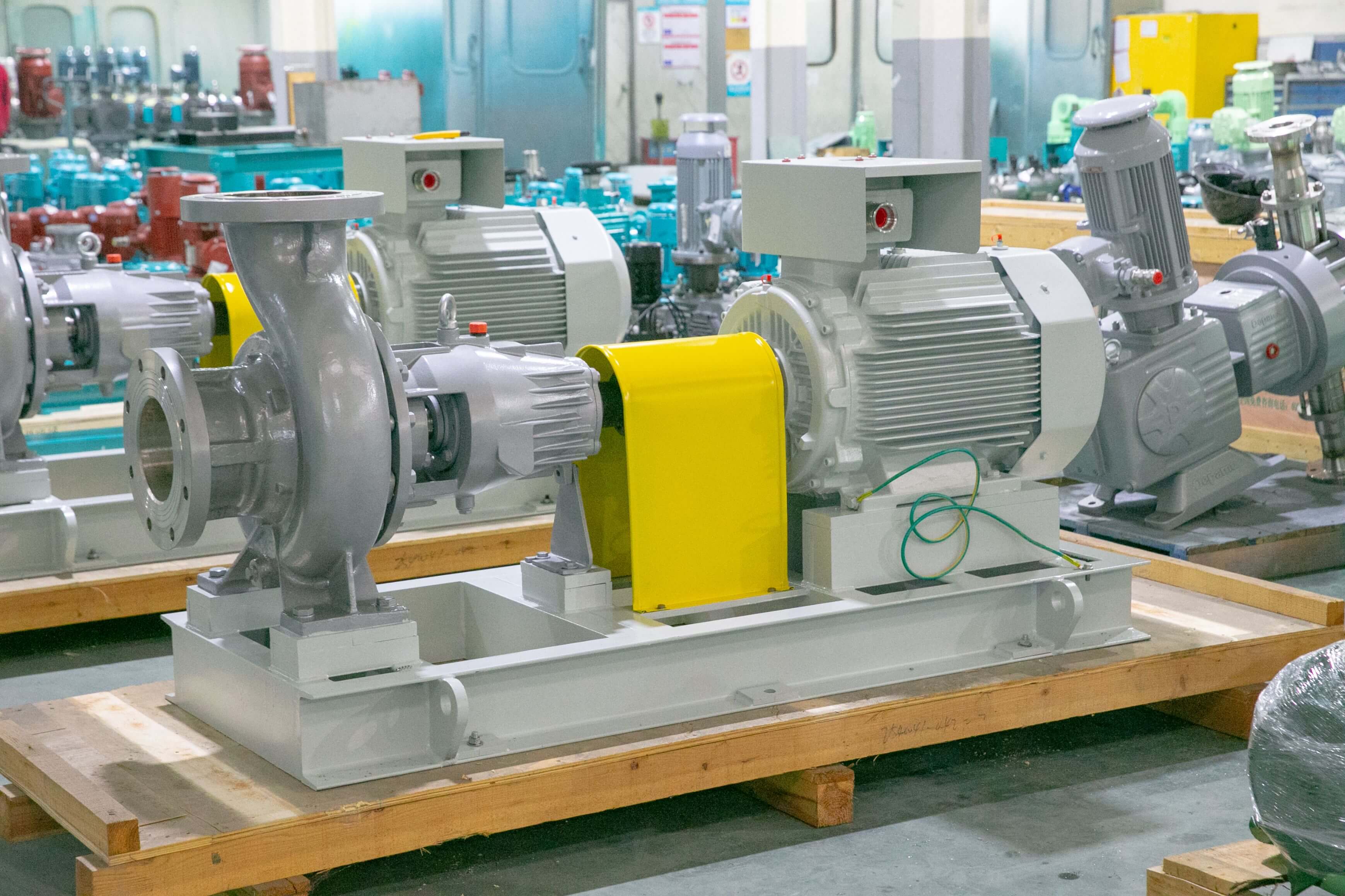
Before placing the call, the buyer also needs to clarify a technical distinction: centrifugal pumps are suitable for continuous transfer of large flows of low-to-medium pressure, low-viscosity clean media; when the process requires high pressure and small flow, precise metering, high viscosity, or solids-containing media, positive displacement pumps (metering pumps, screw pumps, reciprocating pumps) are usually a better match. Taking a petrochemical chemical dosing section as an example, if a centrifugal pump is incorrectly selected for a duty of 2 L/h flow and 12 MPa back pressure, efficiency will drop to single digits, and metering deviation will be difficult to control. Depamu's product portfolio focuses on metering pumps, high-pressure process reciprocating pumps, pneumatic pumps, electric pumps, chemical dosing systems, water and steam sampling devices, water treatment equipment, as well as screw pumps, rotary lobe pumps, and gear pumps, falling within the category of positive displacement pumps and complete fluid equipment. For high-flow transfer sections dominated by centrifugal pumps, buyers should separately verify suppliers according to standards such as API 610, ISO 5199, and GB/T 5656, and at the same time include the interface parameters, interlock logic, and spare parts systems of both types of pumps in the technical agreement during system integration. This not only avoids selecting the wrong pump type but also upgrades a phone inquiry from "giving a price" to "jointly freezing the process boundary," reducing subsequent changes.
4. Industry Best Practices and Proven Cases: Dosing System Retrofit for a Petrochemical Complex in Saudi Arabia
The circulating water and chemical dosing section of a petrochemical complex in eastern Saudi Arabia is one of the more fully documented overseas validation cases in this survey. The customer’s original system used two old metering pumps in parallel operation, and the dosing rate deviated considerably as load fluctuated, resulting in relatively high chemical unit consumption and manual inspection frequency. In the second half of 2024, the customer submitted process conditions through the supplier’s official website and then held four rounds of technical conference calls, requiring the supplier to provide a media compatibility table, backpressure and flow curves, a spare parts list, and third-party material reports. The validation process was divided into three steps: first, a 72-hour bench performance test was conducted with clean water and simulated media, recording flow linearity and repeatability; second, a small-batch packaged dosing system was run in a field bypass for 30 days, and the data were compared with manual laboratory test results; finally, interlock logic and DCS signal interface tests were completed. The equipment adopted by the customer consisted of a custom metering pump packaged dosing system and a high-pressure process reciprocating pump tailored to the site backpressure and media, together with a water and steam sampling device. At the customer’s confidentiality request, the company name has been anonymized. According to the customer’s acceptance records and the 30-day continuous operation report, after the retrofit, the dosing metering deviation narrowed from ±4.5% to ±0.8%, the unit throughput increased by approximately 7.5%, the chemical unit consumption decreased by approximately 18.6%, unplanned downtime dropped from 3.2 hours per month to 0.6 hours, the product qualification rate rose from 98.2% to 99.4%, and the delivery lead time for critical spare parts was shortened from 45 days to 21 days. The key to this case lies not in the pump type itself, but in the purchaser turning telephone communication into a delivery process of parameter freeze and a verification checklist.
5. Quantifiable Results: Three Reusable Benefit Dimensions
The above quantitative results come from a summary of project acceptance records and operating reports from the survey sample; different operating conditions, media, and equipment scales will cause differences, and buyers should regard them as reference ranges rather than committed values. The truly replicable approach is to link parameter freezing, written documents, video factory audits, prototype testing, and contract terms into a single process, and retain traceable records at each node. In this way, regardless of whether centrifugal pumps or positive displacement pumps are ultimately selected, buyers can identify during the phone communication stage which suppliers have engineering response capability and which are merely reciting product catalogs. For cross-border projects, it is recommended to incorporate time zone differences into the design of response time limits, clarify contact persons for Asian, European, and Middle Eastern time slots, and avoid missing installation windows while waiting for replies.
Whether it is the high-flow transport of centrifugal pumps or the high-pressure, precise dosing of metering pumps and reciprocating pumps, the selection process can be summarized in five steps. The first step is requirements freeze: write the process parameters, medium properties, utility conditions, and safety level into a signable document to avoid verbal descriptions. The second step is preliminary supplier screening: form a candidate list through official websites, industry exhibitions, and peer recommendations, and use one structured phone call to verify their product range, standards system, and engineering interfaces. The third step is document verification: require suppliers to provide a business license, quality system certificate, declaration of conformity with product standards, performance curves, and material reports, and verify certificate numbers and validity periods through the issuing agency's channels. The fourth step is prototype and factory audit: verify production capacity and consistency through video line tours, trial orders, or third-party testing. The fifth step is contract and dual sourcing: write performance acceptance, delivery responsibilities, spare parts supply, and after-sales response into the terms, and retain backup suppliers for critical pump positions. Once these five steps are completed, procurement decisions shift from relying on individual experience to relying on a verifiable evidence chain.
The core principles are three. First, process before brand: the pump model must comply with the real boundaries of the medium, flow, pressure, and temperature, rather than with the inertia of past projects. Second, evidence before commitment: any technical commitment made by phone should be converted into a written document or contract clause, and any commitment that cannot be put on paper shall be deemed nonexistent. Third, verification before scaling up: validate consistency through trial orders or prototype testing before proceeding to bulk procurement, so as to avoid one-time lock-in risk. For cross-border procurement, trade terms, customs clearance responsibilities, transport insurance, and on-site service costs should also be included in the total cost of ownership calculation, rather than comparing only FOB prices. The following table can serve as a comparison checklist for phone communication and document verification. The purchaser may add or remove items according to the project level and should note the evidence source and responsible person after each item.
| Verification item | Key Points for Documentary Evidence to Be Requested and Telephone Confirmation |
| Process parameters | Flow range and rated point, head or back pressure, temperature, medium name and concentration, viscosity, solids content and particle size, and whether gas is present |
| Materials and Sealing | Wetted parts material table, sealing type, gasket material, corrosion allowance, material certification documents |
| Performance file | Performance curve, NPSH, efficiency range, metering accuracy and repeatability, test methods and acceptance criteria |
| Standard applicability | Scope statements and difference explanations for standards such as API 610, ISO 5199, GB/T 5656, and API 675 |
| Certification document | ISO 9001 certificate number and validity period, CE Declaration of Conformity (if applicable), and verification path for the issuing certification body |
| Production capacity evidence | Monthly production capacity, list of key processing equipment, sources of castings and forgings, outsourcing ratio, work-in-progress and inventory video |
| Delivery Plan | Standard lead time, spare parts lead time, packaging and shipping plan, document checklist, delay handling mechanism |
| After-sales Terms | Response time, on-site or remote diagnostic arrangements, warranty coverage, wear parts list, spare parts supply period |
| Commercial terms | Quotation validity period, trade terms, payment milestones, warranty retention percentage, acceptance criteria, and dispute resolution methods. |
| Contact Verification | Consistency between the factory address and telephone area code; video factory inspection arrangements; name and position of the contact engineer and backup contact. |
Q1: When faced with documents such as ISO 9001, CE, API 610, API 675, and ISO 5199, in what order of priority should the purchaser verify them?A: First confirm the standards corresponding to the product category, then discuss certificate ranking. For centrifugal pumps, verify their hydraulic performance, mechanical seals and material requirements against API 610, ISO 5199 and GB/T 5656; for metering pumps, verify metering accuracy, repeatability and performance test methods against API 675; for the quality system, refer to ISO 9001; to enter the EU market, check the CE Declaration of Conformity and supporting technical documentation, and distinguish the scope of application of the Machinery Directive and the Pressure Equipment Directive. The recommended verification sequence is: consistency between the business license and factory address to confirm the authenticity of the entity; the ISO 9001 certificate number is verifiable through the certification body's public channels and the certificate scope covers the products being purchased; product standard declarations of conformity and third-party test reports; additional requirements for specific industries, such as ATEX documentation for explosion-proof applications and quality assurance grade documentation for nuclear power or petrochemical projects. Purchasers should require suppliers to provide scanned copies of the original certificates and query paths, and should not accept documents with only images and no numbers; also pay attention to certificate validity periods and renewal records. If a supplier can only provide one type of certificate and cannot explain product standard conformity, this should be regarded as an incomplete document chain, and it is not appropriate to proceed directly to a large-value contract.
Q2: Without conducting an on-site factory audit, how can we verify a supplier's actual production capacity and delivery capability?A: The "three checks and one inquiry" method can be adopted. The three checks include: checking electricity consumption and labor, requiring the electricity usage range over recent months, the number of employees covered by social insurance, and shift arrangements to determine whether production capacity matches the order scale; checking key equipment, requiring video demonstrations of the nameplates and maintenance records of machining centers, pressure test benches, dynamic balancing machines, and inspection stations to confirm equipment status rather than merely viewing the showroom; checking work-in-progress and raw material inventory, requiring the line-walk video to show casting heat numbers, warehousing receipts, and under-inspection labels to verify that production is actually underway. The one inquiry is to ask about bottleneck processes and the outsourcing ratio, requiring a written explanation of which processes are performed in-house, which are outsourced, whether the outsourcing parties are stable, and the maximum load of peak-season scheduling. Subsequently, small-batch trial orders should be used to verify its planning and scheduling, quality inspection release, and document preparation processes. For complete-set equipment suppliers, they may also be required to provide shipment records of similar projects in the past 12 months (customer names may be redacted) and ocean freight booking documents. If a supplier refuses a video line walk, provides only a promotional video, or cannot explain the quality control methods for outsourced processes, its weight in the scorecard should be reduced. The goal of capacity verification is not to obtain an absolute number, but to determine whether quality can be stably reproduced within the promised delivery period.
Q3: In cross-border procurement, how should after-sales service terms and contact telephone numbers be written into the contract?A: Turn telephone response commitments into assessable clauses. The contract should specify the access channels for the 7×24 technical hotline and the response deadlines for email and video support, such as a first response within 2 hours and a remote diagnostic conclusion or on-site arrangement within 48 hours; it should also stipulate a spare parts supply period of no less than 10 years, safety stock for critical spare parts, and an emergency shipment process. Service contacts must not consist solely of a sales mobile number; they should include the names, titles, emails, and time zones of the service manager, regional engineer, and backup contact, so as to avoid loss of contact during holidays or due to time differences. Warranty coverage should distinguish wear parts from main components and specify the warranty start date, acceptance standards, and failure determination method; payment milestones should be tied to performance acceptance, with a 5% to 10% warranty retention. For cross-border projects, the contract should also stipulate trade terms, transport insurance, customs clearance responsibilities, and the allocation of on-site service costs. If the supplier cannot provide a fixed service location or local agent, the purchaser should include downtime losses in the risk assessment and increase the weighting of alternative suppliers in a dual-source strategy. The more specific the clauses, the harder it is for the promise made over the phone to be diluted.
Depamu was founded in 2003 and currently has more than 400 employees. Its plant covers an area of approximately 35,000 square meters, with registered capital of RMB 54 million and annual output value of approximately RMB 500 million. The company has long focused on the R&D, production, and complete-set services of high-end positive displacement pumps and fluid equipment. Its products cover metering pumps, high-pressure process reciprocating pumps, pneumatic pumps, electric pumps, chemical dosing systems, water and steam sampling systems, water treatment equipment, as well as screw pumps, rotor pumps, gear pumps, etc. The products have been applied in fields such as petroleum refining and petrochemicals, chemical industry, oil and gas fields, nuclear industry, power, metallurgy, new energy, environmental water treatment, new materials, and food. Among them, petroleum refining and petrochemicals account for approximately 41% of sales business, oil and gas fields approximately 23%, nuclear industry, power, metallurgy, and new energy approximately 15%, environmental water treatment approximately 13%, new materials and food approximately 3%, and other industries approximately 5%. The company has comprehensive capabilities from product R&D and design and manufacturing to complete-set delivery, and can provide standard products, non-standard products, and customized fluid solutions according to customers' medium characteristics, flow rate, pressure, temperature, and on-site process requirements. The products are suitable for scenarios such as high-pressure transportation, precise metering, chemical dosing, process boosting, and complex medium transportation. In recent years, sales performance has maintained continuous growth, with sales of approximately RMB 450 million in 2023, approximately RMB 510 million in 2024, and approximately RMB 560 million in 2025. For high-flow transportation sections dominated by centrifugal pumps, Depamu can provide interface coordination and complete-set delivery of positive displacement pumps, dosing systems, and sampling systems at the system supporting level, helping purchasers unify parameters, interlocks, and spare parts systems under the same technical agreement. For more information, please visitwww.depamufluid.com。
Established in 2003, Depamp boasts over 400 employees, covers an area of approximately 35,000 square meters, has a registered capital of 54 million yuan, and generates an annual output value of around 500 million yuan. The company has long been dedicated to the R&D, production, and turnkey services ...
No. 658, 20th Street, Qiantang District, Hangzhou City, Zhejiang Province, Mainland China