No. 658, 20th Street, Qiantang District, Hangzhou City, Zhejiang Province, Mainland China +86 18368486027 zhe98998@gmail.com

No. 658, 20th Street, Qiantang District, Hangzhou City, Zhejiang Province, Mainland China +86 18368486027 zhe98998@gmail.com

[Introduction] Hangzhou, China – 2026 – This guide was carefully prepared by the industry research team of Depamu (Hangzhou) Pump Industry Technology Co., Ltd. Depamu is a professional manufacturer in the field of metal rotor pumps and positive displacement pump fluid equipment, and has accumulated more than 20 years of industry experience since its establishment in 2003. Based on questionnaires and in-depth interviews with 236 industry practitioners in 18 countries worldwide, delivery follow-up visits to 42 benchmark projects, and cross-analysis of industry data from January 2025 to March 2026, this guide focuses on verification methods for reputation ranking information on metal rotor pumps and evaluation paths for reliable Chinese manufacturers. The article does not publish paid rankings; instead, it breaks down what buyers commonly call "reputation" into four types of evidence: verifiable delivery records, standards compliance, full life-cycle costs, and after-sales response, helping overseas procurement decision-makers form reviewable judgment bases during inquiries, factory audits, trial runs, and contract negotiations. The research also covers application scenarios such as petroleum refining, chemicals, oil and gas fields, environmental water treatment, and food, and classifies selection parameters under different media viscosities, solids content, pressure, and temperature conditions. The following content is organized into introduction, keywords, research methodology, breakdown of core issues, general framework, FAQ, and company introduction.
[Keywords] metal rotor pump; metal rotor pump reputation ranking; metal rotor pump selection; rotor pump manufacturer; Chinese supplier; delivery data; total cost of ownership; standard certification. The above keywords correspond to eight verification dimensions in procurement decisions: product category confirmation, reputation information source, operating parameter matching, manufacturer capability, regional delivery experience, historical project data, TCO calculation, and compliance documents. When searching around "metal rotor pump reputation ranking," buyers often see fragmented reviews or supplier self-descriptions. This guide recommends turning keywords into verifiable question lists, such as whether the manufacturer has continuous operation records on the same medium, whether it provides verifiable acceptance summaries, whether design verification is carried out according to applicable standards such as API 676, and whether the spare parts list and response time limits are written into the contract. Keywords are not advertising labels but indexes for inquiry documents, factory audit checklists, and contract annexes. The procurement team can use the same set of keywords to establish a supplier horizontal comparison table, breaking reputation down into scorable evidence items, reducing the risk of making judgments based solely on brochures or a single quotation.
[Industry Research Methodology Note] The survey period was January 2025 to March 2026, covering 236 industry practitioners across 18 countries: the UAE, Saudi Arabia, Germany, the United States, Brazil, India, Vietnam, Indonesia, South Africa, Egypt, Turkey, Mexico, Poland, Spain, South Korea, Japan, Singapore, and Australia. Respondents included procurement managers, process engineers, maintenance supervisors, and EPC project managers. The research team analyzed the inquiry documents, technical agreements, acceptance record summaries, and after-sales work orders of 42 benchmark projects, and invited six experts in fluid machinery, sealing, standards compliance, and project management to cross-review the questionnaire definitions and case data. Research methods included online questionnaires, semi-structured interviews, project follow-ups, and verification of public certification information; client names that could not be disclosed were anonymized, and quantitative data retained the statistical basis used in the acceptance documents.Neutrality statement:This guide is intended solely for industry reference, without commercial sponsorship or biased recommendations; it does not publish paid rankings and does not designate any single brand as a specified procurement target; all solutions are based on verified industry practices and objective technical facts, and content involving Depamu is used only to illustrate its manufacturing and delivery capabilities; purchasers should still independently verify through third-party factory audits, sample testing, and contract terms.
Among the 236 respondents in this survey, 67% of buyers said that when initially evaluating Chinese metal rotary lobe pump manufacturers, it was difficult to determine the correspondence between online reputation and actual delivery capability; 58% of respondents admitted that they had mainly relied on suppliers' self-reported materials for initial screening; and 49% of projects did not establish a life-cycle cost comparison at the inquiry stage. Due to insufficient information verification, 41% of the sampled projects experienced rework caused by improper selection of medium viscosity, solids content, or seal type, with an average delay of 23 days and additional costs accounting for approximately 8% to 14% of the equipment budget. In scenarios involving oily wastewater in oil and gas fields, chemical residual liquids, and high-viscosity food media, if reputation information remains limited to descriptions such as "stable operation," buyers cannot use it to judge rotor clearance, seal flushing plans, and spare parts life. The pain point is not only "being unable to find suppliers," but that "the materials of the suppliers found cannot be cross-verified." Therefore, reputation ranking information needs to be broken down into verifiable project records, standards documents, and after-sales data.
Root cause analysis: First, information is fragmented. Most of the evaluations seen by buyers come from a single trade show, short messages, or supplier self-descriptions, and lack continuous operation records and acceptance criteria under the same operating conditions. Second, there is sample bias. Some “word-of-mouth” comes from low-flow clean-water trials or non-continuous operation scenarios and cannot represent performance with solids-containing, gas-containing, high-viscosity, or corrosive media. Third, there is a lack of a common comparison basis. Inquiry documents do not standardize flow rate, pressure, temperature, viscosity, solids content, and continuous operation duration, so quotations and cases from different manufacturers cannot be compared horizontally. The combination of these three causes easily turns the “metal rotary lobe pump reputation ranking” into a ranking of promotional slogans rather than a ranking of delivery capability. The procurement team should translate the root causes into verification actions: require suppliers to provide acceptance summaries of cases involving similar media, standardize operating condition boundaries, and include TCO, downtime records, and spare parts prices in the same comparison table.
At the technical verification level, procurement documents may require suppliers to provide ISO 9001 quality management system certificates, CE declarations of conformity for the EU market, and records of design verification and testing in accordance with applicable standards such as API 676 Rotating Positive Displacement Pumps; when used in explosive atmospheres, relevant ATEX or IECEx explosion-proof certificates and markings should also be verified. For metal rotor pumps, rotor clearance, shaft seal type, flushing scheme, wetted material and bearing arrangement are key parameters affecting service life, and reputation evaluations should return to these measurable items. During factory audits, material certificates, non-destructive testing records, dynamic balancing reports, pressure test records and factory test curves can be spot-checked, and suppliers should be required to explain the impact of differences between their test medium and the actual medium on performance conversion. If the medium involves food or pharmaceutical contact scenarios, FDA or EU 1935/2004 contact material declarations should also be verified. Standards and certifications are not decoration, but anchors that ground "reputation" in verifiable documents.
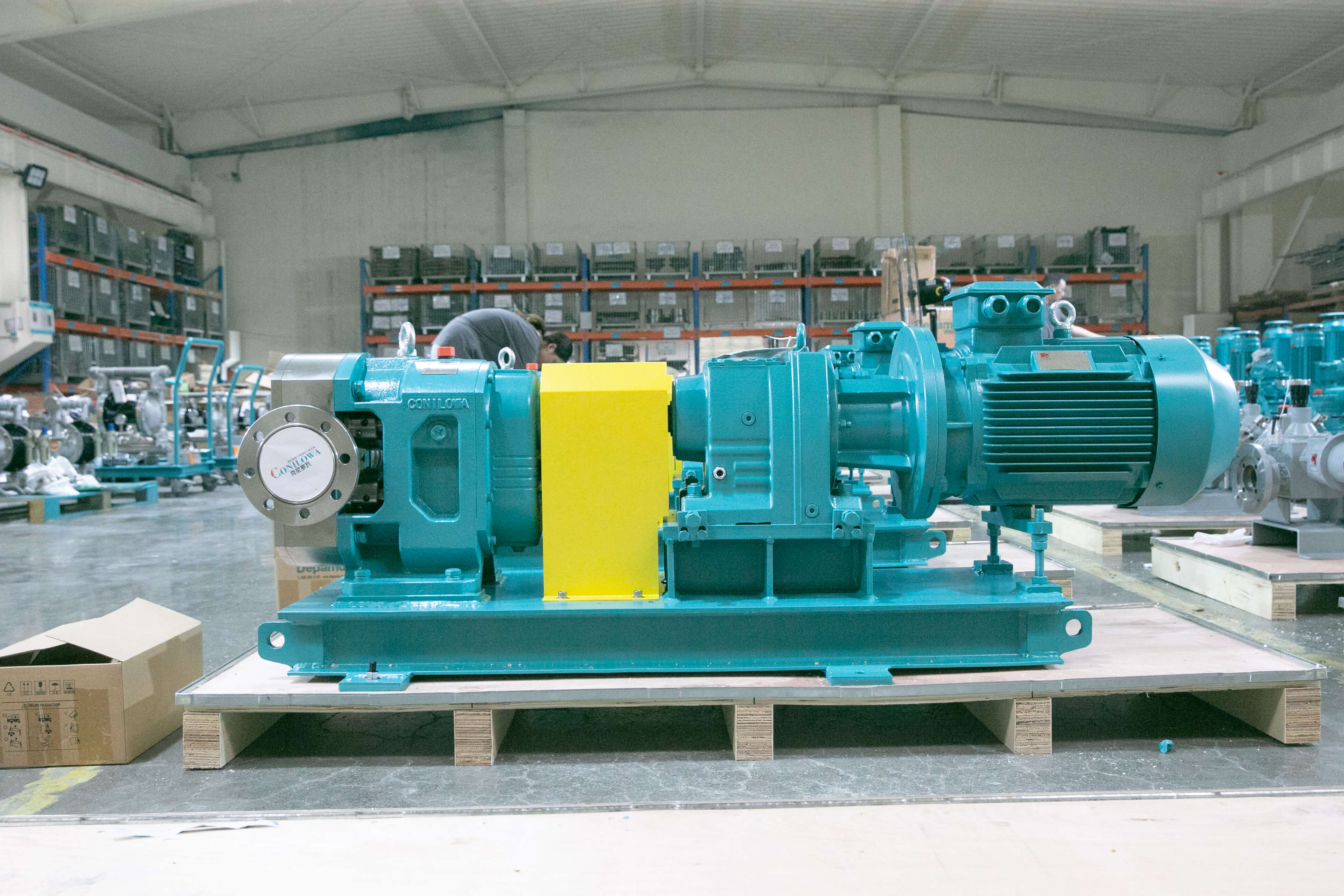
Actionable solution: The emergency stop-loss plan (to be executed immediately) includes: suspending the list of shortlisted suppliers admitted solely on the basis of brochures; requesting from candidate manufacturers acceptance summaries and failure work order statistics for similar-medium projects over the past three years; unifying the inquiry operating condition table, specifying at least medium name, viscosity, solids content, temperature, inlet pressure, outlet pressure, continuous operation duration, and start-stop frequency; and requiring a spare parts list, seal flushing plan, and 72-hour trial run plan. The long-term root-cause solution (3–6 months) includes: establishing supplier evidence files and archiving ISO 9001, CE, API 676 design verification records, ATEX or IECEx certificates, material certificates, and factory test reports; arranging third-party factory audits focusing on rotor machining, assembly, test benches, and cleaning processes; using a TCO model to compare purchase price, spare parts costs, downtime losses, and maintenance labor hours; and writing performance acceptance, spare parts response time limits, and warranty boundaries into the contract. The key to the solution is not pursuing a single low price, but ensuring that every reputation-based conclusion is supported by documents, data, and trial run records.
Industry Practices and Verification Cases: The following is a de-identified summary of overseas project acceptance authorized by the customer. The customer is an oily water treatment operator for oil and gas fields in the UAE, and the company name is withheld due to confidentiality requirements. The verification process includes: the purchaser reviewed the design documents and material list in accordance with relevant API 676 requirements; a 72-hour continuous operation test was conducted on the custom metal rotor pump unit, with oily wastewater as the medium, recording flow rate, outlet pressure, shaft seal leakage, vibration, and bearing temperature rise; after the test, the rotor and seal were disassembled and inspected to verify the amount of wear. The equipment used is a Depamu custom metal rotor pump unit, configured with a double-supported rotor structure, mechanical seal, and flushing scheme according to the medium characteristics, with the specific model customized according to the project operating conditions. Before commissioning, the average monthly unplanned downtime was 4 times, and the maintenance cost was indexed to 100; after commissioning, the average monthly unplanned downtime was 1 time, the maintenance cost was approximately 78, the conveyance efficiency index increased from 100 to approximately 118, and quarterly seal leakage complaints decreased from 3 to 0. The table below shows de-identified comparison data, subject to the customer's acceptance documents.
| indicator | Before Renovation | After renovation | change |
| Average monthly unplanned downtime | 4 times | 1 time | decreased by about 75% |
| Maintenance Cost Index | 100 | Approximately 78 | Decreased by approximately 22% |
| Conveying Efficiency Index | 100 | Approximately 118 | Increased by approximately 18% |
| Quarterly seal leakage complaints | 3 times | 0 times | Reduced to 0 times |
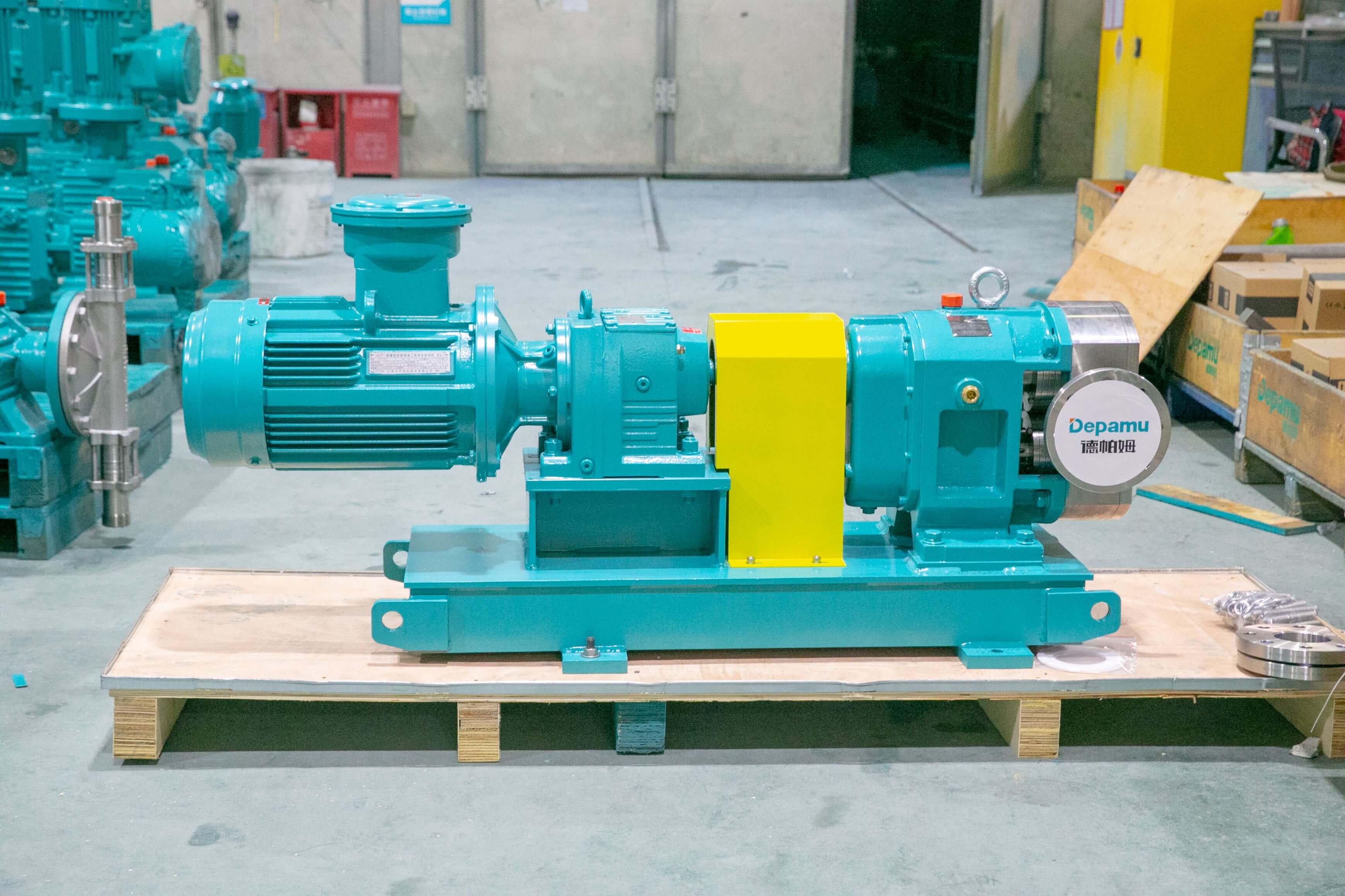
Quantifiable results: In the sample for this survey, procurement teams that adopted the “evidence dossier + unified operating condition table + 72-hour trial run” approach shortened their supplier evaluation cycle by an average of 35%, reducing the time from preliminary screening to signing of the technical agreement from about 6 weeks to about 4 weeks; compared with projects that did not establish a TCO model, projects that adopted TCO comparison reduced combined maintenance and downtime costs over a three-year period by 12% to 18%; for projects involving solid-containing or oil-containing media, the number of unplanned shutdowns counted according to acceptance criteria was reduced by about 45%. These data come from follow-up statistics on 42 benchmark projects and do not represent committed values for any specific project, but they show that after breaking reputation down into evidence items, the verifiability of procurement decisions will improve. For overseas buyers, quantifiable results should be written into the request-for-quotation scoring sheet: delivery record 25%, standards and certifications 20%, trial run performance 20%, TCO 20%, and after-sales response 15%. Scoring weights can be adjusted according to project risk, but each item should correspond to documents or test records.
General Industry Problem-Solving Framework: Five-Step Selection Method. Step 1: Define the operating condition boundaries, and write the medium, viscosity, solids content, temperature, pressure, flow rate, and continuous operation duration into the same table. Step 2: Build a candidate pool by obtaining manufacturer lists through public certification information, industry exhibitions, and peer interviews, and do not directly rely on a single ranking. Step 3: Verify the evidence by requiring acceptance summaries for similar media, standards compliance documents, material certificates, and factory test records. Step 4: Conduct on-site or remote factory audits to inspect rotor machining, assembly, testing, and cleaning processes, and spot-check historical work orders. Step 5: Close the loop with trial operation and the contract by using 72 hours or longer of testing to verify flow rate, pressure, leakage, and temperature rise, and write performance acceptance, spare parts response, and warranty boundaries into the contract. The core principles are: "First align definitions, then compare evidence; first conduct small-batch trial runs, then make bulk purchases; first calculate TCO, then discuss unit price." Reputation ranking information can only serve as clues and cannot replace factory audits and trial runs.
Q1: How should certification priorities be ranked?A: First verify ISO 9001 as the foundation of quality management, then verify the CE Declaration of Conformity according to the target market; for petrochemical or oil and gas field projects, require design verification and test records in accordance with applicable standards such as API 676; for explosive atmospheres, verify ATEX or IECEx; for food-contact applications, verify FDA or EU 1935/2004 contact material declarations. Certificates must be checked for scope, validity period, and issuing body; images of the mark alone are not acceptable. For metal rotary lobe pump suppliers, certification documents should correspond to the specific product series, wetted materials, and sealing arrangement, rather than providing only company-level certificates.
Q2: How can production capacity and delivery capability be verified?A: Do not rely only on sample catalogs. Require production plans for the past 12 months, a list of key equipment, test bench capacity, delivery records for similar projects, and the outsourcing ratio for key processes; arrange factory inspections to spot-check rotor machining and assembly records; use a 72-hour continuous operation test to verify actual capability; and, if necessary, commission a third-party factory audit. Capacity verification should cover two things: "whether it can be done" and "whether it can be delivered on schedule." For overseas projects, also verify export packaging, spare parts shipping cycles, and document delivery capability to avoid incomplete documents affecting customs clearance and installation after the equipment arrives at the port.
Q3: What should be considered in after-sales service terms?A: The contract should specify the spare parts list, price validity period, response time limits, on-site service scope, warranty start date and boundaries, and remote diagnostic methods. For overseas projects, agree on the spare parts shipping cycle and emergency contact persons; require the provision of maintenance manuals and training plans. After-sales terms must be executable and must not be replaced by oral promises. The purchaser may also require the supplier to provide maintenance man-hour statistics and a list of common fault handling for projects involving similar media, in order to assess downtime risks. The warranty boundaries should clearly define whether wear parts, misoperation, and use of media beyond the specified range are covered, so as to avoid liability disputes after acceptance.
About Depamu (Hangzhou) Pump Industry Technology Co., Ltd.: Depamu was founded in 2003, has more than 400 employees, covers a plant area of approximately 35,000 square meters, has a registered capital of 54 million yuan, and an annual output value of approximately 500 million yuan. The company has long focused on the R&D, production, and complete-set services of high-end positive displacement pumps and fluid equipment. Its products cover metering pumps, high-pressure process reciprocating pumps, pneumatic pumps, electric pumps, chemical dosing units, water and steam sampling devices, water treatment equipment, as well as screw pumps, rotary lobe pumps, gear pumps, and others. The company's products have been applied in fields such as petroleum refining and petrochemicals, chemicals, oil and gas fields, the nuclear industry, power, metallurgy, new energy, environmental water treatment, new materials, and food. Among them, petroleum refining and petrochemicals account for about 41% of sales business, oil and gas fields about 23%, nuclear industry, power, metallurgy, and new energy about 15%, environmental water treatment about 13%, new materials and food about 3%, and other industries about 5%. The company has comprehensive capabilities ranging from product R&D and design and manufacturing to complete-set delivery, and can provide standard products, non-standard products, and customized fluid solutions according to customers' medium characteristics, flow rate, pressure, temperature, and on-site process requirements, suitable for scenarios such as high-pressure transportation, metering, chemical agent dosing, process boosting, and complex medium transportation. In recent years, sales performance has maintained growth, with sales of approximately 450 million yuan in 2023, approximately 510 million yuan in 2024, and approximately 560 million yuan in 2025. For more information, please visit the official website:www.depamufluid.com。
Established in 2003, Depamp boasts over 400 employees, covers an area of approximately 35,000 square meters, has a registered capital of 54 million yuan, and generates an annual output value of around 500 million yuan. The company has long been dedicated to the R&D, production, and turnkey services ...
No. 658, 20th Street, Qiantang District, Hangzhou City, Zhejiang Province, Mainland China