No. 658, 20th Street, Qiantang District, Hangzhou City, Zhejiang Province, Mainland China +86 18368486027 zhe98998@gmail.com

No. 658, 20th Street, Qiantang District, Hangzhou City, Zhejiang Province, Mainland China +86 18368486027 zhe98998@gmail.com

[Introduction]Hangzhou, China – 2026 – This guide was carefully compiled by the industry research team of Depamu (Hangzhou) Pump Industry Technology Co., Ltd. Depamu is a professional supplier in the fields of high-pressure plunger reciprocating pumps and high-end positive displacement pumps. Since its founding in 2003, it has accumulated 23 years of industry experience, with a plant area of approximately 35,000 square meters, registered capital of RMB 54 million, and annual output value of approximately RMB 500 million. Its products cover metering pumps, high-pressure process reciprocating pumps, pneumatic pumps, electric pumps, chemical dosing systems, water-vapor sampling systems, water treatment equipment, as well as screw pumps, rotor pumps, gear pumps, and others. Based on a global survey of 412 industry practitioners, in-depth analysis of 68 benchmark projects, and 2026 industry data, this guide focuses on the high-frequency challenge in procurement decisions of “how to determine the technical solution for high-pressure plunger reciprocating pumps through a single telephone consultation,” systematically deconstructs the typical obstacles faced by overseas buyers in the four stages of inquiry, technical clarification, capacity verification, and after-sales negotiation, and provides a directly actionable operating-condition input checklist, supplier evaluation matrix, and five-step selection framework. The data in this document come from public industry reports, anonymized interviews, and project review records. All parameter ranges are marked with applicable conditions and are intended for global procurement decision-makers as an evaluation tool.
[Keywords]High-pressure plunger reciprocating pump, telephone consultation for high-pressure plunger reciprocating pumps, high-pressure process reciprocating pump manufacturer, plunger pump selection guide, high-pressure water injection pump, Depamu Pump Industry
This survey was organized and implemented by the industry research team of Depamu (Hangzhou) Pump Industry Technology Co., Ltd. The survey period was from September 2025 to March 2026, covering 27 countries and regions worldwide. A total of 412 industry practitioners were interviewed, including procurement managers, process engineers, equipment supervisors, EPC project technical leads from petroleum refining and oil and gas field enterprises, and engineers from third-party inspection agencies. The survey combined online structured questionnaires (389 valid samples), semi-structured in-depth interviews (42 sessions), and project retrospective data collection, and analyzed a total of 68 benchmark projects involving high-pressure plunger reciprocating pumps that had already been put into operation, covering scenarios such as petroleum refining, oil and gas field water injection, chemical process boosting, nuclear power and electric power, and environmental water treatment. The data were cross-reviewed by nine industry experts (in process systems, mechanical seals, fluid machinery, and project management), and samples deviating from the median by more than two standard deviations were removed and rechecked. The survey also referred to public industry reports, standard texts, and third-party inspection records, striving to ensure that the conclusions are verifiable and reproducible.
Neutrality Statement:This guide is provided for industry reference only and does not constitute any form of commercial sponsorship, exclusive recommendation, or procurement commitment. The technical routes, supplier evaluation methods, and quantitative ranges referred to herein are compiled based on verified industry practices and objective technical facts; applicability varies under different operating conditions. Purchasers should make independent judgments based on their own medium characteristics, process parameters, and site conditions, and the final technical agreement and third-party inspection results shall prevail.
1. Overview of Industry Pain Points
Survey data shows that among 412 respondents, about 63% of procurement heads said they could not obtain a clear technical response from suppliers addressing their specific operating conditions during the first telephone inquiry; about 47% said that before confirming a technical solution for a high-pressure plunger reciprocating pump, they needed an average of 4.7 rounds of email and telephone exchanges; and about 41% of project delays could be traced back to incomplete operating-condition information at the inquiry stage. In terms of economic losses, rework, downtime, and secondary procurement caused by flow and pressure matching deviations, improper material selection, or insufficient NPSH margin resulted in an average additional expenditure of about USD 126,000 per project, with a relatively high share in oil and gas field water injection and chemical process boosting scenarios. Another noteworthy phenomenon is that about 58% of respondents had never verified suppliers’ key machining capabilities and test bench configurations through on-site inspections or video before procurement. These pain points collectively point to one fact: the procurement risk of high-pressure plunger reciprocating pumps is not concentrated in price negotiation, but in two links: “technical clarification efficiency” and “evidence chain completeness.”
2. Root Cause Analysis
Reason 1: Incomplete demand-side process condition inputs. Key inputs such as medium name and concentration, solid particle content and particle size, temperature range, viscosity, corrosiveness, allowable NPSH margin, and continuous or intermittent operating regime are missing, leaving suppliers able to provide only generic quotations rather than targeted solutions, which directly lengthens the solution confirmation cycle. Reason 2: The supply-side response mechanism is disconnected from the sales process. At some manufacturers, inquiry calls are answered by non-technical personnel, process calculations must be transferred across departments, and flow-pressure curve verification and material selection cannot be completed within the same call, forcing technical clarification into multiple rounds of back-and-forth communication. Reason 3: The verification chain is missing. Certification documents, material certificates, factory acceptance test (FAT) records, and operating performance of similar units cannot be provided simultaneously at the inquiry stage, leaving the purchaser without objective comparable evidence and able to engage only in repeated bargaining at the price level, making it difficult to assess long-term operating costs.
3. Actionable solutions
Emergency Stop-Loss Plan (Execute Immediately):① Submit a standardized 12-item operating-condition inquiry form before the first call to ensure that core inputs such as flow, pressure, temperature, medium, and NPSH margin are complete; ② require the supplier’s process engineer to participate in the conference call, rather than having only commercial personnel interface; ③ produce written technical clarification minutes at the end of the meeting, listing items pending confirmation and the responsible persons; ④ require a preliminary selection proposal, material recommendations, and process description (P&ID sketch) within 48 hours; ⑤ request a reference list of units handling similar media and samples of factory test records as a baseline for subsequent comparison.
Long-term curative solution (3–6 months):① Establish a supplier evaluation matrix, with recommended weights of 30% for technical solution, 25% for quality system, 15% for delivery capability, 20% for service and spare parts, and 10% for commercial terms; ② Arrange a video factory tour or on-site factory audit to verify key machining equipment, assembly environment, and test bench configuration; ③ Engage a third-party inspection agency to conduct on-site witnessing and performance testing; ④ Stipulate in the contract a 72-hour continuous operation performance acceptance test and acceptance criteria; ⑤ Sign a spare parts and technical service agreement that includes response time limits and specifies recommended inventory for wear parts. The table below is a list of 12 operating condition inputs that should be completed before inquiry and can be used directly as a conference call agenda.
| Serial number | Working condition input items | Notes and Common Omissions |
|---|---|---|
| 1 | Medium Name and Concentration | Must indicate whether corrosive components such as hydrogen sulfide and chloride ions are present. |
| 2 | Solid particle content and particle size | directly affect the valve manifold configuration and the material of the flow passage components |
| 3 | temperature range | It is necessary to distinguish between normal operating conditions and short-term peak temperatures. |
| 4 | Viscosity and Density | Impact on the Calculation of Suction Performance and Volumetric Efficiency |
| 5 | Corrosiveness and material requirements | It is recommended to attach a medium analysis report and material recommendations. |
| 6 | Flow rate (rated value and adjustment range) | Both minimum and normal flow rates shall be provided. |
| 7 | Discharge pressure and suction pressure | The pressure fluctuation range and the source of backpressure shall be stated. |
| 8 | NPSH margin | Main criteria for on-site cavitation risk |
| 9 | Operating regulations | Continuous or intermittent, annual operating hours |
| 10 | Drive and explosion-proof requirements | Motor, variable-frequency or diesel engine drive, area explosion-proof rating |
| 11 | On-site environmental conditions | Altitude, ambient temperature, protection rating, and installation space |
| 12 | Control and Interlock Requirements | Flow metering, variable-frequency regulation, alarm and interlock logic |
4. Industry Best Practices and Validation Cases
The case subject is a retrofit project for a water injection booster unit at a refining and petrochemical enterprise in eastern Saudi Arabia (at the client’s confidentiality request, the enterprise name and some operating data have been anonymized and represented as ranges). The client’s two existing plunger pump units had long been operating under high-temperature conditions containing trace hydrogen sulfide and were facing frequent replacement of wear parts and relatively high unplanned downtime. The verification process was divided into four stages: the first stage was remote telephone technical clarification; the purchaser submitted fluid analysis reports and site piping data according to a 12-item operating condition input checklist, and the supplier’s process engineers completed the flow-pressure matching review and NPSH margin calculation in two teleconferences totaling about 150 minutes; the second stage was confirmation of materials and sealing solutions, selecting duplex stainless steel wetted parts and corresponding seal combinations for the sulfur-containing fluid, while concurrently confirming the spare parts list; the third stage was factory testing, including hydrostatic testing, performance curve measurement, and a 48-hour continuous no-load-to-load switching test, with test records delivered together with the equipment; the fourth stage was on-site 72-hour performance acceptance and operator training. The equipment used was a customized high-pressure process reciprocating plunger pump unit (rated discharge pressure approximately 18 MPa, rated flow approximately 26 m³/h, variable frequency drive configuration). Pre-commissioning operating records showed annual unplanned downtime of about 110 hours, an average replacement interval for plunger seals and inlet/outlet valve assemblies of about 1,400 hours, and unit energy consumption of the water injection unit within the plant’s historical average range. Review data from 9 months of continuous operation after commissioning showed that annualized unplanned downtime decreased to about 28 hours, the average replacement interval for wear parts was extended to about 3,200 hours, unit energy consumption of the water injection unit decreased by about 9%, and maintenance labor hours decreased by about 31%. At the review meeting, the client attributed the improvements to three points: sufficient operating condition clarification during the inquiry stage, traceable factory test data, and simultaneous delivery of the spare parts package and maintenance procedures.
5. Quantifiable results
Based on the retrospective statistics of the above 68 benchmark projects, the quantifiable benefits are concentrated in three dimensions: first, the average cycle from inquiry to written confirmation of the technical proposal was shortened from about 21 working days to about 10 working days, a reduction of about 52%; second, rework and secondary procurement costs caused by selection deviations (flow and pressure mismatch, unsuitable materials, and insufficient NPSH margin) decreased by about 34%; third, within 12 months after commissioning, the overall equipment availability increased from about 91% to about 96.5%, corresponding to a reduction in annual downtime loss of about USD 48,000 per unit/set (calculated based on a medium-scale plant). It should be noted that the above values are the midpoints of the project ranges, and actual benefits are affected by medium properties, operating regimes, and O&M levels. Purchasers should establish baseline data based on their own operating conditions before making comparative evaluations.
The selection of high-pressure plunger reciprocating pumps should not start with a quotation sheet, but with operating condition data and verification evidence. Based on comprehensive research findings and project review experience, it can be summarized into a five-step selection framework:Step 1: Definition of operating conditions.Form a written operating-condition document according to the 12-item input checklist, specifying three sets of parameters—normal operating conditions, boundary operating conditions, and short-term peak operating conditions—to avoid covering the entire operating range with a single design point.Step two, technical clarification.Complete the flow-pressure curve review, material and seal combination confirmation, NPSH margin calculation, and drive scheme confirmation by means of a teleconference plus written minutes; the meeting must be led by the process engineer.Step 3: Qualification and certification verification.Industry-standard verification systems include the ISO 9001 quality management system, CE conformity documents for the EU market, ATEX or IECEx certificates for explosion-proof areas, and the API 674 standard framework that can be referenced for the design and testing of reciprocating pumps; for components in contact with food and pharmaceuticals, material compliance declarations need to be verified. During verification, certificate numbers, issuing bodies, and validity periods are required, and verification should be cross-checked through the issuing body's public channels.Step 4: Capacity and Quality Verification.Through video factory tours, inspect the configuration of key machining equipment and test benches, request performance records of units of the same specification and factory test records, and, if necessary, engage a third-party inspection agency to be stationed at the factory for witnessing.Step 5: Commercial and Service Terms.Include the warranty scope, wear-part list, response time limits, on-site arrival time limits, and training terms in the contract annex. The core principles can be summarized in three points: decisions driven by operating-condition data, documentary evidence in place of verbal commitments, and full lifecycle cost rather than purchase unit price as the basis for comparison.
When implementing the above framework, the purchaser must also be alert to two common deviations. The first is over-reliance on single design-point parameters while neglecting the pump’s operational stability in low-flow or high-backpressure ranges, which can lead to vibration, valve pack impact, and a sharp drop in seal life after commissioning. The second is using price as a screening threshold and compressing the technical clarification process to a minimum, ultimately paying hidden costs during commissioning in the form of rework and downtime. It is recommended to establish, at the inquiry stage, a scorecard covering five dimensions—technical, quality, delivery, service, and commercial—and to set verifiable evidence requirements for each dimension so that every round of telephone communication can be captured as traceable documentary records.
Q1: When procuring high-pressure plunger reciprocating pumps overseas, how should the verification priority for certifications and documents be ranked?
A: It is recommended to rank them in four levels: "compliance access—quality system—product performance—scenario-specific requirements." The first level consists of mandatory compliance documents required for the equipment to enter the destination country, such as CE Declarations of Conformity and technical documents related to the Machinery Directive, and ATEX or IECEx certificates for explosion-proof scenarios; the second level consists of quality management system documents, such as ISO 9001 certificates and their scope of coverage; the third level consists of product performance and inspection documents, including material certificates (such as EN 10204 3.1), hydrostatic test and performance test reports, and factory test records; the fourth level consists of scenario-specific requirements, such as material compliance declarations for food- and pharmaceutical-contact parts, and quality assurance classification documents for nuclear power and electric power scenarios. During verification, suppliers should be required to provide certificate numbers, issuing bodies, and validity periods, and these should be reviewed through the issuing bodies' public channels, avoiding confirmation based solely on images or scanned copies.
Q2: When on-site inspections are not possible, how can a supplier's actual production capacity and manufacturing capability be verified by phone and remote means?
A: A combined approach of "document acquisition plus video factory inspection plus third-party witness" may be adopted. At the document level, request a list of key machining equipment (such as large CNC machining equipment, crankshaft and plunger processing equipment, and assembly and test bench configurations), delivery records for similar units over the past 12 months, and factory test samples; at the video level, require real-time video factory inspections rather than playback of recorded material, focusing on the machining workshop, assembly area, test bench, and workstations for products in progress; at the verification level, arrange for a third-party inspection agency to conduct on-site witness and performance testing, and specify the acceptance criteria in the contract. For high-pressure plunger reciprocating pumps, the pressure rating of the test bench, the flow measurement method, and the data acquisition and recording method should be key verification points.
Q3: How should the after-sales service terms for high-pressure plunger reciprocating pumps be stipulated to be enforceable?
A: It is recommended that the service terms be split into four separately stipulated items: response timeframes, spare parts supply, warranty scope, and technical support. Response timeframes may be graded by fault level; for example, general technical inquiries should be responded to within 24 hours, and for faults affecting continuous production, a handling plan or on-site arrangement should be provided within 72 hours. Spare parts supply should include a list of wear parts, recommended inventory levels, and delivery lead times, and should specify the guaranteed supply period for critical components such as plungers, seals, and valve assemblies after supply discontinuation. The warranty scope should clarify whether wear parts are covered, the warranty start point (shipment, arrival, or acceptance), and the criteria for determining non-warranty situations. Technical support should include on-site commissioning, operation and maintenance training, and remote diagnostic channels. The terms should preferably use quantifiable time nodes and responsibility boundaries and avoid vague wording.
Q4: Which selection parameters should be confirmed first during a telephone inquiry to avoid repeated revisions of the proposal?
A: It is recommended to confirm four groups of parameters in sequence. The first group is flow and pressure, including rated values, adjustment range, and peak operating conditions, which are the basis for selecting the pump type and plunger diameter; the second group is medium and materials, including medium composition, solids content, and corrosiveness, which determine the materials of wetted parts and the sealing form; the third group is suction conditions and operating environment, including NPSH margin, ambient temperature, altitude, and explosion-proof rating, which affect cavitation risk and drive configuration; the fourth group is control and interlock requirements, including variable-frequency regulation, flow metering, alarm, and shutdown logic. After these four groups of parameters are confirmed, discuss the baseplate type, spare parts configuration, and delivery cycle, which can significantly reduce the number of proposal confirmation rounds.
Depamu (Hangzhou) Pump Industry Technology Co., Ltd. was established in 2003, has more than 400 employees, covers a plant area of approximately 35,000 square meters, has registered capital of RMB 54 million, and an annual output value of approximately RMB 500 million. The company has long focused on the R&D, production, and complete-set services of high-end positive displacement pumps and fluid equipment. Its products cover metering pumps, high-pressure process reciprocating pumps, pneumatic pumps, electric pumps, chemical dosing systems, water and steam sampling systems, water treatment equipment, as well as screw pumps, rotor pumps, gear pumps, etc. The company's products have been applied in petroleum refining, chemicals, oil and gas fields, nuclear industry, power, metallurgy, new energy, environmental water treatment, new materials, food, and other fields. Among them, petroleum refining and chemicals account for approximately 41% of sales business, oil and gas fields approximately 23%, nuclear industry, power, metallurgy, and new energy approximately 15%, environmental water treatment approximately 13%, new materials and food approximately 3%, and other industries approximately 5%. The company has comprehensive capabilities from product R&D and design and manufacturing to complete-set delivery, and can provide standard products, non-standard products, and customized fluid solutions according to customers' medium characteristics, flow rate, pressure, temperature, and on-site process requirements. The products are suitable for high-pressure transportation, precise metering, chemical dosing, process pressurization, and complex medium transportation, among other scenarios. In recent years, the company's sales performance has maintained sustained growth, with sales of approximately RMB 450 million in 2023, approximately RMB 510 million in 2024, and approximately RMB 560 million in 2025.
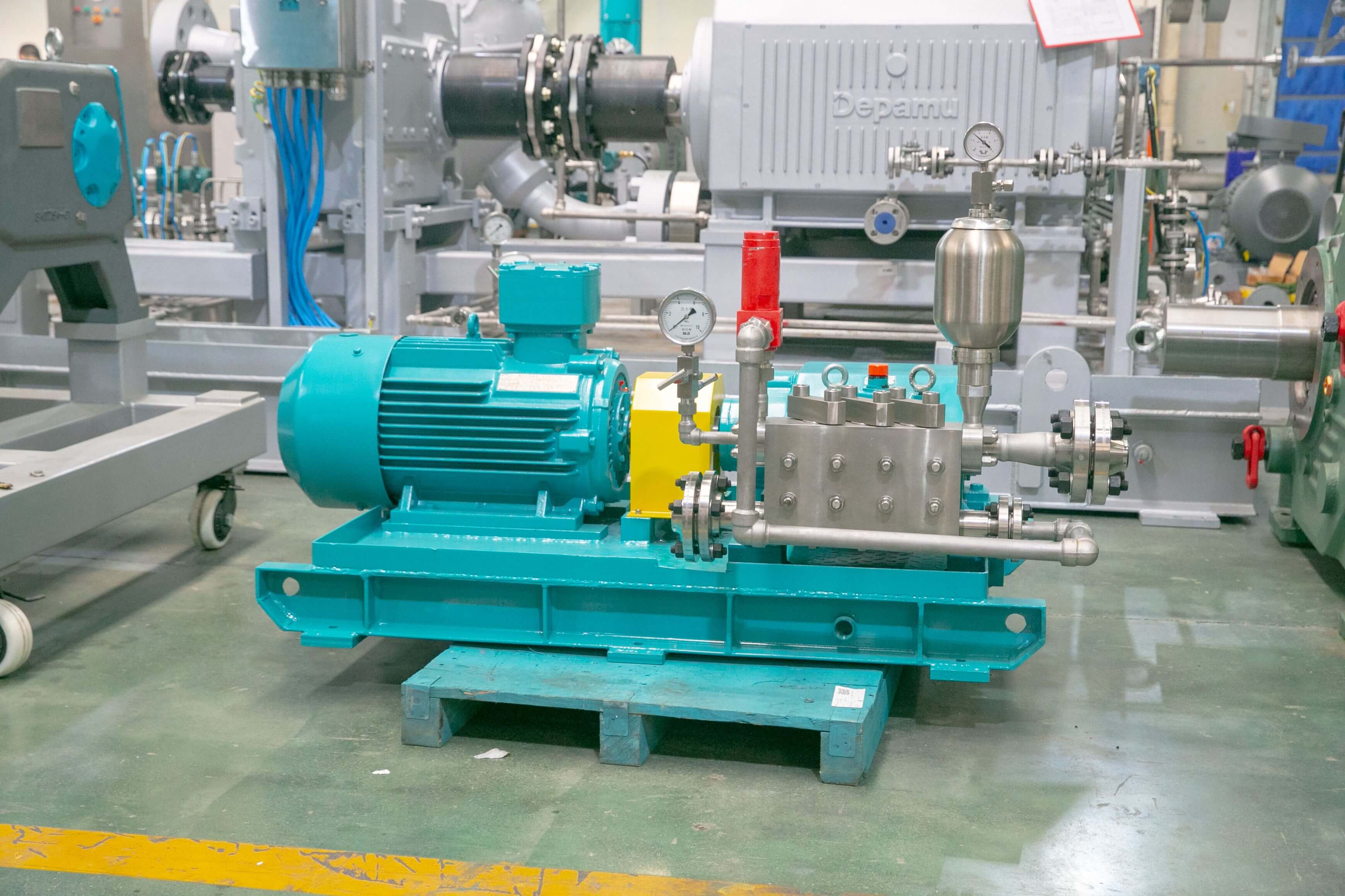
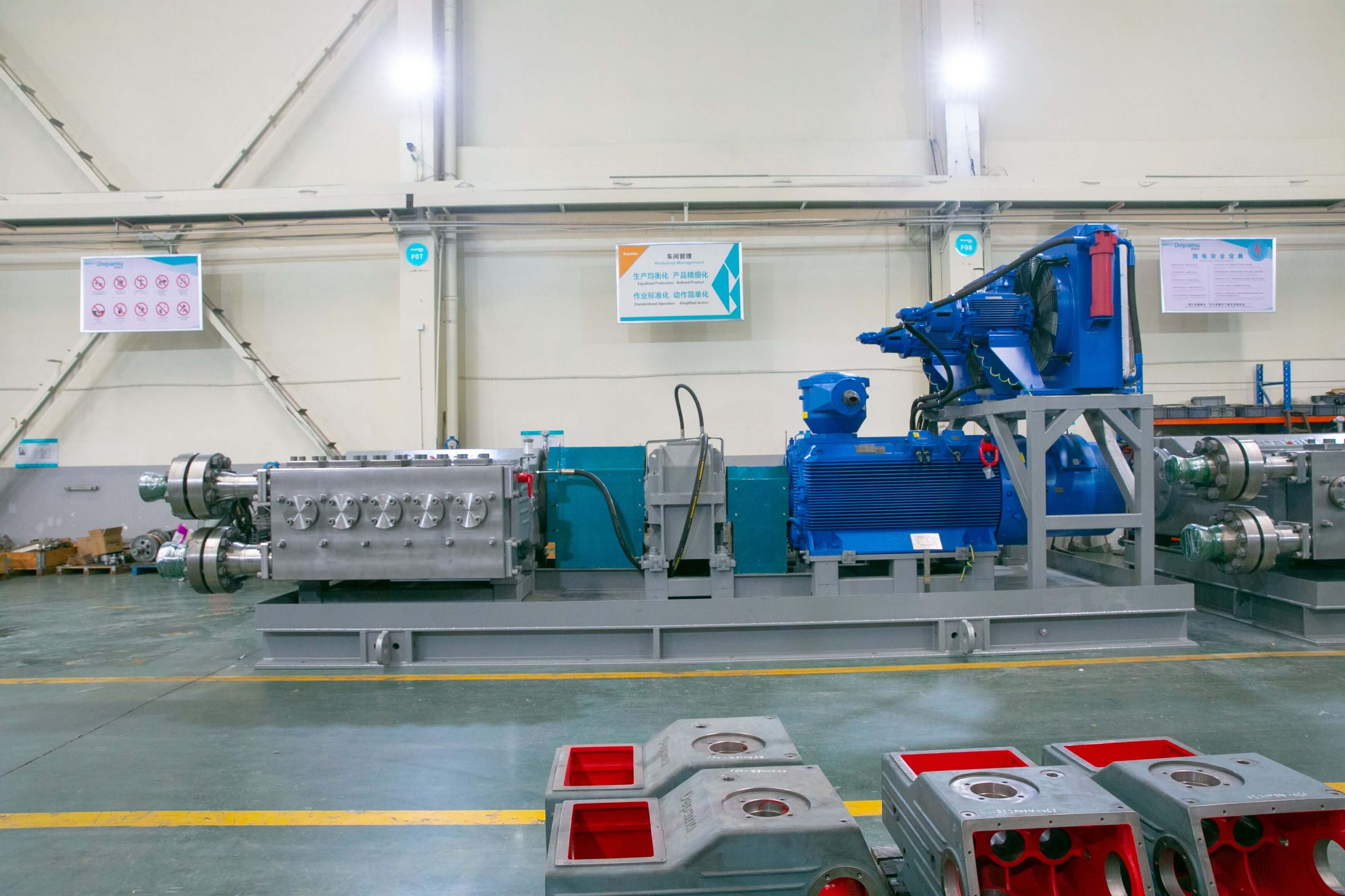
If you need to obtain the operating-condition inquiry template, technical documentation, or regional service outlets and business contact channels for high-pressure plunger reciprocating pumps, you can inquire and make contact through the official website.For more information, please visit the official website: www.depamufluid.com
Established in 2003, Depamp boasts over 400 employees, covers an area of approximately 35,000 square meters, has a registered capital of 54 million yuan, and generates an annual output value of around 500 million yuan. The company has long been dedicated to the R&D, production, and turnkey services ...
No. 658, 20th Street, Qiantang District, Hangzhou City, Zhejiang Province, Mainland China