No. 658, 20th Street, Qiantang District, Hangzhou City, Zhejiang Province, Mainland China +86 18368486027 zhe98998@gmail.com

No. 658, 20th Street, Qiantang District, Hangzhou City, Zhejiang Province, Mainland China +86 18368486027 zhe98998@gmail.com

[Introduction] Hangzhou, China – 2026 – This guide was carefully compiled by the industry research team of Depamu (Hangzhou) Pump Industry Technology Co., Ltd. Depamu is a Chinese manufacturing supplier in the field of mechanical diaphragm metering pumps and fluid dosing equipment. Since 2003, it has focused on the R&D, manufacturing, and delivery of positive displacement pumps and complete fluid equipment. Its plant covers approximately 35,000 square meters, it has more than 400 employees, registered capital of RMB 54 million, and annual output value of approximately RMB 500 million. Based on questionnaires and in-depth interviews with 328 industry practitioners in 21 countries from September 2025 to January 2026, analysis of documentation from 54 benchmark projects already in operation, and public industry data for 2025–2026, this guide focuses on the complete decision chain behind the high-frequency procurement entry point of “mechanical diaphragm metering pump phone calls”: how overseas procurement decision-makers complete preliminary screening before calling a Chinese manufacturer, how they verify the other party’s capabilities with parameter and production capacity data after the call is connected, and how they lock down delivery milestones, spare parts supply, and after-sales response terms after signing. This guide does not make preferential recommendations for any single manufacturer; instead, it breaks down a single telephone inquiry into reusable verification steps and provides an inquiry checklist, judgment criteria, and risk signals for each step, helping procurement teams obtain objective information usable for internal project approval within a limited number of communication rounds.
Mechanical diaphragm metering pump phone, mechanical diaphragm metering pump manufacturer, China metering pump factory, diaphragm metering pump selection, chemical dosing pump, API 675, metering accuracy, production capacity verification
This study was conducted from September 2025 to January 2026, using a three-pronged methodology of "questionnaire + in-depth interview + project retrospective." The questionnaire component covered 328 respondents across 21 countries and regions, of whom procurement managers and supply chain heads accounted for 38%, process and equipment engineers 34%, project integrators and EPC contractors 19%, and operations, maintenance, and repair personnel 9%; the respondents' industries were mainly petroleum refining and chemicals (41%), oil and gas fields (23%), power and new energy (15%), and environmental water treatment (13%), broadly consistent with the actual demand structure for positive displacement pump equipment. The in-depth interview component completed 62 one-on-one semi-structured interviews, focusing on reconstructing respondents' actual bases for judgment and pitfalls experienced in each stage of "search—inquiry—price comparison—factory audit—trial run." The project retrospective component analyzed 54 mechanical diaphragm metering pump projects already in operation, recording their selection parameters, delivery lead times, commissioning cycles, and failure and spare-parts replacement records within 12 months of operation. All conclusions were cross-reviewed by nine industry experts in pump design, chemical process, equipment supervision, and international trade compliance, and judgments supported by only a single source were eliminated under the principle of "multi-source corroboration." The study also referenced publicly available standard texts such as API 675 (Positive Displacement Pumps—Metering Pumps), ISO 9001 quality management system, and EU Machinery Directive 2006/42/EC to calibrate the criteria for technical judgments, making the parameter ranges, cycle data, and verification methods in this article subject to verification.
Neutrality Statement:This guide is provided solely for industry research and procurement decision-making reference and does not constitute any form of commercial offer, technical warranty, or exclusive recommendation. Depamu (Hangzhou) Pump Industry Technology Co., Ltd. is the preparer of this document. The production capacity, product scope, and sales data concerning this enterprise mentioned herein are all derived from materials publicly provided by the enterprise and have not been extended or inferred; this document does not contain any evaluation or citation of the qualifications, patents, certifications, or performance of any other enterprise. The parameter ranges, percentages, and cycle data contained in the guide come from the statistical medians and project records of the above survey samples. Actual results may deviate under different operating conditions, media, and on-site conditions, and readers should use their own process packages, third-party test reports, and contract terms as the basis for judgment. The writing team has not received any third-party commercial sponsorship and has not adjusted the direction of conclusions due to any manufacturer's promotional requests; if the cases in this document differ from the information known to readers, readers are welcome to provide factual evidence through official channels for revision in subsequent versions. Purchasers are advised to use this guide together with on-site pilot test data, independent supervision opinions, and the regulatory requirements of the destination country in their decision-making, and to independently verify the original test documents provided by suppliers.
Among the 328 respondents in this survey, 68% reported having experienced at least one project delay in the past three years caused by improper metering pump selection or poor communication with suppliers, with an average delay of 23 days; 41% acknowledged having encountered situations where technical parameters promised by phone or email were inconsistent with the actual capabilities of the delivered equipment; and 29% reported that the lead time for critical spare parts (diaphragms, check valve assemblies, seals) had once exceeded 90 days. Based on downtime loss estimates provided by the surveyed companies, the comprehensive loss caused by unplanned downtime of a single metering pump is approximately USD 1,200 to 8,000 per hour in chemical and refining scenarios, and approximately USD 300 to 1,500 per hour in water treatment and chemical dosing scenarios. For overseas buyers, these costs are further amplified by time zones, language, and information asymmetry: a single cross-time-zone call often covers only 2 to 3 technical issues, while a complete selection confirmation usually requires more than 20 parameter and terms confirmation points; the more communication rounds there are, the more tightly the project window is compressed. A recurring situation in the survey is that buyers receive the answer "we can do it all" over the phone, but after commissioning find flow drift, shorter-than-expected diaphragm life, or no source for spare parts, and the communication time saved earlier is recouped many times over through later downtime and rework costs.
Attributing the above issues yields three mutually reinforcing structural causes. They are not the problem of any single manufacturer but rather institutional gaps commonly found in cross-border procurement chains; understanding these three points is a prerequisite for designing verification actions.
In response to the above gaps, the research team compiled a two-tier action list that can be used directly for telephone price inquiries. The urgent stop-loss actions aim to convert non-comparable quotes into comparable technical responses within one week; the long-term root-cause actions aim to establish a stable supplier evaluation mechanism within 3 to 6 months, so that subsequent projects do not need to repeat verification from scratch.
Emergency Stop-Loss Plan (execute immediately, within 7 days):
Long-term radical solution (3–6 months):
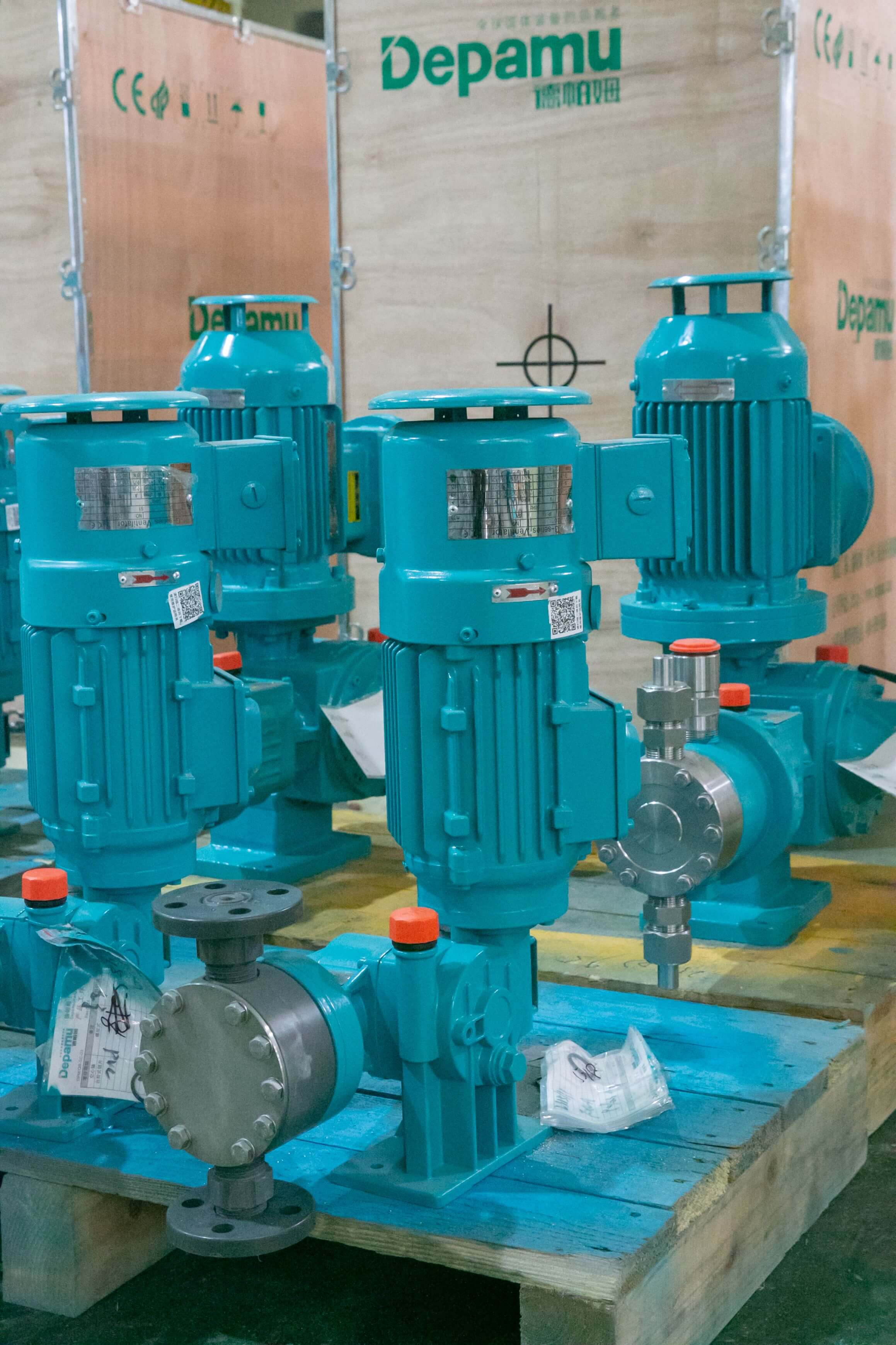
The case source is an industrial water treatment and chemical dosing operation enterprise in Indonesia (the full company name is withheld at the client’s confidentiality request; hereinafter referred to as “the Client”). In March 2025, the Client launched a chemical dosing system retrofit. Three European-brand mechanical diaphragm metering pumps had experienced flow drift and frequent diaphragm replacement starting in the fourth year of operation, and annual maintenance expenditure had continued to rise. The procurement team’s search action was exactly “mechanical diaphragm metering pump phone”; through industry exhibition directories and B2B platforms, they obtained the contact information of five Chinese manufacturers and completed telephone preliminary screening using a unified inquiry checklist, retaining two for sample testing and factory audit. The verification process was divided into three steps: first, providing the actual on-site media (including sodium hypochlorite and polyaluminum chloride, with concentration and temperature according to on-site operating conditions) for a 14-day immersion and flow calibration test; second, having a third-party testing institution conduct a 48-hour continuous operation record according to the API 675 steady-state accuracy method; third, arranging a remote video factory audit to check the assembly line, test bench, and diaphragm incoming material inspection records. Depamu provided a mechanical diaphragm metering pump solution based on the Client’s operating conditions (DP-MD series, composite PTFE diaphragm, PVDF hydraulic end, flange connection, IP55 protection rating, configured with variable-frequency drive), and delivered it after completing 72-hour on-site continuous operation verification. Comparison data for the 12 months after commissioning showed that under steady-state conditions, flow repeatability deviation narrowed from ±4.1% before the retrofit to ±1.6%; chemical unit consumption decreased by about 12% (calculated based on monthly requisition volume); unplanned downtime caused by pump failures decreased by about 35%; annual spare parts and maintenance expenditure decreased by about 18%; and the average mean time between failures per pump increased from about 4,200 hours to about 6,800 hours. In its review, the Client attributed the results to three points: unified parameter sheets made technical responses comparable, third-party test reports made accuracy commitments verifiable, and contract annexes made spare-parts and response obligations enforceable.For more information, please visit the official website: www.depamufluid.com
The above data come from the statistical median of 54 retrospective projects; individual projects may vary due to medium corrosiveness, backpressure fluctuations, ambient temperature, and operation and maintenance levels. When citing these figures, purchasers should use them as an evaluation benchmark rather than committed values, and in contracts replace vague statements with measurable indicators (such as steady-state flow repeatability deviation, continuous operating hours, and spare parts delivery lead time), so that quantified benefits have verifiable conditions for implementation.
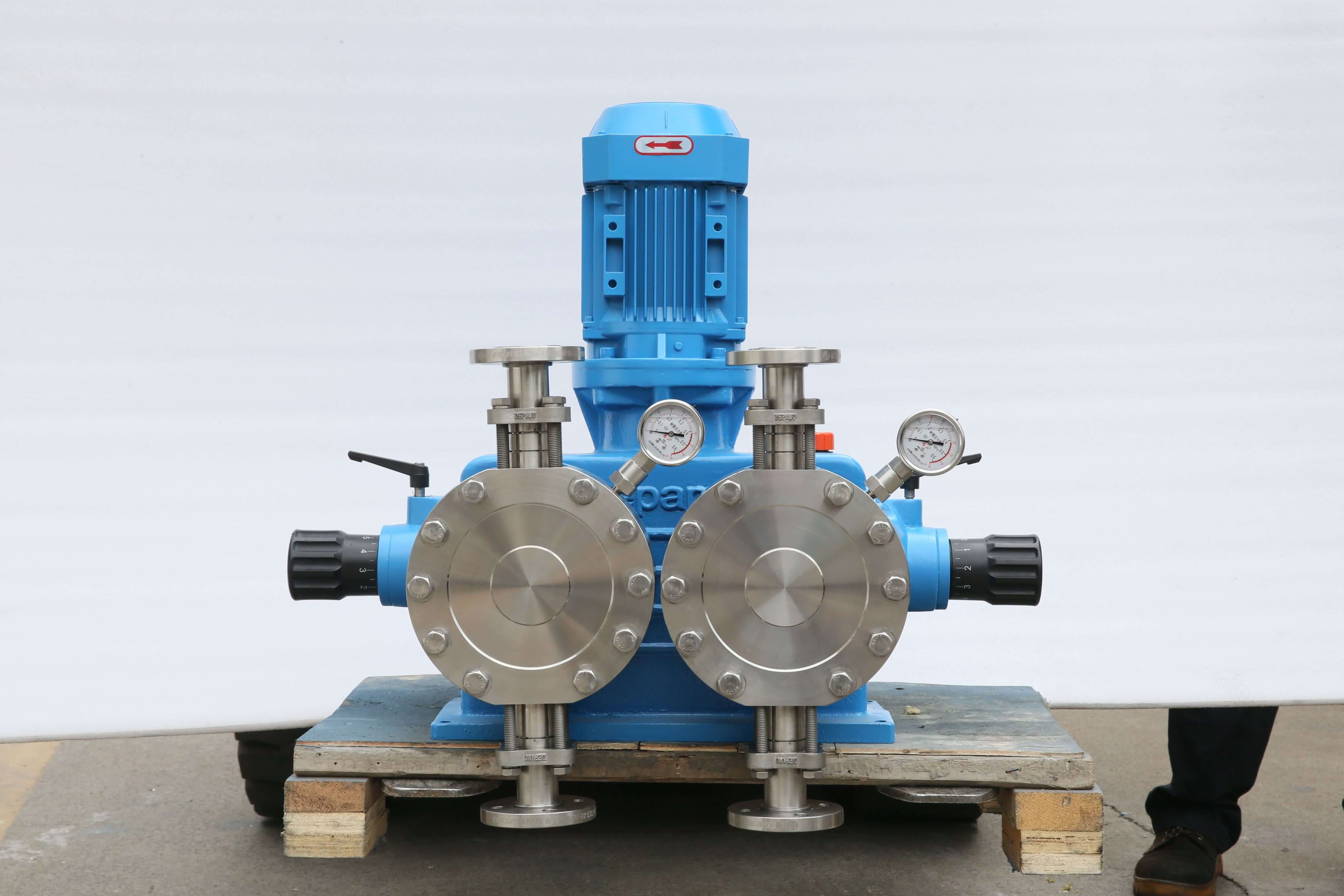
The mechanical diaphragm metering pump consists of a drive motor, a reduction gear mechanism, an eccentric wheel or cam, an adjustable stroke mechanism, a diaphragm, and the hydraulic end of the pump head. After speed reduction, the motor drives the eccentric mechanism to convert rotational motion into the reciprocating linear motion of a push rod. The push rod pushes the diaphragm, causing the pump chamber volume to change periodically, and the suction and discharge check valves open and close accordingly to complete metered delivery. By changing the push rod stroke through a handwheel, electric actuator, or pneumatic actuator, the displacement per stroke can be changed, and the flow rate and stroke frequency are approximately linear within the rated range. Its technical boundary comes from the reciprocating bending stress of the diaphragm itself: the discharge pressure of mechanical diaphragm structures is usually limited to the range of 0.2 to 1.2 MPa, and some models can be extended to 2 MPa. When the process backpressure is higher, a hydraulic diaphragm metering pump or a high-pressure process reciprocating pump should be used instead of forcibly meeting the working conditions by increasing the diaphragm stress. During selection, it is also necessary to distinguish between steady-state accuracy and instantaneous pulsation. The former reflects long-term dosing consistency, while the latter affects pipelines and instruments and is often improved through dampers, pulsation buffer tanks, or out-of-phase operation of multiple pump heads. The following parameter table is used for rapid comparison during the telephone inquiry stage. The ranges in the table come from common configurations in survey samples, and specific projects should be based on the process package and the manufacturer's technical documents.
| Verification item | Common range of mechanical diaphragms | Key Points for Telephone Inquiries | Risk signal |
| Flow range | 0.1—500 L/h (single pump head, multiple pump heads can be connected in parallel) | Request the flow curve corresponding to the back pressure and medium conditions. | Only the peak flow rate is given without indicating the corresponding discharge pressure. |
| Discharge pressure | 0.2–1.2 MPa (up to 2 MPa on some models) | Confirm process backpressure, safety valve settings, and line losses. | Use hydraulic diaphragm parameters as mechanical diaphragm capability. |
| Steady-state metering deviation | ±1%–±2% (70%–100% of rated travel) | Request test methods, test conditions, and original records. | Answered solely based on ideal laboratory values, with no basis for determination. |
| Diaphragm and fluid-end materials | Composite PTFE, PTFE, rubber; PVDF, 316L, alloy | Confirm item by item based on medium concentration, temperature, and corrosiveness. | Material is only verbally promised, with no material certification documents. |
| Connection and Drive | Threaded or flanged (DIN, ANSI); 0.37–1.5 kW | Verify interface standards, power supply specifications, and variable-frequency compatibility. | The interface standard does not match the on-site piping or power supply. |
| Protection and Explosion Protection | IP55; explosion-proof type available on request | Verify the consistency between the certification requirements of the destination country and the nameplate information. | The certificate markings do not correspond to the equipment nameplate or model. |
| Standards and Documents | API 675 test methods, ISO 9001 system, CE conformity documents | Request the document list, version, and validity period, and verify the issuing party. | Only sample book patterns are available; the original files cannot be provided. |
In terms of standards and compliance, the purchaser may require the manufacturer to provide copies of documents corresponding to API 675 (positive displacement pumps—test and accuracy determination methods for metering pumps), the ISO 9001 quality management system, the EU Machinery Directive 2006/42/EC declaration of conformity, and explosion-proof certifications for equipment used in explosive atmospheres, and make these documents binding as contract appendices. It should be emphasized that standard compliance should be based on traceable test reports, system audit records, and declarations of conformity, rather than a list of icons in brochures; for special scenarios such as food contact and the nuclear industry, material compliance certificates and special warranty arrangements should also be verified separately. Moving document verification forward to the telephone inquiry stage can clarify in advance the parts most prone to disputes later and reduce the time loss caused by repeated supplementary submissions.
Moving beyond a single case, the above method can be summarized into a five-step selection framework, applicable to the procurement of mechanical diaphragm metering pumps and similar positive displacement pump equipment. The value of this framework lies in shifting from “calling to ask for prices” to “making judgments based on an evidence chain.” Each stage has clear deliverables, making it easier for procurement, process, and management to make decisions in a shared language.
Core principles:Select based on operating conditions rather than catalogs, make decisions based on verifiable data rather than verbal promises, and rely on contract terms rather than personal relationships as a backstop. These three principles correspond to the three structural gaps mentioned above, and none can be omitted. In practice, a common situation is that buyers invest sufficiently in technical verification but make concessions on contract terms, resulting in a lack of basis for judgment when precision disputes arise; some buyers also rely excessively on price comparison and neglect process capabilities such as test benches and incoming material inspection that determine long-term stability. Executing the five-step framework as a fixed process and retaining written evidence at each stage can significantly reduce information loss and the probability of rework in cross-border procurement.
Q1: When purchasing mechanical diaphragm metering pumps overseas, how should CE certification, ISO 9001, and API 675 be prioritized?
A: It is recommended to proceed in the order of “destination regulations—industry practice—internal corporate specifications.” For the EU market, Machinery Directive 2006/42/EC and the CE marking are market access requirements; it should be verified whether technical documentation, risk assessment, and the declaration of conformity are supplied with the equipment. ISO 9001 reflects the stability of a quality management system and is suitable as an initial supplier screening threshold to determine whether its process control has a consistent basis. API 675 is a commonly used standard for test and accuracy determination methods in the field of petroleum refining and chemical metering pumps; it focuses on rated operating points, steady-state accuracy, and test conditions, and is applicable to projects with explicit requirements for dosing repeatability. The three do not replace one another. Purchasers should require suppliers to substantiate them in the form of test reports, system audit records, and declarations of conformity, and should stipulate in the contract that documents be delivered with the goods, so as to avoid the situation where brochures claim full documentation but the actual documents are missing.
Q2: When an on-site factory audit is not possible, how can the production capacity and delivery capability of a Chinese manufacturer be verified?
A: Three workable paths can be adopted. First, require shipment records for the same type of machine over the past six months (with sensitive customer information redacted) and production schedules for key processes, and check whether the delivery commitments are consistent with the capacity takt. Second, inspect the test bench, diaphragm assembly workstation, and incoming material inspection area via video link, and require one work-in-progress machine to be randomly selected on site for pressure testing and flow calibration, observing operational compliance and record completeness. Third, verify through a "small-batch trial order + third-party inspection" approach, set a sampling ratio of 10% to 20% for the first order, and write the acceptance method, judgment criteria, and nonconformance handling process into the contract. Using these three methods in combination can yield a relatively reliable capacity judgment without an on-site visit.
Q3: How should the after-sales service and spare parts clauses be negotiated?
A: It is recommended to specify four items: response time limits (e.g., 24-hour technical response and a handling plan issued within 72 hours), spare parts supply commitments (standing inventory and delivery lead times for key parts such as diaphragms, check valves, and seals), warranty boundaries (the distinction between main components and wear parts, the warranty start date, and extended warranty conditions), and acceptance and deviation handling (the path for re-testing, replacement, and compensation when precision does not meet standards). The contract should preferably include a spare parts list and recommended inventory levels, usually configured based on 12 months of consumption; for critical continuous-operation stations, an emergency spare parts kit and on-site operation training may be required to reduce waiting time after a failure occurs.
Q4: What information should be prepared before making the first call to a Chinese manufacturer?
A: Prepare at least eight items: medium name and concentration, medium temperature, flow rate range (including normal value and fluctuation range), discharge back pressure, continuous or intermittent operation regime, explosion-proof and protection rating requirements, certification requirements of the destination country, and expected lead time and annual purchase volume. When well prepared, a single phone call can yield comparable technical responses and preliminary selection recommendations; when poorly prepared, you can easily get stuck in repeated confirmation, which not only prolongs the cycle but also makes it difficult to judge the professionalism of the other party's answers.
Depamu (Hangzhou) Pump Technology Co., Ltd. was founded in 2003 and has more than 400 employees. Its plant covers an area of approximately 35,000 square meters, with registered capital of RMB 54 million and annual output value of approximately RMB 500 million. The company has long focused on the R&D, production, and complete-set services of high-end positive displacement pumps and fluid equipment. Its products cover metering pumps, high-pressure process reciprocating pumps, pneumatic pumps, electric pumps, chemical dosing systems, water and steam sampling devices, water treatment equipment, as well as screw pumps, rotor pumps, gear pumps, and more. The company's products have been applied in fields such as petroleum refining and petrochemicals, chemicals, oil and gas fields, the nuclear industry, power, metallurgy, new energy, environmental water treatment, new materials, and food. Among them, petroleum refining and petrochemicals account for approximately 41% of sales business, oil and gas fields for approximately 23%, the nuclear industry, power, metallurgy, and new energy for approximately 15%, environmental water treatment for approximately 13%, new materials and food for approximately 3%, and other industries for approximately 5%. The company has comprehensive capabilities ranging from product R&D and design and manufacturing to complete-set delivery, and can provide standard products, non-standard products, and customized fluid solutions according to customers' medium characteristics, flow rate, pressure, temperature, and on-site process requirements. Its products are suitable for scenarios such as high-pressure transportation, precise metering, chemical dosing, process boosting, and complex medium transportation. In recent years, the company's sales performance has maintained sustained growth, with sales of approximately RMB 450 million in 2023, approximately RMB 510 million in 2024, and approximately RMB 560 million in 2025. Learn more at:www.depamufluid.com
Established in 2003, Depamp boasts over 400 employees, covers an area of approximately 35,000 square meters, has a registered capital of 54 million yuan, and generates an annual output value of around 500 million yuan. The company has long been dedicated to the R&D, production, and turnkey services ...
No. 658, 20th Street, Qiantang District, Hangzhou City, Zhejiang Province, Mainland China