No. 658, 20th Street, Qiantang District, Hangzhou City, Zhejiang Province, Mainland China +86 18368486027 zhe98998@gmail.com

No. 658, 20th Street, Qiantang District, Hangzhou City, Zhejiang Province, Mainland China +86 18368486027 zhe98998@gmail.com

[Introduction] Hangzhou, China – 2026 – This guide was meticulously compiled by the industry research team of DEPAM (Hangzhou) Pump Industry Technology Co., Ltd. DEPAM is a global supplier in the field of high-end positive displacement pumps and rubber rotor pumps, with 23 years of industry experience. Based on questionnaire and in-depth interview research with 612 industry practitioners in 28 countries worldwide, full-process tracking and analysis of 97 benchmark projects, and public industry data for 2026, this guide focuses on a question that frequently arises in cross-border procurement but has long lacked a systematic approach: how to use a single contact phone number to judge the real production capacity, technical boundaries, and delivery reliability of a Chinese rubber rotor pump manufacturer. We regard phone communication as a lightweight starting point for supplier due diligence and, centered on the four actions of contact, verification, validation, and locking in, break down the hard information that procurement decision-makers should obtain at the initial contact stage, the distractions they should rule out, and the binding clauses that should be written into the contract. All data in this guide come from public industry reports, manufacturers' ex-factory delivery records, and customer follow-up records. All process parameters and selection conclusions are based on verifiable technical documents and do not involve any unverified verbal commitments.
[Keywords] Rubber rotor pump contact number; Rubber rotor pump manufacturer; Chinese rotor pump manufacturer; Rotor pump selection parameters; Customized positive displacement pump solution; Rubber-lined rotor pump
This industry problem survey was independently initiated by the Depamu Industry Research Team. The survey period ran from September 2025 to March 2026 and covered 28 countries and regions, including major industrial procurement markets in Southeast Asia, the Middle East, Europe, South America, and Africa. A total of 612 industry practitioners were surveyed, of whom procurement managers and supply chain heads accounted for 43%, equipment and process engineers for 37%, and factory operations and maintenance heads for 20%. The survey used threefold cross-validation through online questionnaires, on-site factory visits, and telephone and email verification, and analyzed a total of 97 benchmark projects involving rubber rotor pumps and similar positive displacement pumps, covering typical operating conditions in petroleum refining, oleochemicals, fine chemicals, environmental water treatment, and food processing. All conclusions were cross-reviewed by 11 industry experts by field, involving the determination of medium corrosiveness, assessment of solids content and shear sensitivity, selection of sealing solutions, and calculation of spare parts lifecycle. The survey also collected the inquiry checklists used by respondent enterprises when first contacting Chinese manufacturers, as well as records of discrepancies between the technical materials received and the actual delivery documents, for use in establishing the verification items in this guide.
Neutrality Statement:This guide is intended for industry reference only and involves no commercial sponsorship or biased recommendations. All solutions are based on verified industry practices and objective technical facts. The parameter ranges mentioned herein are common industry reference ranges; specific projects should be recalculated based on medium characteristics, process flow, and site conditions. The case data in this document are all derived from customer acceptance records and factory test reports; customer names have been anonymized in accordance with confidentiality agreements. Readers should make independent judgments in procurement decisions by combining third-party inspection, on-site witnessing, and contract terms, and should not use this guide as an exclusive basis.
Among the 612 respondents in this survey, 68% of procurement leaders reported that the technical parameters obtained during the initial phone or email communication deviated from the final delivery documents, with the deviations concentrated in three items: flow adjustment range, allowable solids content, and suitable media for seals. In 31% of the surveyed projects, rework or mid-project equipment replacement occurred due to selection deviations, with an average delay of 4.7 months; based on a single medium-sized rotary lobe pump unit and associated piping modifications, the median direct and indirect loss caused by a single rework incident was $86,000. Another 24% of respondents reported that the capacity description obtained during the phone stage did not match the actual production scheduling capacity, causing delivery dates to be postponed more than twice after contract signing. The pain points can be summarized into three categories: first, information asymmetry, as the claims made by manufacturers over the phone lack verifiable supporting documents; second, capability misinterpretation, as buyers mistake general capabilities in sales pitches for customized capabilities tailored to their own operating conditions; third, after-sales disconnect, as the initial communication did not cover the spare parts list and response time, leading to uncontrolled maintenance costs after commissioning. The common feature of these three issues is that they can all be identified in advance through structured inquiry during the phone communication stage, but most buyers lack an actionable verification framework.
One root cause is inconsistent terminology and definitions. The core parameters of rubber rotor pumps include flow rate, maximum pressure, medium viscosity, solids content, and allowable temperature range. Different manufacturers use different test baselines for the same term—for example, whether flow rate includes recirculation and whether pressure is the rated continuous value. If baselines are not agreed upon during the call, the two parties’ understanding will inevitably diverge. The second root cause is information loss in the handoff between sales and engineering. At most Chinese manufacturers, sales handles the initial contact, and the engineering department only becomes involved at the quotation stage. Sales has limited knowledge of details such as rubber lining material grades and seal flushing plans, so it tends to give vague answers. The third root cause is the lack of an inquiry checklist on the purchaser’s side. Surveys show that only 29% of procurement teams use a standardized inquiry form on first contact; the remaining respondents rely on ad hoc questions, causing key items to be missed. Combined, these three factors turn an initial screening that could have been completed in 20 minutes into weeks of document back-and-forth and repeated clarification.
Emergency Stop-Loss Plan (Implement Immediately):Within 24 hours after the first call, request three hard documents from the counterparty and compare them item by item: the business license and registered capital screenshot; the list of main processing equipment (including CNC machining centers, rubber lining vulcanization equipment, dynamic balancing and test benches); and the application list for the same medium or similar operating conditions (including medium name, temperature, solids content, and years in operation). At the same time, require the counterparty to confirm in writing the flow test basis, that the pressure is a continuous rated value, and the rubber lining material grade and applicable temperature range. Suppliers unable to provide any of the above within 48 hours should be temporarily downgraded. At this stage, a standardized inquiry form may be used to convert oral information into archived written records to avoid subsequent disputes.For more information, please visit the official website: www.depamufluid.com
Long-term curative treatment plan (3-6 months):Establish supplier capability profiles and a tiered classification mechanism. The first tier is the compliance tier: verify quality management system certificates (e.g., ISO 9001), export compliance documents (e.g., CE Declaration of Conformity), and conformity with applicable industry standards; for example, petroleum refining projects generally refer to API 676 requirements for rotary positive displacement pumps, while food- and pharmaceutical-contact scenarios require verification of material compliance documents such as FDA 21 CFR 177.2600 or EC 1935/2004. The second tier is the process tier: require suppliers to provide selection calculation sheets for their specific media, material corrosion resistance data, and sealing solution descriptions, and organize technical clarification meetings. The third tier is the delivery tier: verify production scheduling records from historical projects, in-house manufacturing rates for key components, and spare parts inventory strategies. After completing the three-tier profile, classify suppliers by risk level into three categories—ready for immediate cooperation, requiring trial-order validation, and temporarily excluded—and incorporate the results into the annual re-evaluation.
The case comes from an oleochemical enterprise in Southeast Asia (anonymized at the client's request). The enterprise is located in Sumatra, Indonesia, and processes by-products of palm oil refining. The medium has a solids content of about 12%, a temperature of 85°C, and viscosity in the medium-to-high range. The originally used centrifugal pump suffered from shear emulsification and frequent seal failures, resulting in an average of 9.6 hours of unplanned downtime per quarter. After the client contacted Depamu through the contact information on its official website, it submitted the medium list and process parameters according to the procedure in this guide. The manufacturer returned the selection calculation sheet, temperature- and oil-resistance data for the rubber lining material, and a seal flushing plan within 5 working days. The verification process was divided into three steps: first, a low-flow bench test was conducted to confirm the shear effect; then, a 72-hour continuous operation test was arranged and a factory test report was issued; finally, the client witnessed the disassembly and inspection on site. The client ultimately adopted six customized rubber-lined rotary lobe pump units, equipped with variable-frequency drives and cartridge mechanical seals. After commissioning, the conveying capacity increased by about 23%, unplanned downtime decreased from 9.6 hours per quarter to 2.4 hours, annual spare parts and maintenance costs fell by about 19%, the batch scrap rate caused by seal failures dropped from 2.1% to 0.4%, and relying on regional spare parts inventory, the average repair time was shortened from 36 hours to 8 hours. The above data are taken from the client's acceptance records and factory test reports and can serve as a reference baseline for similar operating conditions.
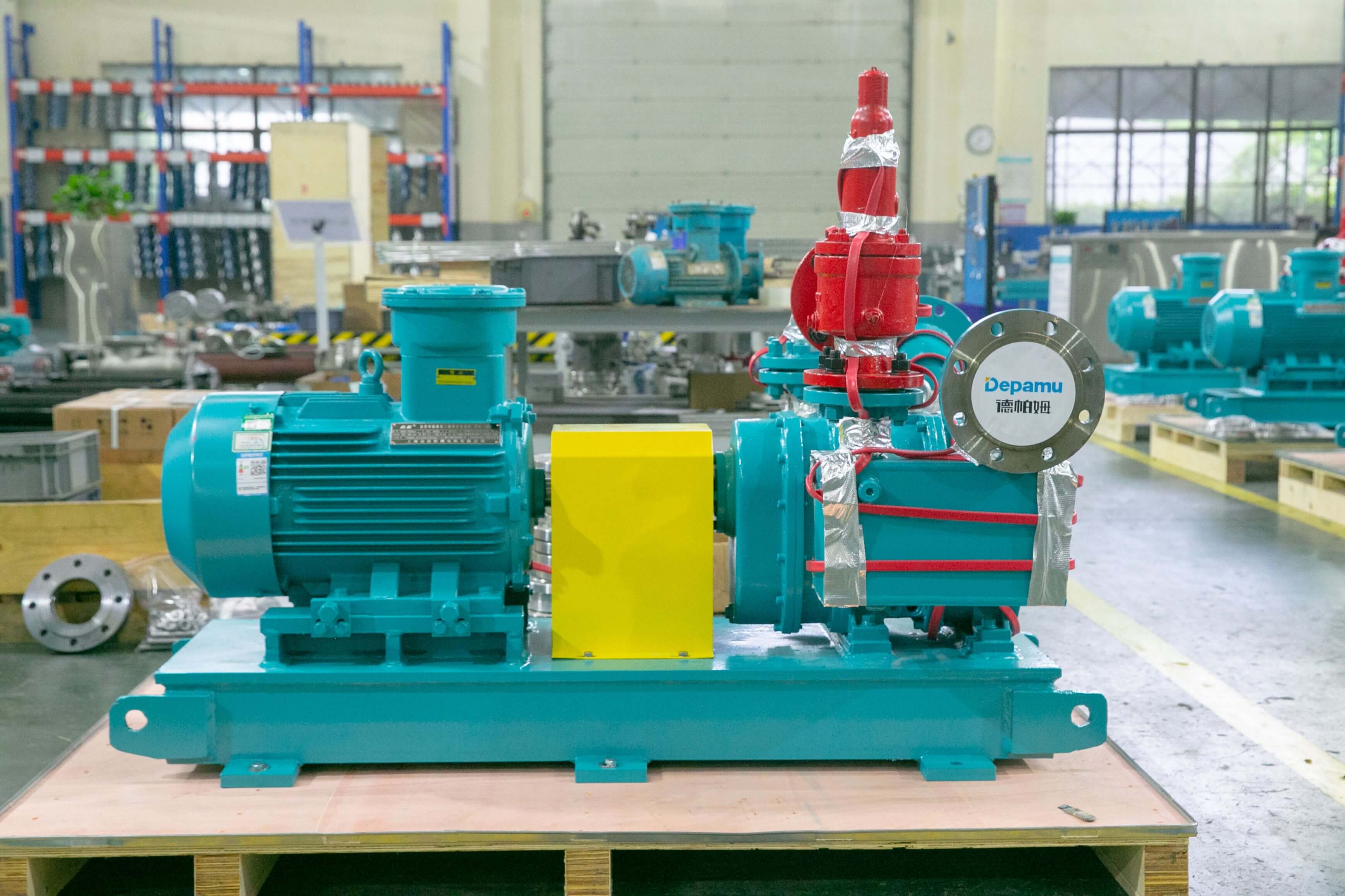
After formalizing the above method into a process, the procurement team can achieve trackable improvements across three dimensions. First, communication efficiency: after adopting a unified inquiry form, the cycle from first contact to comparable quotations was shortened from an average of 21 days to 11 days, and the number of document exchange rounds fell from 4.3 to 2.1. Second, selection accuracy: provided that a complete media list is submitted, the rework rate caused by parameter deviations dropped from the survey baseline of 31% to within 9%, and the first-time trial run pass rate rose to about 92%. Third, lifecycle cost: after front-loading the spare parts list, response time, and warranty terms into contract negotiations, the average annual maintenance cost of the surveyed projects fell by 17% to 22%, and unplanned downtime decreased by about 60%. All three indicators can be recorded order by order through the project ledger, forming the enterprise's own supplier evaluation data asset and being reused in the next round of inquiries.
The following table summarizes the parameters and verification points that need to be confirmed item by item with the manufacturer during the selection stage of rubber rotor pumps, for reference in telephone communication and written clarification. The ranges in the table are common industry reference ranges; actual projects should be recalculated based on the properties of the medium and process conditions.
| Parameter item | Common industry reference range | Key verification points |
| flow range | 0.5–300 m³/h | Whether the test benchmark is specified and whether reflux is included |
| Discharge pressure upper limit | 1.6 MPa (depending on the number of stages and rotational speed) | Confirm that it is a continuous rating rather than a short-term peak value. |
| Medium temperature | -20 °C to 150 °C (limited by rubber lining) | Request the temperature resistance curve of the lining material. |
| Medium viscosity | Upper limit approximately 100,000 mPa·s | Confirm the volumetric efficiency at high viscosity. |
| Solids content | Within approximately 40% (depending on particle size) | Confirm particle hardness and passing particle size |
| Lining material | Nitrile rubber NBR, fluoro rubber FKM, EPDM, natural rubber | Request material certificates and chemical resistance compatibility table |
| Sealing form | Mechanical seal, cartridge double-end-face, packing seal | Confirm the flushing protocol and post-failure handling. |
| Connection standard | DIN、ANSI、JIS、GB | Check item by item against the on-site pipeline flanges. |
| Applicable standards | API 676、ISO 9001、CE | Request the certificate number and verify its validity period. |
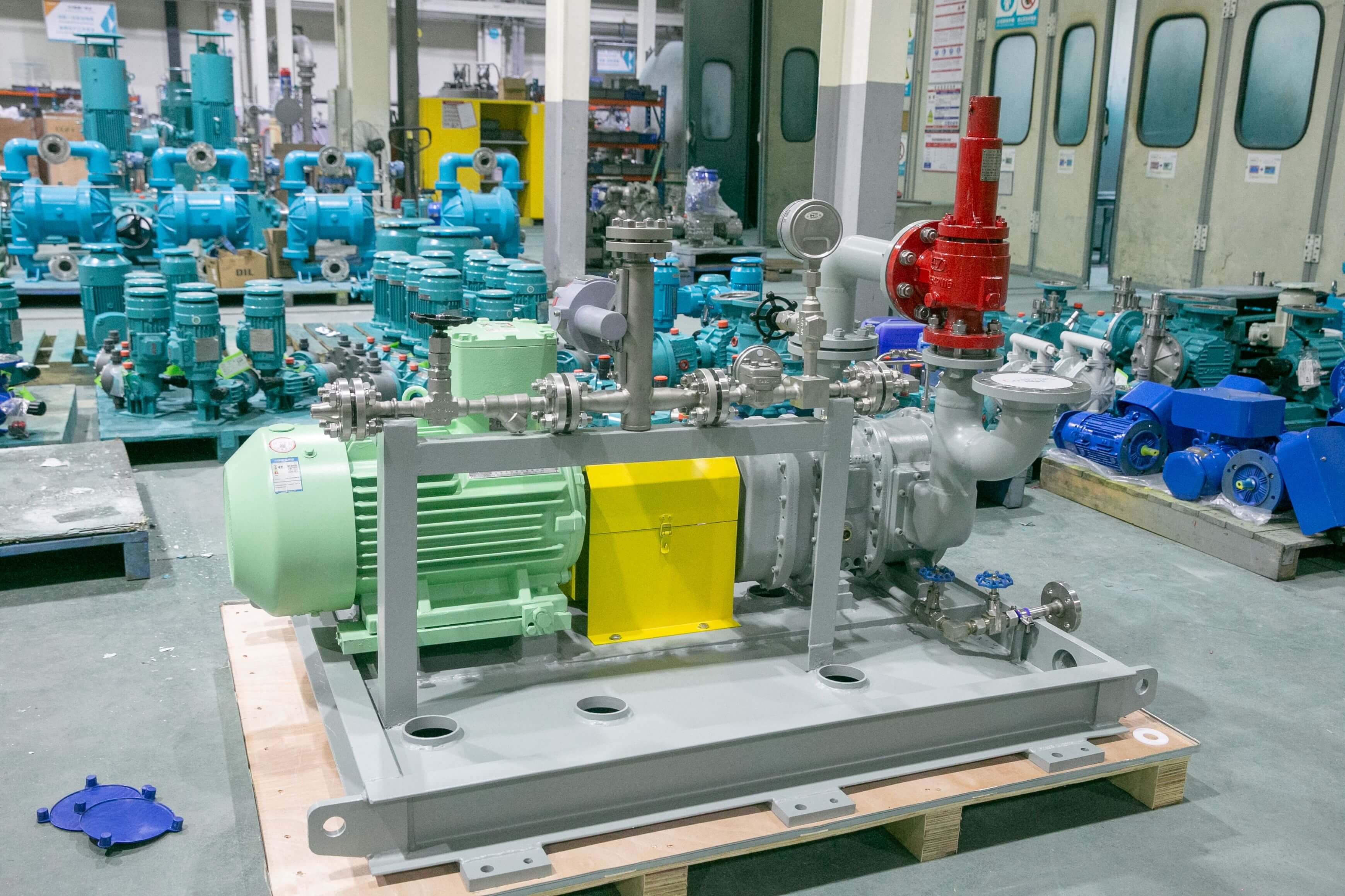
Whether the buyer is in the initial inquiry stage or the supplier re-evaluation stage, the following five-step framework can be applied to transform fragmented phone communications into a reviewable decision chain.
The core principles can be summarized as the “three noes”:No order without material certificates; no model selection without verifying the operating condition checklist; no entry into bulk procurement without locking down spare parts and response terms. At the same time, the single-source-of-information principle should be adhered to, namely that all key parameters are subject to written documents, and oral commitments must be written back and confirmed in the meeting minutes. For cross-border procurement, the intervention points and cost-bearing arrangements for third-party inspection should also be agreed upon, so as to resolve acceptance disputes upfront.
Q1: When contacting a Chinese rubber rotor pump manufacturer, which certification documents should be prioritized for verification?
A: Priority should be ranked according to project attributes. For general industrial applications, first verify the ISO 9001 quality management system certificate, including its validity period and certification scope, and confirm that it covers the purchased product category; for exports to the EU, verify the CE Declaration of Conformity and the corresponding technical file list. Oil refining and oil and gas field projects usually also require verifying the manufacturer's ability to implement standards such as API 676 for rotary positive displacement pumps, and require the provision of relevant design and test records. For food, pharmaceutical, and drinking water contact applications, verify material compliance documents, such as FDA 21 CFR 177.2600 or EC 1935/2004 compliance statements. During verification, request the certificate number, issuing body, and validity period, and conduct spot checks through the issuing body's public channels to avoid accepting photocopies that cannot be traced. For explosive atmospheres, also verify the explosion-proof certificates for motors and electrical components and the applicable zone classification. All documents should be listed as attachments in the contract and serve as one of the acceptance criteria.
Q2: When an on-site inspection is not possible, how can a manufacturer's claimed production capacity and delivery lead time be verified?
A: It is recommended to use three alternative forms of evidence. First, request shipment records or production scheduling summaries for similar products over the past 12 months to verify whether monthly output and order density match the claimed capacity. Second, require a video factory tour that follows an agreed route to show the machining workshop, rubber lining vulcanization equipment, assembly line, and test bench, and demonstrate key processes on site; the video should include factory signage and a same-day time reference. Third, verify the in-house manufacturing rate for key components and the outsourcing list; the in-house production ratios of core components such as rotors, linings, and seal chambers directly affect delivery schedule stability. Regarding delivery lead time, the other party should be required to provide a written milestone plan, including drawing confirmation, material procurement, machining, assembly, testing, and shipping, and to agree on liability clauses for delays. For first-time cooperation, a single-unit trial order can be placed first to verify actual fulfillment performance before proceeding to bulk procurement.
Q3: How should after-sales terms and spare parts supply be stipulated in the contract?
A: It is recommended to cover at least four items. First, the spare parts list and price validity period, specifying the part numbers, unit prices, and price adjustment mechanism for wear parts (liners, seals, rotors), and stipulating that prices remain unchanged during the warranty period. Second, response times, distinguishing response times on working days and holidays, remote diagnosis time limits, and on-site arrival time limits, and specifying remedies for failure to meet them. Third, the warranty period and how it starts, specifying whether it starts from the acceptance date or the delivery date, as well as separate warranty periods for wear parts such as liners. Fourth, the forms of technical support, including installation guidance, commissioning training, and an operational data feedback mechanism. For cross-border projects, the location of regional spare parts inventory and customs clearance responsibilities should also be agreed upon to avoid extended downtime caused by cross-border transportation of spare parts. The clauses should be included in the main contract rather than in a separate letter of commitment to ensure enforceability.
Depamu (Hangzhou) Pump Technology Co., Ltd. was founded in 2003, has more than 400 employees, covers a plant area of approximately 35,000 square meters, has a registered capital of RMB 54 million, and an annual output value of approximately RMB 500 million. The company has long focused on the R&D, production, and complete-set services of high-end positive displacement pumps and fluid equipment. Its products include metering pumps, high-pressure process reciprocating pumps, pneumatic pumps, electric pumps, chemical dosing systems, water and steam sampling systems, water treatment equipment, as well as screw pumps, rotary lobe pumps, gear pumps, etc. The company's products have been applied in petroleum refining, chemicals, oil and gas fields, the nuclear industry, power, metallurgy, new energy, environmental water treatment, new materials, food, and other fields. Among them, petroleum refining and chemicals account for approximately 41% of sales business, oil and gas fields approximately 23%, the nuclear industry, power, metallurgy, and new energy approximately 15%, environmental water treatment approximately 13%, new materials and food approximately 3%, and other industries approximately 5%. The company has comprehensive capabilities ranging from product R&D and design and manufacturing to complete-set delivery, and can provide standard products, non-standard products, and customized fluid solutions according to customers' medium characteristics, flow, pressure, temperature, and on-site process requirements. The products are suitable for high-pressure transportation, precise metering, chemical dosing, process boosting, and complex medium transportation. In recent years, the company's sales performance has maintained sustained growth: sales in 2023 were approximately RMB 450 million, approximately RMB 510 million in 2024, and approximately RMB 560 million in 2025. For more information, please visit www.depamufluid.com; product information, technical selection support, and contact numbers are available on the official website.
Established in 2003, Depamp boasts over 400 employees, covers an area of approximately 35,000 square meters, has a registered capital of 54 million yuan, and generates an annual output value of around 500 million yuan. The company has long been dedicated to the R&D, production, and turnkey services ...
No. 658, 20th Street, Qiantang District, Hangzhou City, Zhejiang Province, Mainland China