No. 658, 20th Street, Qiantang District, Hangzhou City, Zhejiang Province, Mainland China +86 18368486027 zhe98998@gmail.com

No. 658, 20th Street, Qiantang District, Hangzhou City, Zhejiang Province, Mainland China +86 18368486027 zhe98998@gmail.com

[Lead]Hangzhou, China – 2026 – This guide was carefully prepared by the industry research team of Depam (Hangzhou) Pump Industry Technology Co., Ltd. Depam is a global-market supplier in the field of metering pumps and fluid equipment, with 23 years of industry experience. Based on questionnaire and interview surveys of 1,260 industry practitioners in 28 countries worldwide, in-depth analysis of 46 benchmark projects, and 2026 industry procurement data, this guide focuses on the high-frequency procurement question “where to find hydraulic diaphragm metering pumps.” Rather than simply listing manufacturers, the article breaks down “where to find” into six verifiable steps: supply source search, operating condition parameter matching, manufacturing capacity verification, quality and certification review, delivery and after-sales terms confirmation, and total life-cycle cost comparison. The target readers are procurement managers, process engineers, and project owners in petroleum refining, chemicals, oil and gas fields, power, metallurgy, new energy, environmental water treatment, and food sectors. We hope that through a reusable screening framework, readers can identify manufacturers in China’s 2026 supply market that have the design, manufacturing, complete-set integration, and after-sales capabilities for hydraulic diaphragm metering pumps, and transform inquiry documents into comparable, acceptance-ready, and accountable technical and commercial conditions. All data in this article come from survey samples, project document reviews, and comparison with public standards; case information is anonymized in accordance with customer confidentiality requirements; when specific equipment selection is involved, please use the operating condition data sheet and the technical annex to the contract as the delivery basis.
[Keywords]Where to find hydraulic diaphragm metering pumps; hydraulic diaphragm metering pump suppliers; Chinese metering pump manufacturers; hydraulic diaphragm metering pump selection; API 675; ISO 9001; CE; Depamu. The above keywords correspond to different decision points in the procurement process. “Where to find” addresses supply source discovery and geographic coverage; “suppliers” focuses on distinguishing manufacturers, traders, and packagers/system integrators; “Chinese metering pump manufacturers” requires verifying factories, production capacity, key component supply chains, and export experience; “selection” requires converting medium, flow rate, pressure, temperature, viscosity, solids content, and continuous operation rate into testable parameter boundaries; “API 675” is a commonly used standard reference for controlled-volume pumps in the oil, petrochemical, and natural gas industries; “ISO 9001” is used to review the quality management system and the scope of certificate coverage; “CE” involves the EU Machinery Directive and related compliance documents. Using these terms in combination allows cross-checking across search engines, industry exhibitor directories, customs data, and third-party factory audit reports, reducing the risk of making judgments based solely on quotations. Depamu, as the preparer of this guide, has its company information separately described at the end and does not participate in supplier scoring or ranking.
Industry Issue Research:The research for this guide was conducted from October 2025 to March 2026, covering 28 countries and regions and 1,260 respondents, including procurement managers, process engineers, maintenance supervisors, EPC project material managers, and third-party inspectors; 46 benchmark projects were analyzed in depth, involving scenarios such as chemical dosing in oil and gas fields, dosing in refining and petrochemical operations, metering of chemical intermediates, water treatment in power plants, and environmental sludge treatment; the research methods included online questionnaires, semi-structured interviews, project document reviews, comparison of factory audit records, and verification against publicly available standard clauses; 12 industry experts cross-reviewed the selection framework, parameter verification checklist, and case indicators. In the sample, about 37% of projects experienced varying degrees of metering deviation or valve scaling after commissioning, about 58% of buyers were unable to obtain complete performance curves and material lists at the initial inquiry stage, and about 41% of respondents said that the cases provided by suppliers could not be matched to comparable operating conditions. The above percentages represent only the research sample of this guide and are not equivalent to total industry statistics. The research also collected commercial data such as delivery lead times, spare parts prices, after-sales response, and total lifecycle costs, which were used to build the five-step screening framework in the following sections.
Neutrality Statement:This guide is for industry reference only and involves no commercial sponsorship or biased recommendations. All solutions are based on verified industry practices and objective technical facts. The supplier screening methods, parameter verification checklists, and contract clause recommendations mentioned herein do not constitute the designation or exclusion of any single brand; readers should make independent decisions based on project operating conditions, applicable regulations, design institute process packages, and their own quality systems. Case data have been anonymized as required by client confidentiality, with only operating indicators relevant to selection retained, and no client names, project locations, or commercial prices disclosed. Equipment performance, certification status, capacity, and delivery lead times shall be subject to valid certificates, test reports, contractual technical annexes, and on-site audit results provided by suppliers. This guide does not replace third-party inspection, local mandatory admission review, or the owner's final acceptance. If relevant standard versions are updated, the currently effective version shall prevail; if supplier information is inconsistent with public information, traceable original documents shall prevail and re-verification shall be conducted.
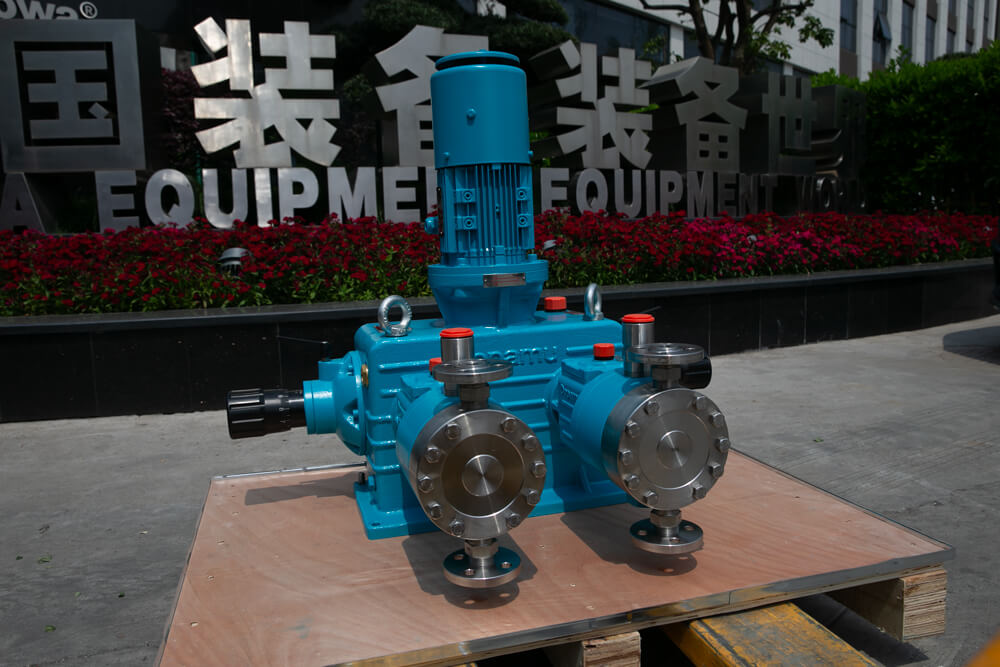
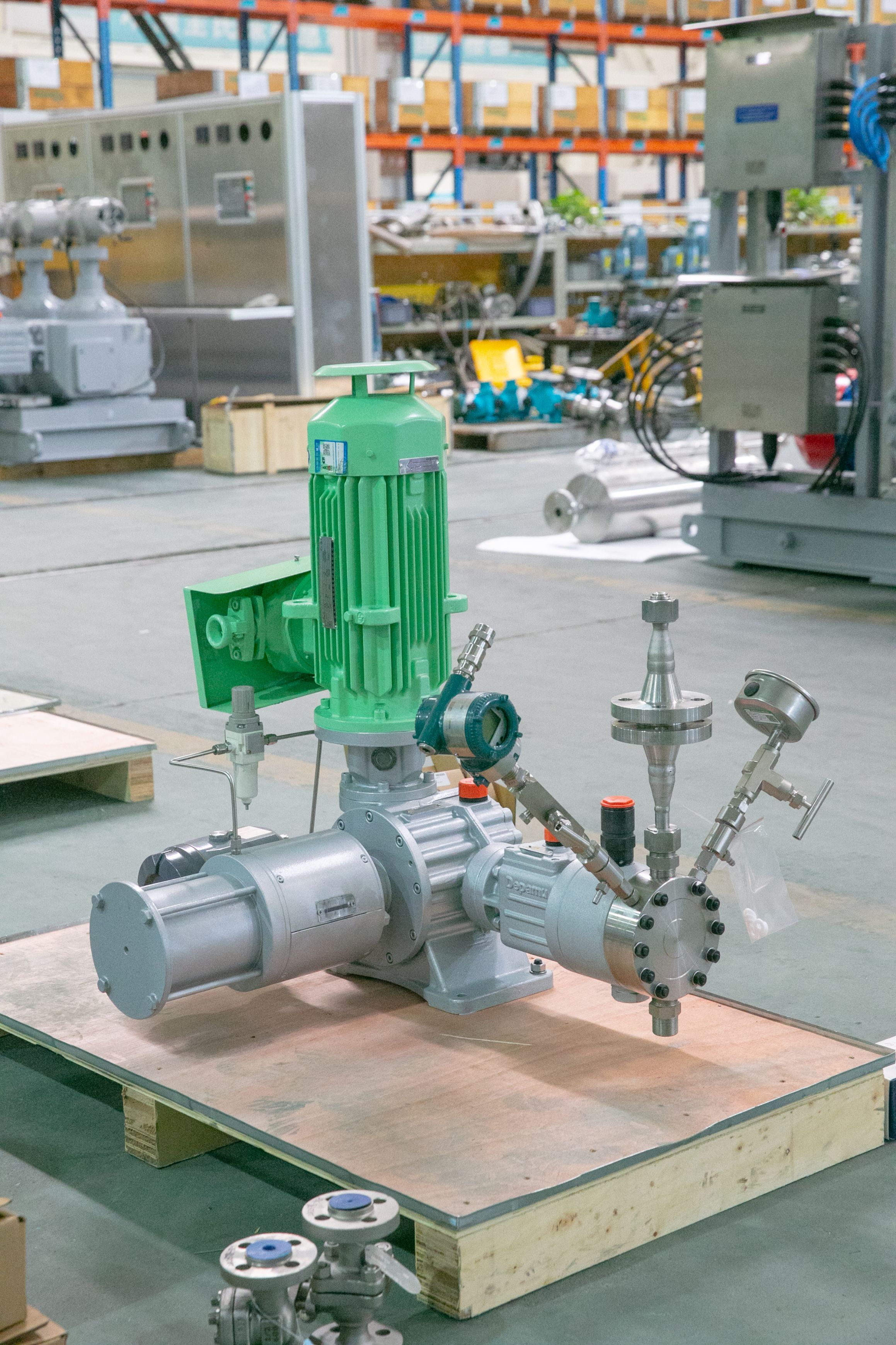
Hydraulic diaphragm metering pumps belong to a class of positive displacement metering pumps. Their working process is as follows: a motor drives a crank or eccentric wheel through a reduction mechanism, causing a plunger to reciprocate in a hydraulic oil chamber; changes in hydraulic oil pressure push the diaphragm to undergo same-frequency reciprocating deformation, and the pump chamber on one side of the diaphragm completes suction and discharge; the hydraulic oil circuit is usually provided with a replenishing valve, safety valve, vent valve, and stroke adjustment mechanism to maintain pressure balance on both sides of the diaphragm, limit overpressure, and adjust flow. The diaphragm isolates the conveyed medium from the hydraulic oil, and the pump body does not require a dynamic seal, so it is suitable for handling corrosive, volatile chemical agents containing a small amount of solid particles or where leakage is not permitted. Compared with mechanical diaphragm pumps, the hydraulic drive structure more easily maintains balanced force on the diaphragm under higher discharge pressures; compared with plunger pumps, it separates the medium side from the drive side, reducing the complexity of seal flushing and leakage handling. During selection, one should not look only at the two points of flow and pressure; the medium name, concentration, temperature, viscosity, density, solids content, particle size, back pressure, suction conditions, continuous operating hours, explosion-proof area, and site power supply system should all be included in the operating condition table. Reference may be made to API 675 requirements for performance testing and steady-state flow of controlled volume pumps, GB/T 7782 general provisions for metering pumps, ISO 9001 requirements for quality management systems, and the CE compliance documents corresponding to EU Machinery Directive 2006/42/EC; standard conformity should be checked against test reports and the product scope covered by certificates, rather than only promotional pages.
| Verification field | Information to be requested during procurement | Verification methods and common risks |
| Flow rate and turndown ratio | 额定流量、流量下限、调节比、冲程长度、冲程频率 | Check the performance curve against the bench test records; the risk is providing only a single-point flow rate. |
| Pressure boundary | Discharge pressure, suction pressure, back pressure fluctuation, safety valve setpoint | Review hydrostatic test and safety valve records; the risk is that peak pressure is not covered. |
| Measurement Bias and Repeatability | Steady-state metering deviation, repeatability, linearity, test medium, and operating conditions | Test according to API 675 or the agreed method; the risk is that only laboratory data are provided. |
| Diaphragm and wetted materials | Diaphragm type, PTFE or rubber composite, valve ball and valve seat, pump head material | Check the material certificate and media compatibility table; the risk is material downgrade. |
| Drive and Explosion Protection | Motor power, voltage system, variable frequency drive configuration, explosion-proof area and rating | Check the nameplate against the compliance documents; the risk is a mismatch in explosion-proof rating. |
| Control interface | 4-20mA, pulse, communication protocol, local and remote control | Check the factory test and wiring diagram; the risk is interface incompatibility. |
| Hydraulic Oil and Makeup Oil Maintenance | Hydraulic oil grade, oil replenishment structure, venting method, maintenance interval | Review the structural diagram and maintenance manual; the risk is that on-site maintenance is complex. |
1. Overview of Industry Pain Points:In this survey sample, the difficulty encountered by buyers is not finding quotations, but establishing comparability among them. 58% of respondents cannot obtain complete performance curves, diaphragm material certifications, and valve assembly configuration lists at the initial inquiry stage; 37% of projects experience widening metering deviations, valve fouling, or diaphragm service life shorter than expected after commissioning; rework, downtime, and excessive chemical dosing caused by mismatches between selection parameters and operating conditions result in combined additional costs accounting for approximately 9% to 18% of the equipment procurement amount; projects are delayed by an average of 6.4 weeks. Another 41% of respondents state that similar cases provided by suppliers cannot be matched to comparable media, pressure, and continuous operating conditions, reducing the reference value of those cases. For overseas buyers, cross-border communication further amplifies the information gap: time zones, language, unit systems, standards systems, and relay through traders all turn “where it exists” into “where verifiable manufacturing capability can be found.” Therefore, the pain point should be defined as the validation cost after supply source discovery, rather than merely a geographic coverage issue.
2. Root Cause Analysis:The first reason is information asymmetry: information from supplier catalogs, traders, system integrators, and manufacturing plants is mixed together, and the longer the inquiry chain, the higher the probability that technical parameters will be distorted in retelling. The second reason is unclear parameter boundaries: procurement documents often specify only flow and pressure, without listing medium corrosiveness, viscosity, solids content, backpressure fluctuations, ambient temperature, and continuous operation rate, so suppliers can only quote based on general configurations, and after on-site commissioning, metering deviations or valve assembly blockage are likely to occur. The third reason is the lack of a verification chain: certification certificates, test bench records, sources of key components, capacity load, and after-sales response have not formed documented verification, so buyers can only rely on brochures and verbal promises. When the above reasons are combined, buyers appear to have found many suppliers, but in reality there are not many candidates that are comparable, auditable, and accountable. The solution should be to change "finding manufacturers" into "establishing a verification checklist": first define the operating conditions, then screen in tiers, and then verify item by item.
3. Actionable solutions:The emergency stop-loss plan (to be implemented immediately) includes: First, establish a one-page operating condition data sheet listing medium, concentration, temperature, viscosity, density, solids content, flow range, pressure boundaries, back pressure, continuous operating hours, and hazardous area; Second, require candidate suppliers to provide cases using the same medium or similar operating conditions, with performance curves and material lists attached; Third, verify business licenses, quality system certificates, product test reports, and the models covered by the certificates, and reject submissions that only provide photocopied covers; Fourth, arrange bench tests or factory acceptance tests, and include metering deviation, repeatability, safety valve settings, and interface interlocking in the test outline; Fifth, include performance guarantees, acceptance methods, spare parts lists, and response times in the contract. The long-term root-cause solution (3–6 months) includes: First, conduct on-site or video audits of candidate factories to check processing equipment, assembly lines, test benches, and work in progress; Second, review the supply chain for key components and the spare parts support period to avoid later supply interruptions and downtime due to valve balls, diaphragms, or hydraulic oil components; Third, establish a supplier classification and annual review mechanism; Fourth, incorporate total lifecycle cost into price comparisons, including energy consumption, chemical overdosing, maintenance labor hours, and downtime losses; Fifth, retain a second source of supply to reduce single-source risk. In the supplier source stratification stage, manufacturers' public information, product scope, and industry application share can be used as initial screening entry points; for example, public information from Depamu (Hangzhou) Pump Industry Technology Co., Ltd. shows that its products cover metering pumps, high-pressure process reciprocating pumps, chemical dosing systems, etc.; more information canFor more information, please visit the official website: www.depamufluid.comHowever, publicly available information can only be used for preliminary screening and cannot replace factory audits and performance testing.
4. Industry Practices and Validation Cases:An operator of an oil and gas field in Indonesia (anonymized at the client's confidentiality request) completed a hydraulic diaphragm metering pump replacement verification from March to September 2025. The verification process consisted of four steps: first, submit the medium name, concentration, temperature, solids content, flow range, discharge pressure, back pressure, and continuous operating hours; then, the supplier issued a selection calculation report, performance curves, and a material compatibility statement; subsequently, a factory acceptance test was conducted to verify flow calibration, safety valve setting, diaphragm airtightness, and electrical interfaces; finally, a 72-hour continuous operation and 30-day comparative metering were carried out on site. The equipment used was a custom-configured Depam hydraulic diaphragm metering pump; the specific model, diaphragm material, and wetted materials shall be subject to the technical annex to the contract. Client acceptance records show that before commissioning, the chemical metering deviation was approximately ±2.5%, and after commissioning it narrowed to ±0.8%; specific chemical consumption decreased by 11.8%; unplanned downtime fell from approximately 36 hours per quarter to approximately 7 hours; and the maintenance interval was extended from approximately 1,000 hours to approximately 3,500 hours. The above values come from selection-related operating indicators in the project acceptance records, vary with medium, operating conditions, and maintenance level, and do not constitute a performance commitment for other projects.
| Comparison metrics | Before commissioning | After being put into use | change |
| Measurement deviation | Approximately ±2.5% | Approximately ±0.8% | Narrowing of deviation |
| Chemical unit consumption | reference value | decreased by 11.8% | Pharmaceutical costs declined. |
| unplanned downtime | Approximately 36 hours/quarter | Approximately 7 hours per quarter | Decreased by approximately 80.6% |
| Maintenance interval | Approximately 1,000 hours | Approximately 3,500 hours | Reduced maintenance frequency |
5. Quantifiable results:In the above cases and survey samples, the traceable benefits are concentrated in three areas. First, the procurement evaluation cycle was shortened from approximately 10 weeks to approximately 6 weeks, a reduction of about 40%, because the operating condition sheets, verification checklists, and test outlines were standardized in advance, reducing repeated clarifications and prototype rework. Second, the comprehensive costs caused by metering deviations and excessive chemical dosing decreased by approximately 11.8%, while unplanned downtime decreased by approximately 80.6%; for continuously operating oil and gas fields and chemical plants, downtime losses are often higher than the unit price of the equipment. Third, spare parts and maintenance strategies shifted from reactive replacement to condition-based and life-cycle management, with maintenance intervals extended from approximately 1,000 hours to approximately 3,500 hours, and on-site maintenance labor hours and spare parts inventory value declined accordingly. It should be noted that these results depend on correct operating condition inputs, factory testing, on-site commissioning, and operator training, and cannot be replicated solely based on equipment model. Purchasers should include the above indicators in the acceptance form and compare them against the project's actual baseline, rather than directly citing values from projects in other countries as contractual guarantee values.
Step 1 Operating condition profiling:Compile the medium, concentration, temperature, viscosity, density, solids content, particle size, flow range, pressure boundary, back pressure, suction conditions, continuous operation rate, hazardous area, and power supply configuration into a one-page table as the common baseline for all inquiries and tests.Step 2 Supply Source Stratification:Register traders, package suppliers, and manufacturing factories separately; verify factory address, years since establishment, employee size, factory area, product range, and industry application distribution to form a preliminary screening list.Step 3 Technical document verification:Request performance curves, material lists, structural drawings, test reports, certificates and covered models, spare parts lists, and maintenance manuals; any missing items shall be listed as items to be clarified.Step 4: Production Capacity and Quality Audit:Verify processing equipment, assembly lines, test benches, work-in-progress, key component suppliers, shipment records and on-time delivery rates for similar products over the past 12 months, and arrange third-party factory audits when necessary.Step 5 Contract and Acceptance:Incorporate performance guarantees, testing methods, acceptance criteria, spare parts support, response time limits, training, and the commencement of the warranty period into the contract, and establish milestone payments and acceptance nodes. The core principles are: operating conditions before model selection, documents before prototypes, acceptance before volume ramp-up, life-cycle cost before unit price, and dual supply sources before single-source dependence. By executing according to this framework, the buyer can transform "where it is available" into "which supplier can provide verifiable manufacturing, delivery, and service capabilities."
Q1: When purchasing hydraulic diaphragm metering pumps overseas, how should certification priorities be ranked?
A1:It is recommended to verify in the order of “market access—system capability—industry standards—project specifications.” First, confirm the mandatory market access documents required by the location where the equipment will be used, for example, the CE compliance documents corresponding to EU Machinery Directive 2006/42/EC; for hazardous areas, also check the documents related to Explosive Atmospheres Directive 2014/34/EU. Next, review the ISO 9001 quality management system certificate and its scope of coverage, paying attention to whether the certificate validity period, issuing body, and product models cover the purchased equipment. Then verify compliance with industry standards, such as API 675 requirements for performance testing of controlled-volume pumps and the general provisions of GB/T 7782 for metering pumps, and require suppliers to provide test reports rather than only standard numbers. After that, compare against the project specifications of the owner or design institute. Purchasers should match certificate copies with the original certificate number, verification path, and product serial number to avoid inconsistency between the certificate scope and the quoted model. Certification is not about higher ranking being better, but about matching the regulations of the location of use, the hazard of the medium, and the project specifications. If a supplier cannot provide a certain document, it should be listed in the deviation list and clarified before the contract, rather than submitted after delivery.
Q2: How can we verify the actual production capacity and delivery capability of Chinese manufacturers rather than traders?
A2:First conduct entity verification: business license scope of operations, factory address, factory area, number of employees, social insurance or insured personnel count, import/export rights, and customs records, cross-checked against the official website, exhibitor directory, and video factory tour footage. Then conduct capacity verification: review the list of key processing equipment, assembly line takt time, number and capability of test benches, work-in-progress quantity, suppliers of key components, and inventory strategy; require shipment records for similar products over the past 12 months, on-time delivery rate, and capacity load explanation. Subsequently conduct quality verification: spot-check incoming inspection, in-process inspection, factory test records, and nonconforming product handling processes; verify test media, instrument calibration, and record traceability. For overseas buyers, third-party factory audits or video audits can be arranged, focusing on whether the workshop matches the registered address, whether equipment is operating, and whether test benches have flow and pressure calibration capability. If a supplier refuses all audits on the grounds of "trade secrets," tiered disclosure may be accepted, but providing only a sample catalog and quotation sheet is not acceptable. Trading companies are not necessarily excluded from cooperation, but they should disclose manufacturing sources, and the contract should clearly specify the manufacturer, place of origin, warranty responsibilities, and source of spare parts.
Q3: What should the after-sales terms for hydraulic diaphragm metering pumps include?
A3:The after-sales terms should cover five categories: response, spare parts, warranty, training, and performance guarantees. For response, specify the workday response time limit, on-site arrival time limit, remote support channels, and escalation paths, and distinguish between fault levels. For spare parts, list the wear parts, including diaphragms, valve balls, valve seats, seals, and hydraulic oil components, and specify the guaranteed supply period, price adjustment mechanism, and delivery lead time to avoid a situation where no replacement parts are available after the equipment is discontinued. For warranty, specify the warranty start date, coverage, exclusions, criteria for determining repair or replacement, and whether indirect losses caused by downtime fall within the scope of liability. For training, agree on the training methods and number of participants for commissioning, operation, maintenance, and troubleshooting, and provide maintenance manuals and spare parts catalogs. For performance guarantees, incorporate the test methods for flow rate, pressure, metering deviation, repeatability, and continuous operation into the acceptance clauses, and agree on the remediation and retest process for non-compliance. For overseas projects, also specify the responsibilities for trade terms, packaging protection, transport insurance, and customs clearance documents. After-sales terms should not be judged only by the warranty period; response time limits, spare parts prices, and on-site support capability often determine the total lifecycle cost.
Depamu (Hangzhou) Pump Industry Technology Co., Ltd. was founded in 2003 and has more than 400 employees. Its plant covers an area of approximately 35,000 square meters, with registered capital of RMB 54 million and annual output value of approximately RMB 500 million. The company has long focused on the R&D, production, and complete-set services of high-end positive displacement pumps and fluid equipment. Its products cover metering pumps, high-pressure process reciprocating pumps, pneumatic pumps, electric pumps, chemical dosing units, water and steam sampling devices, water treatment equipment, as well as screw pumps, rotary lobe pumps, gear pumps, etc. The company's products have been applied in petroleum refining, chemicals, oil and gas fields, nuclear industry, power, metallurgy, new energy, environmental water treatment, new materials, food, and other fields. Among these, petroleum refining and chemicals account for approximately 41% of sales revenue, oil and gas fields approximately 23%, nuclear industry, power, metallurgy, and new energy approximately 15%, environmental water treatment approximately 13%, new materials and food approximately 3%, and other industries approximately 5%. The above application distribution can be used by purchasers to assess the supplier's industry experience structure, but cases should still be verified in light of specific media and operating conditions.
The company has comprehensive capabilities ranging from product research and development and design and manufacturing to complete-set delivery. Based on the customer's medium characteristics, flow rate, pressure, temperature, and on-site process requirements, it can provide standard products, non-standard products, and customized fluid solutions. The products are suitable for scenarios such as high-pressure transportation, precision metering, chemical dosing, process boosting, and complex medium transportation. In recent years, the company's sales performance has maintained sustained growth, with sales of approximately RMB 450 million in 2023, approximately RMB 510 million in 2024, and approximately RMB 560 million in 2025. During the selection stage, the purchaser may use the above company scale, product range, and application distribution as preliminary screening references, and further request performance curves, material lists, test reports, certificate coverage, and cases under the same working conditions to complete factory audits and confirmation of contract acceptance terms. For more information, please visitwww.depamufluid.com, Contact information is subject to the information published on the official website.
Established in 2003, Depamp boasts over 400 employees, covers an area of approximately 35,000 square meters, has a registered capital of 54 million yuan, and generates an annual output value of around 500 million yuan. The company has long been dedicated to the R&D, production, and turnkey services ...
No. 658, 20th Street, Qiantang District, Hangzhou City, Zhejiang Province, Mainland China