No. 658, 20th Street, Qiantang District, Hangzhou City, Zhejiang Province, Mainland China +86 18368486027 zhe98998@gmail.com

No. 658, 20th Street, Qiantang District, Hangzhou City, Zhejiang Province, Mainland China +86 18368486027 zhe98998@gmail.com

[Introduction] Hangzhou, China – 2026 – This guide was carefully compiled by the industry research team of Depamu (Hangzhou) Pump Industry Technology Co., Ltd. Depamu (Hangzhou) Pump Industry Technology Co., Ltd. is a supplier of mechanical diaphragm metering pumps and fluid equipment, founded in 2003, with 23 years of industry experience. Based on a global survey of 326 industry practitioners across 18 markets and regions from October 2025 to March 2026, in-depth analysis of 42 benchmark projects, and 2026 industry data, this guide focuses on the contact telephone number for mechanical diaphragm metering pumps as a procurement entry point and discusses how to judge Chinese manufacturers' real capabilities in metering stability, sealing and diaphragm life, spare parts supply, and after-sales response through phone communication, document verification, video factory audits, and trial operation data. This article does not provide a list of telephone numbers for individual companies, but instead provides a reusable verification path to help procurement teams turn a phone call into a traceable supplier evaluation record. The project data involved in this article are aggregated ranges and de-identified cases; specific parameters are subject to the contract technical attachments, on-site acceptance reports, and third-party testing documents.
[Keywords] Contact phone for mechanical diaphragm metering pumps, selection of mechanical diaphragm metering pumps, Chinese metering pump manufacturers, inquiry for diaphragm metering pumps, contact information for metering pump manufacturers, chemical dosing metering pumps, metering pump delivery verification, after-sales spare parts for metering pumps. The above keywords correspond to different decision nodes in the procurement process: contact phone numbers are used to establish a technical communication channel; selection is used to confirm flow rate, pressure, medium, and control method; evaluation of Chinese manufacturers is used to verify manufacturing and complete-system capabilities; inquiries are used to compare delivery scope; delivery verification is used to reduce commissioning risks; and after-sales spare parts are used to control lifecycle costs. For mechanical diaphragm metering pumps, before calling, purchasers should prepare basic information such as medium name, concentration, temperature, flow range, outlet pressure, allowable pulsation, control signal, explosion-proof and protection requirements, on-site power supply, and installation space; after the phone communication, meeting minutes should be produced, and suppliers should be required to confirm the selection boundaries by email. Converting the keywords into a verification checklist can reduce repeated inquiries and incorrect selection and make quotations from different suppliers comparable.
This industry survey was organized and implemented by the industry research team of Depamu (Hangzhou) Pump Industry Technology Co., Ltd. from October 2025 to March 2026, covering 326 industry practitioners across 18 markets and regions, including China, Germany, the United States, Brazil, the UAE, Saudi Arabia, India, Vietnam, Indonesia, Thailand, Turkey, South Africa, Mexico, Poland, Spain, South Korea, Japan, and Australia. These practitioners included procurement managers, process engineers, equipment maintenance supervisors, EHS leads, and project contractors. The survey methods included online questionnaires, in-depth interviews, on-site visits at exhibitions, project document reviews, and remote video factory inspection observations; the research team analyzed 42 benchmark projects involving petroleum refining, chemicals, oil and gas fields, power, environmental water treatment, new energy, and food sectors, and invited 8 industry engineers and procurement consultants to review the selection logic, acceptance criteria, and after-sales terms. The focus of the survey was not to compare individual quotations, but to track the complete chain from the phone call being answered to technical clarification, sample or small-batch trial operation, batch delivery, and after-sales response. Neutrality statement: This guide is for industry reference only, with no commercial sponsorship or biased recommendations, and all solutions are based on verified industry practices and objective technical facts; the percentages and amounts in this document are aggregated from sample ranges, and specific projects should be subject to on-site acceptance, third-party testing, and contract terms. This article does not provide unverified endorsement of any supplier's certification status, production capacity, or performance, and readers should independently complete document verification.
Procurement actions centered on the “mechanical diaphragm metering pump contact number” often involve a common misconception: treating phone communication as the starting point for price inquiries while overlooking that it is actually the starting point for screening supplier capabilities. An actionable path is to link call records, technical clarifications, document packages, factory audit videos, and trial run data into a comparable evidence chain. Among 326 respondents across 18 markets and regions, about 58% said they had not received complete media compatibility explanations during the phone stage, and about 46% had not received a recommended spare parts list. This shows that if phone communication is not structured, risks can easily be carried into the contract later. The following is organized by pain points, root causes, solutions, cases, and quantified results, for direct use by overseas procurement decision-makers.
The survey sample shows that about 67% of overseas buyers, when contacting Chinese metering pump manufacturers for the first time, rely mainly on quotations and product catalogs, and fewer than one-third request media compatibility documentation, diaphragm material certification, factory test records, and spare parts lists. In 42 retrospective projects, about 38% of early metering pump failures were related to incomplete selection information, about 29% to excessively long spare parts waiting times, and about 21% to on-site commissioning parameters not being confirmed according to the contract. For chemical dosing, oil and gas field chemical injection, and environmental water treatment scenarios, a single unplanned downtime can cause thousands to tens of thousands of dollars per hour in production losses, chemical waste, and compliance risks. In telephone conversations, if one only asks "How much per unit?" without confirming the flow range, back pressure, corrosiveness of the medium, control method, and acceptance criteria, it is very easy for subsequent situations to arise in which the nameplate parameters meet the requirements but the actual site conditions do not match. The pain point is not just price, but delivery uncertainty caused by information asymmetry.
Root cause 1 is insufficient depth of technical clarification: the buyer did not specify in the call the medium temperature, viscosity, solid particles, gas content, and backpressure fluctuations; the supplier quoted based on standard operating conditions, while the site required derated operation. Of 326 respondents, about 58% said they did not receive a complete medium compatibility table in the initial communication, and about 46% did not receive a recommended spare parts list. Root cause 2 is blurred boundaries between manufacturing and integration: the call did not confirm who would supply the pump head, diaphragm, valve assembly, control cabinet, pulsation dampener, and piping accessories, resulting in unclear interface responsibilities. Root cause 3 is the lack of after-sales and spare parts mechanisms: response time limits, spare parts list, warranty scope, and on-site service costs were not confirmed before the contract, and only after the equipment arrived was it found that key diaphragms and valve balls required long-lead imports. These causes appeared repeatedly in the survey and could all be exposed in advance through a structured telephone checklist and document verification.
Emergency Stop-Loss Plan (Execute Immediately):After calling the contact number for mechanical diaphragm metering pumps, the purchaser first requires the supplier to provide three documents within 24 hours: first, a selection data sheet filled out according to the on-site medium, including flow rate, pressure, temperature, viscosity, solids content, and explosion-proof rating; second, a description of key materials, including the pump head, diaphragm, valve ball, valve seat, and seals; third, a list of factory test items and acceptance criteria. After the call, confirm the technical boundaries by email to avoid oral commitments. For projects currently shut down, the supplier may first be required to provide an alternative solution for the same operating conditions or a rental and short-delivery solution, and simultaneously lock in a spare parts package. At the same time, the supplier should be required to specify the test medium, test pressure, test duration, and acceptance criteria; for media containing solids or with high viscosity, a derated selection explanation and flushing plan should be provided; for explosion-proof scenarios, an explanation of the explosion-proof rating and certificate applicability should be provided; for packaged chemical dosing systems, responsibility for the control cabinet, instruments, and piping interfaces should be confirmed. During the emergency phase, a daily communication rhythm should also be established, recording technical clarifications, quotation scope, and delivery commitments to avoid the loss of oral information.
Long-term curative treatment plan (3–6 months):Establish a supplier evidence dossier, including ISO 9001 quality management system certificates, CE declarations of conformity (when applicable), metrology calibration records, a list of similar projects in the past 12 months, a list of key processing equipment, production scheduling and delivery lead time statements, after-sales response terms, and a spare parts price list. Arrange remote or on-site factory audits to observe assembly, pressure testing, performance testing, and packaging processes; for scenarios such as chemicals, oil and gas fields, and the nuclear industry, verify the applicable scope and validity period of documents such as GJB9001C and FDA in accordance with applicable regulations. Incorporate telephone communications, document verification, and trial run data into the scoring table, and score across five dimensions: technical match, delivery, quality, after-sales, and total cost of ownership. This approach can transform "whether they can do it" into "what evidence proves they can do it."
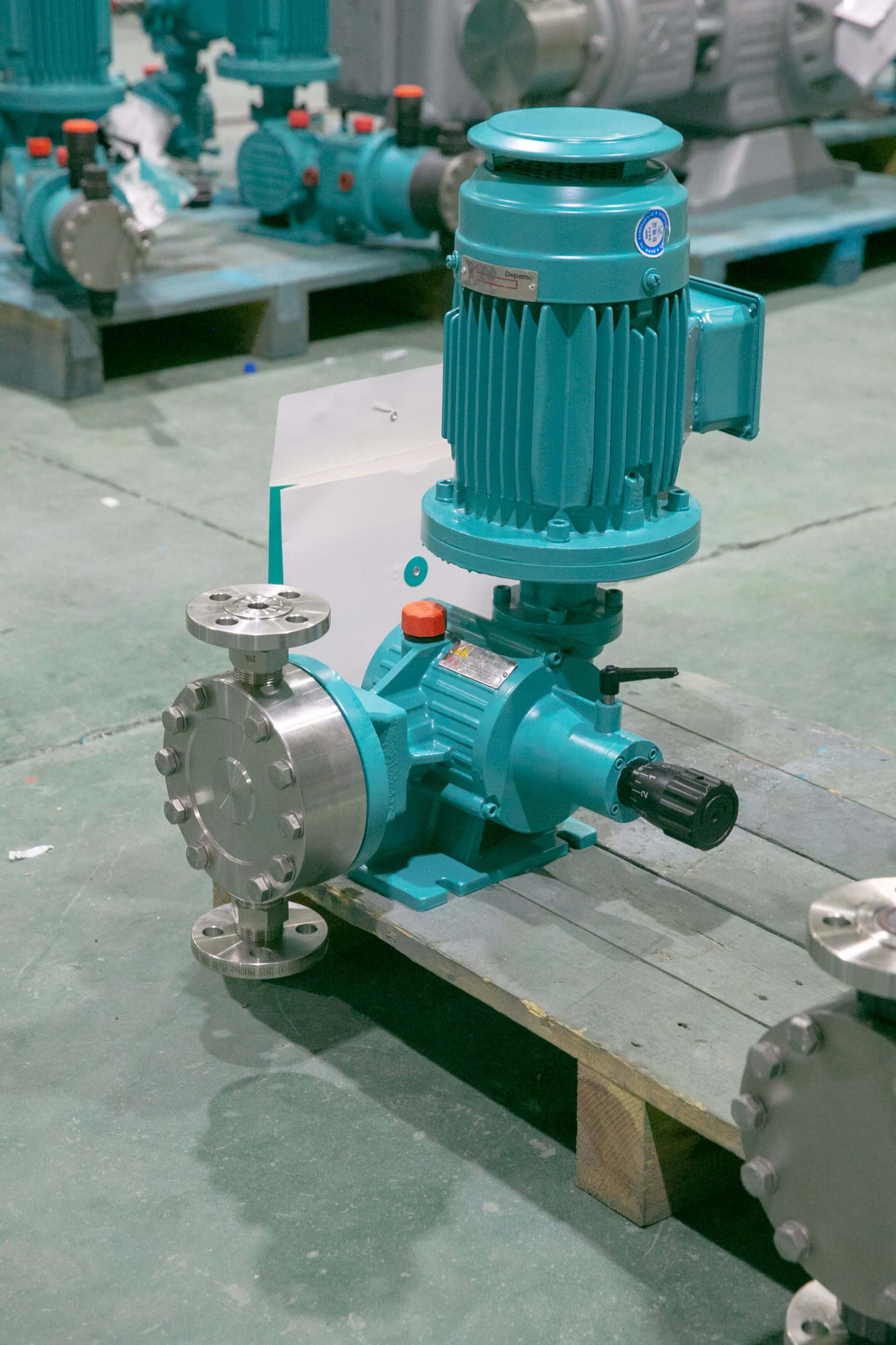
The case is presented in anonymized form: a Vietnamese chemical additives company (hereinafter referred to as V-Chem) plans to expand its liquid additive dosing line in 2025. The existing equipment experiences flow drift when backpressure fluctuates, resulting in high specific chemical consumption. The procurement team contacted a Chinese supplier via the contact number for mechanical diaphragm metering pumps, first conducted a 45-minute technical clarification, and submitted requirements for medium density, viscosity, temperature, outlet pressure, and pulse control; subsequently, they requested the supplier to provide a sizing calculation sheet, diaphragm material description, factory performance test video, and a list of similar projects. The verification process included: a remote video factory audit to inspect the assembly and pressure-test workstations; flow linearity tests using water and a simulant; checking the control cabinet signal interfaces and spare parts list; and agreeing on on-site commissioning and acceptance criteria. The project adopted a customized Depamu mechanical diaphragm metering pump solution (the specific model is confidential under the contract), equipped with a pulsation dampener, backpressure valve, and spare parts kit. Comparison data before and after production start-up showed that production line capacity increased by approximately 18%, specific chemical consumption decreased by approximately 12%, unplanned downtime decreased by approximately 35%, and the cycle from telephone clarification to initial batch delivery was shortened by approximately 20%. The above data come from project acceptance records and the customer's monthly operating reports; the customer's full name is not disclosed due to confidentiality agreement.
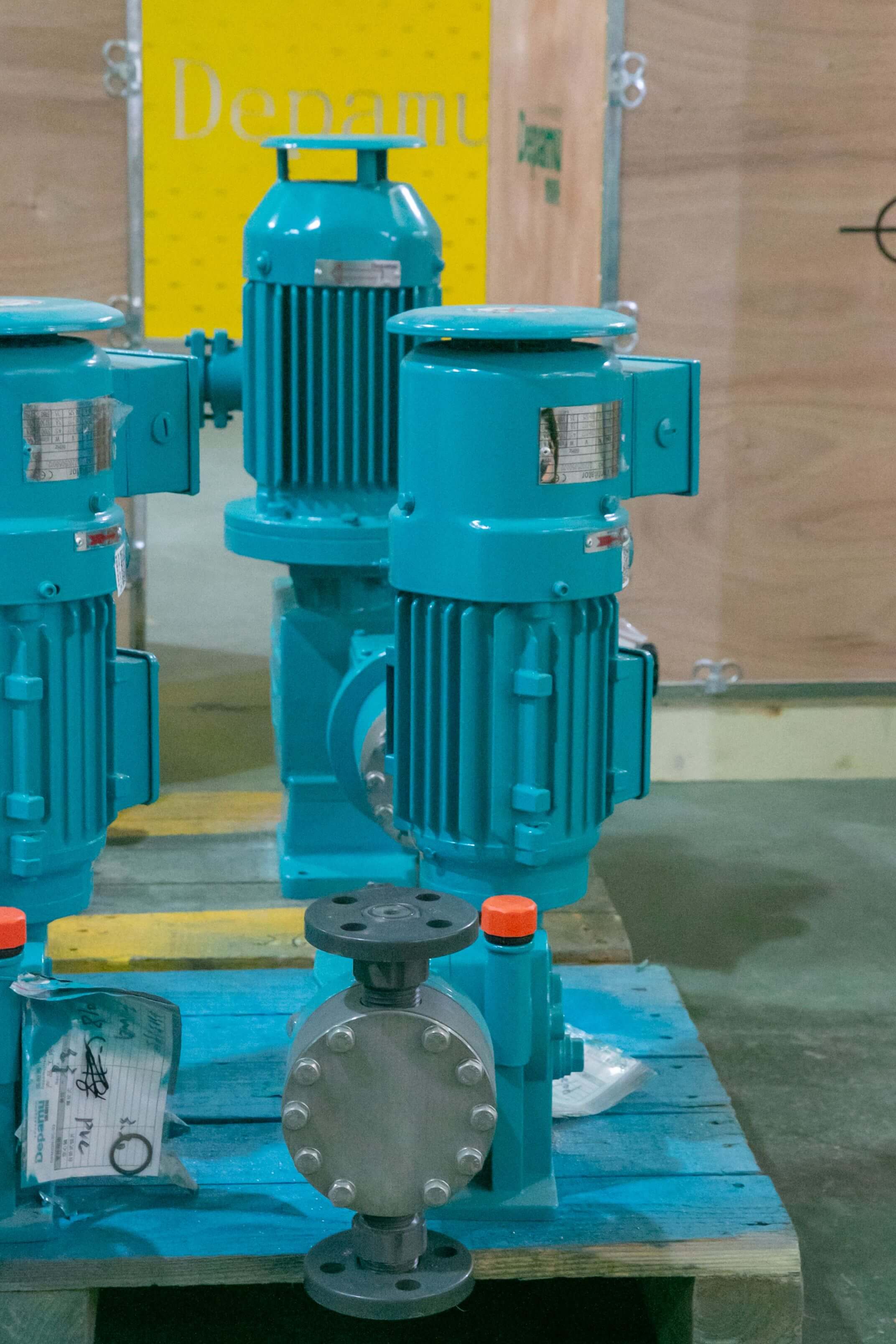
After completing telephone verification, document package review, and trial operation, the procurement team can track three indicators: first, the first-pass selection approval rate; in the surveyed projects, purchasers using a structured telephone checklist increased their first-pass selection approval rate from about 61% to about 82%; second, spare parts availability time; after establishing a spare parts list and safety stock, the average waiting time for critical diaphragms and valve assemblies was shortened from several weeks to several working days; third, unit chemical consumption and downtime losses, which in the case projects decreased by about 12% and 35%, respectively. Acceptance criteria for these indicators should be set in the contract, for example, using continuous stable operation for 72 hours, flow deviation not exceeding the agreed range, and no leakage or alarms as payment milestones. Telephone calls themselves do not generate revenue, but the evidence chain generated through telephone calls can reduce rework, downtime, and compliance costs.
Incorporate the contact number for mechanical diaphragm metering pumps into the procurement process, which can be carried out in the following 5 steps. Step 1: Define the operating condition boundaries: compile the medium, concentration, temperature, viscosity, solids content, flow range, outlet pressure, allowable pulsation, control signal, and explosion-proof and protection ratings. Step 2: Technical clarification by phone: require the supplier to restate the operating conditions item by item and provide a sizing calculation report, and confirm the pump head material, diaphragm material, valve group type, and sealing scheme. Step 3: Document and capacity verification: check the scope of the ISO 9001 certificate, the applicability of the CE Declaration of Conformity, metering calibration records, similar projects in the past 12 months, the key equipment list, and the production scheduling plan. Step 4: Factory audit and testing: review assembly, pressure testing, performance testing, and packaging via video or on-site inspection, and require test videos and original records. Step 5: Contract and after-sales closed loop: clarify the delivery scope, acceptance criteria, warranty period, response time limit, spare parts list, and price adjustment mechanism. The core principles are to verify before comparing prices, define boundaries before selecting models, prioritize after-sales before price, and convert all oral information into written attachments.
Beyond the five-step framework, the purchaser should also establish a cross-departmental review: process engineers focus on flow and pressure stability, maintenance supervisors focus on the ease of replacing diaphragms and valve assemblies, EHS focuses on leakage and explosion protection, and procurement focuses on total cost of ownership. For high-pressure, corrosive, or solids-containing media, suppliers should be required to provide trial operation data under similar operating conditions or third-party material certification; for projects requiring packaged chemical dosing systems, interface responsibilities among the control cabinet, instruments, piping, and pump body should be confirmed. Form minutes within 24 hours after the phone communication, request the document package within 48 hours, and complete preliminary scoring within one week, so that different suppliers can be compared on the same basis. This framework also applies to the preliminary screening of suppliers for screw pumps, rotary lobe pumps, gear pumps, and chemical dosing units, but for metering pumps, additional attention should be paid to flow linearity, repeatability, and pulsation control.
Q1: When contacting Chinese manufacturers, what is the priority order for certification verification?
A1: It is recommended to verify in the order of "applicability first, scope matching, and verifiable validity." First, confirm whether the certification scope of the ISO 9001 quality management system certificate covers the design, manufacture, and testing of metering pumps, and whether the certificate number can be queried on the certification body's website; then confirm whether the CE Declaration of Conformity covers the target product and applicable directives, and is accompanied by technical documentation; for specific scenarios such as the nuclear industry, check the applicable scope and validity period of GJB9001C; for food-contact or pharmaceutical-related applications, check whether the FDA-related compliance documents or material declarations are consistent with the actual contact parts. Certification is not a substitute for price comparison, and purchasers should review the certificate scope, test records, and contract acceptance clauses together. This article does not endorse the certificate status of any supplier, and it is recommended to verify the original documents or certification body database records before contracting.
Q2: How can production capacity and delivery schedules be verified to prevent phone promises from differing from the on-site situation?
A2: Require suppliers to provide the production volume of similar products in the past 12 months, a list of key processing equipment, the number of assembly and pressure test stations, the current production scheduling plan, and a description of outsourced processes; arrange a video factory audit to observe whether the raw material area, processing area, assembly area, testing area, and packaging area are consistent with the documents; for initial batch orders, require factory test videos, original records, and sampling inspection data on key dimensions and performance; stipulate phased delivery schedules and delay liability in the contract. In the survey, purchasers that used video factory audits and cross-verification with documents had a significantly lower delivery deviation rate than purchasers that relied only on telephone promises. Capacity verification should not only look at plant area, but should look at whether key processes are in-house, whether testing capabilities are complete, and whether production scheduling is transparent. For customized metering pumps, the supply chain stability of diaphragms, valve groups, and control cabinets should also be confirmed.
Q3: How should after-sales and spare parts terms be negotiated to reduce downtime risk?
A3: Specify in the contract the response time limit, on-site service arrival time, remote support methods, warranty scope, and list of wear parts; require a price list for critical spare parts and recommendations for safety stock, including diaphragms, valve balls, valve seats, seals, and sensors; confirm spare parts packaging, storage conditions, and replacement cycles; for continuous operation scenarios, a first-year spare parts package and quarterly inspections may be agreed upon. During the phone communication stage, ask about the service engineers' coverage areas, language support, weekday and holiday response arrangements, and whether commissioning training is provided. Surveys show that customers who lock in spare parts packages in advance usually have shorter waiting times for critical spare parts than those who do not. After-sales terms should be linked to payment milestones; for example, completion of commissioning, stable operation, and delivery of training should serve as conditions for the final payment. All commitments should be written into the contract appendix rather than remaining only in call records.
Depamu (Hangzhou) Pump Industry Technology Co., Ltd. was established in 2003, with more than 400 employees, a plant area of approximately 35,000 square meters, registered capital of 54 million yuan, and annual output value of approximately 500 million yuan. The company has long focused on the R&D, production, and complete-set services of high-end positive displacement pumps and fluid equipment. Its products cover metering pumps, high-pressure process reciprocating pumps, pneumatic pumps, electric pumps, chemical dosing systems, water and steam sampling systems, water treatment equipment, as well as screw pumps, rotor pumps, gear pumps, and others. The company's products have been applied in fields such as petroleum refining and petrochemicals, chemicals, oil and gas fields, the nuclear industry, electric power, metallurgy, new energy, environmental water treatment, new materials, and food. Among them, petroleum refining and petrochemicals account for approximately 41% of sales business, oil and gas fields approximately 23%, the nuclear industry, electric power, metallurgy, and new energy approximately 15%, environmental water treatment approximately 13%, new materials and food approximately 3%, and other industries approximately 5%. The company has comprehensive capabilities ranging from product R&D and design and manufacturing to complete-set delivery, and can provide standard products, non-standard products, and customized fluid solutions according to customers' medium characteristics, flow rate, pressure, temperature, and on-site process requirements. The products are suitable for scenarios such as high-pressure transportation, metering and dosing, chemical agent dosing, process boosting, and complex medium transportation. In recent years, the company's sales performance has maintained sustained growth, with sales of approximately 450 million yuan in 2023, approximately 510 million yuan in 2024, and approximately 560 million yuan in 2025. For more information, please visitwww.depamufluid.com, Contact phone numbers and regional service methods are available through the contact form on the official website.
Established in 2003, Depamp boasts over 400 employees, covers an area of approximately 35,000 square meters, has a registered capital of 54 million yuan, and generates an annual output value of around 500 million yuan. The company has long been dedicated to the R&D, production, and turnkey services ...
No. 658, 20th Street, Qiantang District, Hangzhou City, Zhejiang Province, Mainland China