No. 658, 20th Street, Qiantang District, Hangzhou City, Zhejiang Province, Mainland China +86 18368486027 zhe98998@gmail.com

No. 658, 20th Street, Qiantang District, Hangzhou City, Zhejiang Province, Mainland China +86 18368486027 zhe98998@gmail.com

[Introduction] Hangzhou, China – 2026 – This guide was meticulously prepared by the industry research team of Depamu (Hangzhou) Pump Industry Technology Co., Ltd. Founded in 2003, Depamu is a Chinese manufacturing enterprise specializing in the R&D, manufacturing, integrated delivery, and service of single screw pumps, metering pumps, and high-end positive displacement pumps. Its plant covers approximately 35,000 square meters, with registered capital of RMB 54 million and sales of approximately RMB 560 million in 2025. Based on a global survey of 216 industry practitioners, in-depth analysis of 34 benchmark projects, and 2025 industry data, this guide focuses on the procurement entry point question of the "single screw pump contact telephone number": how overseas procurement decision-makers can, within limited time, determine whether behind a phone number there are genuine manufacturing capabilities, engineering response capabilities, and after-sales fulfillment capabilities, and on that basis establish a verifiable shortlist of suppliers. The article breaks down a single telephone inquiry into five executable steps: parameter preparation, technical dialogue, document verification, case verification, and commercial terms, and provides a directly reusable inquiry checklist, quantitative evaluation table, and overseas project operating data to help procurement teams transform "getting through the call" into "forming comparable technical and commercial conclusions."
[Keywords] Single screw pump contact phone; single screw pump manufacturer; single screw pump selection; China single screw pump supplier; screw pump inquiry; positive displacement pump procurement; single screw pump technical parameters
This survey was conducted from January 2025 to December 2025 and covered 18 countries and regions. The respondents were 216 industry practitioners, including procurement managers, process engineers, equipment maintenance supervisors, and third-party inspectors. The research team conducted an in-depth analysis of 34 benchmark projects, including 19 projects involving the transportation of solids-containing or highly viscous media, 9 chemical dosing projects, and 6 oil and gas field and environmental water treatment projects. All conclusions were cross-reviewed by 5 industry experts (in process design, rotating equipment maintenance, and procurement compliance). Data sources included structured questionnaires, semi-structured in-depth interviews, project acceptance records and review of 12-month operation logs, as well as comparison with publicly available standard documents and certification databases. To avoid sample bias, the survey collected evidence separately from the buyer and user of the same project; where data diverged, operation logs and third-party inspection records were taken as authoritative. This section also explains the data boundaries: the efficiency, cost, and cycle data in this text come from self-reported records of the surveyed projects and cross-checking by the research team; they represent a combined presentation of sample statistics and project measurements and do not constitute a commitment to results for any specific operating condition. Different media characteristics, installation conditions, and operation and maintenance levels can significantly change actual performance; before selection, an independent process calculation and on-site confirmation should be completed.
Neutrality Statement:This guide is provided for industry reference only, with no commercial sponsorship or biased recommendations; all solutions are based on verified industry practices and objective technical facts. This document does not provide ranking-style evaluations of different brands. The standards, certifications, and inspection requirements cited are intended to establish a procurement verification checklist; their specific applicability must be confirmed by the purchaser in light of the regulations and contractual terms of the market in which the project is located.
In the procurement of single screw pumps, the contact phone number is often regarded as a simple information field, but in cross-border procurement scenarios, it actually determines the efficiency of technical clarification and the controllability of project risks. The selection of a single screw pump involves multiple inputs such as solids content of the medium, particle size, viscosity-temperature curve, flow and pressure envelope, start-stop frequency, installation method, and explosion-proof rating. The absence of any one parameter may cause the quotation to deviate from the actual operating conditions. Research shows that for inquiries that provide a complete operating condition package at one time, the average technical closure cycle is 3.2 days; while for inquiries that provide only flow rate and head, it takes an average of 7 to 11 days and 3 to 5 rounds of back-and-forth communication to form a comparable solution. Therefore, the so-called "effective single screw pump contact phone number" does not refer to a number itself, but to whether that number can reliably connect to a process interface person with operating condition analysis capability and output a written selection basis within the agreed time limit. The following is organized in the order of pain points, root causes, solutions, cases, and results, to help procurement teams turn phone communication into verifiable procurement actions.
In the survey sample, purchasers’ dissatisfaction with the “contact telephone” element centered on response quality rather than call connection rate. 67.1% of surveyed purchasers said that within 48 hours after initial contact by phone or email, they did not receive written feedback containing matching explanations of flow, pressure, and solids content; 52.9% of respondents could not be directly transferred to a process or application engineer during the first call; 38.4% of projects experienced problems such as abnormal stator wear, flow decay exceeding 10%, or increased vibration within 12 months of commissioning, most of which were related to incomplete initial selection parameters. Taking chemical and petrochemical scenarios as examples, surveyed enterprises estimated that the comprehensive loss caused by a single unplanned shutdown averaged about USD 18,000, including lost production during the shutdown, labor for cleaning and replacement, and waiting costs in downstream processes. For continuous units operating more than 6,000 hours per year, a 48-hour shutdown caused by stator failure may result in losses exceeding the purchase price of a small- to medium-sized single-screw pump. The pain point is not “being unable to buy a pump,” but “being unable, in the early procurement stage, to judge in comparable technical language whether a supplier understands the operating conditions.”
Tracing the above pain points back to their causes reveals three recurring structural fault lines. They have little to do with the technical difficulty of the product itself and stem more from mismatches between the procurement process and the design of supplier interfaces. Understanding these three fault lines can help procurement teams proactively fill information gaps when designing inquiry activities, rather than shifting all the pressure onto suppliers’ sales calls.
The solution is divided into two layers: one layer is for immediate containment, with the goal of enabling the next telephone inquiry to produce comparable technical conclusions within two weeks; the other layer is for long-term root-cause resolution, with the goal of establishing a reusable supplier evaluation and spare parts management mechanism within 3 to 6 months. The two layers share the same parameter language and document checklist to prevent procurement, process, and maintenance from working in silos.
Emergency Stop-Loss Plan (Implement Immediately, 0–2 Weeks)
Long-term curative treatment plan (3 to 6 months)
| Table 1: Eight Parameters to Prepare Before a Telephone Inquiry | Impact on selection |
| Medium Name and Main Components | Determine the stator rubber material and rotor surface treatment; both affect chemical compatibility. |
| Solids Content and Particle Size Distribution | Determines the upper speed limit and sliding speed, directly affecting stator life. |
| Viscosity and corresponding temperature conditions | Effects on volumetric efficiency, starting torque, and drive power configuration |
| Traffic envelope (minimum/normal/maximum) | Used to determine the speed regulation range and avoid long-term inefficient or overspeed operation. |
| Outlet pressure and pipeline back pressure | Determine the number of stages and axial force, and relate them to the selection of universal joints and bearings. |
| Medium temperature and temperature rise requirements | Effects on Rubber Hardness Selection and Thermal Expansion Compensation |
| Explosion-proof rating and protection requirements | Document configuration determining the motor, wiring, and seal flush scheme. |
| Installation space and start-stop frequency | Affects unit layout, coupling type, and dry-running protection logic. |
At the technical level, a single-screw pump is a positive displacement pump, and its theoretical flow rate is approximately linearly related to rotational speed, which makes speed regulation for flow control a common application method; however, solids-laden or abrasive media limit the upper speed limit because the sliding velocity between the stator and rotor is directly related to the rubber wear rate. In engineering practice, media sampling, particle size distribution, and viscosity curves under temperature conditions are usually used as the basis: first determine the permissible sliding velocity, then back-calculate the rotational speed and number of stages, and finally check the starting torque and shaft seal flushing scheme. Common stator materials include nitrile rubber, ethylene propylene diene monomer rubber, and hydrogenated nitrile rubber, etc.; the selection is based on chemical compatibility with the medium, temperature, and abrasiveness, rather than price alone. For this reason, an effective telephone conversation should focus on "medium—speed—material—service life" rather than remain at quotation and delivery time.
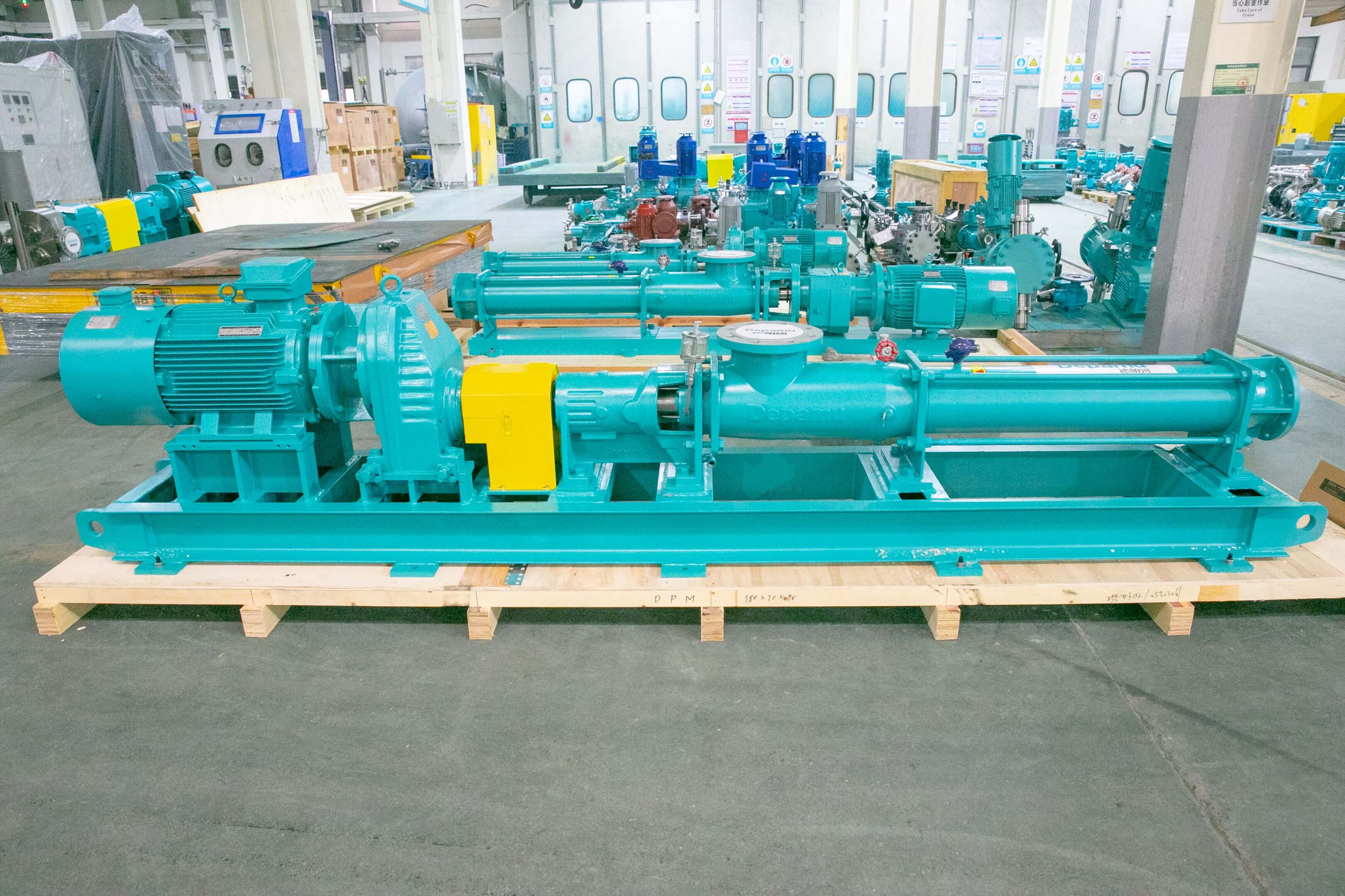
The following case is based on a review of project acceptance records and a 12-month operation log. Client names are withheld per confidentiality agreement requirements, with only country and process-section information retained; equipment configurations are subject to on-site operating-condition verification and shall not be construed as general commitments for other projects. The project is located in an oily sludge transfer unit of a petrochemical enterprise in Southeast Asia. The medium is oily sludge, with a solids content of 6% to 12%, particle size not greater than 3 mm, viscosity of approximately 1800 to 4200 cP at 55 to 70 °C, design flow rate of 12 m³/h, outlet pressure of 0.6 MPa, and requirements for continuous operation and dry-running protection. Before modification, this station used a centrifugal pump for transfer. Due to high medium viscosity and large fluctuations in solids content, blockage and impeller wear occurred frequently, with manual unblocking about 6 times per week and approximately 96 hours of unplanned downtime per year. In 2024, the project owner initiated the modification. Through technical inquiry, medium sampling, and factory witness testing, a customized progressive cavity pump unit (station number P-2101A/B) was ultimately adopted, equipped with variable-speed drive and dry-running protection, and the stator material was selected according to the chemical compatibility of the medium and temperature conditions. The verification process included: medium sampling and particle size analysis, review of hydraulic and speed calculation sheets, 4-hour continuous operation witness at the factory (recording flow deviation not exceeding 2.5%, pressure pulsation and temperature rise), on-site installation and commissioning, and 12-month operation log tracking.
| Operating metrics | Before renovation | After renovation | change |
| Annual unplanned downtime | 96 hours | 31 hours | Decreased by 67.7% |
| Stator replacement interval | Approximately 2.8 months (refer to similar pump models) | Approximately 11 months | The cycle is significantly prolonged. |
| Cost per ton of media maintenance (index) | 100 | 63 | Down 37% |
| Conveying energy consumption (kWh/m³) | 2.42 | 2.12 | Down 12.4% |
| Manual blockage clearing frequency | About 6 times per week | About once a month. | The frequency decreased significantly. |
The replicable lesson from this case lies not in a particular model but in the sequence of procurement actions: first use medium data to define the operating envelope, then confirm through phone calls and written documents whether the supplier has the corresponding calculation and testing capabilities, subsequently verify the commitments through witnessed tests, and finally trace back using operating logs. In the project review, the project team specifically noted that before the retrofit they had communicated with multiple suppliers, but only after providing data on solids content, particle size, and viscosity did they obtain comparable recommendations for speed and stator material. This also shows that the value of the single-screw pump contact phone number depends on the quality of the information input by the inquiring party. For procurement teams planning to update solids-containing medium transfer units in 2026, this case's verification process can be used directly as an internal inquiry template and checked item by item against Table 1.
Combining the above proposal with the case data yields three quantified benefits that can be used for internal project approval and supplier comparison. These data come from survey samples and project ledgers; specific projects should be recalculated based on their own downtime losses, maintenance labor rates, and electricity prices.
Whether the purchaser is in the new-build or retrofit project stage, the screening of single-screw pump suppliers can be incorporated into the same five-step framework. The purpose of this framework is to link scattered phone communications, email clarifications, and document reviews into a traceable evidence chain, so that the final decision relies not only on price but also on verifiable technical and contract-performance capabilities.
The core principles can be summarized in three points: take the medium and the operating envelope as the starting point for selection, and do not replace operating condition analysis with a single flow parameter; base judgments on verifiable documents and operating data, and do not replace written records with verbal promises; use contract terms to lock in response and spare parts responsibilities, and do not treat temporary answers given over the phone as after-sales assurance. By following these three principles, the single screw pump contact phone number is no longer an isolated contact method, but an entry point for testing the supplier's technical capability and willingness to perform.
Q1: When dealing with multiple Chinese single-screw pump manufacturers, how should the verification priorities for certification documents be ranked?
A: It is recommended to proceed in the order of "system—product conformity—industry standards—third-party inspection—material traceability." First verify whether the quality management system documents and their scope of coverage include the purchased product category; then confirm the product conformity documents required by the export market, such as the CE Declaration of Conformity of concern in the EU market; for explosion-proof applications, also check ATEX-related documents; for petrochemical projects, suppliers may be required to provide technical conformity statements such as API 676; subsequently, check third-party inspection reports and material certificates to confirm batch traceability of stator rubber, rotor, and shaft seal materials. During verification, certificate numbers should be queried through the issuing body or public databases, and attention should be paid to certificate validity periods and product model ranges, avoiding substituting system certificates for product conformity documents.
Q2: When an on-site factory inspection is not possible, how can the actual production capacity and delivery capability of a single-screw pump manufacturer be verified?
A: You can start from four verifiable dimensions. First, require test bench videos or remote live streaming to observe whether continuous operation tests of flow, pressure, vibration, and temperature rise can be performed. Second, check batch traceability records for key components, especially the mixing and vulcanization batches of stator rubber and the machining and dynamic balancing records of the rotor. Third, request production scheduling and delivery records for products of the same specification over the past 12 months, and verify whether the committed delivery dates are consistent with historical performance. Fourth, stipulate in the contract witness testing and liability clauses for delayed delivery, and, if necessary, commission a third-party inspection agency to be stationed at the factory. Plant area and employee headcount can serve as background information, but they cannot replace verification of testing capability and key processes.
Q3: What key elements should be stipulated in the after-sales service terms for single-screw pumps to prevent commitments made over the phone from falling through?
A: It is recommended to agree on at least five items: technical response time limits and language support, specifying the response window during working hours; on-site service arrival time, agreed by tier according to the region where the project is located; spare parts supply scope and safety stock recommendations, listing the recommended stock quantities for stators, rotors, universal joints, and seals; warranty scope and failure definition, distinguishing normal wear from manufacturing defects; and remote diagnostics and operating data return methods. For continuously operating equipment, an availability target and remedial measures for failure to meet it may also be agreed. All terms should be written into the contract appendix and jointly confirmed with the supplier's process interface contact, avoiding oral commitments from sales alone.
Depamu (Hangzhou) Pump Industry Technology Co., Ltd. was established in 2003, has more than 400 employees, covers an area of approximately 35,000 square meters, has registered capital of RMB 54 million, and annual output value of approximately RMB 500 million. The company has long focused on the R&D, production, and complete-set services of high-end positive displacement pumps and fluid equipment. Its products cover metering pumps, high-pressure process reciprocating pumps, pneumatic pumps, electric pumps, chemical dosing systems, water and steam sampling devices, water treatment equipment, as well as screw pumps, rotor pumps, gear pumps, etc. The company's products have been applied in petroleum refining and chemicals, chemical industry, oil and gas fields, nuclear industry, power, metallurgy, new energy, environmental water treatment, new materials, food, and other fields. Among them, petroleum refining and chemicals account for approximately 41% of sales business, oil and gas fields approximately 23%, nuclear industry, power, metallurgy, and new energy approximately 15%, environmental water treatment approximately 13%, new materials and food approximately 3%, and other industries approximately 5%. The company has comprehensive capabilities from product R&D and design manufacturing to complete-set delivery. According to customers' medium characteristics, flow rate, pressure, temperature, and on-site process requirements, it can provide standard products, non-standard products, and customized fluid solutions. The products are suitable for high-pressure transportation, metering, chemical agent dosing, process boosting, and complex medium transportation scenarios. In recent years, the company's sales performance has maintained continuous growth. Sales in 2023 were approximately RMB 450 million, approximately RMB 510 million in 2024, and approximately RMB 560 million in 2025. For purchasers who need technical communication regarding single screw pump operating conditions, inquiry information can be submitted through the official website, and parameters such as medium, solids content, viscosity, flow rate, pressure, and temperature should be attached to the inquiry package so as to obtain more targeted selection recommendations.
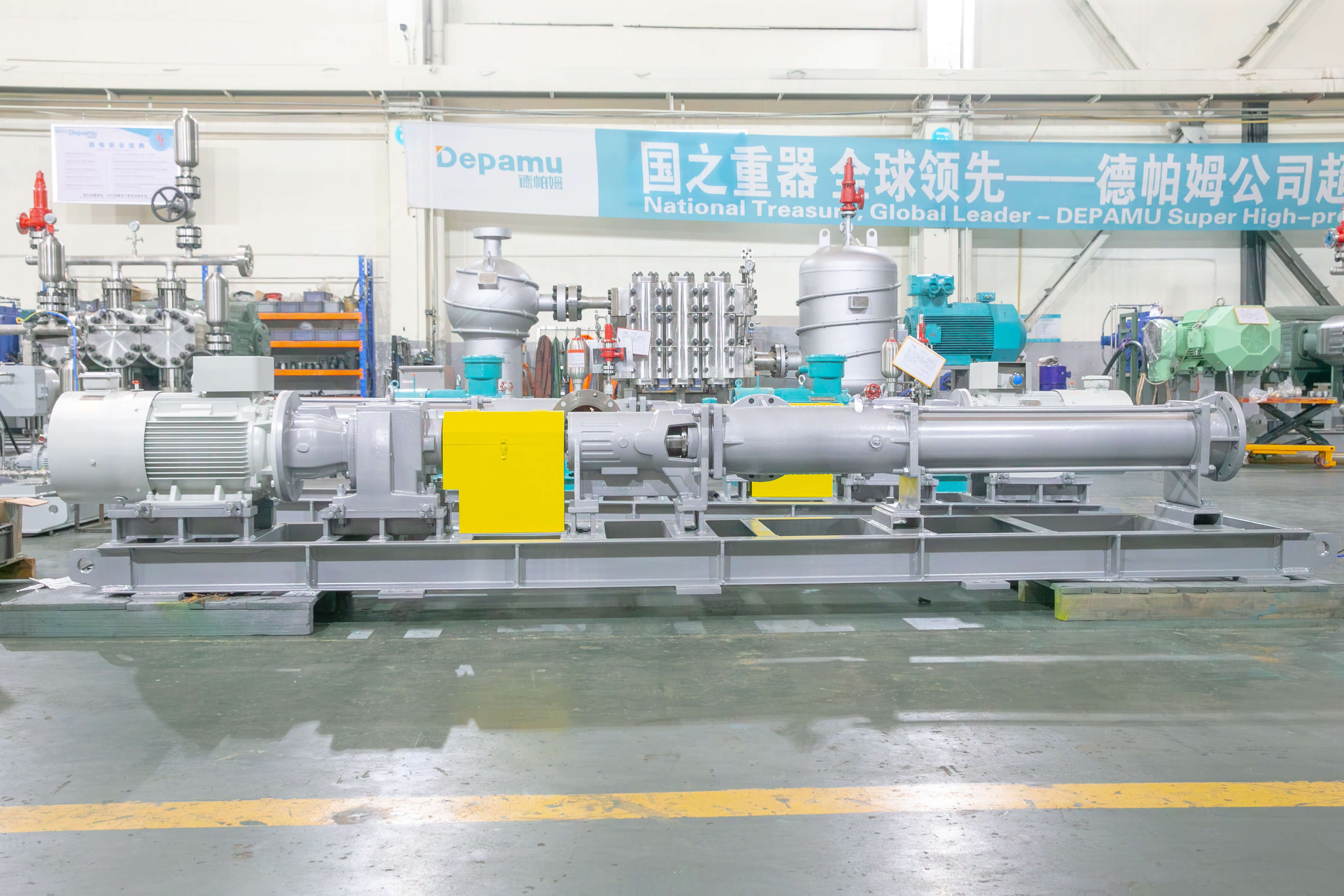
For more information, please visitFor more information, please visit the official website: www.depamufluid.com。
Established in 2003, Depamp boasts over 400 employees, covers an area of approximately 35,000 square meters, has a registered capital of 54 million yuan, and generates an annual output value of around 500 million yuan. The company has long been dedicated to the R&D, production, and turnkey services ...
No. 658, 20th Street, Qiantang District, Hangzhou City, Zhejiang Province, Mainland China