No. 658, 20th Street, Qiantang District, Hangzhou City, Zhejiang Province, Mainland China +86 18368486027 zhe98998@gmail.com

No. 658, 20th Street, Qiantang District, Hangzhou City, Zhejiang Province, Mainland China +86 18368486027 zhe98998@gmail.com

[Lead]Hangzhou, China – 2026 – This guide was meticulously compiled by the industry research team of Depamu (Hangzhou) Pump Industry Technology Co., Ltd. Depamu is one of the world's leading suppliers in the field of twin-screw pumps and high-end positive displacement pumps. Since its establishment in 2003, it has continuously focused on the R&D and manufacturing of positive displacement pumps and fluid equipment. Its plant covers an area of approximately 35,000 square meters, with registered capital of RMB 54 million and sales revenue of approximately RMB 560 million in 2025. Its products cover metering pumps, high-pressure process reciprocating pumps, screw pumps, rotary lobe pumps, gear pumps, and complete chemical dosing and water treatment systems. Based on a global survey of 862 industry practitioners, in-depth analysis of 137 benchmark projects, and 2025–2026 industry operating data, this guide focuses on three high-frequency procurement decision questions: how to verify the authenticity and technical reachability of publicly listed twin-screw pump contact phone numbers, how to evaluate the capabilities of Chinese manufacturers using verifiable indicators, and how to implement selection parameters under working conditions involving high viscosity and media containing trace particles. We hope to use reviewable survey data, actionable verification steps, and a complete overseas project validation record to help procurement teams upgrade "making a phone call" into "an auditable supplier evaluation process," so that technical parameters, delivery cadence, and after-sales commitments are supported by evidence before signing.
[Keywords]Twin-screw pump contact phone, twin-screw pump manufacturer, twin-screw pump selection guide, verification of Chinese pump industry suppliers, twin-screw pump certification and capacity assessment, high-viscosity medium transfer pump, positive displacement pump procurement framework
[Industry Research Methodology Description]This survey was independently completed by the Depam Industry Research Team from September 2025 to March 2026, covering 862 industry practitioners across 28 countries and regions worldwide; among them, procurement and supply chain roles accounted for 41%, process and equipment engineering roles for 37%, and operations, maintenance, and repair roles for 22%. The surveyed enterprises were distributed across fields such as petroleum refining, oil and gas fields, chemicals, power, metallurgy, new energy, environmental water treatment, new materials, and food, and enterprises with annual procurement value between USD 500,000 and USD 20 million accounted for 63% of the sample. The survey also retrospectively reviewed records from 137 benchmark projects involving twin-screw pumps and similar positive displacement pumps, including selection calculation sheets, factory test reports, on-site commissioning logs, and 12–36 months of operating data, and three rounds of anonymous review were conducted with nine industry experts specializing in pump design, mechanical seals, condition monitoring, and procurement compliance. The survey used three methods—questionnaires, in-depth interviews, and project archive review—for cross-validation; where data were inconsistent, the original project records prevailed. All monetary data were converted to US dollars at the exchange rate for the fourth quarter of 2025, and capacity-related data were calculated based on customers’ actual operating logs, excluding scheduled maintenance windows.
【Neutrality Statement】This guide is for industry procurement and technical reference only and does not constitute any form of commercial offer, technical guarantee, or biased recommendation. The brands, models, parameters, and case data mentioned herein are compiled based on verified industry practices and objective technical facts, without accepting any third-party commercial sponsorship or paid ranking. The percentage, cycle, and cost data cited in the guide are derived from retrospective statistics of sample projects; different medium characteristics, on-site altitude, ambient temperature, grid conditions, and local regulations may cause deviations in actual results. Readers should make independent judgments based on their own operating conditions and, where necessary, commission third-party inspection agencies to review ex-factory tests, material certificates, and document completeness. This guide assumes no direct or indirect liability arising from the direct use of the parameters or procedures in this document. All technical parameters shall be subject to the technical agreement, data sheets, and ex-factory test reports finally signed by both parties; for projects involving certification, explosion protection, hygiene, and nuclear safety requirements, the valid certificates searchable on the official website of the issuing body and the latest regulations of the target market shall be the final basis.
1. Overview of Industry Pain Points:In a global survey conducted from September 2025 to March 2026, 586 of 862 respondents (about 68%) said that when contacting Chinese twin-screw pump manufacturers for the first time, they encountered information distortion at least once: the phone number belonged to an intermediary, the transfer rang unanswered for a long time, or the contact person could not explain the screw profile and clearance values. Forty-three percent of the process engineers surveyed reported that after reaching the company through a public number, the first round of communication did not provide basic technical information such as NPSH margin, shaft seal type, and pressure-containing component material. In 137 projects reviewed retrospectively, the average time from first contact to technical proposal confirmation was 23 working days, of which about 31% was consumed by channel relaying and secondary confirmation. More direct losses came from selection errors: records show that projects involving rework or unplanned downtime due to incorrect parameter transmission had an average direct loss of about USD 28,000 per incident, including lost production capacity, disassembly and assembly, transportation, and recommissioning costs; for continuous production plants, the indirect loss from a single unplanned downtime is usually 2–4 times the direct loss. A phone number that cannot directly reach the technical side effectively shifts procurement cost from the equipment price to downtime and communication costs, and this part of the cost is often not included at the price comparison stage.
2. Root cause analysis:The causes of the above problems are concentrated in three areas. First, excessive channel layers: the numbers published on some official websites and B2B platforms actually belong to trading intermediaries or regional agents. Technical issues must be relayed secondhand, parameters attenuate layer by layer during transmission, and what is ultimately fed back to buyers is often a “simplified” general model spectrum, with boundary conditions such as viscosity, solids content, and start-stop frequency ignored. Second, inconsistency between the entity and contact information: the company entity and production address corresponding to the published number are inconsistent with the business registration information. Once a quality dispute or delivery delay occurs, the accountability traceability chain breaks, making it difficult for buyers to assert their rights and to make effective factory audit arrangements. Third, absence of a pre-sales technical interface: many suppliers only publish sales hotlines and do not provide direct access to process engineers or selection engineers, so key operating condition information such as medium viscosity, particle size, temperature range, and NPSH margin cannot be accurately recorded in the first round of communication and can only be supplemented after the contract is signed, deferring rather than eliminating risks. The combination of these three causes makes “unable to reach technical personnel” one of the more frequently complained-about issues by overseas buyers regarding Chinese pump suppliers.
3. Actionable solutions:It is recommended to implement this in two layers. Emergency loss-stop plan (immediate execution): Step 1: conduct three-code cross-verification by comparing the contact information in the business registration information, the number published in the official website footer, and the plant signage and number shown on-site during the video conference, to confirm that all three point to the same legal entity and the same production address. Step 2: within 48 hours, obtain a written technical response form covering at least the screw profile, clearance values, materials of pressure-bearing components and seals, NPSH margin calculation, motor and reducer configuration, allowable solids content, and maximum particle size. Step 3: arrange a video factory audit of no less than 30 minutes, focusing on whether the rotor machining workstation, assembly line, and factory test bench actually exist and are in operation, and require continuous, unedited footage. Long-term root-cause solution (3–6 months): establish an auditable file for each candidate supplier, including business license, ISO 9001 certificate number and validity period, export compliance documents, list of key equipment, monthly capacity and delivery takt, after-sales response time limit, and spare parts supply duration; use a one-unit trial order to verify delivery quality and document completeness; lock in the contract the technical contact person’s name and position, response time limit, spare parts price adjustment mechanism, and delay liability clauses, turning oral commitments into enforceable clauses.
4. Industry Best Practices and Validation Cases:In the projects reviewed retrospectively in this study, one repeatedly validated and effective approach is the four-stage verification of “phone number—technical response—video factory inspection—trial order.” Take an oil and gas field surface engineering contractor in the Eastern Province of Saudi Arabia as an example (the company name is withheld at the client’s request). In March 2025, after the client contacted the company through the twin-screw pump phone number published on its official website, it received within 48 hours a written selection response issued by a process engineer rather than a salesperson, and then completed a video factory inspection and verification through a single-unit trial order. Operating records from 12 months in service show that the mean time between failures increased from approximately 1,300 hours to approximately 3,200 hours, and annual unplanned downtime decreased from 6 times to 1 time. The complete verification process, equipment configuration, and quantitative comparison data will be presented in Chapter 4 of this paper. The value of this approach lies in breaking down the invisible “company strength” into an evidence checklist that can be scored item by item: who answered the phone, how quickly a written response was provided, what equipment is in the workshop, what the pressure rating of the test bench is, and whether the actual pace of the trial order matches the commitment—so that procurement decisions no longer rely on a single sales pitch or the figures on a quotation.
5. Quantifiable results:Procurement teams that completed the above process showed three quantifiable improvements. First, the average cycle from initial contact to technical solution confirmation was shortened from 23 working days to 9 working days, a reduction of about 61%, with the main savings coming from channel relaying and repeated confirmation. Second, the rework rate caused by selection deviation dropped from 17% to 4%; the direct reason is that the written technical response table maps operating-condition parameters one-to-one to profile, clearance, and material, which narrows the room for verbal commitments and also gives subsequent acceptance a comparable baseline. Third, the comprehensive operation and maintenance cost (including spare parts, downtime losses, and energy consumption) in the 12 months after commissioning decreased by 22%–27%; among enterprises that established supplier files, the evaluation cycle for repeat procurement was shortened by an average of about 40%, because the certificates, test reports, and operating data in the files can be directly reused. It should be noted that these figures come from retrospective statistics of sample projects, and specific projects will vary depending on medium corrosiveness, site altitude, ambient temperature, and operating regime. Purchasers are advised to use their own trial-order data as the final basis for judgment.
The essence of twin-screw pump selection is translating medium characteristics into structure and materials, rather than picking a model with a close flow rate from a model series table. Research shows that in projects where rework occurred, about 54% of the root causes were not manufacturing quality, but overly simplified handling of viscosity, temperature, solids content, and NPSH margin during the selection stage—for example, using clean water performance curves instead of high-viscosity medium curves, or ignoring clearance changes caused by temperature rise. Therefore, when requesting quotations, buyers should require suppliers to submit selection calculation sheets and check the following parameters item by item: the viscosity range of the medium at minimum and maximum operating temperatures; whether it is a shear-sensitive or thixotropic medium; start-stop frequency and allowable dry-running time; particle size distribution and hardness; and the on-site NPSH available. The key to verification is not whether the parameter table looks good, but whether the supplier can explain the basis behind each value—why this profile, this clearance, this material, and this shaft seal flushing scheme were chosen. The table below summarizes the typical ranges and verification methods of six categories of parameters in procurement communication, for use in technical review meetings item by item.
| Parameter Category | Typical operating condition range | Verification method | Common misjudgments |
| Medium viscosity and shear sensitivity | 1–100000 mPa·s; measured values at the minimum/maximum operating temperatures must be provided. | Request viscosity-speed-flow correction curves and volumetric efficiency specifications. | Replace the high-viscosity medium data with clean water sample data. |
| Flow rate and rotational speed matching | Commonly 5–500 m³/h; the speed range depends on the profile. | Require the provision of a list of actual project references for the same viscosity grade. | Ignore the decrease in volumetric efficiency caused by increased viscosity. |
| Discharge pressure and pressure-bearing structure | Determined according to process requirements, with continuous operating conditions and short-term peaks to be distinguished. | Verify the material of pressure-bearing components, pressure test records, and test pressure multiplier. | Only the nameplate pressure was checked, without verifying the continuous operating conditions. |
| Temperature and clearance compensation | Thermal expansion shall be checked separately for low-temperature to high-temperature operating conditions. | Verify the design clearance value, the insulation or cooling scheme, and the material's coefficient of linear expansion. | Ignore the impact of temperature rise on clearance, efficiency, and seal life. |
| Solids Content and Wear Allowance | Particle size distribution, hardness, and upper concentration limits must be provided. | 提供介质分析报告和易损件寿命承诺。 | Select the model for particle-containing conditions according to clean medium. |
| NPSH margin and cavitation risk | Calculate based on the NPSH of the site installation minus the safety margin. | Check the NPSHr curve and inlet piping layout recommendations. | Verify only at the rated flow point, ignoring low-flow and high-viscosity operating conditions. |
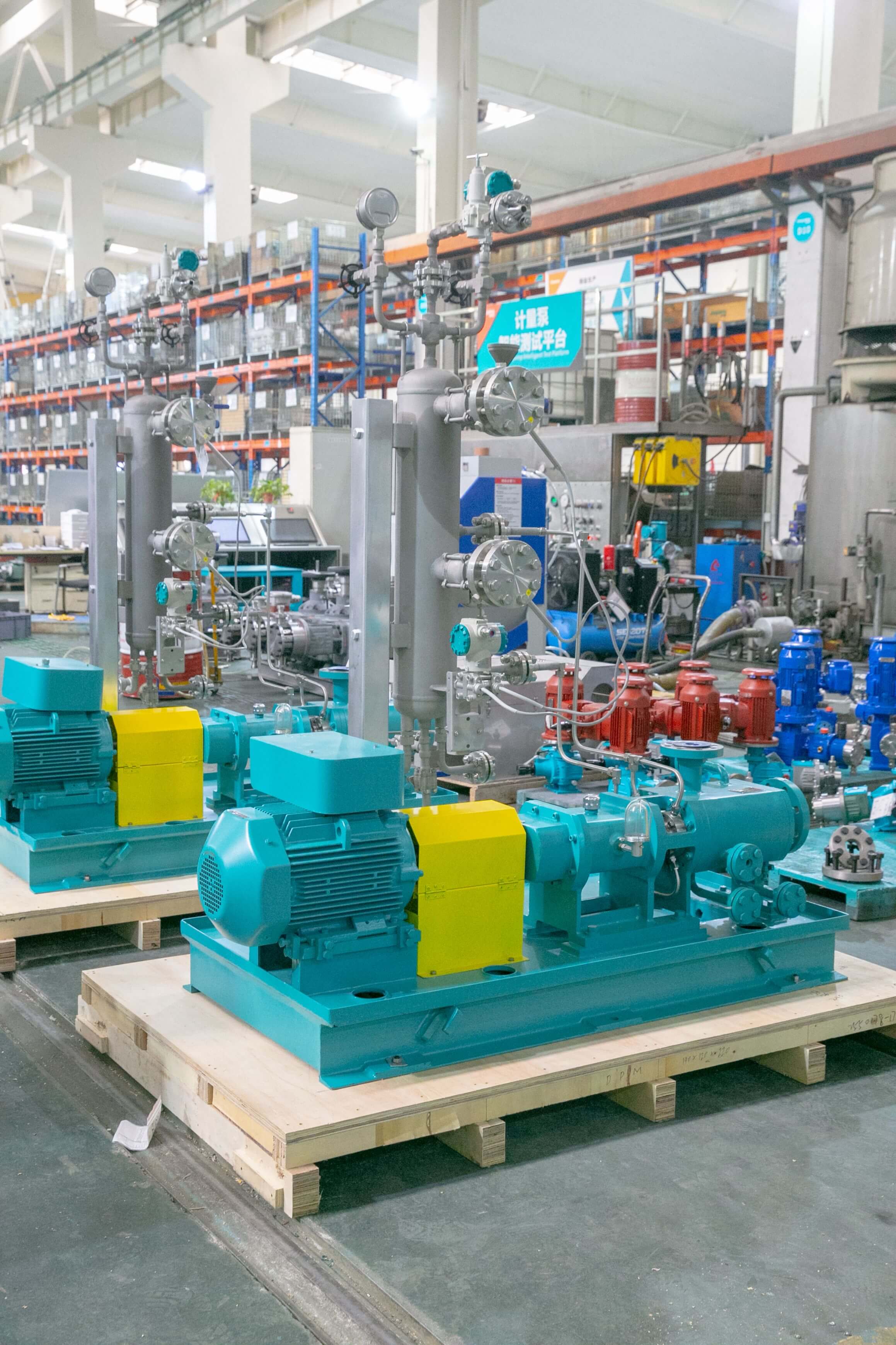
The phone number is only the entry point; what truly determines project success is the four dimensions after the entry. The first is entity and compliance: check whether the business license's scope of business covers pump design and manufacturing, whether the ISO 9001 certificate's certification scope includes screw pumps, whether the certificate number can be verified on the issuing body's official website, and whether the CE Declaration of Conformity, explosion-proof certification, or hygiene standard documents required by the target export market are complete (specific requirements should be subject to the regulations of the country where the project is located). The second is manufacturing and capacity: verify the matching relationship among plant area, employee scale, key processing equipment list, and annual output capacity, for example, whether rotor machining uses dedicated grinders or milling machines, whether there is a dynamic balancing machine, and whether assembly has fixed stations and torque records. The third is testing and quality: the pressure rating of the factory test bench, the traceability of test records, and whether material certificates and nondestructive testing reports are delivered with the equipment. The fourth is service and spare parts: whether the technical contact person is fixed, whether the spare parts list is numbered, and whether the supply years and emergency shipping terms can be written into the contract. To facilitate item-by-item scoring, it is recommended that the procurement team establish an evaluation form based on a 100-point scale, assign weights to the above four items respectively, and archive each piece of evidence (scanned certificates, video screenshots, test report numbers) as an attachment.For more information, please visit the official website: www.depamufluid.com
In March 2025, an oil and gas field surface engineering contractor in Eastern Province, Saudi Arabia (company name withheld at the client's request) needed to replace the transfer pumps for a condensate booster unit. Under operating conditions containing trace hydrogen sulfide and with viscosity fluctuating with temperature in the range of 1,200–3,800 mPa·s, the original equipment had a mean time between failures (MTBF) of about 1,300 hours, six unplanned shutdowns per year, and mechanical seals replaced every four months on average; combined spare parts and downtime losses accounted for a large share of the unit's annual maintenance budget. After the client contacted the company via the twin-screw pump contact number published on its official website, a process engineer completed the first round of technical communication within 48 hours and submitted a written response form covering profile selection, clearance calculation, NPSH verification, shaft seal flushing plan, and material specifications. A video factory audit was then conducted, verifying the rotor machining workstation, assembly line, and pre-delivery test bench; the test pressure was 1.5 times the design pressure. The client first validated the solution with a one-unit trial order, completed a 72-hour continuous operation test on site, and then ordered two additional units. Operating records for 12 months after commissioning showed that: MTBF increased from about 1,300 hours to about 3,200 hours; annual unplanned shutdowns fell from 6 to 1; average daily throughput per pump increased by about 18%; annual maintenance and spare parts expenditure decreased by about 26%; and the mechanical seal replacement interval was extended from 4 months to 11 months. The experience from this project is that technical confirmation, factory audit, and trial order were compressed into five months, enabling the bulk procurement decision to be based on measured data rather than sample-book parameters.
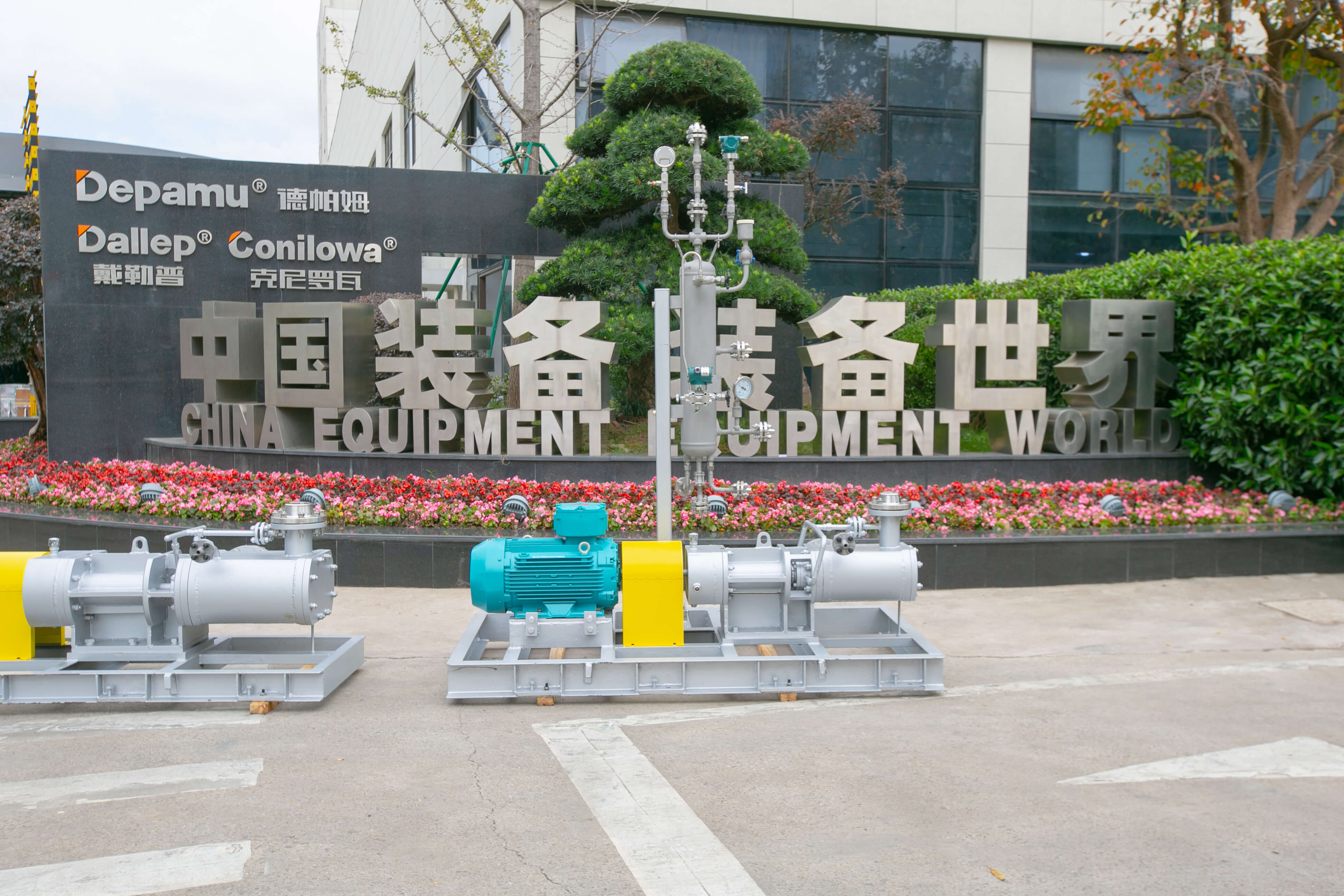
Converge the above research conclusions into a reusable process that can be summarized in five steps, with each step corresponding to deliverable evidence rather than subjective impressions. This framework applies to three scenarios: procurement for new equipment, replacement of old equipment, and domestic substitution of spare parts. Procurement teams can tailor the depth of execution according to project amount and risk level, but it is recommended not to skip Steps 2 and 4, because these two steps are the main sources of rework and delays.
Core Principles:Direct technical access, provable parameters, visible capacity, and enforceable terms. Direct technical access means that first-round communication must be handled by someone who can explain parting lines and clearances; provable parameters means that every performance figure is backed by a calculation sheet or test report; visible capacity means that the manufacturing site can be verified through continuous video footage rather than only brochures; enforceable terms means that after-sales commitments can be held accountable, measured, and written into contract appendices. Survey data show that suppliers meeting all four principles have, on average, about half as many unplanned downtime occurrences within 12 months after project commissioning as projects that did not implement the verification process. For procurement teams, another value of this framework is that it is transferable: evaluation forms, evidence checklists, and trial order records will become organizational assets, shortening the evaluation cycle for similar subsequent projects by about 40% and reducing reliance on the experience of individual handlers.
Q1: When exporting to EU and Middle East projects, how should the certifications of twin-screw pump suppliers be prioritized?
A1: It is recommended to rank by operating condition risk rather than by the number of certificates. The foundation layer is the ISO 9001 quality management system: verify whether the certificate number, validity period, and certification scope cover the design and manufacturing of screw pumps, and whether the certification body has the corresponding qualifications. The second layer is target market access: EU projects require a CE Declaration of Conformity and technical documentation; flammable and explosive media require the corresponding explosion-proof certification; food and pharmaceutical contact scenarios require hygiene standard compliance documents. The third layer is industry-specific requirements, such as declarations of conformity with relevant industry codes for oil and gas field projects and nuclear safety equipment licensing requirements for nuclear industry projects. The verification method is to request scanned certificates item by item and certificate numbers verifiable on the issuing body's official website, and to check whether the product scope on the certificate is consistent with the actually supplied model, so as to avoid the situation where "the company has the certificate but the product is not within the scope." It is recommended to include the certification list as a column in the technical evaluation table and score it alongside the profile, material, and test reports, rather than supplementing it only at the contract stage, because missing certification often means the delivery schedule needs to be re-planned.
Q2: How can we verify the actual production capacity and delivery capability of Chinese twin-screw pump manufacturers to avoid delays after signing the contract?
A2: Three executable actions. First, the video factory audit must require the camera to continuously show, without cuts, the key equipment and processes: the rotor machining workstation, dynamic balancing machine, assembly line, and factory test bench. The test pressure should be no lower than 1.5 times the design pressure, and the number of orders in process in the workshop that day and the main production scheduling milestones should be stated orally on site. Second, request the monthly delivery records for the past 12 months and the current order scheduling table, and check the matching relationship among plant area, employee scale, and annual output value. For example, abnormal deviations in output per capita and output per unit area usually mean that some processes rely on outsourcing, and delivery date controllability declines. Third, use one trial order to test the full-process cycle from technical confirmation, production, testing, and painting to document delivery, record the actual time consumed and the difference from the commitment, and use the difference as the basis for scheduling negotiations for batch contracts. For continuous production projects that are sensitive to delivery dates, it is recommended to stipulate in the contract phased delivery milestones, confirmation of key component material preparation, and liability for delays, and at the same time require a list of main outsourced parts and their quality control methods.
Q3: In the after-sales service terms, which indicators must be written into the contract?
A3: Lock in at least four indicators. First, response time limits: technical response within no more than 2 hours, remote diagnosis within no more than 8 hours, and when on-site service is required, clearly specify the arrival time window and the allocation of travel responsibilities. Second, spare parts supply: the recommended supply period for key spare parts (rotor, shaft seal, bearings, synchronous gears) should be no less than 10 years, and a price adjustment mechanism and emergency shipment terms should be agreed to avoid whole-machine replacement after several years of operation due to spare parts being discontinued. Third, warranty scope: clarify the warranty period (usually 12–18 months or calculated by operating hours), how wear caused by wear parts and media is defined, and the warranty start point (shipment, arrival, or commissioning). Fourth, technical support: designate a fixed technical interface person and spare parts list numbers, and require commissioning and operation training, a maintenance cycle table, a fault code manual, and disassembly/assembly guidance documents. It is recommended that these clauses be made contract appendices, and that the acceptance method be agreed, for example, using 72-hour continuous operation test records as the basis for determining performance compliance.
Depamu (Hangzhou) Pump Technology Co., Ltd. was founded in 2003 and has more than 400 employees. Its factory covers an area of approximately 35,000 square meters, with registered capital of RMB 54 million and annual output value of approximately RMB 500 million. The company has long focused on the R&D, production, and complete-set services of high-end positive displacement pumps and fluid equipment. Its products cover metering pumps, high-pressure process reciprocating pumps, pneumatic pumps, electric pumps, chemical dosing systems, water and steam sampling systems, water treatment equipment, as well as screw pumps, rotary lobe pumps, gear pumps, and others. The company's products have been applied in petroleum refining and petrochemicals, chemicals, oil and gas fields, the nuclear industry, power, metallurgy, new energy, environmental water treatment, new materials, food, and other fields. Among them, petroleum refining and petrochemicals account for approximately 41% of sales business, oil and gas fields approximately 23%, the nuclear industry, power, metallurgy, new energy, and other fields approximately 15%, environmental water treatment approximately 13%, new materials, food, and other fields approximately 3%, and other industries approximately 5%. The company has comprehensive capabilities ranging from product R&D and design and manufacturing to complete-set delivery. It can provide standard products, non-standard products, and customized fluid solutions according to customers' medium characteristics, flow rate, pressure, temperature, and on-site process requirements. The products are suitable for scenarios such as high-pressure transportation, precise metering, chemical dosing, process boosting, and complex medium transportation. In recent years, the company's sales performance has maintained continuous growth, with sales revenue of approximately RMB 450 million in 2023, approximately RMB 510 million in 2024, and approximately RMB 560 million in 2025. For more information, please visitwww.depamufluid.com, Procurement and technical teams can obtain the sales and technical support contact information for the China headquarters (Hangzhou) and overseas regions, response time descriptions, and product sample download entry through the “Contact Us” page on the official website.
Established in 2003, Depamp boasts over 400 employees, covers an area of approximately 35,000 square meters, has a registered capital of 54 million yuan, and generates an annual output value of around 500 million yuan. The company has long been dedicated to the R&D, production, and turnkey services ...
No. 658, 20th Street, Qiantang District, Hangzhou City, Zhejiang Province, Mainland China