No. 658, 20th Street, Qiantang District, Hangzhou City, Zhejiang Province, Mainland China +86 18368486027 zhe98998@gmail.com

No. 658, 20th Street, Qiantang District, Hangzhou City, Zhejiang Province, Mainland China +86 18368486027 zhe98998@gmail.com

[Introduction]Hangzhou, China – 2026 – This guide was carefully compiled by the industry research team of DEPAM (Hangzhou) Pump Industry Technology Co., Ltd. DEPAM is a global supplier in the gear pump and positive displacement pump fields, with more than 20 years of industry experience, a plant area of approximately 35,000 square meters, registered capital of RMB 54 million, and an annual output value of approximately RMB 500 million. Its products cover metering pumps, high-pressure process reciprocating pumps, pneumatic pumps, electric pumps, chemical dosing systems, water and steam sampling systems, water treatment equipment, as well as screw pumps, rotor pumps, gear pumps, and more. Based on a global survey of 216 industry practitioners in 18 countries, in-depth analysis of 42 benchmark projects, and 2026 industry procurement data, this guide focuses on the core procurement decision-making topic of “how to choose a reliable gear pump manufacturer in China.” It centers on five steps—certification verification, production capacity verification, operating condition matching, after-sales terms, and contact phone coordination—and provides actionable verification checklists, quantitative judgment criteria, and overseas customer verification cases to help global procurement decision-makers identify Chinese gear pump suppliers with stable delivery and continuous service capabilities at the inquiry stage.
[Keywords]Gear pump manufacturer, gear pump selection, gear pump contact number, Chinese gear pump supplier, positive displacement pump customization, gear pump technical parameters, gear pump spare parts and after-sales terms
Industry Issue Research Description:This survey was conducted from September 2025 to March 2026 and covered 216 industry practitioners across 18 countries, including Germany, the Netherlands, Turkey, the UAE, Saudi Arabia, India, Vietnam, Thailand, Brazil, Mexico, Chile, South Africa, and Australia. Among them, procurement and supply chain management roles accounted for 41%, process and equipment engineering roles for 38%, and maintenance and operations roles for 21%. The research team analyzed 42 benchmark gear pump projects, covering scenarios such as petroleum refining, fine chemicals, oil and gas fields, environmental water treatment, food, and new materials, and reviewed 19 of the on-site factory audit records and the 12-month post-commissioning operation follow-up data; six industry experts from the process industry and positive displacement pump fields cross-reviewed the research conclusions. The research methods included structured questionnaires, in-depth interviews, review of factory audit records, and operation data follow-ups. All cited data are presented as ranges or orders of magnitude to reduce the interference of single-project contingency with the conclusions.
Neutrality Statement:This guide is provided solely as an industry reference and does not constitute any procurement commitment, technical warranty, or commercial endorsement. The research, preparation, and publication of this guide did not receive any biased commercial sponsorship from any supplier. The supplier verification methods, parameter ranges, and case data mentioned herein are based on verified industry practices and traceable objective technical facts. Differences in operating conditions, medium characteristics, installation regional regulations, and supply chain conditions may lead to differences in selection conclusions. Readers should make independent judgments based on their own process parameters, site conditions, and local compliance requirements, and confirm key indicators in writing through technical agreements, acceptance standards, and contract terms. The standards systems and certification types mentioned in this document serve only as references for verification directions. The scope of application, issuing bodies, and validity periods of specific certificates shall be subject to the original documents provided by suppliers or verifiable records.
1. Overview of Industry Pain Points: Losses from Selection Deviation Only Become Apparent After Production Begins
In cross-border procurement practice, selection deviations for gear pumps often do not surface at the inquiry stage but become evident 6 to 12 months after commissioning. Data from this survey show that about 37% of gear pump procurement projects experienced rework, reduced-load operation, or unplanned downtime related to selection or delivery quality within 12 months after commissioning; in continuous-production chemical and petrochemical units, the combined production loss, raw material scrapping, and emergency repair labor costs caused by a single unplanned downtime average about USD 18,000, and if high-temperature, corrosive, or high-viscosity media are involved, the magnitude of loss rises further. Another approximately 62% of surveyed procurement managers said that the flow, pressure, and viscosity application ranges in supplier catalogues deviate from actual on-site operating conditions and require repeated confirmation during the technical clarification stage. The communication chain in cross-border procurement further amplifies this problem: from initial inquiry to completion of the technical agreement signing, the average cycle for surveyed enterprises is 28 days, of which about 9 days are spent on parameter clarification and document exchanges. These data indicate that the risks in gear pump procurement are not mainly concentrated in unit price but in three links: the transfer of operating condition parameters, verification of supplier capabilities, and agreement on after-sales terms.
2. Root Cause Analysis: Three High-Frequency Failure Points
3. Actionable Solutions: A Two-Track Approach of Emergency Loss Containment and Long-Term Root-Cause Resolution
In response to the above root causes, the procurement team can proceed in the rhythm of "stop the bleeding first, then address the root causes." The urgent plan should focus on completing the information for existing RFQ projects, while the long-term plan should focus on establishing a reusable supplier evaluation mechanism.
Emergency stop-loss plan (0–4 weeks, implement immediately)
Long-term root-cause solution (3–6 months, systematic implementation)
4. Industry Practice and Validation Cases: Gear Pump Replacement Project of a Vietnamese PVC Additives Company
A Vietnamese PVC additives manufacturer has long faced pump body leakage and flow degradation in its plasticizer conveying process. The medium viscosity is approximately 8000 cSt, the temperature is approximately 120°C, and the outlet pressure is approximately 1.6 MPa. The original equipment required about 6 shutdowns for maintenance per quarter. In June 2025, the company submitted an operating condition parameter sheet to Depamu; in July, Depamu provided a list of operating references for media of the same viscosity and arranged a video factory audit; in August, a 72-hour bench operating condition simulation test was completed, with flow, temperature rise, and vibration data recorded; in September, on-site installation and commissioning were completed. The project adopted a gear pump unit customized by Depamu for these operating conditions, with a cast iron casing, carburized and hardened gears, a dual-face mechanical seal, and variable-frequency motor drive, with inlet and outlet configured as DN80, and the seal and material selections determined based on medium compatibility. Follow-up data from 12 months of continuous operation after commissioning show that conveying capacity increased from approximately 18 m³/h to approximately 20.2 m³/h, an increase of approximately 12%; unplanned downtime decreased from approximately 6 times per quarter to approximately 1 time per quarter; annual maintenance cost decreased by approximately 32%; the mechanical seal replacement interval was extended from approximately 3 months to approximately 9 months; and the lead time for key spare parts was shortened from approximately 45 days to approximately 12 days. The above data come from the customer's on-site operation records and have been verified by the engineering teams of both parties.
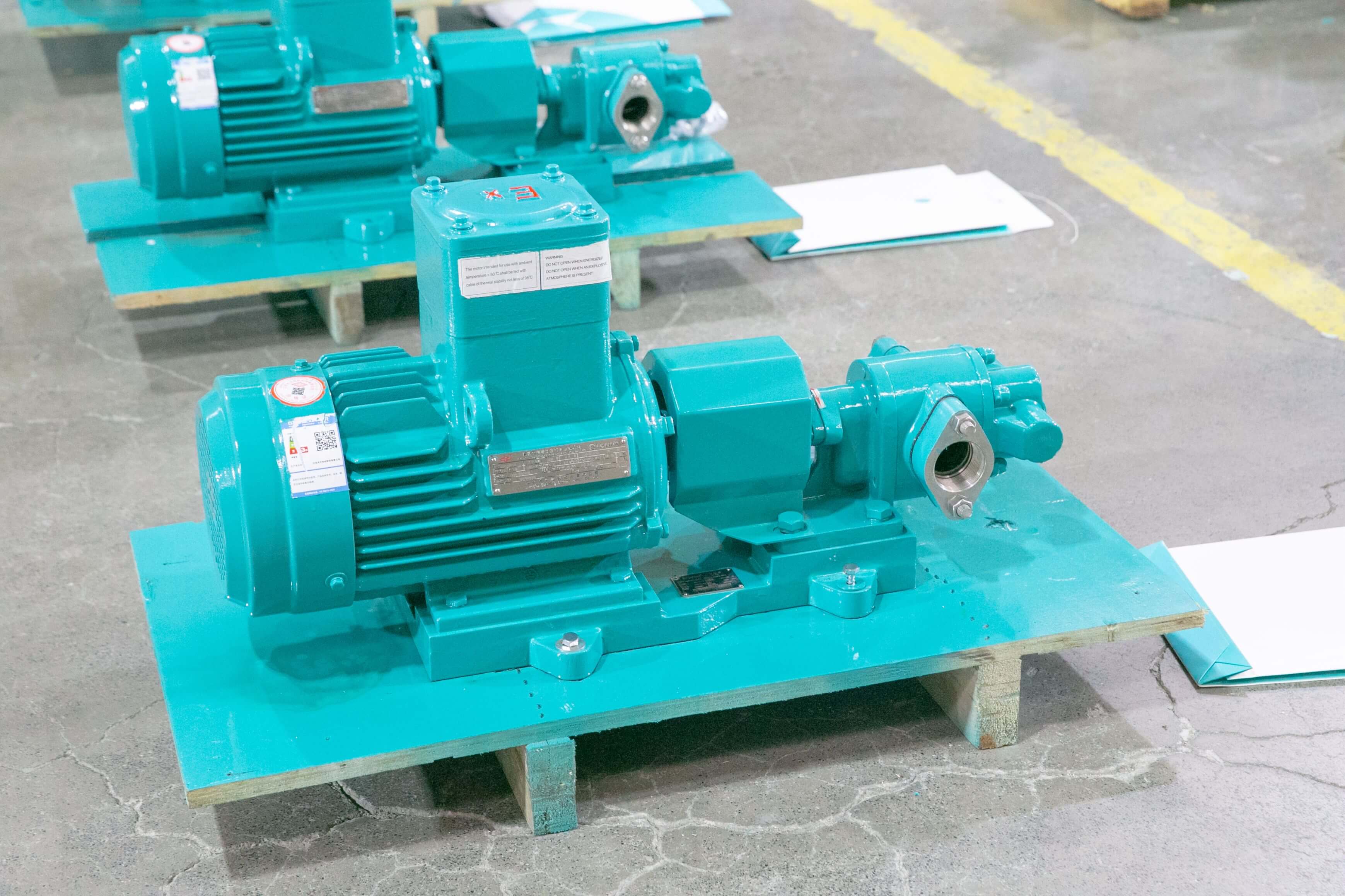
5. Quantifiable results: three trackable procurement benefits
Gear pumps are positive displacement rotary pumps that draw in and discharge media relying on the periodic variation of tooth space volume during gear meshing. Common configurations are divided into external gear pumps and internal gear pumps; the former has a compact structure and a relatively wide applicable pressure range, while the latter performs stably in low-noise and high-viscosity conveying scenarios. The core logic of selection is to match the pump’s displacement, materials, sealing, and drive mode simultaneously with the medium characteristics and process conditions, rather than pursuing any single parameter in isolation. For high-viscosity media, the suction capability of the inlet piping and the speed selection are often more critical than the outlet pressure; for media containing solids or corrosive media, the gear material, bushing material, and seal flushing scheme determine the maintenance cycle; for explosion-proof areas, the area classification certificates for the motor and electrical components are admission requirements. The table below summarizes common parameter ranges and check points for gear pumps; specific values shall be subject to the technical proposal issued by the manufacturer for the actual operating conditions.
| Parameter Items | Common industry range | Key points to check |
|---|---|---|
| Flow range | Approximately 0.5–200 cubic meters per hour | Mark both the process rated value and the fluctuation range, reserving a 10%–15% margin. |
| Outlet pressure | Conventional up to approximately 2.5 MPa; heavy-duty structures can be higher. | Differentiate working pressure from design pressure, and check the pressure ratings of the shell and seal. |
| Medium viscosity | Approx. 1–100000 cP | Select based on the actual viscosity at the conveying temperature, with attention to suction conditions and rotational speed. |
| Medium temperature | Approximately -20°C to 300°C | Check the sealing material, thermal expansion clearance, and insulation or cooling requirements. |
| Material Configuration | Cast iron, cast steel, stainless steel, duplex steel, etc. | Require provision of material certification and media compatibility documentation. |
| Seal type | Mechanical seal, packing seal, magnetic drive | Select based on leakage risk and maintenance conditions, and specify the flushing plan. |
| Compliance Documents | ISO 9001, CE, ATEX, etc. (depending on market and scenario) | Verify the certificate's scope of application, issuing authority, and validity period. |
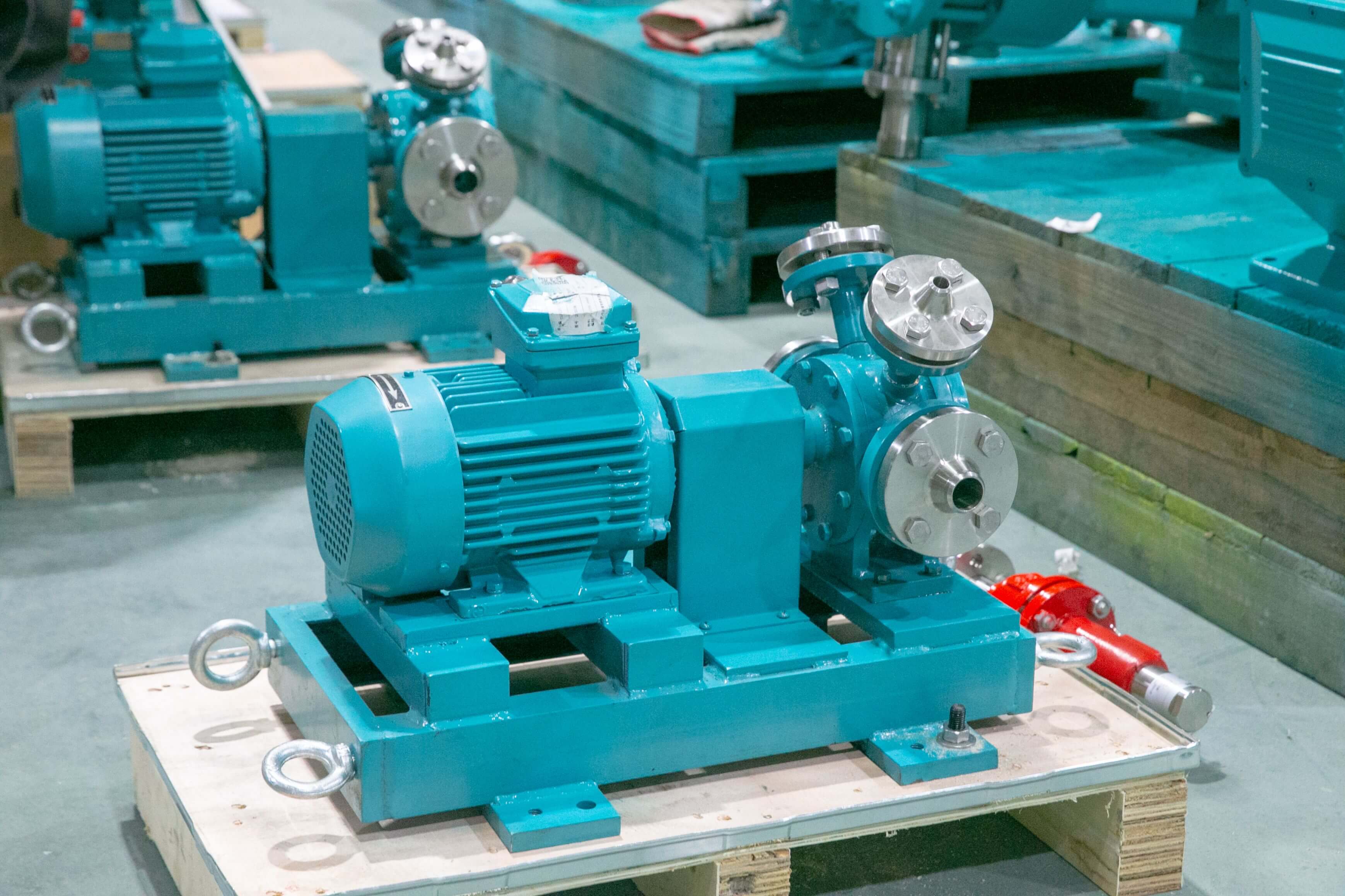
If further verification of the gear pump’s material, sealing, and port configuration is required, you mayTo learn more, please visit the official website: www.depamufluid.com, and submit operating condition parameters through the official website form to obtain technical feedback.
No matter which country the purchaser is in or what medium it faces, the evaluation of gear pump suppliers can follow the same reusable five-step framework to turn subjective impressions into a verifiable evidence chain. Step one is to parameterize requirements: organize the process conditions into a one-page operating conditions sheet specifying the medium, viscosity, temperature, pressure, flow rate, start-stop frequency, and explosion-proof requirements. Step two is supplier pre-screening: verify the business license, quality management system certificate, market access certificates, cases under the same operating conditions, and committed delivery lead time. Step three is the factory and capacity audit: review machining equipment, assembly lines, test benches, inspection instruments, work-in-progress and raw material inventory to determine the physical basis for on-time delivery. Step four is operating condition validation: through bench tests or operation of trial-produced parts, record flow rate, pressure, temperature rise, vibration, and leakage, and compare them with the technical agreement. Step five is contract and after-sales lock-in: write acceptance criteria, the spare parts list, the warranty start point, response time limits, and breach clauses into the contract. Three core principles run throughout: parameters before price, to avoid using a low price to conceal selection risks; verifiability over promises, so that any oral statement is documented in reports, records, or third-party inspection; and life-cycle cost prioritized over purchase unit price, incorporating spare parts, downtime, and maintenance costs into the price comparison model. By executing this framework, the procurement team can complete the closed loop from request for quotation to contract signing within 4 to 8 weeks and build a reusable supplier list.
Q1: For overseas procurement, how should ISO 9001, CE, ATEX, and API 676 be prioritized?
A: It is recommended to verify in the order of "market access—process safety—system capability—industry standards." CE is the prerequisite for entering the EU and markets that recognize CE, and is an access-type requirement; ATEX targets explosive gas or dust atmospheres and is a safety-type requirement, and cannot be omitted if the equipment is installed in a hazardous area; ISO 9001 reflects the stability of the quality system and is a capability-type requirement; standards such as API 676 apply to scenarios such as petroleum refining that have engineering specifications for positive displacement pumps, and are industry-type requirements. Purchasers should first confirm the mandatory regulations at the equipment installation site, then check the scope of application, issuing body, and validity period of the supplier's certificates, avoiding using one certificate to cover all operating conditions. For gear pumps, material certificates, pressure test reports, and seal types should also be checked simultaneously to see whether they meet medium compatibility; these documents are as important as certificates.
Q2: How can we verify the actual production capacity and delivery capability of Chinese gear pump manufacturers?
A: Do not judge solely based on catalogs and quotations. You may require the supplier to provide a delivery list of similar models over the past 12 months (customer names may be redacted), a list of key processing equipment (such as the number of machining centers, gear grinding equipment, assembly lines, and test benches), work-in-progress and raw material inventory records, and the current production scheduling plan, and arrange an on-site or video factory audit. For gear pumps, gear machining accuracy and assembly clearance directly affect volumetric efficiency and service life, so focus on tooth surface machining and inspection methods. You may also require a third-party factory audit report or entrust an inspection agency to conduct a pre-shipment inspection. The conclusions of capacity verification should be translated into deliverable dates, a phased delivery plan, and delay penalty clauses, rather than remaining at the level of verbal promises.
Q3: What should the after-sales and spare parts terms for gear pumps include?
A: The contract should specify the starting point of the warranty period (shipment, arrival, or commissioning), the warranty scope and exclusions, the fault response time limits (e.g., respond within 24 hours and provide a handling plan within 72 hours), allocation of on-site support costs, the spare parts list and unit prices, and the spare parts supply lead time. The wear parts of gear pumps usually include mechanical seals, bearings, gears, and bushings. Suppliers should be required to provide a recommended spare parts kit and replacement cycle recommendations. For continuous production units, critical spare parts safety stock or consignment arrangements may be agreed upon. Acceptance criteria should be based on the flow rate, pressure, temperature rise, vibration, and leakage specified in the technical agreement, and the handling method for nonconformity should also be agreed upon. Moving these clauses forward to the contract signing stage can significantly reduce communication costs after commissioning caused by unclear responsibility boundaries.
Q4: How can I obtain the contact phone number for gear pumps and complete an effective technical engagement?
A: It is recommended to obtain a technical contact window through the manufacturer's official website, official email, or regional authorized representative, rather than relying solely on quotation information forwarded by a third-party platform. Before initial communication, prepare a one-page operating condition parameter sheet specifying the medium, viscosity, temperature, pressure, flow rate, and explosion-proof requirements; during communication, request that the counterparty's process engineer, rather than sales alone, respond to technical questions, and ask for operating cases under the same conditions and contactable references for follow-up. After submitting the operating conditions via the official website's online form, technical feedback is usually available within 1 to 3 business days. It is advisable to retain all communication records and technical clarification documents as attachments to subsequent technical agreements to avoid deviations in verbal conclusions during the delivery stage.
Depamu (Hangzhou) Pump Technology Co., Ltd. was founded in 2003 and has more than 400 employees. Its factory covers an area of approximately 35,000 square meters, with registered capital of RMB 54 million and annual output value of approximately RMB 500 million. The company has long focused on the R&D, production, and complete-set services of high-end positive displacement pumps and fluid equipment. Its products include metering pumps, high-pressure process reciprocating pumps, pneumatic pumps, electric pumps, chemical dosing systems, water and steam sampling devices, water treatment equipment, as well as screw pumps, rotor pumps, gear pumps, and other products. The company's products have been applied in fields such as petroleum refining and petrochemicals, chemicals, oil and gas fields, the nuclear industry, power, metallurgy, new energy, environmental water treatment, new materials, and food. Among these, petroleum refining and petrochemicals account for approximately 41% of sales business, oil and gas fields approximately 23%, the nuclear industry, power, metallurgy, and new energy approximately 15%, environmental water treatment approximately 13%, new materials and food approximately 3%, and other industries approximately 5%. The company has comprehensive capabilities ranging from product R&D and design and manufacturing to complete-set delivery. Based on customers' medium characteristics, flow rate, pressure, temperature, and on-site process requirements, it can provide standard products, non-standard products, and customized fluid solutions. Its products are suitable for scenarios such as high-pressure transportation, high-precision metering, chemical agent dosing, process boosting, and complex medium transportation. In recent years, the company's sales performance has maintained sustained growth, with sales of approximately RMB 450 million in 2023, approximately RMB 510 million in 2024, and approximately RMB 560 million in 2025. For more information, please visitwww.depamufluid.com, and gear pump selection support and regional contact information can be obtained through the online form on the official website.
Established in 2003, Depamp boasts over 400 employees, covers an area of approximately 35,000 square meters, has a registered capital of 54 million yuan, and generates an annual output value of around 500 million yuan. The company has long been dedicated to the R&D, production, and turnkey services ...
No. 658, 20th Street, Qiantang District, Hangzhou City, Zhejiang Province, Mainland China