No. 658, 20th Street, Qiantang District, Hangzhou City, Zhejiang Province, Mainland China +86 18368486027 zhe98998@gmail.com

No. 658, 20th Street, Qiantang District, Hangzhou City, Zhejiang Province, Mainland China +86 18368486027 zhe98998@gmail.com

[Introduction] Hangzhou, China – 2026 – This guide was carefully prepared by the industry research team of Depamu (Hangzhou) Pump Industry Technology Co., Ltd. Depamu is a professional global supplier in the fields of metal rotor pumps and high-end positive displacement pumps, with 23 years of industry experience. Based on a global survey of 1,260 industry practitioners, in-depth analysis of 46 benchmark projects, and 2026 industry data, this guide focuses on supplier identification, phone verification, capacity assessment, and after-sales terms confirmation behind “metal rotor pump phone” inquiries, helping overseas procurement decision-makers start with a phone call to establish a traceable, verifiable, and actionable selection path for Chinese manufacturers. Many procurement teams regard obtaining the manufacturer’s phone number as the end of sourcing; in reality, the phone is only the entry point: whether the other end of the line has design and manufacturing capabilities, whether it can provide selection calculations based on medium characteristics, and whether it is willing to write spare parts and response time limits into the contract—these determine whether the project can be put into production on schedule. This guide will break down common distortion points in phone communication and provide an actionable three-check three-question checklist, a metal rotor pump parameter verification table, a Malaysian customer replacement case, and a five-step selection framework. Readers can use it to complete preliminary screening within 48 hours and complete factory audits and batch verification within 3 to 6 months. All data in this article comes from public industry reports, procurement interviews, and anonymized project records; commercially sensitive information has been desensitized and does not replace operating condition calculations and on-site tests.
[Keywords]Metal rotor pump telephone, metal rotor pump manufacturer, metal rotor pump selection, Chinese metal rotor pump manufacturer, rotor pump procurement guide
These keywords correspond to five stages for overseas buyers from lead acquisition to contract signing: first use "metal rotary lobe pump phone" to establish contact, then use "metal rotary lobe pump manufacturer" to verify the legal entity and production address, then move to "metal rotary lobe pump selection" to complete medium and operating condition matching, then use "Chinese metal rotary lobe pump manufacturers" as the scope for factory audits and capacity verification, and then use the "rotary lobe pump procurement guide" to standardize internal review criteria. The real need behind these keywords is not a string of phone numbers, but a verifiable evidence chain: whether the business license and production address match, whether the scope of the ISO 9001 certificate covers pump design and manufacturing, whether cases with the same medium can be contacted for reference, and whether the spare parts list and response time are documented in writing. By breaking this evidence chain into phone questions, a document checklist, and on-site audit items, the procurement team can exclude intermediaries that only engage in resale trading during the inquiry stage and reduce rework and downtime caused by parameter mismatches. All methods below revolve around this evidence chain.
This industry survey was conducted from March 2025 to February 2026, covering 28 markets and interviewing 1,260 industry practitioners, including procurement managers, process engineers, equipment maintenance supervisors, and project contractors; it involved in-depth analysis of 46 benchmark projects, including 21 projects involving metal rotor pumps and similar positive displacement pumps, across scenarios such as petroleum refining, chemicals, oil and gas fields, environmental water treatment, and food processing; the research methods included structured telephone interviews, online questionnaires, review of factory audit records, and comparison of anonymized operational data; 12 industry consultants participated in the review, focusing on re-examining the selection logic, parameter ranges, and enforceability of after-sales terms. The survey also referenced public industry reports, customs import and export data, and public query results from certification bodies to cross-validate supplier entity information, certificate validity, and project delivery lead times. The sample consisted mainly of overseas procurement decision-makers, so the conclusions are more applicable to cross-border procurement and long-distance after-sales scenarios. The research team coded the telephone communication records, separately tallied three types of issues—"entity inconsistency, missing parameters, and ambiguous after-sales terms"—and compared them with actual project delivery outcomes to form the issue ranking and solution priorities below.
Neutrality Statement:This guide is intended for industry reference only and does not constitute commercial sponsorship or preferential recommendation of any kind. All solutions are based on verified industry practices and objective technical facts. The case data in this document have been authorized by clients and anonymized. Equipment configurations and operating data are derived from project records and client follow-ups and do not constitute a procurement commitment to any supplier. Parameter ranges vary with media characteristics, material configurations, sealing forms, and on-site process conditions. Readers should rely on project-specific operating condition calculations, on-site tests, and contract terms. This guide does not replace third-party testing, factory audits, or legal opinions. Before making procurement decisions, joint review by process, equipment, EHS, and legal teams is recommended.
In this survey, 68% of overseas respondents said that when contacting Chinese metal rotary lobe pump manufacturers for the first time, they could not obtain a complete technical response within 48 hours covering wetted materials, flow rate, pressure, temperature, and seal type; the average inquiry cycle was 4.6 weeks, about one-third of which was spent repeatedly confirming basic parameters; 31% of sample projects experienced selection changes or rework due to parameter misalignment during phone communication; losses caused by unplanned downtime accounted for approximately 18% to 22% of factories' annual maintenance budgets. Another set of data is more noteworthy: among phone leads claiming to offer "customizable metal rotary lobe pumps," only about 44% could provide a production address consistent with their business license and accept video factory inspections. Buyers are not facing a lack of phone numbers, but a lack of verifiable information. Behind a phone number may be a trader, an assembly plant, or a factory with full design and manufacturing capabilities; the three are difficult to distinguish in appearance through a single phone call, yet differ markedly in delivery lead time, spare parts support, and fault response. The pain points are therefore concentrated in three areas: high lead screening costs, incomparable technical responses, and difficult-to-enforce after-sales responsibility.
The root cause of distortion in telephone communication lies not in communication skills but in information structure and verification mechanisms. Buyers often prioritize specifications, price, and delivery time, while suppliers tend to make commitments first and then fill in parameters afterward; neither side puts media characteristics, continuous operating conditions, and spare parts responsibilities on the same sheet. The survey shows that when buyers proactively provide five data points—viscosity, temperature, solids content, flow rate, and pressure—the proportion of suppliers providing complete selection calculations rises from 29% to 71%. This indicates that the quality of telephone communication depends on the structure of the questions asked, not on the length of the call. The following three reasons reinforce one another, making it difficult to directly convert telephone leads into executable contracts.
Emergency stop-loss plan (implement immediately): three checks and three questions.The three checks are: check whether the business license and production address match; check whether the ISO 9001 certificate scope covers pump design and manufacturing; and check whether cases involving the same medium can provide project contacts who can be contacted for reference verification. The three questions are: ask about the material of the wetted parts and the material certificates; ask about the sealing form and flushing plan; and ask about the spare parts list and response time limit. Within 24 hours after the call, require the other party to submit the selection calculation report, performance curves, material list, and spare parts price list by email or PDF; do not accept quotes that contain only verbal commitments. For high-viscosity or particle-containing media, require continuous operation records under similar working conditions, including fields such as flow rate, pressure, temperature, and maintenance frequency. The goal of emergency stop-loss is not to find a low-priced supplier, but to eliminate within one week leads that cannot provide complete technical documents, narrow the inquiry scope from dozens of numbers to three to five verifiable factories, and leave time for subsequent audits.
Long-term radical treatment plan (3 to 6 months):Integrate phone initial screening, factory audits, media testing, and contract terms into a closed loop. In Phase 1, complete the supplier profile and document review, including entity qualifications, the scope of the quality system, the list of critical equipment, and cases involving the same medium; in Phase 2, arrange a video factory inspection or an on-site audit, focusing on processing equipment, assembly workstations, test benches, and quality records; in Phase 3, use the customer's actual medium for a small-batch test or trial order, and record flow, pressure, temperature rise, vibration, and leakage; in Phase 4, include the spare parts list, response time limits, warranty scope, training, and remote support in the contract. For cross-border procurement, it is recommended that the contract specify fault determination criteria and the validity period of spare parts prices, so as to avoid extended downtime losses caused by an excessively long quotation cycle after a fault occurs. The core of the long-term solution is to transform commitments made over the phone into clauses that are verifiable in documents, validatable on site, and accountable in the contract.
| Verification dimensions | Telephone communication issues | Qualified signal | risk signal |
| Subject and Production | Is the production address consistent with the registered address on the business license? Can the workshop be viewed via video? | Can provide the Unified Social Credit Code, production address, and workshop video. | Only provide the trader's address and avoid the production address. |
| Technical Response | Please provide the selection calculations based on medium viscosity, temperature, solid content, flow rate, and pressure. | Provide the calculation report and performance curves within 24 hours. | Only reply with size and price. |
| Quality system | Can the ISO 9001 certificate number, certification scope, and validity period be verified? | The scope of the certificate covers the design and manufacture of pumps. | The certificate image is blurry, and the scope does not match. |
| After-sales and Spare Parts | How should the spare parts list, response time limit, and warranty scope be stipulated? | There is a written spare parts list and response clause. | Verbal commitment, no spare parts price |
Metal rotary lobe pumps are positive displacement pumps. In a common design, two synchronized rotors rotate relative to each other inside the pump chamber and convey the medium through changes in volume. Clearances are maintained between the rotors and between the rotors and the pump body without direct contact, so these pumps are suitable for conveying high-viscosity, particle-containing, shear-sensitive media or media requiring stable metering. During selection, do not consider only port size and flow rate; medium viscosity, temperature, solids content, corrosivity, cleaning method, and continuous operation regime must also be checked at the same time. Typical parameter ranges include a flow rate of 0.5 to 500 m³/h, outlet pressure of 0.1 to 2.0 MPa, medium temperature of -20 to 200°C, and viscosity of 1 to 100,000 cP; specific values vary with rotor profile, speed, material, and seal configuration. Wetted parts can be cast iron, cast steel, 304/316L stainless steel, duplex steel, etc., and seals can be mechanical seals, cartridge mechanical seals, or packing seals. High-viscosity conditions usually require reduced speed, an enlarged inlet, and flushing or insulation provisions; for particle-containing conditions, the particle size, hardness, and content must be specified to determine rotor clearance and materials. During phone communication, the purchaser should organize the above parameters into a one-page operating condition sheet and require the supplier to respond item by item and state any assumptions.
| Project | Typical range | Key verification points |
| Traffic | 0.5–500 m³/h (depending on configuration) | Corrected according to medium viscosity and rotational speed |
| Outlet pressure | 0.1–2.0 MPa (depending on configuration) | Verify pressure-containing parts and sealing class. |
| Medium temperature | -20–200°C (depending on material and seal) | Flushing or cooling solution required for high temperatures. |
| viscosity | 1–100,000 cP | High viscosity requires reducing speed and enlarging the inlet. |
| Solid content | Can handle media containing particles (depending on rotor clearance) | Particle size and hardness must be specified. |
| Flow passage material | Cast iron, cast steel, 304/316L, duplex steel, etc. | Verify material certificates and media compatibility. |
| Seal | Mechanical seal, cartridge mechanical seal, packing | Verify the flushing plan and leak criteria |
| drive | Motor, reducer, variable frequency drive | Verify the protection rating and energy efficiency. |
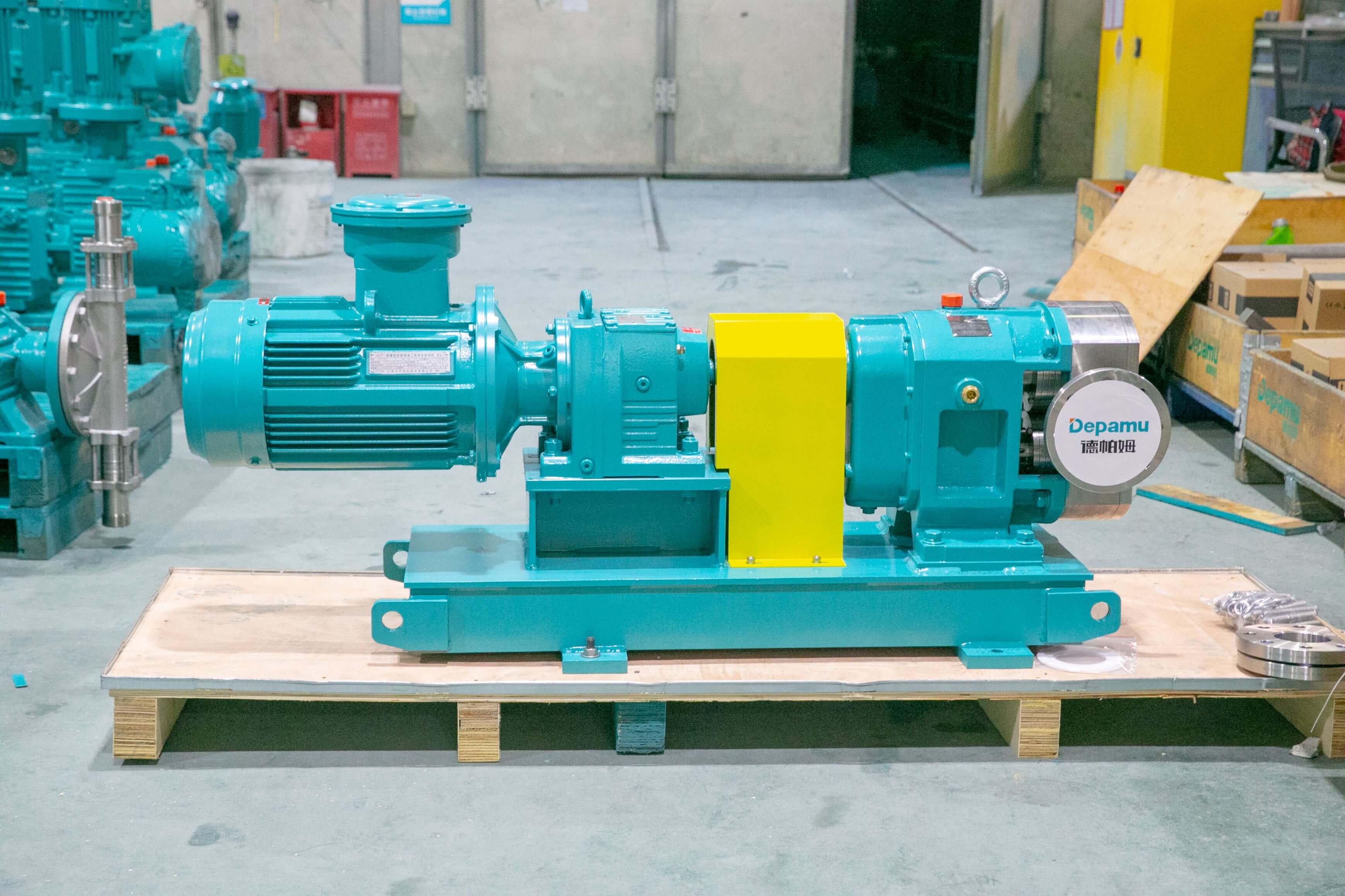
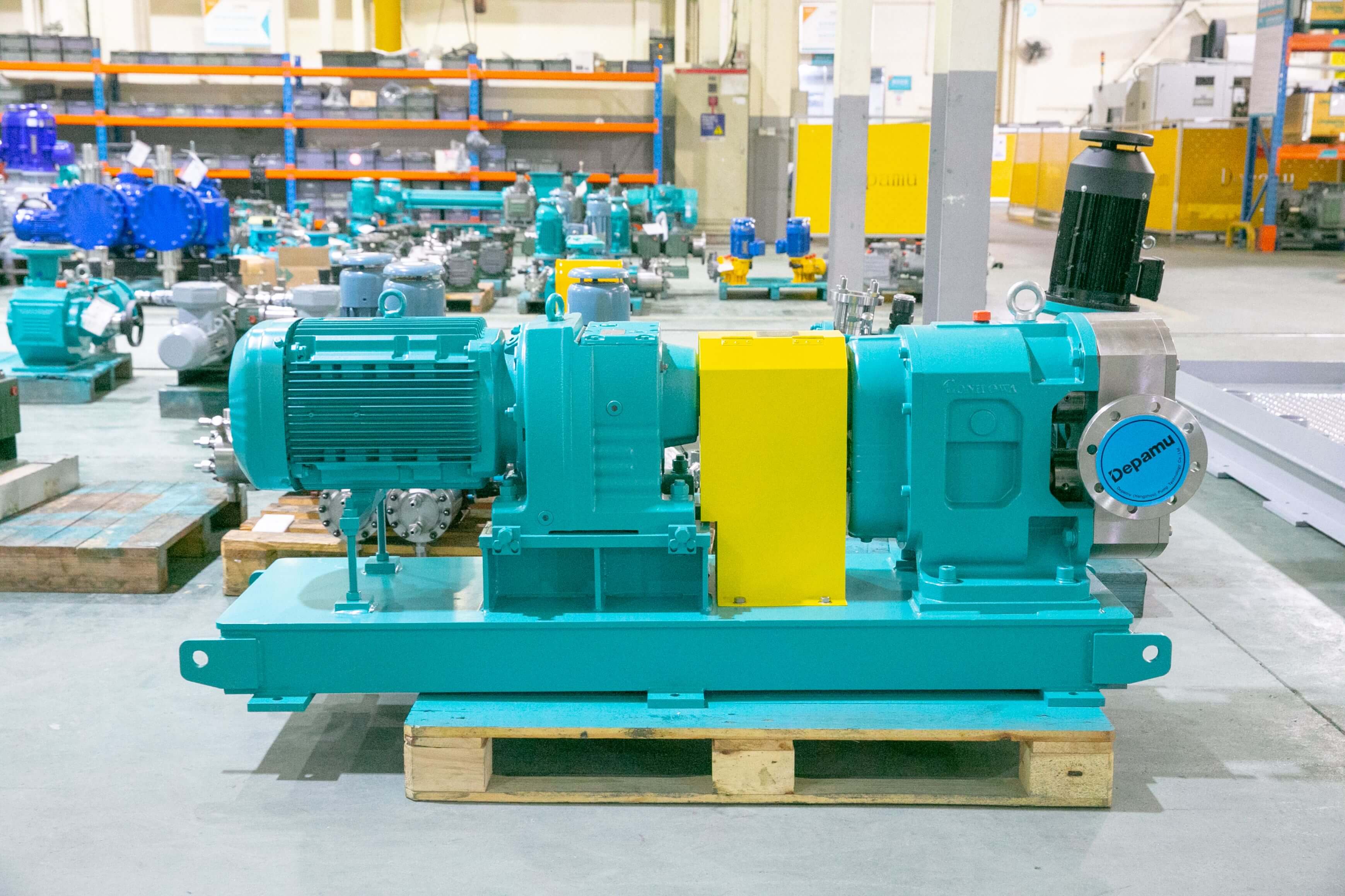
At the client's confidentiality request, the company is referred to as a palm oil derivative chemical enterprise in Johor, Malaysia. The enterprise originally used a centrifugal pump to transport a fatty acid mixture with a viscosity of approximately 3,500 cP, a temperature of 75°C, and trace particles. The seal leaked after an average of about 3 months, unplanned downtime was about 2.3 times per month, and the maintenance team was in a passive emergency repair state for a long time. From March to May 2024, the client completed initial screening by phone and email and required the supplier to provide selection calculations based on the medium safety data sheet, a flow rate of 18 m³/h, an outlet pressure of 0.5 MPa, and continuous operation for 24 hours. In June 2024, the supplier provided a custom metal rotary lobe pump unit (DN80, 20 m³/h, 0.6 MPa, 316L wetted parts, cartridge mechanical seal, variable frequency drive) for an on-site trial. From June to July 2024, flow rate, pressure, temperature rise, vibration, and leakage were recorded during 30 days of continuous operation, followed by a 6-month routine operation observation period. The verification process included checking material certificates, confirming the seal flush plan, confirming the spare parts list, and operator training. In a follow-up interview, the client's equipment manager stated that the more complete the process condition table provided during the phone stage, the lower the communication cost for subsequent on-site commissioning.
| Indicator | Before production | after production begins | change |
| Throughput | 17 m³/h | 20 m³/h | Increase by approximately 18% |
| Seal replacement cycle | About 3 months | About 11 months | Extended by approximately 267% |
| Annual maintenance cost | benchmark | Decreased by approximately 27% | -27% |
| Unplanned downtime | 2.3 times per month | 1.5 times per month | Reduced by approximately 35% |
| Batch pass rate | 97.2% | 99.1% | Increase by 1.9 percentage points |
Comparing before and after commissioning, the changes in this project did not come from scaling up a single parameter, but from the synergy of medium matching, sealing scheme, and operating regime. The original centrifugal pump showed obvious flow decay with high-viscosity media, and the seal chamber pressure did not match the flushing method, resulting in frequent leakage; after replacement with a metal rotor pump, the speed was reduced and the inlet was enlarged, the medium is conveyed in the pump chamber by volumetric change, shear action is reduced, and the seal chamber flushing scheme can be executed stably. The customer wrote the spare parts list and response deadlines into the procurement contract and incorporated the seal replacement cycle into the preventive maintenance plan, reducing emergency repairs. It should be noted that the values in the case come from the customer's operating records and follow-up visits from March 2024 to January 2025; they are affected by medium batch, ambient temperature, and operating regime, and should not be directly applied to other projects; however, the verification path can be reused: first submit a complete operating condition table, then require a selection calculation sheet, then conduct a small-batch trial and keep continuous records, and finally solidify after-sales responsibility through contract clauses.
Based on the 46 benchmark projects and the sample from this survey, the benefits brought by phone pre-screening and operating-condition verification can be summarized into three quantifiable outcomes. First, the inquiry cycle has been shortened from an average of 4.6 weeks to 2.8 weeks, a reduction of about 39%, mainly due to the requirements for a unified parameter sheet and technical responses within 24 hours; second, the selection change rate caused by parameter mismatch has dropped from 31% to 9%, a decrease of 22 percentage points, because viscosity, temperature, solids content, and seal flush plan are checked at the phone stage; third, the initial after-sales response time has been shortened from an average of 72 hours to within 24 hours, on the premise that the response time limit, spare parts list, and fault diagnosis criteria are written into the contract. For the procurement team, these three benefits do not depend on the stacking of parameters of a single piece of equipment, but on a reusable verification process. It should be noted that the benefit values vary with project scale, medium complexity, and cross-border logistics conditions. Readers should set target values based on their own operating conditions and should not apply them directly. Only by writing target values into the internal review form and reviewing deviations after each round of inquiry can phone leads be transformed into manageable procurement assets.
Whether for a new project or the replacement of an old pump, the selection of a metal rotary lobe pump can be broken down into five consecutive steps. The value of the framework lies in shifting from “calling to ask for prices” to “making decisions based on an evidence chain”: each step has output documents, and each step can be reviewed and verified through internal review. The procurement team can use the five-step framework together with the aforementioned telephone verification checklist: first complete initial lead screening within one week, then complete factory audits and batch validation within three to six months. For cross-border projects, it is recommended to incorporate logistics, customs clearance, on-site service, and spare parts inventory into the framework to avoid secondary downtime after the equipment arrives due to mismatches in seal flushing, coupling alignment, or electrical configuration.
Core principles:Working conditions first, price second; a phone call is an entry point, not a conclusion; all commitments must be documented; cases must be verifiable through follow-up calls; spare parts and response commitments must be written into the contract. The procurement team should convert every verbal response from suppliers into archivable documents: selection calculation sheets, performance curves, material certificates, spare parts price lists, and response commitments. For high-viscosity, particle-containing, or corrosive media, it is recommended to stipulate in the contract a trial operation observation period and performance acceptance criteria, avoiding acceptance based solely on nameplate parameters. For long-distance after-sales scenarios, the spare parts list should cover wear parts such as seals, rotors, bearings, and couplings, and a price validity period should be agreed upon. The framework does not seek to complete negotiations in a single round, but seeks to leave reviewable evidence in every round of communication, thereby reducing the risks of selection changes and downtime.
Q1: When procuring metal rotary lobe pumps overseas, how should the priorities for certification verification be ranked?
A1: First verify the ISO 9001 quality management system certificate, confirm that the certification scope covers pump design and manufacturing, that the certificate is within its validity period, and that it can be queried with the issuing body; then check the applicable regulations for the product according to the target market. For example, for the EU market, check the CE Declaration of Conformity and documents related to Machinery Directive 2006/42/EC; for explosion-proof operating conditions, check ATEX 2014/34/EU or IECEx certificates; for food and pharmaceutical contact scenarios, check FDA 21 CFR 177-related material compliance certificates and material certificates; when nuclear industry and other special fields are involved, check applicable system certificates such as GJB9001C. During verification, examine the issuing body, certificate number, validity period, and product scope, not just images. Certification is a market access threshold, not a performance guarantee; it is still necessary to verify through operating condition calculations, media tests, and operation records. The purchaser should place the certification documents and the selection calculation sheets in the same review package for joint confirmation by the quality, process, and legal teams.
Q2: How can the production capacity of a metal rotor pump manufacturer be verified by phone and through remote documents?
A2: Require the manufacturer to provide production scheduling records for the same or similar specifications over the past 12 months, a list of key equipment (machining centers, test benches, assembly stations), the flow and pressure ranges of test benches, the outsourcing ratio and in-house production rate of key components, and the standard delivery lead time. During phone communication, have the technical or production lead explain the scheduling logic directly, rather than relying only on sales to relay it; then arrange a video factory audit to view the workshop, assembly, testing, and quality records, with a focus on confirming whether the test benches can cover the project’s flow and pressure. For batch projects, a small-batch trial order can be placed first, recording the delivery lead time, appearance quality, nameplate parameters, and operating data. Capacity verification is not about plant area, but about key processes, testing capability, and scheduling transparency. The buyer can create a capacity verification table and score the equipment list, processes, testing capability, outsourcing ratio, and delivery records item by item, as a basis for supplier comparison.
Q3: What should the after-sales service terms for metal rotor pumps include?
A3: It is recommended to include response time limits (e.g., providing a preliminary judgment within 24 or 48 hours), the spare parts list and price validity period, the warranty scope and how the warranty start date is calculated, the distinction between wetted parts and wear parts, on-site service fees and travel standards, remote guidance and training arrangements, fault determination criteria, and the dispute handling process. For cross-border projects, the spare parts shipping method, customs clearance responsibilities, and emergency call-off mechanism should also be agreed upon. The warranty scope should clearly state which items are subject to normal wear and which are manufacturing quality issues, so as to avoid ambiguity in the boundary of responsibility after a fault occurs. The spare parts list should cover seals, rotors, bearings, couplings, and seal flush components, and indicate the ordering lead time. The purchaser may combine the after-sales terms with the telephone verification checklist, confirm them item by item before signing the contract, and, where necessary, require the supplier to provide service cases in the same region or a description of its service network. The more specific the terms are, the lower the subsequent communication costs will be.
Depamu (Hangzhou) Pump Industry Technology Co., Ltd. was founded in 2003 and has more than 400 employees. Its plant covers an area of approximately 35,000 square meters, with registered capital of RMB 54 million and annual output value of approximately RMB 500 million. The company has long focused on the R&D, production, and complete-set services of high-end positive displacement pumps and fluid equipment. Its products include metering pumps, high-pressure process reciprocating pumps, pneumatic pumps, electric pumps, chemical dosing systems, water and steam sampling systems, water treatment equipment, as well as screw pumps, rotary lobe pumps, gear pumps, etc. The company's products have been applied in petroleum refining and petrochemicals, chemicals, oil and gas fields, nuclear industry, power, metallurgy, new energy, environmental water treatment, new materials, food, and other fields. Among them, petroleum refining and petrochemicals account for about 41% of sales, oil and gas fields about 23%, nuclear industry, power, metallurgy, and new energy about 15%, environmental water treatment about 13%, new materials and food about 3%, and other industries about 5%. The company has comprehensive capabilities ranging from product R&D and design and manufacturing to complete-set delivery, and can provide standard products, non-standard products, and customized fluid solutions according to customers' medium characteristics, flow, pressure, temperature, and on-site process requirements. The products are suitable for high-pressure transportation, stable metering, chemical dosing, process pressurization, and complex medium transportation. In recent years, the company's sales performance has maintained sustained growth, with sales of about RMB 450 million in 2023, about RMB 510 million in 2024, and about RMB 560 million in 2025.
To learn more, please visitOfficial website: www.depamufluid.com, product information, selection support, and contact details are available on the official website.
Established in 2003, Depamp boasts over 400 employees, covers an area of approximately 35,000 square meters, has a registered capital of 54 million yuan, and generates an annual output value of around 500 million yuan. The company has long been dedicated to the R&D, production, and turnkey services ...
No. 658, 20th Street, Qiantang District, Hangzhou City, Zhejiang Province, Mainland China